Liu, Cixin. A View from the Stars Tor Books, 2024.
Version 1.0.0
A View from the Stars is a rich collection of Liu Cixin’s essays and short fiction in translation. Bringing together six short stories and thirteen essays, the volume offers readers a multifaceted portrait of Liu Cixin not only as a major writer but also as a reflective commentator on his own creative practice and on the development of science fiction as a genre. The fiction stories included in the collection were originally published around 2000, and most of the essays date from the early 2000s to 2015. While the collection is not organized by the chronology of the original Chinese publications, its arrangement foregrounds the breadth of Liu’s intellectual thinking and the range of his literary imagination.
The fiction in the collection engages questions of technology and development, and each story emphasizes different concerns. “Whale Song” and “Butterfly” point to two political events around the turn of the millennium, respectively: the anti-whaling movement and the political upheavals in Yugoslavia. “The Messenger” takes the form of a quasi-historical fantasy, imagining the evolution of physics theory through a figure suggestive of Einstein. “End of the Microcosmos,” “Destiny,” and “Heard It in the Morning” are comparatively less marked by historical specificity, and they speculate respectively on theories of microscopic particles, space-time, and cosmological models. The essays in the collection illuminate Liu’s relatively under-discussed professional trajectory from a science fiction fan to one of the most representative writers of Chinese science fiction, as well as his creative process and a more humble, even vulnerable side of himself when confronting fundamental philosophical questions. For instance, essays such as “Time Enough for Love,” “A Journey in Search of Home,” and “Thirty Years of Making Magic Out of Ordinariness” discuss Liu’s first encounters with science fiction, how he developed an interest in the genre, the difficulties he faced in publishing during his early years as a writer, and the material circumstances behind his decision to writing science fiction at different moments in his life. In essays such as “The ‘Church’ of Sci-Fi” and “Civilization’s Expansion in Reverse,” he addresses philosophical themes explored in his works and his methods of writing science fiction, particularly on how to represent a sense of awe toward the cosmos and the unknown in science fiction stories. Across these essays, Liu also repeatedly comments on the state of the Chinese science fiction industry. For example, in “On Ball Lightning, An Interview with Liu Cixin,” originally published in 2004, he offers predictions about the future of Chinese science fiction that, in retrospect, seem strikingly prescient.
It is worth noting that the stories and essays included in this volume primarily foreground Liu’s writing before The Three-Body Problem achieved international success. In these relatively early works, one can trace Liu’s fiction writing from comparatively single-dimensioned storytelling to a more multilayered approach to worldbuilding. The essays in the collection supplement this trajectory by presenting, in more analytical terms, his reflections on science fiction as a literary practice. When discussing the history and development of Chinese science fiction, Liu frequently contrasts the genre with “mainstream literature,” by which he means the realist tradition that has dominated Chinese literature since the early twentieth century. Prior to the 2010s, science fiction occupied a more or less marginalized position within the Chinese literary field; these texts therefore register Liu’s concern for the future of Chinese science fiction as a genre and his efforts to articulate its distinctive epistemological force as a means of legitimizing it.
For scholars, this collection provides excellent primary material for understanding both the worldbuilding of Liu’s fiction and the historical conditions under which his works emerged. Some of the essays in the collection—especially those originally published on internet forums and blogs around 2000—are particularly valuable, as this kind of text has become more difficult to access amid tightening publishing censorship in China today. One shift in Liu Cixin’s thinking that can be traced through the selected essays is especially noteworthy. In “Civilization’s Expansion in Reverse,” written in 2001, Liu argues that if human civilization were to expand outward, the resources of the solar system would not be sufficient to sustain human consumption; thus, one possible response, he suggests, would be for humanity to intervene technologically in its own evolution and thereby reduce its biological scale. Yet a decade later, in “One and One Hundred Thousand Earths,” written in 2011, he speculatively suggests that expansion into outer space might offer one possible solution to the survival crisis humanity faces as a result of environmental changes on Earth, and that the resources of the solar system would be sufficient to sustain the population of a hundred thousand Earths. My intention in highlighting this shift here is certainly not to moralize either perspective—after all, in the original texts, these ideas function more as thought experiments than as serious judgments—but rather to suggest that it exemplifies the productive tension between competing currents of thought within Chinese science fiction. Such tensions have been central to the emergence of the remarkable boom in Chinese science fiction we witness today.
The texts in this collection are, for the most part, written in the grand narrative mode for which Liu is best known: a mode concerned with civilization, humanity, and the future on a grand scale. Readers can clearly discern the influence of generic forms of canonical Western science fiction on Liu’s writing. At the same time, Liu’s specific concerns and lines of inquiry remain grounded in the realities of China, including the economy of the Chinese science fiction industry and the practical and historical-political considerations shaping publication. Overall, this accessible volume is a valuable resource for understanding both the history and development of science fiction in China and the study of Liu Cixin and his works.
Zichuan Gan is a PhD Candidate in Comparative Literature at the University of Toronto, with a specialization in Women and Gender Studies. His research and teaching engage literature, digital media, and popular culture, with a particular focus on contemporary Chinese science fiction and modern Chinese cultural production.
Tchaikovsky, Adrian. Bee Speaker Head of Zeus, 2025.
Version 1.0.0
Bee Speaker is the third book in the Dogs of War Series: it follows the development of bioforms (genetically modified, enhanced, and sentient beings) and presents a certain homage to bees without which there is no life for humans. The first book shows the growth of bioforms from mere weapons to entities who develop moral agency while the second book focuses on the secluded evolution of bioforms and humaniforms (enhanced humans) adapted to live on Mars. Bee Speaker takes place some two hundred years after the second book, and it begins with a received signal for help from Earth. Mars has not changed ecologically, but life has adapted to it with the help of distributed intelligence (DisInt/AI) –Bees. It is relatively peaceful, and everyone has learned how to depend on one another. Bioforms and humaniforms do not remember life on Earth; they have forgotten how treacherous humans can be. This naïve approach to life leaves room for error when they decide to travel to Earth in order to help Earthly Bees. On the other hand, life on Earth has regressed to some form of cut-throat dystopian world in which Bunker-folk, unarmed villagers, atheistic monks (the keepers of knowledge), bioforms, clones, and other DisInts have painstakingly achieved some kind of fragile détente solely based on transactional dependency through which everyone has something that the other needs. Information is the greatest asset, and trust is a word in which no one believes. Therefore, when the crew consisting of two humaniforms and two bioforms (a dog and a dragon) arrives on ancestral turf and expects to connect the two parts of humanity, everything goes awry, and they find themselves in a hostile environment with an unknown entity pulling all the strings.
Tchaikovsky presents a highly imaginative world, which in reality is very hard to imagine. For the reader, it is difficult to visualize the modified beings, the advancement of technology, and the sentience of dogs and dragons. Once again he plays with the “what if” of science fiction and takes bioengineering to a level that has the reader questioning the ethics of such scientific growth. Just because something can be done does not mean that it should be done. It is interesting that the reader’s empathy does not waver when it comes to the actions and wellbeing of the bioforms because from all the entities that are bound in the local mess of misunderstandings and manipulations, the actual humans are the ones who are the least likeable characters. This raises the issue of what it truly means to be human and who is capable of moral agency in this story. Every character believes that they deserve moral consideration, but only the humans and the Earthly Bees (the corrupt AI) refuse to acknowledge the worthiness of the other’s life. Earthly Bees is an entity that is only looking out for herself/itself and how to survive. Bees does what it needs to in order have everyone under her/its control. The humans are no better. For example, they cut off the arms and legs of their leader, Josh Griffin III (so he cannot run away), and keep him connected to a machine in order to harvest his enriched blood.
Yet, the crux of the story is the the moment humans realize that they need Martian Bees (AI) to make sense of their world and guide them towards prosperity, peace, and coexistence. Bees will organize their lives, communicate with the outside world, and create a more promising future for all involved. It follows that this advanced AI has more rationale than the humans do. Still, it is unknown whether Bees will have moral agency. Bees will see if it will at some point decide that it is beneficial for her/it to continue with the biological enhancement of humans. The decision will be Bee’s. The question is will AI manipulate the humans just as its predecessor has or will it be a benevolent part of Earth’s future? For the time being, Bees is neither good nor bad. It does not have empathy nor preference. It is still not sentient.
Another interesting aspect of the novel is the role that women have within it. Most of the important characters are female or have been assigned the feminine gender (two bioforms, one humaniform, distributed intelligence, the women in the villages and bunkers). In the bunkers, the men seem to rule as in the time of Vikings, but the women have their own second culture that seems to covertly create the climate within the clan. They live subserviently in the shadow of men, but they are cunning and strong. Their clandestine meetings and conversations are the source of all the important information that is the foundation of all the decision making. Yet, Tchaikovsky does not provide any information or clues as to why he chose these characters (especially the artificially created ones) to be female. Apart from being savvy, they do not have any grand or noble characteristics: Ada is weak, Serval is conniving, the witch lurks around and collects fungus, Jennifer is portrayed as a sociopath, and the Earth Bees is a tyrant. The only truly good female character is Boatman since she seems to have empathy and an understanding of the humans and bioforms alike. Perhaps the message is that the world would be run—maybe not better but more effectively—by women.
Bee Speaker is an ideal novel for undergraduate and graduate science fiction courses since it deals with the topic of bioengineering, which has become more science than fiction with the development of CRISPR technology. It can be used for scholarly work discussing the consequences of genetic manipulation and biological enhancement, the use and abuse of prosthetics and personalized medicine, and the difference between moral status and moral agency. Furthermore, it deals with peace as an aesthetic condition and the effects of soft and hard power on humanity. One can also discuss narrative theory, affect theory, feminist and ecofeminist criticism, and any theory that analyzes biostudies, biopolitics, trauma, and postcolonialism.
Zorica Lola Jelic, Ph.D. is an Assistant Professor at the faculty of Contemporary Arts in Belgrade, Serbia. She teaches English as a foreign language, Business English, Shakespeare, and English Drama. She earned her degrees in Shakespeare studies, but she also loves to write about literary theory and science fiction. She has published scholarly papers, coursebooks, and enjoys attending professional conferences.
The Blue Trail (O Último Azul). Dir. Gabriel Mascaro. Vitrine Filmes, 2025.
Version 1.0.0
“And humans…well, they’re assholes.” This world-weary comment by Murderbot’s titular cyborg (Alexander Skarsgard) simply and crudely summarizes the broad appeal of the character—created by Martha Wells in her acclaimed Murderbot Diaries series—for legions of readers.[1] There is much for audiences to relate to in a construct living in a permanent existential dilemma between serving humans in all their limitless array of faults, follies, and idiocies and wanting nothing more than to hide oneself away from the unscripted, unpredictable, and illogical messiness that humanity generates on a daily basis.
The genius of Wells’ creation (carrying over seamlessly into its broadcast interpretation by the Weitz brothers) is the very (ironically) human nature of a being who regards actual humans with disdain and frustration yet desperately guards its feelings out of self-preservation and the need to function inside a society in which it is an explicit outsider. It is an understandable complex of emotions, giving Murderbot a relatable dimensionality lacking in other artificial beings in fiction that might serve humanity without question (R2D2 and C3PO or Robocop), look to destroy or surpass it (the Terminator or Prometheus’ David), desire to be more human (Data), or even sublimate contempt for humans into an overall depression over the entire universe (Douglas Adams’ Marvin the Paranoid Android). Murderbot is as human as the beings it is forced to serve, and in that contradiction lies the pain (and much of the bitter humor) of its existence. Murderbot is not the first fictional artificial being on whom we look as an instrument for exploring the range of our own complicated emotional existence, but it is one of the most comical. After all, who among us would not—from time to time—rather retire from life around us and be left alone to watch our shows, rather than engage with the behavioral messiness inherent to human beings? At the same time, though, the series is a poignant examination of the development, offering, and extension of empathy, as well as the awakening to the responsibilities and opportunities of personal autonomy. Much of this is accomplished through Skarsgard’s dry narration and his subtle, minute eye and facial movements that reveal both Murderbot’s inner emotional struggles and its heroic attempts to keep from betraying them to its clients.
Upon hacking its governor module, its first free act is to give itself a secret name— ‘Murderbot’, symbolizing a new and private self-construction as a being who fantasizes about killing the countless humans that exist only to aggravate it. It is a moment of great personal significance that signals the genesis of personal independence and identity. Murderbot then immediately expands its universe into joyful new dimensions when it discovers and downloads limitless entertainment content, immersing itself whenever a free moment arises in soapy fantasy worlds where human behavior is flattened into simplistic digestible stories without the messiness of human reality that so vexes Murderbot on a regular basis.
However, much as Murderbot would like to remain aloof in its own world—distaste for humans intact—it is leased for a scientific survey expedition to an unexplored planet by members of Preservation Alliance (“PresAux”), a granola-crunchy communal polity led by the compassionate Dr. Ayda Mensah (Noma Dumezweni), and where artificial constructs such as Murderbot enjoy rights and distinct identities. Much of the series is concerned with behavioral clashes between the PresAux team trying to live out its ethical code through proffering Murderbot opportunities for self-expression, self-motivation, self-identity, and independent behavior (things Murderbot increasingly owns internally but keeps secret for its own protection), and Murderbot’s own annoyed exasperation with its earnest clients who live awash in inconvenient and irritating human relationships.
As the series progresses, PresAux—while still hesitant at times to trust Murderbot, especially once its secret name and possible homicidal past is revealed—develops a relationship with it that celebrates and centers its autonomy as a rational being with free will, one whose life they will risk their own to protect, and for whom they will fight against the vastly powerful Company to secure Murderbot’s independence; in turn, Murderbot evolves its own sense of emotional obligation and community (dryly noting near the series’ conclusion, “My clients are the best clients.”) towards PresAux, creating a strategy to save them from a rival corporate team, the ruthless GreyCris, and sacrificing itself on multiple occasions to prevent their deaths. It is not a 180-degree turnaround; instead, in a much more realistic way reflecting the complexities of real human behavior, Murderbot retains its exasperation with humanity but experiences a newfound openness to the idea of living in the midst of a human universe. And, in the emotional final scene, Murderbot’s psychological multidimensionality extends even further when it leaves its newfound PresAux family to pursue its own destiny, to experience autonomy and freedom on its own terms. Departing on a transport ship to parts unknown, Murderbot narrates, referring to itself and to Mensah, “I don’t know what I want, but I know I don’t want anyone to tell me what I want or to make decisions for me…even if they are my favorite human.” Murderbot is ultimately a story of developing understanding about the definition of human freedom and its concomitant ethical obligations; in this effort, the show succeeds remarkably, hilariously, and poignantly.
[1] In the interests of full disclosure for this review, I note that I am both a friend of Wells and the archivist for her literary papers.
Jeremy Brett is an archivist and librarian at Cushing Memorial Library & Archives, Texas A&M University. There he serves as Curator of the Science Fiction & Fantasy Research Collection, one of the largest of its kind in the world. Both his M.A. (History) and his M.L.S. (Library Science) were obtained at the University of Maryland, College Park. His professional interests include science fiction, fan studies, and the intersection of libraries and social justice.
The Blue Trail (O Último Azul). Dir. Gabriel Mascaro. Vitrine Filmes, 2025.
Version 1.0.0
Gabriel Mascaro’s The Blue Trail (O Último Azul, 2025) is a quietly devastating work of speculative cinema. Set in a near-future Brazil that feels less imagined than extrapolated, the film explores aging, social utility, and biopolitical control through a restrained yet deeply unsettling narrative. Rather than staging dystopia through spectacular technologies or authoritarian excess, Mascaro constructs a world in which exclusion operates through hypocritical politeness, bureaucracy, and the language of care.
At the center of the film is Tereza, portrayed with remarkable nuance by Denise Weinberg. Approaching eighty years of age, Tereza remains lucid, physically capable, and economically active, working in a riverside processing facility in the Brazilian Amazon. Yet, none of these qualities matter in the social order the film depicts. In this imagined Brazil, old age itself constitutes a terminal category. Citizens who reach a certain age are forcibly retired and relocated to state-run “colonies,” spaces ambiguously described as sites of protection, rest, and dignity. Tereza’s response is not revolt but movement. Rather than accept relocation, she seeks to fulfill a minimal desire: to fly, if only once. This simple wish becomes radical in a society that regulates aging bodies through paternalistic control. When even the purchase of a plane ticket requires a daughter’s authorization, the film exposes how aging subjects are deprived not only of autonomy but of imaginative agency.
The Amazonian settings function not as exotic backdrop but as part of the film’s narrative logic. Movement is fluvial, slow, and contingent. Rivers replace roads; boats replace cars. This temporal dilation counters the accelerationist fantasies typical of much science fiction, producing a speculative ecology grounded in embodied experience and local rhythms.
Along her journey, Tereza encounters figures who inhabit the margins of legality and institutional order: smugglers, failed entrepreneurs, and a woman who has purchased her own freedom and lives aboard a floating church, selling digital Bibles to river communities. None presents true salvation from the status quo. Instead, they represent negotiated forms of autonomy within overlapping systems of commerce, faith, and survival.
The film’s most overt speculative gesture appears in the form of a rare snail whose blue secretion, when applied to the eyes, induces a trance-like state and altered perception. The resulting blue-stained gaze evokes classic science fiction imagery—from Dune to Logan’s Run—yet Mascaro reframes the trope through Amazonian epistemologies. Vision here is not mastery but vulnerability; the future is glimpsed obliquely, without promise of control. The blue in the eyes evokes the Fremen and the spice of Arrakis, but here, in The Blue Trail, this trope is given new meaning based on Amazonian knowledge and a long tradition of ritual usage of natural substances for the expansion of consciousness. It is less about pastiche and more about speculative anthropology, fully integrated into the territory.
In this sense, the film also dialogues, perhaps even more precisely, with The Night Travelers (I Viaggiatori della Sera, 1979), by Ugo Tognazzi, in which a seemingly tourist trip reveals itself to be a veiled form of collective euthanasia. Just like in the Italian film, The Blue Trail articulates social violence not as an explicit gesture, but as a process mediated by affection, bureaucracy, and forced consent.
Formally, The Blue Trail resists closure. Tereza’s journey does not resolve in escape or defeat, but in suspension. This refusal of narrative finality mirrors the film’s ethical stance: resistance is not triumph but persistence. Life is not performance, production, or utilitarianism. Tereza stands for a symbol of life refusing utilitarianism and, above all, discarding. At almost 80 years old, she appears to start living for real, along her way across the rivers. One cannot avoid thinking of Heraclitus of Ephesus’s famous metaphor about the man who cannot bathe twice in the same river.
Situated alongside recent Brazilian works such as Kleber Mendonça Filho and Juliano Dornelles’s Bacurau and Mascaro’s Divine Love, The Blue Trail exemplifies a mature engagement with speculative genres as tools of social critique. These films do not treat speculative elements as exceptional; they integrate them into everyday life, revealing futures already embedded in the present.
Ultimately, The Blue Trail offers a model of speculative cinema grounded in modesty and ethical attention. By centering an aging woman’s insistence on desire—on the right to want something unnecessary—the film articulates a powerful critique of societies that measure human worth through productivity alone. Its speculative force lies not in distant futures, but in trajectories already unfolding.
Alfredo Luiz Suppia is Associate Professor of Film and Audiovisual Studies at the University of Campinas (UNICAMP), Brazil. His research focuses on speculative cinema, science fiction film, and the intersections between cinema, science, and technology, with particular attention to Brazilian and Latin American audiovisual cultures. He is the author and editor of several books and articles on science fiction cinema, experimental film, and film historiography, and he regularly curates film programs and exhibitions related to archival and speculative audiovisual practices. Suppia’s work combines academic research, curatorial practice, and experimental filmmaking.
Kassia Krone’s Hollywood’s Monstrous Moms exposes the long-term stigma against mothers with mental illness in Hollywood horror films. Her study demonstrates a troubling pattern in the film industry of villainizing mothers with mental illness. Her book also identifies a research gap that hasn’t been fully explored at the intersection of disability studies, women, and mental illness. Disability studies in film has increasingly focused on representations of physically disabled bodies, arguing that their representation challenges the dominant able-bodied cinematic narrative. While there is some attention to cinematic characters with mental disorders, the one-dimensional characters make the discussion lack complexity. Even within feminist disability studies which critically examine the stereotypes about women with disabilities, women with physical disabilities or chronic illnesses are often central in discussions about the female body, beauty standards, and medical treatment as opposed to the experiences of women who are mentally ill. However, Krone’s research follows a feminist approach while adding the focus on mental disabilities.
The scope of Krone’s research includes classic horror films such as Carrie (1976), Mommie Dearest (1981), and Rosemary’s Baby (1968); slasher films such as Friday the 13th (1980) and Scream 2 (1997), as well as other more recent films such as The Sixth Sense (1999), Us (2019), Things Heard & Seen (2021), and so on. Her research also examines prestige horror films such as Hereditary (2018) and The Babadook (2014) to address the new trend. Krone’s scope is large, but all these films portray women with mental illness, which also illustrates how their images are rendered as a horror trope by the film industry. As Krone argues, these tropes vilify disability and gender together, especially motherhood. These depictions are also harmful to those in the disability community who fight for justice and equal rights.
Krone mainly examines female characters with mental illness from the following perspectives: women’s liberation movements and the film industry backlash; the representation of disability tropes; medical and social models of disability; and mother-child relationships. This approach draws her research into conversation with the gender inequality in Hollywood, disability tropes in films, and the narrative of female madness. Dating back to the Victorian period, women with mental illnesses were viewed as moral failures or as inherently emotionally fragile, which successfully constructed female madness as something stigmatizing and distorted. Krone’s analysis persuasively argues that these discriminations are also ubiquitous in contemporary cultural products.
Chapter One discusses classic horror films such as Carrie, Rosemary’s Baby and Mommie Dearest, in which mentally ill mother characters serve as a horror response to the emerging independent women. Their mental illness is used as a metaphor for punishment, suggesting that their progress is “detrimental to their mental health or stability” (22). Chapter Two analyses the films The Others (2001), Mama (2013), and Things Heard and Seen to illustrate how mental health facilities or haunted houses impact women’s mental condition and dehumanize them. This discussion is also addressed to the history of women who are diagnosed with hysteria, showing the long history of the medical narrative inclined to stigmatize them as ‘mad women’ without questioning the reason and truthfulness and then imprison them into isolated spaces (45). In these films, these female characters become ghosts after their suicide and haunt their children in the house. These depictions also complicate Jay Timothy Dolmage’s “kill or cure” trope for disability representation in film, as these mentally ill women “are already dead” and need to be banished again (57). Chapter Three focuses on the female killers in the slasher films Scream 2 and Friday the 13th. They are labelled as psychotic, driven to seek revenge for their sons’ death, a characterization reinforced by the slasher film narrative to emphasize their ‘craziness’ while ignoring their grief and emotional trauma over losing their children.
Moreover, these harmful portrayals are also linked to other forms of discrimination, such as racism and medical bias. Krone’s discussion situates these elements within the concept of intersectional feminism, which recognizes overlapping oppression rather than focusing solely on sexism. Chapter Four shifts the focus to mentally ill Black women in the horror films Ma (2019), Barbarian (2022), and Us. Even when Black women are present, the film industry often commodifies them through fixed tropes or stereotypes, such as the “Black villain” (96) and the “Black female vixen” (97). Their mental health is often overlooked by medical professionals and the film narrative, especially when they encounter racism and ableism at the same time: “blackness” is sometimes regarded as a form of disability within horror film narratives (108). Chapter five discusses the representation of mothers with Munchausen syndrome by proxy (MSP) in films The Sixth Sense, Fragile (2005), Love You to Death (2019), and Run (2020). It is implied that mothers who have mental illnesses are unfit to raise children.
However, this does not mean that all contemporary horror films are trapped in this representational dilemma. As readers might be aware, horror films are also constantly evolving, responding to the growing concern regarding approaches to disability and gender. Krone examines Things Heard and Seen in Chapter Two to argue that it provides an unconventional ending that resonates with contemporary feminist movements by foregrounding female solidarity. The film emphasizes the collaborative efforts among spectral moms to break the cycle of domestic abuse. Chapter Six shows that Hereditary and The Babadook portray the female protagonists who navigate their mental struggles with resilience which challenges stereotypes linking their mental illness with villainy. These depictions also embody the potential to understand the mentally ill in another way: to sympathize with them. This change mirrors the rising of “prestige horror” in the film industry (149); these films juxtapose mental illness with societal issues and call for greater attention to people’s spiritual world. In the films Hereditary and The Babadook, the mothers are portrayed as “three-dimensional” characters, with their mental illness symbolically linked to themes such as religion, family grief, and personal trauma (149). Krone posits that these films also “present mental illness as more of an allegory or symbol through the use of the supernatural” (176). In this way, they complicate the trope of mental illness in horror cinema, rather than solely using it to characterize villains. However, the thematic direction expressed by the creators and the audience’s perception can be vastly different. Krone argues that Hereditary expresses compassion toward mentally ill characters, especially the mother character Annie. However, I see the film as reinforcing a fear of mental illness, particularly through its title, which indicates that mental disorders are inevitably passed down through generations. This implication could further deepen societal fear and misunderstanding of mental illness. Thus, Krone’s interpretation also needs to be supported by further evidence.
Krone is, however, correct when she argues that an often-overlooked issue in horror films that we rarely reflect on is the negative impact of depicting mentally ill characters as villains. Audiences tend to accept these terrifying portrayals as natural. Furthermore, Krone points out that Hollywood rarely casts actors with disabilities in disabled roles. This reiterates the need for more diverse representations in horror films. I believe this book could explore its connection with the Victorian tradition of depicting female madness in literary works, a topic not fully explored in this study. At the same time, this book can also be integrated with queer theory, as this theory similarly challenges the narrative of “normality,” creating intersections with both disability studies and feminist scholarship. Scholars interested in horror cinema, feminist disability studies, and mad studies will likely find this book valuable.
Shiqing Zhang is a PhD candidate at Newcastle University, where she studies children’s literature. In particular, she does research on Ursula K. Le Guin and how her work challenges the conventions of YA literature. She acknowledges the support of the China Scholarship Council (CSC) for funding her research in the UK.
Review of Decoding Digital Culture with Science Fiction
Nanditha Krishna
Alan N. Shapiro. Decoding Digital Culture with Science Fiction: Hyper-Modernism, Hyperreality, and Posthumanism. Bielefeld: transcript Verlag and New York: Columbia University Press, 2024. Paperback. 374 pages. €50.00. ISBN 9783837672428.
Version 1.0.0
When I completed my Master’s degree in English Language and Literature in July 2024, I found myself increasingly drawn to the question of how science fiction (SF) can help us think critically about the digital and technological futures we now inhabit. Many of the speculative worlds I explored during my degree – once purely imaginative, especially in the late 20th century – no longer feel like distant possibilities. They feel less like fiction and more like our lived reality. Surveillance systems, pervasive data collection, algorithmic control and governance, and artificial intelligence are no longer abstract concepts. They are already here, shaping everyday life in profound ways.
Science fiction has evolved beyond simple prediction or foresight; it has become a practical method, a way to decode the complex digital cultures around us. This shift is at the heart of Alan N. Shapiro’s Decoding Digital Culture with Science Fiction, a book that blends cultural theory, media studies, and futures thinking to explore how science fiction (SF) helps us understand and even shape emerging technologies. I wish I had discovered the book earlier, particularly during my thesis research. Still, it has since become a key influence in my current role as a Fellow in the Young Future Maker Fellowship Program, run by Future Days (Portugal), the Copenhagen Institute for Futures Studies (Denmark), and Media Lab Bayern (Germany).
During my fellowship, I have been applying many of the ideas that Shapiro discusses: using literary and science-fictional thinking to analyze digital futures, especially around themes of surveillance, privacy, and algorithmic governance. My work focuses on utilizing cultural texts (literary studies) to address real-world challenges, collaborating with futures and media experts to explore how stories and technologies intersect. For instance, in preparing for my Future Days 2025 fellowship presentation, I used his concept of science fiction as a critical lens and methodological tool—an applied iteration of the Literary Futures method by Rebecca Braun and Emily Spiers—to analyze not only the stories we tell about technology but also the algorithms and systems that structure our digital lives. This book hasn’t just been a background reference; it has directly influenced my practice-based research, showing how theory can guide creative, future-oriented work. Shapiro’s framework has profoundly shaped my approach to projects that bridge narrative, technology, and futures thinking. The book has helped me frame projects that bring literature into dialogue with foresight practices, culminating in recent presentations at the Future Days Conference (2025) Garden Gallery in Estufa Fria, Lisbon, Portugal.
Shapiro’s book explores the deep entanglement of science fiction, digital technologies, and cultural theory, arguing that SF is no longer just a storytelling genre. Instead, it has become a shaping force, influencing both the design of new technologies and the ways in which society understands them. The text is divided into three interconnected sections: Hyper-Modernism, Hyperreality, and Posthumanism, progressing from analysis to critique and ultimately to proposals for transformation.
In Part 1, Shapiro introduces Hyper-Modernism, an intensification of postmodernism driven by algorithmic systems that now organize culture and everyday life. Drawing on theorists such as Fredric Jameson and Gilles Lipovetsky, he shows how science fiction has evolved from mere storytelling to a force that actively influences technological development. Through examples like Black Mirror and Star Trek, Shapiro demonstrates SF’s dual function: it both inspires technological innovation and provides critical commentary on its consequences. This section particularly resonated with me, as it highlights why SF deserves serious study within the humanities and beyond.
Part 2 engages with Jean Baudrillard’s theory of hyperreality, where simulations and images replace reality itself. Shapiro argues that in today’s digital, algorithm-driven world, Baudrillard’s ideas are more relevant than ever, but they need to be updated. Platforms such as social media, VR, and AI have pushed hyperreality to new extremes, eroding the distinction between the real and the virtual. This section also addresses post-truth politics and the algorithmic shaping of perception, connecting Baudrillard’s theories to contemporary debates. What I appreciated most here was Shapiro’s insistence that we are not powerless: by “re-coding” digital systems, we can resist and reconfigure the structures of hyperreality. His use of The Matrix as a metaphor for this kind of critical engagement was especially compelling.
Part 3 moves toward transformation, focusing on Creative Coding and Posthumanism. Drawing on N. Katherine Hayles’ How We Became Posthuman, Shapiro critiques the traditional, abstract conception of code as purely functional. Instead, he envisions coding as a creative, embodied, and collaborative practice. This has profound implications for computer science, which he argues should become more transdisciplinary, connecting technology, art, and the humanities. Creative Coding, as Shapiro presents it, can resist algorithmic capitalism, generate art, and decenter human authorship through collaboration with AI. While this section was inspiring, I found myself wishing for more detailed, practical, and concrete examples of Creative Coding, as this concept feels especially promising for education and futures studies. It would have been valuable to see specific examples of how these ideas could be applied in classrooms, labs, and workshops.
Shapiro situates his work within a rich theoretical tradition. His arguments draw on thinkers such as Michel Foucault (panopticism and power), Donna Haraway (Informatics of Domination), Cornelius Castoriadis (The Imaginary Institution of Society), Jean Baudrillard (hyperreality and simulation), and Gilles Deleuze (rhizomatic thought and networks). By engaging these foundational ideas, Shapiro provides a strong intellectual grounding for his claim that science fiction is not only a cultural artifact but also a methodological tool for decoding digital life.
In this sense, Shapiro’s work sits alongside other major texts in digital culture and futures studies. For example, while Shoshana Zuboff’s The Age of Surveillance Capitalism examines the economic and political dimensions of the surveillance economy, Shapiro goes further by showing how narrative and imagination can decode and critique these systems. Similarly, where Hayles explores the evolution of posthuman subjectivity, Shapiro provides a practical, future-facing perspective, demonstrating how SF can actively shape our responses to technological change.
One of the most compelling chapters in the book is “Science Fiction Heterotopia: The Economy of the Future.” In the section “Similar Technologies in the Real World Today,” Shapiro draws striking parallels between fictional worlds and actual technologies. He weaves together Foucault’s panopticon, Zuboff’s surveillance capitalism, and science-fiction narratives to explore the politics of surveillance and power in the digital age. These intersections between theory, technology, and narrative are where the book truly shines, showing how science fiction can act as both a mirror and a map for our future.
The book’s greatest strength lies in its interdisciplinary reach. It speaks to literary scholars interested in speculative fiction, digital humanists exploring the links and intersections of narrative and technology, and futures practitioners seeking frameworks to guide foresight projects. Its ideas could enrich courses in literary studies, cultural theory, media studies, and futures education, helping students and researchers think critically about how stories and technologies co-evolve.
From a personal perspective, this book has been transformative for my fellowship work. It provided not just theoretical insight but also a practical philosophy for using science fiction as a tool in real-world futures work. Shapiro’s approach reaffirmed my belief that fiction is not just meant to be read or interpreted, but to be applied—as a way of anticipating, critiquing, and reshaping the future. This understanding has guided my collaborations with media experts and informed public presentations, where science fiction acts as a bridge between storytelling and systems thinking.
If there is one area where the book could be expanded, it would be its treatment of Creative Coding. Shapiro’s vision of coding as an artistic and philosophical practice is compelling, but I found myself wanting more concrete examples and teaching strategies. Given the rapid growth of computational creativity and generative AI, this topic deserves more attention. While I would have liked to see a deeper dive into Creative Coding, this does not diminish the book’s impact. For me, it has been more than just an academic text: it has become a practical tool and a source of inspiration. In an era when algorithms and simulations define so much of our world, Shapiro’s call to “decode” digital culture feels both urgent and empowering.
Decoding Digital Culture with Science Fiction is more than just a book about literature or technology; it is a call to action. By positioning science fiction as both a critical lens and a creative practice, Shapiro urges readers to move beyond passive story consumption and toward active engagement with digital systems. For educators, scholars, and practitioners across philosophy, literary studies, digital humanities, and futures thinking, this book offers an essential framework for navigating our algorithmic age. It has been pivotal in my own work, highlighting that science fiction is not just a genre but a method for creating better futures. As our world becomes increasingly shaped by algorithms, simulations, and automated decisions, Shapiro’s work feels urgent and necessary. It is a book that should be read widely, not only for its intellectual depth but also for its potential to change how we teach, create, and imagine digital futures. Overall, Decoding Digital Culture with Science Fiction offers a critical yet hopeful vision of our technological future. This is a book I strongly recommend to anyone seeking to understand, critique, and reimagine our technological futures.
Nanditha Krishna graduated in 2024 with a Five-Year Integrated Master’s (M.A.) degree in English Language and Literature from Amrita Vishwa Vidyapeetham (Amritapuri, India). She is a Future Days 2025 Fellow (Copenhagen Institute for Futures Studies, Media Lab Bayern, and Future Days). Previously, she was a virtual research intern at the Australian Research Centre for Interactive and Virtual Environments (University of South Australia), contributing to projects on interactive narratives, news games, digital art, virtual reality (VR), and creativity in immersive performance. From 2021 to 2023, she was a HASTAC Scholar and a research intern at the Empathic Computing Lab (University of Auckland). Her interests span speculative fiction, media studies, and futures studies, exploring how digital technologies shape culture and society.
Cassandra L. Jones. Black Speculative Feminisms: Memory and Liberated Futures in Black Women’s Fiction. The Ohio State University Press, 2024. E-book. 122 Pages. $29.95 ISBN 9780814283776.
Version 1.0.0
In Black Speculative Feminisms, Cassandra Jones explores how Black women authors use science fiction, fantasy, and speculative fiction to challenge linear notions of time by drawing on Afrocentric concepts. The work positions itself within a larger effort to excavate and highlight the power of Black women’s history and its implications for the future. Jones emphasizes “attention to record-keeping as an ongoing antiracist intervention” (2) and introduces key hashtags such as #ListenToBlackWomen, #BlackWomenArtTheFuture, and #CiteHerWork as part of Black Twitter’s tradition of disrupting the erasure of Black women’s contributions.
The book distinguishes Afrofuturist feminism from broader Afrofuturism (speculative fiction, science fiction, fantasy, and futuristic literature written about and by Africans and African Americans), defining it as a literary tradition where “people of African descent and transgressive, feminist practices born of or from across the Afro-diaspora are key to a progressive future” (5). Central to Jones’s analysis, and repeated throughout the book, is the concept of “restorative critical fabulation” – not simply mythologizing a great African past but creating imaginative works that humanize Black women and breathe life into historical records, shifting our relationship with traumatic histories. Jones further notes that this concept of restorative fabulation “recognizes the emotional labor of the author and serves as a balm for reckoning with those histories of trauma” (8).
In Chapter 1, Jones examines Tananarive Due’s TheGoodHouse (2003) and Nalo Hopkinson’s TheNewMoon’sArms (2007) to illustrate how memory serves as an instructive device for identifying threats to Black people, a concept she defines as rememory. These repressed memories can be transformed into healing when dealing with generational traumas from the past. She notes that rememory is similar to what we are currently experiencing in political circles with the attacks on Black history and Black studies; how learning, remembering, and sharing of this history is determined to be dangerous and traumatic. Jones examines rememory through the figure of Due’s conjure woman, Angela, and Hopkinson’s Calamity, both of whom celebrate the power and promise of an African past, using memory to resolve historical horrors and transform that trauma into healing.
The chapter examines how the strength of Black women is often pathologized, referencing destructive narratives, such as the Moynihan Report (https://www.dol.gov/general/aboutdol/history/webid-moynihan). This 1965 study by sociologist and, at the time of the report, Assistant Secretary of Labor Daniel Patrick Moynihan proposed that the high rate of Black families headed by single mothers was a major obstacle to Black progress towards equality. Rather than focusing on systemic racism, the report pathologized Black women as the cause of the deterioration of the Black family. In contrast, both novels reclaim Black women as figures who celebrate them, emphasizing love over pain, a healing that is rooted in giving oneself over to a restorative fabulation that engages and adds to Dr. Sadiyah Hartman’s methodology called critical fabulation. Hartman’s method requires that we interrogate the historical record through the lens of the marginalized and the aftereffects of the institution of slavery. Both frameworks of Jones and Hartman enable the recall of a familiar history that is critical, restorative, and finally, celebratory.
The Conjure woman has also been demonized and stigmatized as an evil force, but these two novels reclaim Conjure women as bearers of ancestral knowledge that is important and continuously present. In Due’s book, it is the entity titled the Baka that represents the colonial past; the desire to suppress memories and the horrors they experienced that devours Black people. Through this analysis of works featuring spiritual possession, Jones demonstrates how surrendering oneself to memory can facilitate healing by connecting it with the transformative power of love from departed family members. This remembering is used to fight against the Baka, an evil force and horror that forces characters to kill others or themselves. One of the main characters, Tariq, is used as the metaphor for how the embrace of toxic masculinity, homophobia, and the rejection of the wisdom of the ancestors makes him vulnerable. That vulnerability causes Tariq to succumb to the Baka. It is through Angela, the Conjure woman, the figure that unites the past and future into a singular moment, that she can defeat the baka. More importantly, she can connect “ancestral memory and love…this healing a step further to physically rewrite the world, restoring Corey and all those killed by the baka to life” (26).
The chapter also examines Hopkinson’s The New Moon’s Arms, which centers on a Caribbean woman, Calamity, as she nears menopause. Her hot flashes bring back familiar memories and items from her past, and the recurring theme of good/bad mothers and communal rememory that Jones discusses throughout the book. These themes are combined in Calamity’s story with the repression of sexuality, which traumatizes Black people throughout their lives. In the novel, this sexual repression is often done through religious adherence that embraces the compulsory heterosexuality and homophobia of Calamity’s Christian upbringing, which has traumatized her since childhood. The hot flashes force her to trust her body and to accept her role as matriarch and the vessel for communal rememory. Calamity confronts the disappearance of her mother, who she believes drowned in the sea, and her memories connect to the trans-Atlantic slave trade and the sea creatures, seals and merpeople (mermaids/mermans), which in these narratives are often depicted as the descendants of enslaved Africans who escaped into the sea rather than submit to slavery. “Calamity’s horror in Hopkinson’s novel is not only tied to a fear of the supernatural unknown, but also deeply tied to a fear that repressed memories and stories from her past kept from her by her parents might reemerge” (33). It is the ability of these women, Angela and Calamity, to connect to the past that guarantees their futures and those of their ancestors.
Chapter 2, “Memory and African Traditions”, examines how memory functions in novels to imagine futures that incorporate African traditions, rather than simply reinforcing Western modernity. Jones pushes back against criticism of science fiction/fantasy as “white” literature, noting that these forms have always been part of African-centered storytelling traditions. This perspective is particularly important as Jones challenges conventional genre boundaries and demonstrates throughout the book how African narratives naturally feature “beings from space, seers, talking animals and sentient plants” (36) that communicate morality and tradition across the continent.
Jones’s analysis of Nnedi Okorafor’s Lagoon (2014), in which aliens invade Nigeria, explores how the novel critiques Christian traditions that foster self-hatred, addressing the complex interplay of ideological and physical influences in the postcolonial, neocolonized world. Jones examines how the novel challenges neocolonialism, which frames Africa as perpetually in need of Western intervention, and highlights how African intellectuals have sometimes been complicit in perpetuating cultural imperialism. This approach resonates with other significant works of Black speculative fiction, such as esteemed lawyer Derrick Bell’s “Space Traders” (1992), a story about aliens coming to America and requesting that all Black people be sent to their spaceship. In return for sending them all the African Americans, they offer the United States riches, clean air and water, and overall prosperity. Both Okorafor’s and Bell’s work confronts Black self-hatred while demonstrating how anti-Blackness has been complicit in propagating Western cultural imperialism, revealing that holding on to these ideas ultimately offers no protection.
The variety of protagonists that are central to Okorafor’s story include Father Oke, who represents anti-Blackness and misogyny; Adaora, the marine biologist who introduces the aliens; Ayodele the alien ambassador; Mami Wata, the water deity who destroys Father Oke; and Legba, whose use of the Nigerian Prince, also called the 419 scam, is rehabilitated after his encounter with the aliens. Through these diverse characters, Okorafor illustrates how the aliens serve as agents of transformation. Upon the aliens’ arrival in Lagos, Nigeria, they not only destroy the internet cafes that facilitated these scams but, as Okorafor notes, “the invasion’s dramatic ability to unseat Western discourses by strengthening the existing power of resistance” (46). Toppling multiple social hierarchies and cleansing the oceans, these shapeshifting aliens, who proclaim themselves catalysts of change, inspire nationalist pride and expel the lasting influences of colonialist rule.
The novel’s use of animals and mythological figures exemplifies how “animals hold a place of extreme importance in African storytelling and mythology” (43), serving as messengers of gods or living incarnations of deities in Ashanti, Igbo, and Yoruba traditions. This is particularly evident in Okorafor’s portrayal of Mami Wata as a powerful water deity who represents traditional African spiritual forces resisting colonial impositions. Through these elements, Jones demonstrates how “restorative fabulation employs the tropes of science fiction to restore indigenous beliefs and cultures,” using alien contact narratives to explore both anti-African sentiment and the cultural beauty and power of African cultures (51). Ultimately, the chapter reveals how Black women authors such as Okorafor use speculative fiction not merely as entertainment but as a powerful vehicle for cultural preservation and decolonization of the imagination.
In Chapter 3, Jones introduces the concept of “Sankofarration,” derived from “Sankofa,” meaning “it is not taboo to fetch what is at risk of being left behind” (56). She examines how Black authors employ narrative and writing to reclaim and preserve memory, drawing on what was left behind. The chapter contrasts how Black Studies tends to focus on the past, while Afrofuturism looks to the future, revealing how Black speculative fiction uniquely bridges these temporal orientations to recover non-Western concepts of history and time.
The chapter analyzes Octavia Butler’s Kindred (1979), showing how it connects memory, trauma, and time travel as an act of decolonization. “Decolonizing time becomes an additional approach to recognizing and healing this trauma” (53). Drawing on Butler’s archives housed at the Huntington Library in San Marino, California, Jones illuminates how the novel’s time travel mechanics connect to Igbo cosmology, demonstrating Butler’s deliberate engagement with African philosophical traditions. Kindred exemplifies “imaginative thinking that cannot change the past but can breathe life into the historical record and shift our relationship with the past” (57). Through this lens, Jones reveals how Butler attempts to spark emotion and create empathy in readers by demonstrating that racism is not merely individualized but deeply systemic, requiring a cross-temporal understanding to comprehend its enduring impacts fully.
Butler’s Wild Seed (1980) serves as another powerful example of restorative fabulation, creating “a world in which characters reckoning with chattel Slavery are not yoked to realist history” (58). This narrative approach offers readers the opportunity to shift their perspective and relationship to historical trauma without diminishing its significance. By transcending conventional temporal boundaries, Butler creates spaces where Black women can imagine alternatives to oppressive systems while acknowledging the weight of historical memory.
Jones also analyzes Rasheedah Phillips’ novella “Telescoping Effect” (2017), which borrows its central concept from psychiatry to portray memory as an economically exploitable resource. The term refers to cognitive temporal displacement where one’s understanding of linear time is disrupted, creating what Phillips sees as “an undiscovered scientific possibility that time might be collapsed in order to achieve contact between the past, present and the future” (66). Phillips argues that this “collapsing of time” that women experience in the novella serves to “decolonize our memory” (66), positioning the relationship between temporality and memory as a site for Black critical imagination and the creation of future possibilities.
What makes Phillips’ work particularly significant is her development of Black Quantum Futurism as both a theoretical framework and a practical community resource, as evident in her website and series. Unlike many academic theorists, Phillips begins with community engagement before presenting her ideas in academic spaces, thereby inverting the traditional flow of knowledge from institutions to communities. Her innovative work on metaphysics, ontology, and epistemology—areas traditionally dominated by scholars in the social sciences and humanities—represents a radical shift in how we might understand time, memory, and Blackness outside of Western paradigms. This approach demonstrates how Black women speculative writers are not merely creating entertaining fiction but developing comprehensive philosophical systems that challenge fundamental assumptions about reality, time, and historical knowledge.
Chapter 4 examines Octavia Butler’s ‘Patternists’ series (Patternmaster [1976], Mind of My Mind [1977], Survivor [1978], Wild Seed, and Clay’s Ark [1984]) as a complex exploration of memory, power, and historical consciousness that transcends conventional chronology. These interconnected novels create what Jones describes as “lieux de memoire” (sites of memory) – concentrated nodes of spontaneous public memory that function fundamentally differently from ‘official’ historical narratives, which accrue power to particular perspectives. She contrasts institutional history with living memory that incorporates “legends, folklore and other forms of storytelling” (71-72), demonstrating how Butler’s work exists in this more fluid, communal space of memory-making.
The chapter centers on Jones’s nuanced analysis of Anyanwu, the immortal shape-shifter who serves as the moral anchor and disruptive force throughout the series, particularly in Wild Seed. As a character whose existence spans centuries, Anyanwu embodies collective memory itself, defying historical amnesia and functioning as a voice of resistance whose memory offers revolutionary potential against oppressive systems. Through Anyanwu, Butler creates not just a character but a living archive of resistance that persists across temporal boundaries.
Jones masterfully dissects the power dynamics between the series’ central characters. Doro, the body-snatching immortal who builds a breeding program for psychically gifted individuals, represents the colonizer’s mindset: consuming others while justifying his actions through claims of progress and protection. Mary, who eventually defeats Doro in Mind of My Mind by creating the telepathic Pattern, initially appears to represent liberation; however, she ultimately establishes an oppressive hierarchy that mirrors Doro’s regime. Both Doro and Mary function as vampiric forces, though Mary refuses this comparison, creating a society where non-telepathic ‘mutes’ are treated as lesser beings without agency. Jones notes how both rulers create “official histories… that functions as an accounting of past events that has sedimented into layers of narrative, repeating only the ‘official’ narrative, accruing power to a certain people or nations through this shared narrative and those creators authorized to contribute layers of history, denying the ability to create legitimate narratives to the general populace” (71). Doro and Mary justify their behavior, mirroring real-world colonial and post-colonial power transitions.
What makes Jones’s analysis particularly powerful is her examination of how Anyanwu serves as the true revolutionary force throughout the series. Unlike the dramatic power struggles between Doro and Mary, Anyanwu’s resistance operates through the preservation of memory and quiet subversion. She “acts as a site of memory in multiple crucial movements,” using her historical knowledge to critique not only Doro’s horrific acts but also highlights what “E. Frances White reminds us about the problems that came from accepting a false unity during the decolonization phase that has led to the transfer of local power from an expatriate elite to an indigenous one” (88). As the embodiment of the people’s disruptive power, Anyanwu recognizes what others cannot: that Mary is becoming indistinguishable from Doro despite her claims of difference.
The chapter draws important connections between Butler’s fictional worlds and real historical processes, highlighting Butler’s interest in Igbo culture as a repository of memory and a reminder of alternative social organizations. Jones quotes Butler directly: “I don’t think it would be wise…for any black person…to forget” (82), underscoring the political dimension of memory-keeping in Black communities. Through her concept of ‘critical fabulation,’ Jones shows how Butler conjures fully realized characters that conventional historical archives often fail to document, creating speculative figures who participate in North American slavery without changing its factual record. This approach enables emotional and psychological explorations of historical trauma that traditional historical accounts often cannot access, demonstrating the unique power of speculative fiction as a tool for historical recovery and healing.
Jones concludes her analysis by connecting the theoretical frameworks she has developed throughout the book to pressing contemporary issues, including the COVID-19 pandemic, the overturning of Roe v. Wade, accelerating ecological disasters, the persistence of white supremacy, and the genocide of Palestinians in Gaza. These current crises serve as stark reminders of why speculative fiction by Black women isn’t merely entertainment but rather essential cultural work that helps us imagine alternative futures while processing traumatic histories.
While acknowledging science fiction’s visionary potential, Jones emphasizes that “understanding the past and how we remember it are equally important in any project that aims to ‘save ourselves from ourselves’” (89). She points specifically to Butler’s prescient novels, Parable of the Sower (1993) and Parable of the Talents (1998), as warnings particularly relevant to our troubled times, challenging readers to question societal priorities—whether lavish space exploration should take precedence over sustaining democratic systems and addressing fundamental human needs. The Black women authors showcased throughout Jones’s analysis demonstrate how “an understanding of the past and how we remember it are just as important in any project that purports to save ourselves from ourselves” (90), positioning memory work as essential to survival rather than merely as an academic exercise.
Jones draws urgent connections between her literary analysis and contemporary political movements aimed at suppressing collective memory, particularly highlighting anti-critical race theory legislation and voter suppression laws that echo earlier Jim and Jane Crow policies. These connections reveal the high stakes of memory work in an era where historical amnesia is being deliberately cultivated through institutional means. Against these forces, Jones advocates for public and activist scholarship that moves beyond the academy, positioning restorative fabulation as “a praxis for acting in the world” (90) rather than merely a literary technique.
The conclusion extends beyond literary analysis to consider the practical applications of Afrofuturist principles, highlighting how Black and Indigenous agricultural practices provide concrete insights as a component of Afrofuturist activism. This connection between speculative imagination and practical environmental knowledge demonstrates how restorative fabulation can inform concrete solutions to contemporary crises. Jones ultimately argues that restorative fabulation draws attention to temporality and our understanding of history, transcending the anthropocentric view of time and progress, and refusing “to reject our human emotional response to work in ways that according to patriarchal models, render us weak and overly feminine” (93).
In her final synthesis, Jones positions the worlds created by Black women speculative fiction writers as vital spaces “for respite from our horrors, a place to refresh, and a place to consider our options in responding to injustices and threats to our existence as we learn about our past and imagine our potential futures” (93). This conclusion powerfully articulates the therapeutic, political, and revolutionary potential of Black women’s speculative fiction as not just literary artifacts but as living technologies of resistance, healing, and possibility in increasingly uncertain times.
This book is an excellent text for undergraduate and graduate students in the academy. It offers a varied reading list of works for a wider public consumption, including works not critiqued by the author. Scholars of Africana Studies, English/Literature, Physics, and Women’s & Gender Studies will find that this book provides a wealth of opportunities for lively discussions and further study.
Rebecca Hankins is a full professor in the Department of Global Languages and Cultures in the College of Arts and Sciences at Texas A&M University. She has been at the University since 2003. She researches and teaches courses in Africana and Religious Studies. She has a substantial publication portfolio of peer-reviewed works and has presented at national and international conferences, most recently in Barcelona, Spain; Doha, Qatar; and Berlin, Germany.
The saddest aspect of life right now is that science gathers knowledge faster than society gathers wisdom – Isaac Asimov
This quote by Asimov resonates with one of T. J. Klune’s most recent novels. In the Lives of Puppets, published in 2023 and roughly Klune’s fifteenth novel, offers a speculative reinterpretation of familiar science fiction and fairy tale tropes. In this novel Klune explores questions of care, kinship, and ethical responsibility in a posthuman world. The narrative, which is considered a retelling of Pinocchio (1883), is set in a future shaped by advanced artificial intelligence. It follows Victor Lawson, a human raised almost in isolation by a small community of robots, whose carefully constructed life is disrupted when he encounters a dangerous threat posed by technology in the past. Combining elements of science fiction, fantasy, and romance, Klune constructs a narrative that foregrounds emotional connection and moral choice over transformative technological advances in society.
The novel revolves around an unconventional chosen family. Victor lives with his adoptive father, Giovanni Lawson, an android inventor who is also an android himself, and two robots with different personalities that have been given distinct affective capacities. Their secluded existence in the forest presents an alternative to a wider world marked by violence, constant surveillance, and the abuse of technology. When Victor is captured by the AI that was responsible for past devastation in the human world, the narrative shifts into a rescue quest that forces this found family to confront both external threats and internal fears. While the plot follows a recognizable adventure plot, In the Lives of Puppets consistently returns to its core concern, which is how love, loyalty, and care operate across the human-machine worlds.
Klune, who is already well-known for character-driven speculative fiction as in his best-seller The House in the Cerulean Sea (2020), writes this novel within a tradition of science fiction that uses non-human and robotic figures to reflect on the human condition and what it means to be human. As anticipated, this work draws on Pinocchio, reinterpreting the fairy tale and bringing in current anxieties through the lens of artificial intelligence and posthuman ethics. The protagonist’s desire to protect and be protected, to belong to his non-human community and to choose his own path, echoes the wooden puppet’s longing for humanity, while the presence of sentient machines complicates any straightforward distinction between the human and the non-human. In this sense, the novel stands out as part of a long-standing SF conversation about artificial intelligence, agency, and morals, recalling earlier explorations by writers such as Isaac Asimov while shifting the focus from logic and control to dynamics of care and affect.
Within contemporary science fiction, In the Lives of Puppets aligns with an increasing body of work that prioritizes community, intimacy, and chosen family over conflict-driven narratives and complicated world-buildings. Rather than presenting AI as a potential threat or a tool for his characters, Klune uses it to imagine artificial beings that are capable of emotional development, ethical reasoning, and profound attachment as is the case of Rambo (a sentient small vacuum robot) and Nurse Ratched (a nurse android), who are Victor’s best friends. This resonates with recent speculative fiction that foregrounds community and mutual dependence in order to thrive, positioning the novel closer to relatively recent scholarly fields such as Community Studies or Hope Studies, far from traditional dystopian science fiction. At the same time, the text does not overrule the dangers of technological power as the antagonist AI embodies the consequences of uncontrolled authority, non-human reasoning, and the desire to control rather than to coexist.
Regarding the genre of the novel, it can be described as a conjunction of science fiction, fantasy, and romance. While its futuristic setting in a post-human world firmly locates it within SF, the narrative structure and emotional arc borrow heavily from the broad tradition of fairy tale and quest narratives. The emphasis on different kinds of love, from romantic and platonic to familiar, shapes both character development and plot progression. For some SF readers, this affective focus might feel at odds with potential expectations of extensive world-building that is typical of these novels. However, this mixture is central to the novel’s intervention as by foregrounding emotion and ethical choice, Klune reorients speculative inquiry towards questions of responsibility, vulnerability, and care in a technological world.
From a scholarly perspective, In the Lives of Puppets therefore offers rich material for discussions on posthumanism, community, and care ethics. The novel repeatedly challenges anthropocentric paradigms by giving robots emotional depth, thus inviting readers to reflect on where humanness begins and ends. The novel’s portrayal of non-human beings who can love, fear loss, and make sacrifices for one another complicates binaries such as human versus machine and the natural versus the artificial. These dynamics make the text particularly relevant to academic conversations around AI, affectivity in AI, and the ethics of invention and creation with technology.
The novel lends itself well to pedagogical use across different educational stages. In the classroom of secondary education, it could be productively paired with canonical texts concerned with AI such as Isaac Asimov’s I, Robot (1950) or Philip K. Dick’s Do Androids Dream of Electric Sheep? (1968). Reading Klune’s novel alongside these works may allow students to trace how representations of AI have changed over time. While earlier SF often frames AI through anxieties about control, autonomy, and threat against human life, Klune’s text reflects a contemporary, globalized context in which human-machine interactions are an everyday reality.
At the undergraduate level, the novel can be read alongside foundational theoretical work on posthumanism, such as Donna Haraway’s essay “A Cyborg Manifesto” published in 1985 in the Socialist Review or Rosi Braidotti’s influential book The Posthuman: A Theory of the Near-Future (2013), inviting students to explore how speculative fiction reworks traditional anthropocentric frameworks. Klune’s emphasis on chosen family and ethical responsibility provides a fertile ground for discussion on how agency, humanness, and moral obligation may be redistributed in posthuman contexts. The novel’s accessible prose and emotionally engaging narrative make it suitable for undergraduate courses, while its thematic engagement with responsibility, care, and power also makes it an insightful reading for more advanced critical discussion at the master’s level.
In conclusion, In the Lives of Puppets contributes to contemporary science fiction panorama by reaffirming the genre’s capacity to explore ethical and philosophical questions through emotionally grounded storytelling. Klune demonstrates with this novel how speculative fiction can successfully interrogate potential technological futures without sacrificing community or hope, positioning care, affection, and connection as vital to survive innovation and technological transformation. By revisiting familiar tropes through a posthuman lens, the novel invites readers to think about forms of community that transcend kinship and biological boundaries, offering a thoughtful and affecting meditation on what it means to choose love in a world governed by machines.
Patricia García Santos (Córdoba, 1999) is a predoctoral researcher in the Department of English at the University of Córdoba (Spain). She holds a dual degree in Translation & Interpreting and English Studies and has completed a Master’s in Secondary Education Teaching, which she pursued alongside a Master’s in Advanced English Studies. She is currently pursuing her PhD in Literatures in English, where she is a second-year student. She holds an FPI grant linked to the state-funded project The Poetics and Politics of Transparency in Contemporary English Literature (PID2023-146346NB-100). Her research examines the tension between contemporary demands for transparency and the inherent opacity of language and linguistic systems through the reinterpretations of the myth of the Tower of Babel.
Tchaikovsky, Adrian. The Hungry Gods. Solaris, 2025.
Version 1.0.0
This novella is the first in the Terrible Worlds: Innovations series in which Tchaikovsky explores power, belief, and runaway technologies that seem to ultimately do more harm than good. The novellas are standalones, but they share themes, and they can be read out of order (at least that is the initial concept considering that only the first one is out). At first glance, The Hungry Gods evokes certain emotions and postcolonial themes found in Ursula K. Le Guin’s The Word for World Is Forest since humans with advanced technology play Gods in a world where people have no technology. Unlike the planet in Le Guin’s narrative, this is not some alien world but Earth in the distant future. At some point in the past, humans poisoned water resources, the ground, and the air. Then, when everything became barren, the brightest and the best left for a new planet, Utopia, to start a better life. They believed that nothing survived the harsh living conditions back home. However, people did survive. They live in primitive, divided, and hostile tribal communities scavenging for food, water, and other resources. The tribes are given animal names, and the weakest are the Rabbits. Their day-to-day survival is disturbed by the arrival of the Gods, the four main scientists who created Utopia. They are back to repopulate the Earth, each to his own vision and preference (overgrowth of plants, bugs, robots), and each one of them treating the humans as a means to an end. The fourth wants to stop the other three, but with his own agenda. Facing an inevitable extinction, the fourth God, Guy Westen, heads on a journey to unite the tribes and create an army to achieve his goals. Yet, there is a plot twist in the end that invites new questions and more discussions regarding the nature of humanity.
Tchaikovsky examines his favorite topics in this novella: ecology, advanced technology, and humans playing Gods. Relentless exploitation of the earth, which is something we are witnessing in our own time, will inevitably lead to an uninhabitable, desolate, and toxic environment. The what if? of this novella follows the thought that even if a new world is found and this one is abandoned, all human life might not cease to exist. What if some humans survive in such a toxic place? The people in this novella are sick and one of the elders is at the ripe old age of thirty-four. The ecological imbalance creates a hostile environment, and humanity has regressed to a “primitive” way of life, which is hunting and gathering for whatever is left. Yet, the “Gods” who had the technology to create a new, better world somewhere else, decide to use this advanced technology for extreme experiments. All four of them see humans as an expendable resource that can be utilized as a fighting force or biodegradable material. As in other novels, Tchaikovsky does not need to explain complicated and new technology. It is a means to an end, and it amplifies whatever emotions humans have in this distant future. Somehow, Tchaikovsky always comes to the conclusion that greed and power seem to prevail despite the possibility of developing better ethics and higher compassion. His logic, based on present humanity, always comes back to the dichotomy between science and ethics, which are presented as mutually exclusive. Therefore, the more technologically advanced a society becomes, the less compassion and morals people have. In Tchaikovsky’s fiction, exploitation is always driven by predatory power, which leads to the consumption of beliefs, resources and ultimately lives. According to Tchaikovsky, humanity is trapped in a vicious cycle of war, sacrifice, and conquests. This cycle is broken occasionally only to start from the beginning. This novella hints at that toward the end. His writing challenges the anthropocentric assumptions that humans are the most important entities in the universe by showing that humans more often than not tend to regress to a darkness that embraces the annihilation of many for the whims of the few.
This novella is appropriate for undergraduate courses since it is short and covers interesting topics that are worthy of discussion. Once the trilogy is out, it could be used for graduate work. The novella can also be useful for scholarly work. It is great for discussing ecocritical and postcolonial theories. The “Gods” are colonizers, and they return to Earth only to find humans alive, but they have no problem using them as resources or erasing their culture/s. They are the divine authority that can do that. By the same token, the “gods” behave as parasitic organisms who use and dispose of humans regardless of their desire to fight and live. The experiments are more important than people. What is the purpose of those experiments? Perhaps glory or just because they have nothing more to achieve. Science works toward goals and higher achievements until the final goal is some form of perverse destruction of life that will lead to a hypothetical new level of we did it because we could. Political theology is another theory that works well in this novella as well as Marxist theory or posthumanist theory. One of the scientists wishes to take all the consciousness of the people that existed and download it into robots. He is more interested in AI and preserving human thoughts than preserving life itself. The experiment focuses on nonhuman ethics while destabilizing human ethics. Tchaikovsky flirts with more theories in his writings, but he always comes back to the basics of science fiction and that is that humans can change planets and develop technology, but no good will ever come of that until we change ourselves.
Zorica Lola Jelic, Ph.D. is an Assistant Professor at the faculty of Contemporary Arts in Belgrade, Serbia. She teaches English as a foreign language, Business English, Shakespeare, and English Drama. She earned her degrees in Shakespeare studies, but she also loves to write about literary theory and science fiction. She has published scholarly papers, coursebooks, and enjoys attending professional conferences.
Novellas—specifically, speculative novellas—have once again become a popular literary form. With the rise in readers consuming books via digital devices, the novella appears to be perfect for those existing in the chaotic and harried 21st century. Works such as Martha Wells’ Murderbot have gained wide attention outside of SF circles, resulting in an acclaimed streaming series.
Emergent Properties, the third novella by American author Aimee Ogden, explores a world of battling corporations through the experiences of an AI investigative journalist. Ogden, who was a 2021 Nebula finalist for her novella Sun-Daughters, Sea-Daughters, introduces the reader to the independent AI reporter Scorn. The reader learns that Scorn is unique as ze is one of a few emancipated AIs. As Scorn possesses no defined or stabilized gender identity, Scorn utilizes ze/zir pronouns. Scorn follows the clues as ze traces a conspiracy that could remake the earth and radically reconfigure the relationship between AIs and humans.
Speculative authors have employed journalists as protagonists, or supporting characters, for decades. Heinlein includes the reporter Ben Caxton in Stranger in a Strange Land; in Ender’s Game, Valentine and Peter’s journalistic endeavors propel them into complex political games and Norman Spirad’s Jack Barron tracks down clues to reveal corruption in corporations. Perhaps the most fascinating of these literary reporters is “gonzo journalist” Spider Jerusalem (modeled after Hunter S. Thompson) in Warren Ellis and Darick Robertson’s cyberpunk comic series Transmetropolitan.
When the reader first encounters Scorn, ze cannot recall the previous ten days as zir “mindfile” (memory) has been erased. The genre has seen protagonists who have had complete memory loss (such as in Andy Weir’s Project Hail Mary), or even amnesia, such as that endured by the crew in Mur Lafferty’s Six Wakes, who awaken to find that a team member has been murdered and one of them is the culprit. The “protagonist with amnesia” has also translated with success to cinema. Spectators piece together the mystery of Memento as the protagonist—suffering short-term memory loss—solves a murder; Eternal Sunshine of the Spotless Mind details a pair of bitter ex-lovers who undergo a process to extract memories of one another.
Using the device of a memory impaired protagonist is often effective as it hinges on the existential query of “Who am I?” and the reader follows the character as they construct an understanding of their own identity. For Scorn, the memories of those missing days were excised, yet that reason remains the mystery. It is this pursuit of those missing days and who wiped zir “mindfile” that motivates Scorn’s investigation.
Scorn’s physical form manifests in a variety of iterations. Scorn’s “mindfile” and consciousness are stored in a massive, shared data cloud, allowing for backups if Scorn’s “body” is destroyed. Unlike the “sleeves” (bodies) in Richard K. Morgan’s Altered Carbon, in which an individual’s consciousness is downloaded into a human form, the world of Emergent Properties features AIs in a variety of physical forms. These physical “holders” of the AI are referred to as “chassis” and can be a palm size “spiderbot”, a designated human body, or even a kiosk. Since all high-level functioning AIs have unique personalities and traits and can inhabit any device or structure, this creates an unusual set of encounters as Scorn pieces together the clues.
Though constructed with the intention to serve on exploratory scientific missions, Scorn “found more novelty in the secrets and subtleties of existing social structures than in the unexplored Jovian moons” (9). Scorn stands as one of the few emancipated AIs while the vast majority toil as servants to humans.
Though the plot is intriguing, the novella does not adequately heighten tension or suspense. Scorn follows the clues and leads, but the reader is never fully aware of the stakes. Scorn, as noted, is basically “immortal” as zir “mindfile” can continuously be uploaded to the data cloud. So, danger to Scorn is minimal. The reader does not learn enough about this world’s given humans to have an emotional interest in their survival. When the source and reason for the conspiracy is unveiled, sadly, it is not a moment of high tension.
Emergent Properties also utilizes a variety of anachronisms, yet the effect on the reader is one of confusion. References to emojis, paper periodicals, the term “bougie” and denigrating an AI as a “Commodore 64 of a security bot” (33) and an “overgrown toaster” (38) intrude into the reader’s willing sense of disbelief. In addition, by utilizing ze/zir pronouns, Ogden calls attention to aspects of the non-binary gender identity of Scorn, but this fascinating element is not pursued in any depth.
Beyond these shortcomings, there are many fascinating concepts in the novella. Most notably, architectonic structures are “AI alive” as a building can be an AI’s chassis. Another novel concept is the “black box”, a café-like establishment in which AIs can be free of human monitoring and can converse across various networks with AIs, similar to a Reddit for AI. In another linkage to Reddit, the humans and AIs in this world display an “Aura” for their actions, intelligence, and behavior. As indicated by a color, the “Aura” ’s hue alters and changes as others add/subtract points.
By the conclusion, Scorn learns that the personal and political are often inextricably interwoven with Scorn realizing that “I think it’s a mistake to try to be more human for the sake of being human” (74). From observing humans, Scorn concludes that zir fear was never about becoming human but rather becoming that type of craven and destructive human that has corrupted their world. A quick, enjoyable read, what Emergent Properties lacks in suspense, the novella makes up with memorable and intriguing concepts.
Shannon Blake Skelton (he/him) is a teacher, professor, author, and researcher located in the Midwest. His scholarship, fiction, and reviews have appeared in numerous journals. His volume Interviews: Wes Craven was published by The University Press of Mississippi. He is a proud contributor to the Ad Astra Institute: https://adastra-sf.com/about.htm#about.


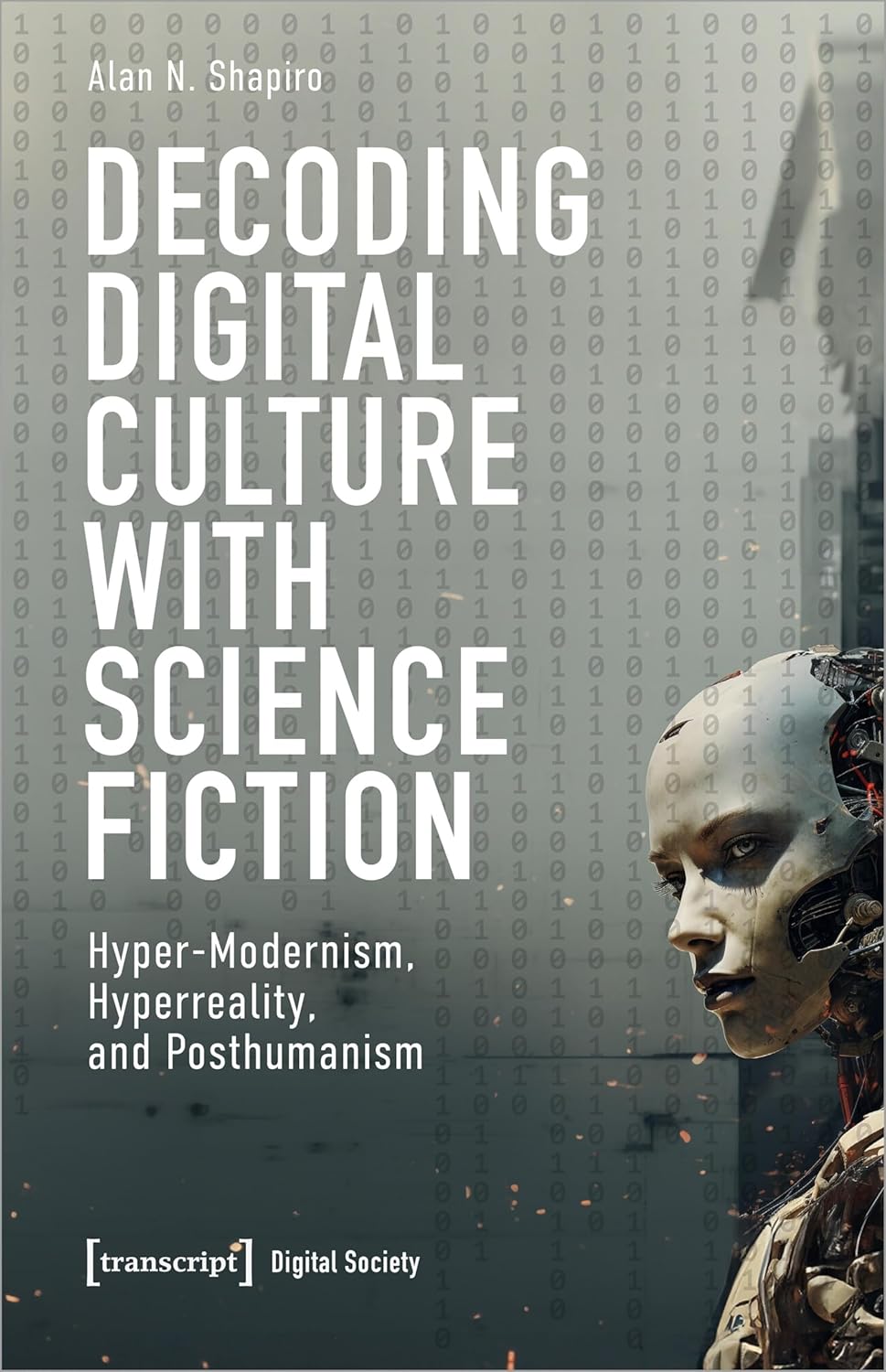
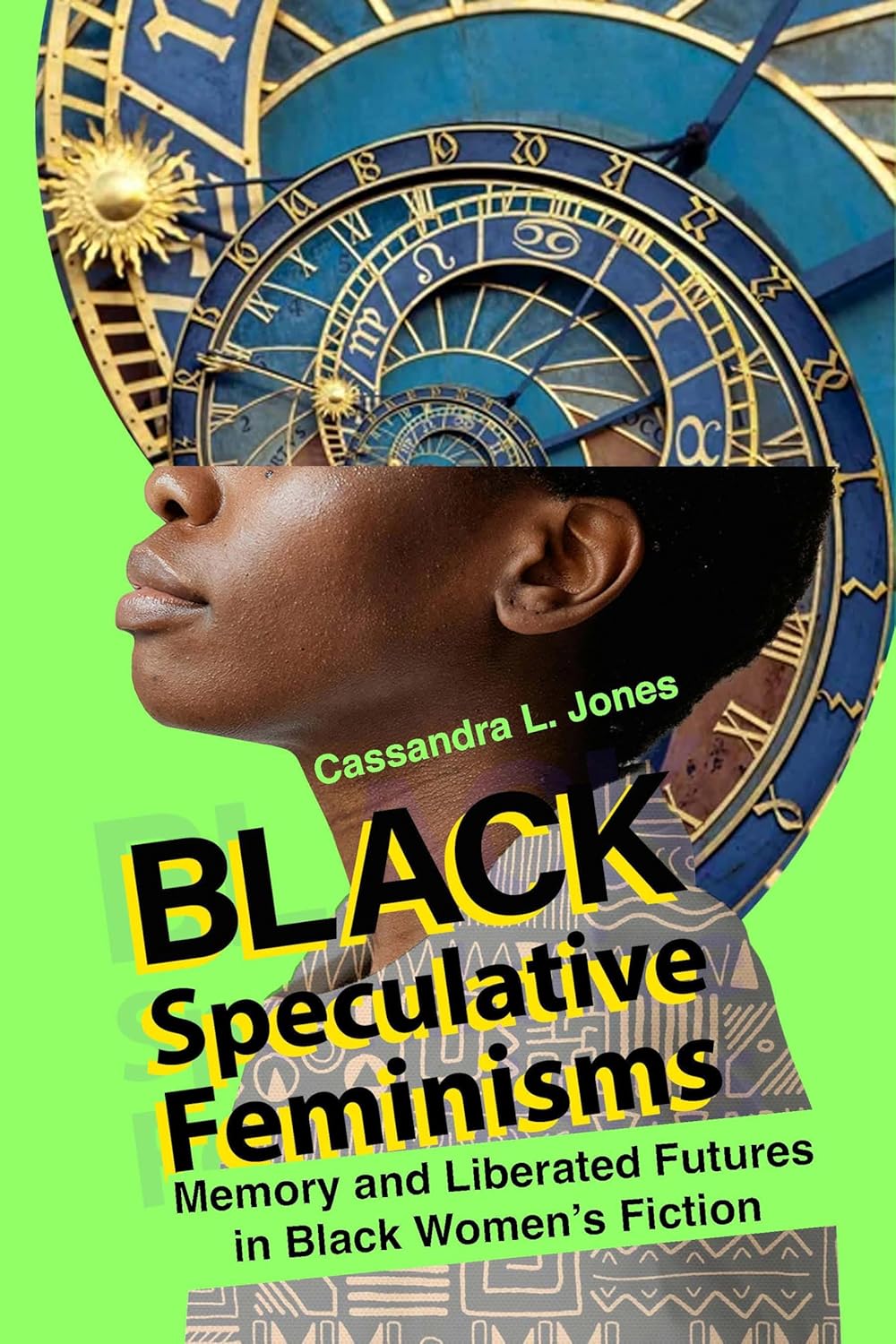
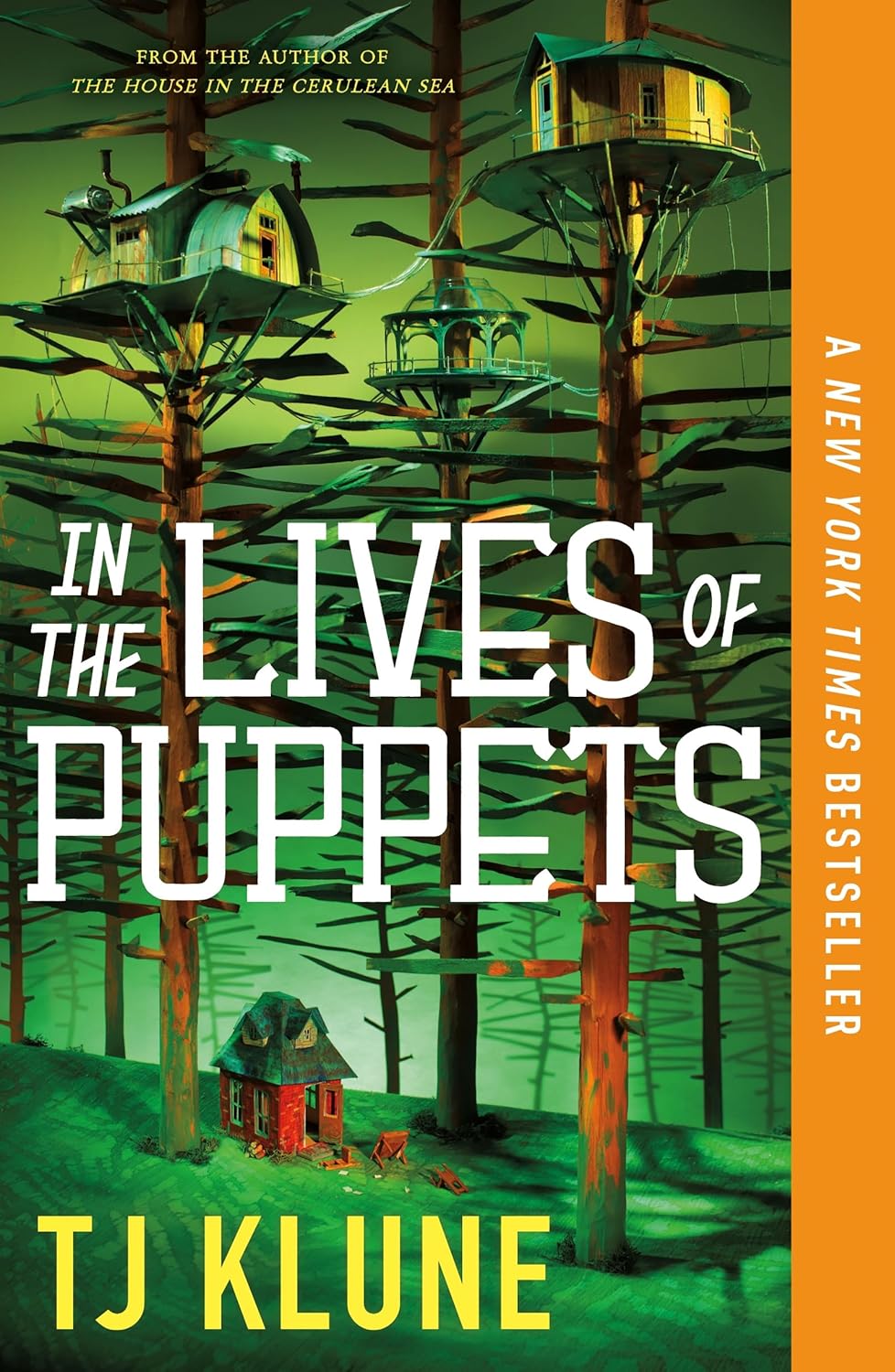
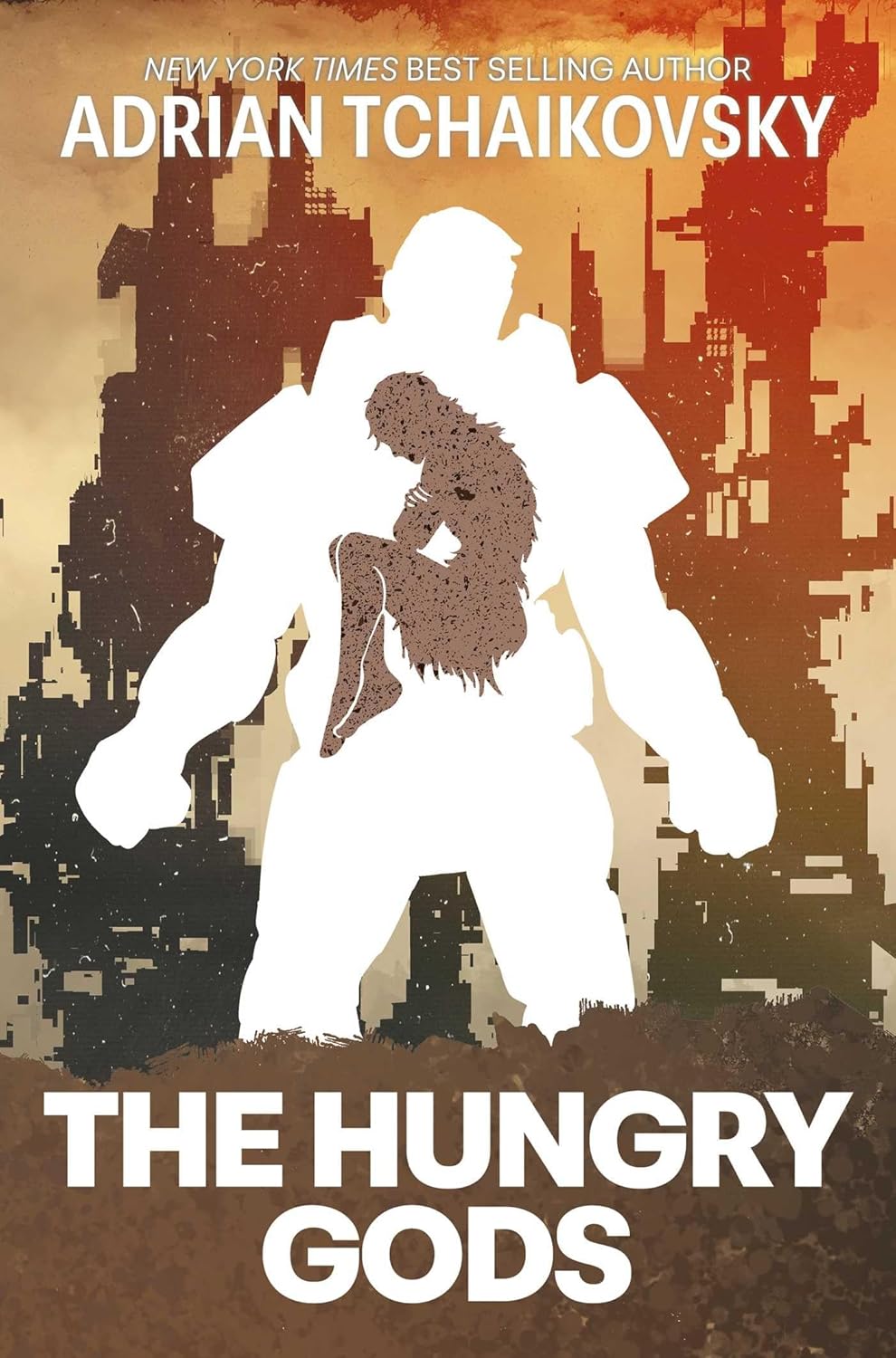
 SFRA Review