At the time of writing this column the SFRA 2026 conference is a mere seven weeks away. I’m incredibly excited to be attending via Zoom this year and only wish I could be there in person. The organising committee—Sonja Fritzsche, Eric Aronoff, Rocio Quispe-Agnoli, Blaire Morseau, Jessica Stokes, Michael Stokes and Vered Weiss—has done an incredible job of pulling together an exciting programme and working on all the many details that are required to put together an academic conference such as this. My appreciation and thanks go out to all of them.
This year, for the “Vision and Support” session, I have put together a roundtable on activism, public engagement and policy with Patrick Brock of the University of Oslo, Julian Chambliss of Michigan State University and Petranka Malcheva of the Office for the Future Generations Commissioner for Wales. This promises to be an engaging and wide-ranging discussion about the role of the sf academic and creative practitioner in the twenty-first century. The idea for this panel is informed by last year’s discussion during the Vision and Support session about the possibility for running sessions on activist training—which this panel is not quite about but which I do hope to organise something for a future session (and to that end, if anyone would like to discuss possibilities for such a panel please do send me an email). But another point that was raised during that session was a recommendation to engage in dialogue with communities beyond the immediate academic context. This panel explores how we might begin to fold those discussions into our academic and creative practice. Please do come along to the session and contribute to this discussion.
Things are chaotic right now, and between surging gas prices, global conflict, and the closure of Spirit Airlines, I am reflecting on what it means to lead an international organization which brings together members from around the globe. I am grateful to everyone who can travel to East Lansing, Michigan for the conference in June. It’s going to be a great conference, and I look forward to seeing many of you there! We also have a high percentage of people presenting remotely this year, which is an understandable choice and an option that I’m glad we can provide.
SFRA is an important academic home for many of us, so what happens if this home becomes unaffordable? Hybrid format options for connecting to the field are good to have, but this also might be a great time to invest in our local SFRA communities through connections we’ve set up like the SFRA Country Representatives or the SFRA listserv. I am also thinking ahead to future conference locations. The SFRA depends on volunteer conference organizers, so if you would like to see the conference come to your area, please consider putting in a bid to host the conference. I’m happy to discuss what hosting the conference entails and how to go about putting a proposal together. Even if you are only curious at this stage, please feel free to reach out to me!
Members at-Large (elected to serve one three-year term with the possibility of running for a successive three-year term)
The at-large members represent the interests of the membership at large to the executive committee. They are voting members of the Executive Committee and participate in all ExCom meetings. They organize the Professional Development panel for the conference. Incoming at-large members will also have the opportunity to continue the amazing work that Kania Greer and Helane Androne have started to set up an SFRA mentorship program. We welcome any members for these positions, including graduate students, NTT faculty, and candidates representing our global membership.
We will be electing two candidates for this position. No prior experience is necessary. We would need a candidate statement that outlines your interest in the position. You can see examples of previous candidate statements here. We publish the candidate statements in the Summer issue of the SFRA Review and run the elections in the fall. If you have any questions about this position, please feel free to contact me (satteber@calpoly.edu) or the current officers. We’ll be happy to chat with you about position. Or alternately, if you’re in Michigan for the conference, please feel free to find me to chat in person!
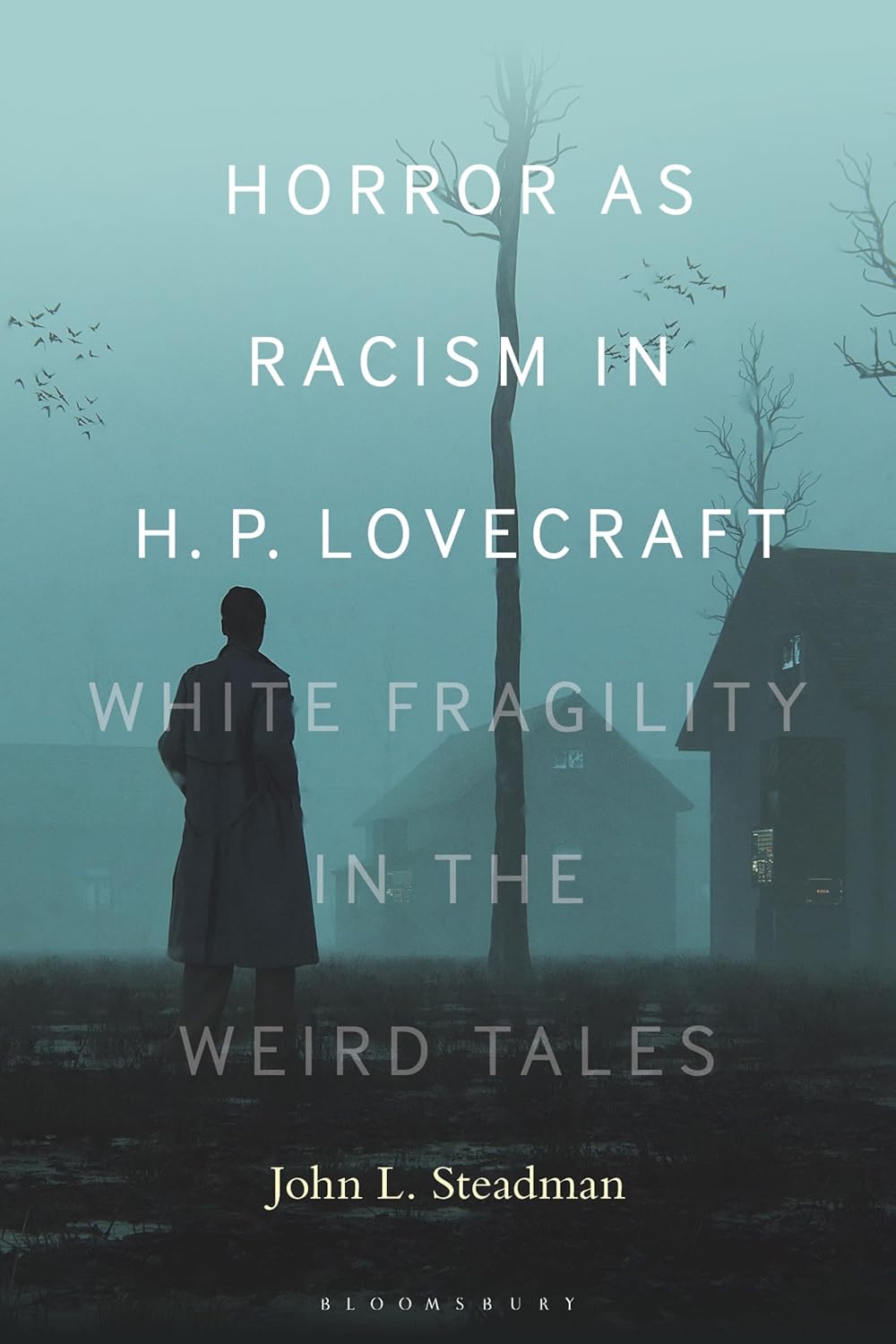
Review of Horror as Racism in H.P. Lovecraft: White Fragility in the Weird Tales
Vladimir Rizov
John L. Steadman. Horror as Racism in H.P. Lovecraft: White Fragility in the Weird Tales. Bloomsbury Academic, 2024. Hardback. 249 pg. $90.00. ISBN 9798765107683.
Version 1.0.0
John L. Steadman offers a blunt exploration of H.P. Lovecraft’s racism. While severely limited in his engagement with race scholarship, Steadman nevertheless presents an intriguing exegetic text on key stories in Lovecraft’s oeuvre. Steadman’s main thesis is twofold: Lovecraft’s racism manifests one way in his early works and another way in his later writings. Specifically, the early works have a focus on miscegenation as brought on by immigration, and the later works have a focus on slavery as seen in a master/slave race dichotomy. The book is divided into three parts and nineteen chapters. Part I (Chapters 1-4) is titled ‘Beginnings,’ and it offers an introduction to Lovecraft’s early life with a focus on biographical details, especially his intellectual preoccupations and formative experiences. Part II (Chapters 5-11) is titled ‘Humankind against Hybrid, Degenerative Monsters’ and it is concerned with racism as miscegenation in the early works of Lovecraft. Part III (Chapters 12-19) focuses on the later works, and Steadman’s second thesis respectively; it is titled ‘Humankind against the Cosmic Slave Masters.’ Overall, Steadman’s argument is persuasive in its distinction between Lovecraft’s twofold racist fixation and its development throughout his work. More than that, the book does well to root its thesis in an analysis of Lovecraft’s formative years. The common Lovecraftian protagonist’s ultimate stupor upon uncovering the hidden eldritch knowledge is argued to mirror Lovecraft’s own passivity in dealing with trauma and hardship.
While Steadman presents a focused monograph with a cumulative logic, certain matters tend to get obscured and displaced. For instance, the book, especially in Parts II and III, takes on the format of a single chapter per specific text by Lovecraft. Most chapters of this kind might prove rather descriptive to the reader familiar with Lovecraft’s work, and there is only occasionally a reference to a scholar or writer other than Lovecraft. At the end of both Part II and III, Steadman offers a ‘Critical Commentaries’ chapter (11 and 18, respectively), in which he moves away from the story-specific chapters and situates his own twofold thesis in relation to other scholars. While the bulk of the book tends to have a reverential, albeit critical, approach to the original text, Steadman seems to be rather quick to dismiss certain perspectives from other scholars. For instance, in a discussion of Lovecraft’s “The Lurking Fear” (1923), Steadman cites Williams’ work on the hysterical female gothic in relation to Lovecraft’s use of underground locations such as caves and grottoes. Instead of providing an argument against Williams’ claim (or Callaghan’s claim cited shortly before), Steadman rejects it out of hand and provides a dismissive generalisation about ”so-called psychological analyses of Lovecraft” (90). Interestingly, Steadman does not see his own argument in this vein, even though significant attention is devoted to Lovecraft’s own “pattern of loss and failure […as] evident in the lives of Lovecraft’s main characters” (5). This results in a certain tension that cannot be ignored by the careful reader of the book, let alone the reader familiar with Lovecraft. Specifically, this means that the potential significance of a range of patterns in Lovecraft’s fiction remains ignored; so is the case with the multiple cases of chthonic female goddesses, the symbology of the witch (which Steadman acknowledges on pg.197), and the spatial symbolism of caves and grottoes, especially considering Steadman’s own remarks on Lovecraft’s own formative experiences of restrictive spaces (such as the house he moved into with his mother after his grandfather’s passing, or his inability to enter hospitals and only visiting his ailing mother in the hospital grounds—in fact described as “the grotto” in a quotation provided on p. 27).
This is not an uncommon pattern in the book. Steadman will acknowledge a perspective, only to dismiss it without engaging with the claim in question in much depth. Another example is Simmons’ argument that Lovecraft’s characters are both repulsed and attracted by the Other. Steadman is a little more thorough here with his dismissal of the claim, but similarly as noted above, the tension between the dismissal and Lovecraft’s texts remains unresolved. Steadman claims that there is nothing attractive about the Other in Lovecraft’s work. Such a dismissal has to ignore the very fact that Lovecraft’s characters seek out magic from Western Asia, knowledge from Africa, or refer frequently to places beyond Western Europe and North America as abounding with mystery and danger. In the simplest of terms, Lovecraft’s characters are in need of people over which to rule. The common interweaving of revulsion with attraction in orientalism appears to be a proposition unworthy of consideration for Steadman.
This is indicative of Steadman’s understanding of race, which at times appears superficial, at others severely misguided. The bulk of the conceptualisation of racism seems to rely on Robin DiAngelo’s White Fragility (2018). However, despite informing the subtitle of Steadman’s book, DiAngelo seems to be cited only once on the first page of the introduction. Nevertheless, the evocative phrase of ‘white fragility’ is made to carry a lot of weight in support of Steadman’s general lack of engagement with scholars of race. This is made worse in two telling instances. First, in the chapter discussing Lovecraft’s The Shadow Over Innsmouth (1936), there is a misguided, to be quite generous, attempt at riffing on Lovecraft’s racist language that amounts to Steadman himself using the n-word (165). Second, the appendix seeks to go beyond Lovecraft and engage with work that deals head on with Lovecraft’s racism. To do this, Steadman discusses Afrofuturism in general and Matt Ruff’s Lovecraft Country (2016) and Victor LaValle’s The Ballad of Black Tom (2016) in particular. Steadman’s ignorance of race scholarship is quite telling. It is such ignorance that leads him to draw parallels between Afrofuturist music duo Drexciya and Lovecraft’s work. Steadman (223) cites Kodwo Eshun’s description of Drexciya’s “science-fictional retelling of the Middle Passage,”: in which they imagine “water-breathing, aquatically mutated descendants of ‘pregnant America-bound African slaves thrown overboard by the thousands during labour for being sick and disruptive cargo”’ (Drexciya as cited in Eshun, 2003: 300). Steadman, perhaps facetiously, and definitely in bad taste, pontificates so: “The idea of adding the water babies born from drowned female slaves into the mix is intriguing and one, I think, that Lovecraft might not have objected to” (223). To claim that Afrofuturism is “overtly Lovecraftian” (223) is a terrible misreading of the unbridgeable difference in what separates the aesthetics being compared.
Overall, Horror as Racism in H.P. Lovecraft promises an intriguing perspective by trying to pick apart Lovecraft’s racism and its central role throughout his work. Nevertheless, Steadman, while clearly critical of Lovecraft’s racism, fails to provide much insight into the subject. At this point in time, the description and acknowledgement of Lovecraft’s racism is easy and should be the bare minimum in critical scholarship. It is much more important to understand it.
Vladimir Rizov is Assistant Professor in the Department of Sociology and Criminology at the University of Sussex. His current book project is titled A Criminology of Videogames: Playing at Crime and its Control. He is the author of Urban Crime Control in Cinema: Fallen Guardians and the Ideology of Repression. He has published articles and essays on film, videogames, the history of documentary photography, and urban history.
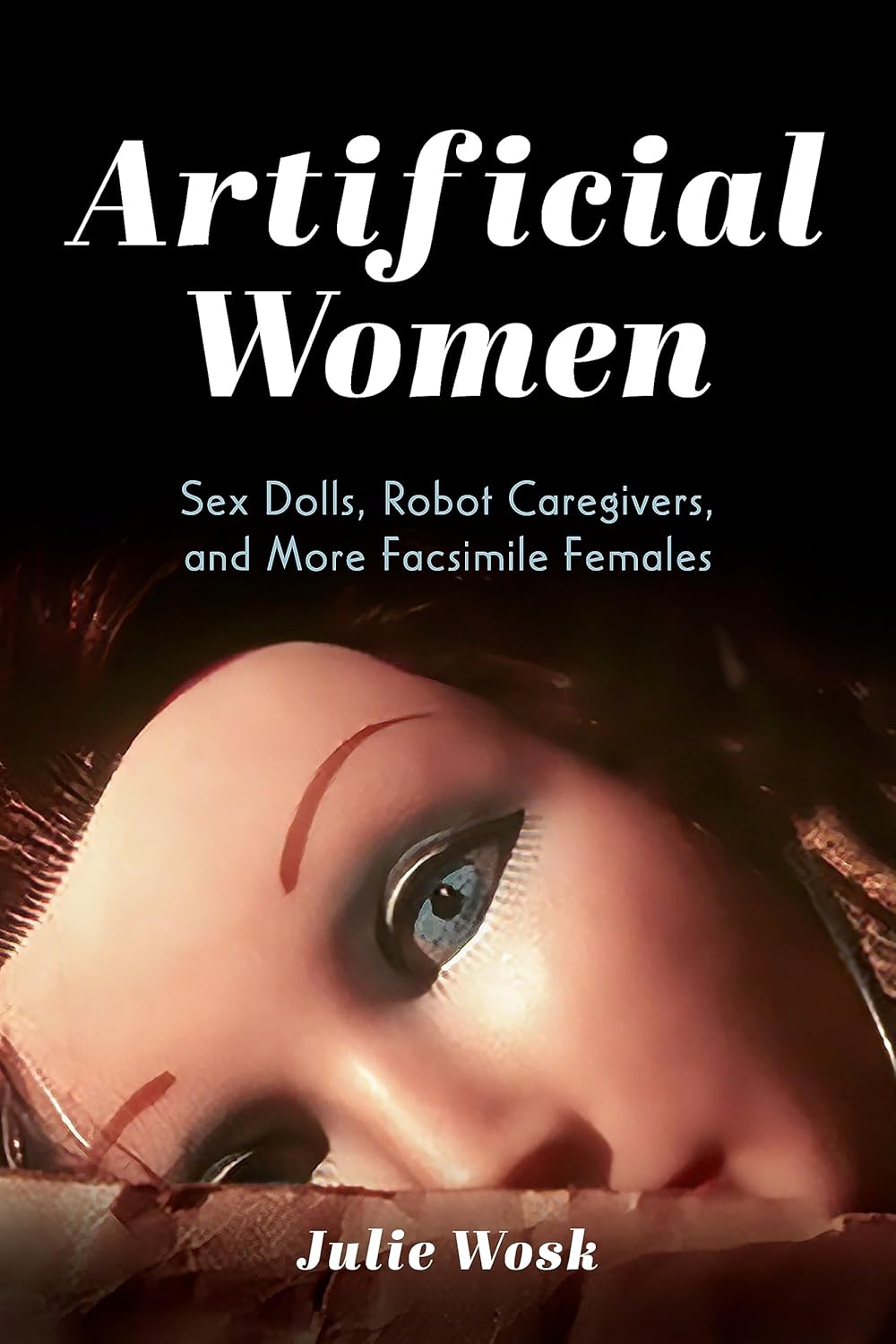
Review of Artificial Women: Sex Dolls, Robot Caregivers, and More Facsimile Females
Sue Smith
Julie Wosk. Artificial Women: Sex Dolls, Robot Caregivers, and More Facsimile Females. Indiana University Press, 2024. 220 pg. $30.00. ISBN 9780253069252. eBook ISBN 97802530692694.
Version 1.0.0
Julie Wosk’s Artificial Women explores society’s enduring fascination with the constructed female–who is created in a variety of guises both in reality and fiction, from embodied machines, automatons and robots, to disembodied AIs and virtual voices. In these techno-re-imaginings of the female as servo-bot, Wosk outlines how cultural understandings of women as passive, giving and obedient are held in tension with the reality of lived female personhood, in which women desire agency and self-determination. The primary questions asked are: In the complex world of technology and gender, how do women combat the cultural proliferation of the female as an exploited identity? How do women intervene in a male-dominated industry of technology and engineering that genders servitude as feminine, reifying women as subordinate to the needs of patriarchy and capital? In Wosk’s readings of the artificial woman, she is not opposed to the creation of the female simulacrum to explore human-machine encounters. However, she does insist that we must create her so that the interface between human and machine will, a) productively and positively rehearse the rightful treatment of women, and b) genuinely foster respect for the human female. However, as Wosk’s book highlights, in the service of male desire and in the pursuit of profit, tech companies and corporate businesses are, for the most part, perpetuating archaic stereotypes of women that continue to distort visions and gender relations and future technology. In this respect, Wosk is a crucial voice for scrutinising and contesting male dominated visions of gender and technology.
Artificial Women begins with a fascinating and compelling introduction that outlines Wosk’s enduring interest in female simulacra in both avant-garde and popular culture. Here, Wosk demonstrates an impressive range and depth of knowledge of the subject in visual, material and literary culture across differing timelines. Following the introduction, Wosk discusses the myriad synthetic females that have been and still are being created and exploited by industry and culture today. In Chapter 1, ‘A New Breed of Sex Robots and Sex Dolls,’ Wosk looks at the female robot and AI as a self-sacrificing sex worker/slave who frequently doubles as an emotional companion. She plays with the stereotype of the ‘tart with the heart’ normalising the male treatment and expectations of such stereotypes in which the human male is put first and women, whether organic or synthetic, second. In Chapter 2, ‘Under the Skin: The Fabricated Femme Fatale,’ the performative masque of the artificial woman as lure and threat is explored through the seductive image of the femme fatale. In this section is the suggestion that the synthetic skin as a progressive development in robot technology is a deception akin to women who are accused of putting on femininity as artifice to distract and subvert for personal gain. In Chapter 3, ‘Female Robot Caregivers, Doubles, and Companions,’ Wosk’s focus shifts towards social and emotional robots envisioned as caregivers and companions to ailing elderly adults and vulnerable children. Extending to narratives of human loneliness brought about by failing health, cataclysmic events and hostile environments, the female robot – in fiction and reality – is a replacement or double designed to mitigate loneliness or protect their human (or humanoid) charge by emulating human empathy and compassion.
In Chapter 4, ‘Paradoxes of Perfection: A Servant No More,’ Wosk takes the reader through cultural anxieties about technology in the home by exploring the female robot as a familial, domestic helper who ultimately becomes either a perceived threat to traditional family relations or threatens to rebel and break free from her servitude. In Chapter 5, ‘Virtual Voices: Talking Barbie Dolls, Alexa, Bitchin’ Betty and More,’ Wosk discusses the cultural history of the talking doll and automaton and its evolution into disembodied voices and computerised companions that serve as assistants in the work and home and fascinatingly as a warning system in domestic and military aviation. The disembodied female is open to abusive treatment, which Wosk discusses in detail, but when contextualised in a more life-threatening setting and safety is of the utmost importance to protect human life, such as in the field of aviation, the virtual female is afforded respect and the authority of her voice being adhered to without question or derision. Finally, in ‘Coda,’ Wosk summarises her book’s premise of humanity’s hope, fascination and anxiety surrounding the figure of the artificial woman. Can the artificial woman produce new and transformative possibilities for humanity? Or will she reify gender roles that reduce women to a commodity in accordance with patriarchal expectations? It is in these closing pages that Wosk calls to women to intervene in the vast array of new robot and AI technologies. Here she provides examples of women who are already doing so as they work to empower and create a space for living in a complex, contemporary world. It is in these final moments that Wosk draws examples from the active work and engagement of LGBTQ+ and disability communities, a springboard perhaps for further work and research for those who negotiate the everyday from a diverse and alternate position of the human.
Julie Wosk’s book is a relevant new addition to the field of robot technology and gender studies. Her work on the artificial is long-standing, and her interests are fuelled by life experiences working in media and magazine culture, art, literature and museums. Artificial Women demonstrates Wosk’s extensive knowledge of the cultural and social history of the artificial woman. It is written for academics and students of visual and material culture and literature and accessible for non-academic individuals who are interested in the subject. It provides a comprehensive source of ideas for those who want to take the discussion further.
Sue Smith is an English Teacher at a Post-16 SEN College in Leicestershire, UK. Her interest is in the representation of gender and disability in American Cyborg Fiction. Her current research article is on the robot psychiatrist in American military medicine and American military science fiction.
Review of Utopian and Dystopian Explorations of Pandemics and Ecological Breakdown: Entangled Futurities
Corpus Navalón-Guzmán
Heather Alberro, Emrah Atasoy, Nora Castle, Rhiannon Firth, and Conrad Scott, eds. Utopian and Dystopian Explorations of Pandemics and Ecological Breakdown: Entangled Futurities. Routledge, 2025. Routledge Environmental Humanities. Hardcover. 254 pg. $190.00. ISBN 9781032385914.
Version 1.0.0
What if the real question cultural artifacts ask after a global catastrophe is not what happened but why do we keep imagining it that way? Utopian and Dystopian Explorations of Pandemics and Ecological Breakdown: Entangled Futurities operates less as a blueprint for the ‘end of times’ and more as a forensic investigation into our collective anxieties, hopes, and failures. It is a kind of whydunit in which the apocalypse is never just an end, but a narrative charged with ideology, desire, and critique. Comprising four major parts, each divided into approximately four chapters, this edited collection catalogues representations of crisis across literature, activism, and performance, interrogating the deeper patterns beneath them. It highlights how cultural production reflects ecological and epidemiological realities, helping us to reimagine what comes next.
Framing the collection within the current world context is a timely and urgent provocation since, even as we appear to teeter on the edge of the so-called posthuman era marked by the collapse of stable binaries, technological saturation, and ecological precarity, we remain deeply entangled in the complex web of humanity. This foundational tension animates the collection’s interdisciplinary inquiry, which employs theoretical frameworks from scholars such as Jason Moore, Karen Barad, and Donna Haraway to explore the ruptures and continuities between the human and the non-human. Concepts such as Moore’s “intimacy, porosity, and permeability,” Barad’s “intra-action,” and Haraway’s “more-than-human” (1) become key tools to unpack how pandemics both reveal and intensify these entanglements. The book’s relevance has only deepened after the COVID-19 pandemic, which has prompted our interconnectedness with microbial and ecological systems in ways we can no longer ignore. The editors are quick to acknowledge that while the volume’s conception was there before the pandemic, its development during this global health crisis makes it a crucial intervention in the present moment. Each section of the book unfolds as an iteration of an ongoing crisis; the sections build upon each other to shed light on how global health, environmental breakdown, and social injustice are not separate but mutually reinforcing.
The editors’ introductory section establishes a theoretical framework that is as ambitious as it is urgent. Rejecting the more familiar language of climate change in favor of the term “ecological breakdown” (5), the editors seek to capture an intricate network of mutually influencing crises: the erosion of biosphere integrity, mass extinction events, and the systemic unraveling of ecological interdependencies. This reframing is not merely semantic since it underscores the collection’s broader commitment to an intersectional analysis attentive to colonialism, capitalism, patriarchy, queerphobia, and human supremacy. While this theoretical section gestures toward concepts from critical posthumanism, such as entanglement, and acknowledges ecological affects like fear and anxiety, its brevity occasionally leaves key theoretical anchors underexplored. Nevertheless, the editors articulate a compelling vision of pandemics as events that rupture rather than reinforce human exceptionalism. Their nuanced treatment of utopia and dystopia similarly resists static definitions, proposing instead a dynamic continuum where dystopic collapse may give rise to fragile yet vital forms of hope.
The first part of the collection, “Monsters and Monstrosity,” draws together a set of chapters that redress the figure of the monster as a key to explore the collapse of boundaries between human and non-human life. Across the three chapters by Tânia Cerqueira, Ujjwal Khobra and Rashmi Gaur, and Timothy S. Murphy, a shared concern emerges with the political and affective work monsters perform within pandemic imaginaries. Rather than framing monstrosity as an object of fear, the narratives explored in these chapters present how figures of contamination, whether viral, ecological, or social, break down with anthropocentric models of agency and citizenship. Cerqueira’s chapter proves foundational, as it introduces the theoretical framework of EcoGothic, a new interpretive lens whereby ecocriticism draws from typical traits from the gothic novel to explain environmentally-related collapse. While Cerqueira leans on gothic and ecological motifs, Kothra and Gaur foreground Braidotti’s politics of otherness. Murphy’s chapter, for its part, pivots toward a more explicit political critique, using Richard Matheson’s novel I am Legend (1954) to illustrate how ecological and social collapse expose the fragility of dominant power structures, particularly when the majority finds itself displaced. When read together, these chapters not only stage an encounter between historical materialism and new materialism but also signal the collection’s broader project: envisioning forms of posthuman belonging in the ruins of familiar worlds.
If part one foregrounds monstrosity as a rupture in the human/nonhuman divide, part two recalibrates this tension through the lens of intersectionality. What emerges from the chapters in “Intersectional Critique” is a sustained interrogation of how posthuman ecologies are never experienced abstractly but mediated through histories of dispossession, gendered embodiment, and racialized vulnerability. Crucially, these essays do not deploy intersectionality as a stable lens. Rather, this framework works as a moving analytic that constantly shifts according to context. Legatt’s discussion of “fungal capital” (71) in HBO’s TV show The Last of Us (2023–) and Ling Ma’s novel Severance (2018) underscores how capitalist flow masquerades as disorganized rhizomes that subtly reproduce hierarchies of value and access. However, these rhizomes also embody the potential for radical horizontal solidarities that surface in crisis. Benjamin Burtt’s reading of Joca Reiners Terron’s novel Death and the Meteor contrasts this view by foregrounding the Indigenous experience of ongoing apocalypse as colonial continuity, not rupture, and evokes ritual, not resilience, as a form of collective refusal. Meanwhile, González-Bernardez and Rossi’s respective chapters resist the treatment of nature as passive terrain: in Naomi Novik’s Uprooted (2015) and Sophie Mackintosh’s The Water Cure (2018), the nonhuman world functions as a volatile ethical subject where vulnerability emerges not as a weakness but as a condition for political transformation.
The third part of this collection critically interrogates the concept of mutual aid, particularly in its intersection with ecological justice. COVID-19 put mutual aid into the spotlight but stripped it of its radical roots to serve the political elites as a mask to state failures. Yet, the contributions of this section return to the concept’s original transformative potential, expanding the boundaries of mutual aid beyond human-centric frameworks. Curtis’ chapter explores post-pandemic science fiction to reveal how the genre’s preoccupation with environmental justice urges a shift from survivalist thinking toward proactive frameworks that seek justice for both human and non-human life. Similarly, Horn, Martin, and Seville’s analysis of Charles Burns’s graphic novel Black Hole (1995) shows how the viral transmission of a sexual disease turns into an agent of transformation that fosters posthuman sensibility. Both analyses critique anthropocentric, capitalist frameworks that isolate humans and their environments, urging instead a radical reimagining of interdependent solidarity. Grześkiewicz and Boschen’s chapter also adds to this critique by underscoring the destructive effects of state-imposed borders and the potential of more-than-human solidarity in resisting it. Collectively, these chapters foreground that more-than-human mutual aid does not simply offer an antidote to neoliberalism’s failures but a push for radical ecological and social justice that embraces a multispecies, interconnected world.
Part four, “Creative Resistance and Utopian Glimmers,” turns away from critique as diagnosis toward critique as creation. This section assembles a set of chapters that treat culture as a mode of political and ecological practice. Throughout these chapters, utopia is not presented as a distant concept, but as a set of situated, messy practices: DIY music enclaves, pandemic theater, and youth-led climate action. Moreover, these contributions offer a sustained interrogation of how aesthetics and performance can resist the logic of legal, spatial, ecological enclosure and foreground relational forms of agency. Käkelä, Breemen, Yağcıoğlu, and McKnight all push back against narratives of apocalyptic finality, opting instead for a speculative mode rooted in entanglement between humans and more-than-human actors, between past devastation and future invention. Importantly, these chapters do not romanticize resilience or prefiguration. Their focus is instead on how minor gestures, or “micro-utopias” (215) as McKnight calls them, can reorient perception and shape collective imaginaries. Nonetheless, a critical tension persists: can cultural resistance unsettle the infrastructures of surveillance, control, and commodification it navigates? Or does it risk being reabsorbed as aesthetic capital in the very systems it critiques? This section insists that utopian thinking must remain alert to this paradox, which is at once generative and complicit, speculative and material.
In sum, Utopian and Dystopian Explorations of Pandemics and Ecological Breakdown is a timely and thought-provoking collection that does more than analyze crisis. It dwells in it, navigates through it, and asks what forms of thought and practice might still be possible from within wreckage. There is something about this collection that sets it apart from others. It refuses to offer simple solutions or neatly packaged theories. Instead, it models a form of scholarly engagement that is porous, speculative, and deeply rooted in the urgency of our current moment. Whether discussing plague literature, performance during lockdown, or youth climate movements, these contributions do not deliver definite conclusions. Rather, they equip readers, especially scholars, students, and artists, with conceptual tools to rethink what critique, resistance, and creativity can mean in a world shaped by ecological collapse and viral entanglement. In that sense, it is not just a collection of essays but an invitation to reimagine how we live, relate, and create in times of crisis.
Corpus Navalón-Guzmán holds a PhD in English Literature and Culture from the University of Murcia, where she completed her dissertation on queer trauma in contemporary Anglophone literature and cinema. She has been a visiting researcher at the University of Northampton and Ghent University. Her research interests include queer theory, trauma studies, childhood studies, and cultural studies, with a focus on the representation of queer trauma in literary and cinematic texts.
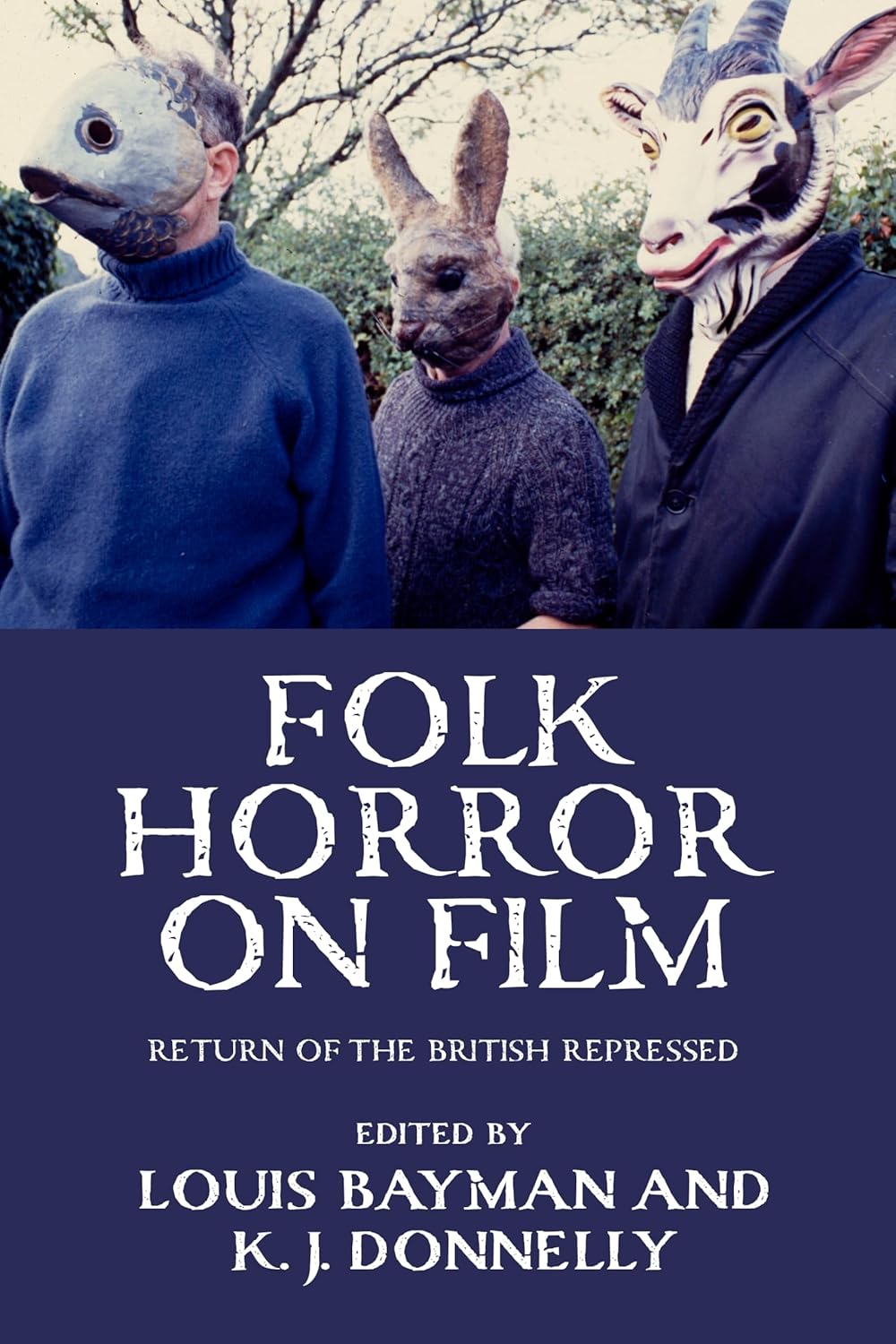
Review of Folk Horror on Film: Return of the British Repressed
Brontë Schiltz
Louis Bayman and K. J. Donnelly. Folk Horror on Film: Return of the British Repressed. Manchester University Press, 2025 Paperback. 264 pg. $33.99. ISBN 9781526191205.
Version 1.0.0
Although use of the term ‘folk horror’ has been traced back to 1936, it was not until the twenty-first century that it entered the critical lexicon, used by director Piers Haggard to describe his 1971 film Blood on Satan’s Claw in 2003, and then by actor, writer and director Mark Gatiss, with reference to Haggard’s film as well as to Witchfinder General (1968) and The Wicker Man (1973), in the 2010 documentary A History of Horror. Folk Horror on Film: Return of the British Repressed, edited by Louis Bayman and K. J. Donnelly and recently released in paperback following its 2023 hardback publication, delves deeper into this now canonised triad, but also reaches back to Night of the Demon (1957) and forward to Apostle (2018), and examines films more typically associated with other genres, such as the science fiction thriller Doomwatch (1972). Comprising fourteen chapters, the book begins with debates on The Wicker Man—today the best-known of the “unholy trinity” (Scovell, 8)—followed by analysis of the titular ‘Return of the British repressed,’ and, finally, of ‘Folk horror’s cultural landscapes.’
Adam Scovell’s Folk Horror: Hours Dreadful and Things Strange (2017) sparked new interest in folk horror, which Scovell theorised not as a subgenre or (as is often the case in Gothic studies) a mode, but rather as a “chain” that links “disparate forms of media through their summoning of … themes and ideas,” including isolation, unsettling landscapes, “a skewed belief system or morality,” and a “happening” or “summoning” (Scovell, 17–18). As Bayman and Donnelly observe, “folk horror is of the folk themselves, and of the wider conditions that sustain their existence” (5). As the unity of the United Kingdom disintegrates, with 54% of Scottish adults favouring independence as of March 2025 polling and thousands of farmers protesting proposed changes to inheritance tax in the English capital in 2024, British folk horror’s interrogation of national identity and evocation of metropolitan anxieties concerning rural communities are increasingly relevant. This collection thus offers politically as well as academically significant theorisations of such cultural products.
The opening three chapters probe The Wicker Man’s religious ideologies. While Ronald Hutton identifies a representation of “paganism as dangerous in a way that either Christianity or modern scientific scepticism are not” (34), Laurel Zwissler reads the film as offering “a carnivalesque experience for viewers, both Pagan and otherwise” (51). As Miken J. Koven notes, however, the word “Pagan,” derived from “[t]he Latin pagamus,” which “simply meant rural,” was later “further applied to designate between dichotomies of … Christian/non-Christian,” and as a consequence, “to identify as Pagan is nonsensical because to do so would be to recognise the hegemonic power of the Church” (58-9). Such varied perspectives exemplify the collection’s excavation of the complexity of Britain’s cultural and mythological history.
Derek Johnston begins the following section with an interpretation of “folk horror communities as microcosms of the wider nation,” particularly in their “reproduction of a form of class system” (79). Dawn Keetley likewise attends to capitalism’s influence, reading Doomwatch as centrally concerned with “the life-destroying sickness of global modernity that dooms land and people alike” (89). In his analysis of Requiem for a Village (1975), Paul Newland similarly identifies the locus of horror not in the film’s undead, but in its “faceless, gigantic mechanical leviathans” (109). But the past is as threatening as the present. Donnelly reads folk horror “as a form of historicism,” revealing “a forgotten – and happily forgotten – heritage” (117) and producing “an ‘outsider’ version of Britain’s history” (129). As Beth Carroll argues, however, folk horror’s relegation of regions beyond “England, and arguably even more specifically the south of England and London” to outsider status (131), rather than contesting this traditional hegemony, instead “assume[s] an English framework and mode of viewing” (144), reinforcing existing power structures. Amy Harris’ examination of folk horror as “defined by androcentrism” (152), meanwhile, brings vital attention to the Othering of women in the folk horror tradition – a form of exclusion endemic not just to British history, folklore and folk horror itself, but also to related academic discourse. The ‘British repressed’ of the collection’s title thus emerges as referring less to marginalised communities than to the actual processes of marginalisation – geographic, socioeconomic and gendered – that have shaped British history at the level of both content and methodology.
In the final section, David Evans-Powell and Mark Goodall explore the ascription of “agency, sentience or autonomy” to landscapes (Evans-Powell, 178) and “to the built-up environment, liminal areas and technology” (Goodall, 211) in traditional folk horror and what Goodall terms the “urban wyrd” (211). This transgression of the boundaries between the animate and the inanimate is mirrored by a coalescence of the diegetic and non-diegetic. Goodall notes that the rape scene in Blood on Satan’s Claw is “filmed voyeuristically[,] forcing the viewer to be almost party to the crime” (214), while Lyndsay Townshend explores the role of drums in “conjuring … community, bodily affect and fear” (164), acting “as a sonic identifier for a human heartbeat” (175) that encourages corporeal identification in viewers. Diane A. Rodgers also considers audience response in her analysis of the “wyrd,” which she suggests generates “a general sense of brooding fear” (225). As well as cultural, theological and historical frameworks, then, the collection also attends to audience studies—a growing area of academic interest that is essential to analysis of texts so concerned with emotion, corporeality and communality.
WORKS CITED
Scovell, Adam. Folk Horror: Hours Dreadful and Things Strange. Auteur Publishing, 2017.
Brontë Schiltz is a PhD candidate at Manchester Metropolitan University, England. Her work has been published in The Sibyl, Fantastika Journal, Aeternum Journal, SIC Journal, Revenant Journal and Horrified Magazine, as well as several edited collections. She features on documentaries and commentaries on Hammer’s 2025 rereleases of The Quatermass Xperiment and Quatermass 2, and has appeared on podcasts including Victorian Legacies, The Ghost Story Book Club, The Death Studies Podcast, BERGCAST, There’s Not Always a Twist, The Folklore Studies Podcast and Scarred for Life. She is the members coordinator of the International Gothic Association and principal editor of Hive Journal.
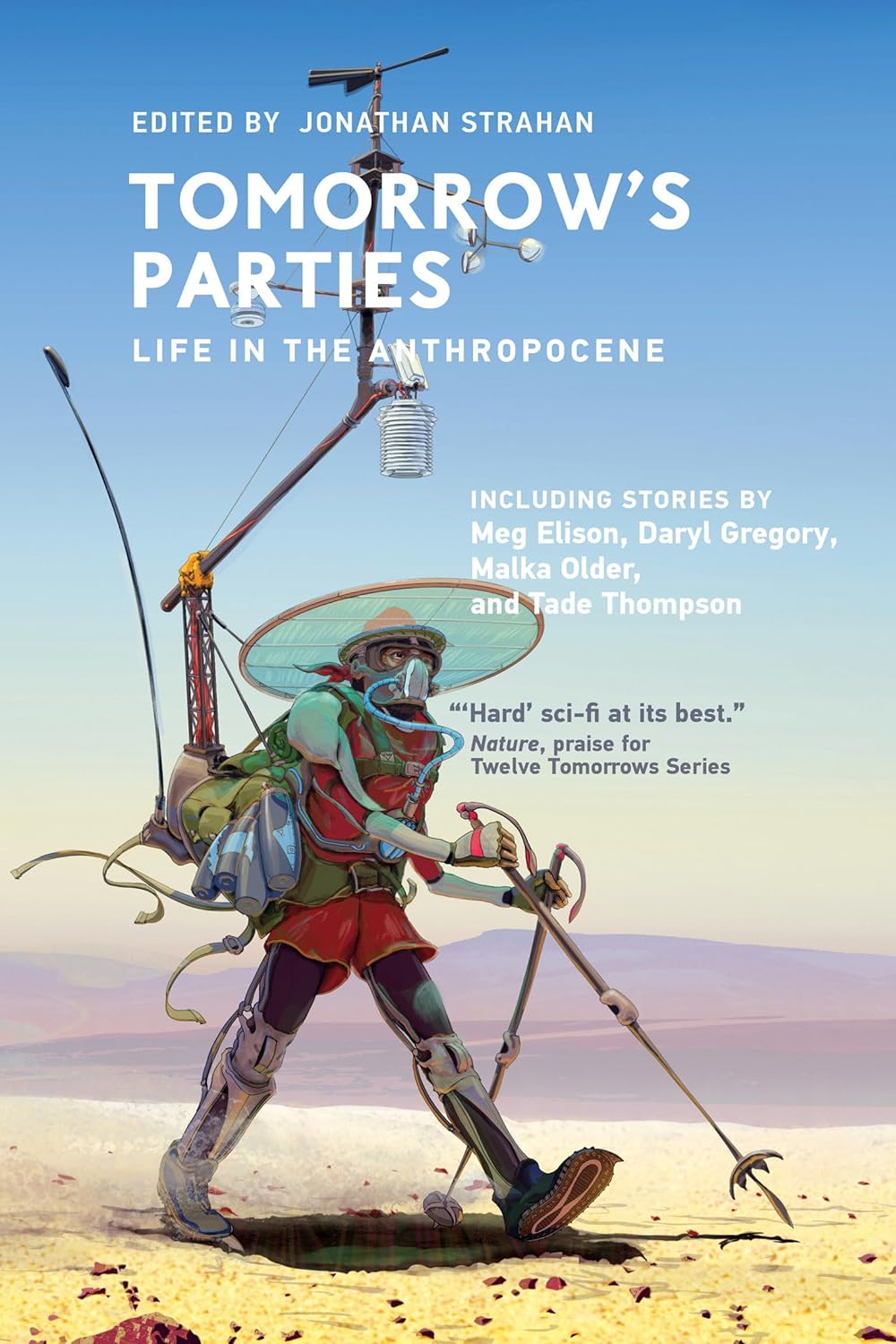
Review of Tomorrow’s Parties: Life in the Anthropocene
Peter Sands
Strahan, Jonathan. Tomorrow’s Parties: Life in the Anthropocene. MIT, 2022.
Version 1.0.0
Tomorrow’s Parties is the eighth installment in an MIT anthology series published in one form or another since 2011, often with distinguished editors and featuring well-known authors engaging with contemporary technologies. This volume is edited by Jonathan Strahan, an award-winning anthologist and veteran editor based in Australia. It features writers from Australia, Bangladesh, China, the UK, and the United States, and begins with an interview between James Bradley, a novelist and critic, and Kim Stanley Robinson, the most important writer of science fiction in the utopian vein working today. The remaining ten stories and one short essay contextualizing the artwork provided by Sean Bodley are workmanlike engagements with the Anthropocene, including contributions from very familiar names, including Tade Thompson and Greg Egan. Some readers may enjoy its aesthetic or speculative qualities, but its true value would be as a classroom text.
Bradley interviewed Robinson in 2021, not long after his Ministry for the Future (2020) was published, and during the COVID pandemic, both of which are given as contexts, along with climate change records being set, and the January 6th attack on the United States Capitol as elements sharpening their sense of crisis. Robinson’s answers to Bradley’s questions cover many themes he has developed in longer essays, noting for instance that the pandemic has brought people to a better understanding “that we are indeed in a global civilization” (13; all citations are to a PDF review copy, so pagination in print may differ). He tells us that “[a]s prophecy, SF is always wrong; as metaphor, it is always right, being an expression of the feeling of the time of writing” (14). Much of the rest strikes familiar notes: there is a “science versus capitalism” moment in history, with the two “arm-wrestling for control” (17) and the institutional structures (science) have to be strengthened to combat “all the older power systems of the few over the many” (capitalism) if humanity is to have hope in the changed future of the Anthropocene (18). Elsewhere, Robinson offers expected recourse to law and legal institutions as bulwarks against the predations of capital (19-20) and against “old-style violent revolutions” (22). In a striking bit of understatement (from my perspective in late 2025 and early 2026), he says, “I think it really is a crux moment in history. The 2020s are going to be wild” (26). Robinson’s answers to Bradley’s queries are as always cogent, but do not bring to light anything like a new position. Still, as clear statements of his positions, they are pretty hard to beat.
The strongest stories in the volume are powerful studies of affect in the face of environmental disaster, sometimes framed or assisted by extrapolated technologies, but mostly given power by the sense of wrack and ruin—if not quite the end of the world, a significant step toward a fundamentally altered future—that surrounds the characters. Tade Thompson’s evocative “Down and Out in Exile Park” sets his characters mostly in a gigantic island of floating plastic that has been urbanized and settled by societal outcasts off the coast of Lagos, Nigeria; Greg Egan’s “Crisis Actors” gives an unsettling look at what happens when the conspiracy-minded confront immovable realities that contradict their views; Justina Robson’s “I Give You the Moon” plays out a late-life love story inside a frame of climate-altered economies and advanced technologies; and Malka Older’s “Legion” gives a tense, unnerving glimpse of the possibilities offered by surveillance technologies and crowdsourcing for combating the intractable threats posed by men against women the world over and across all epochs. Two stories stand out for their evocation of place and affect: Chen Qiufan’s “Do You Hear the Fungi Sing?” and James Bradley’s “After the Storm.”
Quifan, translated by Emily Jin, imagines a village in China some time after 2060 in which a “hypercortex network” is being laid over the actual physical geography of the country to create a parallel AR system for real-time adjustments to climate-impacting human activities. One of the few remaining blind spots in the country turns out to be a remote, matriarchal village that resists the encroachments of modern technologies separating humans from the natural world. The villagers of Baenl are in a symbiotic relationship with the vast mycorrhizal fungi network around them, using fungi for food production, building materials, even electricity generation. Su Su, a woman sent to the village to convince them to permit the hypercortex technology to be located there and map their territory, gradually becomes part of their society, returning her to a balanced relationship with herself and with nature (aided by a mushroom-fueled psychedelic experience, naturally), that reveals the true hypercortex of fungi networks under the earth. “Symbiosis was the way of life,” she realizes (215). She is given a gift of insight into the true network: “Like the duet in her dreams, she was meant to bring them all to perfect synchrony. In a future like that, humans would be endowed with the wisdom to restore and sustain the delicate balance between nature and technology, saving the fragile blue planet that they— alongside a multitude of other beings—cherished as home from destruction” (219) and must remain in the village as a conduit for older ways of knowledge to save the future of humanity.
In “After the Storm,” we get a complex, multigenerational story of alcoholism, abandonment, loss, and redemption in the frame of an Australia ravaged by rising seas and temperatures about twenty years from now. It could easily be a piece of contemporary realist fiction and indeed ends on a note of ambiguity and shared pain, but it is helped along throughout by the unraveling social and economic fabric in the wake of climate-intensified storms.
At the outset, I said I could see this more as a classroom text than anything else, and I want to revisit that comment. There are no stories in here that I think would be award contenders, but there are also no stories here that I could not use in a classroom to engage with the effects of climate change or the trajectories of technologies and adaptations we might extrapolate from today to the world of the next few decades. There are some standout moments—Tom Hanks as a possible cannibal, eating a synthetic Bronson Pinchot resonates with readers of a certain age; the creeping realization that being a creep is no longer to be tolerated in an age of cheap and widespread surveillance—and the stories do model something more than solarpunk or hopecore fantasies. Strahan writes in the introduction of seeking to create a volume that is “a little sad, a little elegiac, a little hopeful,” which today, in the wake of COVID, January 6th, and now the wholesale undermining of renewable energy and post-war consensus politics, would be a good place to begin a discussion with the students who will live in tomorrow’s parties.
Peter Sands is Director of the University of Wisconsin-Milwaukee Honors College and associate professor of English. He primarily teaches utopian and dystopian literature, science fiction, and American literature courses. His research includes work on white representations of Native American otherness in nineteenth-century literature, utopian and dystopian responses to racial and class divides from the nineteenth century to the present day, and work on the slow food and related slow movements as alternatives to contemporary social and economic frameworks that particularly empower non-dominant communities to resist global inequities and imagine possible worlds.
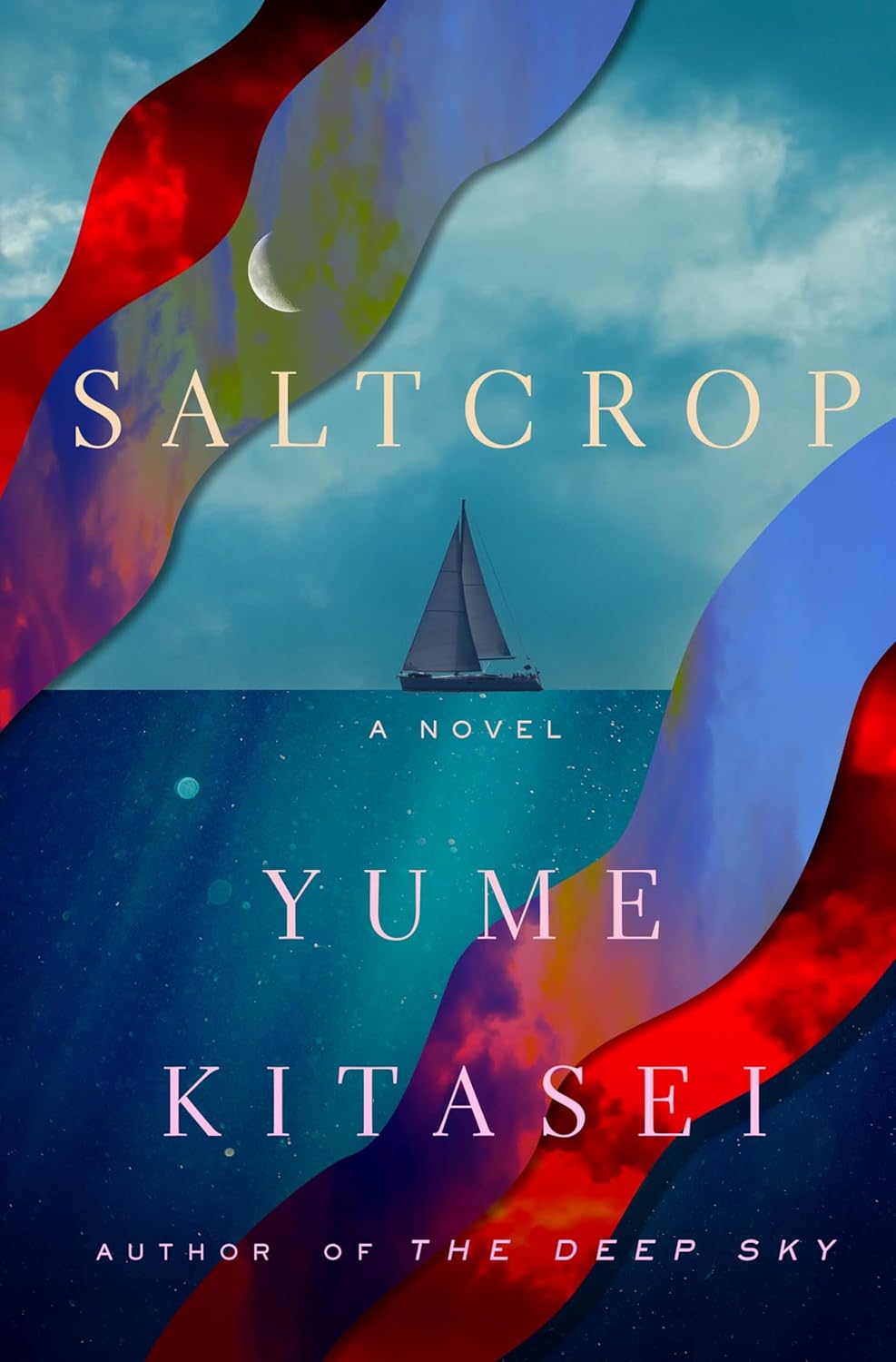
Kitasei, Yume. Saltcrop: A Novel, Flatiron Books 2025.
Version 1.0.0
Saltcrop is Yume Kitasei’s latest novel, her third in three years, which turns its attention away from the author’s former interest in space narratives and towards the displaced landscape of our own planet. The book is evenly cleaved in three portions, each narrated by one of the main characters: Skipper, Carmen, and Norah, who are all sisters. Skipper, the youngest, begins the tale, revealing the shrunken parameters of life in her resource-drained, barely disguised U.S. context. Skipper is the youngest and seems to be the least successful of the sisters; where Norah has moved to the city for a fancy research job, and Carmen has just secured a new job as a nurse, Skipper makes her living scavenging, skimming the ocean in her little boat and bringing back once-treasured trash. That is, until she discovers that her oldest sister, Norah, has disappeared. Skipper is intent on finding her, and Carmen—the responsible but somewhat intolerable sister—invites herself along for the voyage. The second section, from Carmen’s point of view, describes life after making ground across the ocean, when the sisters must work at a remote seed vault for incredibly low wages and hope to both solve the mystery of where Norah went and figure out how to follow her with so little resources to barter. The last section, from Norah’s point of view, reveals much of the vault’s secrets and of the sisters’ own history and destinies.
Like Kitasei’s previous novels, The Deep Sky (2023) and The Stardust Grail (2024), Saltcrop meditates on the unique bonds that spring up in the wake of collapse and acts of valor that have domino effects, changing and saving the lives of many. Here, however, she dives more deeply into the oil-slick evil of corporate greed, giving an all-too realistic portrayal of how agricultural companies might leverage their power when food becomes scarce. The seed vault, no doubt inspired by the Svalbard Global Seed Vault, is an especially potent object and setting here. Other recent novels, like C. Pam Zhang’s Land of Milk and Honey (2023) and Charlotte McConaghy’s Wild Dark Shore (2025), have similarly depicted agricultural arks as symbols of misplaced faith. The vault, meant to be a bastion of hope, becomes the ultimate symbol of this world’s moral failure. It is run on wage slavery and secrets that cast doubt on the benevolent agricultural company, Renewal, which has been keeping the world alive during a series of increasingly aggressive blights.
Though the novel focuses on the pain and beauty of the sisters’ sacrificial care for each other, I found the most moving portion of the book to be Skipper’s description of the enormous trash pile she and Carmen discover on the ocean. The list is reminiscent of the lost treasures Emily St. John Mandel catalogues in Station Eleven (2014), but where Mandel records the many nostalgic experiences that have vanished from the post-apocalyptic world, Kitasei makes it clear just how many things lose their meaning and remain, sickeningly, to outlive the humans who once believed them precious. She describes the floating debris as “the detritus of everything that has ever been loved and bought and consumed by people”:
cat toys, dog toys, sex toys, fidget toys, baby toys, water bottles, suitcase wheels, an infinite number of pens running out of ink at the moment its user needed to write, telephones with curly cords, flip phones, smartphones and the oversized boxes they came in, clocks that never got someone somewhere when they needed to be there, microwaves, hangers, rubber duckies, packaging from favorite snacks, jewelry bought by teenagers with the first money they earned themselves… (150)
The list goes on and on, filling an entire page and overwhelming the reader with a mountain of beloved trash. Giving the trash all the heartbreaking banality it entails, Kitasei writes, “It is the last two hundred years of human history come to rest in the great gyre compressed into one, singular, cacophonous moment” (150). Kitasei puts Skipper and Carmen’s high seas adventure and search for their sister on hold to imagine our society’s watery grave, a swirling, beautiful pile of filth.
After the delightful surprise of Kitasei’s generation starship debut, The Deep Sky, and the space-alien-heist romp of The Stardust Grail, I’ll admit to some disappointment concerning Saltcrop, which felt much smaller, more mundane and shackled to the earth. Upon reflection, though, I can see how this focus on the ordinary is meant to push at a different sort of adventure, one that takes even more courage than venturing into outer space. This is the adventure of, as Donna Haraway puts it, staying with the trouble, an exercise that:
requires learning to be truly present, not as a vanishing pivot between awful or edenic pasts and apocalyptic or salvific futures, but as moral critters entwined in myriad unfinished configurations of places, times, matters, meanings. (1)
Here, Haraway expresses her frustration with two, too-simple responses to Anthropocene terror: first, the faith in a deus ex machina, that either a machine or the return of literal god will save us; and second, the more insidious belief that it is too late to stop the consequences of our actions, and we should accept inevitable doom (3). While narratives of galactic adventure and alien contact scratch an escapist itch while still critiquing things like environmental decay and xenophobia, Kitasei’s Saltcrop strikes a hard note in favor of imagining the world as it will be for those who stay, who are born into the trouble and must make their lives within it.
In the end, Saltcrop is a novel that answers Imre Szeman’s call for “narratives that shake us out of our faith in surplus…by tracing the brutal consequences of a future of slow decline, of less energy for most and no energy for some” (325). Skipper, Carmen, and Norah’s world displays an intensification of our contemporary worries, particularly surrounding climate change and corporate overreach, and gives us a recognizable future of decline. Such a world becomes localized, with concerns and horizons shrinking down to the community level, which makes Skipper and Carmen’s voyage across the ocean all the more daring and all the more terrifying.
WORKS CITED
Haraway, Donna J. Staying with the Trouble: Making Kin in the Chthulucene. Duke University Press, 2016.
Laurie Shannon, Vin Nardizzi, Ken Hiltner, Saree Makdisi, Michael Ziser, Imre Szeman and Patricia Yaeger. “Editor’s Column: Literature in the Ages of Wood, Tallow, Coal, Whale Oil, Gasoline, Atomic Power, and Other Energy Sources.” PMLA, March 2011, Vol. 126, No. 2 (March 2011), pp. 305–326.
Sarah Nolan-Brueck is a PhD candidate at the University of Southern California, where she studies how science fiction authors critique medical legislation that restricts diverse gendered groups in the United States. Sarah was a 2024 Le Guin Feminist Science Fiction Fellow at the University of Oregon. She has been previously published in ASAP/J, Utopian Studies, Orbit: A Journal of American Literature, Extrapolation, and Huffpost.
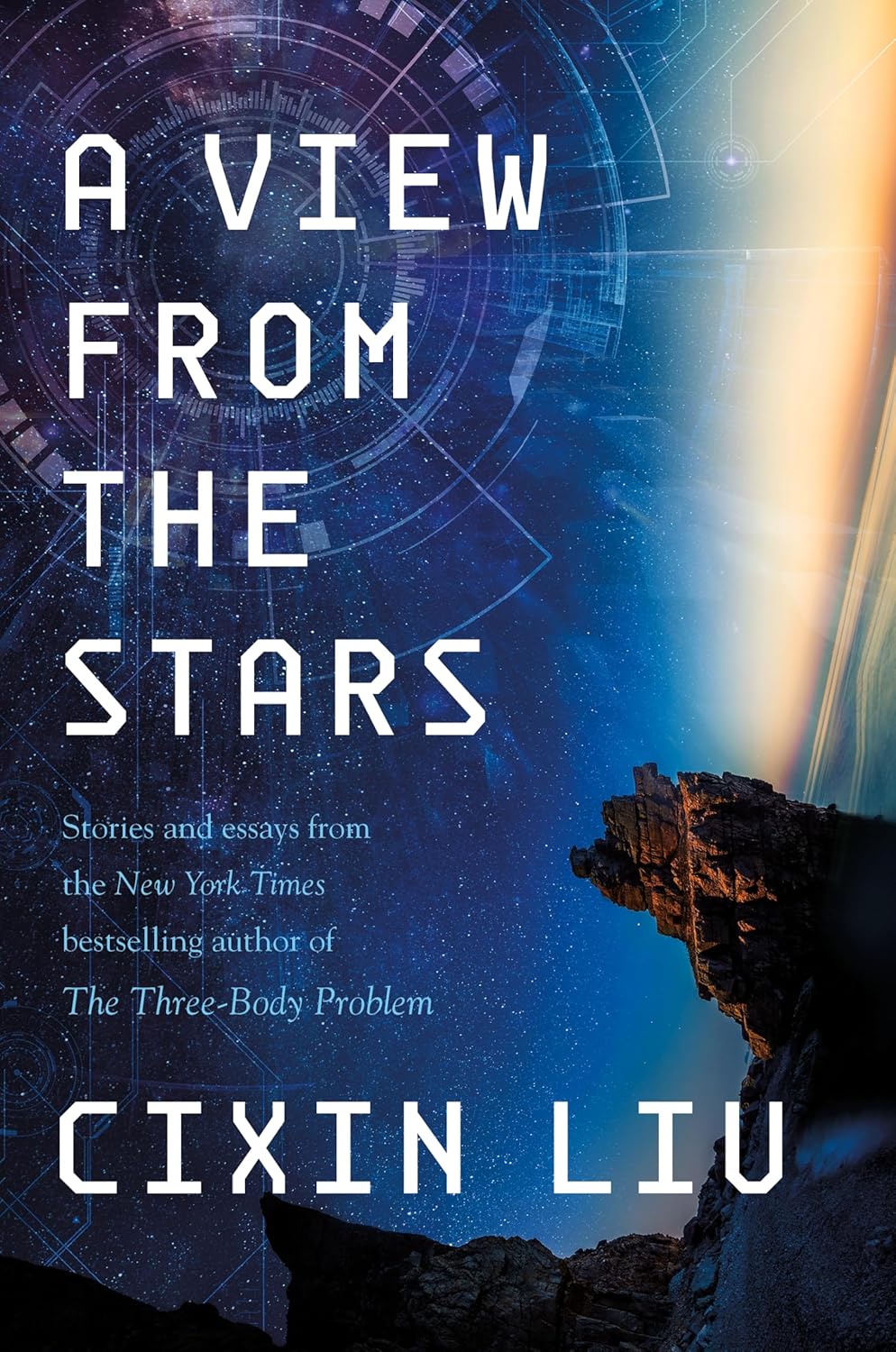
Liu, Cixin. A View from the Stars Tor Books, 2024.
Version 1.0.0
A View from the Stars is a rich collection of Liu Cixin’s essays and short fiction in translation. Bringing together six short stories and thirteen essays, the volume offers readers a multifaceted portrait of Liu Cixin not only as a major writer but also as a reflective commentator on his own creative practice and on the development of science fiction as a genre. The fiction stories included in the collection were originally published around 2000, and most of the essays date from the early 2000s to 2015. While the collection is not organized by the chronology of the original Chinese publications, its arrangement foregrounds the breadth of Liu’s intellectual thinking and the range of his literary imagination.
The fiction in the collection engages questions of technology and development, and each story emphasizes different concerns. “Whale Song” and “Butterfly” point to two political events around the turn of the millennium, respectively: the anti-whaling movement and the political upheavals in Yugoslavia. “The Messenger” takes the form of a quasi-historical fantasy, imagining the evolution of physics theory through a figure suggestive of Einstein. “End of the Microcosmos,” “Destiny,” and “Heard It in the Morning” are comparatively less marked by historical specificity, and they speculate respectively on theories of microscopic particles, space-time, and cosmological models. The essays in the collection illuminate Liu’s relatively under-discussed professional trajectory from a science fiction fan to one of the most representative writers of Chinese science fiction, as well as his creative process and a more humble, even vulnerable side of himself when confronting fundamental philosophical questions. For instance, essays such as “Time Enough for Love,” “A Journey in Search of Home,” and “Thirty Years of Making Magic Out of Ordinariness” discuss Liu’s first encounters with science fiction, how he developed an interest in the genre, the difficulties he faced in publishing during his early years as a writer, and the material circumstances behind his decision to writing science fiction at different moments in his life. In essays such as “The ‘Church’ of Sci-Fi” and “Civilization’s Expansion in Reverse,” he addresses philosophical themes explored in his works and his methods of writing science fiction, particularly on how to represent a sense of awe toward the cosmos and the unknown in science fiction stories. Across these essays, Liu also repeatedly comments on the state of the Chinese science fiction industry. For example, in “On Ball Lightning, An Interview with Liu Cixin,” originally published in 2004, he offers predictions about the future of Chinese science fiction that, in retrospect, seem strikingly prescient.
It is worth noting that the stories and essays included in this volume primarily foreground Liu’s writing before The Three-Body Problem achieved international success. In these relatively early works, one can trace Liu’s fiction writing from comparatively single-dimensioned storytelling to a more multilayered approach to worldbuilding. The essays in the collection supplement this trajectory by presenting, in more analytical terms, his reflections on science fiction as a literary practice. When discussing the history and development of Chinese science fiction, Liu frequently contrasts the genre with “mainstream literature,” by which he means the realist tradition that has dominated Chinese literature since the early twentieth century. Prior to the 2010s, science fiction occupied a more or less marginalized position within the Chinese literary field; these texts therefore register Liu’s concern for the future of Chinese science fiction as a genre and his efforts to articulate its distinctive epistemological force as a means of legitimizing it.
For scholars, this collection provides excellent primary material for understanding both the worldbuilding of Liu’s fiction and the historical conditions under which his works emerged. Some of the essays in the collection—especially those originally published on internet forums and blogs around 2000—are particularly valuable, as this kind of text has become more difficult to access amid tightening publishing censorship in China today. One shift in Liu Cixin’s thinking that can be traced through the selected essays is especially noteworthy. In “Civilization’s Expansion in Reverse,” written in 2001, Liu argues that if human civilization were to expand outward, the resources of the solar system would not be sufficient to sustain human consumption; thus, one possible response, he suggests, would be for humanity to intervene technologically in its own evolution and thereby reduce its biological scale. Yet a decade later, in “One and One Hundred Thousand Earths,” written in 2011, he speculatively suggests that expansion into outer space might offer one possible solution to the survival crisis humanity faces as a result of environmental changes on Earth, and that the resources of the solar system would be sufficient to sustain the population of a hundred thousand Earths. My intention in highlighting this shift here is certainly not to moralize either perspective—after all, in the original texts, these ideas function more as thought experiments than as serious judgments—but rather to suggest that it exemplifies the productive tension between competing currents of thought within Chinese science fiction. Such tensions have been central to the emergence of the remarkable boom in Chinese science fiction we witness today.
The texts in this collection are, for the most part, written in the grand narrative mode for which Liu is best known: a mode concerned with civilization, humanity, and the future on a grand scale. Readers can clearly discern the influence of generic forms of canonical Western science fiction on Liu’s writing. At the same time, Liu’s specific concerns and lines of inquiry remain grounded in the realities of China, including the economy of the Chinese science fiction industry and the practical and historical-political considerations shaping publication. Overall, this accessible volume is a valuable resource for understanding both the history and development of science fiction in China and the study of Liu Cixin and his works.
Zichuan Gan is a PhD Candidate in Comparative Literature at the University of Toronto, with a specialization in Women and Gender Studies. His research and teaching engage literature, digital media, and popular culture, with a particular focus on contemporary Chinese science fiction and modern Chinese cultural production.
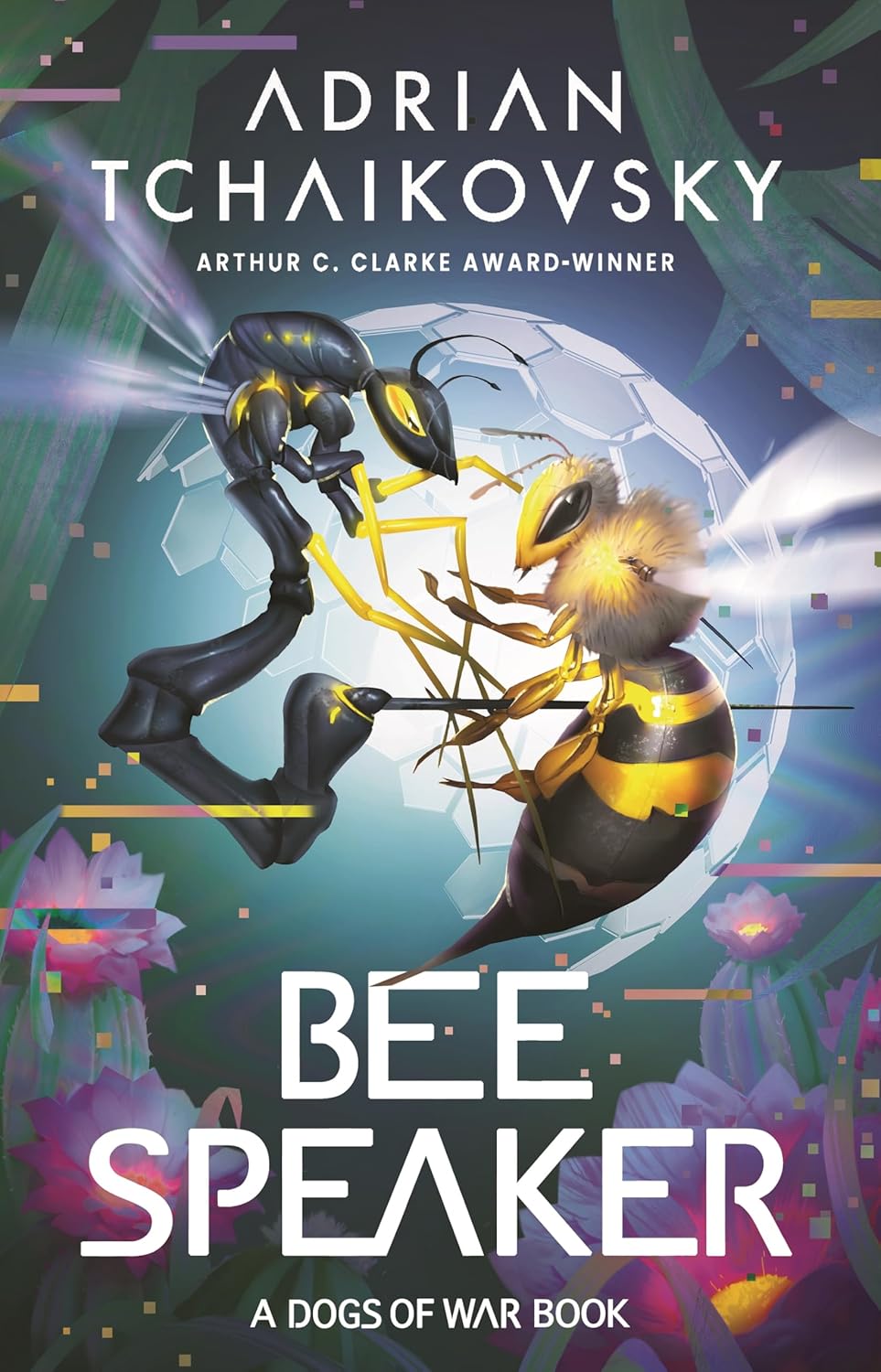
Tchaikovsky, Adrian. Bee Speaker Head of Zeus, 2025.
Version 1.0.0
Bee Speaker is the third book in the Dogs of War Series: it follows the development of bioforms (genetically modified, enhanced, and sentient beings) and presents a certain homage to bees without which there is no life for humans. The first book shows the growth of bioforms from mere weapons to entities who develop moral agency while the second book focuses on the secluded evolution of bioforms and humaniforms (enhanced humans) adapted to live on Mars. Bee Speaker takes place some two hundred years after the second book, and it begins with a received signal for help from Earth. Mars has not changed ecologically, but life has adapted to it with the help of distributed intelligence (DisInt/AI) –Bees. It is relatively peaceful, and everyone has learned how to depend on one another. Bioforms and humaniforms do not remember life on Earth; they have forgotten how treacherous humans can be. This naïve approach to life leaves room for error when they decide to travel to Earth in order to help Earthly Bees. On the other hand, life on Earth has regressed to some form of cut-throat dystopian world in which Bunker-folk, unarmed villagers, atheistic monks (the keepers of knowledge), bioforms, clones, and other DisInts have painstakingly achieved some kind of fragile détente solely based on transactional dependency through which everyone has something that the other needs. Information is the greatest asset, and trust is a word in which no one believes. Therefore, when the crew consisting of two humaniforms and two bioforms (a dog and a dragon) arrives on ancestral turf and expects to connect the two parts of humanity, everything goes awry, and they find themselves in a hostile environment with an unknown entity pulling all the strings.
Tchaikovsky presents a highly imaginative world, which in reality is very hard to imagine. For the reader, it is difficult to visualize the modified beings, the advancement of technology, and the sentience of dogs and dragons. Once again he plays with the “what if” of science fiction and takes bioengineering to a level that has the reader questioning the ethics of such scientific growth. Just because something can be done does not mean that it should be done. It is interesting that the reader’s empathy does not waver when it comes to the actions and wellbeing of the bioforms because from all the entities that are bound in the local mess of misunderstandings and manipulations, the actual humans are the ones who are the least likeable characters. This raises the issue of what it truly means to be human and who is capable of moral agency in this story. Every character believes that they deserve moral consideration, but only the humans and the Earthly Bees (the corrupt AI) refuse to acknowledge the worthiness of the other’s life. Earthly Bees is an entity that is only looking out for herself/itself and how to survive. Bees does what it needs to in order have everyone under her/its control. The humans are no better. For example, they cut off the arms and legs of their leader, Josh Griffin III (so he cannot run away), and keep him connected to a machine in order to harvest his enriched blood.
Yet, the crux of the story is the the moment humans realize that they need Martian Bees (AI) to make sense of their world and guide them towards prosperity, peace, and coexistence. Bees will organize their lives, communicate with the outside world, and create a more promising future for all involved. It follows that this advanced AI has more rationale than the humans do. Still, it is unknown whether Bees will have moral agency. Bees will see if it will at some point decide that it is beneficial for her/it to continue with the biological enhancement of humans. The decision will be Bee’s. The question is will AI manipulate the humans just as its predecessor has or will it be a benevolent part of Earth’s future? For the time being, Bees is neither good nor bad. It does not have empathy nor preference. It is still not sentient.
Another interesting aspect of the novel is the role that women have within it. Most of the important characters are female or have been assigned the feminine gender (two bioforms, one humaniform, distributed intelligence, the women in the villages and bunkers). In the bunkers, the men seem to rule as in the time of Vikings, but the women have their own second culture that seems to covertly create the climate within the clan. They live subserviently in the shadow of men, but they are cunning and strong. Their clandestine meetings and conversations are the source of all the important information that is the foundation of all the decision making. Yet, Tchaikovsky does not provide any information or clues as to why he chose these characters (especially the artificially created ones) to be female. Apart from being savvy, they do not have any grand or noble characteristics: Ada is weak, Serval is conniving, the witch lurks around and collects fungus, Jennifer is portrayed as a sociopath, and the Earth Bees is a tyrant. The only truly good female character is Boatman since she seems to have empathy and an understanding of the humans and bioforms alike. Perhaps the message is that the world would be run—maybe not better but more effectively—by women.
Bee Speaker is an ideal novel for undergraduate and graduate science fiction courses since it deals with the topic of bioengineering, which has become more science than fiction with the development of CRISPR technology. It can be used for scholarly work discussing the consequences of genetic manipulation and biological enhancement, the use and abuse of prosthetics and personalized medicine, and the difference between moral status and moral agency. Furthermore, it deals with peace as an aesthetic condition and the effects of soft and hard power on humanity. One can also discuss narrative theory, affect theory, feminist and ecofeminist criticism, and any theory that analyzes biostudies, biopolitics, trauma, and postcolonialism.
Zorica Lola Jelic, Ph.D. is an Assistant Professor at the faculty of Contemporary Arts in Belgrade, Serbia. She teaches English as a foreign language, Business English, Shakespeare, and English Drama. She earned her degrees in Shakespeare studies, but she also loves to write about literary theory and science fiction. She has published scholarly papers, coursebooks, and enjoys attending professional conferences.