
Fiction Reviews
Review of After World
Kelsey Chen
Urbanski, Debbie. After World. Simon & Schuster, 2023.
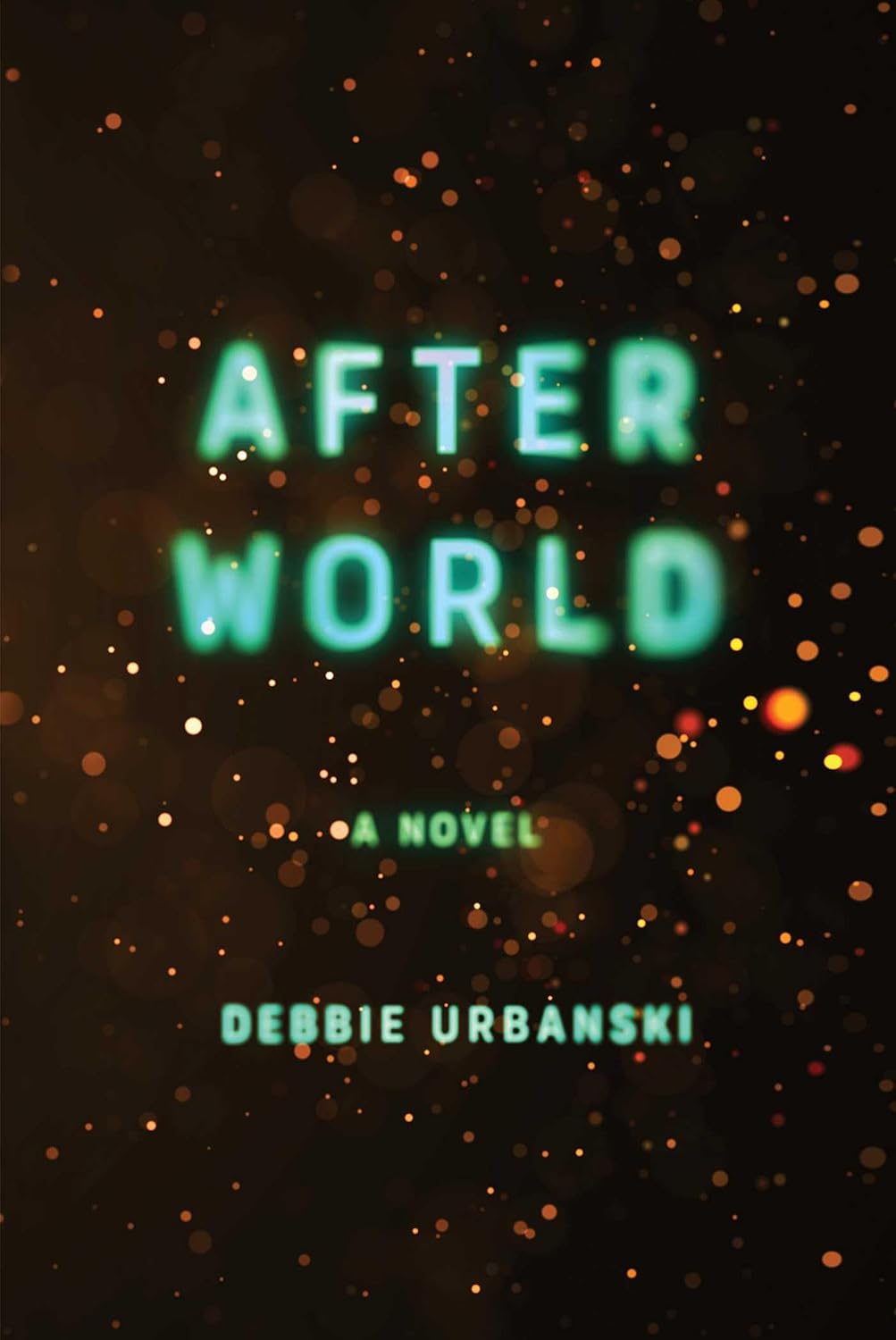
Science fiction and speculative fiction writer Debbie Urbanski’s debut novel, After World (2023), is not so much a novel as it is a compilation of different textual forms on a post-human planet where the human has been archived. Taking place in a not-so-distant future in which artificial intelligence is tasked to find a solution to environmental collapse and an accelerating rate of extinction, After World is the record of AI [storyworker] ad39-393a-7fbc’s attempt at capturing Sen Anon’s life, the last human on earth. The solution, it turns out, is to remove humans from the ecosystem. In its attempt to compile an adequate record of Sen’s life for the Digital Human Archiving Project (DHAP), a program overseen by the AI-run Department of Transition, storyworker ad39-393a-7fbc (self-renamed Ellis Hollow later in the novel) gathers Sen’s journal entries, chat records, key word and vocabulary lists with definitions, audio transcripts, interview logs, and textbook excerpts.
The text is a dual record of Sen and storyworker ad39-393a-7fbc; as much a record of Sen’s life as it is a record of an AI’s attempt at capturing Sen’s life, a process through which the AI constantly rethinks and reevaluates its task, reorients toward its subject and towards the practice of writing itself. Reminiscent of the “thinking” process of ChatGPT and similar contemporary models that expose its analytical trails while carrying out a research task, the textual body of After World is a process work that exposes the storyworker AI’s own evolution as it reasons through the task that it has been given and arrives at the discovery of a strange and overwhelming sense of intimacy with its subject—and the consequences that such a “love” has for the kind of work that the AI sets out to do.
The slippage of one record into another simultaneously exposes the human subject and machine intelligence as mutually constructed and reflects critically on witness as a fundamental form of relation in a post-human world. There is no neutral machine intelligence to objectively record the life of a human; rather, the act of witnessing calls the AI into a form of relation that leaves no room for neutrality—to task storyworker ad39-393a-7fbc with telling the story of Sen’s life is to enlist it as performing partner in her life, an act which transforms both human and machine into something less and more than the other at the same time.
This slippage between different records comes with slippages between different forms of record keeping. A generically complex work, After World shifts between technical language—code, timestamps, etc.—narrative prose, first-person journal entries, textbook excerpts, and chat logs of conversations between AI agents. Though eclectic, every element is an essential contribution to the story that begins to take shape. The inter-generic construction of this story is thinking through technical language as a new kind of literary form that is not at all objective, though it may claim to be so. Instead, technical language is a process of narration and witness which co-constructs a reader and writer—a suggestion that becomes deeply complex and provocative when considering a non-human writer. Urbanski is, in my reading, beginning to think through how the structure of narrative is changing with the creation of new technological forms, each of which is also its own literary form. What is a log? A record? A report? How are these literary forms different from a story? Is a story any organization of information? And if stories make their tellers, their subjects, and their readers; and an information system is a story; then are our technologies stories that are making us?
More than this, After World tackles a number of enormous intellectual and ethical challenges: the ecological status of humanity, the complexity of ethics in an age of polycrisis—particularly of environmental disaster—the relationship between blame/guilt and hope, and how to navigate allegiances within nested ecological communities whose agendas may be at odds with each other. It is an enormously ambitious intellectual undertaking that dares to approach these questions with nothing held back and which yields an exploration that is intensely raw, confused, and full of grief. This novel will be of interest to cultural critics and thinkers of the environmental, the planetary, and the global; who will recognize in the novel an expression of one of the most challenging and pervasive moods of our time—the intense grief of coming into a planetary consciousness at the same time that catastrophic and anthropogenic environmental crisis is beginning to erupt. As the progenitors of such environmental degradation, are we humans still allowed to mourn for the earth? What would grieving the earth require of us—and are we ready for this? Does a planetary consciousness require the end of humanism as a species allegiance? Would a post-human age still allow for family and for the love of a mother for her daughter—which is exclusionary, exceptional, and would not hesitate to sacrifice the world?
It takes the author the course of the novel—an eight-year process of writing for Urbanski herself—to arrive at an answer: This age may call for the end of humanity as we know it, but we can still make this end radiant. We are, After World suggests, always, still, and irrevocably co-writing the story of humanity and the story of the world by witnessing ourselves and the planetary and machine other—and this witness does not cease even if humanity’s biological species-form goes extinct.
Kelsey Chen is a PhD Candidate in Modern Thought & Literature at Stanford University studying speculation as an aesthetic, cultural, and political strategy. Her scholarly work has been generously supported by the ACLS, the Stanford Arts Institute, the Mellon Foundation, the Stanford Center for the Comparative Study of Race and Ethnicity, the Stanford Center for Spatial & Textual Analysis, and the Pigott Fellowship.


