Review of The Metabolist Imagination: Visions of the City in Postwar Japanese Architecture and Science Fiction


SFRA Review, vol. 52, no. 1

Nonfiction Reviews


Review of The Metabolist Imagination: Visions of the City in Postwar Japanese Architecture and Science Fiction

Baryon Tensor Posadas

William O. Gardner. The Metabolist Imagination: Visions of the City in Postwar Japanese Architecture and Science Fiction. University of Minnesota Press, 2020. Paperback. 224 pg. $24.99. ISBN 978-1517906245.

An argument could be made that the idea of Japan holds an outsized position within the formation of the megatext that constitutes the science-fictional imagination. This goes back to the beginnings of the genre, with Japan’s rise as an imperial power at the turn of the twentieth century prompting the popularization of yellow peril and future war narratives that served as one of the precursor genres to science fiction, which later sees a revival in the techno-orientalisms of cyberpunk in the 1980s as Japan came to be perceived as an economic rival to the United States. Yet despite this prominence, only a handful of scholarly monographs on Japanese science fiction in the English language—Takayuki Tatsumi’s Full Metal Apache (2006), Steven T. Brown’s Tokyo Cyberpunk (2010), Motoko Tanaka’s Apocalypse in Contemporary Japanese Science Fiction (2014), to name a few—have been published to date.  

William O. Gardner’s The Metabolist Imagination is a very welcome and much needed addition to this short list, not only providing sustained discussions of historically noteworthy works of Japanese science fiction that have not seen much attention in English language scholarship, but, more importantly, also offering a multilayered scaffolding for articulating the historical and critical significance of these texts. At the center of Gardner’s discussions is the project of reconstructing the intertextual linkages between avant-garde architecture and the genre of science fiction. Taking the example of the cross-pollination of ideas between the Metabolist movement in postwar Japanese architecture and the postwar development of Japanese science fiction as his point of departure, The Metabolist Imagination presents a compelling case that their respective engagements with questions of futurity—first under the historical condition of postwar reconstruction in the aftermath of the Second World War, then followed by the subsequent neoliberal turn—call attention to how both of these sites of imaginative work perform their own respective practices of cognitive estrangement.

Gardner explains that a central tenet of the Metabolist group of young architects—which includes figures who have since become well known in their own right, such as Isozaki Arata, Tange Kenzō, Kurokawa Kishō, and others—was a project of an open utopianism in urban design. As articulated in their manifesto Metabolism 1960: Proposals for New Urbanism, they believed that architecture is better understood not as the design of fixed permanent structures, but as a process that remains flexible to future growth and potential transformation. Drawing inspiration from both the Japanese historical legacy wherein cities were frequently destroyed and rebuilt in the aftermath of fires and earthquakes and from the modular designs emerging out of the developments in space exploration, avant-garde architects in Japan imagined such projects as massive megastructures that enclosed whole cities akin to space habitats, or buildings constructed out of capsules like cellular structures that could be organically expanded or reconfigured as needed.

In Gardner’s argument, it is this emphasis on a temporal dimension to architecture that serves as the basis for its interface with science fiction, writing that “the work of the Metabolist group of architects investigated here includes a significant narrative dimension” that invites reading them in conjunction with their contemporaries in science fiction (2). In other words, the works of the Metabolist architects did not simply parallel those of science fiction authors, but were in themselves cognitively estranging projects in dialogue with other writings conventionally classified as science fiction. For Gardner, this collaboration culminates in the 1970 Osaka World Expo, which featured—placed in the same space—the imagination of the future city expressed especially in the capsule architecture that was prominently featured throughout the various exhibits and the visions of the future by science fiction authors like Komatsu Sakyō and Tezuka Osamu (both of whom participated in the event). As Gardner notes, not only did the World Expo shape the trajectory of Japanese science fiction since as later cyberpunk narratives responded to the techno-utopian visions it presented, its media coverage outside of Japan arguably also prefigured the techno-orientalist image that would come to be ascribed to Japan in the 1980s. As such, an argument can be made that the 1970 Osaka World Expo also played a role in the subsequent development of Anglophone science fiction, in effect opening up a space to consider the stakes of Gardner’s discussion beyond the confines of Japan.

Although The Metabolist Imagination does not quite fully explore these transnational ramifications, there is something to be said for its recognition of this possibility. In part, this is because even as the field of Science Fiction Studies can be criticized for its relative neglect of Japan shaped by its Eurocentric (if not even Anglocentric) historical legacy, on the flipside, the treatment of science fiction within the field of Japan Studies often exhibits a tendency towards what Hajime Nakatani has called a “Japanological neurosis,” wherein something like “Japanese science fiction” is treated as a singular coherent entity and subjected primarily to a hermeneutics of national allegory (Nakatani 528). In the end, if there is one strength in particular to Gardner’s discussion, it is precisely its deft avoidance of this trap that Nakatani identifies, opening new lines of intellectual inquiry. Indeed, in putting into active conversation the discourses of architecture and science fiction, The Metabolist Imagination offers an effective demonstration of Istvan Csicsery-Ronay’s contention that science fiction is not merely a “genre of aesthetic entertainment” but has become “a form of discourse that directly engages contemporary language and culture, and that has, in this moment, a generic interest in the intersections of technology, scientific theory, and social practice” (Csicsery-Ronay 4). In doing so, it provides a blueprint for articulating science fiction as something that is no mere object of cultural hermeneutics, but is itself a mode of critical practice of intellectual inquiry.

WORKS CITED

Csicsery-Ronay, Istvan. The Seven Beauties of Science Fiction. Wesleyan University Press, 2008.

Nakatani, Hajime. “Combating the Japanological Neurosis. Review of Robot Ghosts and Wired Dreams: Japanese Science Fiction from Origins to Anime.” Science Fiction Studies, vol. 3, no. 3, Nov. 2011, pp. 525–28.

Baryon Tensor Posadas is an associate professor in the Department of Asian and Middle Eastern Studies, University of Minnesota. He is the author of Double Visions, Double Fictions: The Doppelganger in Japanese Film and Literature. His current research focuses on the intersections of science fiction and empire in the Japanese context. 

Review of The Monster Theory Reader


SFRA Review, vol. 52, no. 1

Nonfiction Reviews


Review of The Monster Theory Reader

Lars Schmeink

Jeffrey Andrew Weinstock, ed. The Monster Theory Reader. U of Minnesota P, 2020. Paperback, 600 pg. $35.00. ISBN 9781517905255.

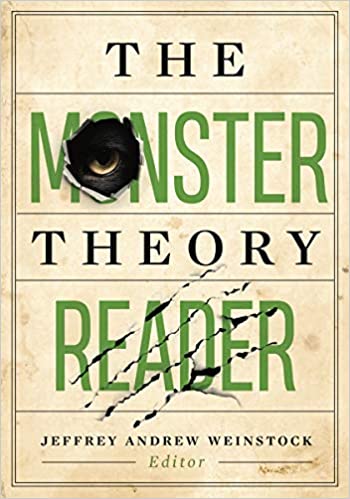
If you subscribe to the theory that Mary Shelley is a key figure in the genesis of science fiction, then it is only a small step to claim that the figure of the monster is as central to science fiction as it is to horror. In fact, Vivian Sobchack has commented on monsters as the primary moment of “congruence between the SF and the horror film” at which it is hard to “make abrupt distinctions between the two genres” (30). Monsters can be found in science fiction; because SF pushes the limits of what it means to be human, it breaks down categories of human/alien or human/machine. And the monster, as a cultural marker, “is the harbinger of category crisis” (40), as Jeffrey Jerome Cohen points out in his “Monster Culture (Seven Theses),” the flagpole text of The Monster Theory Reader and the fulcrum of monster theory as an academic discipline. Editor Jeffrey Weinstock has chosen to place Cohen’s text before and outside the main structure of 23 essential essays that form monster theory, because it is the one text that “named a field” (1) and thus brought it into being. As Weinstock explains, monster theory might have been present in many different fields and approaches to a variety of texts, but it wasn’t until Cohen’s 1996 intervention that the field was named.

In his introduction, Weinstock then goes on to give a genealogy of the field, moving through both history and disciplines to explain the variant approaches that congealed around Cohen’s terminology: teratology, mythology, and psychology (4). Supported by medieval and classical texts, Weinstock explores both scientific and supernatural explanations for how monsters come to be, moving from “supernatural theories” to “hybridization, maternal impression, accident and what we today would call genetics” (5). In his excursion into mythology a similar duality of both scientific rationale and superstition informs early mythological theories about monsters, from “monstrous races” (14) as culturally misunderstood by early European explorers to “mythical creatures” (17) and “cryptids” (20) falling somewhere between zoology, showmanship, and ignorance. In the last part of his introduction, Weinstock then moves towards psychology and its focus on human behavior and our contemporary understanding of monstrosity as a cultural and political category that can be used and abused for specific purposes.

It is important to note that The Monster Theory Reader is not a handbook on monsters themselves—for that I would recommend Weinstock’s other editorial work The Ashgate Encyclopedia of Literary and Cinematic Monsters (2014)—but an exploration of what cultural impact monsters have on us and how the liminal position they inhabit maps onto different social categories or identities. Theory is the key term here, and Weinstock makes clear in his structure that the 23 previously published essays all comment on specific themes. Under the heading of “The Monster Theory Toolbox,” six essays introduce the basic building blocks of engaging with monster theory. Here, you can find the by far oldest entry in Sigmund Freud’s discussion of “The Uncanny” from 1919. Other well-known essays include Julia Kristeva’s “Approaching Abjection,” and the film theoretical explorations of monstrosity by Robin Wood and Noel Carroll. For science fiction scholars most intriguing in this part is definitely Masahiro Mori’s rarely found critique of near-human replications of the human (for example in digital renderings of humans) in “The Uncanny Valley.” The text is immensely important to understandings of artificial humans and fears of our becoming-machine. 

The six essays that follow under the heading of “Monsterizing Difference” each address monstrosity as a tool to marginalize and separate specific groups of people. Accordingly, each chapter addresses the relation between monstrosity and an othered group, separated by religion, sexuality, or race. In terms of science-fictionality, I want to emphasize the essay by Annalee Newitz that addresses race issues in contemporary zombie fictions, which is one of the current discussions of how to address this particular monster: “The Undead: A Haunted Whiteness.” For more on this nexus, an earlier and very similar work to this one in the University of Minnesota Press’ catalogue comes to mind: Sarah Juliet Lauro’s Zombie Theory: A Reader (2017).

The third part of the reader then gives room to seven essays on “Monsters and Culture,” broadening the scope of cultural commentary by including approaches to psychology, religion, terrorism, migration and so forth. Each of these is more concise in topic than the essays in the parts before, and they help to focus on the cultural specificity of monsters, on how they function for unique purposes. Lastly, the reader closes with four essays that move beyond the general understanding of monstrosity and “show us how monsters can be figures not just of fear but of hope” (Weinstock 30). In this last part, then, the science fiction scholar can find explorations of how monsters come to embody posthuman potential and help us embrace otherness—highlighted in essays by Donna Haraway (“The Promises of Monsters”) and by Patricia MacCormack (“Posthuman Teratology”).

In all, the essays collected here for a very reasonable price are perfect for use in college classrooms of both horror and science fiction scholars. Bringing them together in such a well-organized manner and rounding them out with an insightful introduction is an important step to moving the subfield of monster theory into the high cultural critical theory curriculum and should be applauded.

WORKS CITED

Sobchack, Vivian. Screening Space: The American Science Fiction Film. New York: Ungar, 1993 [1980].

Lars Schmeink is currently Leverhulme Visiting Professor at the University of Leeds. He has inaugurated the Gesellschaft für Fantastikforschung and has served as its president from 2010-19. He is the author of Biopunk Dystopias (2016) and the co-editor of Cyberpunk and Visual Culture (2018), The Routledge Companion to Cyberpunk Culture (2020), Fifty Key Figures in Cyberpunk (2022) and New Perspectives on Contemporary German Science Fiction (2022). 


Review of The Shape of Fantasy: Investigating the Structure of American Heroic Epic Fantasy


SFRA Review, vol. 52, no. 1

Nonfiction Reviews


Review of The Shape of Fantasy: Investigating the Structure of American Heroic Epic Fantasy

James Gifford

Charul Palmer-Patel. The Shape of Fantasy: Investigating the Structure of American Heroic Epic Fantasy. Routledge, 2020. Routledge Research in American Literature and Culture. Hardcover. 188 pg. $140.00. ISBN 9780367189143.

Charul Palmer-Patel shows a nearly encyclopedic scope in her innovative study of the formal traits of American Epic Fantasy, ranging across primary texts rapidly and with fluency. This book will delight readers with a similar breadth of reading in mainstream bestselling fantasy fiction from the 1990s onward while potentially dizzying some outsiders, but she is consistently engaging. The capaciousness of her argument in relation to primary materials is commendable even if some readers may skim the case studies by sticking to the critical arguments. Palmer-Patel is also specific in her scope and purpose: using the mainstream bestsellers in American fantasy fiction across twenty years from 1990 to 2010 to identify the key structural traits of the Heroic Epic as a sub-genre. This sets her work both parallel and contrary to many of the dominant trends in critical work on fantasy. Palmer-Patel echoes (while critiquing) the structuralist tendencies of Farah Mendlesohn’s focus on rhetorics, an approach echoing all the way back to E.M. Forster’s argument against defining the genre, and also follows in its path with a focus on structure (not form) in order to define a sub-genre. The focus on the epic and the heroic paired with a structuralist method places Palmer-Patel in line with the preponderance of major critical work from Rosemary Jackson and Tzvetan Todorov to Brian Attebery and C.N. Manlove while at the same time forcing her to break with them because “studies of Fantasy fiction have become dated” (13) and seem to largely end historically where her study begins. This leads to a critique via Paul Kincaid of Mendlesohn because “her choice of texts may lead to her criticism of the form” (12) and kindred implicit revisions of others. This is, in itself, enough critical complexity for one project, but she has a twinned thesis. This second thesis is continually present yet not with the same direct concision as her primary aim: the centrality of prophecy and determinism to the Heroic Epic sub-genre she identifies, which suggests an interest less focused on “form” itself than it is in “form” as a sublimation of “ideology.”

This second thesis emerges immediately after the Introduction and shapes all of the subsequent chapters. She begins her project with Lois McMaster Bujold’s The Curse of Chalion (2001) based on “prophecy” and the “destined hero” (19), thereby broaching the contradictions of determinism and free will in fantasy’s tropes. This, in effect, is the “shape” of American heroic epic fantasy. It remains constant across the book through to the final chapter on David Eddings, in which she contrasts her attention to the shape of free will and fate against Tzvetan Todorov’s more dialectical focus on history in a straight-forward conflict followed by the temporary stability of a new synthesis (159). In the first instance, the fine distinction between fate and free will comes via Manlove and Mendlesohn, with Palmer-Patel’s innovation being a dispute against her precursors who contend that “The hero does not have free will in a narrative driven by prophecy” (Mendlesohn 42; quoted in Palmer-Patel 19). This leads her to argue prophetic foreknowledge is not determinism so much as it is a matter of interpretation, but not the dodge that not knowing how to interpret determinism dissolves its conflict with free will. While Palmer-Patel then moves into archetypal criticism, mainly based on Frye and Campbell, she returns again and again to prophecy and free will without engaging with its long theological basis. There are, however, some thorny questions here. The argument uses Mendlesohn’s and Richard Mathews’s (contradictory) contentions that free will sits at the heart of The Lord of the Rings (1954-1955), although reference to the closing gestures to prophecy in The Hobbit (1937) would be helpful. In Tolkien, however, this conflict between fate and free will is bridged through Christian theology’s long conversation about Providence, which leaves space for both. Palmer-Patel’s most striking example in the chapter is not from Bujold, however, but comes from Terry Goodkind’s Wizard’s First Rule (1994), in which the heroes fulfill destiny only by rejecting it. Of course, this does not actually undermine the problem since choosing what is destined (or choosing what is not) does not alter determinism. What is fascinating, though, is Goodkind’s fixation on a libertarian/Randian concept of freedom shaping his work’s response to the theme of predestination and prophecy.

Once this twinned focus is established in the first chapter, Palmer-Patel proceeds to matters of time in Mercedes Lackey’s The Fairy Godmother (2004). Here, the defining twist for fate and free will comes not through the subversion of interpretation as the problem surrounding fate but rather time itself. To Palmer-Patel, the paradox between fate and free will is structural, and that structure “captures and rearticulates current theories of time” (35). Some of this, with gestures to quantum mechanics and Stephen Hawking (35–38) or a light-cone charting of Campbell’s the Hero’s Path (40), may tread close to old memories of the Sokal affair, but the metafictional analysis this opens for Lackey and Robert Jordan in the third chapter is very productive. At the same time, as the work on Jordan turns to Brian Sanderson (the subject of Chapter 8) twinned again with the problem of interpretation of fate, new questions emerge. She focuses on how a protagonist’s interpretation of fate mirrors our interpretation of plot and structure, both as a form of prefiguration, akin to the seeming oddity of working hard to prevent the impossible and bring about the inevitable. That oddity reveals the essentially ideological nature of fate in these instances, unveiling not the inescapability of Providence so much as our social systems of belief. This approach leads her to argue “the hero is confronted with a choice or an alternate path which provokes epistemological questions where the hero comprehends and then accepts or rejects their own identity” (61). The draw here is toward a fantasist not included in the study but whose literary and philosophical work is deeply concerned with subjectivity, consciousness, and determinism: R. Scott Bakker, who also fits Palmer-Patel’s timeframe but is Canadian not American (despite studying in the USA and publishing his novels there first).

With these critical successes in the study, there are also components likely to garner critique. Palmer-Patel’s reliance on archetypal criticism in her excavation of the “shape” of fantasy recalls many hesitations, from poststructuralist challenges to these kinds of grand narratives to the self-conscious use of Campbell’s works by authors after the famous promotion of it by George Lucas, who hosted Bill Moyers’ interview with Campbell on Skywalker Ranch (later becoming a bestseller published as The Power of Myth just two years before the start of Palmer-Patel’s period of study). We know that many of the authors in Palmer-Patel’s study are or were conversant with Campbell’s work and archetypal criticism generally, perhaps most especially Campbell’s early book The Hero With a Thousand Faces (1949) that would prefigure his four volume magnum opus, The Masks of God (1968). Some of Palmer-Patel’s authors acknowledge this in interviews, and others like Eddings make it more overt in their manuscripts. However, some readers will be old enough to remember (or had professors old enough to be committed to archetypal criticism to know) why archetypal criticism fell from academic favor in the same moment as it gained its greatest popular appeal. The mainstreaming of postcolonial and poststructuralist critical work in the 1990s prioritized attention to forms of difference that an archetypal method makes difficult by prioritizing forms of similarity. This means that some of the ways Palmer-Patel employs Frye and Campbell may jar particular groups of readers. While we have poststructuralist psychoanalytic theory, Palmer-Patel’s contention that “Campbell’s psychoanalytic approach suggests that acts that seem to be accidental are a result of suppressed desires” (2) may generate disagreement around “psychoanalysis” and the return of the repressed or sublimation. A Jamesonian understanding of psychoanalysis as the ideological manifestation of a bourgeois mode of production would also offer an alternate interpretation to her assertion that “this is not a result of suppressed desires, but instead an active declaration of free will” (24). Such a declaration could, especially in this historical moment, be aptly understood as a surrender to the coercive ideological forms of neoliberalism and its conflation of choice with freedom. These same rifts emerge again when Campbell returns in relation to messianism and David Farland (81) or the fact of repetition as the monomyth’s implicit messianic mode (164).

The closing chapter on Eddings offers an effective culmination of the project, both in terms of Palmer-Patel’s analysis based on the refinements each of the preceding chapters made possible, as well as Eddings’s own self-conscious play with choice, determinism, and dialectical history across The Mallorean (1987-1991) series (the subject here) and its precursor The Belgariad (1982-1984). This is especially effective given Eddings’s relative exclusion from fantasy criticism. As Palmer-Patel notes, the characters realize and discuss the problems of repetition, free will, and determinism. That Eddings would be the subject of the conclusion to the study is not surprising given the extent to which his works consider repetition, archetypes, prefiguration, and choice as their central themes (and as anticipated in his teaching notes held in his archives at Reed College – these are prevalent themes in his fiction precisely because they were central concerns in his critical study of literature as a professor). In a sense, Palmer-Patel’s critical summation sits in parallel with Eddings’s, with both pointing to time, open form, and an ideological nostalgia for the Edenic in the “nostos” of return in Eddings’s epilogue to The Seeress of Kell (1991): “And so, my children, the time has come to close / the book. There will be other days and other stories, / but this tale is finished” (171; quoting Eddings 374), which Palmer-Patel interprets as the “novum” enacted in repetition by a new cycle implied in “other days and other stories” (171). What strikes one here is Eddings making overt the contrition and repetition compulsion (back to psychoanalysis) in his series: he and his wife Leigh lost custody of their adopted son and daughter then spent a year in jail after being convicted of physical abuse, for which the books seem some ongoing impossible attempt at recuperation, healing, or reconciliation. This is not merely an opportunistic observation. The “novum” with which Palmer-Patel closes inevitably reminds the reader of Darko Suvin’s work, which reads fantasy very differently and considers a very different sense of history, determinism, and dialectics. The newness of exploring the traumatic past through a fresh repetition and a new cycle may be an expression of free will (conjuring up the willful “fort/da” game of little Hans in Freud’s Beyond the Pleasure Principle), but it is also the traumatic repetition compulsion crushing the free choice of the self, for which the “unexpectedly new” is also the failure to recuperate the repeated past and to move forward.

A number of minor infelicities are worth noting, ranging from “James [sic] Campbell” (22), missing adverbial forms and past tenses (161), misspelled character names (165), and some repetitions in the Index (185). These are minor slips inevitable in the nature of the production of Routledge’s series. Palmer-Patel excels in her fluid ease with the primary texts of her study and her demand that fantasy criticism do more and extend its scope to a metacritical frame. Anyone at work on contemporary fantasy should respond to her challenges in The Shape of Fantasy. Her call for an extension of the critical “canon” on fantasy in order to respond to work of the past twenty-five years is entirely convincing. It can only be imagined what a computational “distant reading” of the sub-genre would reveal about its traits, which might both support and surprise Palmer-Patel’s work. Regardless of the supports or surprises it may bring, any future work on heroic epic fantasy as genre will need to contend with this book.

James Gifford is Professor of English at Fairleigh Dickinson University – Vancouver Campus. He is the author and editor of several books, including A Modernist Fantasy: Anarchism, Modernism, & the Radical Fantastic (ELS Editions, 2018), Personal Modernisms: Anarchist Networks & the Later Avant-Gardes (University of Alberta Press, 2014), and Of Sunken Islands and Pestilence: Restoring the Voice of Edward Taylor Fletcher to Nineteenth-Century Canadian Literature (Athabasca University Press, 2022). Find him on Twitter @GiffordJames.


Review of Posthuman Biopolitics: The Science Fiction of Joan Slonczewski


SFRA Review, vol. 52, no. 1

Nonfiction Reviews


Review of Posthuman Biopolitics: The Science Fiction of Joan Slonczewski

Bruce Lindsley Rockwood

Bruce Clarke, editor. Posthuman Biopolitics: The Science Fiction of Joan Slonczewski. Palgrave, 2020. Palgrave Studies in Science and Popular Culture. Hardcover. xiii+187 pg. $71.97. ISBN 9783030364854. Ebook ISBN 9783030364861.

The Preface to this collection of essays on the work and significance of the novels and other texts by Joan Slonczewski nicely sums up its purpose as addressing the “sustained output of major science fiction by a working scientist” that is “a fairly rare phenomenon” (v). The novels under discussion include the foundational A Door into Ocean (1986), its three successor novels in the same universe—Daughter of Elysium (1993), The Children Star (1998), and Brain Plague (2000)—and The Highest Frontier (2011). There is also discussion of Slonczewski’s textbook Microbiology: An Evolving Science, co-authored with John W. Foster and Erik R. Zinzer, now in its fifth edition (Norton 2020), her pedagogy as a Professor of Biology integrating sf into her teaching, and her blog https://ultraphyte.com/. Clarke says that the purpose of the volume is to “ratify and consolidate the professional literature on Slonczewski’s creative accomplishment and to suggest further lines of engagement” while noting that “our need for the reflective ethical practice” of her work has “never been greater” (vi).

The collection of essays, some previously published, begins with a “virtual group conversation” (1) between Slonczewski and the contributors to the text about the themes that inform her work, such as her interest in microbes and the possibility of an arsenic based ecosystem which she portrays with the planet Prokaryon in The Children Star. Stating “My entire writing career has focused on the question, ‘What does it mean to be human?'” (7), Slonczewski wants “to expand our traditional view of ‘human’ to include simians (gorilla hybrids), sentients (human-like machines), and intelligent microbes” (8).  Her interests include “fact denialism” as portrayed by the Centrist Party in The Highest Frontier, molecular biology, religion, tolerance, the invention of creationism by 20th century Christian revivalists, symbiosis and complexity, and nonviolence.

The conversation sets the stage for seven essays that explore these themes in her work in detail: “Posthuman Narration in the Elysium Cycle,” by Bruce Clarke; “A Door into Ocean as a Model for Feminist Science,” by Christy Tidwell; “”Then Came Pantropy’: Grotesque Bodies, Multispecies Flourishing, and Human-Animal Relationships in A Door into Ocean,” by Chris Pak; “Bodies That Remember: History and Age in The Children Star and Brain Plague,” by Derek J. Thiess; “Microbial Life and Posthuman Ethics from The Children Star to The Highest Frontier,” by Sherryl Vint; “The Future at Stake: Modes of Speculation in The Highest Frontier and Microbiology: An Evolving Science,” by Colin Milburn; and “Wisdom is an Odd Number: Community and the Anthropocene in The Highest Frontier” by Alexa T. Dodd.

Collectively, these essays provide a comprehensive overview of the plots, characters, ideas and conflicts presented in Slonczewski’s deeply thought-through fictional universe, spread out in time and space as reflected in the first four of these novels. Implicit back stories unfold and provide lessons for the role of empathy and sharing as the question of what is human or posthuman are explored in each volume. Clarke points out in his comprehensive overview that the Elysium cycle is enormous: 4 books, 1600 pages of text, covering over 1000 years, and exploring a variety of species, some that live a normal human life span, some practically immortal, some with silicone circuits  that think  in microseconds, and microbes whose lives are over in hours or weeks. The diversity of size and time scale permits Slonczewski to explore “social organization, political praxis and personal autonomy in a posthuman world” (18). A Door into Ocean explores the conflict between the patriarchal planet Valedon and the “sharers” of the Moon Shora, who possess “life shaping” techniques the Patriarch of Torr wants (21-22). Clarke argues that Door is a “deep critique of modern humanity” (23): “Composed in the final years of the Cold War amidst the nuclear brinkmanship of the Reagan era [it] [. . .] brilliantly transposes the threat of human self-destruction from the nuclear to the genetic arena. An all-female society is invisibly armed with weapons ‘too deadly to be used’ other than as planetary applications of their preserved powers over the forms of life” (26).

Daughter of Elysium, the next novel in the Elysium cycle, tells of the fall of Torr (which turns out to be Earth) and the emergence of a planetary community called the Free Fold. On Shora mechanical servos are “cleansed” on “suspicion of sentience,” but one servo is given refuge on a Sharer raft under a Sharer treaty with the long-lived Elysians who have come to live on Shora, paving the way for recognition of machine intelligence as sentient (31-35). Clarke concludes with a summary of the first contact discovery of intelligent microbes and their role in preventing the terraforming of the arsenic based planet Prokaryon in The Children Star, and the conflict over competing communities of microbes that lead to human fear of being controlled by them in Brain Plague.

Each of the succeeding essays grapples with Slonczewski’s texts in distinct ways, adding to the complexity and insights found in her work. Tidwell focuses on the relative lack of women among STEM students, faculty and scientists, and the role of Slonczewski’s novels in providing a corrective to this situation. Tidwell proposes that three competing approaches to feminist views of science are reflected in SF of the 1970s and 1980s: “rejecting science, attempting to control it, and embracing it” (49). Examples of the first kind of writers she cites include Sally Miller Gearhart, Dorothy Bryant, and Judy Grahn. Examples of the second kind of feminist SF, exploring how women can do science differently or even better than men, include Joanna Russ’s The Female Man (1975) and Sherri S. Tepper’s The Gate to Women’s Country (1988). Tidwell’s “third significant approach” to feminist science accepts science but rejects it as male “without simply reversing the terms of an unequal power structure” (51). Examples she cites include Kate Wilhelm’s The Clewiston Test (1976), Anne McCaffrey’s Dinosaur Planet (1978), Janet Kagan’s Mirabile (1991), and Mary Robinette Kowal’s The Calculating Stars (2018).

Tidwell argues that there are problems with each of these often overlapping approaches, and that Slonczewski’s A Door into Ocean “neither rejects science [. . .] nor ignores feminist critiques of science. The novel illustrates the possibility of a feminist science that is not built on femaleness or femininity, does not simply invert the power structure or leave the structures of science unchanged” (52). Instead, it shows a “realistic feminist science” that acknowledges women’s past and present contributions, “challenges dichotomies and hierarchies,” and makes explicit “the political and ethical ramifications of its choices” (52). Tidwell argues that the narrative illustrates scientific principles but with an “emphasis on the organic” that “recognizes the importance of the natural world and places the scientist within that world rather than above or outside it” (56). One goal of “feminist intervention in the sciences [. . .] must involve critique of the narratives and metaphors we already rely upon. [. . .] The Sharers’ use of metaphor illustrates this kind of responsibility” (60).

Pak argues that Slonczewski uses pantropy to “question the values and assumptions that underlie the pursuit of terraforming. [. . . ] The grotesque imagery [. . .] is fundamental to the text’s challenge to colonialist domination embodied in industrial approaches to terraforming. The pantropic subjects and ecology of the planet Shora offer an alternative conception of habitation centered on responsiveness to other lives” (65-66). Through a close textual reading of A Door into Ocean, Pak “explores what it means to be an amborg subject made up of individuals whose relationships are predicated on both response and respect” (81).

Thiess focuses on The Children Star and Brain Plague to examine issues in the meaning of history and bodily aging, comparing a near immortal Elysian who wants to terraform Prokaryon with both the life shaped children who have relatively normal human life spans that are brought to colonize the planet, and the short-lived microbial life forms that already inhabit the planet. Thiess argues that in Slonczewski’s “ecofeminist Elysium novels, matters of embodiment highlight the displacements of the history that is to be rewritten by the powerful. Moreover, in paying special attention to bodies for which a range of ages is important, this novel [. . .] can be read as drawing attention to the shortcomings of cultural theorizations of embodiment that exclude age in discussions of intersectional gender, race, sex, and orientation” (86). The Elysium Cycle “presents a biological narrative in which naturally aging bodies [. . .] call attention to the biological limitations of the human” (87).

Vint notes that “Rethinking our species beyond the limiting frameworks of the human and into the expanse of the posthuman has become a central focus of scholarship in the humanities, much of it attentive to our entanglement with the lives of other species” (111). After reviewing the literature of the posthuman in the works of Haraway, Wolfe, and Braidotti, she cites Anna Tsing’s argument that becoming posthuman may be necessary for “collaborative survival” (112). This becomes her thesis in a close reading of The Children Star, Brain Plague and The Highest Frontier, which she argues offer “a compelling model of Tsing’s ethics of collaborative survival” (113). She includes a section on “Microbial Political Life” that discusses the idea that the human body is a supra-individual because of the microbiome that lives within it, citing the work of Lynn Margulis, Hird and Landecker. This section on the research on horizontal gene transfer in microbial life provides a scientific foundation for the fictional microbial lives portrayed in The Children Star and Brain Plague, and the concept of the invading Ultraphytes in The Highest Frontier (114). Vint continues with a close reading of each text, concluding that “Slonczewski’s fiction offers us a posthuman ethics whose transformations aspire far beyond the mere augmented bodies of her characters” (129).

Milburn examines the “self-reflexive” pedagogy sf provides through a reading of The Highest Frontier and Slonczewski’s co-authored textbook, Microbiology: An Evolving Science. He notes that each “suggests that speculation is a double-edged sword, describing both the future-generating and future-confining forces of our world. But the virtue of sf is that it can teach us to see the difference and imagine better” (134). Slonczewski is quoted as suggesting that “My science fiction offers a way out—a way forward” (140), reminiscent of Frederik Pohl’s remark to me that one of the purposes of sf is not to predict but to prevent the future. Milburn then does a stimulating deep dive into how Slonczewski uses sf to teach and motivate students, and to promote the practice of creative speculation in doing science. Slonczewski’s “praxis: fiction, science, and ethics” is, he argues, essential for the “adventure of education [. . .]. With nothing less than the future at stake” (155). Milburn clearly believes this, reflected in his excellent and comprehensive notes and references.

Dodd pursues a thorough analysis of the role of community, wisdom, humility and a willingness to listen across difference through an insightful and close reading of The Highest Frontier. Politics, the meaning of the Anthropocene, religious conservatism, and fear of the invading ultraphyte are all explored in what is also a clever academic and political satire, the first in a projected new trilogy. Dodd provides a solid discussion of the origin, literature and implications of the term Anthropocene, and then examines the plot of the novel through sections on Community, Wisdom and Humility, and Mary the Ultraphyte, before coming to an assessment of Gaia and Human Responsibility: “Mary, as an ultraphyte, can serve as yet another example for humans. Humans, like ultra, have harmed the Earth. But if we can learn to adjust to our new role as the dominant species and become a wise community, maybe we can save the earth” (175). The essay concludes with an exploration of the possibility that there is another solution to human problems, out there in space.

Collectively, these essays provide a marvelous starting point for the continued exploration of the significant work of Joan Slonczewski, in sf, science, education, and as a moral spokesperson for our troubled times. Published in January 2020 just as the novel coronavirus has us all huddling in place, with the science and policy recommendations of public health criticized by ignorant leaders in several countries, and the challenge of the Anthropocene doubling down on a myriad of challenges facing us all, survival of a human, or posthuman, community remains in doubt. The fiction of Joan Slonczewski addresses this in significant ways and merits continued academic study as well as incorporation into undergraduate and graduate courses. Posthuman Biopolitics is an excellent collection.  It should be in every academic library, and one can only hope a less expensive paperback version will be available in the near future to kickstart further work.

Bruce Lindsley Rockwood, Emeritus Professor of Legal Studies at Bloomsburg University, Pennsylvania, is a long-time member of SFRA, having served as Vice President (2005-2006), and regularly writes reviews for SFRA Review from his retirement home in Midcoast Maine. He has taught and published on law, literature, climate change and science fiction, and attends SFRA and WorldCon with his wife Susan when possible (most recently in Montreal, Spokane, and the June 2021 virtual SFRA).


Review of Dread Trident: Tabletop Role-Playing Games and the Modern Fantastic


SFRA Review, vol. 52, no. 1

Nonfiction Reviews


Review of Dread Trident: Tabletop Role-Playing Games and the Modern Fantastic

Clare Wall

Curtis D. Carbonell. Dread Trident: Tabletop Role-Playing Games and the Modern Fantastic. Liverpool UP, 2019. Liverpool Science Fiction Texts and Studies. Hardback. 256 pgs. ISBN 9781789620573. $120.00.

Dread Trident: Tabletop Role-Playing Games and the Modern Fantastic contributes to a growing body of interest in game studies and adds to Liverpool’s UP’s substantial series on science fiction and fantasy criticism by including a work exploring tabletop role-playing games (TRPGs). Several recent works in game studies have offered examinations of role-playing games including José P. Zagal’s and Sebastian Deterding’s edited collection, Role-Playing Game Studies Transmedia Foundations (2018), and Jon Peterson’s The Elusive Shift: how Role-Playing Games Forged their Identity (2020). Dread Trident distinguishes itself in its specific focus on TRPGS (as opposed to digital games) and its exploration of them through the literary and cultural aspects they draw on from science fiction and fantasy literature in their realized worlds, adding critical exploration to a range of gametexts and their universes. Carbonell’s focus on written gametexts as archives of popular culture makes a significant contribution to this still underrepresented area of academic study, especially in its examination of them through the lenses of the modern fantastic and trans/posthumanism to draw academic attention to the spaces for creative world/character building and game-play experience through the gametexts and modes of embodied play.

Carbonell examines six popular TRPGs through literary and cultural studies approaches to their hybrid modes of gameplay that engage both digital and analogue elements. A central aim of Dread Trident is to explore how our understanding of the modern fantastic is expanded through theorizing gametexts as foundational mechanisms that give rise to realized worlds through their settings, forms of gameplay, and mechanics. Carbonell concentrates his analysis on analogue gametexts and their combinations of draconic (fantastic) and post/transhuman (science fictional) genre tropes to argue that they provide a means of mediating the technologized existence of modern reality through the embodied gameplay. Carbonell weaves this hybridity into his analysis by positing a “draconic-posthuman figure” that he argues is essential to contextualize the modern fantastic (18). By engaging with posthumanist modes of thought, Carbonell suggests that these realized fantastic worlds are built through complex hybrid combinations of digital and analogue tools, enacting, a “process of posthumanization” that directs attention to the “spaces in which subjects emerge” (3). Dread Trident’s extensive study of analogue games makes a compelling argument for the significance of gametexts and their tools for putting the modern fantastic into context with our contemporary, highly technologized ways of being in the world by creating complex spaces where these fantastic and posthuman subjectivities can develop and exist.

Dread Trident is structured in the form of case-studies where each chapter focuses on one modern game system or gametext, placing these gametexts/series alongside works of fiction and broader genre and pulp movements in modern fantasy, science fiction, and horror in order to contextualize the draconic and posthuman elements that emerge through engaged play in the game-worlds. Carbonell examines several well-known TRPG games/game series spanning fantasy, science fiction, weird, science fantasy, and horror genres including Eclipse Phase (2009), Dungeons & Dragons (1974-present), World of Darkness (1991-2006), Call of Cthulhu (1981-2014), Warhammer 40000 (1987-Present), and Numenera (2013) to ask, “what do TRPG gametexts and tools reveal in their clarification of the modern fantastic?” (51). For Carbonell, the answer is that these games offer a space where the self might be fashioned through the spaces created by their embodied gameplay and their combinations of analogue and digital game tools.

Those approaching Dread Trident from the perspective of genre theory may take issue with Carbonell’s elision of fantasy and science fiction into opposite poles of a shared umbrella of the modern fantastic—a fact that he acknowledges. However, Carbonell’s use of gametext archives in Dread Trident enables him to observe the generic shifts in the fantastic occurring in games through many editions and settings over time, including recognizing the way that both draconic and posthuman elements manifest across games occupying different genre categories. An example of this is in his chapter “Worlds of Darkness” where he traces the use of reimagined Gothic tropes from the original World of Darkness (WoD) game settings of the 1990s, Vampire: The Masquerade (1991) and Werewolf: The Apocalypse (1992), to the Weird tropes of the more recent edition of WoD, Chronicles of Darkness (2015), which focuses game exploration on uncovering truths about the hidden and indescribable God-Machine entity. Carbonell contends that this movement offers an example of the Gothic transitioning into cosmic horror and supports his argument for increased attention to TRPG texts by offering a means of examining them for their reflection of changing representations of tropes and fantasy/horror/science fiction features through their archive of gametext editions.

Carbonell’s case studies demonstrate a great depth of knowledge of the gametexts and the archives of tools, manuals, content, and fan contributions that have become parts of these fantasy, horror, science fiction, and weird TRPG worlds. His critical examination of the multiple elements of the gametexts in their structure, imagined realities, mechanics, and engagement of players makes a convincing case for them as valid objects of academic attention, especially in their interconnections and contributions to literary and popular culture. A few of Dread Trident’s chapters also include discussions of literary works including Bruce Sterling’s Schismatrix stories, China Miéville’s Bas-Lag trilogy, and H.P. Lovecraft’s fiction. Carbonell dedicates an entire chapter to examining the legacy of H.P. Lovecraft in the Call of Cthulhu TRPG game series in terms of both the Mythos crossing from a literary world into a gametext and Lovecraft’s materialism and impulse to categorize in rich description—an impulse which Carbonell argues is also reflected in early TRPGs. While these chapters that combine analyses of gametexts with works of science fiction and fantasy literature help establish the connections and differences between the approaches to and realization of worlds in the literary fantastic and TRPG gametexts, they are successful to varying degrees. Dread Trident’s chapter on Eclipse Phase balances a pairing of it with Bruce Sterling’s Schismatrix stories to facilitate further understanding of the latter’s genre-blurring of the draconic/fantasy aspects with those of the posthuman through Sterling’s posthuman embodiments. This blending results in the advanced technology in the game operating “in the same manner as the marvelous in fantasy roleplaying games” (71), thus creating a space for the emergence of imagined post/transhuman subjectivities under the myth of living in a singularity future. However, Carbonell’s chapter examining Numenera alongside works by China Miéville, Jorge Luis Borges, Gary Wolfe, Thomas Ligotti, and HBO’s first season of True Detective lacks the same coherency in its focus.The chapter offers insightful ideas about each of these works and their rich and complicated settings’ relationships to the fantastic—especially the evolution of the weird and new weird—but so much is packed into the chapter that it lacks the clarity and cohesion of other chapter in the monograph and would have benefitted from greater critical attention to Numenera itself.

One of the most effective chapters in Dread Trident is Carbonell’s chapter on Dungeons & Dragons’ multiverse, which focuses its attention on the large archive of Dungeons & Dragons (D&D) gametext editions and settings as well as how that multiverse of shared world expands through fan-created materials and the inclusion of digital media and game tools. This chapter also demonstrates Carbonell’s extensive knowledge of the game’s archival history as he traces its evolution from its earliest editions into an assemblage multiverse where the current 5th edition “encourages new forms of entertainment beyond those found in the sourcebooks” (107). Further discussions of multiple media forms in the subsequent chapter on the World of Darkness series discussing the success of Vampire: The Masquerade and its spin-off video game, television show, graphic novels, collectible cards, and fan-created content help highlight the significant—and often overlooked—influence that TRPGs are having on the fantastic across diverse types of media and in shaping fan communities. Carbonell’s recognition of these areas of cross-pollination between TRPGs and other media opens a space for further examinations on the flow of creative content across fan, popular culture, and creator communities in game studies, as well as expanded work on the effects of hybrid tools on TRPG styles of play, experience, and world creation. The presentation of the interconnections of science fiction and fantasy as two poles of the modern fantastic and the genre blurring that occurs within many of these TRPG gametexts and their realized spaces also speaks to the benefits of including role-playing games in academic studies of the fantastic, something that will hopefully increase in prevalence as the diversity and influence of these TRPG games continues to expand.

Overall, Dread Trident offers a theoretically rigorous and informative exploration of its focal gametexts and the use of game archives to critically explore how the modern fantastic as a genre evolves in them over time. Carbonell’s approach to theorizing these gametexts as using digital and analogue tools to generate realized worlds which “encourage creativity and agency for the broadest number of persons, as well as the expansion of these fantasy spaces across a variety of platforms” (29) is innovative and compelling.

Dread Trident is best suited to more advanced levels of study and those working specifically in genre studies, popular culture, and game studies due to the complexity of the literary and cultural theories involved in approaching the different case studies including theories of genre, trans- and posthumanism, and embodiment. The arguments regarding embodied space in these realized worlds and the combinations of posthuman with draconic tropes in these games also makes it of interest to those working in posthuman studies. While Dread Trident would have benefitted from more attention to laying out the direction and reasoning behind each chapter to better connect its many arguments, it does make an effective case for TRPGs as objects of academic study within SF/F studies, especially in Carbonell’s applications of genre and posthuman theory to tabletop role-playing gametexts and tools and the imaginary spaces they create. Carbonell’s monograph offers those working in game studies an informative scholarly examination of several iconic TRPGs, and it will hopefully be joined by many future works drawing academic attention to the growing diversity, depth of content, and creative spaces emerging from the TRPG community.

Clare Wall is a Toronto-based educator and independent scholar. She holds a PhD from York University in English Literature. Her research interests include contemporary posthuman climate fiction, nonhuman agencies, and ecologies of the future. Her academic writing appears in The Canadian Fantastic in Focus (2014) and the forthcoming anthology Interrogating the Boundaries of the Nonhuman: Literature, Climate Change, and Environmental Crises (2022). Clare’s creative contributions appear in the cyberpunk role-playing game expansion The Veil: Cascade (2018).


Review of Cyberpunk and Visual Culture


SFRA Review, vol. 52, no. 1

Nonfiction Reviews


Review of Cyberpunk and Visual Culture

Kerry Dodd

Graham J. Murphy and Lars Schmeink eds. Cyberpunk and Visual Culture. Routledge, 2018. Paperback. 326 pg. $54.95. ISBN 9781138062917.

Cyberpunk is undeniably part of our cultural fabric and has never been more visually recognizable since the 1980s than it is today. Not just a SF sub-genre craze, Cyberpunk informs contemporary technological development and lies at the heart of many mainstream realist media representations. The troubled launch of Cyberpunk 2077 (2020) catapulted ‘Cyberpunk’ into prime-time news headlines and ironically revitalized cultural awareness of the genre via the very neoliberal crunch culture that it notionally interrogates. Cyberpunk and Visual Culture, edited by Graham J. Murphy and Lars Schmeink, has in many ways only become more critically relevant, then, since its release, particularly given the pandemic’s fast-forwarding of labor and leisure into virtual spheres which have reinforced global concerns towards technological accessibility. Murphy and Schmeink’s edited collection of 15 essays commendably engages with a profusion of media formats to highlight the visual styles iconic to Cyberpunk and argue for the centrality of such aesthetic paradigms within contemporary ‘realistic’ settings. Through this targeted focus the selected chapters exhibit a coherence of thought and criticism that is often lost within other broader collections, marking this title as both an important contribution to critical debate and companion to our current Cyberpunk-inflected times.

Part I begins with the intersection between text and image in the visualization of Cyberpunk futures, extrapolating from Gibson’s iconic description of the sky being ‘the color of television, tuned to a dead channel’ as a refocusing of criticism between graphic and prose mediums. Christian Hviid Mortensen’s opening chapter astutely notes that Gibson’s vision of the future now feels anachronistic to contemporary readers, where the more common blue hue of untuned channels unwittingly inverts the original visual. Focusing on ‘gonzo-journalism’ in the graphic novel Transmetropolitan (1997-2002) Mortensen grapples with the retrofutures left behind by technological change and deploys Marshall McLuhan’s concept of the ‘anti-environment’ to demonstrate how the text’s blending of media-anachronism and media-futurism can create a space that is ‘necessary to effect needed social observation, if not social critique’ (13). Timothy Wilcox’s subsequent chapter continues this exploration through ‘failures of imagination’ via the comic book series The Surrogates (2005-2006) by shifting the focus on the materiality of Cyberpunk futures. Through a discussion of the text’s eponymous surrogate robot bodies Wilcox critically examines the importance of visualizing physical re-embodiment to reveal the everyday manners in which we encounter ourselves and others via posthuman materialities – an important consideration that is often lost within criticism amidst the emphasis on ‘cyber’ futures, but one that should equally consider the non-human and ecological consequences of such speculations. Murphy’s own chapter meanwhile provides a compelling extended study of animal representation and motifs in Boom! Studios’ comic book adaptation of Do Androids Dream of Electric Sheep (2009). Opening with an eloquent demarcation of how Do Androids is not necessarily a classic Cyberpunk text but is both influential to and of that milieu, Murphy demonstrates how the original novel and graphic adaptation define empathetic understanding via animal husbandry and cruelty – a refreshing reading of an oft-cited text that emphasizes a consideration of how Cyberpunk’s imagination impacts beyond the human. Stina Attebery and Josh Pearson follow by considering the importance of fashion and style within the table-top role-playing game Cyberpunk 2020 (1998), shifting the discussion of visuality from cyberspaces and cityscapes to the centrality of self-expression and personal image to Cyberpunk through an exploration of precarious social identities within metropolitan spaces. While this chapter illuminates an oft-overlooked aspect of the field, there is only a brief engagement with the text’s concerning conflation of bodily modification with a ‘humanity cost’ (that causes anti-social behavior) which would have benefitted from a more nuanced consideration and additional reflection of the capitalist driven generation of fashion waste. Paweł Frelik concludes the section by examining the interplay between light and Cyberpunk visions of the future. Astutely noting that many SF texts are predicated on a future of energy abundance, Frelik demonstrates how the ‘near-absolute absence’ of any explanation of such plenitude ‘rings loud’ from a contemporary perspective (94). Focusing on a variety of textual media, the chapter emphasizes how light’s integral presence to Cyberpunk aesthetics is not only a retrofuturistic imagination of outdated neon technology but also emblematic of the genre’s complicated relationship to contemporaneous social-political tensions.

Part II explores virtual and visual terrains, tracing developments of both the digital gaze and rendering of cyberspaces. Christopher McGunnigle begins with the cyborg posthuman body in the RoboCop franchise through an examination of the titular character’s digitally overlaid sight as a form of ‘subjective shot’ (107). Moving from a consideration of the ‘male’ to ‘cyborg’ gaze, McGunnigle examines how the series challenges traditional conceptions of hypermasculinity and disembodiment to configure and reclaim human subjectivity in symbiosis with cybernetics. The discussion crucially avoids tackling who programs and controls such a gaze, however, which given historic discriminatory practices around face ID recognition underscores the necessity of understanding the biases that underpin algorithmic sight. Ryan J. Cox’s subsequent chapter meanwhile provides a detailed analysis of Makoto Kusanagi within the Ghost in the Shell film (1995) and Stand Alone Complex anime series (2002-2005). Contrary to early hacker idealism towards cyberspace being free from the trappings of embodied prejudice and persecution, Cox astutely demonstrates how Kusanagi is a far cry from disembodied freedom and is rather subject to and a participant of meat space ideologies. Kusanagi’s own repeated inhabitation of bodies with similar physical characters then is ‘not an attempt to seal the rupture between ghost and shell, it is an act of self definition’ (136) that affirms the centrality of the body to enduring paradigms of self-expression. Mark R. Johnson’s following chapter explores historic visualizations of cyberspace within video games, poignantly noting that such landscapes represent fundamentally digital objects—data comprised of zeros and ones—through human visual paradigms. Focusing on the utilization of space, color and shape within various depictions, Johnson moves from early grid-based systems to more contemporary avatar renderings in a study that highlights a lack of creative re-imagining towards virtual spheres. The discussion itself however is predominantly descriptive and limited in scope, particularly as the chapter could have formed the foundation for a more convincing argument towards the potential of revitalizing how humanity visualizes and encounters cyberspace. Stephen Joyce’s chapter, however, complements the previous discussion by focusing on the potential of video games to replicate Cyberpunk agentic tensions between gameplay freedom and narrative control in the Deus Ex (2000-2016) franchise with a specific focus on Deus Ex: Human Revolution (2011). Joyce argues that the players’ navigation of the game as a form of cyberspace encourages their immediate immersion within transhumanist values and demonstrates not only the medium’s reflection of contemporary social-technological debates but also the ‘cost’ of such capitalist driven depictions, where ‘the “free choice” of transhumanism is never as free as it seems’ (167). Cyberpunk video game’s potential for capitalist critique therefore stems from a fault that ‘lies not in the medium but in ourselves’ (171), where nuanced criticism of the processes that have led to deregulated market control are more effective than arguments towards nebulous concepts without any proposed alternative. Jenna Ng and Jamie Macdonald close Part II by focusing on a distinctly recognizable ‘cyber’ future in the video game Watch Dogs (2015) where all electronic devices are connected to the ctOS (Central Operating System) surveillance-state metropolitan network. Shifting from traditional discussions of jacking into cyberspace, the authors demonstrate how contemporary data-driven systems represent an entwinement of virtual and ‘real’ spaces, one that the game’s hacker-protagonist Aiden utilizes to subvert the ctOS system and forge his own sense of urban agency. This discussion however avoids directly challenging the rather simplistic representation at the heart of Watch Dogs hacktivism, where Aiden is seemingly able to control the cityscape and freely access central databases in a manner that is divorced from contemporary practice.

Part III draws the collection to a close by focusing on Cyberpunk as a form of SF realism, where visions of the future reflect more upon the contemporary moment than any distant possibility. Evan Torner shifts the discussion away from American and Japanese stereotypes by introducing two often overlooked examples of German Cyberpunk films – Kamikaze 1989 (1982) and Nuclearvision (1982) – which resonate with the concerns articulated elsewhere in the collection. Torner demonstrates how the deeply pessimistic tone of both films, particularly within their late cold war context, offers a moral and ethical ambiguity that is frequently lacking in Hollywood depictions, where glamourous and gritty portrayals of technological liberation or servitude will often depend upon the audience’s own socio-political views in a manner that fails to query ‘whose interests are supported by which technologies’ (210, original emphasis). The danger therefore lies in systems that are notionally beyond self-reflective critique, causing Torner to ask, in a very meta-cyberpunk manner, ‘what makes the white western male incapable of grappling with these systems of his own creation’ (209). Mark Bould’s following chapter further critiques the anglophonic bias of mainstream Cyberpunk media through both the genre’s blindness and marginalization of African people, Africa and its diaspora. While Bould notes that aspects of his cited examples may ‘look very familiar to western eyes’ (231)—as shown via the work of Nadia El Fani, Sylvestre Amoussou, Jean-Pierre Bekolo and particularly the Holloywood-esque spectacle of Neil Blomkamp’s cinematography—his movement between the molar and molecular scales pinpoints how ‘they use those pieces to play an often different game’ (231). He poignantly concludes that ‘no matter how things fall apart, the center will find ways to hold’ (231), and when we consider that this ‘center’ not only represents colonizing hegemony but equally deracinated global corporations then the impetus of such a critique is not only urgent but globally relevant. Anna McFarlane’s following chapter returns to the blurring between representation and reality through Katherine Bigelow’s Strange Days (1995) and Zero Dark Thirty (2012), persuasively arguing that the latter may not appear as a traditional Cyberpunk film but does undeniably return to thematic and cinematographic aspects that are central to the director’s wider work. For McFarlane both films are positioned either side of the epochal millennial shift, where Strange Days sees the future as something potentially horrifying and wonderous while the ‘post’ 9/11 response at the heart of Zero Dark Thirty struggles with the prospect of an optimistic future. The different reflections of virtual reality, surveillance monitoring, remote viewing and the tone central to both films crucially returns to the increasing manners in which the contemporary moment is both visualized and represented via Cyberpunk motifs. Sherryl Vint expands upon this notion in an excellent chapter that explores the fusing, or collapsing, of material and virtual environments in a range of military-sf films that continually align warfare with digital game culture. As Vint notes, the audience’s perceived ability to differentiate what is real from representation lies in our expectation of what cyber-, military and game space should look like, where the inversion of topographical expectations in such films as Ender’s Game (2013) and Source Code (2011) reinforces technological and ethical concerns around being unable to distinguish artifice from authenticity. From this Vint draws connections to contemporary remote warfare in the film Good Kill (2014) by illustrating how drone combat physicalizes such an anxiety in contemporary terms and thus underscores the importance of sf critical studies to a cultural appreciation of a present built upon Cyberpunk visualizations. Schmeink draws the collection to a close with an afterword that appropriately focuses on counter visuality and Cyberpunk’s fundamental relationship of seeing and being seen within cities, cyberspaces and posthumanism.

While some chapters are more persuasive in their cultural and critical argumentation than others, the writing throughout is consistently engaging, making it accessible to Cyberpunk novices or enthusiasts and is a testament to the rigorous work of the editors. Far from treading pre-established ground, Cyberpunk and Visual Culture proves the enduring relevance of Cyberpunk visuality to understanding the ‘reality’ that surrounds us daily. Certainly, it would have been productive to see further discussions of texts more contemporaneous to the book’s release—as only a handful of chapters discuss media released in the early to mid-2010s—but this title is undeniably an excellent guide to our constantly developing cyberpunk present and will surely be a steadfast companion for those who look to take this research further.

Kerry Dodd completed his PhD at Lancaster University, UK. His thesis, entitled “The Archaeological Weird: Excavating the Non-human,” examined the intersection between archaeology and Weird fiction. Focusing on the cultural production of the artefact encounter, his thesis explored how archaeological framings can offer a re-conceptualization of object ontology through the Weird. He is currently working on a monograph that explores the representation of materiality and objects in archaeological fiction. Kerry also works more widely in the fields of Science Fiction (particularly Cosmic Horror and Cyberpunk), the Gothic, and glitch aesthetics.


Review of The Routledge Companion to Cyberpunk Culture


SFRA Review, vol. 52, no. 1

Nonfiction Reviews


Review of The Routledge Companion to Cyberpunk Culture

Michael Pitts

McFarlane, Anna, Graham J. Murphy, and Lars Schmeink, editors. The Routledge Companion to Cyberpunk Culture. Routledge, Taylor & Francis Group, 2020. Hardcover. 474 pg. $225.40. ISBN  9780815351931.

The Routledge Companion to Cyberpunk Culture, edited by Anna McFarlane, Graham J. Murphy, and Lars Schmeink, aims broadly, as outlined in the text’s introduction, “to track cyberpunk’s diversity and far-reaching influence” (xx). Made up of contributions from more than fifty scholars, the sizable anthology is divided into key three sections: Cultural Texts, Cultural Theory, and Cultural Locales. The first section is made up of traditional analyses of the cinematic and literary roots of cyberpunk and notably replaces examinations of typical works such as Neuromancer (1984) and Blade Runner (1982) with other texts such as Pat Cadigan’s Synners (1991) and Charles Stross’s Accelerando (2005). Containing theoretical assessments of disparate topics such as identity, ecology, class, and political power, the second section of the anthology, Cultural Theory, explores cyberpunk through the lenses of diverse theoretical frameworks including queer theory, Afrofuturism, and feminism. The final segment, Cultural Locales, complicates assumptions that cyberpunk is an Anglo-American mode constructed through the appropriation of other cultures’ imagery and tropes. As this companion emphasizes, cyberpunk, though perhaps initially a North American phenomenon, has manifested in pivotal ways within various polities. The essays making up Cultural Locales examine these cultural manifestations of cyberpunk and their relationships to the complex systems operating within and influencing these societies. This anthology is a valuable resource due to its close examinations of cinematic and literary manifestations of cyberpunk and for its analyses of identity and the political actions of cyberpunk media in relation to discussions of governing power, ecologies, and class. It is additionally pivotal due to the questions it raises about cyberpunk as a global phenomenon that reflects and shapes our understanding of living in the 21st century (xx).

This companion continues the work of scholars interested in cyberpunk as a method for better understanding contemporary life. Unique to this collection is its emphasis upon cyberpunk as not simply a genre of writing but instead “a cultural formation, a means of engaging with our 21st-century technocultural age” (xx). Recognizing the limitations of treating this phenomenon as a mere literary school, Anna McFarlane, Graham J. Murphy, and Lars Schmeink construct a broader framework for their collection and therefore widen discussions concerning the relationship between cyberpunk and contemporary culture. Since Bruce Bethke initially utilized the term in his short story “Cyberpunk,” published in a 1983 issue of Amazing, and Bruce Sterling edited an influential collection of fiction under this classification, Mirrorshades: The Cyberpunk Anthology (1988), cyberpunk scholarship has flourished but maintained a predominant focus upon literary and cinematic generic functions. Larry McCaffery’s edited collection Storming the Reality Studio: A Casebook of Cyberpunk & Postmodern Science Fiction (1992), for example, drew together the fiction of contemporary writers and the critical commentaries of scholars to diagnose cyberpunk as the quintessential postmodern literary form through which writers use the resources of a fragmentary culture to comment on how technology shapes modern life. While subsequent major collections such as The Cambridge Companion to Science Fiction (2003) and The Oxford Handbook of Science Fiction (2014) contain minor sections focused upon cyberpunk, The Routledge Companion to Cyberpunk Culture is a significant resource for scholars due both to its predominant focus upon this cultural formation and its recognition of cyberpunk’s influence and presence outside literary and cinematic borders.

Emphasizing such a far-reaching impact and manifestation of cyberpunk, this anthology is best suited for scholars seeking a helpful companion for undergraduate courses focused on this topic or emerging scholars desiring a guiding resource through this cultural terrain. Moving beyond the most influential cyberpunk texts, it provides a broader understanding of how cyberpunk permeates disparate genres and media including video games, music, fashion, role-playing games, manga and anime, comic books, novels, and films and therefore enables scholars to re-envision cyberpunk as not merely a North American genre of speculative fiction but instead in a more accurate sense as a global response to late capitalism. This companion additionally provides theoretical tools for young scholars and students seeking to better understand how to interrogate cyberpunk as a tool for negotiating a complex, technocultural age. By providing key critical works utilizing various theoretical foundations including feminist, race, and queer frameworks, this anthology acts as an ideal tool for young scholars and students seeking an entry point into discussions surrounding this cultural formation and its commentary on identity in 21st-century societies. Though a somewhat limited resource for advanced scholars versed in the history, theoretical apparatus, and cultural products of cyberpunk, The Routledge Companion to Cyberpunk is a valuable collection for developing scholars seeking a broad understanding of this cultural phenomenon.

Michael Pitts is assistant professor at the University of South Bohemia. He specializes in masculinity studies, queer theory, SF studies, and utopian studies. His articles have been published in Extrapolation and The European Journal of American Studies and his first monograph, Alternative Masculinities in Feminist Speculative Fiction: A New Man, was published by Lexington Books in 2021. 


Review of Tolkien’s Cosmology: Divine Being and Middle-earth


SFRA Review, vol. 52, no. 1

Nonfiction Reviews


Review of Tolkien’s Cosmology: Divine Being and Middle-earth

Adam McLain

Sam McBride. Tolkien’s Cosmology: Divine Being and Middle-earth. Kent State UP, 2020. Hardcover. 304 pg. $55.00. ISBN 9781606353967.

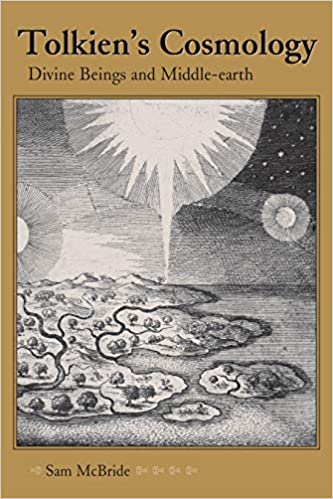
Many books on J. R. R. Tolkien and religion focus on the religion of the man himself. They attempt to piece together how Tolkien’s Catholicism and Christian faith are interwoven into his text, seeing Christianity as a driving force of the books or as intricately hidden within the hundreds of pages of drafts, published texts, and notes Tolkien left. Instead of approaching Tolkien’s work as representative of Tolkien’s personal religion, Tolkien’s Cosmology seeks to understand the religion within the texts as religion itself rather than representative of another. McBride takes upon himself a large and daunting task of describing not only the cosmos of Tolkien’s universe but also how that cosmos involves itself with the machinations of Tolkien’s terrestrial world. In this explanation, McBride finds himself grappling with a large pantheon of gods, an author’s deft touch on a text to allow divine intervention, and soteriological and eschatological questions answered in primary and extraneous texts. As an approach to the cosmology, this text provides a stunning grasp of the complexities and vastness of Tolkien’s texts, while allowing for newcomers to this vast universe to be welcomed into its wide depths.

McBride uses his text to provide descriptive analysis of Tolkien’s mythology. Throughout much of the text, McBride describes, outlines, and summarizes the pantheon of gods (including Eru Ilúvatar, the supreme deity, and the pantheon of gods and minor deities), the genesis of creation, the divine intervention of the gods throughout Arda’s history, and the eucatastrophe of the end to the world. For example, in describing the understanding of deity in Arda, McBride coins the term polytheistic monotheism: worshipping one ultra-deity (Eru), while also engaging with, believing in, and praying to minor deities, who at times can supersede the ultra-deity in the centrality of worship from lower beings. This term helps McBride explain how, throughout its history, the divine influence on the world can be seen not just through Eru’s machinations but also through the efforts of other deities who can be believed to be the singular God or one of many gods, depending on the person or people who are worshipping (chapters 1 through 4 deal with explaining and expanding how polytheistic monotheism influences Tolkien’s universe). Additionally, McBride delves into and examines the themes of evil (chapter 5), death (chapter 6), and the end of the world (chapter 7), three topics that religion, generally, should be able to at least address. In these examinations, McBride shows his argumentative finesse, engaging with scholars who have attempted to examine these topics and using his new framework—a cosmology scaffolded by all the works of Tolkien—to show the differences a new view makes.

To approach Tolkien’s oeuvre, a scholar must decide how to incorporate the copious extant notes and drafts. While many scholars of Tolkien have approached his work as developing across the course of his writings, McBride chooses to engage with Tolkien’s work in its totality. Instead of tracing the chronological development of ideas, McBride unites all of the ideas, from notes to early drafts, to envision a cohesive cosmology, mythology, and theology throughout Tolkien’s work. This effort helps McBride build a pantheon for the books themselves, writing an in-universe revelation of what could be; however, it stifles the understanding of Tolkien’s books as Tolkien’s creation. Instead, in forming this cosmology, McBride almost becomes coauthor with Tolkien, not necessarily exegetically or eisegetically engaging with the world but rather working with Tolkien to form an understandable cosmology.

Although McBride’s book’s genesis comes from Tolkien’s assertion that The Hobbit (1937), The Lord of the Rings (1954/1955), and The Silmarillion (1977) contain and discuss religion, McBride spends little time problematizing or recognizing the fraught history of the term and the study of it. Indeed, he simply says there is religion and continues forward into a descriptive analysis of the deities and their interactions with the world. As a result, scholars of religion have a foundation in McBride’s book upon which to understand fantastical and created religions, while also using Tolkien’s work to further the study of religion. Tolkien’s Cosmology, then, can be seen as laying a good groundwork for many future articles and books on the subject.

This robust description and analysis of Tolkien’s cosmology will aid any Tolkien researcher and scholar of fantasy literature in approaching not only his work as a whole and his entire created world but also any other attempt by authors at worldbuilding. Indeed, McBride’s engagement with not only the published source material but Tolkien’s archive of notes and drafts provides insight into the mind of one of the twentieth century’s greatest creators. His astute analysis, humbled through awareness of his different methodology, provides grounds on which the novice and experienced author can discover new things about Tolkien’s work. McBride’s text is meant to be one that supports wandering without getting lost.

Adam McLain researches and writes on dystopian literature, legal theory, and sexual ethics. He is currently a Harvard Frank Knox Traveling Fellow, studying twentieth-century dystopian literature and the legal history of sexual violence in the UK. He has a bachelor’s degree in English from Brigham Young University and a master of theological studies from Harvard Divinity School.


Review of Gender and Environment in Science Fiction


SFRA Review, vol. 51, no. 4

Nonfiction Reviews


Review of Gender and Environment in Science Fiction

Patrick Sharp

Christy Tidwell and Bridgitte Barclay, eds. Gender and Environment in Science Fiction. Lexington Books, 2019. Ecocritical Theory and Practice. Paperback. 238 pp. $39.99. ISBN 9781498580595.

This anthology from Christy Tidwell and Bridgitte Barclay is a part of Lexington Books’ series on Ecocritical Theory and Practice. As Tidwell and Barclay explain in their introduction, the purpose of the volume is to engage the ways in which science fiction narratives take up, challenge, and transform the “often flawed scientific narratives” of scientists and “popular science writing” that are centrally important for examining “environmental and gender issues” (xii-xiii). The essays in the volume focus primarily on science fiction film and literature, with one essay on mid-century comics. Like most anthologies of this kind, there is not a tight coherence connecting all of the essays to one another, but this is not a flaw. The purpose of the volume also seems to be to open a broad-based conversation between branches of feminist science studies and the scholarly science fiction community on increasingly urgent environmental issues. As a result, each essay weaves together a new provocation from different disciplinary threads and theoretical approaches. While the overall book might seem eclectic to some, I enjoyed the variety of the essays and think that it provides a welcome and timely addition to the growing body of SF scholarship grappling with climate change and environmental themes.

The first section of three essays focuses on “Performing Humanity, Animality, and Gender,” and begins with Barclay’s essay on Mesa of Lost Women (1953) and Wasp Woman (1959). Both of these mid-century B movies focus on monstrous, hyper-sexualized “wom-animals” designed clearly to titillate (3). However, as Barclay argues, the films’ blurring of boundaries between “nature and science, humans and animals, masculine and feminine,” work to “destabilize both gender and human/nonhuman constructs” and open up rich possibilities for camp readings (3). As drag shows expose the artificial nature of gendered performances, such low-budget B movies expose the artificial nature of filmmaking (through clunky effects and non-sensical stories that destroy the suspension of disbelief). Barclay shows how they also expose master narratives and mid-century hierarchies of power, and proffers a camp reading through “ecocritical and feminist frames” that queer such narratives and hierarchies (5). Through her camp readings of these films, Barclay shows how their “sf warnings about” violating boundaries become “a pleasure” in violating those boundaries (6). In Mesa of Lost Women, a scene of mad science where “arachnid women […] with super intelligence and beauty” work feverishly in a laboratory becomes a vision of the traditional objects of the male scientific gaze—women and animals—becoming “empowered” by actively “undoing […] traditional gendered and anthropocentric boundaries” (10). In Wasp Woman, a businesswoman overcomes the condescension of men by “becoming the experiment and the experimenter,” reaching into the animal kingdom to give herself the power of a queen wasp (10). Barclay demonstrates how this appeal to alternative gendered arrangements in the animal kingdom shows the artificiality and mutability of the “sex/gender constructs of human culture” (13).

The second essay in the first section is by Tidwell, who takes up gendered performance in two recent films—Her (2013) and Ex Machina (2015)—and argues that they are narratives of escape and “freedom for […] female characters, who are not punished for their flight and who do successfully escape” (30). Tidwell rejects the readings of the films that try to limit them to standard exercises in male fantasy projected onto technology. What is more problematic, she argues, is the way in which the films “privilege the machine at the expense of the garden” and “take for granted human control of nonhuman nature” (36). By glorifying liberation for female characters at the expense of nonhuman nature, Tidwell shows how the films highlight “the need for stronger connections between feminist and environmental concerns” in science fiction (38). In the third essay of the section, Amelia Z. Greene addresses the embodied quality of knowledge in Octavia Butler’s novel Wild Seed (1980), focusing on the abilities of main character Anyanwu to read bodies and transform herself into any body—regardless of sex or species–that she could read. Greene shows how Butler rejects the masculinist eugenics associated with the novel’s villain Doro, opting instead for a kind of utopian queer ecology through the ways in which Anyanwu gathers and adjusts bodies and develops “alternative models of familial care” as a site “of ethical world-building” (47). As such, Greene argues that Wild Seed provides one possible alternative to the heteronormative, “future-oriented environmentalist thinking” that focuses on protecting nature for the benefit of future human generations (58). Anyanwu’s building of families as a father and mother, and also as a dolphin, queers the “category of the human […] as one piece of a much larger planetary organism or arrangement” (59). Though limited by Butler’s adherence to “reproductive futurism,” Greene shows how Butler “calls on readers to emulate Anyanwu” and “deviate from the scripts we have been given” (61).

The second section has two essays on “Gendering the Natural World.” The first is an examination of speciesism in the films Womaneater (1958) and The Gardener (1974) by Fernando Gabriel Pagnoni Berns and Juan Juvé. More specifically, they look at how the “vegetal monsters” are coded as “passive and feminine” objects of “imperialism and capitalism,” while also being coded as violently masculine threats to the social order (70). Using ecocritical theory that highlights the “interwoven nature of speciesism” with “misogyny” and other “forms of oppression,” Berns and Juvé show how the woman-eating Amazonian tree of Womaneater is an active phallic monster, while at the same time it serves as a passive and feminized extension of the colonial British explorer who captured it (71). Where Womaneater shows a critique of speciesism similar to the nascent counterculture movements of the 1950s, Berns and Juvé argue that The Gardener is an example of such critique during the full flowering of the consciously ecological “nature-run-amok” films of the 1970s (79).

The second essay, by Steve Asselin, looks at the gendering of nature in Mary Shelley’s The Last Man (1826). Using a “queer ecocritical” approach, Asselin notes how male characters think of the novel’s global plague in terms of feminine roles such as mother, lover, and female tyrant (91). Asselin makes clear that nature is “a nonhuman entity forced into a human and gendered persona,” and dismantles the “heterosexist assumptions” that Shelley’s characters use when they confront nature and the plague (92). Asselin also celebrates Shelley’s rejection of “reproductive futurism,” or the belief that people should think about “subsequent generations” as a motivating force for doing good (94). The novel makes clear that there will be no future generations, and Asselin makes clear that it also deconstructs “masculine cultural practices” that will vanish along with humanity (99).

The third section has two essays on “Contemporary Queering.” The first is by Tyler Harper, whose examination of Kim Stanley Robinson’s 2312 (2012) emphasizes the importance of “alternate ways of thinking about nature” that help “combat […] forms of environmental and bodily violence and subjugation” (116). Harper argues that Robinson’s cyborg main character—and the novel’s critique of terraforming—lead to a “post-naturalism that would not presuppose to transcend nature” (124). Harper concludes that the strength of Robinson’s novel comes through its insistence on an awareness of making as an activity that exists within nature, and that must also contend with the limitations of the boundaries we create with our knowledge. For Harper, this means avoiding putting “the world […] under the thumb of techno-scientific mastery” and also avoiding the rejection of knowledge as radically contingent (127).

Stina Attebery provides the second essay in this section, “Ecologies of Sound,” in which she explores the sound elements of Upstream Color that further “feminist biopolitics” and lead to “queer forms of human and non-human reproduction” in the film (132). A story of cross-species parasitism that leads to heightened sensory awareness, Upstream Color (2013) uses sound to foreground the main character’s journey from trauma to understanding, particularly in her linkages in a “queer community of species” akin to Stacy Alaimo’s formulation of “trans-corporeality” (134). Attebery shows how the intimate sensual connection between the main characters and two pigs—created through “mediated listening” in a complex series of medical interventions and gestations—offers a “new political framework” for understanding “forms of reproductive futurity” that “are explicitly queer” (137).

The fourth and final section, entitled “’We Don’t Need Another Hero,” has three essays that critique the gendering of hero figures in comics and film. The first, by Jill E. Anderson, focuses on “Ecoqueer Hybrid Heroes in Atomic Age Comics” put out by branches of the U.S. government to teach ecological lessons. Analyzing such characters as Smokey the Bear and Nature Boy, Anderson shows how their campy stories and connections to nature make them particularly transgressive figures in the ultra-conservative era of the Comics Code Authority. Anderson convincingly reads Smokey as a ruggedly masculine “gay bear” who shows the folly of human treatment of nature while redefining “masculinity as forgiving, undemanding, and inclusive” (155-156). Anderson reads Nature Boy as a hilariously campy master of nature who rides phallic lightning bolts, uses his powers to fight “humankind’s violence, greed, and corruption,” and approaches conflict with “empathy and benevolence” (158). Anderson’s discussion of Swamp Thing and Aquaman reinforces the case that such hybrid characters effectively commandeered mid-century masculinity to show the interdependency of humanity and non-human species.

The second essay, by Michelle Yates, breaks down Eden imagery in Soylent Green (1973) and Wall-E (2008), in particular the nostalgic quests of white men in after-Eden stories looking to restore (feminine) nature and (masculine) civilization. As Yates shows, both films rely heavily on eco-memories of pristine nature and romanticize “a past when […] white people were seemingly in a harmonious relationship with extra-human nature” (174). Like much political nostalgia, however, these films romanticize something that never in fact existed, and use it to reinscribe hegemonic patriarchal whiteness at the center of modern eco-discourse in ways that obscure material relations of power and privilege. They also reveal the persistence of such white masculinist fantasies in eco-media.

The final essay in this section (and the anthology) is Carter Soles’s piece on petroleum culture and feminism in the Mad Max franchise. Soles shows that the rise of feminist characters beginning in the third film, Mad Max Beyond Thunderdome (1985), undercuts the “patriarchal constructions of women as passive” and instead recasts them as the builders of ecologically sustainable civilizations (189). The move away from the petroleum culture of the first two films to a nuclear frontier setting in Thunderdome and Mad Max: Fury Road (2015), Soles argues, allows the films to connect patriarchy with the environmental devastation of capitalism. However, Soles shows that the films remain committed to a globalized capitalist economy supported by an “unsustainable dependence upon fossil fuel” (199).

The essays in this volume provide very different and engaging theoretical and methodological approaches to gender and the environment, and each speaks to the power of SF to provide transgressive and transformative possibilities necessary for building more ethical (and survivable) futures. One particular strength of this collection is this:  the essays in this anthology will bring  those unfamiliar with eco-feminist and eco-queer theory up to speed as they cover large swaths of the field and ground these theories in detailed readings of SF texts. Science fiction scholars should ensure that their library has a copy of this fine collection, and scholars interested in the intersections of gender, sexuality, and the environment in SF should get the paperback for their personal libraries.

Patrick B. Sharp is Professor of Liberal Studies at California State University, Los Angeles. He is the author of Darwinian Feminism and Early Science Fiction (2018) and series co-editor of New Dimensions in Science Fiction with the University of Wales Press.


Review of The Order and the Other: Young Adult Utopian Literature and Science Fiction


SFRA Review, vol. 51, no. 4

Nonfiction Reviews


Review of The Order and the Other: Young Adult Utopian Literature and Science Fiction

Thomas J. Morrissey

Joseph W. Campbell. The Order and the Other: Young Adult Utopian Literature and Science Fiction. UP of Mississippi, 2019. Children’s Literature Association Series. Paperback. 200 pg. $30. ISBN 9781496824738. Hardback. 200pg. $99.00. ISBN 9781496824721.

Joseph W. Campbell is a man on a mission. His goals are to differentiate SF from dystopian literature and to demonstrate “how essential it is for adolescents to come into contact with dystopian literature and science fiction and to understand these genres on their own terms” (5). For him, texts in both genres have a “use value” in the classroom, which is to say that texts in each genre invite an understanding of either othering (SF) or social critique (dystopia). The Order and the Other: Young Adult Utopian Literature and Science Fiction, consists of an Introduction, five chapters that take us from the theoretical underpinnings of the genres to observations about their future course, thorough notes, a bibliography, and an index.

Chapter One, “Interpellation, Identification, and the Boundary Between Self and the o/Other,” establishes ways of looking at subject formation and its relationship to cultural and state power. The sources—Althusser, Žižek, Foucault, Burke, Trites, and others—will be familiar to most critics. Campbell demonstrates that adolescents are themselves othered, that they are under surveillance, and that society wants the literature written for them to reenforce prescribed social constructs. However, SF is built upon the novum (Ernst Bloch) and cognitive estrangement (Darko Suvin). Paraphrasing Carl Freedman, Campbell writes that “the novum is the object or place that creates radical alterity, the ‘new thing’ that immediately pulls readers out of their assumptions about how the world-within-the-fiction works” (34-35). Furthermore, “what we might think of as normal ideological beliefs and rhetorical positions are estranged” (35). On the other hand, “dystopian fiction is a genre where the author can readily engage contemporary social situations and theoretically project what is to come for an audience that is perhaps not always as theoretically and politically aware as an academic one” (37). Campbell introduces Althusser’s Ideological State Apparatuses (ISA) and Repressive State Apparatuses (RSA). The former are the means of indoctrination and cultural hegemony; the latter are the violent methods that dystopian societies employ when ISA fail. ISA and RSA recur throughout the text.

The second chapter, “’The Electric Boy Grows Up’: Science Fiction for a Young Adult Audience,” discusses the use value of YA SF. Unlike YA literature in general, which Roberta Seelinger Trites says is primarily designed to reinforce established discourses and values, YA SF benefits from cognitive estrangement; hence, “science fiction can be used to help adolescents examine the ‘us/them’ orientation of the discourse that surrounds them” (43). Specifically, YA SF should be eye-opening. Campbell writes that “contemporary science fiction is engaged with the encounter with the other and exploring the nature of othering itself” (49), both of which endeavors result from the destabilizing effect of cognitive estrangement and the new opportunities inherent in the novum. Openings are created for newer discourses. Feminism and other critical perspectives emerged in SF precisely because the form invites them. Campbell gives attention to several texts that help illustrate his contention that the genre is “a literature of critical advocacy” (55).

Chapter Three, “’The Treatment of Stirrings’: Dystopian Literature for Adolescents,” seeks to define the scope and use value of the form. The chapter’s title is an unmistakable nod to Lowry’s The Giver (1993), a discussion of which concludes the chapter. Lowry’s sexless world is devoid of youthful hormones. Furthermore, the adults in the book experience infantilization. Hence, Campbell agrees with Lyman Tower Sargent’s observation that dystopias for adults and young people are not all that different. Campbell dismisses the argument that dystopia is about hope or the lack thereof. He points out that YA dystopia offers the opportunity for social critique. But the form also highlights the passage from childhood utopia to adult dystopia. This is precisely what happens to Jonas in The Giver when he moves from restricted childhood to the lonely and painful status of Keeper of Memories. There are informative discussions of several other novels including Todd Strasser’s  The Wave (1981), Robert Cormier’s The Chocolate War (174), and Suzanne Weyn’s The Bar Code Tattoo (2004).

Having taught both SF (YA and Adult) and utopia/dystopia for over forty years, I enjoyed Campbell’s discussion in Chapter Four, “Teaching the Fantastic”: Using Science Fiction and Dystopian Texts in the Classroom.” His intention is to help give students the tools they need to read the texts with the goal that they will come to their own critical perspectives. One point on which he is adamant: “Studying science fiction and dystopian literatures can create a learning community within the classroom space” (129). I agree wholeheartedly. Teaching these texts requires that teachers allow students to own them. Since both forms employ social criticism, it is important to recognize that in order for students to recognize the ISA which trap them, they must be empowered. To teach top down is to miss the point entirely. While failure is implicit in adult dystopias, dystopia for younger readers must not be entirely hopeless, which does blunt, to some extent, the dire warnings. The remainder of the chapter surveys a number of pedagogical uses of the genre by multiple teachers, including engaging observations based on Campbell’s own teaching. Of particular note is the idea that instructors have a responsibility to deal with the impact on students of reading critical texts that might upset preconceived ideas.

Chapter Five, “’Signs of Life’: Consideration for the Future of the Genres and Their Critique,” is where Campbell shows his passion for his pedagogy, the goal of which is helping teachers to better grasp the immediate use value of two closely aligned genres. The boundaries between the genre are permeable. While the task of YA SF is to defamiliarize, to catch off guard, the job of YA dystopias is to create fictive societies that clearly resemble the world in which the YA audience lives and that offer hope for and pathways to life beyond adolescence. Campbell tells us that dystopias “tend to share one thing in common: a sense of totalitarian fascism” (157-8). Fascism is alive, well, and resurgent, and students need the tools to deconstruct it. This chapter also features strong individual discussions of films and texts.

This a multi-faceted book. It is an erudite and lucid discussion of critical theory as applied to SF and dystopia. It is a source book for instructors who want to learn how better to employ such texts. It is also a call to action. Teachers are urged to think more systematically about the two genres and choose texts that will develop in students an ability to appreciate new ways to look at the self, the other, and the struggles inherent in living in a largely dystopic world.

Thomas Morrissey is Emeritus Distinguished Teaching Professor of English, having retired from SUNY Plattsburgh in August of 2020. He has written numerous articles and book reviews, many SF-oriented. He is coauthor with Richard Wunderlich of Pinocchio Goes Postmodern: The Perils of a Puppet in the United States (Routledge). He is also author and composer of several musical comedies, one of which, “Puppet Song,” follows the trials and tribulations of Pinocchio’s descendants.