Review of Sorrowland


Review of Sorrowland

Julia Lindsay

Solomon, Rivers. Sorrowland. MCD Books, 2021. 368 pp, $14.45, ISBN 9780374266776.

In relation to both gender and genre, Rivers Solomon pushes boundaries. Their first novel, An Unkindness of Ghosts (2017), launched them into the literary scene and was shortlisted for several awards. Solomon maintains Unkindness’s queer and Afrofuturist themes in their subsequent novels and continuously engages with African American history. Sorrowland (2021), Solomon’s third and most recent novel, features a cast of queer characters, including intersex protagonist, Vern. The novel follows Vern as she evades a Black separatist commune-turned-religious-cult, the Blessed Acres of Cain, from which she has fled. In the first half of the novel, Vern hides from her pursuers in the woods of a speculative contemporary American South, an unconventional setting for the SF genre. The novel further toys with the reader’s generic expectations, employing tropes and figures traditionally associated with the gothic and the fantastic.

The novel is queer from the opening pages, as Vern gives birth to twins Howling and Feral and does not bother to look at Howling’s genitalia after birth (the sex of the babies is never revealed to the reader). She decides not to gender them, concluding that such matters are of no concern in the woods. Vern and the children’s relationship with the woods may trouble readers in the first half, as Solomon’s initial characterization could potentially stabilize the problematic nature/culture binary. However, the latter half of the novel, which follows Vern and the children after they leave the woods, complicates such a reading. As Vern and the children come into their own, she realizes the naivete of her escapism. Vern’s time in the compound and the years she and the children live in the woods, in fact, leads them to encounter the novel’s speculative United States as strangers. Solomon utilizes free indirect discourse and reading through Vern’s, and later Howling’s, perspectives defamiliarizes the novel’s setting, evoking the same sense of cognitive estrangement common to temporally or spatially distanced SF. 

Solomon uses gothic and fantastic conventions that are particularly associated with Southern and African American literature, continuing the push to open SF to the experiences and voices of authors whom the genre has excluded based on race and region. Further, Vern’s ambiguous references to “hauntings” and to a “fiend” stalking her in the opening scenes, evoking the gothic or fantastic, unmoor the reader, making it difficult to place the novel in place or time. These “hauntings” originate in Cainland and appear to follow Vern after her escape. For Vern, they materialize in human form, featuring both familiar and foreign faces, increasing in number and intensity as the plot unfolds.  The science fictional nature of Sorrowland is not confirmed until the latter third of the novel, a move that, while not unique to SF, sidesteps the norm and contributes to the novel’s interrogation of genre, particularly as it pertains to Black experience. Vern discovers that her hauntings, and the strange developments in her body that she begins to notice shortly after the birth of her children, are the result of a government conspiracy with Cainland at its center: Cainites are being used for medical experimentation. Joining the gothic/fantastic and science fiction through hauntings displaying the history of violence on black bodies highlights how these genres can both reflect and be limited by an antiblack culture.

Vern is forced out of the woods when the symptoms of this experimentation take a turn for the worse, making her fear she will die and leave her children abandoned as a rapidly developing exoskeleton leeches her body of energy. Once the novel moves out of the woods, the introduction of Gogo, a queer woman of Lakota descent, provides a welcome shift in plot and intensity, the novel’s underlying detective structure becoming more realized with Gogo taking on the role of co-investigator and love interest. Gogo identifies as winkte, a term from her Lakota heritage that is definitionally fluid, pushing against the binary constructs of gender and sexuality in the Anglo world as well as those in fundamentalist Cainland. Gogo enables Vern to not only become more comfortable with her sexuality but also to better understand her changing body.

Solomon thus forges a unique and fruitful link between the novel’s queer and posthumanist themes. Their inclusion of queer and intersex characters and of Black characters with albinism brings to the fore the many ways bodies naturally resist categorization, and this queer lens compliments the novel’s science fictional rendering of posthumanist perspectives. Together they undermine notions of fixity and autonomy and the naturalized, humanist hierarchy placing the human above the non-human. Solomon instead favors the cyborg, the porous being, the process of becoming, the mutual interpenetration of human and nonhuman nature, the rhizome. Vern refers to her developing exoskeleton as her “little passenger,” an echo of the language she uses to explain germs, viruses, and sickness to her children. Vern does not see her passenger as a separate entity threatening her bodily autonomy; rather, she sees it as an organism doing what it needs to do (the same way she views her body’s adaptation to it). Near the end of the novel, she acknowledges that her passenger has turned her into her “true self.” 

Sorrowland presents scholars with a case study of how queerness, Blackness, and science fiction intersect. The novelreframes African American history with science fictional tropes, like P Djèlí Clark’s Ring Shout (2020), where grave-robbing “night doctors” and Klansmen are likened to literal alien body snatchers, or Bill Campbell’s Koontown Killing Kaper (2013), which extrapolates from the government-made crack epidemic in a darkly funny monster-noir narrative. Foregrounding the incredibly science fictional nature of Black history and experience, Solomon draws a genealogy between the novel’s fictional experimentation and its historical precedents, referencing MKUltra, Project 112, Edgewood, and Tuskegee. These novels together ask: how fictional is science fiction? 

Themes such as trauma and collective memory connect Sorrowland with African American literary predecessors across genres, its spectral figures, of course, evoking Beloved (1987). However, Solomon moves beyond the trauma narrative, as these undead are neither psychological manifestations of trauma nor merely tragic figures. Because Vern’s passenger is a mycelium, she becomes part of a subterranean matrix, tied through the earth to the knowledge and experiences of the dead who have carried this fungus. 

These are not ghosts to be excised; they are part of an Afrofuturist-networked consciousness, inseparable and codetermining. Solomon‘s play with genre and history provides scholars with fruitful ground, highlighting how their science fictional fungus is just one iteration of this kind of Afrofuturist work. Drawing from and celebrating subversive and/or non-Western knowledges and technologies and connecting Black people across time and space through various engagements with collective memory sits at the core of the African American literary tradition. Sorrowland, as such, can serve as a point of departure in conversations about the ever-evolving definitions of Afrofuturism and SF. 


Review of Chosen Spirits/The City Inside


Review of Chosen Spirits/The City Inside

Ruchira Mandal

Chosen Spirits, by Samit Basu. Simon & Schuster, 2020. To be republished by Tor in 2022 as The City Inside. 256 pp. Price/ISBN yet to be established.

Chosen Spirits by Samit Basu is a novel set in the late 2020s in a New Delhi that still carries the scars of real, recent political violence, albeit hidden beneath the glib veneer of technological advancement and a plethora of distractions. Dubbed as a “capitalist technocrat’s wet-dream” (Deepanjana) by one reviewer, this near-future view of the city unsettles the present-day reader both by the familiarity of its history and the strangeness of its present.  The people now live under constant surveillance from their gadgets, houses, and even toothbrushes all watching and listening; they are distracted from dissent via the stories they are fed from their omnipresent screens. This distraction is primarily in the form of the new-age social media platform, the Flowverse, a cross between reality television and live-streaming. The Flowstars are the new celebrities/influencers of this era, streaming artificial, scripted stories about their lives, the content of which is pre-determined by their teams in accordance with the policies of their corporate bosses. It is not only the Flowverse, but also the actual reality of ordinary people that is largely controlled and curated by a combination of safety filter settings on the television channels, a firewall around the country’s internet, and the manipulation of information by the powers that be. As Nikhil, a potential investor, tells Indi, the Flowstar, “Bro, you have no idea who even runs the country…. It’s certainly not the dumbfucks on the hoardings” (Basu 106).

It is appropriate then, that the protagonist of this novel, Joey, holds the designation of a “reality-controller,” a professional image-builder and storyteller whose role it is to curate the feeds of Flowstars assigned to her. However, Joey’s own position as one of the objects of constant surveillance and her lack of control both over her own reality and over her Flowstars’ actions renders the job-title of “reality-controller” ironic. The opening sentence of the novel sets the mood for this world of mundane but sinister compliance: “Sometimes Joey feels like her whole life is a montage of randomly selected, algorithm-controlled surveillance-cam clips, mostly of her looking at screens or sitting glazed-eyed at meetings” (3). As a professional storyteller, Joey notes the lack of structure and story qualities in her own life, sometimes fantasizing herself as the star of those perfect montages she curates for her clients. In a world watched by some undefined, multi-entity Big Brother, life is a series of social media stories. While Orwell had the Thought Police, Basu’s characters are watched not only by their devices but also by their own bodies. Smart tattoos on their wrists can monitor their hormones and stress levels for the personal AI assistant called Narad, [1] who can order the coffeemaker to make coffee, order takeout, schedule a therapy session, and even send puppy gifs and loving emojis to their phones. Basu brings Orwellian dystopia and satire closer home with click-bait headlines that you may have read last week (Chattopadhyay). However, despite this omniscient surveillance, there are hints of an undercurrent of resistance. Surveillance cameras are mysteriously smashed and roadside kolams [2] with QR codes lead to secret protests with maximum bloodshed ratings.

Unlike many cyberpunk novels written by Western authors, Basu does not create a lone, male protagonist fighting the system. Rather, his protagonist, Joey, is a more relatable Indian, upper-middle-class woman, trying to do her job, look after her elderly parents, and survive without getting into trouble with the authorities. In creating an upper-middle class protagonist with a privileged social standing, Basu ensures that the readers are given entry into the world of the powerful while simultaneously sharing in her helplessness and insignificance. Rudra, the secondary protagonist and disfavored second son of a powerful family, is another character who functions as an observer of this world through all his cameras and VR sets. In his Dear Reader interview, the author declares that:

…this is a book about people who I might have known if they’d really existed, set in a world that’s pretty much identical to ours right now, and will be wholly so very soon. Which is why what the protagonists want is a normal, everyday life; peace, happiness, clarity — not adventure, not escape, not any form of saved or improved world; just the ability to cope with a regular day. (Deepanjana)

This is perhaps the reason why, unlike his earlier, more fantastical work such as the Gameworld trilogy, there is no grandstanding, saving-the-world scenario in Chosen Spirits. The protagonists of Gameworld learn to view all grand narratives with a degree of cynicism and irony, but they are nevertheless players with stakes in the game, rulers, powerful sorcerers, and prophesied heroes. In Chosen Spirits, the characters would simply like to get by without getting into trouble. Basu’s primary milieu is of “a middle-class family, complete with domestic help, facing the usual problems—ageing parents, a younger brother who isn’t ‘settled.’ Basu even posits a kind of ‘jugaadpunk’ [3] aesthetic in his depiction of the semi-formal cyberbazaars of Delhi” (Unudurti).

What makes Chosen Spirits specifically Indian and particularly disorienting is its rootedness in current Indian socio-political events. Basu wrote this novel in a milieu of protests relating to, among other issues,the Citizenship Amendment Act or CAA, which could compel citizens to prove their citizenship (The Hindu); the Farm Laws, which farmers allege would leave them without legal recourse against traders’ hoarding and arbitrary pricing (Chaba); and the attack on the students of Jawaharlal Nehru University (BBC News). More popularly known as JNU, the university has long been one of India’s premier educational institutions as well as a stronghold of Left-Wing student politics. In November 2019, an MP of the ruling party proposed that the university be closed for a period of two years “to curb the presence of antisocial elements” (Press Trust of India). In Chosen Spirits, we are casually informed that the mall selling the world’s largest air-conditioning machine has been built “over the ruins of what was once Delhi’s most prestigious post-grad university, demolished after three years of demonstrations, terror strikes and bloodshed the city pretends hard to forget” (Basu 122). Likewise, Shaheen Bagh, the hotbed of anti-CAA protests, “exists only in memory” (7) in the novel, with a new name that Joey refuses to learn. It is this near familiarity with the real world that paradoxically gives the novel its quality of displacement. As the author says, unlike classic sci-fi, there is “no central sci-fi or fantasy plotline or regular-physics-distortion in Chosen Spirits, so physical and digital objects, places, and character transformations based on both real (and imaginary near-future) historical events are where the dislocation from here and now comes from” (Deepanjana). Instead of taking a dive in an unspecified far future, Basu takes us on a ride through the dystopia of a possible near future, and the effect is both fascinating and discomfiting. In Joey’s world, our present has become ‘the Years Not To Be Discussed’ (Basu 14), a time when opinions could still be expressed before:

the Blasphemy laws in several states, … the mass de-citizenings, the voter-list erasures, the reeducation camps, the internet shutdowns, the news censors, the curfews, … data-driven home invasions… the missing person smart-scrolls on every lamp-post…. (15)

Joey’s parents, belonging to an older generation, continue to cling to a lingering faith in the idea of protests and standing up for what is right. But in a world where anyone from pest-control or app-based cleaning crews can plant molka cams in one’s kitchens and bathrooms and young girls may disappear a few days after attending a protest of the demolition of their schools (18), the individual has very little agency to do anything to change the state of things.

The ubiquitous surveillance technology described in the novel is very similar to an early 2000s Georgia Tech project called ‘Aware Home’ (Kidd 191-198), a “human-home symbiosis” consisting of a network of “context aware sensors” embedded in the house and wearable computers worn by the home’s occupants. The network of smart tattoos, personal AIs, smartphones and kitchen appliances in the houses of Joey or her parents in Chosen Spirits recalls this concept of ‘aware home.’ However, whereas the original intention of the scientists might have been optimistic and idealistic, the idea of a truly ‘aware’ house takes on a far more sinister connotation in Basu’s novel where the idiom about walls having ears comes true in the most literal and frightening sense. As Joey tries to explain to her uncomprehending parents, while one could still express one’s opinions in the good old days when surveillance was run by people, it was “your own house spying on you now” (Basu 16). While the scientists at Georgia Tech assumed that the knowledge produced by the new data systems would belong exclusively to the people who live in the house, the data in Chosen Spirits is subjected not just to government surveillance but also to corporate espionage. Shoshana Zuboff in her book The Age of Surveillance Capitalism discusses how this original benign idea might have influenced a present-day smart home appliance such as the Nest Thermostat, which uploads its personalized data to Google’s servers “to be shared with other smart devices, unnamed personnel, and third parties for the purposes of predictive analyses and sales to other unspecified parties” (Zuboff 6). The project, in the year 2000, “imagined a digital future that empowers individuals to lead more effective lives” (7). Writing in 2019, nearly two decades later, Zuboff observes how those inalienable rights to privacy and knowledge have given way to the age of “surveillance capitalism”, which “unilaterally claims human experience as free raw material for translation into behavioral data” (7). And writing just a year later in 2020, Basu predicts a future in which personal data is not simply sold for marketing purposes but is also monitored to ensure the maintenance of the status quo of inequality and injustices that allows for more profitable trade.

While Joey leaves for work from her posh gated community, the militia is busy herding out people in rags, possibly to some detention centre. She wonders if they have become non-citizens already or if they are going to lose their organs, but can’t voice any of her concerns because “she’ll hear they were illegal terrorists or Pakistani spies, and her concern will be noted in the Welfare Association’s ledgers, marking her out as a potential troublemaker” (Basu 27).  Meanwhile, a Singapore real estate tycoon advertises for partners for an organ-farm business and the debate on the news centers not around human trafficking and slavery, “but around the maximum allowable percentage of foreign ownership of these farms” (29). Farmer protest processions still happen, but in single file as they submit to face scans and searches through data implants installed on their necks (30). While a fraction of this makes its way to the Newsflow, real news is to be found in the gatherings of the powerful, as Rudra discovers during his father’s funeral by shadowing Chopra, an ‘access-caste’ elite, one of the people with access to people’s data and the means to use them (63). As Zuboff notes, “Surveillance capitalism’s actual customers are the enterprises that trade in its markets for future behaviour” (10). As Rudra learns from this gathering, there are new plans in place to implement a new system of social-credit ranking, an automated, algorithm-based system where the average citizen will be ranked according to “every transaction, every observed adherence to or violation of every unwritten rule, every movement, every word spoken or messaged, every act of consumption, participation or expressed emotion…” (Basu 64) to be filtered and categorized by their biometrics and their role in family and community against their optimum, ideal potential as a member of society. The resultant data will only be available to people like Chopra to be used while the ordinary citizens, thus judged, will never even know about it; “Surveillance capitalists know everything about us, whereas their operations are designed to be unknowable to us. They accumulate vast domains of new knowledge from us, but not for us” (Zuboff 11).

The surveillance capitalists in this new world continue to grab for even more control, not just for data but for the very identities of individuals. As Zuboff says, “the competitive dynamics of these new markets drive surveillance capitalists to acquire ever-more-predictive sources of behavioral surplus: our voices, personalities, and emotions. Eventually, surveillance capitalists discovered that the most-predictive behavioral data come from intervening in the state of play in order to nudge, coax, tune, and herd behaviour toward profitable outcomes” (8). In Chosen Spirits, Basu posits a future where faceless corporations not only control the social media content of the influencers but eventually control their digital identities—for all time—where this new digital icon/filmstar/influencer might become the face and voice of anything without the consent or even involvement of the actual individual. According to this estimate, in some undefined but not far off future, the individual may not even exist, and celebrities would be created from scratch, without the need to sign up an actual human being (Basu 115). This is the offer that is made by a potential investor to Indi and Joey, an offer they refuse at first, because in a world where every action performed by the body is recorded and measured, “talking is all we can do…” (116). Thus, digital expression via the Flowverse, however scripted, remains one of the last vestiges of freedom of expression, or an illusion of it at least. But the oligarchs in this world get what they want, and Indi is soon convinced into signing to save his career when a video-clip of him sexually assaulting a makeup-artist mysteriously finds its way to the feed of a rival Flowstar. In the ensuing damage-control measures, the issue of justice for the victim is of course buried.

Surveillance capitalism thus depends upon knowing and thereby shaping human behaviour towards goals that suit those in power. While Basu’s dystopian Delhi has neighborhood armies marching in jingoistic uniforms, simultaneously advertising vegetarian restaurants and flushing out undesirables, the real power of the state is exerted not via “armaments and armies” but “through the automated medium of an increasingly ubiquitous computational architecture of ‘smart’ networked devices, things, and spaces” (Zuboff 8). Thus, while Indi dreams of the poor rising like a zombie herd someday to overthrow the current order, Joey is aware of the difficulty of achieving that in a regime that has foreseen every possible means of insurrection and taken measures to prevent it.

Basu’s dystopian Delhi can be described as a cyberpunk cross between the Orwellian world of surveillance and Huxley’s Brave New World where instead of Soma, the people are drugged by the constant diversion of catchy, clickbait entertainment.  Moreover, this distraction is often a conscious and necessary choice in a world where “not looking away means seeing terrible things” (Basu 28). Early in the novel, Joey and her brother attempt to prevent their parents from having “a full-scale fight about the State of the Nation…. She barges in and makes the standard gestures—they stop immediately, and stare back at her with their usual mix of rage and shame” (14). The crisis is then more properly averted as Joey sets the television to a puppy adoption show, which acts as a ‘smart pacifier’ to distract the elderly from ranting about the government; “There will be no van full of murderers pulling up outside their house today” (16). When Tara, aspiring Flowstar, speaks of participating in protests as a student while promoting the supermarket built at the site of the former university, she manages to disturb the audience who would rather forget student protests when “the mall and the accompanying religious park… are an attempt at dazzling the city into distraction” (122). 

Even Joey, who is more adept than her parents at keeping her opinions unheard, and less tone-deaf than Tara, is often tormented by having “Real Thoughts” and must distract herself with the work of creating stories for her clients. A major theme of the novel therefore is that of storytelling and narratives. Chosen Spirits looks at how stories are constructed, which stories are told, and which ones are buried beneath the onslaught of relentless entertainment. While Joey selects the stories that might get maximum engagement from Indi’s followers, another slum not far from her upper-middle class, respectable neighborhood is being evacuated by the police and the builder-militia.

Although written from the perspectives of the upper-class elites of the city, the novel manages to highlight this clear line between the privileged and the poorer section of the population. Basu posits the ‘Chosen Spirits’ of the title as the privileged, ‘chosen’, conformist elites who have always been a part of the city’s top brass, “the chosen ones of the age” (Basu 1) mentioned in the Mir Taqi Mir poem used as an epigraph. In a private Twitter conversation, Basu states that the poem reflects “both the timeless nature of Delhi” as the city of the powerful and “the representative/popular/conformist nature of the workspace of the protagonists.”  Joey herself is aware of this “low-level court intrigue” (12) that makes her feel a little out-of-place amongst her Delhite friend circles despite belonging to the same social class. Although she has adapted herself to this new position of being in the surveillance state, this sense of discomfort never really dissipates, much like the constant itching of her smart tattoo. Similarly, the privileged may pretend that everything is perfect, protected as they are by their air-sealed, air-conditioned apartments and cars, but even for them stepping out on the streets entails packing essentials such as water bottles, smog masks, and pepper sprays. Even for the chosen ones, the problems of environmental pollution and social degeneration are hiding just around the corners, and neighborhoods must hire private militia (wearing patriotic uniforms with sponsorship logos in a beautiful marriage of jingoism with capitalism) to ensure that their ration of weekly drinking water is not raided by someone less fortunate.  This state of being is maintained by a combination of surveillance and the dissemination of too much information that drowns out news that matters, such as the new age slave-trades and environmental disasters.

Although the book, toward the latter part, does consider the possibility for change, Basu’s main focus is to dig into the mechanics of oppression, the way those in control silence or marginalise the “other”—whether it be Muslim, Dalit or LGBTQIA+ voices—by feeding an eager audience with spectacle and distraction. (Mond)

Flowstars are often willing participants in this circus of ‘spectacle and distraction.’ Indi may speak of uprisings and the freedom to use his own voice and Tara may speak of her struggles and trauma from participating in student protests in her hometown. Yet, in truth, they have very little agency or even intention beyond building their own careers. Even celebrities less selfish than Indi or Tara can do nothing to change this state of affairs. Joey has seen other reality controllers and Flowstars fade and disappear from the industry after being seen at protests. Even looking at inspiring photographs of protestors braving police brutality and fascist mobs across the world is of no help, if not downright dangerous as potential ID traps (Basu 28). This is in contrast to the Shaheen Bagh and Jantar Mantar protests, which Joey remembers as a time of hope, of people coming together from all walks of life for a common cause: “…they’d thought they were alone, that most people in the country had been swallowed up by a tide of bigotry and hate. They’d never been happier being proved wrong” (5). Those people from ‘the Years Not To Be Discussed’ were united by stories of faith against a common enemy, and as history will show, stories are important as tools that can both make or break a civilization.  As Yuval Noah Harari says in his famous work, “The ability to create an imagined reality out of words enabled large numbers of strangers to cooperate effectively…. Since large-scale human cooperation is based on myths, the way people cooperate can be altered by changing the myths- by telling different stories” (Harari, 36).

In the fictional near future of the late 2020s India, all possibilities of cooperation and collective protest have been nullified through a multiplicity of stories. As Nikhil tells Indi during their business meeting, “They wouldn’t know if there was another epidemic happening right now, or a genocide, or a civil war. Even if they knew, they wouldn’t know how to join it. They would have no idea what to do. They’re that easy to distract” (Basu 116). Unlike the protestors from the past, the oppressor in Chosen Spirits is faceless, even more so than Orwell’s Big Brother:

…it isn’t just the government snooping any more, but a peak-traffic cluster of corporations, other governments, religious bodies, cults, gangs, terrorists, hackers, sometimes other algorithms, watching you, measuring you, learning you, marking you down for spam or death. (Basu 16)

In an interesting conversation between Joey, Indi, and Nikhil where the latter proposes to make Indi a global icon in exchange for his digital identity, the reader is offered an insight into what it means to be an ‘influencer’ and the mechanics of garnering an audience in India and in the West. In this new age of ‘Cultural Warming,’ the digital identity of the icon can be constantly altered to stay relevant to public demand, becoming a film-star or spiritual healer or social justice activist as the need be. Whatever public dissatisfaction exists may be weeded out without causing any real impact: “The state funds and controls the resistance, so there’s no left or right, everything’s a distraction, everyone’s observed and under control” (Basu 120).

The real resistance in the novel is offered by tertiary figures who have learned to subvert the system to their benefits, sometimes using VR gaming platforms: DesiBryde, a radical porn-star who performs while wearing the masks of religious leaders, creating a Flowstream powerful enough to circumvent all culture-policing and censorship; E-Klav, a Banksy-like Dalit graffiti artist who has somehow managed to stay hidden while vandalizing the symbols of the establishment; and Zaria Salam, an investigative journalist who has managed to build up an online notoriety despite her videos disappearing off the Indian internet within seconds of release. There is also cyberbazaar, the market for pirate-tech run by working class people where Rudra and Zaria get their smart-tattoos removed when they go off-the-grid. At the end of the novel, Basu does not offer revolution, only the possibility of change through slow, long-term efforts as Desibryde and Joey begin to discuss the possibility of working together. This leaves the novel open for sequels, but also makes it more realistic. As history might prove, the mass uprising of the poor, as envisioned by Indi, rarely affects a sustainable shift in the dynamics of power imbalance, especially against an insidious, all-pervasive system. Basu thus creates a cautionary tale of a possible future, leaving us only with an outline of how to navigate it.

NOTES

[1] Narad or Narada is a god-sage in Hindu mythology famous as a travelling musician and storyteller.

[2] Kolam is a form of traditional decorative art made of a series of dots joined by lines and loops that is drawn by using rice flour, generally seen during festivals and celebrations.

[3] Jugaad, a Hindi word meaning hack or makeshift solutions. Cyberbazaar in the novel is a market for pirate tech.

WORKS CITED

Basu, Samit. Chosen Spirits. Simon & Schuster, 2020.

—. Personal Communication on Twitter. 8 July 2020.

BBC News. “JNU: Students across India Protest against Campus Attack.” BBC News, 6 Jan. 2020, www.bbc.com/news/world-asia-india-51004204.

Chaba, Anju Agnihotri. “Explained: Point-by-Point, Why Farmers Still Oppose the Centre’s Proposals on Farm Laws.” The Indian Express, 16 Dec. 2020, indianexpress.com/article/explained/government-farmer-talks-deadlock-explained-7106698/#:%7E:text=Farmers’%20objection%3A%20%E2%80%9CThe%20Union,discontinue%20the%20subsidies%20to%20farmers.&text=Therefore%20the%20Modi%20government%20wants,farmers%20are%20opposing%20this%20move.

Chattopadhyay, Diyasree. “Samit Basu’s New Novel Looks at How Reality Is Shaped and What Humans Can Do about It.” Scroll.in, 9 May 2020, scroll.in/article/961362/samit-basus-new-novel-looks-at-how-reality-is-shaped-and-what-humans-can-do-about-it.

“Citizenship Amendment Act.” The Hindu, 2021, www.thehindu.com/topic/citizenship-amendment-act.

Deepanjana. “Of Choices and Chosen Spirits.” Dear Reader, 12 May 2020, deepanjana.substack.com/p/of-choices-and-chosen-spirits.

Mond, Ian. “Ian Mond Reviews Chosen Spirits by Samit Basu.” Locus Online, 4 Aug. 2020, locusmag.com/2020/09/ian-mond-reviews-chosen-spirits-by-samit-basu/.

Harari, Yuval Noah. Sapiens. Vintage, 2015.

Huxley, Aldous Leonard. Brave New World. Kindle ed., 1932, Vintage, 1994.

Kidd, Cory D. et al., “The Aware Home: A Living Laboratory for Ubiquitous Computing Research.” Proceedings of the Second International Workshop on Cooperative Buildings, Integrating Information, Organization, and Architecture, CoBuild ’99, 1999, 191–98, http://dl.acm.org/citation.cfm?id=645969.674887.

Orwell, George. 1984. Kindle ed., Secker & Warburg, 1949.

Press Trust of India. “JNU Should Be Shut for 2 Years, Renamed after Subhas Chandra Bose: Subramanian Swamy.” India Today, 26 Nov. 2019, www.indiatoday.in/india/story/jnu-should-be-shut-for-2-years-renamed-after-subhas-chandra-bose-subramanian-swamy-1622798-2019-11-26.

Unudurti, Jaideep. “Joey and the Guardians of the Data Galaxy: Review of Samit Basu’s ‘Chosen Spirits’.” The Hindu, 13 June 2020, www.thehindu.com/books/joey-and-the-guardians-of-the-data-galaxy-review-of-samit-basus-chosen-spirits/article31810825.ece.

Zuboff, Shoshana. The Age of Surveillance Capitalism: The Fight for the Future at the New Frontier of Power. Kindle ed., Profile Books, 2019.


From the Editor


Fall 2021

Ian Campbell
Editor, SFRA Review


My memories of last fall are of constant anxiety and insomnia. I genuinely believed that monster was going to win re-election, and that my daughter and every other woman would be soon reduced to de jure as well as de facto second-tier citizenship. Now, I’m no less anxious, but the fear is not so immediate; yet unless we begin to think of ourselves as a coalition against fascism rather than a fractious party divided into two groups with very different agendas, we’re headed toward authoritarian minority rule, all while the climate apocalypse keeps ticking away. A 74-year-old coal baron and a proudly out queer woman who was once a member of the Green Party are keeping us from addressing that apocalypse, while the other party actively denies its existence or even exacerbates it. Imagine an agent or publisher finding any of this plausible as a work of SF. Now imagine a work of SF that estranges a modern society facing the climate challenge by having its foundational document written with a feather on a sheepskin by an all-male group of aristocrats who were mostly slaveowners.

I say all this well aware that I personally have a great deal of societal privilege: were I able to plausibly claim that I’m a Christian, I’d pretty much run the table on it. In this issue of SFRA Review, we present to you two different perspectives on SF from folks who can plausibly claim they’ve already suffered through the, or an, apocalypse.

In our Features section, we have a roundtable discussion on the state of Black Indie SF, centering on how a group of people often excluded from mainstream publishing both put out their work and deal with both the exclusion and the still-imperfect attempts at inclusion. The discussion is fascinating in itself, but its organizers have also included links to publishers, sites, authors and events: please take the time to introduce yourself to this most excellent discourse. Our symposium in this issue, Trans-Indigenous Futurity, examines SF by and from Indigenous authors from North America. Much of the fiction examined by the scholars in this symposium addresses the apocalypse that for many of these groups is and has always already happened. Please take the time to explore these fascinating and valuable perspectives.

In addition, we introduce our Fiction section in this issue. We urge you to submit your own works of SF for subsequent issues. And as we move toward peer review, please make sure the graduate students and emerging scholars in your network are aware of the opportunity for peer-reviewed publication through SFRA Review.

From the Vice President


SFRA Review, vol. 51, no. 4

From the SFRA Executive Committee


From the Vice President

Sonja Fritzsche
Michigan State University


The SFRA Support a New Scholar Grant deadline will have closed when this goes to press on November 1, 2021 for the independent and non-tenure track scholar competition. For those interested in the graduate student competition look for that call in the early fall of 2022.

We are excited to be discussing plans for a hybrid conference in 2022 hosted by Bodhisattva Chattopadhyay of the CoFutures initiative at the University of Oslo in Norway. Dates are Monday, June 27, 2022 through Friday, July 1, 2022. This will no doubt be one of our most compelling and international conferences yet!

The SFRA Country Representatives have continued their quarterly meetings and brainstormed ways to support/mentor graduate students and early career scholars in the respective cultural and geographical contexts at the last meeting. The next meeting will be in January 2022. We continue to look for new representatives so please e-mail me if you are interested (fritzsc9@msu.edu) and share your global events on Facebook, Twitter, and the SFRA list. The current rep list is: http://www.sfra.org/Country-Reps. Look for the contributions of the country reps in each SFRA News to learn more about what is going on in various places in the world in the study of SF.

And finally, I bid you farewell with sadness as the outgoing Vice President since I will finish my three year term at the end of December 2021. The past three years have been a joy as I have worked with such dedicated colleagues on the executive committee who have put in so much work on conferences and in other organizational matters during a time of significant upheaval. Some important bylaws changes were recently passed that should help to make the society more inclusive in a variety of ways. We are all responsible for ensuring that happens in the way that it was imagined, so consider putting yourself forward or nominating deserving others for some of the new openings as excellent stewardship opportunities. Congratulations to incoming VP Ida Yoshinaga who will bring much creative energy to the position. You all are in excellent hands! Thank you to the other candidates who ran as well. We hope you will run again in the future and/or help out with other various SFRA functions, as there is always the need for service from people dedicated to the furthering the study of science fiction. Ciao for now!

Hidden Stars: A Conversation on Black Indie Speculative Fiction


Hidden Stars: A Conversation on Black Indie Speculative Fiction

Jalondra A. Davis and LaRose Davis

Hidden Stars: Black Indie Speculative Fiction is a roundtable discussion with independent Black writers, creators, publishers, and organizers. This roundtable continues conversations within the 2021 SFRA conference regarding the need for more critical attention to the nontraditional publishing of BIPOC authors, with a focus on Black indie publishing in science fiction, speculative fiction, comics, fantasy, and horror. The conversation addresses themes and subgenres, institution building, and the relationship between the indie scene and mainstream.

The idea for this roundtable had its genesis at the 2021 SFRA Conference. Over the course of the conference, which included papers on Baldwin, Butler, and Okorafor, we realized that so many of the authors being studied were the same ones who have received critical attention in the genre for many years. In her keynote address, Joy Sanchez-Taylor illuminated one reason for the frequent repetition of the same coterie of black science fiction authors; namely the continued existence of roadblocks to traditional publication for Black authors in the genre. Even in overcoming the obstacles to publication, traditionally published black authors still face challenges with visibility in the spaces where speculative fiction is disseminated and discussed, including at fan conventions and academic conferences. As a result, the pool of available texts by Black authors might seem rather shallow.

Black speculative writing has not diminished as a result of these obstacles. Rather, a vibrant and innovative community of independent authors and presses exists that addresses the gap and meets the need of audiences (both Black and Non-black) that demand more representative speculative fiction canons. As an indie author who has been writing in the genre for over a decade, LaRose Davis (pen name L.M. Davis) asserted understandings of Black speculative production that rely solely on the work coming out of larger traditional publishers are incomplete, both in their definition of the scope of the offerings and their perceptions of how black speculative literature is innovating the genre. In order to fully understand the evolution of Black speculative production, the independent scene must be more completely engaged and studied.

Thus, “Hidden Stars” was born. LaRose (L.M.) Davis, independent author and scholar, and Jalondra A. Davis, black feminist writer and scholar of speculative fiction and culture, convened this roundtable with independent authors and publishers working throughout the genre, from comics to novels to film. Our intent was threefold: 1) we wanted to begin to document the decades-long project of creatives to build these independent spaces and networks; 2) to document the contributions and impacts of independent authors to the larger field, and 3) begin to assemble a resource guide by identifying and cataloguing some of the most innovative, independent authors writing right now.

What follows is the result of a wonderfully rich, two-hour conversation with some of the pillars of the independent scene. For the sake of brevity, we have trimmed the transcript, in places removing portions from individual responses, but in no way did we change the original meaning or intent of the speakers.   

Jalondra A. Davis: So I think where we want to start is if everyone can just tell us a little bit about yourself and your work in the Black speculative fiction community. 

Nicole Sconiers: My name’s Nicole Sconiers and thank you LaRose, LM, and Jalondra for inviting me to participate. It’s interesting because I didn’t always call myself a spec fiction/sci-fi writer. I guess I didn’t feel smart enough to be writing sci-fi, but I have since claimed that title. I’m the author of a collection of spec-fic stories called Escape from Beckyville: Tales of Race, Hair and Rage. And that’s how Jalondra and I met, because I was driving cross country to promote my stories in this huge van that was wrapped in the cover of my book. And just going around to different indie venues, spoken word places to talk about my stories, to read my stories. I’ve been published in Lightspeed, different sci-fi, spec fiction publications. I have a story out this week actually, in Speculative City. I’ve also directed a spec fiction short, that’s based on Escape from Beckyville. So I direct and I write spec-fic and sci-fi and horror. I was in Sycorax’s Daughters with Nicole. And also Black from the Future with Nicole, which is a collection of speculative fiction by Black women writers. So, I’m excited about this conversation and talking to you guys. Thank you. 

Jarvis Sheffield: Once again, my name is Jarvis Sheffield.  I am the creator of Black Science Fiction Society…It’s an online social network that’s created for black creators and this is our thirteenth year. I’m also the Coordinator of Tennessee State University’s media centers on both campuses. We also manage the creator space, actually the Makerspace called the Imagineering Lab, and I’m also the Director of Dragon Con’s diversity track. This is our fourth year.

Nicole Givens-Kurtz: I can go next. My name is Nicole Givens Kurtz. I am a science fiction, mystery writer. I write speculative mysteries basically. And I write weird westerns. I’m also the Science Fiction Geek Track Director for Multiverse as well as a programming…part of the programming community for Boskone. So, I do a lot of panels at science fiction conventions, and I am also a writer, but I am also running a very small press called Mocha Memoirs Press and we aim to amplify marginalized voices in speculative fiction. Our most recent anthology was called Slay:  The Stories of the Vampire Noir, which is an anthology of vampire and hunter story, slayer stories from the African diaspora. So, I do a little bit of everything [laughter] publishing, editing, writing, and programming for science fiction conventions as well.

Hannibal Tabu: Alright. Well, hi, my name is Hannibal Tabu. Thank you all for having me here. I am an award-winning journalist, novelist, and comic book writer. I’m the head comic book reviewer at BleedingCool.com. I worked for, I think it was, gosh, sixteen years, at Comic Book Resources before I moved on to that. I am the winner of the 2012 Top Cow Talent Hunt, the 2018-2019 Cultural Trailblazer Award from the city of Los Angeles. In this specifically Black speculative fiction space, I’ve been published in the Steam Funk and Cyber Funk anthologies from MV Media as well as their Black Superhero Anthology, Black Power.  I’ve written two novels, Far Away and The Crown Ascension. And I’ve completed a manuscript for a third called Rogue Nation, which I am now shopping out to agents and managers. I’m also the writer of Project Wildfire, which will be in comic bookstores this November. It just became available for pre-order yesterday, actually. And that will be coming to comic bookstores wherever you are. So, feel free to ask your local comic book retailer for Project Wildfire. I’m also the writer of Time Core for Wunderman Comics, which is like a time travel book and the upcoming supernatural western, War Medicine, which I’m getting art from issue number two from the artist now. I specialize in the comic book space.  I have a degree in creative writing from the University of Southern California. And I am not as awful as white people would have you think, just to some of them.

L.D. Lewis: I think I’m the last one. So I am L.D. Lewis, L. or LeKesha if you can spell it properly. If not, just go with L. I am one of the founders of Fiyah Literary Magazine for black speculative fiction. Been there about five years. Absolutely exhausting, but I love it. I directed this year’s Nebula conference. I’m the director of FiyahCon, and Nicole and Mocha Memoirs Press is actually paneling. I noticed that I’m kind of tangentially like a Jarvis, Jarvis, you won something at the Nebulas this year. You were one of the special award winners, honorees. And then I’m here with Nicole, and then LaRose will be editing an upcoming issue of Fireside Magazine of which I am publisher. So I have little connections with everyone. Most of my published short fiction is, let me see, Anathema, Fiyah, Fireside, Lightspeed, Neon Hemlock Press. I’ve been in a couple of anthologies, one of which is with Scholastic. I’m kind of all over the place. So, I also edit and write and publish and do event things. And then I also author studies like the, like Firesides. Fireside and Fiyah, they both put out iterations of black speculative fiction reports, which study experiences and output specifically regarding the presence of Black voices in short, genre fiction. The last one of those came out in 2018. We’ll be bringing it back this year. Looking forward to seeing how the market has improved, because it has ever so slightly. But I like to put numbers to the numerous complaints we have about the industry. So, that’s my whole thing.

LaRose: Okay. Great! So now we have our panelists. And I think actually, your introductions kind of transition into our next question, which is, how are you defining indie? 

Nicole G-K: So the question is, what does it mean to be independent? And what does independent mean? For me.

LaRose: I think it’s both, what does it mean to you? But then how does that look in the field? So, I don’t want to frame, but I may redirect after I hear your responses.

Nicole G-K: [Laughter]. Okay. So, for me, independent or indie is not having one of the major—as a writer, independent for me is self-publishing. Me guiding my own work, producing my own work or not using a traditional press, whether it’s a small press, a medium press, or one of the larger like Tor or Edge or someone framed in being my own publisher. I am independent of these other major publishers in producing my work. It could also mean to a certain degree, you’re unagented, right, and kind of operating on your own, solo, through the publishing streams. 

Hannibal: In the spirit of our people, I would “yes and” our sister’s response there and say in the comic book world it’s all those things plus more. In comic books, there are two major publishers. And those two major publishers have 70% of the market cornered. And everybody else who shows up is an afterthought, literally. No matter if they’re a large international publisher like Humanoids, where I did a graphic novel called MPLS Sound, or if they’re, you know, eight people in an office space in West LA, which is another publisher that I worked with. So, indie comes, in my mind, first of all, with, you’re walking into the market without a bankroll. You’re walking into the market without the machinery of a large company, promoting, producing, and verifying the quality of your work. 

And indie has a certain stigma from a consumer standpoint…, even if it’s something as big as The Walking Dead, which is an indie book that was independently produced and put out through Image Comics when Robert Kirkman had zero money or if it’s someone like myself on Second Side Publishing with Wildfire. All those are painted with a broad brush with the term indie.

For the creators, it is a mark of pride. It is you know, David versus Goliath. It is standing against an establishment that has denied and marginalized people who look like me, people who look like you for almost ever [laughter]. And we are more than proud to wear that title and claim it as we will build something on our own and something independent in the spirit of my other sister, Ava DuVernay.

Nicole S: To Hannibal’s point, there is this stigma of being considered an indie writer, because it’s like you weren’t good enough to have a mainstream publisher backing you. But when I first wrote Escape from Beckyville, I didn’t reach out to mainstream publishers. My goal was, I’m going to self-publish this, and I’m going to do all the legwork. I’m going to drive across the country. I’m going to talk to the indie bookstores. And I wouldn’t replace that experience, because a lot of those Black indie bookstores that I went to are no longer in existence, you know. So, it was great to be able to get out into the community to talk to people. I mean, they saw me coming basically in my little pink van. So, to just get out there and talk and say, hey, this what I’m doing, and I’m writing spec fiction. And they’re like, oh, they had never heard of spec fiction, some of the communities that I went to. So, to me, it was a give and take. They embraced me as an indie writer, and I was introducing them to a genre that they hadn’t heard of before. So, it was a fulfilling experience for me.

LaRose: And to your point—I’m just gonna interject here—the stigma is particularly around writing. Because I don’t think that you have that kind of stigma around other types of indie production, independent film….I think that people are more open to the idea and understand a pathway to success through film, for music, for musicians, as independent artists, as opposed to looking at writers and thinking you weren’t good enough. As opposed to, as Nicole said, making a deliberate choice to be independent… for a lot of the same reasons that other artists and others working in other mediums choose to be independent, a lot of which has to do with creative control.

Jarvis: Right. I think I’m really simple in most things. Operating outside the mainstream primarily is my definition of being independent. Primarily having complete ownership of your creative work, which gives you the opportunity to have creative control over your characters…. I’ve seen other comic book creators that have submitted their work to major corporations—Nickelodeon, Disney, things of that nature—and it’s like, oh okay, that’s great, that’s really… oh, we really like what you’re, what you’re doing, but we’re going to…can you change this character to a white character? You know what I’m saying? And so, that’s value in itself. Also, I’ve seen a lot of times people want to have that recognition or verification from the mainstream to feel as though their work or what they’re doing is culturally significant. I’m kind of the opposite.

Nicole G-K: So, one of the things I think is super important about being an independent author is not…is that, what Jarvis said which in that creative control, but it also puts you right in what Nicole said, right, lock in step with your people, with your readers, you’re a lot more connected. Because you have to go out and work for them, you have to go find them, you have to go out there and make connections with them. And so, that is and to our point, we talked about Black Science Fiction Society, The State of Black Science Fiction. Prior to the rise of social media, which is when I first got my first novel contract was in 1998… I felt completely disconnected, right, because I would go to cons with my one little book.  And that’s what they tell you, right, go to science fiction conventions, you wrote a sci-fi book.  And I would go to my vendor table with my one little book. 

And first of all, people were like, who is that? And then I was the only one in that space [chuckle] with my one little book. And people were very much, who published it? That’s number one. Oh, you’re not published by Baen. You’re not published by, you know, the larger people. So, you’re not really a writer.  But you’re buying all the books with the white guy next to me who self-published all his UFO books. Got it. [Laughter]. So, okay. And two…I actually made a point of having a Black woman on the cover, because growing up I didn’t see that a lot. I didn’t see it…unless it was like an urban contemporary story, right. The Women of Brewster Place or Terry McMillan. Some of those more contemporary stories had Black women on the cover, but not always. And so, I was really hungry as an adult to see myself reflected on covers, and a darker me, right. Like me. [Laughter]. Not, not the racially ambiguous female on my cover. So, I made a point of doing that. But it was really difficult.  That was because I was able to as an indie author, right or with a small press to demand that. And it wasn’t a risk for the press, because everything was a risk. Cause everything was e-book, right. This is like 2000, super long ago. But people looked at that, and they would pick it up and say, “you know, I don’t think I can identify with this.” “I don’t know if this book is for me.” But you can identify with a shapeshifting tiger. But you can’t identify with another human being who’s going through, right, trials in a speculative setting. So, being independent allows you to find, to root out those people and actually find those who are actually just as hungry and just as interested in Black speculative fiction as you are, as a fan, as a writer.

LaRose: So, the reason we asked this question is we wanted to get everybody kind of on the same page in terms of what we’re discussing, and what the sort of scope is of what we’re calling the indie community. And so some people mentioned small presses. But Nicole, in your initial response, you were saying that you think for writers, it is independence from all presses. It’s completely guiding the process yourself. So, just in terms of the rest of the conversation, this is the scope. So, we can think about maybe small presses, we can think about self-publishing, completely guiding every part of the process. What it means to have no budget, right, in terms of what you’re creating, even if you’re creating through a small press. So, that can be the scope of what we’re thinking about as we answer the other questions. Jalondra?

Jalondra: So, we wanted to ask, what are some of the most exciting developments that people see happening right now in the indie community? And this can include things you’re doing, things you’re seeing of other authors, things that are happening in presses, with institutions, with specific works, collections…

Nicole S: Can I talk about something that’s… a little subversive in spec fiction and sci-fi is, I’m seeing a trend toward joy. Like I’m seeing these calls for, publications having calls out for, we want stories about joy. Khadijah Queen, and I think it’s Kiini Salaam, are working on an anthology about the POC gaze and utopias from a Black perspective or a POC perspective. I think it’s Escape Pod has a call for their next issue is on joy. Apparition Lit has a call out for wonder. And I think that living in a pandemic in the country is so much, you know, turmoil, tumult, and divided. People want, not Pollyanna-ish stories, but more affirming stories of the future. And so, and that was and that was subversive for me, because all my stories are dark. I don’t think I’ve ever written a happy ending. So, I’m like, joy, I don’t think I can do that [laughter]. But now it’s, it’s got me thinking like, how can I include more uplifting elements in my writing?

Jalondra: Yes, that is so real Nicole, I’ve been noticing that too. And I think that my dissertation project, and even writing that I’ve done has tended towards… I don’t like to use dark, but you know, just unsettling. That was one of the things I wrote about your collection. It’s very unsettling. So I understand the turn towards joy. It’s really interesting, and it’s really complex. 

Hannibal: Well, I’ve specifically made a move towards joy myself. Choosing it in both my personal life and in the fiction that I’m writing. I was talking to my creative partner Quinn McGowan about the character Will Watson from Project Wildfire, and our goal with him was to present the inherent goodness that is installed into Black, most Black people in the south, from values, from aunties, from relatives, from being cared for by community. And from that set of values that comes up outside of what is traditionally thought of as a southern idea, which comes across very white, very racist, very exclusionary.

He’s a superhero, but literally the first time he meets any conflict, he tries to talk, every time. It rarely ends up with him being able to do that, but he at least tries every time. And as a self-described horrible person, I always say when I’m writing Will, I think what would I do, and I do something completely unlike that. [Laughter]. And that’s come across with the project. And I’m hoping when it comes to stores in November that people will really be able to latch on to it. 

In the fantasy space, my friend Sebastian Jones is working very hard with HBO Max on his show, Asunda which is going to be set in his fictional universe that he’s been working on for, since before I met him, 30 years ago [chuckle]. And to see that come to fruition from a guy who was just making his own little Dungeon and Dragons characters to seeing it realized with contracts at HBO Max is very gratifying. And I would be remiss if I didn’t mention a sister named C. Spike Trotman.…she posted the other day that she’s about to launch her thirtieth Kickstarter. She has made literally more than two million dollars kickstarting projects, speculative fiction, Black specific fiction, very, very niche cast material, and she has created an industry of her own, a lane of her own that nobody else is in and that she dominates.…Now there’s a lot of notice from bigger publishers for smaller writers, I see Brandon Thomas writing a lot more stuff at DC Comics, which is great to see after he did Miranda Mercury, which is like a love letter to Black women in science fiction, or after he did Excellence, which is a very strong family drama based in magic that he did for Image Comics. So  there’s a lot of great things happening. As for myself, I’m doing this speculative fiction story called False Flag, which is like GI Joe meets wrestling, but in a world of superheroes. It’s super evil. It’s so the worst. And I’m doing it for free on operative.net. I’m doing that with illustration from Demar Douglas, and I’m really enjoying finding these spaces of joy under this cloud of doom. That’s where a lot of these stories happen. That Will Watson shines, because there needs to be light. That these stories are presenting, you know, finding your sliver of happiness, even when everything else is going wrong. Oh, I’m sorry, I almost missed Tee Franklin, who wrote the very brilliant Bingo Love graphic novel for Image Comics. She’s also getting some more notice. I hear she’s writing television now, which I’m enormously happy to hear. So, there’s a lot of great movement from people who were not in the mainstream, being able to take mainstream money and then bring it home to the family, which I really appreciate.

LaRose:  I feel like L.D., Fiyah, you all had a call for joy, last year. That you all actually had been thinking about in 2019, or something before, I feel like I remember Davaun saying that this was the moment for it. But you had already determined that was going to be a topic in 2019.

L.D. Lewis: Yes.

LaRose: So maybe you talk a little bit about that. But I think it gets to another point that we’re trying to make about how what’s happening on the indie scene sort of anticipates or not even anticipates, but drives kind of what happens in the larger sphere.

L.D. Lewis: Let me see, so we settle on themes for issues the summer prior to the publication year. So, our Joy issue was our October issue last year. And it was really well received. But the reason we did it was because you know, state of the world type stuff. But also because the bulk of our submissions normally are based in trauma. And we publish exclusively Black writers… and it’s to the point where acquiring editors kind of need a break from those sort of heavy topics. So, the core of the theme was to give our readers a bit of a break there. And it just turned out to be timely. I mean, we do that work to kind of anticipate where there’s shortages.

Fiyah became a thing, it was born out of a void in the industry. There was a lack of Black voices.  We were like, okay, well, here’s a publication, it’s all entirely Black voices. And so, there was a dearth of Black joy on the scene. And so that’s what we’re doing. So next year, it’ll probably be more Black horror, or we’ll get into some punk themes or whatever. But I think that across the board, especially at Fireside as well, we receive a lot of narratives that are rooted in trauma. So, I think that the joy theme was sort of to dare us to tell stories outside of that home zone, that sort of finding joy in dark places, or just not having the dark places at all. We’re so used to kind of pigeonholing ourselves in that way. 

Jarvis: Alright, I’m excited about three specific things. I believe that creators have to hit the industry on both the independent front and the mainstream front, to hit, to push on all of those. And I’m excited about the individuals that Hannibal mentioned, in addition to Sebastian, Brandon Easton, Kevin Grevioux, LaSean Thomas have been making a lot of waves in terms of mainstream. But then on the other side, I’m excited about the explosion,…with the Black sci-fi creatives, and I’ve seen from when I first started, of maybe a dozen people that I would buy stuff from and share with my friends to hundreds now, and that’s comics, that’s books, that’s e-books, independent movies, and shorts. So, now we have a plethora of things to read and enjoy and share with other people. And then lastly, I’m a big fan of the events. Some of the people here I met at events. So, I’m excited that I started off going to maybe two or three events a year and before, pre-COVID, I was up to like fifteen events a year.  I was at everything. [Laughter]. If it was a Black event, I was there…But events, like The Black Age of Comics, which was really the first one that started almost thirty years ago in Chicago, and it kind of spread and became…some other people picked up the mantle and started the East Coast Black Age of Comics. The Motor City Black Age of Comics. The Atlanta Sci-Fi and Fantasy Expo, Onyx Con, and the African Street Festival here in Nashville….And so, I really enjoy going to those events. And it’s a real community when you go there.

LaRose: I was going to follow up with Jarvis to talk about actually Cons and events. I’ve been going to Dragon Con, I think my first time was maybe in 2011. So minus a pandemic, 10 years. [Laughter]. And I have noticed and I kind of want to think about that a little bit, how our presence in those spaces is changing the field…I remember one of the first panels we had for the State of Black Sci-fi, there was even this sort of conversation about whether we call ourselves science fiction and fantasy authors, right. And it was this back and forth between, well, no, I don’t write that, I write weird stories. I don’t know if I want to embrace that label because of how so often that label pushes us out. So, now in the last ten years, in terms of my experience—and Jarvis can speak more to this, but it sounds to me like he was saying a similar sort of thing—I have seen us more in these spaces, cosplaying, on panels, doing those sorts of things. And can we talk a little bit about how we think that might also be impacting our presence in the space, as writers and as creators, as opposed to just as participants and consumers? 

Hannibal: …for me, you know, because I’ve been going to like San Diego Comic Con since ’99, but going to something like Black Speculative Arts Movement or Black Comix Day in San Diego—which is run by Keithan Jones—to  go to those places, is a much different, much warmer environment.

For a Black creative at San Diego Comic Con or Wonder Con, you’re in there, your eyes are going left and right, you’re looking for opportunities, you’re looking for vulnerabilities, you’re looking for a place to make yourself welcome, because the energy isn’t always there.  When you’re at, you know, Black Comix Day, everybody loves you. Everybody’s happy to see you. Everybody’s happy to be there. There’s a shift that is happening from our presence.  We’re showing up, and we are, we’re building up certain people. We’re building up your N.K. Jemisins. We’re building up, as you said, your Brandon Eastons, who also wrote on the Netflix series, the Transformers series…So, seeing us…if we elevate our people, then other people are forced to accept them. But it is a community effort. It is a work of banding together in that regard. And it cannot work if, as the old folks used to say, a rising tide raises all boats and we all got to put something in the water.

LaRose: I just want to take a minute to underscore, because I think that’s a really important point Hannibal, about our presence shows that there is an audience, which is what drives mainstream or traditional interest in our work. And I think, we can also then look back at the Black Science Fiction Society and the State of Black Sci-Fi as these massive online communities that also show mainstream publishers, you got, 20,000 people in the State of Black Sci-Fi, who probably would be interested in this work by this Black author. Milton is not here, he has talked about that in the past. That was one of his interests in creating that community, was just to show the audience existed.

Nicole S: I have to shout out Rasheedah Phillips, who is one of the originators from the State of Black Sci-Fi, she has this amazing event in Philly, the Afrofuturist Affair, and she’s always been such a strong advocate for her fellow writers, creating this safe space for Black writers of sci-fi and spec fiction to come in, read their work, barter with other writers, bring their products to sell. She has an immersive experience this month. I think it’s called the Black Quantum, Black Quantum Futurism that’s taking place at the Hatfield House, which is this historic house here in Philadelphia. And it’s going to be like time capsules and time travel and just bringing Black people in to see what Black people, what our future could look like. Like can you imagine the possibilities of a Black future and also bringing in people to read their work, to get on the mic to talk about what they’re doing. So, Rasheedah has always been super supportive. 

Nicole G-K: So, I have noticed that at Boskone a few years ago, there was the State of Black Sci-fi meetup. But when I was at Worldcon in Dublin, there was a specific Black sci-fi writer meetup as well, that was just us. And it literally said in the program, if you’re not Black, do not attend. Because it was just a safe space in a much larger area. And as Hannibal mentioned it may not always be inviting or warm to us to be able to find others to network, to vibe as Nicole was saying in those spaces. But I also know that from working with programming for a couple of different conventions, that the goal has shifted towards being more inclusive beyond just having a diversity panel, right. Because we are fans of science fiction and fantasy. I can speak to more than just diversity in spec. And so, I know that from programming from Multiverse in particular, as well as Boskone and ConGregate, they were definitely working towards having panels that were inclusive of different people across the board for every panel, not just that corner here, let’s have a diversity panel. And I think Jarvis’s track at Dragon Con just demonstrates and kind of amplifies at such a large, it’s like the largest con, sci-fi con in the United States after Worldcon, that’s not a comic con, that’s Dragon. Here we are…it’s even worth noting that having a track devoted to Black and people of color speculative fiction tells the other readers, right, in other fandom and other participants, this is something you might…this is not a small thing. This is actually a bigger thing.  It’s something that you may want to give your attention to or notice. And even at Worldcon in Dublin, they had highlighted a section in their dealer’s room, a large section that was just devoted to Brazilian science fiction art. 

Jarvis: Oh, I just wanted to piggyback. Thank you for mentioning the diversity track at Dragon Con, I think that track is the first track at any major event. Cause in the past, you had your Black panel, and then everybody goes home and goes back to normal, and before the Diversity Track. And with the Diversity Track, we have a whole week of stuff all day, all day long. So, it’s not going back to okay, we’re gonna just do a Black panel and send everybody home again.

L.D. Lewis: So, FiyahCon, which was… which I started yesterday, last year with Brent Lambert, who’s the Social Media Manager over at Fiyah, it is dedicated specifically to centering black, indigenous, and people of color and their experiences and contributions to spec lit. And we are Hugo nominated now for it…because we set that as our focus, it allowed us to do, beyond 101 programming. So, there are no diversity panels. It’s just all of these people from all of these different backgrounds who are able to actually talk craft, without having to properly orient people as to what Afrofuturism is, you know, for the eleventy-billionth time. And it was super well received. We had like eleven, twelve hundred attendants, something like that. Twelve hundred attendants last year. This year, we are at about eight hundred so far. And we’ve added an additional day of programming and it’s really robust and really interesting conversations. Even as different organizations are doing like year-round kinds of panels and things, we were able to still find conversations that haven’t been had yet. So I got the Nebula conference gig off of having directed FiyahCon and I was able to diversify some of that programming, some of the social spaces there as well. And it’s… it’s been really interesting to see how well it’s been received. It’s been interesting to see how a lot of Con runners from predominantly white teams are trying to poach my team members to try and get them to contribute something organically to their space. And I’m like, well, why do you have, you know, a white person who only has white friends trying to diversify their programming, maybe they’re not the person for that job just because they want it. And so, that’s a class I had to teach at Clarion West to just kind of like, these are pretty basic questions you should be asking yourself when staffing your events. 

Jalondra: So, I just want to follow up. I’m so glad that you are talking about the importance of institution building. How Black people build institutions and build spaces and build community. And that’s actually the thing that carries up and supports artists and builds audiences and cultivates new talent. Because when I was in a creative writing program, I wasn’t connected to any of these communities. And I was really pushed to do realist fiction. I think about how transformative it would have been to be connected to these communities. One of the things I find myself within the academy frustrated about, is I feel like with Afrofuturism and all of this excitement—and there’s a lot of white people doing Afrofuturism work, right—I  feel like there is kind of a narrative that the white people did it first and then the Black people, then Octavia Butler, and Samuel Delaney came… I feel like there’s a little bit of this linear narrative, because the only space being looked at is that…mainstream science fiction institution, you know what I mean?  Like, because the only site being looked at is these particular publications, these particular venues, these particular associations, they’re only seeing the people who…. somehow managed to be included within those spaces and not seeing all of this other stuff that’s happening. 

Nicole G-K:  So, we’re just not going to talk about like, “The Comet,” right.  Like, W.E.B. DuBois, right, “The Comet.”  It’s the first…for me, I feel like.

LaRose:  Well, yes. 

Nicole G-K:  The first like, like…the first science did it first.

LaRose:  Pauline Hopkins serialized the novel.

Jalondra:  Pauline Hopkins, yes.

LaRose:  Called Of One Blood in the 1800s.  [1]

Jalondra:  Yes. Yes.

LaRose:  You know, and within academia, obviously, where white people, and I, you know, we’re not even going to call it mainstream or whatever, just white people ignore again, the sites of, the places and spaces that Black folks are using to get these stories out. And just because you ignore it, just cause you kind of decide that it’s not worth talking about, or that you’re not aware of it, that doesn’t mean that it’s not there and hasn’t been happening.

Jalondra: And I mean, I do see people talk about  those older texts… Within the institution, Black people have done that genealogical work of saying, like, oh, DuBois, Pauline Hopkins, all of that.…but then I still don’t really see critical engagement of those works. Still not the engagement of how Black people are engaging with these themes of utopia, time travel, body transformation.

Nicole G-K:  Gender. Yep.

Jalondra: Like what Black people are doing in these conversations. That’s kind of what I’m doing now with the mermaids project. Like, it’s not just this thing over here, like, look at this cool example of Black people being mermaids. It’s like, no, Black people are transforming what the mermaid means. Black creators are advancing and creating and innovating certain concepts, but still not really getting engaged through those concepts, because it’s still being engaged as, look at this cool example of Black people also doing this, you know what I mean?

Nicole G-K: Like it’s an anomaly.  

Jalondra:  Yes.

Nicole G-K: We’re looked at as anomalies versus being…a living, breathing entity, right….and again it goes back to the idea that there could be only one. That’s why when you see examples of list of “Black Authors You Should Be Reading,” it’s the same five authors over and over again, because there’s this concept that… and they’re only looking at this very narrow—it’s like they’re looking at Florida, instead of looking at the whole United States.  They’re only looking at this one area, when it’s a much, much larger canvas to be observed. Wait a minute, this isn’t just this one small [chuckle] state, it’s a whole country.

LaRose:  But also… it’s a question of even having the tools, right?

Nicole G-K:  Right.

LaRose: To understand what they’re encountering.  And a lot of times, you know, in the year of our Lord 2021… white academics specifically are still not being trained to even have that nuanced conversation Jalondra that you pointed to about how Black folks are not just taking sort of Eurocentric or mermaid mythologies that come out of a European history and lineage, but they’re adding to it. They’re bringing things that are coming out of African traditions, they’re bringing things that come out of Caribbean mythologies. And that quite honestly, those things have been present… were present in these communities prior to contact… So it’s not we’re taking the notion of mermaid and kind of flipping it—though, that’s sometimes what’s happening—but we’re also… we’ve always had this idea of this water creature, right, that gels in some ways with European mermaid mythologies, but it’s completely different in other ways… because they don’t have the tools necessarily to do a complex, thoughtful reading of what is distinctive… about the way that that figure appears in Black texts in sort of African diasporic texts.

Jalondra: I think that that leads well into the subgenres question. What subgenres that were or are being incubated in the indie community have crossed into the mainstream?

Hannibal: Well, I can think of one from the comics books sphere that there’s a very common element that happens with Black creators where we’ll look at something and say, that doesn’t make any sense. That’s stupid. It’s got to be fixed.

Nicole G-K: To piggyback on Hannibal’s point, the demand often comes from us.  If you look at Black Twitter, or social media, we are a loud voice. Those shows that don’t have us in the writing room, they don’t do well. The chorus that arises from Black Twitter and from Black social media around things, wait a minute, no, that’s racist, or no, that’s not us, or no, that doesn’t flow, or who’s in your writing room, has kind of forced the hand for major studios to rethink how they present things, and who is in that writing room. Which is why we’re getting a lot more diverse talent in the room. But I think that conversation of, if you look at Lovecraft Country, what Misha Green was able to do with Mark Ruff’s text blew it out the water. Just, I mean, her, just from her experience, episode seven, Name Yourself: Who Am I, right?… the whole love letter to Black women and speculative fiction. That whole episode was phenomenal. And it was so well received. If you look at Lovecraft Country, it had like 12 or 15 Emmy nominations.  It’s stuff that we’ve been doing forever, right. Black horror, Black sci-fi, but because it’s been elevated to such a state, more people are gonna do it now, right, cause it’s popular. Because it’s successful. It’s been proven that there actually is a chorus or an audience for that. And that’s the note for indie, right. We do things. And it has a small blip of popularity amongst us in our niche. And then someone else says, “hey, what’s this ripple over here.” And they take it, and they amplify it, which is what Hannibal was saying. And now suddenly, it’s popular. And you’ll see more opportunities grow from that. But as LaRose said earlier, it does tend to ebb and flow. I remember in the early ‘90s, when Waiting to Exhale came out, and there was like a gazillion other authors who were writing similar girlfriend books, and it was like, oh my gosh, we’ve arrived. We’ve arrived. And you can’t even name five of ‘em now. You can’t find three of ‘em on a shelf. And so, [chuckle] it does tend to ebb and flow. But one of the things that is consistent is Black independent authors and Black independent publishers continuing to produce work that reflects the needs and wants of our communities.

Jalondra: Yes, I want to follow what you just said Nicole about Black audiences and social media. I think there’s a way in which I see independent writers, because they’re in control of the process, because they’re not at the behest of the schedule of a press and trying to find an agent they are responding more immediately, being a part of these conversations. That’s something that I wrote about Escape from Beckyville is that there are these conversations that black women were already having about the Psychology Today article that said Black women were ugly, and the film The Help, that the stories were directly engaged with. And I think that’s really powerful, because it provides a window into this work for Black people that’s not only through the window of science fiction. Like people who weren’t already fans come into a lot of this work in different ways.

LaRose: Does anybody have any other thoughts on things that are happening right now that you’re seeing in the indie world, that we’re going to see in like two years in the mainstream? Or that we potentially will see, as long as this interest in representing us actually persists? Which, who knows when it will ebb again? But what’s happening now? What do you think is poised to break through into more mainstream spaces? And I think we have to think about that language as well, because it continues to be problematic.

Hannibal: I would keep an eye on LaGuardia by Nnedi Okorafor. It’s a science fiction comic that she did with one of the smaller publishers, not one of the big two. And it posited the idea of plant consciousnesses and human consciousnesses living side by side in the societal thing. The development of the idea was really deep, and I just, I was reading it like, yeah, I can see this in the movie, this could check out. So, whether she does it or someone tries to steal it, I don’t know. But I would not be surprised to see some elements of LaGuardia on your screen within the next few years.

Jarvis: I’m going to piggyback off of Hannibal. You’re going to continue to see more independent work making its way to mainstream like William Hayashi’s Discovery. Where it centers around Black people who have been living on the dark side of the moon before Neil Armstrong. There’s been like a Jack and Jill type of recruiting that’s been done with the geniuses and people of that nature. A Black ilk, they’ve created their own society, and have been in hiding and they get discovered. That has already, from what I understand, been picked up by, I think Netflix. 

Nicole G-K: That’s right. Yep.

Jarvis: Yvette Kendall has a series called God Maps, where they explore where the soul actually goes after you die. These scientists have created this technology to… at the moment of death, it kind of tags the soul as it leaves the body, and they’ve been tracking it. And she has had her stuff picked up, and is in the process of development. So, you’re going to see a lot of cherry picking of successful work. Sort of like the entertainment industry. I was privileged to be in the room with… I can’t think of his name right now. Record executive. He came to Tennessee State University years ago, and I taped his speech. And he was basically telling us like, how do we get on. People were trying to give him tapes and DVDs of their work and stuff, and he’s like, that’s not how it works. We pick up people that already have a buzz, that they’ve proven that they have an audience. And if you can have an audience in your region, or state or whatever, we pick those people and then work with them. So, you’ll see a lot of cherry picking like that happen. Which can be a good or a bad thing.

LaRose: And are there genres? I think about for instance, steamfunk, as something that we definitely saw going very strong in the indie community and P. Djèlí Clark with A Dead Djinn in CairoandThe Black God’s Drum.

Nicole G-K:  The Black God’s Drum. Yeah. I love that book.

LaRose:  Where we’re starting to see more steamfunk and Nisi Shawl had a steampunk novel. And we’re starting to see that more in the mainstream. But we definitely saw that in indie writers before it had that kind of crossover. I think a lot of that is coming out of Tor right now. So, are there other genres right now that we haven’t seen in the mainstream, but that we’re seeing in the indie community that you think we’re going to see in the mainstream later? Because we want to talk about it right now, so we can point back to it in two years and be like, look. We said it. They said it. Now respect their authority. 

Nicole G-K: So, I write futuristic noir, which is basically cyberpunk slash futuristic noir. They’re all mysteries set in the future, with a PI, think Blade Runner, but with a Black female lead. And I used to be the only Black woman who did that. But I’m starting to see a growing number of Black women authors writing mystery speculative noir. I’m very happy about that because I was the only one for a very long time. But I definitely see that they’re not tagging it as futuristic noir, it’s either cyberpunk, or they’re just tagging it a regular science fiction story. But at its origins, it’s a mystery in a speculative setting. I think that genre is going to tend to grow because people love mysteries. There is a rise of people who are watching true crime as they go to bed at night, or just to calm down. People who like a good mystery, but are kind of sick of the ordinary settings, are turning to that genre.

Hannibal: I was just going to piggyback on what Nicole was saying, because earlier this year, I was in two anthologies, from Milton Davis, of course, Cyberfunk! and Noir is the New Black from Fair Square Comics, where I was writing, as she said, a mystery of sorts in a futuristic setting. I definitely think that’s the aesthetic, because when costume designers and production designers look at things, the lines and the aesthetics of that being applied to black aesthetic are very visually appealing. A lot of people have learned from the way that Issa Rae used lighting in Insecure to light dark-skinned people. They are like, oh, we can do this now. We’ve learned something we can steal. So, I definitely think that will definitely be a factor. I’ve always seen ironically, that Milton is ahead of the curve, because he was the one who did the steamfunk anthology. I was in that.

Nicole G-K:  He was. Yep.

Hannibal:  He had Cyberfunk!  His new plan, I believe he talked about, is doing spyfunk.

Nicole G-K:  Spyfunk.  Yep.

Hannibal: Which is a black spy thing, because they won’t make Idris Elba, James Bond.  They’re like, okay, suckers, we can do it ourselves.

Nicole G-K:  We got it!

Hannibal:  And off we go. So if you see Will Smith popping back into, you know, the spy thing in a few years, that’s probably why.

Nicole G-K: I’m also in Cyberfunk! And actually Milton and I had long conversations about…I’m a huge cyberpunk fan, obviously. I’m a big Philip K. Dick fan. And so, one of the things that we actually talked about a lot with the Cyberfunk! anthology is, where do we want it to go? Because cyberfunk by its definition is high tech, low life, which is really depressing. But he was like, I don’t want to do the same stuff that cyberpunk has done before hence Cyberfunk! And it’s a very different anthology as Hannibal can probably attest. These are not your ordinary cyberpunk stories. They have elements of hope. They have elements of other things that aren’t oriented in trauma. They don’t all have to have a murder, or some horrific thing that happens, or discussions on what it means to be human. It’s just how do I exist in this space and find joy? I love the idea of cyberfunk, I hope it catches on. I hope it grows. I expect that it will, because it’s a very unique twist on cyberpunk. Milton’s diesel funk is ahead of the curve as well. With futuristic noir, the noir anthology that Hannibal was talking about as well. We write those things. If you think about the Sherlock Holmes comic that was written, set in Harlem, Watson and Holmes. I mean, we’re just always ahead of the curve with these types of things. Even though they may not be labeled as such, they’re definitely part of a growing trend of, here’s what we do that’s awesome. And how we make twists and turns and transform things. That’s kind of just… that’s the beauty of who we are. We take what is on the table or something and then we reconstruct the table to fit our needs. 

Hannibal: That’s a hip-hop aesthetic. Everything that you’re talking about is hip-hop, or jazz, or blues, or griot. I mean, that’s, that’s the black aesthetic inside and out all day.

Jalondra: Speaking of cyberfunk as a movement towards hope, one of the things I’ve been noticing at academic conferences lately are critiques of dystopia. And trying to talk about hope more in the midst of these kinds of genres. One of the things I would like to see is for the Black writers that are doing this to be centered, or at least factored in and read in the context of that conversation. Not read after the fact like, oh look, they’re doing it too, but like, oh, no, this is actually a driving factor, not just an afterthought.

Nicole G-K: And that’s the thing though with indie. That’s why we ask people to read indie, because they are at the forefront of the next large movement. By the time it’s mainstream, it’s already been active in indie circles for a while, right?

LaRose: I’m going to tell the story about my series. I truly believe that one of the problems that I had when I was shopping my series in 2010, that people didn’t know what to do with something that wasn’t about Black trauma. I really think that was one of the massive things that I encountered. But now Black people are saying… we’re tired, our experiences are more than our trauma. We are more than our trauma. Our experiences are more than trauma. And we want to see that reflected in books as well.

Jarvis: One theme that has been emerging is the strong Black female lead. I want to see that continue to thrive. That’s been in the independent world for as long as people been writing. But stuff like Lovecraft Country, Discovery, Sleepy Hollow, and anything that Janelle Monáe is in. Those are strong Black female leads that have been coming to the forefront.

Nicole S: The flip side of what Jarvis was saying about the strong Black woman lead is the woman who’s dealing with trauma. And I’m seeing more writers talking about their struggles with PTSD ,with trauma. Zin E. Rocklyn talks about writing as a woman who has suffered PTSD and writes about trauma in her work. And I love Sumiko Saulson, her book Solitude.

Nicole G-K: Yes, Sumiko. We publish her.

Nicole S: Yes. She’s awesome. In her book Solitude, she talks about just having this radical self-acceptance, and how mental health challenges are stigmatized in the Black community, and how it is transgressive to talk about being a woman who suffers from a mental illness. One of her characters is a woman who is housebound and an empowered character. So I am seeing more women speaking out about their own trauma, their own PTSD, their own feeling othered whether it’s in their community or in their own skin, and how they transcribe that into their work.

Nicole G-K: In my Fawn & Briscoe series, the protagonist Fawn actually has PTSD from the job that she actually does as a detective. It’s in this futuristic setting, of course, but it kind of enables her ability to do some of the work she needs to do. And it’s dealing with that because I think especially after the year we just all collectively had–

Nicole S:  Yeah.

Nicole G-K:  There’s definitely a lot of residual mental health that we need to look at. But I also think to Jarvis’s point, a strong Black female lead, it depends on who’s writing the character. I go back to this again and again, who is in your writing room? Because sometimes… it’s a Black female lead, and it’s not authentic. It’s not… it’s kind of destructive in how she’s depicted. So, it’s really important, I know “I’m rooting for everybody Black!” but I need to see who’s writing that character. Because Misha Green writing a character is very different from J.J. Abrams writing a Black female lead. And so, I need to know who’s behind that work, because that’s very important in how that character shows up in the movie, or film, or TV show.

LaRose: I think that that’s an important point, because a lot of what you all have been talking about as to how these ideas are moving out of the indie space into the mainstream is through film. So, now we’re talking about a whole other sort of apparatus that we have to think about, because it’s not just that you’re dealing with publishers and trying to make sure that the resulting book stays true to your vision, but also that now we’re talking about where we have writers’ rooms, and where they may option the rights to your story, but then you don’t know who is writing the story, who is translating your character, and whether or not that person has the insight to be able to authentically translate that character, especially if you as the writer are not involved in that process. I know N.K. Jemisin, a couple of her things have been pulled for adaptation, and I know that with The Hundred Thousand Kingdoms, I think that’s the one she’s actually adapting herself. But yeah, that becomes a massive factor. Because what gets lost? What gets flattened out? What gets jettisoned? Because people don’t understand the significance of it in the first place. Because there are not enough people reflecting, who are connected to those identities in the writers’ room.

Hannibal: Real quickly. Could I just tell a real quick story. One of my friends, Lamont Magee, was one of the writers on Black Lightning. And when they were doing the Crisis on Infinite Earths crossover, there was a moment when Black Lightning walks into the room with Diggle and Lamont spent three weeks arguing with people and producers and writers that when they walked in the room the dude gave him a head nod.  Gave him the nod.

Nicole G-K:  The head nod.

Hannibal: The head nod. What’s up.

Nicole G-K: The head nod. [Laughter].

Hannibal:  He was like, you have no idea how hard I fought for that. And the importance of it, that it would be on screen. That it would be recognized. Because it was important that when these two Black men in a space with mostly white people walk in, there was that moment of recognition.

Nicole G-K:  The head nod. Oh my god. Yes.

Hannibal:  And I was like, yeah, that’s what’s up. That’s why we got to be in the room.  Exactly what you’re saying.

Nicole G-K: And Black Twitter erupted. I cannot tell you how many people tagged me and did you see that head nod? Did you see it? Yasss! Oh my god, it was perfect. Okay.  I’ll calm down now.

Hannibal: [Laughter].

Jalondra: Do you all in your platforms and your work, intentionally seek to move the genre or genres or in new directions? And if so, how?

Jarvis: With all of my platforms and the little writing that I actually do, I think it’s important that we are socially responsible and put images and themes out there that we want to see repeated. Not just, okay, I’m gonna go with what’s going on right now. And not just copy what somebody else is doing. We see that in all the little inventions that you’ve seen on Star Trek our whole life, whether it’s the cell phone, or the tablet, or the flat screen TV. And so, just like people see those inventions on sci-fi, and okay, well they figure out how to make that a reality. We need to put the images out there that we want to see in the future. So, other people can figure out, okay, how can we move this, move our country and our world toward that reality?

Hannibal:  I totally agree with what Jarvis is saying. And I’m gonna piggyback on that.  One of my elders in the Los Angeles poet community is this sister named V. Kali. When she first met me, I’d been writing all these break-up poems and that kind of stuff. And she was like, “have you ever thought about writing what you want to happen, and not what did happen?” And it changed my entire perspective on things. And I really, I really looked at that as science fiction being tomorrow’s science fact, in the way that Jarvis was saying. And really thought about what we’re doing as writers, we are creating these myths, we’re creating these paradigms, we’re creating these ideas that will then influence the actual lives of actual people. And that’s very important in the work that I’m doing, because I got two kids, that they always see me, to quote another one of my poetic mentors, Michael Datcher, that my Black man life lives up to my Black man rhetoric. That the work that they see me put out is work that verifies them, that lifts them up, that shows them in a light of possibility and what can be. So, yeah that’s super important to me. I’m writing a superhero book called Project Wildfire. It has a very aspirational element, even though most of the people in the book are awful, horrible liars, doing terrible, terrible things, and smashing up stuff. But there has to be a light in all of that. And that light has to shine.

Nicole S: I’ve been more intentional in my writing about writing older Black women characters as the main characters, because I think a lot of sci-fi and spec fiction leans toward younger characters. And I’m guilty of that in my own work, like, okay, she’s got to be 25 to 30. And as I’m getting older, I want to see middle-aged women not just seen as the elder, but in their full humanity, like being on a dating app or something. Just saying that older Black women exist and not just to save the world, as Whoopi Goldberg said. But they exist to, you know, do things in their community and be these complex characters. So that’s what I’m working on and being intentional about.

L.D. Lewis: I do something similar. My novella A Ruin of Shadows from 2018, the protagonist is in her late 50s. And then it still got shelved somehow as YA, but that’s another conversation entirely. All of my short stories have so far been kind of just personal experiments. So, that one came about… well, I don’t know how to write fight scenes, and it turns out that I do them really well. And it became a thing. And my short Moses ended up reprinted at Lightspeed, long listed in one of the “best of” anthologies, I don’t remember which one it was. That one was centering an addict, but who had super powers. So, trying to balance those two things. Because I had never seen an addict portrayed in a speculative literature setting. So, I don’t know about trying to push things forward, but I’m just trying to fill gaps in the stories that I’m seeing.

Nicole G-K: So, I write mysteries, as I mentioned before, but one of the things I do write also are weird westerns. I may be the only Black woman writing weird Western fiction set in the 1900s New Mexico Territory. I love westerns… but there’s a gap there, right? It’s a gap with westerns. They’re usually depicted as, with the exception of Maurice Broaddus’ Buffalo Soldiers and a few others, they’re often depicted as, white folks in the West. And they negate the stories of Native people there. They negate the story of the Chinese immigrants who are building the railroad. They negate the former slaves that escaped to that area. They negate all the people of color in those spaces. Like L.D., I love westerns, but I saw a gap. And so, I wrote stories—and of course, they’re speculative because I’m a nerd—about experiences in New Mexico. I lived in New Mexico for six years, which actually helped feed the magical quality of those stories. And I center Black women in almost all of those stories, because those stories don’t get told. I did a lot of research, a lot of writing. I don’t know if it pushes anything forward, but it definitely adds other stories or additional voices to the weird western genre, which is almost exclusively white male. Because I like those stories… first and foremost, the writer pleases the writer. But also, I didn’t see those stories, I thought those stories should be added and told. Secondly, I write speculative mysteries. Again, you don’t often see Black female protagonist PI stories set in the future. And so, my Cybil Lewis series, my Kingdom of Aves series, which is speculative fantasy, mystery fantasy, and then my Fawn & Briscoe series, they all star Black women detectives, doing what you normally see white male detectives doing in those spaces. I write those stories because I like them. And the repeated thing I tell people is that Black folks aren’t a monolith. We all have very different interests and things that we love. And so, the stories that I write are the things that I love. I love mysteries. I love spec. I love fantasy. I love westerns. Does that help another reader who’s like, “oh, you know, I like mysteries, I like mysteries in the future, but I never see this character.” I hope so. Growing up I didn’t see a lot of the things I love reflected as Black women doing it. My goal with the work that I produce, is that it finds a reader who feels validated and seen by reading, you know, Cybil investigating a crime or Prentiss using her Hawk abilities and her magic. So that’s my goal as a writer. Our mission is to amplify marginalized voices in speculative fiction over at Mocha Memoirs Press. And so, the stories that we tend to pick, not always, but most of the time, are those that are kind of hard to fit. Sometimes they’re mash-ups. Sometimes they’re just a little odd and outside of what the mainstream would like, either the voice it’s being told in, or the subject matter. And so, we try to produce works that fall into those cracks that don’t often get heard or seen or read or accepted. 

LaRose: So, I think that a lot of us who write are writing in some ways to what we wish we would have seen, or what we wish we could see now or what we wish we would have seen as kids. When I started writing and decided to self-publish, it was because you weren’t seeing hardly any—I guess they might have been out there; if they were I don’t know what they were—stories of Black boys in fantasy worlds. And you still barely see that. But the landscape has definitely changed since my first novel became available in 2010. And I wrote it because I had a cousin who loved fantasy. And I’m like, he should be able to read about people who look like him. And when I couldn’t think of a book to buy and couldn’t find any books to buy, that’s when I started writing. And the other thing that was always on my agenda was, again, that notion that we’re not a monolith. And so much of what you see, particularly written about Black children, is Black children engaged in these really serious adult issues, right. I mean, obviously, a lot of times to have a book and to have conflict, it’s not “my peanut butter and jelly sandwiches is missing” for a teenager. That’s not the conflict. But… Black children don’t always have to be the next Civil Rights hero. They don’t have to be facing down the police. We can tell stories about other kinds of conflict for Black children. And particularly when that’s something that we see all the time, Black kids need escape, you know. Like, this is on the news all the time. This is happening in the streets. And yes, it is important to talk about that. And it’s important to give them books that help them think through those experiences, but it’s also important to give them places that say, you can have other kinds of possibilities for your life. And so, for me, when I started writing my Shifters Novel series, I wanted to start from a space where these Black children were empowered. And the world that matters is not this world. It’s a whole other dimension that I created, where everybody is like these Black children. And that was purposeful. Sometimes let kids breathe different air. And again, those books are really important. I’m not saying that they’re not important, I’m just saying kids deserve other stories as well.

Jalondra: I think it speaks to balance and variety. We need to have range and encompass and bigness to the art. And I think what tends to get the attention and the support tends to be that that coheres most with what is already familiar. So, my critique wouldn’t necessarily be of the author, but of the larger context for what is getting emphasized versus what we don’t see. Like, what’s the larger context for that? And how do we keep creating? I think this kind of institution building that all of you’ve been involved with is really key to how you create a larger canvas, you know, so that everyone can find what resonates with them.

Hannibal: I was just going to say real quickly, that one of the things that motivates me in my writing was growing up watching the Flintstones and the Jetsons and saying, there’s no place for me in the future or the past. So, I was like, yeah, I can fix that. I can, I can do something about that. I got these right here. And I started writing. And later on, I heard the story of Martin Luther King encouraging Nichelle Nichols to stay on Star Trek. So yeah, I just think it’s really important that we just keep pushing the discussion and making the work for ourselves, because we have to be the first audience. And we have to satisfy the reader that we are before we can satisfy anybody else.

NOTES

[1] Hopkins serialized Of One Blood in The Colored American Magazine between 1902 and 1903.

REFERENCED AND SUGGESTED RESOURCES

Addison, Linda D., Brooks, Kinitra & Morris, Susana. Sycorax’s Daughters. Cedar Grove Books, 2017.

Allen, Stephanie Andrea  &, Cherelle, Lauren. Black From the Future: A Collection of Black Speculative Writing. BLF Press, 2019.

Bollers, Karl, Perlow, Brandon, & Mendoza, Paul. Watson and Holmes: A Study in Black. New Paradigm Studios, 2013.

Broaddus, Maurice. Buffalo Soldiers.Tor.com, 2017.

Clark, P. Djèlí. A Dead Djinn in Cairo. Tor Books, 2016.

—. The Black God’s Drum. Tor.com, 2018.

Davis, L. M. Interlopers. Lyndberry Press, 2010.

—. Posers.Lyndberry Press, 2012.

—. Skinless. Lyndberry Press, 2013.

—. Forgers.Lyndberry Press, 2020.

Davis, Milton. The City: A Cyberfunk Anthology. MV Media LLC, 2015.

—. Steamfunk! MV Media LLC, 2013.

Davis, Milton & Thomas, Sheree R. Slay: Stories of the Vampire Noire. Mocha Memoirs Press, 2020.

Givens-Kurtz, Nicole. Cybil Lewis series. Amazon Digital Services, LLC 2008-2018.

—. Fawn & Briscoe series. Mocha Memoirs Press, 2020.

—. Kingdom of Aves series. Mocha Memoirs Press, 2020-2021.

—. Sisters of the Wild Sage. Mocha Memoirs Press, 2019.

Harris, T.C. Noir is the New Black. FairSquare Comics, 2021.

Kendall, Yvette. God Maps. Stravard Lux Publishing House Incorporated, 2019.

Lewis, L.D. A Ruin of Shadows. Dancing Star Press, 2018.

—. “Moses.” In Anathema: Spec from the Margins. Issue 7, April 2019.

Okorafor, Nnedi. La Guardia. Dark Horse Books, 2019.

Saulson, Sumiko. Solitude. Lulu.com, 2012.

Sconiers, Nicole. Escape from Beckyville: Tales of Race, Hair and Rage. Spring Lane Publishing 2011.

—. ”70 Decibels.” In Speculative City. Issue 12: Sound. Summer 2021.

Tabu, Hannibal. The Crown Ascension. Telepoetics Incorporated, 2005.

—. Project Wildfire.Second Sight Publishing, 2021.

, with Illidge, Joseph Phillip & Laxton, Meredith. MPLS Sound. Humanoids Inc., 2021.

AUTHORS

Linda Addison: https://lindaaddisonwriter.com/

Maurice Broaddus: http://mauricebroaddus.com/

L. M. Davis: https://www.lmdaviswrites.com/books

Tee Franklin: http://teefranklin.com/

Tenea D. Johnson: https://www.teneadjohnson.com/

Sebastian Jones: https://www.strangercomics.com/

Kai Leakes: https://kwhp5f.wixsite.com/kai-leakes

L.P. Kindred: https://twitter.com/LPKindred?ref_src=twsrc%5Egoogle%7Ctwcamp%5Eserp%7Ctwgr%5Eauthor

Victor Lavalle: http://www.victorlavalle.com/

L. D. Lewis: https://ldlewiswrites.com/

Alicia McCalla: https://aliciamccalla.com/

Rasheedah Phillips: https://www.blackquantumfuturism.com/product-page/recurrenceplot

Christopher Priest: https://lamerciepark.com/

Zin E. Rocklyn: https://www.terizin.com/

Sumiko Saulson: https://sumikosaulson.com/

Nicole Sconiers; http://nicolesconiers.com/

Hannibal Tabu: http://www.hannibaltabu.com/411/

Brandon Thomas: https://twitter.com/bwrites247?lang=en C. Spike Trotman: https://ironcircus.com

EVENTS

African Street Festival: https://www.aacanashville.com/african-street-festival

Afrofuturist Affair: https://www.afrofuturistaffair.com/

Atlanta Sci-Fi and Fantasy Expo: https://www.atlantascifiexpo.com/

Black Comix Days: https://www.kid-comics.com/blackcom-xday.html

Black Quantum Futurism: https://www.blackquantumfuturism.com/

Black Speculative Arts Movement: https://www.bsam-art.com/

Blacktasticon: https://www.instagram.com/blacktasticon/?hl=en

FiyahCon: https://theconvention.fiyahlitmag.com/

OnyxCon: http://www.onyxcon.com/

PRESSES AND PUBLISHERS

Anathema: Spec from the Margins: http://www.anathemamag.com/about-anathema

BLF Press: https://www.blfpress.com/

Cedar Grove Books: (http://cedargrovebooks.com/)

Mocha Memoirs Press: https://mochamemoirspress.com/

MVMedia: https://www.mvmediaatl.com/

Neon Hemlock Press: https://www.neonhemlock.com/books

Obsidian Sky Books: https://obsidianskybooks.com/

Speculative City: https://speculativecity.com/

WEBSITES

Black Sci-Fi: https://blacksci-fi.com/

Black Science Fiction Society: https://blacksciencefictionsociety.com/

Onyx Pages: https://www.youtube.com/channel/UC_reNHCI5mUeKGbvkN2_bTA

Sistah SciFi: https://sistahscifi.com/

Operative.net: http://operative.net/

Jalondra A. Davis is a Black feminist cultural critic and University of California Postdoctoral Fellow at the University of California, San Diego. Her work has been published in the Museum of Science Fiction’s Journal of Science Fiction, anthologies The Politics of Ugliness and Challenging Misrepresentations of Black Womanhood, and is forthcoming in the Journal of the Fantastic in the Arts and the Routledge Handbook to Alternative Futurisms. Her new book project in progress, Sea People: Mermaids and the Black Atlantic focuses on aquatic mythologies in African diasporic literature, art, and performance. She is also the author of a novel entitled Butterfly Jar.

As L. M. Davis, LaRose Davis is a YA/MG author who writes about shapeshifters, aliens, immortals, and witches. L. M. Davis is author of Interlopers: A Shifters Novel, Posers: A Shifters Novel, Forgers: A Shifters Novel, and skinless: A Novel in III Parts. Additionally, Davis is a scholar of African American and Native American literatures and cultures, with particular interest in the speculative production of these communities. Finally, she has worked as a background actor on a variety of SFF projects including “Black Panther,” “Raising Dion,” “Spiderman: Homecoming,” and “Lovecraft Country.” She has recently written and directed her first speculative short film, titled “Fevered Dreams.”

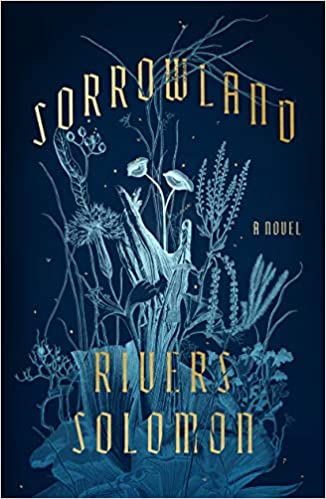
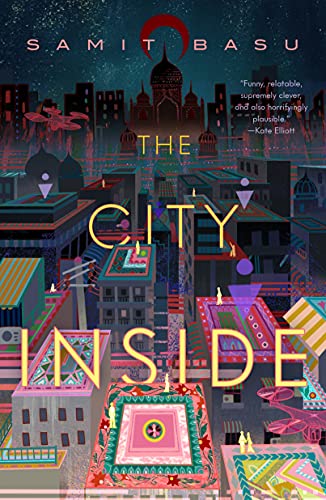
Beyond the End: Indigenous Futurisms’ Interventions in the Anthropocene


SFRA Review, vol. 51, no. 4

Trans-Indigenous Futurity


Beyond the End: Indigenous Futurisms’ Interventions in the Anthropocene

Abdenour Bouich

In Walking the Clouds, Grace Dillon refers to science fiction works produced by Indigenous authors as “Indigenous futurisms,” a growing movement that encompasses, inter alia, literature, films, and even video games. As indicated by its name, Indigenous futurisms is inspired by Afrofuturism, defined by Mark Dery as “speculative fiction that treats African-American themes and addresses African-American concerns in the context of twentieth-century technoculture—and, more generally, African-American signification that appropriates images of technology and a prosthetically enhanced future” (180). Similarly, for Dillon, Indigenous futurisms arise as a subversion of what she calls “reservation realisms” that often define expectations surrounding Indigenous literatures (2). Sometimes combining Indigenous sciences with recent scientific theory, sometimes exposing limitations of western sciences, this fiction, Dillion states, combines “sf theory and Native intellectualism, Indigenous scientific literacy, and western techno-cultural science, scientific possibilities enmeshed with Skin thinking” (2). As such, one characteristic of Indigenous futurisms, Dillon explains, is to posit Indigenous sciences “not just as complementary to a perceived western enlightenment but indeed integral to a refined twenty-first-century sensibility” (3). In fact, Indigenous interventions in science fiction could be perceived as a decolonising project, or better yet, as an Indigenizing project. Commenting on “Indigenizing processes” within Indigenous research, Linda Tuhiwai Smith explains that “Indigenizing” is anchored within “a politics of indigenous identity and indigenous cultural action” (245). Quoting M. Annette James, she explains that the process of “Indigenizing” is anchored in Indigenous worldviews and ways of knowing to “counters the negative connotations” of “Indiginism” in “Third World countries, where it has become synonymous with the ‘primitive’, or with backwardness among superstitious peopies [sic]” (qtd. in Smith 245). Thus, the process of Indigenising science fiction is evident in Indigenous futurisms’ mobilisation and centralisation of Indigenous epistemologies and ontologies alongside elements pertaining to mainstream science fiction.

This article proposes a trans-Indigenous reading of two Indigenous futurist novels that emanate from different Indigenous literary traditions: Killer of Enemies, written by the Abenaki writer and storyteller Joseph Bruchac, and The Interrogation of Ashala Wolf,written by the Palyku novelist, illustrator, and scholar Ambelin Kwaymullina. In Trans-Indigenous, Chadwick Allen states that a trans-Indigenous mode of reading is a methodology based on “juxtapositions” of different Indigenous artworks emanating from distinct Indigenous contexts (xvii, original italics). He explains that purposeful trans-Indigenous juxtapositions would “develop a version of Indigenous literary studies that locates itself firmly in the specificity of the Indigenous local while remaining always cognizant of the complexity of the relevant Indigenous global” (xix). The first part of this article explores the narrative registers and aesthetic techniques employed by these authors to capture dystopic and anthropogenic futures resulting from the severing of bonds between humans, other-than-humans, and the land, a process initiated by colonialism and later exacerbated by extractive capitalism. The second section examines the novels’ potential in offering Indigenous visions beyond the Anthropocene and beyond “the end of the world.” Through their imaginative power and an assertion of Indigenous knowledge systems, these works of Indigenous futurisms reflect on Indigenous perspectives and views of personhood and kinship to imagine balanced futures beyond the apocalypse, tragedy, and annihilation.

Colonial Genocides, Colonial Ecocides

Killer of Enemies is set in a near future in what is now known as the United States of America. In this future characterized by major technological and genetic advances, a new form of governance emerges controlled by an authoritarian and repressive nomenclature composed of upgraded “human beings.” This cast implemented to their bodies all sort of techno-genetic implants by which they increased their senses. However, a global cataclysm occurs when a cloud from outer space settles on the planet, making all electronic devices obsolete and plunging the world into a neo steam-age. This “Silver Cloud,” as it is called in the novel, causes the death of many of these upgraded “humans” due to the failure of their electronic implants. In what is called “New America,” four members of this previous upper-class cast survive. Adamant to maintain their superior position, these four “Ones” establish a prison/workcamp ironically called “Haven” located in the Sonoran Desert where the lower-class survivors are provided with rudimentary sustenance and security from the outside world that is plagued by famine and water scarcity against their total servitude and obedience to the Ones. In addition, these lower-class survivors face the danger of being killed by genetically modified creatures created prior to the “Silver Cloud” apocalypse and which are now wandering freely in this post-apocalyptic world. 

The novel is told from the first-person point of view of the main character and protagonist Lozen, an Apache teenager and member of the Chiricahua nation located in southwest America. Lozen lives with her family in Haven where they were forcibly removed after some of the Ones’ mercenaries and recruiters found their hidden village. There, she protects her family by accepting to be recruited by the Ones to kill the genetically modified creatures that were once kept in the “pleasure parks of the most powerful Ones” (2). Being a skilled warrior with a good grasp of firearms and the ability to sense the danger of the Gemods before they approach Haven, the Ones choose Lozen as their favorite “monster hunter” (11). Nevertheless, Lozen knows pertinently that the Ones are vicious and selfish and would not hesitate to eliminate her if they find out that she is too dangerous to be controlled. Therefore, she must feign loyalty and carry on doing her job while planning her family’s escape from Haven.

While Killer of Enemies is a work of Indigenous futurisms that depicts a post-apocalyptic future, the cultural and historical contexts that defines the protagonist’s background are explicitly conveyed throughout the novel. Lozen’s name is based on the historical figure of Lozen, a Chiricahua warrior and prophet who lived during the Apache wars (1849-1924). Indeed, the real Lozen fought alongside other important figures such as her brother Victorio and later with Geronimo. In the “Author’s Note” of the novel, Bruchac writes: “Born around 1840, the first Lozen never married and died in 1890 in Alabama where the entire Chiricahua nation had been sent into exile by the United States government” (360). Throughout the novel, Lozen explicitly refers to the collective traumas that the Apache peoples endured during the American westward expansion and particularly during and after the Apache Wars, thus presenting a counternarrative to those Eurocentric historical accounts that portray colonisation as a benign civilising act or a heroic story of adventure and discovery. In addition, the novel aims at engaging non-Indigenous audiences by projecting these stories of contact, invasion, and subjugation to a narrative of futurity where the whole planet is under authoritarian and oppressive elites that remove, subjugate, and enslave any human being that does not pertain to their casts. As such, Killer of Enemies reflects what Dillon calls a storytelling tradition of “ironic Native giveaway” that positions readers, Indigenous and non-Indigenous, within the “diasporic condition of Native peoples” (6).

The Interrogation of Ashala Wolf is set in a post-apocalyptic future during which earth is recovering from an ecological cataclysm called “The Reckoning” that resulted from a longstanding environmental crisis due to humanity’s excessive pollution and resource extraction. “The Reckoning” left the humanity nearly extinct and caused the disappearance of separate continents giving birth to a single Pangaea-like continent that consisted of eight sophisticated cities ruled by elected representatives, yet they are all subject to a federal-like governing entity called the “Council of Primes” where each city is represented by a “Prime.” The Council of Primes established a new system and passed a number of “Accords” to maintain the “Balance” and avoid “the pollution, the overcrowding, and the terrible disparity between rich and poor” that characterised the “old world” and led to the Reckoning (29). However, the most important change in this post-apocalyptic world is the birth of children endowed with superpowers: for example, Firestarters can start fires, Rumblers can cause earthquakes, Menders can heal others, and Runners have a superhuman speed. These children with abilities are feared and hated by the rest of the population, as such the Council of Primes pass Citizenship Accords that distinguish the “normal” population from what is now called the “Illegals.” The Citizenship Accords states that each fourteen-year old child must be tested by a government enforcer to determine if they have any superhuman ability. Citizen tattoos are granted for those who display no superhuman abilities or have benign powers that can be exploited for the government interests. In contrast, children with “dangerous” powers are forcibly removed from their parents and confined in detention centres for the sake of general “safety” and to maintain the “Balance.” Indeed, the novel opens in Gull City’s “Detention Centre 3” where the protagonist of the novel, Ashala Wolf, is imprisoned. Ashala is one of the children with abilities who were able to escape the Citizenship test. Being “Illegals” now in the eyes of the government, some of these children formed a group called “Tribe” and found refuge in a forest called the “Firstwood” under the leadership of Ashala. As such, Ashala is hunted down and interrogated by Neville Rose, the Chief Administrator of the Centre, in an effort to make her divulge information about the Tribe. 

The socio-political and historical dimensions on which The Interrogation of Ashala Wolf is grounded are subtly expressed and implicitly embedded into the text. Indeed, in the post-apocalyptic world depicted in the novel, what is known today as Australia no longer exists. Nevertheless, it is not difficult to discern parallels between this post-apocalyptic world and the historical and contemporary realities of the Indigenous peoples of Australia after the invasion and colonisation. In the novel, The Citizenship Accords that grant the government the power to assess children and subsequently remove and detain them in detention centres if they manifest any superpowers is reminiscent of the dark colonial and settler-colonial history of Australia and its treatment of Indigenous peoples. These accords echo the Aborigine Protection Act of 1909 by which the Australian settler-colonial state forcibly removed Aboriginal children from their families under the subterfuge of “neglect” from their Aboriginal parents. These children were placed under “the protection” of the government and were given for adoption to white families. Child removal in Australia lasted from the beginning of the twentieth century until the 1970s engendering what is known today as the collective trauma of the Stolen Generations. The Interrogation of Ashala Wolf conjures the traumatic legacies of the Stolen Generations and projects the colonial policies of child removal in Australia into a futuristic narrative, thereby addressing Australia’s historical amnesia towards its colonial past and its treatment of Indigenous peoples. Moreover, the novel succeeds in implicating non-Indigenous audiences in the story by abstaining from making any explicit reference to the historical and contemporary realities of “Australia.” The story of the novel creates a déjà vu effect with which Indigenous and non-Indigenous audiences are invited to identify. Indeed, in“Non-Linear Modes of Narrative,” Annika Herbwrites: “The reader is invited to become an active participant in coding meaning by applying their own understandings of the context and connections, creating an inter-subjective dialogue between reader and text, and Indigenous and non-Indigenous knowing.”

Although different in their approaches, Bruchac and Kyawmullina ground their respective novels upon significant socio-political and historical contexts to draw attention to the historical and contemporary realities of the Indigenous people within the settler-colonial states that encase them, and expresses the need for historical accountability and social justice from these settler-states societies that are yet to be achieved. In addition, while both Killer of Enemiesand The Interrogation of Ashala Wolf imagine worlds devastated by cataclysms, either of cosmic origin or of climatic nature, the authors’ depictions of the post-apocalyptic futures in the novels differ greatly. Indeed, as explained above, the post-Reckoning world portrayed in The Interrogation of Ashala Wolf is characterised by a sense of “development” in the way in which resources are exploited and wealth is distributed according to the Accords passed by the Council of Primes in order to avoid another catastrophe. In contrast, the post-Silver Cloud world in Killer of Enemies is characterised by major regressions, thus contradicting the often-accepted idea that conceives the future and modernity in terms of a continuous development of science and technology that would bring about new human conditions. Instead, the future is conceived in terms of a reverse process of development in which humanity plunges back into a neo-steam age. 

Nevertheless, both novels seem to agree on the fact that apocalypse is the result of a failure of a global system due to humanity’s longstanding abuse of nature and the environment, as well the misuse of technology. In “On the Importance of a Date, or Decolonizing the Anthropocene,” settler scholar Heather Davis and Métis anthropologist Zoe Todd call for a re-evaluation of the start date of the Anthropocene by linking it to western colonisation, approaching it not as a distinct phase that begins in the twentieth century, but as a continuation and accumulation of colonial dispossessions, genocides, and ecocides (761). They argue that colonialism and settler colonialism “[were] always about changing the land, transforming the earth itself, including the creatures, the plants, the soil composition and the atmosphere. It was about moving and unearthing rocks and minerals. All of these acts were intimately tied to the project of erasure that is the imperative of settler colonialism” (770). The logic of the Anthropocene, they assert, resides in colonialism and contemporary petrocapitalism’s severing of the bonds between “humans and the soil, between plants and animals, between minerals and our bones” (770). This parallel between the Anthropocene and western colonialism highlights the different perspectives that Indigenous and non-Indigenous peoples tend to have regarding climate and environment crises, suggesting that Indigenous peoples are well acquainted with the Anthropocene and its repercussions. Indeed, in “Indigenous Science (Fiction) for the Anthropocene,” Potawatomi scholar Kyle P. Whyte argues that what constitutes non-Indigenous peoples’ speculations about dystopic ecological futures are mostly a reality Indigenous peoples endured and continue to endure under colonial practices and policies (226). It is, therefore, important to note that when the Anthropocene is explored in works of Indigenous futurisms, it exceeds mere speculation. 

Killer of Enemies provides several examples that depict the anthropogenic character of the future described in the novel. Lozen talks about the ways in which “[b]ack in the mid-twenty-first century […] rivers had been poisoned by gold mining. [And] the great forests of giant trees had been clear cut”, and how “anyone annoying our nation was blown up with unmanned drones and guided missiles” (168, 114). Yet, perhaps the most poignant anthropogenic example in the novel is the extinction of horses that, as Lozen puts it, “had their own apocalypse” before the Silver Cloud (111). In fact, what decimated horses is a disease called “equine pneumonia” that resulted from a biologically engineered “symbiotic microbe” inhaled by horses to make them stronger and faster on racetracks (110). She declares: “the symbiote mutated. It got faster. A year or two turned into a week. The infected lungs filled with blood, yellow mucus poured out of the horses’ nostrils. And they died” (110 ̵ 11). In addition, the disease becomes a pandemic spreading all around the world and “mov[ing] into other hooved domestic animals as well. Cows, sheep, even the semi-wild private herds of buffalos that still existed” (111). The advanced technological level reached by humanity in this futuristic world, however, cannot explain the Silver Cloud.

During one of her missions where she is sent by the Ones to kill a monster, Lozen encounters what she describes as an ancient being “who lives in the stories of not just my people but those of Indians all over the continent” (155). She declares: “All of our Native people have stories about him or his relatives. They’ve called him by many different names. Big Elder Brother, Sasquatch, Bigfoot. To us he was just Tall Hairy Man” (155).It is during another encounter with this being that Lozen now calls Hally that she finds answers about the origin of the Silver Cloud. Hally explains that his people walked the Earth long before humanity, and, like humans, advanced in knowledge and technology. He declares “We, too, became powerful. We could fly. We could shape the courses of the rivers with the work of our thoughts, dig into the roots of the mountains, raise great structures up to the sky” (304, original Italics). This feeling of might made Hally’s people believe they were more worthy than other life forms, that they would even “dream a way to rise up beyond the Life Giver” (304, original italics). Yet, he adds, “the Maker sent us a message. It came, a big light streaking across the sky. And there was a great explosion” (304, original italics). Hally remarks that the cycle is repeating now, as humans “were behaving as we did long ago. Your leaders believed they were wiser and stronger than Creation. They were crushing all other life on Earth beneath their weight” (305, original italics). Excessive use of technology, he adds, creates an “attractive field,” drawing things from outer space (307, original italics). In the same way this attracted the “meteor” that destroyed nearly all of Hally’s people before humans inhabited the Earth, it now attracted the “Silver Cloud” (307, original italics). As such, the apocalypse in Bruchac’s novel responds to the ways in which humanity, specifically the planetary elites, use technology to control other life forms, fostering a dynamic of oppression on the land, the environment, and on human and other-than-human conditions.

Similarly, in The Interrogation of Ashala Wolf, the apocalypse called the “Reckoning” is caused by humanity’s abuse of the environment, making “‘the life-sustaining systems of the Earth collapse’” (12). Ashala, born long after the Reckoning, has no clear idea of humanity’s relationship with the land and environment in the old world; she soon gets a glimpse, however, when she arrives at the Firstwood. After fleeing her house, Ashala, along with her friend Georgy, takes refuge in the Firstwood since government enforcers avoid it for fear of dangerous giant lizards, called the saurs, that emerged after the Reckoning. On their way, they are stopped by a saur and discover that they can communicate with humans. The saur informs Ashala that the trees of the Firstwood “grew from seeds that survived the great chaos. They carry within them the memories of their ancestors […]. They do not forget what humans have done” (187). As such, if Ashala wants to live in the Firstwood, she must seek permission from the trees, and “whatever bargain you make with them, the saurs will ensure you keep it. And if the forest decides you must go, then we [saurs] will finish you” (188-9). Ashala speaks directly to the trees, promising that if they can live among them, they “won’t eat any of the animals, or cut down any tree” (192). It is here that the trees share memories of the old world with Ashala: “Images poured into my mind, nightmarish pictures of things I’d never seen before. Strange vehicles with metal jaws, weird saws with teeth that roared, and humans, always more humans, cutting and hacking and slashing and killing” (193). While Ashala is unfamiliar with the images the trees share, readers can identify these as characteristics of today’s extractive capitalism. The Reckoning is, therefore, a direct consequence of the exacerbation of the utilitarian relationship that humanity has with nature and the environment.

Post-Apocalyptic Balance

The dystopic futures in both novels result from what Davis and Todd call the severed bonds between humans, other-than-humans, and the land, caused by colonialism and later exacerbated by extractive capitalism. While Indigenous peoples did face countless anthropogenic scenarios that unfolded alongside colonisation, Davis and Todd assert that they “contended with the end of their worlds, and continue to work to foster and tend to strong relationships to humans, other-than-humans, and land today” (773). As such, rather than conceiving of human liberation and salvation from the anthropogenic horrors of climate change within science and technology, they “call here for a tending once again to relations, to kin, to life, longing, and care” (775). This is what works of Indigenous futurisms advocate, offering artistic and activist interventions to the current anthropogenic realities. Indeed, in Why Indigenous Literatures Matter Daniel Heath Justice explains that, though works of Indigenous futurism present violence, cruelty, and suffering that ravage a world destroyed or on the verge of destruction by “settler colonialism’s limited sense of kinship and personhood,” it endeavours to expose the destructive racial logic of the state which affects both the human and other-than-human world (168-9). He argues that, when the state’s “[b]lood rhetorics” appear to be the cause of catastrophe in these works, an Indigenous vision of “reciprocal kinship becomes, if not a full solution, part of the return to wholeness. The broken world may be overturned, but another world awaits—or at least, its potential lies at the ready” (169). Indeed, the two novels do not simply paint a bleak picture of the future. Rather, through their imaginative power and assertion of Indigenous perspectives and views of personhood and kinship, they offer visions of a future beyond apocalypse, tragedy, and annihilation.

In Killer of Enemies, Lozen learns from an early age that human beings are but a small part of a greater creation, and that human life is not the only one that must be respected and protected. In Our Stories Remember Bruchac asserts that “all created things are regarded as being of equal importance. All things— not only humans and animals and plants, but even the winds, the waters, fire, and the stones— are living and sentient” (11). Speaking of her fear of snakes, Lozen recalls her father saying that there is no need to be afraid as “[t]he God of Life made [them], too. [They have] as much right to live as we humans” (130). This vision of personhood also applies to kinship. Lozen asserts the strong bond between her people and dogs, remembering her mom saying that “‘[o]ur dogs made us more human,’” calling them “four-legged allies” (emphasis added, 225−6). Similarly, The Interrogation of Ashala Wolf reflects this vision of personhood and kinship with other-than human beings. In “A Land of Many Countries” Kwaymullina explains that when colonisers arrived to what is known today as “Australia,” they did not understand “that life in all its shapes watched them anxiously from the ground, the water; the sky; and there was not a single grain of sand beneath their feet that was not part of a thinking, breathing, loving land” (11). She states that the colonisers considered land an object, “not as grandmother, grandfather, mother, father, sister, brother and family” (11).  In the novel, the Firstwood becomes a stronghold for Ashala and her companions. The trees allow her to live there because the two recognise in each other the violence they are subjected to. Upon receiving the trees’ memories, Ashala declares: “‘there is no reason. Do you hear me? There’s no reason good enough to hurt my sister, or to kill a forest’” (194). Indeed, Ashala asserts that the Firstwood “‘count as much as [her],’” adding that “‘if anyone ever comes for you with machines or saws or axes or anything, they’ll have to get through me first’” (194). Here, Ashala affirms the personhood of the Firstwood, pledging to respect and protect it at the expense of her own life. 

 Commenting on personhood and kinship with the other-than-human, which is central to many Indigenous knowledge systems, Justice argues that in various Indigenous traditions being human is a learnt process achieved through respectful and meaningful affiliation to the land and kinship with the other-than-human (WILM 76). He writes: “The earth speaks in a multitude of voices, only some of which are human. […] these plants, animals, stones, and other presences are our seen and unseen relatives, our neighbours, our friends or companions” (86). It is this expansive perspective on personhood, kinship, and life that leads both Lozen and Ashala to realise that their role in their respective worlds cannot be limited to protecting themselves, their families, and friends. Rather, they must devote their abilities to preserving all forms of life. 

In Killer of Enemies, after hearing Hally’s explanation of the origin of the Silver Cloud, Lozen corroborates it with stories that her mother used to recount, where many worlds before hers were destroyed “because of the misdeeds of humans or of Coyote, who is a sort of embodiment of all the craziest, most powerful and irrational aspects of humanity” (306). Lozen comes to understand the Silver Cloud as retribution to the imbalance caused by humanity’s oppressions and destruction of other forms of life. She declares: “What we need to do is to find the balance again to make it right” (306, emphasis added). While Lozen escapes from Haven with her family, she states that she must return and fight the Ones, because “if they have their way, they and others like them will claw their way back to control the whole world” (293). Approaching Haven, Lozen finds herself on a mountain: the “Place Where Birds Flew. Just one ridge away from Haven” (315). Seeking a way down the mountain to avoid one of the Ones posted on the path to Haven, Lozen states that “[t]here’s another, more precarious way” (328). She remembers her uncle advising her to not just “see the “‘mountain,’” rather “[b]e the mountain’” (331). Far from being metaphorical or romantic, these words find concrete manifestation when Lozen starts descending the cliff: “I’m part of it,” she states (331). The stones of the mountain, Lozen affirms, are as warm as “the skin of a living being” that as she touches, the feeling of weight disappears giving place “to immeasurable lightness” (331).  She realises that this is “this mountain’s spirit” that, as she holds, she begins “to know some of what it knows, feel the life that shimmers all over it, every plant, every insect and small animal. […] And with the mountain’s spirit helping [her], [she] take[s] a deep breath and move[s]” (331).  Lozen acknowledges the sentience of the land, regarding it as alive from a physical and moral perspective. Reflecting on the land’s ability to exert influence on human and the other-than-human beings, Vanessa Watts writes: “Our truth, not only Anishnaabe and Haudenosaunee people but in a majority of Indigenous societies, conceives that we (humans) are made from the land; our flesh is literally an extension of soil” (27). This conceptualisation that Watts calls “Place-Thought” is “based upon the premise that land is alive and thinking and that humans and non-humans derive agency through the extensions of these thoughts” (21). Lozen illustrates this concept of “Place-Thought” in the way her body becomes an extension of the mountain, whose spirit shares its thoughts and knowledge with her, strengthening her agency as she moves down the cliff with ease. 

In the same way that the historical and socio-political contexts are not explicitly delineated in The Interrogation of Ashala Wolf, so is the cultural context that informs the protagonist’s identity and cultural heritage. Kwaymullina subtly and tactfully integrates epistemologies and knowledge systems of Aboriginal peoples into the text that the protagonist (re)visits simultaneously as the readers are introduced to them. This, according to Herb, reflects the author’s endeavour to centre Indigenous “knowledge in its own right, rather than in direct opposition to Western epistemologies.” Indeed,after hearing Ashala’s plea, the Firstwood responds to her and manifests its consent in its own way. Indeed, Ashala states that after uttering her words, “something started growing in the emptiness” making all forms of life within the Firstwood grow and flourish (195). Kwaymullina explains that Aboriginal peoples call their homelands “Countries,” and while “Australia” does not exist anymore in Ashala’s world, Kwaymullina states that “every landscape in The Tribe Series is inspired by one of the many biodiverse regions of Australia” (“Author’s Note,” TheInterrogation). The significance of the concept of Country to Aboriginal peoples, however, exceeds the physical; Kwaymullina writes, “Country is not simply a geographical space. It is the whole of reality, a living story that forms and informs all existence. Country is alive, and more than alive—it is life itself” (“A Land” 12). Indeed, Ashala states that “beneath and within and between” the blooming life in the Firstwood “was a shining shape that was somehow the beginning and the end of everything. The glowing thing flowed around me, and my whole body hummed with life. I found myself shouting out, giving words to the joy and defiance of the Firstwood. ‘I live! We live! We survive!’”(195, emphasis added).Not only is the Firstwood sentient, but it also infuses life into everything that lives within it, including Ashala herself. Her words to the Firstwood convey the imperative of an interrelated existence. For Aboriginal peoples, Kwaymullina explains, the world as it is created by the Ancestor spirits consists of a “web of relationships” between all forms of life (“A Land” 13). She writes: “it is by maintaining and renewing the connections linking life together, that country—and so all of reality—is balanced and sustained.” (10, emphasis added). 

The Balance is the driving force behind the events of The Interrogation of Ashala Wolf. The government considers children with abilities not only outside the Balance, but also a threat to it. Chief Administrator Neville Rose’s desire to destroy Ashala and the Tribe makes him break the Benign Technology Accords by developing an interrogation machine to question detainees about Ashala and the Tribe. Discovering this, Ashala declares that “everyone knew the dangers of advanced tech. It had isolated the people of the old world from nature, shielding them from the consequences of imbalance. […] That was one of the reasons why we had Benign Technology Accords, to stop us from making the same mistakes” (288, original italics). Ashala realises that it is not only herself and the Tribe that are in jeopardy, but also the Firstwood and all that lives within it. This, for her, constitutes the Balance. She declares: “‘I’d always heard about the Balance before that. But that was the first time I actually felt it. That was when I knew that there was something greater than all of us. Those trees, and the Tribe, and even the saurs – that’s the heart of me. The essence of who I am’” (303, emphasis added). The Firstwood is Country for Ashala, defining her identity and giving meaning to her existence. She understands the Balance as that where all forms of life, human and other-than-human, are intimately bound and of equal importance. Offering herself to the enforcers as bait, she succeeds in stopping Neville Rose’s plan, freeing the detainees, and protecting the Firstwood. 

Conclusion

Killer of Enemies and The Interrogation of Ashala Wolf present Indigenous perspectives in which life, agency, and subjectivity exceed the category of the human, encompassing the-other-human and the land itself. In both novels, the apocalypse and the Anthropocene are approached as an imbalance in the bonds that tie these life forms together. The authors register what Davis and Todd call “ruptures and cleavages between land and flesh, story and law, human and more-than-human” caused by colonialism and extractive capitalism (755). Nevertheless, in both novels, the apocalypse is not the end of the world because, as Kwaymullina explains, “in an animate, interconnected existence, where everything has consciousness and agency, life is not easily overcome. Its nature is always to adapt, to change, to make itself anew—and in so doing, to remake all else” (“Author’s Note”). Both novels embody Indigenous perspectives and visions of land and environment, positing what Dillon calls “Indigenous scientific literacies” which are “sustainable practices used by Indigenous peoples over thousands of years to reenergize the natural environment while improving the interconnected relationships among all persons (animal, human, spirit, and even machine)” (7). In Killer of Enemies,Lozen’s source of survival and agency is largely informed by the history of her ancestors’ resistance who contended with their own apocalypse through their knowledge of the land and the environment that they regard as alive and sentient. In The Interrogation of Ashala Wolf, Ashala and the Firstwood live in a harmony defined by mutual respect and protection. Indeed, Ashala understands that these bonds and relations are what define the Balance. 

WORKS CITED

Allen, Chadwick. Trans-Indigenous: Methodologies for Global Native Literary Studies. University of Minnesota Press, 2012.

Bruchac, Joseph. Our Stories Remember. Fulcrum Publishing, 2003.

—.  Killer of Enemies. Tu Books, 2013.

Davis, Heather, and Zoe Todd. “On the Importance of a Date, or, Decolonizing the Anthropocene.” ACME: An International Journal for Critical Geographies, vol. 16, no. 4, 2017, pp. 761-80.

Dery, Mark. “Black to the Future: Interviews with Samuel R. Delany, Greg Tate, and Tricia Rose:” Flame Wars: The Discourse of Cyberculture, edited by Mark Dery, Duke University Press, 1994, pp. 179-222.

Dillon, Grace L. Walking the Clouds. University of Arizona Press, 2012.

Justice, Daniel Heath. Why Indigenous Literatures Matter. Kindle ed., Wilfrid Laurier University Press, 2018. 

Herb, Annika. “Non-Linear Modes of Narrative in the Disruption of Time and Genre in Ambelin Kwaymullinas The Interrogation of Ashala Wolf.” M/C Journal, 4 Dec. 2019, https://journal.media-culture.org.au/index.php/mcjournal/article/view/1607. Accessed 06 Oct 2021.

Kwaymullina, Ambelin. “A Land of Many Countries.” Heartsick for Country: Stories of Love, Spirit and Creation, edited by Sally Morgan, Tjalaminu Mia, and Blaze Kwaymullina. Fremantle Press, 2008.

—. The Interrogation of Ashala Wolf. Candlewick Press, 2012.

Medak-Saltzman, Danika. “Coming to You from the Indigenous Future: Native Women, Speculative Film Shorts, and the Art of the Possible.” Studies in American Indian Literatures, vol. 29, no. 1, 2017, pp. 139–171.

Smith, Linda Tuhiwai. Decolonizing Methodologies: Research and Indigenous Peoples. 2nd ed., Zed Books, 2012.

Watts, Vanessa. “Indigenous Place-Thought and Agency Amongst Humans and Non-humans (First Woman and Sky Woman Go on a European World Tour!).”  Decolonization: Indigeneity, Education & Society, vol. 1, no.1, 2013, pp. 20-34. Pdf

Whyte, Kyle P. “Indigenous Science (Fiction) for the Anthropocene: Ancestral Dystopias and Fantasies of Climate Change Crises.” Environment and Planning: Nature and Space, vol. 1, no. 1–2, Mar. 2018, pp. 224–242.

Abdenour Bouich is Indigenous North African (Amazigh) member of the Kabyle peoples. He is currently a Ph.D. Candidate at the University of Exeter in the UK. His research interests include colonial trauma studies, Indigenous studies, Indigenous futurisms, contemporary Indigenous “North American” literature, contemporary Indigenous “Australian” literature, and world literature. 


The Pursuit of Rhetorical Sovereignty in Indigenous Futurisms


SFRA Review, vol. 51, no. 4

Trans-Indigenous Futurity


The Pursuit of Rhetorical Sovereignty in Indigenous Futurisms

Jesse Cohn

The greatest technical problem facing the writer of scientific fiction is that of securing belief.

—James O. Bailey, Pilgrims Through Space and Time, 203.

Imagining potential futures, or alternative worlds in any time, is not merely an exercise of imagining; I assert it as an act of what Scott Lyons calls rhetorical sovereignty… 

—Chelsea M. Vowel, Where No Michif Has Gone Before, 10.

I write this from Cession 180, the swath of so-called Northwestern Indiana from which the Neshnabék (Potawatomi) were expelled by force of arms not quite two centuries ago; I write as a settler with insufficient knowledge of Indigenous histories and cultures, an academic with much to learn. I hope not to have misrepresented the Cherokee, Ojibwe, Ohkay-Owingeh, Métis, Nishnaabeg, Dene, and Apache persons and peoples spoken of here. In view of a long history of struggles for sovereignty, I am propelled into thought by the phenomenon—both “new” and “not so new” (Dillon 2)—of Indigenous peoples reaching for the cultural “toolkit” (Doctorow) of science fiction, fantasy, and horror, fields in which they have been historically unwelcome. My sense is that while the very genre structures comprising the “toolkit” are also a “structure of settlement” (Warburton 34), the rhetoric of the fantastic affords them tools with which to pursue sovereignty.

Science fiction, writes Darko Suvin, is “a literary genre whose necessary and sufficient conditions are the presence and interaction of estrangement and cognition, and whose main formal device is an imaginative framework alternative to the author’s empirical environment” (7-8). This influential definition, excluding fantasy and horror as inferior forms, has been contested on several grounds, not the least of which concerns its somewhat naïve empiricism. The question of who determines what “the author’s empirical environment” is, and therefore what is “strange” to it, becomes even more difficult in a settler colonial context, where colonial accounts of empirical truth are imposed over and against the accounts given by Indigenous people. All of this complicates our very understanding of what counts as science fiction at all. To give just one example, in Kai Minosh Pyle’s (Métis/Baawiting Nishnaabe) “How to Survive the Apocalypse for Native Girls” (2020), we are told the following explanatory story about how the apocalypse in question came to be:

We call that time the hungry years not just because people often went without enough food, but also because there was often another kind of hunger. The kind of hunger that causes people to do terrible things: wiindigo hunger.… Wiindigoog are more than just cannibals. They are possessed by a hunger that only increases every time they try to fill it. That hunger can be for anything—food, drugs, sex, love, but most of all, power. (85)

Why does violently antisocial behavior (“terrible things”) need an explanation beyond ordinary hunger? Why are Wiindigoog an explanation rather than a thing-to-be-explained? These questions are perhaps better formulated as “for whom”: for whom is a complete breakdown of social norms in times of material want the expected outcome? For whom are Wiindigoog—once-human monsters with hearts of ice—simply another item to be found among an inventory of “the furniture of the universe” (Bensusan and Ribeiro Cardoso 287 [1])? It is tempting to answer that a certain group, the “kinship-based” Northern Algonquians (a linguistic/cultural group which includes Pyle’s Nishnaabe family), is the collective subject for whom the Wiindigoog are a given, and that members of non-“kinship-based” societies, “modern” societies in which the social fabric is already rather tenuous, are the ones who are ready to accept the premise of social “apocalypse” without much further explanation. The late settler anthropologist David Graeber cautions against such an easy compartmentalization (51-53); it is quite possible one might encounter Nishnaabeg who regard Wiindigoog as mere legend or settlers who don’t find post-apocalyptic Mad Max scenarios credible. If it is not so easy to determine the whoms in question for either case, it is clearer that we are dealing with some fundamental questions about what counts as an “alternative” framework—in other words, a “heterocosm” (Stableford) or “secondary world” (Wolf)—and perhaps more importantly, what is the nature of the “primary world” in which the author and the readers are situated, of “reality” as such.

Like perhaps most definitions of interest, Suvin’s definition of SF is an attempt to set the terms for all future discussion of its subject—a largely successful attempt, in fact; even the micro-genre of critiques of Suvin bears ironic witness to the persuasiveness of its rhetoric. Scott Lyons speaks of a “rhetorical imperialism” which consists in “the ability of dominant powers to assert control of others by setting the terms of debate,” for “he who sets the terms sets the limits” (452). In contrast, Lyons defines “rhetorical sovereignty” as “the inherent right and ability of peoples to determine their own communicative needs and desires,” to exercise control over the parameters of the discourses in which they are involved (449). Where SF is concerned, Suvin has set the parameters of discussion in ways that immediately problematize a good deal of Indigenous futurist writing, in so far as Indigenous futurists often make reference not only to the future but to “old things that rumbled under the surface of the world,” as Adam Garnet Jones (Cree/Métis/Danish, 2020) puts it (41), often placing such pieces of ontological furniture as the Wiindigoog, ghosts, and spirits of all kinds on the same metaphysical ground as the more common furnishings of science fiction. The place that SF reserves for scientific knowledge as explanatory principle is shared by the wisdom of grandmothers, by oral traditions and visions. As Blaire Topash-Caldwell summarizes: “Indigenous science fiction privileges autochthonous, localized, and historically situated knowledge systems instead of Western science with its ties to the Enlightenment in Europe” (46). For Suvin, this would place these works in the category of the “subliterature of mystification,” presenting “estrangement” without the rational, scientifically-grounded, materialist character of “cognition” (8-9).

My intention here is not to defend the claim of Indigenous futurisms to be considered as part of the genre of science fiction (or fantasy or horror, for that matter); rather, I want to look at how these futurisms have pushed not only at genre boundaries but also at ontological and epistemological boundaries. In particular, to borrow Farah Mendlesohn’s question, I want to see how this kind of transgression of colonial borders is effected rhetorically—how Indigenous futurist writers persuade skeptical readers from both settler and Native communities to “accept as normal” accounts of things which, to readers with cognitivist biases, appear “fantastical.” In short, I want to investigate how Indigenous futurist writings strive to assert their rhetorical sovereignty.

Rhetorics of Incredulity

The keenest pleasures of satire may be the moments at which one disbelieves — keenly, explicitly, and acutely.

–Joanna Russ, To Write Like a Woman, 18.

One of the most common rhetorical strategies employed by Indigenous futurists appears to sidestep questions of truth and reality altogether by what I will call rhetorics of incredulity, strategies such as satire and irony that serve to produce disbelief. As Kristina Baudemann notes, “the comic… is an often-overlooked structuring principle in North American Indigenous literatures” (84). Trickster figures such as the Cherokees’ Jistu, a rabbit who is always disguising himself as other animals to make mischief, personify this humorous streak. Drew Hayden Taylor’s (Cherokee) “Take Us to Your Chief” (2016) adopts the guise of settler SF while also undercutting its tropes in staging the encounter of benevolent aliens, the Kaaw Wiyaa, with a group of Ojibwe men on the rez, Teddy, Tarzan, and Cheemo—just three buddies intent on quietly sitting on couches, fishing and drinking beer. Their attitude toward the sudden arrival of extraterrestrials is not characterized by the “sense of wonder” canonized by settler SF, nor do their Ojibwe identities supply them with profound thoughts or words to match the solemnity of the occasion: one wonders whether the aliens’ unearthly appearance “must freak the girls out,” while another is reminded that he “[hasn’t] had calamari in a long time,” and a third ponders “[whether] that thing with calamari arms had farted” (140). The Chief to whose office the Kaaw Wiyaa are ultimately led is just a minor tribal bureaucrat, beneficiary of a “luxurious band office salar[y],” for whom the aliens constitute an unwanted hassle: he briefly wonders “if this was how the Beothuk and Mi’kmaq chiefs felt five hundred years ago,” but soon concludes that “[h]e’d better do something to get this thing out of the building before it triggered any lawsuits” (142-43). Hastily appointed as cultural ambassadors from Earth and ushered aboard the Kaaw Wiyaa starship, the three friends find that its interior has been revamped so as to make them “feel at home,” complete with beer and couches for fishing (144-46)—a happy ending, by their lights. “We should have done this years ago,” Cheemo reflects (146).

The comic rhetoric of Taylor’s story is designed to achieve humor by reproducing a clichéd plot while subtracting from it all the lofty emotions (like “wonder”) with which it is normally associated. The protagonists’ responses to the irruption of a Suvinian novum in their midst all fail to match the occasion in an unexpected way, not unlike the reaction of Gogol’s barber Ivan Yakovlevich to realizing that a customer’s nose has inexplicably appeared in the bread his wife has baked for him—namely, to worry that this will get him in official trouble of some kind—or Kafka’s deadpan announcement that his protagonist is now a bug. It’s easy enough to see that Taylor is poking fun at the whole drama of the First Contact conceit, but at the same time, he is sabotaging romanticized versions of the indian as a noble people, stoic in the face of their own tragic “vanishing,” etc. In both of these senses, the primary rhetorical strategy of “Take Us to Your Chief” targets the smug white liberal humanism of David Brin’s “Dogma of Otherness,” the supposed tolerance for the new and different that purportedly establishes the superiority of Western civilization. [2] Taylor denies settler readers the kind of Otherness that serves to confirm the colonial Same.

The expected (colonial) scenario invoked by “Take Us to Your Chief”—the vanishing Indian is saved by the superior technology of an alien race—is exploded, here, by the story’s heroes: that is, not any of the human protagonists, but the bottles of beer that insouciantly occupy the story’s foreground. In Daniel Heath Justice’s words, within the tragic framework of a “deficit model” for which “‘real’ Indigenous peoples are always Other, always diminished, always the reduced shadow of our former greatness,” beer would serve as a symbol of “deficit and loss”—the firewater that destroyed the once proud people, and so on (Moreton-Robinson xiii). Settler readers are not made to witness the expected scenes of inebriated disgrace (another sign of deficit); rather, beer is merely that which pleasantly passes time. The aimless, empty time of the three Ojibwe friends, marked by the leisurely consumption of one bottle after another, is a non-productive, non-progressive temporality that is only briefly troubled by First Contact: “Tarzan realized his beer was empty, and this was definitely a time for extra beer” (139). Beer gently annihilates seriousness: the silence of the three, which so intrigues the Kaaw Wiyaa (“If I may speak freely, what truly impressed us [was] your… ability to communicate without interacting verbally. Almost a form of telepathy” [144]), is not the silence of the Taciturn Indian, a sign of great wisdom and sorrow, but a refusal to produce signs, to reproduce the narrative of deficit, to participate in the history of colonial progress. Thus it is that the friends’ first instinct, in the face of historic events unfolding at their fishing spot, is “to relocate to a less historic location” (139). The story’s happy ending does not see the Natives (representing, no doubt, the past of the human race) elevated into a transcendent future, à la Cocoon or Close Encounters; it presents instead a return of the Same in the form of survivance (Vizenor 15). Native Americans, Cheemo reminds us, “have done this”—survived—for a long time. The non-historical temporality of Indigenous SF satire is the temporality of stubborn immovability.

A similarly anti-chronological animus animates Craig Strete’s (Cherokee) signature work, “A Horse of a Different Technicolor” (1975). Unlike Taylor, who at least ironically honors the narrative structure of the Freytag Pyramid, Strete’s New Wave-style experimentalism eschews linear temporality altogether; the narrative, such as it is, jumps around with such frequency and violence that it presents a collage more than a montage. Rather than engage in the usual settler SF exercise of worldbuilding, Strete cuts up and radically rearranges images of worlds, at least one of which is an (unsystematically) imagined 2074 which is never over (“2074 happened twice,” we are repeatedly told), others seemingly belonging to the 1974 in which the story is written, perhaps others representing an 1870s which is never over (and perhaps never began) (77, 82). Instead of providing us with any single unified narrative voice, Strete gives us a “playback” of multiple voices, none of which seems authoritative or trustworthy (77). In Gerald Vizenor’s terms, it’s unclear whether any of these voices are Natives (real presences); most seem to represent indians, empty simulacra, parodies of Hollywood and TV images (Vizenor 15; Baudemann 94). “[W]e made and remade every dream ever played and put them on the screen,” one voice tells us, while another (?) performs the endless martyrdom of fake death (“I fell off horses so well… I always fell off horses so beautifully”) before yet another colonial voice (?) who admonishes an indeterminate complainant to “[r]emember, you have your place with your race, and are taped accordingly” (81, 79, 78). “Take comfort that no one ever dies,” a voice instructs us (?): “Although the original telecast has ceased, we promise you shall live on in reruns and syndication” (80). As each voice replaces the last in a “precession of simulacra,” the procession of colonial time crashes to a halt (Baudrillard 1).

Strete’s rhetoric aims not at Bailey’s “suspension of disbelief” (203) but at the proliferation of disbelief; by repeatedly “playing back” images of Iron Eyes Cody [3] and John Wayne films, he attempts to inoculate the reader against the spectacular, phantasmatic figure of the indian. Indeed, he seems to warn us against belief in his own identity: Strete’s games with authorship (e.g., writing introductions to his collections signed by the names of Jorge Luis Borges and Salvador Dalí) do nothing to assuage the doubts that have been raised concerning Strete’s claims to Cherokee identity (Baudemann 77). Could the strategies that Baudemann and I identify with Native American tricksterism be, in fact, the strategies of a white man “playing Indian”? As Philip Joseph Deloria reminds us, “[p]laying Indian did not fail to call fixed meanings—and sometimes meaning itself—into question” (184).

While it would be easy to place Strete in the canon of American postmodernists such as Donald Barthelme and Robert Coover, his interest in motivating readers to resist floating signifiers of Native American identity and history is perhaps even more reminiscent of Rebecca Roanhorse’s (Ohkay-Owingeh/Black) “Welcome to Your Authentic Indian Experience™”. [4] Unlike Strete, however, whose machineries of disbelief are designed to prevent anything like identification with a character, Roanhorse draws on one of the oldest and best-known rhetorical devices of fiction by placing the settler reader within an unfamiliar subject position: “You maintain a menu of a half dozen Experiences on your digital blackboard, but Vision Quest is the one the Tourists choose the most. That certainly makes your workday easy…” The second person voice interpellates “us” into Jesse Turnblatt, a.k.a. Jesse Trueblood, a Native VR actor whose job is to provide intimate but cinematic “Experiences” of Indianness to the clientele of Sedona Sweats. The daily grind of reenacting the most worn-out clichés for “Tourists” to “Experience” at one remove is bad enough, but the day one customer demands “something more authentic”—a friendship with the “real” Jesse, with his “aging three-bedroom ranch and a student loan —a fatal mimetic process begins: it is as if, as the indian wannabe extracts more and more of Jesse’s Native essence, the more he comes to resemble Jesse, to the point of replacing him, taking away his job, his house, his wife, and his very identity. That is to say, the white settler intruder has done all this to “us,” the readers, in so far as the second person has worked its rhetorical magic on us. On the one hand, then, the story solicits our belief in this process of cultural vampirism; on the other hand, the culmination of that process issues in this performative irony: in effect, we have had an Authentic Indian Experience™. The story has successfully simulated the experience of dispossession, erasure, Removal, and as a result, we/Jesse feel “[t]hat same stretching sensation you get when you Relocate out of an Experience,” as if we/Jesse had been electronic phantoms all along.

Rhetorics of believing

As Basil Johnston (Anishinaabe) might remind us, w’daeb-a-wae, “a telling of the truth,” casts our voices and words only as far as vocabulary and perception allow.

—Grace L. Dillon, “Imagining Indigenous Futurisms” 2

The credence in and currency of spurious representations of Indigeneity, whether romanticized, degraded, or both, is one continuing problem; the discredit attributed to Indigenous self-representations is another. Many commentators have noted this problem in connection with the very genre definitions attributed to Indigenous Futurist works: insofar as “science fiction,” “fantasy,” and “horror” denote departures from ordinary realism, do we “run the risk of trivializing Native voices and communities, of reducing lived experiences to mere superstition” by labeling them as such (Spiers 53)? Grace L. Dillon objects to this reductive reading: “our ideas of body, mind, and spirit are true stories, not forms of fantasy” (qtd. in Vowel 6). Accordingly, the pursuit of rhetorical sovereignty may also entail a rhetoric of believing: that is, running the engines of satirical incredulity in reverse, aiming to produce a more traditional suspension of disbelief, to evoke another kind of “wonder.”

Richard Van Camp’s (Dogrib Tłı̨chǫ Dene) “Aliens” plays a sophisticated game of believing, beginning with his first paragraph: 

I wanna tell you a beautiful story. And I’ve been waiting for somebody very special to tell it to. I guess it’s no secret now: the aliens or “Sky People” are here. We can see a ship way up high: its outline. No lights. It’s like a big, dark stone in the sky and most people just watch TV or Facebook now, waiting for something to happen. Some people call them “Obelisks.” Apparently, there’s one huge ship miles high over every continent and the oceans are boiling, gently, but no fish are dying. Just simmering, and scientists are saying that the oceans and rivers are being cleansed. It’s like the “Star People”—that’s what our Elders call them—are helping us. (20)

The “ship” in question is a mute presence, “dark” and motionless; it is effectively a technological “black box,” not unlike the Monolith in Arthur C. Clarke and Stanley Kubrick’s 2001: A Space Odyssey. This places Van Camp’s novum beyond the understanding of reader and protagonist alike, where it is safe from questioning. The silent, inscrutable alien craft, familiar to us from innumerable films from The Day the Earth Stood Still to Arrival, is a piece of “off-the-shelf” imaginary, a borrowing from what Damien Broderick has named the “sf megatext” (xi): as readers come to it already “knowing” what this is (“it’s no secret,” indeed), it requires no special argument. Recasting Indigenous concepts of “Sky People” in terms of the science accepted by settler society (“aliens”) allows a settler reader to accommodate one with the other.

Van Camp allows us to believe, for a moment, that the “beautiful story” will be about these aliens, before shifting focus to his “quiet,” “gentle” friend, Jimmy from the hardware store in Fort Smith. “I guess you could say me and Jimmy are related in the medicine way,” the narrator tells us, explaining that

they say my grandfather pulled a hummingbird of fire out of a little boy’s mouth, from under his tongue. And he showed that little boy this little bird that had been living in his mouth. And he explained this was the reason that little boy couldn’t speak like other people, and this is why his voice kept locking. And hundreds of people saw this little hummingbird that my grandfather pulled out of this little boy’s mouth, and my ehtse let that little bird go… And my grandfather walked all the way back to that little boy, and he said, “Now speak.” That little boy started to speak… And that little boy never stuttered again. (21)

This magical event will not be the primary novum of the overall story, either, but it is framed as what Daniel Heath Justice prefers to call a “wonder”: “Wondrous things are other and otherwise; they’re outside the bounds of the everyday and mundane, perhaps unpredictable, but not necessarily alien…” It is a wonder presented in the matter-of-fact tone that W.R. Irwin calls “quiet assertion” (69), reducing its novelty by adding it to the ordinary inventory of ontological furniture. We have been put on notice: this world is a magical kind of world, a world where this is simply the kind of thing that happens from time to time.

But Van Camp’s assertion of rhetorical sovereignty is not yet exhausted. The bulk of the story is about a somewhat over-familiar process of heterosexual courtship, in which Jimmy shyly works up the nerve to ask out Shandra. The slot of difficult-to-believe is no longer occupied by aliens in the sky or mysterious hummingbirds living in young boys’ throats, but by the fact that Jimmy is interested in Shandra and not her more popular sister, Roberta (22-23). A certain accumulation of banal detail—steak and lobster, banter about the old days in elementary and how the town’s changed, etc.—grounds what we might otherwise read as the fantastic, estranging elements in the bedrock of the expected, the everyday, and the already-known. The alien craft is just another local “sight” that a couple on a date might drive out to see (25). (They decide not to: “Well, I gotta see your house. I wanna see how you decorate” [26].) No, the story’s true novum (another black box) is the revelation Shandra conveys to her friends the morning after: “Jimmy’s different… he’s beautiful” (27-28). In other words, “he’s what the Crees say: Aayahkwew: neither man nor woman but both”; “two-spirited… or transgender, or both, or perhaps something we’ve never heard of before — even under these new skies” (28, 30). Jimmy is the novum, the wonder at the heart of the story. Van Camp’s efforts have all been aimed at persuading us to imagine a Native gender/sexual identity that is beyond what “we”—settler and Native alike—know.

Yet Van Camp’s story preserves a “deficit” of Indigenous knowledge in the figure of the “something we’ve never heard of before”—an internal non-knowledge that operates as a sign of possibility. Something similar is at work in the fiction of Darcie Little Badger. In “Nkásht Íí,” Little Badger invokes the authority of ancestors:

Great-grandmother taught me everything she knew about death before it took her.

Never sleep under a juniper tree. They grow between this world and the place below.

Bury the dead properly, lest their ghosts return.

A ghost is a terrible thing.

Someday, we will all be terrible things.

Great-grandmother, you were right.

All of these warnings are borne out by the narrative that follows, as Josie and Annie investigate the death of a man’s daughter near Willowbee, Texas. This death has a mundane explanation: father, mother, and daughter were all in a car crash, and only the father survived. However, this account is belied by a supernatural experience: the father testifies that the infant survived the crash, but was borne away by an “owl-woman” with the mother’s face. “There are legends…” Annie murmurs, “The kind my great-grandmother knew.”

Here, the invocation of the numinous (the force of which is carried by the ellipsis that follows Annie’s “there are legends…”) is abetted by a folkloric megatext: Native or settler, we have probably heard a story like this one. “Ghosts? Huh, maybe he met La Llorona,” Josie muses. “¿Dónde están mis hijos?… It’s possible, right?” And once again, the gravity of the known grounds the otherworldly: mundane details such as empty coffee cups, cell phones, bus rides, and Best Westerns undergird the mysterium tremendum. The gesture of the grieving father who reaches out to grip Annie’s shoulder prompts Josie to reach for her Mace—unnecessarily, in the event, yet the same pragmatic instinct also protects her from accepting the offer of a ride from a man [5] who then drives his pickup truck off a bridge and “into the water… [without] caus[ing] a single ripple.” This is a universe in which, for instance, “karma” seems to operate (Josie and Annie are “paid” for their investigation by lucky lottery tickets), but also one in which the driver who pulls over to offer a ride to two young Native women may be not an ordinary predator but something worse (ominously, his sunglasses don’t reflect their faces…). “After dark, with its baby-killing ghosts and doomed pickup truck drivers, Willowbee seemed unbearably creepy,” Josie reflects. The reader, too, is unsettled, as “autochthonous, localized, and historically situated knowledge systems” displace modern, Western ones. In such a so-called America, it’s best to expect the unexpected, to distrust the signage, and to listen instead to one’s Apache great-grandmother.

Kai Minosh Pyle draws the dystopian scenario of “How to Survive the Apocalypse for Native Girls” from the sf megatext, saving them much of the effort of justifying and explaining broad changes to society:

Shanay’s grandma is one of the best doctors, because she was trained both Anishinaabe-way and in one of the old universities before the borders broke down. She likes to joke that it’s a good thing the apocalypse happened, because that way she didn’t have to pay off her student loans, which were apparently a thing that, like money, used to be a big problem for people. (82)

Retrospection (money “used to be a big problem”) makes the collapse of colonial governments and capitalism and the resumption of full tribal autonomy into a fait accompli, no longer a distant ideal but a self-evident response to practical problems. Kinship, inawemaagan, offers a ready-made local communism, so that, as Mark Fisher writes, the dystopian scenario affords a small space for utopian reimagining (2).

This defense of utopian imagination is opened to critical inspection, however, as the protagonist, Nigig, struggles to distinguish between emancipatory and oppressive inheritances, to know when what the Council says reflects internalized colonialism—in this case, anti-blackness and the colonization of genders and sexualities—more than any authentic tradition. Here, questions of sovereignty are complicated by legacies of self-hatred: despite the authority of Kinship, as a two-spirit girl, Nigig and her kind are despised by some of their kin. In a tense scene, she confronts a hostile Council member, a woman from the Eagle Clan, about her rejection of Nigig’s two-spirit friend Migizi (a name which, ironically, means “bald eagle” [Livesay and Nichols]):

“You can’t exile someone just because you don’t like them,” I said hotly. “Kinship–”

“Kinship is exactly the reason why that freak had to be gotten rid of,” she spat… “They’re dead, child. No one survives long outside the protective network of the Nation.” (89-90)

Nigig’s narrative, conveyed in sixteen “instructions” for how to survive the apocalypse, culminates in a recognition of others taking part in the internal struggle (“Maybe this, too, is Kinship”) and a final instruction: “I know now that the only way to survive the apocalypse is to make your own world” (94). All of Pyle’s rhetorical craft has been in support of this utopian call to self-recreation, to the assertion of another kind of (Indigiqueer) sovereignty.

Sovereignties

The concept of sovereignty, of course, is open to multiple, competing interpretations among Native activists and artists. It is interesting to note, in this inevitably too-brief survey, that Indigenous Futurist writings participating in rhetorics of incredulity, as I have termed them, seem the least disposed to raise questions about the nature of the Indigenous sovereignty that is being sought, and that those manifesting rhetorics of believing seem to do so more often. Is this simply an artifact of selection, since the most reflexive and complicating stories were drawn from anthologies of Indigiqueer writing? How do these rhetorics respond to different historically and/or culturally specific needs? These are questions for further scholarship. What seems more certain is that the enterprises of “mak[ing] your own world” imaginatively and politically are mutually implicated.

NOTES

[1] Translation mine (“o mobiliário do universo”).

[2] “Perhaps,” Brin muses, “we ought to be proud of America as the prime promoter of a dogma of difference and choice” (91).

[3] Cody is best remembered as the “crying Indian” from the Keep America Beautiful commercial that first ran on TV in 1971.

[4] Roanhorse’s claims to Native American identity, too, have been subjected to scrutiny (Agoyo, Klingensmith-Parnell) ironically, in light of the story’s fierce critique of cultural appropriation.

[5] The spectre of the Missing and Murdered Indigenous Women and Girls (MMIWG) hovers over this page (Carnes, personal communication).

WORKS CITED

Agoyo, Acee. “‘The Elizabeth Warren of the Sci-Fi Set’: Author Faces Criticism for Repeated Use of Tribal Traditions.” Indianz.com, 24 June 2020, https://www.indianz.com/News/2020/06/24/the-elizabeth-warren-of-the-scifi-set-au.asp.

Bailey, James O. Pilgrims Through Space and Time: Trends and Patterns in Scientific and Utopian Fiction. Greenwood Press, 1977.

Baudemann, Kristina. “‘I Have Seen the Future and I Won’t Go’: The Comic Vision of Craig Strete’s Science Fiction Stories.” Studies in American Indian Literatures, vol. 29, no. 4, University of Nebraska Press, 2017, pp. 76–101.

Baudrillard, Jean. Simulacra and Simulation. Translated by Sheila Faria Glaser, University of Michigan Press, 1994.

Bensusan, Hilan, and Tomás Ribeiro Cardoso. “Por Uma Metafísica de Tramas: O Mundo Sem Arché.” Kriterion, vol. 53, no. 125, June 2012, pp. 281–98, doi:10.1590/S0100-512X2012000100014.

Brin, David. “The Dogma of Otherness.” Otherness, by David Brin, Bantam Books, 1994, pp. 86–100.

Broderick, Damien. Reading by Starlight: Postmodern Science Fiction. Routledge, 2005.

Carnes, Jeremy. Personal communication. Sept. 27, 2021.

Deloria, Philip Joseph. Playing Indian. Yale University Press, 1998.

Dillon, Grace L. “Imagining Indigenous Futurisms.” Walking the Clouds: An Anthology of Indigenous Science Fiction, edited by Grace L Dillon, 2012, pp. 1–12.

Doctorow, Cory. “Cold Equations and Moral Hazard.” Locus Online, 2 Mar. 2014, https://locusmag.com/2014/03/cory-doctorow-cold-equations-and-moral-hazard/.

Fisher, Mark. Capitalist Realism: Is There No Alternative? Zero Books, 2010.

Jones, Adam Garnet. “History of the New World.” Love After the End: An Anthology of Two-Spirit and Indigiqueer Speculative Fiction, edited by Joshua Whitehead, Arsenal Pulp Press, 2020. 35-60.

Justice, Daniel Heath. “Indigenous Wonderworks and the Settler-Colonial Imaginary.” Apex Magazine, 10 Aug. 2017, https://apex-magazine.com/indigenous-wonderworks-and-the-settler-colonial-imaginary/.

Klingensmith-Parnell, Elsa Ruth. “Cultural Appropriation or Much-Needed Representation? On Rebecca Roanhorse’s Trail of Lightning.” SFRA Review, no. 330, Fall 2019, pp. 90-98.

Livesay, Nora, and John D. Nichols, editors. “Migizi (Na).” The Ojibwe People’s Dictionary, https://ojibwe.lib.umn.edu/main-entry/migizi-na. Accessed 5 June 2021.

Lyons, Scott Richard. “Rhetorical Sovereignty: What Do American Indians Want from Writing?” College Composition and Communication, vol. 51, no. 3, Feb. 2000, pp. 447–68. DOI.org (Crossref), doi:10.2307/358744.

Mendlesohn, Farah. Rhetorics of Fantasy. Wesleyan University Press, 2008.

Moreton-Robinson, Aileen. The White Possessive: Property, Power, and Indigenous Sovereignty. University of Minnesota Press, 2015.

Pyle, Kai Minosh. “How to Survive the Apocalypse for Native Girls.” Love After the End: An Anthology of Two-Spirit and Indigiqueer Speculative Fiction, edited by Joshua Whitehead, Arsenal Pulp Press, 2020. 77-94

Roanhorse, Rebecca. “Welcome to Your Authentic Indian ExperienceTM.” Apex Magazine, 8 Aug. 2017, https://www.apex-magazine.com/welcome-to-your-authentic-indian-experience/.

Russ, Joanna. To Write Like a Woman: Essays in Feminism and Science Fiction. Indiana University Press, 1995.

Spiers, Miriam C. Brown. “Reimagining Resistance: Achieving Sovereignty in Indigenous Science Fiction.” Transmotion, vol. 2, no. 1 & 2, 1 & 2, Nov. 2016, pp. 52–52. journals.kent.ac.uk, doi:10.22024/UniKent/03/tm.224.

Strete, Craig. “A Horse of a Different Technicolor.” Galaxy, vol. 36, no. 1, Jan. 1975, pp. 76–82.

Suvin, Darko. Metamorphoses of Science Fiction: On the Poetics and History of a Literary Genre. Yale University Press, 1979.

Taylor, Drew Hayden. Take Us to Your Chief: And Other Stories: Classic Science-Fiction with a Contemporary First Nations Outlook. D & M Publishers, 2016.

Topash-Caldwell, Blaire. “Sovereign Futures in Neshnabé Speculative Fiction.” Borderlands Journal, vol. 19, no. 2, Mar. 2021. http://www.exeley.com, doi:10.21307/borderlands-2020-009.

Van Camp, Richard. “Aliens.” Love Beyond Body, Space, and Time, edited by Hope Nicholson, Bedside Press, 2016, pp. 20–30.

Vizenor, Gerald Robert. Fugitive Poses: Native American Indian Scenes of Absence and Presence. U of Nebraska Press, 2000.

Vowel, Chelsea May. Where No Michif Has Gone Before: The Form and Function of Métis Futurisms. University of Alberta, 2020.Warburton, Theresa. Other Worlds Here: Honoring Native Women’s Writing in Contemporary Anarchist Movements. Northwestern University Press, 2021.

Jesse Cohn, who teaches English at Purdue University Northwest, is the author of Underground Passages: Anarchist Resistance Culture, 1848-2011 (AK Press, 2014) and the translator of Daniel Colson’s A Little Philosophical Lexicon of Anarchism From Proudhon to Deleuze (Minor Compositions, 2019). He is currently at work on a new book, tentatively titled Hot Equations: Science, Fantasy, and the Radical Imagination on a Troubled Planet.


Decolonizing the Post-Apocalyptic Landscape: Narratives of Fear, Hope, and Resilience in the Indigenous Arctic


SFRA Review, vol. 51, no. 4

Trans-Indigenous Futurity


Decolonizing the Post-Apocalyptic Landscape: Narratives of Fear, Hope, and Resilience in the Indigenous Arctic

Kelsey Lee

At first glance, the circumpolar Arctic possesses many characteristics that seem apt to be tropified in apocalyptic, post-apocalyptic, and/or horror speculative cinema and literary fictions. Among these characteristics are a typically sparse human population, challenging or even deadly climatic and environmental conditions, potentially dangerous wildlife, and limited access to other parts of the world in terms of geography and, in some cases, technology (Hansson). Widely perceived as inhospitable by those who are unaccustomed to circumpolar Arctic territories (as well as the polar regions), remotely located tundra and icescapes have served as recurring backdrops for survival and Gothic horror since the 19th century, from Samuel Taylor Coleridge’s The Rime of the Ancient Mariner (1798)to H.P. Lovecraft’s At the Mountains of Madness (1936). In these texts (notably, by non-Indigenous authors), the frozen Arctic is generally typified in a couple of different ways. The circumpolar or polar regions often serve as hazardous settings within which predominantly male, foreign explorers demonstrate their heroism and capacity for survival against insurmountable odds (Lewis-Jones). On the other hand, particularly in survival horror and in related sub-genres, the Arctic is often represented as a place that can bring out the worst inclinations of mankind as otherwise honorable characters succumb to madness, violence, or cannibalism amidst the chilling terror and isolation of the frozen North (Craciun). In fact, during the Victorian era, these tropes were so prevalent that a popular proto-genre of literature emerged known as the “Polar Gothic,” in which the Arctic and polar regions were popularized in fictions like Mary Shelley’s Frankenstein as spaces of fear. Here the 19th century human desire for mastery over his environment often went catastrophically awry (Bowers). 

These characterizations of the Arctic and Antarctic as liminal spaces within which human survival tales and colonialist dramas play out, of course, have been applied primarily to stories featuring non-Indigenous explorers, scientists, and adventurers (Lam). As Hansson maintains, these tropes rely heavily on “conventional ideas of the Arctic as an empty space,” and concomitantly as a “natural rather than a social world” (69). However, in fiction penned by those peoples indigenous to the circumpolar Arctic territories, these tundra regions are characterized quite differently. Rather than being represented as inhospitable, stark, or barren, in Indigenous Arctic fiction the region is characterized as a social and cultural landscape lavishly occupied by spirits, legends, life, and culture. Further, rather than being presented as victims of the conditions of a fundamentally hostile territory, Indigenous characters written by Indigenous authors are often strategic, resourceful, and innovative, with deeply rooted familial and spiritual connections to their land that allow them to survive and thrive in potentially difficult environments or even amidst horrific circumstances. 

In this article, I will be focusing on the circumpolar Arctic and near-Arctic as settings for post-apocalyptic horror fiction written by Native and First Nations authors. I will emphasize that, while the themes of dread and terror that distinguish these kinds of speculative fictions are still ubiquitous throughout their texts, Indigenous authors often approach representations of their land and their people in a way that emphasizes resilience drawn from the continuance of cultural tradition, adaptability, and active “survivance” (as coined by Gerald Vizenor). Thus, Indigenous  styles of post-apocalyptic and/or survival horror literatures set in the Arctic or near-Arcticstand in stark contrast to the corpus of similar texts by non-Indigenous authors. As I will elucidate through analyses of the novel Moon of the Crusted Snow by Waubgeshig Rice (Wasauksing Nation) and a short story from Taaqtumi: An Anthology of Arctic Horror Stories, “Wheetago War II: Summoners” by Richard Van Camp (Tłıchǫ Nation), horror elements in Indigenous fictions arise amidst a complex network of culturally specific themes and motifs. These elements will often blend frightening characters from mythology and folklore with contemporary issues that continue to impact First Nations and Native populations including colonialism, displacement, and environmental degradation and exploitation, among others. In other words, the fear does not necessarily arise from the isolation and austerity of the Arctic environment; it arises principally from settler colonial issues impacting the Arctic, its cultures, and its peoples.

I will also note here that I am concentrating thematically on the notion of apocalypse-as-horror in this article. This is because apocalypse serves as a particularly apt metaphor in an Indigenous context. In the words of Grace Dillon, editor of Walking the Clouds: An Anthology of Indigenous Science Fiction, “it is almost commonplace to think that the Native Apocalypse…has already taken place” (Dillon 8). More specifically, I will be focusing on the ways in which Indigenous authors use apocalypse as an allegory for the colonization and brutalization of Indigenous peoples by settlers and/or outsiders. As Weaver puts it, “the apocalyptic paradigm of revelation and disaster can work effectively to interrogate the history of colonization and relations between white and [Indigenous peoples] and propose spaces of hope for the future” (100). Indeed, I will explore the ways in which the Indigenous literary use of apocalypse-as-horror utilizes the common literary horror themes of apprehension and fear while concomitantly investigating the ways in which apocalypse allows for possibilities for survival, renewal, and the continuance of Indigenous resilience. 

Moon of the Crusted Snow

Moon of the Crusted Snow by Waubgeshig Rice is a post-apocalyptic horror novel set on a fictional Anishinaabe reservation in the Canadian North. The people of this particular reservation have been displaced from their native homeland in the South because of assimilatory and colonial policies in Canada; nevertheless, they have managed to survive and thrive in the remote North. Indeed, Rice makes it clear that the “proud rez lifer[s]” enjoy a “comfort and familiarity [in their] community,” and that they are able to navigate deftly through the variable obstacles inherent to life in a relatively isolated far Northern community (20). Many of those challenges are environmental and cyclical. For example, in the beginning of the novel, our protagonist Evan Whitesky is preparing for what he describes as the “great annual test,” the near-Arctic winter (Rice 13):

In the coming weeks, the temperature would drop…and the snow and ice would be with them for six months. Like people in many other Northern reserves, they would be isolated by the long, unforgiving season, confined to a small radius around the village only as far as the snowmobile’s half tank of gas (Rice 11). 

Indeed, Rice does not shy away from conveying how difficult the winter can be for this community. On the other hand, the “great annual test” is presented as something Evan and his community are well-equipped to weather (Rice 13). In fact, Evan maintains that during the frozen winter he feels “more relaxed in some ways, falling into the natural rhythm of the days and the tasks that [need] to be done” (72). Among these tasks is, perhaps most significantly, hunting to provide sustenance for his partner and two children throughout the long winter months. The novel opens with Evan slaying a moose, after which he offers a prayer of reverence and gratitude for the life he has taken in accordance with the Anishinaabe ethos:

‘Gchi-manidoo,’ he said aloud, ‘Great spirit, today I say miigwech for the life you have given us….’ Evan expressed thanks for the good life he was trying to lead… He finished his prayer with a resounding, solitary miigwech before putting the tobacco on the ground in front of the moose. This was his offering of gratitude to the Creator and Mother Earth for allowing him to take this life. As he took from the Earth, he gave back. It was the Anishinaabe way, as he understood it (Rice 5).

Here the reader is offered some insight into what Aamold describes as the “unseen” landscape of the Arctic, that which is rich with Indigenous values, aesthetics, and spiritual cosmologies (85). Evan’s hunting tactics and principles offer a glimpse into the complex cultural and spiritual relationships that bond the Anishinaabe people, the land they occupy, and the non-human lives that inhabit the Northern territories. Immediately, we have established that Evan has a profound relationship with the cultural landscape of the Indigenous near-Arctic, but he also exhibits a keen understanding of, mastery over, and intimate familiarity with his far Northern home.  

Rice makes clear many of the challenges unique to living in a small, relatively isolated, near-Arctic community in Northern Canada. For example, it is established that the reservation has relatively limited and sporadic access to technologies and resources that are more abundant down South. One of the first indicators that something is going wrong down in the more populated southern territories of Canada happens early in the novel when cell service is unexpectedly terminated on the reservation. However, as Evan reminds the reader, “cell service outages were common. The cell tower had gone up only a few years before, when the community was finally connected to the hydro grid” (Rice 14). For this community, cell service is more of a recent luxury than a necessity. Many reservation residents confirm lightheartedly that the “moccasin telegraph” will do the job of transmitting essential news (22). We are immediately presented with a pervasive sense of isolation, but also keen self-sufficiency among the “rez lifers” (20).

Nevertheless, concern rises in this Anishinaabe community as television, phone service, and Internet all go down at once. After all, these modalities of communication constitute their only connection to the more densely populated and resource-abundant South. Further, they receive diesel from the southern regions, so these connections are somewhat critical. As questions and apprehensions arise among the reservation residents, their Chief, Terry, calls a meeting to discuss a strategic plan for community safety. Before the meeting commences, Evan assists an Elder, Aileen, in conducting a prayer and a smudge. This action “[represents] a cleansing of the spirit, and the ceremony [is] believed to clear the air of negativity” (Rice 53). While once forbidden by the church and outlawed by the government, Rice explains, cleansing ceremonies such as these were kept alive by “people like Aileen, her parents, and a few others [who] had kept the old ways a secret…even when they were stolen from their families to endure forced and often violent assimilation at church-run residential schools far away from their homes” (53). Described as “soothing” and “calming” for the attendees, the smudging ceremony represents one of many instances in which Evan and others seek comfort and strength in their culture and tradition, even against a backcloth of apprehension and adversity (Rice 52).

The reader begins to understand how truly dire the situation is when two young college students from the reservation, Kevin and Nick, escape from their university lodging in the South and return to the reservation via snowmobile to attend to their families and update their community. During the subsequent reservation meeting, Nick explains to his community that, like Evan, neither he nor Kevin were too alarmed when a blackout hit their school. However, they explain that panic escalated further at their university as it became clear that power, food, water, heating, phone and Internet service, and all other modern amenities were failing to return. When the first student starved and died alone in his dormitory, violent riots ensued, indicating to Kevin and Nick that they needed to escape and return to the reservation. Finally, the reader understands after a long, measured build-up that the situation—in Canada at least—is apocalyptic. 

With that being said, over the next four chapters or so, Evan and the other members of this Anishinaabe community endure their seemingly apocalyptic circumstances in relative peace. Rice indicates to his reader that the lack of panic on the reservation emerges from a very particular cultural context. He emphasizes that adherence to Indigenous values and ways of living coupled with a longstanding history of active survival and adaptability have allowed the Anishinaabe people to endure and thrive in the midst of apparently insurmountable adversity:

Despite the hardship and tragedy that made up a significant part of this First Nation’s legacy, the Anishinaabe spirit of the community generally prevailed. There was no panic on the night of this first blizzard, although there had been confusion in the days leading up to it. Survival had always been an integral part of their culture. It was their history. The skills they needed to persevere in this northern terrain, far from their original homeland farther south, were proud knowledge held close throughout the decades of imposed adversity (Rice 48).

It is not until an outsider arrives from the South that the true horror materializes in Moon of the Crusted Snow. A colossal traveler called Justin Scott comes to the reservation, having followed Kevin and Nick’s tracks via snowmobile. He is an imposing figure, a massive white man dressed in all black, with a “wide, bald dome,” “bulbous nose,” and “square jaw” (Rice 101). The man immediately makes an argument for his semi-permanent presence on the reservation: “‘I can help provide for your community. I’m a survivalist. I know how to live on this land without the comforts and luxuries people in the South have become too dependent on. I know all about emergency management’” (107). Ironically—and patronizingly—he continues: “I can help your people adapt to this situation” (107). Evan is immediately put off by Scott’s excessive bravado and condescension, but Chief Terry tentatively accepts Scott as a member of the community as long as he contributes to the well-being of the collective.

Scott starts causing problems on the reservation almost immediately, with deadly consequences. For example, one evening Evan finds him inappropriately cavorting with many of the younger community members at a house party, during which alcohol—a pervasive taboo in this Indigenous community—is flowing in abundance. The next morning, two young women who were at the party are found frozen to death. The situation only escalates further when three more non-Indigenous strangers arrive via snowmobile, having followed Scott’s trail. Scott promptly shoots one of them after he rushes Chief Terry in a wild, starved panic. “‘There’ll be more coming, Terry,’” Scott tells the Chief, “‘We gotta make a stand’” (Rice 141). Evan observes that Scott is covetous of power and has already made allies to that effect. At the same time, paranoia and, tragically, suicide rates are on the rise on the reservation.

The quiet, creeping horror in Moon of the Crusted Snow ascends to a climax as it is ultimately revealed that Scott has begun to cannibalize the dead. Aside from the general, conceptual dreadfulness of human cannibalism, Scott’s flesh-eating serves as a source of terror that derives from a very specific cultural context in Moon of the Crusted Snow. Rice presents Scott as, in his own words, an “allegory for colonialism” through the cultural metaphor of the Windigo, a frightening cannibalistic creature in many Indigenous stories (Rice). In the Anishinaabe mythos, the Windigo is often described as a human who has morphed into a flesh-eating monster, having succumbed to the vices of spiritual weakness and greed (Smallman). Rice states:

…the Windigo isn’t explicitly discussed in the story itself—only hinted at in a few subtle ways. It’s a figure in Anishinaabe and Cree stories that exploits communities at their weakest during the wintertime… As kids in our community, we learned that Windigo stories were told to warn people from cannibalizing one another and succumbing to evil and weakness in winter (Rice).

Here I return to an idea presented at the beginning of this article. Specifically, in non-Indigenous survival horror and/or post-apocalyptic literature set in the Arctic, readers often observe cannibalism used as a literary device representative of the “devastating effects of the icescape on the minds and bodies of foreign explorers” (Lam 196). This trope is especially relevant in the mythos of Canada’s Arctic North, the location of perhaps the most notorious example of (alleged, but highly likely) cannibalism in the nation’s history: the doomed expedition of Sir John Franklin, who set sail from Greenhithe, England with his crew on 19 May 1845 (HMS Erebus and the HMS Terror) on an ill-fated expedition to Baffin Bay (McCorristine). According to Dr. John Rae’s (October 1854) historical claims, much to the horror of the Inuit people, Franklin’s stranded crew members began to cannibalize each other in a tumult of madness and desperate starvation (Keenleyside et al). While this was a real event, the mystery and horror of the Franklin expedition has become almost a mythological part of Canada’s history and has served inspiration for many Canadian novels (such as Rudy Wiebe’s A Discovery of Strangers) and short stories (Margaret Atwood’s “The Age of Lead”).

Conversely, in Indigenous literatures such as Moon of the Crusted Snow, cannibalism instead serves as a “a metaphor for the imperial consumption of lands and bodies, implying that colonial conquest leaves its lasting marks on the bodies of those who live in the Arctic, as well as those who came to claim it” (Lam 196). In Rice’s novel, Justin Scott represents colonialism-as-cannibalism. He is illustrative of the material consumption of Indigenous lands, resources, and bodies, but also the defilement and desecration of Indigenous values. Indeed, Scott’s disregard for life and disrespect for the legacies of Indigenous lives lost stands in stark contrast to Anishinaabe values, which have been repeatedly and clearly articulated in the novel through the act of hunting;  hunters always give thanks for the life that has passed on, and it is plainly established that they must never take more than what is necessary [“It’s not the Anishinaabe way to take more than you need,” explains Jeff, Evan’s friend, to Scott during a hunting mission (Rice 125)].” Scott, in contrast, is presented as a pragmatic, unscrupulous, power-seeking survivalist whose primary aim is to preserve his own life and satisfy his appetite at any cost. Like the cannibalistic Windigo, Scott is an insidious, sinister figure who takes advantage of the vulnerability of an Indigenous community under unusually challenging circumstances.   

Scott represents an additional dimension to the colonialism metaphor in an Indigenous context; specifically, he signifies colonialism-as-apocalypse. In Moon of the Crusted Snow, the termination of cellular services, internet, radio, and other amenities signals the commencement of a widespread “apocalypse,” but it is not the end of the “civilized” world as one knows it that truly brings terror for our First Nations characters. This is because, for Indigenous peoples, the “apocalypse” has already happened, and has been managed and dealt with repeatedly throughout history. During a private discussion between Evan and the Elder Aileen, the reader is provided some insight into what the “end of the world” means to this First Nations community. To note first, Aileen maintains that there is no such translation for the term “apocalypse” in their language. “‘Yes, apocalypse!’” she declares, “‘What a silly word. I can tell you there’s no word like that in Ojibwe’” (Rice 149). She continues:

‘The world isn’t ending. Our world isn’t ending. It already ended. It ended when the Zhaagnaash [colonial settlers] came into our original home down south on that bay and took it from us. That was our world. When the Zhaagnaash cut down all the trees and fished all the fish and forced us out of there, that’s when our world ended. They made us come all the way up here. This is not our homeland! But we had to adapt and luckily we already knew how to hunt and live on the land’ (Rice 149). 

 “‘Yes, apocalypse,’” she says, “‘We’ve had that over and over. But we always survived. We’re still here. And we’ll still be here, even if the power and the radios don’t come back on…’”  (Rice 150). Indeed, the arrival of Justin Scott and his ghastly actions are directly reflective of the consumption, abuses, and defilement of Indigenous bodies and values that are part and parcel of settler colonialism. However, as Aileen maintains, Indigenous peoples have already encountered these atrocities and injustices through forced, often violent, assimilation and other aggressive colonial policies. While they have signified the end of a certain way of living for their communities, Indigenous peoples have nevertheless actively—and repeatedly—survived, adapted, and endured.

At the end of Moon of the Crusted Snow, Evan and two of his friends are compelled to take Scott down in a violent final face-off. In the epilogue, we follow Nicole as she loads her children and her belongings in their truck to meet with Evan, who has been scouring for new territories to settle with a few companions. “There was no use staying somewhere that had become so tragic,” Rice explains (211). Further, “the collapse of the white man’s modern systems…withered the Anishinaabeg here. But they refused to wither completely, and a core of dedicated people had worked tirelessly to create their own settlement away from this town” (Rice 212). Finally, Nicole, Evan, and a few other survivors “begin a new life nestled deep in the heart of Anishinaabe territory” further South ( 213). Though Moon of the Crusted Snow ascends to a violent and disturbing climax, the conclusion provides space for hope and revitalization for this Indigenous community. Though the “white man’s apocalypse” has deeply disadvantaged the people of this reservation, they continue on as they always have, creating new possibilities for their collective future, while rooting their existences in the continuance of Indigenous values, knowledge, and tradition.

Wheetago War II: Summoners

“Wheetago War II: Summoners” by Richard Van Camp is the third short story installment in Taaqtumi: An Anthology of Arctic Horror Stories, which is comprised almost entirely of contemporary tales of Arctic terror written by Indigenous authors. In Wheetago War II, we follow a nameless narrator as he guards a bush school field trip through a perilous landscape during a near-future in which monstrous creatures have been awakened by global environmental degradation and misuse. These creatures are called “Wheetago,” or “Body Eaters,” and are loosely analogous to the legend of the Windigo. These barbarous beasts freeze humans with their petrifying screams and suck the brains out of the victims through their eyes while they are frozen, subsequently possessing and then consuming their bodies. While these beings eat adults, it is revealed that they abduct children: “And why do they want our children? You ever think of that? It ain’t killing. It’s something more. Something…for their rituals. We seen their altars out there on the land. Some of our scouts have seen them smudging with human hair” (Van Camp 32).  

Despite the ominous premise, it is made clear in “Wheetago War II” that this Inuit community has continued to live effectively off their land and maintain their cultural traditions even against a post-apocalyptic backcloth. Our nameless narrator explains that bush schools have been established in the community to teach children how to survive and manage their environment efficiently. For safety, each child embarks on expeditions with Silencer rifles around their chests along with brightly colored life jackets. Further, the narrator explains, “Each [child] was marked in the way of the walrus or the caribou: this signified if they were guardians of the land or the sea” (Van Camp 21). I suggest that this signification indicates a perpetuation of Indigenous ways of teaching in terms of practically and spiritually sound environmental ethos, which overwhelmingly emphasizes responsibility and guardianship in relationship to the land in the Indigenous lifeworld (Kawagley). Concomitantly, the narrator demonstrates a keen affection and appreciation for his Arctic environment even amidst a series of circumstances that ought to make the landscape seem overwhelmingly threatening: “It was a beautiful day,” the narrator states as he leads a group of children into the wilderness. “The leaves were yellow, gold. Frost had been on the grass just that morning. No wind. You could hear for miles” (Van Camp 24). Like Evan in Moon of the Crusted Snow, the narrator of “Wheetago War II” sees beauty through brutality in the frozen tundra, an ability that I suggest is heavily informed by Indigenous values and land relations. 

“Wheetago War II” also emphasizes storytelling as a vitally important way of Indigenous tutelage (Barnhardt & Kawagley). For example, a teacher called Norma cites an Inuit legend to the children on their trip: “A long time ago, there were Na acho, the giant ones… See that mountain? Look along the sides. That was all scraped smooth by giant beavers as they made their way south for war” (22). Additionally, much like in Moon of the Crusted Snow, the characters in “Wheetago War II” adhere to the Inuit way of honoring the dead. The children, for example, are taught to harvest porcupine quills ethically and with respect for the deceased being:  

[Norma]…motioned for us all to approach the body of a dead porcupine as she pulled on thick gloves… ‘I saw this little one yesterday when we were picking berries. We drop tobacco in honor of this little life’s passing’ …So the teachers and students dropped tobacco and offered it to the earth and to our mother (Van Camp 23).

Like in Moon of the Crusted Snow, in “Wheetago War II” there is much to be found in the “unseen” spiritual and cultural landscapes of the Indigenous Arctic North through the actions and values of its characters (Aamold 85). Despite the apocalyptic conditions rendered upon the landscape, the characters of “Wheetago War II” use their Arctic environment to find meaning and utility, as well as gratitude. As Norma further explains during the bush school field trip, “Today…we give thanks for all we have. My husband’s birthday is soon approaching, and I want to make him new moccasins…you can use porcupine quills to decorate just about anything if you know what to do (Van Camp 23).” But tragically, as Norma bends down to conscientiously harvest the porcupine quills, it is revealed that a Wheetago has possessed the body of the dead animal. The creature attacks Norma, seizing possession of her body and snapping her spine in half. The narrator and other guards swiftly pursue the Wheetago, shooting it with their Silencers while attempting to protect the group of children from abduction. It is a gruesome scene, resulting in several disappeared children and countless adult bodies ripped apart and devoured. 

In “Wheetago War II,” our narrator elucidates a theory regarding the events and circumstances that caused the Wheetago to emerge to his nameless listener. Specifically, he refers to pervasive environmental degradation and resource exploitation and overpopulation resulting in climatic warming: 

Let me think about this: they say that Earth had seven billion humans before the Wheetago returned, right? I think that was their magic number. I think they warmed the world and unthawed themselves from whatever Hell they came from. I think seven billion was the magic number for the food they’d need to make the world maggoty with them and their kind (Van Camp 30).

The narrator of “Wheetago War II” offers a critique of industrialization in excess while the events of the story champion the sustainability of Indigenous ways of caring for the environment, which inform their relationship to the land. Despite the intensely graphic nature of this story, the narrator of “Wheetago War II” can’t seem to help but hope: “I think if I make it, I’m gonna witness an answer to all our prayers,” he asserts (Van Camp 30). He continues, “…we have to take back our kingdom. But, first things first, we have to find our children” (Van Camp 33). It is heavily implied that the resilience of his Indigenous community and its collective values are part of what provides him with this courage and resolution: “The Outpost was growing. Again, we had hope. Strength in numbers” (Van Camp 25).  Much like in Moon of the Crusted Snow, the apocalypse described in “Wheetago War II” often results in brutality and violence, but also provides a discursive and actionable place for the resilience of Indigenous peoples, whose traditions and community values endure while much of the rest of the world dramatically changes or even perishes. Further, I suggest that the characters of “Wheetago War II” demonstrably ground the root of their survivance in community land relations; rather than being solely apocalyptic and desolate, the Indigenous Arctic as depicted in this short story maintain their collective values, eco-folklore, and environmental ethos, both drawing out and offering life and character to the Arctic landscape.

Conclusion

In the corpus of global literature thematizing “Indigenous issues” or centralizing/utilizing Indigenous characters, outsiders’ literary voices have been historically paramount. This discrepancy has, in recent years, given rise to what has been described as an “Own Voices” movement, which attempts to decolonize the literary sphere by championing the works of Indigenous writers so that Native and First Nations communities may enjoy ownership over their own stories and their own portrayals in both fiction and non-fiction (Jensen 2020). This movement is important for several reasons; first, Own Voices novels and short stories allow Indigenous writers to rectify stereotypes and humanize the Native experience through narrative. Further, Indigenous storytelling is essential for the survival of Native and First Nations ethos and cosmologies, and, most relevantly for the purposes of this paper, values regarding land relations, which critically underpin Native systems of ethics. Moon of the Crusted Snow and “Wheetago War II” serve as critical examples of Own Voices fictions that champion the survival of Indigenous environmental ethics and values through a very specific lens – through the post-apocalyptic horror narrative –  and through very specific settings – the near-Arctic and Arctic North. Indeed, in both of these texts, the characters exemplify Indigenous resilience and active survivance through the maintenance of Native values and land relations, lending social, ethical, spiritual, and cultural character to a tundra environment that has been historically portrayed as frightening, barren, and desolate by outsider novelists. In this way, I suggest that Own Voices literature possesses the opportunity to portray Indigenous characters empathetically, but also to portray Indigenous environments and landscapes with greater depth and complexity.  

WORKS CITED

Aamold, Svein. “Representing the Hidden and the Perceptible: Johan Turi’s Images of Sápmi.” Sámi Art and Aesthetics: Contemporary Perspectives, edited by Svein Aamold, Elin Haugdal, and Ulla Angkjær Jørgensen, Aarhus University Press, 2017, pp. 69-98.

Atwood, Margaret. “The Age of Lead.” Wilderness Tips, by Margaret Atwood, McClelland and Stewart, 1991.

Barnhardt, Ray and Angayuqaq Oscar Kawagley. “Indigenous Knowledge System and Alaska Native Ways of Knowing.” Anthropology and Education Quarterly, vol. 36, 2005, pp. 8-23.

Bowers, Katherine. “Haunted Ice, Fearful Sounds, and the Arctic Sublime: Exploring Nineteenth-Century Polar Gothic Space.” Gothic Studies, vol. 19, no. 2, 2017, pp. 71-84.

Coleridge, Samuel Taylor. The Rime of the Ancient Mariner and Other Poems. 1798. Dover Publications, 1992.

Craciun, Adriana. “Writing the Disaster: Franklin and Frankenstein.” Nineteenth-Century Literature, vol. 65, no. 4, 2011, pp. 433-480.

Dillon, Grace L. “Imagining Indigenous Futurisms.” Walking the Clouds: An Anthology of Indigenous Science Fiction, edited by Grace L. Dillon, University of Arizona Press, 2021, pp. 1-11.

Hansson, Heidi. “Chapter 6: Arctopias: The Arctic as No Place and New Place in Fiction.” The New Arctic, edited by Birgitta Evengård, Joan Nymand Larsen, and Øyvind Paasche, Springer International Publishing Switzerland, 2015, pp. 69-77.

Jensen, Kelly. “‘Readers Are Realizing their Hunger For Our Stories’: Native Literature for Kids and Teens.” Book Riot, 12 October 2020. https://bookriot.com/native-childrens-literature/.

Kawagley, Angayuqaq Oscar. A Yupiaq worldview: A pathway to ecology and spirit. Waveland Press, 1995.

Keenleyside, Anne, Margaret M. Bertulli, and Henry Fricke. “The Final Days of the Franklin Expedition: New Skeletal Evidence.” Arctic, vol. 50, no. 1, 1997, pp. 36-46.

Lam, Anita. “Arctic terror: Chilling decay and horrifying whiteness in the Canadian North.” Horror Studies, vol. 11, no. 2, 2020, pp. 187-204.

Lewis-Jones, Huw. Imagining the Arctic: Heroism, Spectacle, and Polar Exploration.
I.B. Taurus, 2017.

Lovecraft, Howard Phillips. At the Mountains of Madness, and Other Novels. 1936. Arkham House, 1964.

McCorristine, Shane. “Searching for Franklin: A contemporary Canadian ghost story.” British Journal of Canadian Studies, vol. 26, no. 1, 2013, pp. 39-57.

Poe, Edgar Allan. A Descent into the Maelström. 1841. Kessinger Publishing, LLC, 2010.

Rice, Waubgeshig. Moon of the Crusted Snow. ECW Press, 2018.

—. Interview with Alix Hawley. Storybrain, 18 April 2019, https://www.alixhawley.com/storybrain/eight-questions-for-waubgeshig-rice.

Smallman, Shawn. Dangerous Spirits: The Windigo in Myth and History. Heritage House, 2015.

Van Camp R. “Wheetago War II: Summoners.” Taaqutumi: An Anthology of Arctic Horror Stories, compiled by Neil Christopher, Inhabit Media, 2021, pp. 21-37.

Weaver, Roslyn. “Smudged, Hidden, and Distorted: Apocalypse as Protest in Indigenous Speculative Fiction.” Science Fiction, Imperialism, and the Third World: Essays on Postcolonial Literature and Film, edited by Ericka Hoagland and Reema Sarwal, McFarland & Company Inc. Publishers, 2010, pp. 99-115.

Wiebe, Rudy. A Discovery of Strangers. Vintage Canada, 1995.

Vizenor, Gerald. Survivance: Narratives of Native Presence, University of Nebraska Press, 2008.

Kelsey Lee earned her PhD in Social Anthropology from Durham University in 2021, having just passed her viva in April. Her thesis explored Sámi cinema as part of a broader decolonial endeavor in the Arctic European North. She graduated from the University of Edinburgh with a Master’s degree in Social Anthropology in 2013, earning High Distinction on her dissertation exploring the complex intersections among cosmology, traditional knowledge, and reindeer herding practices with the Indigenous Sámi peoples of Norway, Sweden, Finland, and the Kola Peninsula of Russia. She also has a background in museology and has worked alongside and for Indigenous curators and museum professionals in the American Southwest and beyond. She loves reading Indigenous literatures of all genres but is particularly drawn to speculative fiction.


Trans-Indigenous Sci-Fi in French: Language and Temporality in Wapke


SFRA Review, vol. 51, no. 4

Trans-Indigenous Futurity


Trans-Indigenous Sci-Fi in French: Language and Temporality in Wapke

Malou Brouwer and Camille Roberge

An examination of the depths of trans-Indigenous science-fiction would not be complete without paying attention to Indigenous sf produced in French. Published in May 2021, Wapke is the first short story collection of Indigenous anticipation stories in French in what is colonially referred to as Quebec. It brings together fourteen authors from different Indigenous communities who imagine wapke, or “tomorrow” in Atikamekw. From time travelling Indigenous warriors to rebellious language and knowledge keepers, from Big Trees in a lake to a human sausage factory, from living on the land to living in cyberspace, these stories provide a trans-Indigenous colonial critique. Crossing communities, generations, languages, times, and places, Wapke is indeed inherently trans-Indigenous in form. Moreover, when read together, these stories convey trans-Indigenous messages about language, temporality, colonialism, and decolonization. Thus, in this article, we aim to demonstrate how Wapke goes beyond the confines of settler colonial ideologies and imagines decolonial futures. Closely reading Wapke and drawing on Leanne Betasamosake Simpson’s theory of Indigenous resurgence, Daniel Heath Justice’s take on Indigenous wonderworks, and Chadwick Allen’s notion of trans-Indigenous methodologies, we seek to answer the following questions: As a trans-Indigenous wonderwork, what messages about language and temporality does Wapke communicate? How are these enriched by its trans-Indigenous form? We argue that, on the one hand, by offering criticisms of “civilization” and settler colonial structures, these stories dismantle colonialism, and, on the other hand, they build tomorrows rooted in Indigenous resurgence by creating alternative temporalities and reflecting on linguistic diversity. 

As settler scholars in what is now called Canada, we are committed to engaging with Indigenous literatures in ethically appropriate and respectful ways. To us this means continually learning about the cultures and communities from which these artistic expressions arise, privileging the work of Indigenous scholars, writers, and community members, and critically engaging with these works and texts – as Sam McKegney points out, “healthy skepticism and critical debate are signs of engagement and respect” (85); all of which we aimed for in our analysis of Wapke as a trans-Indigenous wonderwork.

Situating Wapke as trans-Indigenous wonderwork

Wapke is characterized as “le premier recueil de nouvelles d’anticipation autochtone au Québec”, as the book’s back cover indicates. [1] Although associated, anticipation and science fiction are not synonymous: while both imagine other worlds, science-fiction can be set in the past, present, or future while anticipation always portrays a future. Anticipation stories are not necessarily science fiction either, since they can portray futures without “sci-fi elements”. In reading Wapke, we found this Western genre distinction to be counterproductive as it would classify some stories as sci-fi but not others. In our understanding of Indigenous sci-fi, we follow Indigenous writers and scholars like Daniel Heath Justice (Cherokee) and Grace Dillon (Anishinaabe) who argue that Western genre categorizations are limited, and can even be dangerous to Indigenous sci-fi, literatures, and people, since they are “so deeply entangled in settler colonial logics of dead matter, monolithic reality, and rationalist supremacy” (Justice 152). As an alternative to colonial understandings of Indigenous sci-fi, Justice proposes to think about these works as Indigenous wonderworks: 

Wondrous things are other and otherwise; they’re outside the bounds of the everyday and mundane, perhaps unpredictable, but not necessarily alien, not necessarily foreign or dangerous – but not necessarily comforting and safe, either. They remind us that other worlds exist; other realities abide alongside and within our own. Wonderworks, then, are those works of art – literary, filmic, etc. – that centre this possibility within Indigenous values and towards Indigenous, decolonial purposes. (153) 

Indigenous wonderworks remind the reader that there are other ways of being in the world than the colonial ways we have been taught to accept. Indeed, as Grace Dillon writes in Walking the Clouds, these works “return us to ourselves by encouraging Native writers to write about Native conditions in Native-centered worlds liberated by the imagination” (11). Indigenous wonderworks offer a future, even if it is only an imagined one—for now (Justice 156). Wapke’s anticipation stories do exactly that: they offer the reader other futures and worlds—some still colonial, others decolonial. 

Wapke is not only an Indigenous wonderwork, but also a trans-Indigenous wonderwork. To Chadwick Allen, the trans-Indigenous centers Indigenous communities and relations; trans-Indigenous methodologies are “a broad set of emerging practices designed explicitly to privilege reading across, through, and beyond tribally and nationally specific Indigenous texts and contexts” (“Decolonizing Comparison” 378, emphasis in original). Additionally, Allen asserts that trans-Indigenous methodologies are “purposeful Indigenous juxtapositions” (Trans-Indigenous xviii). [2] As a collection of short stories, Wapke intrinsically embodies the notion of trans-Indigenous: short story collections are, in essence, purposeful juxtapositions of stories, and Wapke is a purposeful collection of Indigenous anticipation—or wondrous—short stories. Indeed, it brings together authors from different communities, [3] generations, [4] places, and traditions, inherently shaping Wapke in a trans-Indigenous form. In that respect, a trans-Indigenous approach on our part is appropriate: we read Wapke in a trans-Indigenous way, keeping in mind the local contexts from which the stories emerge, all the while staying cognizant of the whole of this short story collection. The question arises then as to what a trans-Indigenous reading of these stories brings to the fore. We focus our analysis on the themes of language and temporality to explore how these function as sites of resistance to settler colonialism and of Indigenous resurgence and self-determination. 

From Indigenous Language Revitalization to Indigenous resurgence in Wapke

Multiple stories in Wapke deal with language, although in different ways. While some focus on linguistic diversity between French and Indigenous languages, others portray a universal language created through mixing various languages. Whereas some stories offer the reader a critique of colonial languages, others center language revitalization and linguistic resistance as essential components of Indigenous resurgence. 

Wapke’s first short story is Innu poet Marie-Andrée Gill’s “Dix jours sur écorce de bouleau,” which is composed of ten diary entries written by the main character, an unnamed boy. He reflects on French, writing “je sais pas quoi écrire. Le français, j’aimais pas ça. Les seules choses que j’aimais quand on était au village, c’était jouer au hockey quand on pouvait encore, jouer à ma console et monter dans le bois” (Gill 16). [5] The boy’s assertion that he did not like French reads, on the one hand, as an adolescent’s dislike of the school subject French, and, on the other hand, as a critique of this language being forced on Indigenous people through colonialism. Indeed, in the last diary entry, the boy recounts how another small community found theirs: 

On voulait tous leur poser des questions mais on était aussi un peu gênés, c’est bizarre de voir du nouveau monde. C’est comme si les mots restaient pris dans la gorge parce que le cœur bat trop fort. Je pense que ça leur faisait ça à eux aussi. Ils devaient être habitués de juste parler leur langue entre eux. Avec Simba, Jack et kukum Denise par contre ils pouvaient parler en atikamekw et ils se comprenaient super bien. Moi je poignais juste des bouttes, comme un radio qui poigne un poste à moitié. (Gill 18)

The community that found them had been speaking solely in Atikamekw [6] until they arrived there. In the boy’s community, only three out of twelve people were still fluent in the language, the others—including the boy—spoke mainly French with some Atikamekw words. The metaphor of the radio is quite significant too since earlier in the story the boy recounts how there was less and less communication over their radio until it completely stopped – apart from the signal they picked up hearing people speak with an Atikamekw accent, who turned out to be the people who later found them. In this quote, the radio detecting only half the signal is a reflection of how the boy only catches half of what is said in Atikamekw. His grandfather was the only one who knew about how to work with electronics and had tried to teach the boy, but he was not interested at that time. To the boy, his former disinterest in his grandfather’s teachings “n’a plus de sens aujourd’hui” (Gill 11); it would have been useful if he had paid attention to his grandfather’s teachings back then. [7] The idea that he missed out on learning from his nukum indicates that he is now interested in relearning the language, not necessarily to get rid of his French, but rather to be able to communicate with the Atikamekw communities close to him.

In the story “Kanatabe Ishkueu” by Innu poet Natasha Kanapé Fontaine, Innu-aimun appears beyond rescue at first. Even though Kanatabe, a future version of what is now called Canada, has implemented Indigenous knowledges to survive the new ice age, the language has not fully endured: “cependant, la technologie ne nous a pas permis de sauvegarder notre langue maternelle, l’innu-aimun” (Kanapé Fontaine 164). [8] In this world, their language has disappeared apart from some names and states that have been named by taking a word from an Indigenous language or by coming back to the roots of the word:

le Keb était autrefois une province, le Québec, aujourd’hui un état libre au sein des États unifiés du Kanatabe. Le Canada et le Québec, comme d’autres États du monde, ont été renommés, soit en reprenant un nom issu d’une des langues autochtones du territoire, soit en revenant à l’origine de leur nom. Kanatabe (Kanata-Ahbee) signifie ‘terre des nombreux villages’, et Keb provient du Kebeq, ‘là où le fleuve se rétrécit’, pour désigner la capitale, la ville de Québec. (Kanapé Fontaine 164-5) [9]

These names appear to be the only traces of Indigenous languages throughout the first part of the story and can be considered a form of tokenism; the Kanatabe government has only symbolically given Indigenous names to the states and cities all the while maintaining the oppression of Indigenous people, partly through the further erasure of their language. However, the story turns around after the main character’s Traversée (or Crossing): the person who found her addresses her in Innu with “kuei”, and throughout the second part of the story, other Innu words are used (such as mushum); in this alternate, separate world Innu-aimun is still alive. Quite like Gill’s story, Kanapé Fontaine’s story ends on a hopeful note. The character explains she was able to make the Traversée guided by a book explaining how to get to this other place. This underscores the power of literatures; as Jo-Ann Episkenew (Métis) asserts, Indigenous stories have real-world effects “as [they] move outside the boundaries of a text to affect the material world” (193). Or as the main character in Gill’s story writes: “C’est puissant, les mots, quand même” (10). [10] Since she left the book in Kanatabe, “ca veut dire qu’il y en a d’autres qui viendront” (Kanapé Fontaine 177). [11] Not only are Innu-aimun (Innu language) and Innu-aitun (Innu culture) very much alive, but others will also be able to join this community and live within Innu traditions. Gill’s and Kanapé Fontaine’s stories thus provide a hopeful image of Indigenous language revitalization in their imagined futures, hinting towards Indigenous resurgence as a possibility.

Virginia Pésémapéo Bordeleau’s story “Les enfants lumière” paints a different picture in which languages are morphed together into a universal language. In the story, the world has completely changed due to capitalism’s continued extractivism, and attacks on the earth. Among the Survivors of “L’Événement” (the Event) are the original people from the Abitibi region: in line with their traditional values of “l’accueil chaleureux” and “une large conscience sociale” (59), they welcomed the refugees, among them Chinese students, people from African countries and Haiti, and a descendant of the Aboriginals of Australia. This resonates with Leanne Betasamosake Simpson’s (Anishinaabe) idea of solidarity between Indigenous peoples and people of color as an essential part of radical resurgence: “If we recognize settler colonialism to be dispossession, capitalism, white supremacy, and heteropatriarchy, that recognition points us to our allies: not liberal white Canadians (…) but Black and brown individuals and communities on Turtle Island and beyond that are struggling in their own localities against these same forces, building movements that contain alternatives” (As We Have Always Done 228-9). This story shows that co-resistance and solidarity are essential to building an alternative reality rooted in renewed, traditional values such as hospitality and relationality. After the Event, most people renounced having children, as their mentalities had radically changed. However, Sam, a member of the Anishinaabeg, and his wife Bella still had hope, and did have a child, Nibi. The third and last part of the story indeed focuses on Nibi and “les enfants lumière” (the light children). They bring joy and hope to the new people; after couples were formed among the other community members, they gave birth to a new generation that will carry forward the knowledge of the People: 

Le savoir serait transmis. […] Au fil des années, des enfants de toutes les nuances possibles du genre humain animèrent les maisonnées et le grand village cosmopolite. Ils parlaient plusieurs langues à la fois en mêlant les mots, inventant ainsi un langage unifié tout comme ils créeraient avec le temps une humanité sans races. (Pésémapéo Bordeleau 67) [12]

This universalization of the language is born out of solidarity between Indigenous peoples and other people of color. Here, traditions are reactualized rather than staying put in the past: the story shows tradition as a living entity that adapts to and through time and space. Tradition can and should be recalled and used in ways that reflect and suit present life. The decolonial world imagined here by Pésémapéo Bordeleau is then built on the “very best practices of our traditional cultures, knowledge systems and lifeways in the dynamic, fluid, compassionate, respectful context in which they were originally generated” (Dancing on our Turtle’s Back 18). 

While the authors mentioned above have taken up language as a theme, others use Indigenous languages in their stories. The title of the collection underscores the importance of using Indigenous languages: “Le titre, Wapke, un mot atikamekw qui veut dire demain ou avenir, n’est d’ailleurs pas anodin dans les circonstances et représente un message fort” (Yvon). [13] These circumstances include the continued extractavist practices targeting Indigenous land, the environmental crisis, missing and murdered Indigenous women and girls, Québec’s refusal to acknowledge systemic racism in the province, not to mention the current and ongoing Covid-19 pandemic. [14] Although the writers had not gotten any specific assignment, all stories reflect on and connect through such social, political, and environmental themes; through sharing such elements, these stories portray trans-Indigenous content. Cyndy Wylde (Anicinape and Atikamekw) said that “c’est un peu décourageant qu’on se projette tous comme ça,” but also emphasizes that she wanted a positive end to her story: “je voulais qu’on soit les gagnants dans l’histoire” (qtd. in Yvon), [15] which is a goal that Wapke’s contributors seem to share. Indeed, as the title reminds us, these short stories offer a tomorrow from an Indigenous perspective.

Some authors have used words, phrases, and expressions in an Indigenous language in their stories. Natasha Kanapé Fontaine, for example, uses mushum in her story to refer to the main character’s grandfather and kuei, an Innu greeting, to signal the continuance of the Innu language in the other world (as we have discussed above). Joséphine Bacon, in turn, uses Innu words like Uatan (the village in which her story takes place), Nutshimit (the inland), Tshishikushkueu (“la femme de l’espace qui veille sur la Terre” (203)) and teueikan (drum). In using Innu words, these authors underline the continued existence of Indigenous languages, cultures, and peoples into the future, especially since the words used here are mostly related to family and to inherently Innu places, traditions, and knowledge. In a similar vein, Atikamekw language teacher, actress and writer Janis Ottawa’s story includes many Atikamekw words, especially those that refer to traditional knowledges of the land (“wikwasatikw, le bouleau blanc” (180), “minihikw, une épinette blanche” (181), “awesisak, le gibier” (181), etc); traditional ways of living (“nous allons apprendre le kotosowan, la façon dont nos ancêtres le faisaient, pour appeler l’orignal juste à temps pour la chasse” (182)); people in the community (“awacak, les jeunes” (181), “kokom, grand-mère” (181), “moshom, grand-père” (181), etc), and the others (“ka wapisitcik, des Blancs” (182)). Miko, the story’s main character, indeed uses Atikamekw language and his life in the community is rooted in traditional practices. Nevertheless, Miko has a strong desire to leave the island and go to the city to find his lost love. Towards the end of the story, he even says to himself that he does not want to be Anicinape anymore: ‘Je ne veux plus être un Anicinape”, se dit-il. Puis il regrette; c’est insensé de vouloir changer d’identité, aussi bien de mourir (186-7). [16] Miko realizes that he should not try to change his identity as Anicinape. He becomes aware of the interconnection between the island where he and his community live, the way they live there (including their language use), and his identity as Anicinape. In that sense, the story exemplifies Jeannette Armstrong’s concept of interdependence and the centrality of land and language to Indigenous existence: “language was given to us by the land we live within” (146).

Ottawa’s, Bacon’s, and Kanapé Fontaine’s stories also have in common an Indigenous place setting: Bacon’s story takes place in the village of Uatan in Nutshimit; Ottawa’s story on the island, and Kanapé Fontaine’s story partly in Kanatabe, which is still colonial, and partly in the Innu world. In these places, Indigenous people lead a life practically separate from a colonial world, and it comes as no surprise, if we keep in mind Armstrong’s idea about the land speaking, that their languages are spoken in these places. These stories thus exemplify Indigenous resurgence and its relation to language. For Simpson, Indigenous resurgence is strongly rooted in Indigenous languages: she argues that Indigenous resurgence and decolonization involve learning from Indigenous languages as they carry Indigenous epistemologies, philosophies, and meanings in their structures. Indigenous resurgence centers self-determination and Indigenous resistance. The imagined futures by these three authors are indeed centered around self-determination of the community in their own spaces, speaking their own languages, and living on the land. They move away from a politics of recognition focused on reconciling with the settler state to root their lives in their own values, traditions, epistemologies, and lands (Coulthard). [17]

The idea of Indigenous resurgence and self-determination becomes even more clear in Cyndy Wylde’s story. “Pakan (Autrement)” begins in 2022 and takes us to 2063 following a line of Anishinaabeg women beginning with Kanena and followed by Nibi and her daughter Maïka. These three women are confronted by the decisions of a hegemonic government, but they find ways to actively resist, notably by using their language: 

Tout était donc susceptible d’être entendu, mais une barrière demeurait pour les fonctionnaires du régime actuel: les langues autochtones. Nibi s’était fait un devoir de transmettre sa langue à Maïka. Tous les Autochtones de sa génération devenus parents avaient fait de même. La revitalisation de l’identité était un moteur, mais elle roulait dans l’ombre pour ne pas susciter les foudres de l’État. Nibi elle-même avait dû user de plusieurs ruses pour conserver sa langue maternelle. Née de parents chez qui les pensionnats avaient ciblé la destruction de l’identité autochtone en interdisant d’utiliser leur langue, Nibi s’était promis d’honorer ses ancêtres et de perpétuer la sienne. Elle avait réussi à garder l’anicinape bien vivant avec sa fille et, aujourd’hui, la confidentialité qu’il permettait l’aiderait à préserver quelque chose de tout aussi vital. (…) Les deux femmes marchent au bord de l’eau, reconnaissantes d’avoir peu de risques d’être écoutées ou, du moins, comprises. En parlant anicinape, Nibi ajoute une obstruction qui la rassure. (Wylde 101-2) [18]

Nibi then continues to explain to her daughter how the government has oppressed Indigenous peoples in the past, and how they continue to do so. Nibi had relearned the Anicinape language to honor her ancestors and to continue the Anicinape language, knowledges, and traditions. In that sense, this act of Indigenous language revitalization forms an act of Indigenous resurgence, as does the fact that she transmits it to her daughter. At the same time, speaking the language also serves as a layer of protection as well as an act of active resistance. Since the authoritarian government listens to everything that is being said, they could not  have this honest conversation in French. Speaking in Anicinape allows them to criticize the government without retribution and, thus, to actively resist oppression. 

Although in different ways, Gill, Kanapé Fontaine, Pésémapéo Bordeleau, Bacon, Ottawa, and Wylde deal with language—as a theme and/or as a practice—to embody Indigenous resurgence. Language is a path to resisting settler colonialism and building a future rooted in Indigenous languages and epistemologies. Another way these authors resist settler colonialism is by putting forward different conceptions of time and temporality, which are another form of resistance and resurgence. 

Dismantling Time: Stories of Temporalities as Indigenous Resurgence

Time and temporality are not synonymous, as “[t]emporality is subjective progression through moments, while time attempts to objectively measure and mark that progression. Time is necessarily temporal, but temporality can exist plainly without time—a slow clock still measures temporality, even if it doesn’t do so in a timely fashion” (Joelle). Time is associated with “objectivity,” measurable and detached from context, while temporality is deeply embedded in subjectivity, place, and relationships. Time works in a linear way, pulling apart temporality to analyze it without the set of relations that makes it whole. Although our settler backgrounds necessarily influence our understanding of time and temporality here, we attempt to follow, as much as possible, Indigenous conceptions throughout our analysis. Wapke’s Indigenous anticipation stories makes it possible to link story and history together, creating new narratives for relationships between Indigenous and non-Indigenous people. As the authors play with temporality to make visible the horrors brought on by colonization, past, present, and future collide in the stories to make space for an allyship between the readers and the authors. While offering insightful criticism about the ongoing story that is colonialism, these stories demonstrate that “other realities abide alongside and within our own” (Justice 153). As the authors (re)build their houses, they give the readers the necessary space to feel and think about the issues brought forward. 

Wendat writer Jean Sioui’s short story, “Les couleurs de la peau”, takes place in 1534 with the “discovery of Canada” by Jacques Cartier, and challenges the notion of Terra Nullius: [19] “Ils sont restés sur le territoire qu’ils prétendaient avoir découvert” (88, emphasis added). [20] The story then moves on to the year 2234, when a new mutation of the smallpox virus—the same one that decimated the Hurons-Wendat in the early 1700s—strikes the newborns of Kanata, making their skin blue—but not affecting Indigenous peoples. From there, it does not take much “pour que les horreurs d’un temps à oublier ressuscitent” (88): [21] the children from the story being taken away from their communities to medical laboratories remind the reader of the forced placement of Indigenous children in residential schools, [22] including the medical testing some of these children suffered. [3] This imagined future is rooted in the past and stems from preconceived ideas:   

Au début des années 2000, les gouvernements parlaient de pardon et de réconciliation avec les peuples autochtones. À l’aube de 2270, trente-six ans après le début de l’épidémie, les Autochtones sont toujours sous l’emprise de préjugés et de racisme systémique. Presque quarante ans à vivre avec le nouveau virus. Les politiciens, les complotistes et les médias accusent effrontément la nation wendat de sorcellerie. Ils prétendent que des chamans ont jeté un sort aux Canadiens pour se venger de leur inaction après plusieurs études, des rapports gouvernementaux nombreux et des promesses qui sont restées lettre morte. Des promesses qui devaient pourtant corriger les injustices commises envers les Premières Nations. (89) [24]

Demonstrating the failure of recognition and reconciliation policies, Sioui emphasizes how colonization is not a fixed moment in history, but a process that persists by constantly reinventing itself. [25] This reminds us of Glen Coulthard’s deconstruction of the policies of recognition and reconciliation—empty words of action which are not about change but about appeasing Indigenous claims, allowing governments to retain all power. Moreover, the narrative of recognition and reconciliation also serves to naturalize colonization as an historical event; but settler colonialism is not “an anomaly of time and space—it’s an ongoing process of violent self-justification through the erasure of Indigenous peoples as anything but an empty symbol” (Justice 10).

While Sioui’s short story warns us about the emptiness of the recognition and reconciliation discourses, Janis Ottawa’s short story emphasizes the dangers of giving into that same narrative. In “Minishtikok (l’île)”, reconciliation is subtly discussed through Miko, the main character. Growing up, Miko dreams of reconciliation between Indigenous and non-Indigenous people. But it quickly becomes clear that reconciliation is not an option: water and animals are getting harder to find; they are searching shelter from non-Indigenous people; they are in continuous danger of being found; and the men chosen to leave the island to bring back food and materials (like Miko’s father) do not come back. Towards the end of the story, it becomes clear that reconciliation is a trap set to capture Indigenous people in erasure. When Miko asks his mom what happened to their people, she tells her son about the dangers of hospitals, the construction of pipelines on stolen land, the communities poisoned by the government’s alimentary help provided to families with low income, how these deaths were covered-up by the medias as collective suicides, and how his father always believed in reconciliation only to leave the island and never come back.

In reminding us of the colonial history that led to the death of tens of thousands of Indigenous people, Sioui and Ottawa demonstrate clearly that it could happen again, that it is still happening in more pernicious ways. Indeed, colonialism is perpetuated through government policies of recognition and reconciliation. For Vanessa Watts (Mohawk from Bear Clan, Six Nations & Anishinaabe), this act of remembering “is not a question of accessing something, which has already come and gone, but simply to listen. To act” (32). In this sense, the authors invite the readers to become allies by listening to their stories and by speaking up. Here, remembering “is not a question of “going backwards”, for this implies there is a static place to return to” (Watts 32), but rather is embedded in a juxtaposition of temporalities. 

​​In Cyndy Wylde’s short story, the juxtaposition of temporalities is embodied in form and content. Indeed, “Pakan (autrement)” starts with an ending, the drowning of Maïka. The story then jumps to the year 2022, when Kanena, an Anicinape woman living in Kepek (Quebec), is deeply concerned about the impacts of the recent pandemic on Indigenous people, as discrimination and racism continue to exist in public services and educational institutions. In 2042, Kanena’s daughter, Nibi, is stunned by the news of her pregnancy given that she never had intercourse. She cannot get a second opinion since hospitals specific for Indigenous people were created after the pandemic – although they are staffed by Quebecers only. She cannot talk about this with her mother either, because Kanena disappeared one day: “La disparition d’une femme autochtone avait laissé la plupart des gens dans l’indifférence la plus totale” (98). [26] A year later, Nibi opens a letter from the government in which her daughter’s Indian status is denied because the father is unknown. But when, in 2063, Maïka announces to her mother that she is pregnant (again, without being sexually active), Nibi’s suspicions are confirmed: “L’histoire se répète, ce n’est pas une coïncidence, c’est clair” (100). [27] She explains to her daughter—in Anicinape—that in 2022, a secret government policy was instituted, in which the doctors were ordered (under penalty of disbarment) to insert into every Indigenous baby a programmed chip that assured a pregnancy within eighteen to twenty-five years of their installation. The babies born from this process also get a chip. Without a known father, the children could not be recognized by the law, releasing the government from any obligation towards them, especially economically. Here, we can draw a clear parallel to the Indian Act’s regulation of status—and how it has disproportionately impacted Indigenous women [28]—as well as to the coerced and forced sterilization of Indigenous women that is still happening to this day in Canada. [29] Furthermore, the fact that the doctors in Wylde’s story are “ordered” (with a negative incentive) rather than forced shows the degree to which they are complicit: as much as they (should) want to help, they do not when they risk losing their privilege. This example of complicity asks readers to think about their own complicity in settler colonial structures. Completely overwhelmed by this revelation, Maïka starts running and ends up falling in the water near her—bringing back the readers to the beginning of the short story. But this is not the end, as the narrative continues towards the (re)creation of the earth: “L’île de la Tortue renaîtra, et Maïka deviendra la grand-mère de tous les êtres humains sur cette nouvelle terre” (107). [30] Then, the Creator explains to Maïka that the first Mother Earth is falling apart and that they are responsible for the next one: “Vous êtes les protecteurs de la tortue, vous appartenez à la terre et non le contraire. Dorénavant, il ne faut plus laisser le mal prendre autant de place sur son dos. Protégez la Terre mère” (108). [31] Here, the last words of Wylde’s short story remind us that acting, and listening is everybody’s responsibility, the settlers as well as Indigenous people. 

As the story starts with an ending and ends with a beginning, the temporalities are juxtaposed in ways that demonstrate the continuity of colonialism while moving towards change—the recreation of Mother Earth. To us, this represents resurgence, as the author builds on ancestral knowledge about time and temporality to create a “new” narrative deeply embedded in a traditional Creation story. Indeed, Wylde’s story embodies a conception of time that is not linear. This reminds us of what Grace Dillon, quoting Gerry William (Spallumcheen Indian Band, Enderby, British Columbia), writes about:

This is also reflected in Louis-Karl Picard-Sioui’s (Wendat from Wendake) short story, as the characters travel through time andspace. In “La hache et le glaive”, Yahndawara’ is charged with protecting the Strendu, a technology that allows both traveling through and altering time, against the Glaive, an all-powerful sect (39) that is trying to gain power over the machine to rule time. Created in 2124, the Strendu was an experiment that went horribly wrong: “la machine avait été aspirée par la brèche qu’elle avait elle-même générée. La surface du temps avait été fissurée” (39). [32] Yahndawara’ has been running for a long time across spatiotemporal currants trying to prevent this catastrophe, to stop this system that could cause “assez de paradoxes et d’anomalies pour déchirer la toile de la réalité elle-même et briser de façon définitive le cercle sacré de l’existence” (37). [33] Here, the idea of movements across spatiotemporal currants is echoed by Diane Glancy’s (Cherokee) explanation of time, which is like:

a rubber band, stretchable, or as little loops. Millions of years can be ‘kinked up and crawled over. There are wormholes you can fall down and get lost in and then come back up and move on and travel. So time is certainly not really circular, and it’s certainly not linear. There are lapses and times within times, and coils, and other geometrical patterns that time can follow. It can undulate, and be wavelike, going back and forth… History is a multiplicity… [akin to] the unrolling of many scrolls… going back and retrieving what was there but has not had a voice.’ (Dillon 26-7)

Yahndawara’ is coming from far away, in space and in time, as she was born in the 16th century when her city was among the first to be invaded by the colonizers. As an Indigenous woman, she is a guardian of this sacred circle of life. As she comes close to succeeding in her mission, meeting general Providence, the leader of the Glaive, becomes inevitable. Their encounter illustrates the clash between two conceptions of time, as for the general, time is something controllable and the Strendu is a given right: “Bientôt, il pourrait récupérer ce qui était sien. Il pourrait corriger le passé” (45). [34] But for Yahndawara’, the Strendu is an aberration that does not belong to anybody. Indeed, when Yahndawara’ and the general meet, it becomes clear that you cannot solve an issue with what caused it in the first place, as the Sorcerer also affirms in the story: “On ne peut régler un problème avec l’outil qui l’a causé” (40). [35] This not only refers to the Strendu being unable to resolve the breach of time, but also of the impossibility of settler colonial logics to solve settler colonialism: there can be no decolonization without dismantling settler colonial thinking, policies, and structures, nor without Indigenous resurgence, which provides a sustainable alternative.  

Conclusion

At the beginning of this article, we asked ourselves what Wapke teaches us through its trans-Indigenous nature as a short story collection. The ways that the authors deal with language and temporality demonstrate resistance to settler colonial structures and center Indigenous resurgence as an effective way forward. Indeed, on the one hand, Wapke offers a sharp critique of the devastating effects of colonialism. Despite the open instructions the authors had received, they tended to take up and criticize similar issues: colonial hegemony, government control, institutional and personal violence, land exploitation, language loss, etcetera. These critiques effectively dismantle the master’s house, to borrow from Audre Lorde, in order to affect change. On the other hand, the authors move beyond a colonial framework, which is often damage-centered and recognition-based, to imaginative futures where Indigenous resurgence and resistance are central to the continuity and life of Indigenous people. The tomorrows envisioned in Wapke are rooted in Indigenous resurgence through the creation of alternative temporalities and realities and through the reflection on linguistic diversity often centered around Indigenous languages. In this way, bringing together fourteen authors with different backgrounds, experiences, and histories, Wapke offers a trans-Indigenous perspective of what the future could be.  

As a trans-Indigenous wonderwork, Wapke teaches the reader about how Indigenous resurgence is not only rooted in language and conceptions of time and temporality, but also in place, space, (renewal of) traditions, presence, ethics, and more. Further exploration of this topic would benefit from a land-based approach reflecting on how language and temporality as parts of Indigenous resurgence inherently come from the land. In our analysis of Wapke, we came to understand that Indigenous resurgence is strengthened by the trans-Indigenous as it centers Indigenous-to-Indigenous relations; the short story collection embodies Simpson’s idea of a constellation of active co-resistance: “Individual stars shine in their own right and exist, grounded in their everyday renewal of Indigenous practices and in constellated relationships, meaning relationships that operate from within the grounded normativity of particular Indigenous nations, not only with other stars but also the physical world and the spiritual world. Constellations in relationship with other constellations form flight paths out of settler colonial realities into Indigeneity” (Simpson, As We Have Always Done 217-8). Each story shines in its own right, but read together they recreate the future “pakan, autrement” (Wylde 108).

NOTES

[1] “The first Indigenous collection of anticipation short stories in Quebec” (our translation).

[2] Juxtaposition is understood broadly here as placing texts close together.

[3] Marie-Andrée Gill, J.D. Kurtness and Michel Jean are Innu de Mashteuiatsh. Katia Bacon, Natasha Kanapé Fontaine, and Joséphine Bacon are Innu from Pessamit. Alyssa Jérome is Innu from Uashat Mak Mani-Utenam. Louis-Karl Picard-Sioui, Isabelle Picard, and Jean Sioui are Wendat from Wendake. Virginia Pésémapéo Bordeleau is Métis-Cree from Rapide-des-Cèdres. Cyndy Wylde is Anicinape and Atikamekw from Pikogan. Elisapie Isaac is Inuit from Salluit. Janis Ottawa is Atikamekw from Manawan.

[4] Wapke comprises stories of writers of different generations. The younger generation includes emerging authors such as Katia Bacon and Alyssa Jérome as well as more established authors such as Natasha Kanapé Fontaine and Marie-Andrée Gill. Wapke also includes stories by those who are Elders in their communities such as Joséphine Bacon.

[5] “I don’t know what to write. French, I didn’t like that. The only things I liked when we were in the village were playing hockey when we still could, playing on the console and going up to the woods” (our translation).

[6] “We all wanted to ask them questions but we were also a little embarrassed, it’s weird to see new people. It’s like the words are stuck in your throat because your heart is beating too fast. I think they felt that too. They must have been used to just speaking their language to each other. With Simba, Jack and kukum Denise however they could speak in Atikamekw and they understood each other very well. I could only pick up some parts of what they were saying, like a radio that is not quite tuned.” (our translation)

[7] “today that doesn’t make sense anymore” (our translation).

[8] “However, technology has not allowed us to save our mother tongue, Innu-aimun” (our translation).

[9] “Keb used to be a province, Quebec, nowadays it’s a free state within the United States of Kanatabe. Canada and Quebec, like other states in the world, had been renamed, either by retaking a name from one of the territory’s Indigenous languages, or by going back to the origin of their name. Kanatabe (Kanata-Ahbee) means ‘land of numerous villages’, and Keb comes from Kebeq, “there where the river retreats’ to refer to the capital, the city of Quebec” (our translation).

[10] “Words are powerful though” (our translation).

[11] “That means that there are others who will come” (our translation).

[12] “The knowledge would be transmitted. […] Over the years, children of all possible shades of the human race animated the houses and the big cosmopolitan village. They spoke several languages at once, mixing words, thus inventing a unified language, just as they would in time create a humanity without races” (our translation).

[13] “The title, Wapke, an Atikamekw word meaning tomorrow or future, is not insignificant under the circumstances and represents a strong message” (our translation).

[14] “La pandémie était aussi un terreau fertile pour imaginer le pire comme le meilleur” [The pandemic provided also fertile ground to imagine the worst as well as the best] (Yvon, our translation).

[15] “it’s a little discouraging that we all project ourselves like that” (our translation); “I wanted us to be the winners in history” (our translation, emphasis added).

[16] “‘I don’t want to be an Anicinape anymore,’ he says to himself. Then he regrets; it is insane to want to change identity, might as well die.” (our translation)

[17] In Red Skin, White Masks, Dene scholar Glen Coulthard argues that a politics of recognition does not challenge the Canadian state; it only upholds current power relations. A politics of recognition refers to the range of recognition strategies and models that try to ‘reconcile’ Indigenous assertions for nationhood and self-determination with(in) settler state sovereignty. Coulthard argues that instead of creating mutual recognition and reciprocity, a politics of recognition only serves to uphold and reproduce colonialist, racist, patriarchal state power that Indigenous peoples sought to transcend.

[18] Everything could be heard, but one barrier remained for the officials of the current regime: the Indigenous languages. Nibi had made a point of passing on her language to Maïka. All the Indigenous people of her generation who had become parents had done the same. The revitalization of identity was a driving force, but it was carried out in the shadows so as not to incur the wrath of the state. Nibi herself had to use many tricks to keep her mother tongue. Born to parents for whom residential schools had targeted the destruction of Indigenous identity by forbidding them the use of their language, Nibi had vowed to honour her ancestors and perpetuate her own. She had managed to keep Anicinape alive with her daughter, and now the confidentiality it allowed would help her preserve something equally vital. (…) The two women walk along the water’s edge, grateful that they have little chance of being heard or, at least, understood. Speaking Anicinape, Nibi adds an obstruction that reassures her. Suddenly, she stops and looks Maïka right in the eyes. (our translation).

[19] Indeed, the settlers rationalized their asserted right to the land, its resources, and its history through the myth of “terra nullius—the racist legal fiction that declared Indigenous peoples too “primitive” to bear rights to land and sovereignty when they first encountered European powers on the continent, thus rendering their territories legally “empty” and therefore open for colonial settlement and development” (Coulthard 175).

[20] “They stayed on the territory they pretended to have discovered” (our translation).

[21] “For the horrors of a time to be forgotten to resurrect” (our translation).

[22] For more information about the forced removal of Indigenous children, see Truth and Reconciliation Commission of Canada. Honouring the Truth, Reconciling for the Future. Summary of the Final Report of the Truth and Reconciliation Commission of Canada. 2015.

[23] For more information on this matter, see Mosby, Ian. “Administering Colonial Science: Nutrition Research and Human Biomedical Experimentation in Aboriginal Communities and Residential Schools, 1942–1952”. Histoire sociale / Social History, vol. 46, no. 1, 2013, pp. 145-172.

[24] “In the early 2000s, governments were talking about forgiveness and reconciliation with Indigenous peoples. At the dawn of 2270, thirty-six years after the epidemic began, Indigenous people are still in the grip of prejudice and systemic racism. Almost forty years of living with the new virus. Politicians, conspiracy theorists and the media brazenly accuse the Wendat Nation of witchcraft. They claim that shamans have cast a spell on Canadians to avenge their inaction after several studies, numerous government reports and promises that have gone unheeded. Promises that were supposed to correct the injustices committed against First Nations” (our translation).

[25]  In “Settler Colonialism and the Elimination of the Native”, Patrick Wolfe indeed asserts that settler colonialism is a structure not an event.

[26] “The disappearance of an Indigenous woman had left most people in total indifference” (our translation). This points to the missing and murdered Indigenous women and girls in Canada. See, for example, National Inquiry into Missing and Murdered Indigenous Women and Girls. Reclaiming Power and Place: Executive Summary of the Final Report, 2019, available at https://www.mmiwg-ffada.ca/final-report/.

[27] “History repeats itself, it’s no coincidence, that’s for sure” (our translation).

[28] For a detailed analysis of how Indigenous women were disproportionately affected by the Indian Act, see, for example, Barker, Joanne. “Gender, Sovereignty, Rights: Native Women’s Activism against State Inequality and Violence in Canada.” American Quarterly vol. 60, no. 2, 2008, pp. 259-266.

[29] See Delphine Jung. “‘Je ne me sentais plus femme’, raconte une Autochtone stérilisée malgré elle.” Radio Canada: Espaces Autochtones, March 24, 2021, https://ici.radio-canada.ca/espaces-autochtones/1779442/ligature-trompes-femmes-premieres-nations-sterilisation (accessed August 15, 2021); Boyer, Yvonne and. Judith Bartlett. “External Review: Tubal Ligation in the Saskatoon Health Region: The Lived Experience of Aboriginal Women.” July 22, 2017, https://www.saskatoonhealthregion.ca/DocumentsInternal/Tubal_Ligation_intheSaskatoonHealthRegion_the_Lived_Experience_of_Aboriginal_Women_BoyerandBartlett_July_22_2017.pdf.

[30] “Turtle’s Island will be reborn, and Maïka will become the grandmother of all human beings on this new land” (our translation).

[31] “You are the protectors of the turtle, you belong to the earth and not the other way around. From now on, you must not let evil take up so much space on your back. Protect Mother Earth” (our translation).

[32] “the machine had been sucked in by the breach it had itself generated. The surface of time had been breached” (our translation).

[33] “enough paradoxes and anomalies to tear the fabric of reality itself and definitively break the sacred circle of existence” (our translation).

[34] “Soon, he could reclaim what was his. He could rectify the past” (our translation).

[35] “You can’t fix a problem with the tool that caused it” (our translation).

WORKS CITED

Allen, Chadwick. Trans-Indigenous. Methodologies for Global Native Literary Studies. University of Minnesota Press, 2012. 

—. “Decolonizing Comparison: Toward a Trans-Indigenous Literary Studies.” The Oxford Handbook of Indigenous American Literature, edited by James H. Cox and Daniel Heath Justice, Oxford University Press, 2014, pp. 377-394.

Armstrong, Jeannette. “Land Speaking.” Introduction to Indigenous Literary Criticism in Canada, edited by Heather MacFarlane and Armand Garnet Ruffo, Broadview Press, 2016, pp. 146-161.

Coulthard, Glen. Red Skin, White Masks: Rejecting the Colonial Politics of Recognition. University of Minnesota Press, 2014.

Dillon, Grace L., editor. Walking the Clouds: An Anthology of Indigenous Science Fiction. University of Arizona Press, 2012.

Episkenew, Jo-Ann. Taking Back Our Spirits. Indigenous Literature, Public Policy, and Healing. University of Manitoba Press, 2009.

Jean, Michel, editor. Wapke. Les Editions Stanké, 2021. 

Je m’appelle humain/Call Me Human. Directed by Kim O’Bomsawin, Terre Innu, 2020. 

Joelle, Michelle. “The Difference Between Time and Temporality,” 18 June 2014,  https://storiesandsoliloquies.com/2014/06/18/time-and-temporality/#:~:text=Temporality%20is%20subjective%20progression%20through,so%20in%20a%20timely%20fashion.

Justice, Daniel Heath. Why Indigenous Literatures Matter. Wilfrid Laurier Press, 2018. 

McKegney, Sam. “Strategies for Ethical Engagement: An Open Letter Concerning Non-Native Scholars of Native Literatures.” Learn, Teach, Challenge: Approaching Indigenous Literatures, edited by Deanna Reder and Linda M. Morra, Wilfrid Laurier University Press, 2016, pp. 79-88. 

Simpson, Leanne. Dancing on Our Turtle’s Back: Stories of Nishnaabeg Re-Creation, Resurgence, and a New Emergence. ARP Books, 2011.

—. As We Have Always Done: Indigenous Freedom Through Radical Resistance. University of Minnesota Press, 2017.

Watts, Vanessa. “Indigenous Place-Thought and Agency amongst Humans and Non-humans (First Woman and Sky Woman go on a European Tour!).” Decolonization, Indigeneity, Education and Society, vol. 2, no. 1, 2013, pp. 20–34.

Wolfe, Patrick. “Settler Colonialism and the Elimination of the Native.” Journal of Genocide Research, vol. 8, no. 4, 2006, pp. 387-409.Yvon, Anne-Marie. “Wapke : l’avenir imaginé par 14 voix autochtones.” CBC Radio: Espaces Autochtones, May 1, 2021, accessed August 11, 2021. https://ici.radio-canada.ca/espaces-autochtones/1789324/wapke-avenir-autochtones-dystopie-futurisme-michel-jean-stanke.

Malou Brouwer (she/her) is a settler scholar living in Treaty 6 territory. As an international PhD student in Transnational and Comparative Literatures at the University of Alberta, she examines the use of languages – Indigenous, colonial, poetic, visual – by Indigenous women poets to trace how community is built and decolonization envisioned in/through their poems. She has published academic articles in Post-Scriptum, RELIEF, and Raffia Magazine and a short story in Les ponts à construire (2019). Her research interests include Indigenous literatures, Indigenous feminist theories, Francophone women’s writing, ecocriticism, and decolonial studies.

Camille Roberge (she/her) is a settler-scholar living on Tiohtià:ke, the unceded territory of the Kanien’kehá: ka Nation. She is currently a candidate for the individualized master’s degree in Indigenous transontology at the Université de Montréal. Following the completion of her B.A. in Anthropology in 2019, she pursued her desire to deepen her theoretical and critical knowledge through Indigenous literatures. Her research interests include Indigenous literatures, decolonial studies, ecocriticism, ontological and epistemological questions, the more-than-human and relationality.


Wandering the World’s Most Isolated Metropolis: Structured Dispossession & Post-Apocalyptic Stress Syndrome in the Film Waikiki


SFRA Review, vol. 51, no. 4

Trans-Indigenous Futurity


Wandering the World’s Most Isolated Metropolis: Structured Dispossession & Post-Apocalyptic Stress Syndrome in the Film Waikiki

Nicole Ku’uleinapuananiolikoawapuhimelemeleolani Furtado

Waikiki, by Christopher Kahunahana, is a kaleidoscopic, speculative vision of surrealist and experimental filmmaking that deconstructs the colonial imaginary of Hawaiʻi as a tourism-based “paradise.” The film unearths the sickness colonialism brings upon Indigenous peoples through homelessness, mental illness, domestic abuse, overdevelopment, and the loss of Hawaiian identity. Kahunahana’s cinematic vision elucidates navigating the metropolis that is Honolulu and its dark underbelly of inflated houseless populations. These populations are disproportionately Native Hawaiian and most live in tent cities throughout the island of Oʻahu, a painful truth that doesn’t fit into the tourism industry’s narratives of Hawaiʻi. Waikiki is centered around the main character Kea. Her plight operates as a stand-in for the hard realities of many Native Hawaiians who are homeless within their own homeland. Kea, played by actress Danielle Zalopany, is a young Kanaka Maoli woman who supports herself through hula dancing in Waikiki, being a bar hostess in Chinatown, and serving as a Native Hawaiian cultural teacher to children. By following the life of Kea, Kahunahana’s film embodies “Post-Apocalyptic Stress Syndrome” (PASS) of Native peoples who, through the advent of colonialism, experienced the end of their worlds (Gross). Waikiki conveys these issues by stretching boundaries of time and space to embody a Native Slipstream that comments on the dystopian elements of living in Hawaiʻi after the apocalypse has already happened for Native peoples. As Grace L. Dillon (Anishinaabe) has stated, the Native Apocalypse has already happened (Dillon 8). Therefore, Gross’s theory on Post-Apocalyptic Stress Syndrome is vital to showcasing beyond a “thought-experiment” format of speculative storytelling and instead illuminates lived realities. PASS can be identified in multiple levels of loss and cultivates intergenerational trauma through the severance of land or ʻike ʻāina [to know the land]. Therefore, this cultural trauma of surviving the apocalypse is implicated throughout Kea’s life of struggle and survival. Through a visual reading of Waikiki, I engage Glen Coulthard’s “structured dispossession” and its capitalistic endeavors and emphasize the importance of reigniting connection to Kānaka Maoli epistemologies. 

The film begins by following Kea through her different jobs she has to survive living in Honolulu. An altercation with her abusive boyfriend outside of a bar after work causes Kea to escape in the van she lives in until she runs over a homeless man named Wo. Kea takes Wo, played by Peter Shinkoda, into her life and thus the film takes a turn wherein past, present, future, and fantasy begin to blend together. Although it is commonplace for folks who live in Hawaiʻi to survive by working multiple jobs, Kahunahana’s choice to have Kea work in the tourism industry and in sex work, interpersed with her connection to teaching Native Hawaiian language and culture, illuminates the complexities and messy entanglements of the lived realities and challenges contemporary Native Hawaiians face. By surviving the apocalypse and having connection to land severed, Indigenous peoples endure systems of violent dispossession that “ensur[e] that Indigenous land and resource bases remain open for exploitation and capitalist development [and futures]” (Coulthard 77). Surviving the Native Apocalypse means living within structural systems of extractive frameworks. The film, aptly named Waikiki, beckons to the militourism leviathan of cultural commodification that happens to Native Hawaiian culture. As formative Kanaka Maoli scholar Haunani-Kay Trask, who has extensively written about cultural exploitation, states, “The attraction of Hawaiʻi is stimulated by slick Hollywood movies, saccharine Andy Williams music, and the constant psychological deprivations of maniacal American life” (Trask, From a Native 137). Hawaiʻi represents a form of desirable escapism ripe for touristic consumption.

Film therefore becomes the medium and message to relay Kahunahana’s sentiment that “Hawaiʻi is much more than Hollywood’s backdrop” and to chronicle a story of failure within a colonial matrix as well as cultural survival (Sanders). The saccharine, slick Hollywood vision that is commonly accepted of Waikiki and the overall image of Hawaiʻi Nei to visitors is powerfully refused in Kahunahana’s story. [1] The film portrays a gritty realness to aspects of Hawaiʻi that the tourism industry actively attempts to conceal in order to sell the idea of Hawaiʻi to the rest of the world. The accepted spelling in ʻŌlelo Hawaiʻi (the Hawaiian language) is actually Waikīkī, however, Kahunahana has stated that he chose to name the film after the touristic version (without diacritical marks) to highlight the commercialized aspects of Kānaka culture that have proliferated throughout Hawaiʻi’s history. Surprisingly, most of the film does not actually take place in Waikiki. Though Kea’s journey throughout the film begins there, the majority of it takes place in Chinatown, the Sand Island industrial area, and the metropolitan outskirts of Waikiki—all considered the extra ‘dirty’ areas of Oʻahu for its high influxes of tourists and houseless populations.

Promotional Shot for Waikiki. Kea wears a haku and visually confronts viewers with a traditional form of cultural expression and a dead-locked stare.

Waikiki reignites the need for rebuilding and maintaining ʻAuwai [caring and tending for the ʻāina or land and ecologies of kalo] through the praxis explained by Noelani Goodyear-Kaʻōpua. She states, “We need all the resources of our pasts and innovative capacities of our peoples to help us shape those transitions in ways that can bring us into preferred, non-imperial futures” (Goodyear-Kaʻōpua 246). In referencing cultivating ʻauwai or developing sustainable wetland cultivation, Goodyear-Kaʻōpua is utilizing a metaphor for restoring pathways of cultural knowledge transmission (particularly in educational systems) against continued imperialism by rehabilitating economic and ecological systems that “will again allow us to feed ourselves and our ʻāina.” This dire need for reconnection to land is set up early in Waikiki and repeated with the phrase “He aliʻi ka ʻāina, he kauwa ke kanaka.” In one of the most powerful scenes that haunts the rest of the film, Kea arrives to work late after experiencing domestic violence from her boyfriend and having to show up to teach with Wo alive but injured in her van. Kea, a fluent speaker of ʻŌlelo Hawaiʻi, discusses with her elementary students the literal translation of the phrase to mean “The land is the chief and the people are the servants.” Sonically, the scene differentiates itself as it happens completely in the Hawaiian language. Kea then instructs her students that the kaona or deeper meaning behind “He aliʻi ka ʻāina, he kauwa ke kanaka” is actually “We all must care for the land. Because in turn it will take care of us.” While the film takes place in the densely populated metropolitan areas of Honolulu, echoes of ʻāina (land) are cut and interspersed as images of Hawaiʻi’s lush landscapes, bountiful rivers, waterfalls, and forests. These intersperses call on the viewer to recognize this ancestral truth of Hawaiʻi that Kea, who is mentally, physically, and spiritually lost a majority of the time within the metropolis that is Honolulu, conveys to her haumana (students). 

The importance of connection to land within the film is part of a larger genealogy of Hawaiian cultural beliefs and worldviews. Many Kānaka feminst scholars have called upon this genealogical connection to land to highlight a praxis of Aloha ʻĀina or love of land. As Haunani-Kay Trask has stated, “Our survival depends, especially today, on understanding and connecting to this land of our ancestors… Aloha ʻĀina means in economic terms agriculture and aquaculture—not hotels and not military bases… [it means] a profound cultural belonging to the land as our ohana, or elder brother, elder sister, those who went before…” (Trask, “69”). Therefore, the viewing audience of Waikiki is confronted with the hyper-overdevelopment of Honolulu and as “He aliʻi ka ʻāina, he kauwa ke kanaka” reminds us: we must, as a people who have survived the apocalypse, rebuild our worlds and sacred connections. Grace L. Dillon has noted of the Native Apocalypse that telling our stories is a “returning to ourselves” and a recovering of our ancestral traditions in order to adapt to a post-Native Apocalypse world (Dillon 10). Waikiki, through its interspersed edits/cuts of the realities of living in Hawaiʻi, highlights these truths through Kea’s plight of cultural loss and survivance centuries after Native Hawaiians experienced the apocalypse.

Surviving the Apocalypse

“Post-Apocalyptic Stress Syndrome,” a term created by Lawrence Gross (Minnesota Chippewa), indicates how American Indians have experienced the end of their respective worlds and also survived the apocalypse. His work is incredibly important to highlight how the effects of surviving imposed cultural destruction lingers and results in personal trauma and social dysfunction that can be combated by the rebuilding of American Indian communities that recognize conditions of both the past and the present. While describing the structured collapse of Native American livelihood and sovereignty and the need for cultural world-building, utilizing a trans-Indigenous approach with Gross’s work is necessary to begin to understand the destruction of Kānaka Maoli worlds that occurred. While the sheer depth of “unabridged sovereignty” that existed in precontact Native cultures and subsequent destruction of our ancestors’ worlds is hard to fully grasp, Haunani-Kay Trask describes the decimation of Hawaiian culture as such: 

Like most Native peoples, Hawaiians lived in our mother’s keeping until the fateful coming of the haole [or] Western Foreigners in 1778. Then our world collapsed from the violence of contact disease, mass death, and land dispossession; evangelical Christianity; plantation capitalism; cultural destruction, including language banning; and finally, American military invasion in 1893, and forced annexation in 1898. During the course of little more than a century, the haole onslaught had taken from us 95% of our Hawaiian people, 99% of our lands and waters, and the entirety of our political sovereignty. As the 20th century dawned, we were but a remnant of the great and ancient people we had once been. (“The Color” 11) 

Promotional Shot for Waikiki. The two main characters, Kea and Wo, in front of a fake illusion of the “paradise” image of Hawaiʻi.

Thankfully, due to the foundational works of many Kānaka scholars and activists like Haunani-Kay Trask, a Hawaiian Cultural Renaissance has flourished since the 1970s.  Further, in the present time, the Native Hawaiian population is over 500,000 in Hawaiʻi and across the Hawaiian diaspora. There is a rebuilding of worlds occurring every day, all the time, and in different contexts. However, living in the post-apocalypse causes tremendous stress institutionally and personally upon Indigenous communities that can result in pervading intergenerational trauma. These stressors can manifest this trauma in ways succinctly described in Gross’s research:

On the personal level,

  1. An abandonment of productive employment
  2. An increase in substance abuse
  3. An increase in violence, especially domestic violence
  4. An increase in the suicide rate
  5. An increase in the rate of mental illness
  6. The abandonment of established religious practices
  7. The adoption of fanatical forms of religion
  8. A loss of hope
  9. A sense of despair
  10. A sense of survivor’s guilt

These prevalent issues can hit close to home for many Indigenous families. Gross’s work delineates a clear and important connection between the cultural traumas Native communities must face and endure. Homelessness is the issue at the heart of Waikiki. Kahunahana highlights the bitter truth that over 15,000 folks are estimated to be homeless in Hawaiʻi and suffer lower life expectancy, high rates of mental illness, addiction, and Post-Traumatic Stress Disorder (“Homeless in Hawaii: Facts and Resources”). The homeless population in Hawaiʻi is also overwhelmingly Native Hawaiian. The historical and material conditions that have produced this situation are directly related to the apocalyptic cultural devastation that Native Hawaiians experienced and the critical severing of land-based pedagogies that are central to Kānaka worldviews. The film Waikiki sees Kea living out this sense of incredible loss on a personal level. Kea desperately attempts to survive in a post-apocalyptic environment while enduring domestic violence, battling her own mental illnesses, her own despair and loss of hope, and (outside of her work as a cultural teacher) being employed in the prostitution of her own culture.

Kea dancing Hula ʻAuana (contemporary hula) for tourists in the film as one of her jobs.
Kea’s plastered smile for the guests of a touristy lū‘au in Waikiki. Her smile is haunting as viewers know the truth behind her living situation. Adorned in ornamental Hawaiian-esque clothing that does not reflect traditional practices, girls in coconut bras and mishmashed versions of other Polynesian cultures dance for tips from tourists.

Early in the film, we see Kea dancing hula in Waikiki for tourists in a resort. Like a distorted mirror in a carnival funhouse, Kea’s cultural dancing no longer reflects the sacredness the dance holds. At this point in the film, the audience knows Kea is homeless and struggling to make ends meet. The scene showcases a sea of tourists that is a typical sight of Waikiki lū‘aus (parties) where visitors go to get an “authentic” Hawaiian experience. In reality, these types of resort spaces embody very little of Kānaka culture. Famously, Haunani-Kay Trask in From a Native Daughter: Colonialism and Sovereignty in Hawai‘i tackles issues of cultural prostitution and the pernicious grasp of manufactured Hawaiian cultural expression that multinational resort complexes utilize to entice tourists. Trask is adamant that Hawaian culture cannot be ornamental as seen in spaces such as Waikiki:

…hula dancers wear clownlike makeup, don cos­tumes from a mix of Polynesian cultures, and behave in a manner that is smutty and salacious rather than powerfully erotic… In the hotel version of the hula, the sacredness of the dance has completely evaporated, while the ath­leticism and sexual expression have been packaged like ornaments. The purpose is entertainment for profit rather than a joyful and truly Hawaiian celebration of human and divine nature. (144)

This striking critique of resort-based hula reverberates to Kea’s own dancing to survive in a capitalistic system. Her makeup emphasizes the need to focus on her “customer service” smile. The focused and lingering shot on Kea’s smile turns eerie as the subsequent startling cut scenes to her real world are less colorful and vibrant. Hula, a sacred expression of culture, turns into a job and not part of erotic cultural pleasure. The viewer is then confronted with the transformation of Kea and the defacing of hula and Waikiki (a place once known for its spouting waters and lush wetlands) as it once was. Hawaiʻi, as an idea, becomes packageable and consumable for the tourists, non-Natives, and visitors. It is marked “for sale,” thereby removing true Hawaiian cultural context and rendering the tourist versions of Waikiki as capitalistic and meaningless.

As a symptom of PASS, Kea is unable to secure enough stable employment to gain permanent housing. Kea uses public utilities such as beach park showers to maintain hygiene amongst tourists and beach goers while she survives by living out of her van—a familiar and harsh reality that can be witnessed all throughout Hawaiʻi. This sense of personal loss also culminates in a fiery and distressing one-sided argument Kea has with Wo. Unsure of what to do with Wo after hitting him with her car, she begins spouting vitriol as he sits silently. Kea’s boyfriend, who had previously assaulted her, tells her over the phone to “get rid of him” and that Wo is “…using you. Fucking pilau bum, drop him off Waiʻanae, get rid of him!” Kea, in a manic spiral afterwards, screams at Wo:

“What am I supposed to do with you? Homeless pilau bum! What would your family think? They must be so fucking ashamed of you. Stupid ass pilau bum! Stop looking at me! Don’t you sit there fucking judging me!”

The dialogue in this moment is significant. The signaling of Kea’s boyfriend to get rid of Wo in the Waiʻanae area of Oʻahu is a direct reference to the high houseless population in that part of the island. Waiʻanae has the highest concentration of Native Hawaiians in the world and is famously known for having high levels of houselessness. Kea’s boyfriend’s demands to drop Wo off and forget about him because Wo is using Kea indicates the State of Hawaiʻi’s willful ignorance of the crises that occur on Oʻahu and the State’s desire to erase unsightly problems. Kea interpellating Wo as a “pilau bum” means he is a dirty, distressing, and parasitic problem. While Wo sits there and just listens to Kea’s abusive words, it seems to us viewers that she is actually screaming her own hate for herself and her situation. 

Witnessing Kea spiral downwards into a path all too familiar for local families showcases the blatant struggles of homelessness in Hawaiʻi. Kea screams at Wo because he is a reflection of herself and the consequential severing she has experienced in her own Native lands. The irony of being unable to find a safe place to live on her ancestral lands is the result of many factors: mental health, economic status, and structural dispossession.  Kea feels shame and guilt for the situations she finds herself in, even though her situation is symptomatic of the structural inequalities beyond Kea’s control.

After Kea’s van is towed, she passes out with Wo under a makeshift tent in Kakaʻako Park. In a desperate attempt to secure a place to stay, Kea is told paying in all cash is not an acceptable form of payment from a Waikiki-based realtor and that “[she’s] not gonna get a place from anyone… [and] need[s] paystubs.” Kea defiantly states, “I had cash. I need that room. I don’t have any place to stay,” only to be hung up on as the realtor states, “You’re not going to qualify for anything.” This scene parallels a subsequent moment in which Kea watches Honolulu Police Department officers harassing a homeless man pushing his shopping cart full of possessions near a highly gentrified, high-income area of Oʻahu. As the film progresses, viewers are unsure if Wo is real or just a figment of Kea’s imagination. This uncertainty is a directorial choice on Kahunahana’s part.  The central sentiment is simply that Wo and Kea’s journeys are deeply intertwined. Kea and Wo strike up a tentative friendship and reliance on each other during Kea’s spiral into further disconnection from herself, her family, and her friends. Therefore, much like her berating of Wo feels like self-flagellation, Kea’s attempts at comforting Wo by saying, “I know things have been shitty… We are going to be alright. Everything’s going to be alright” feels like an empty and hopeless reassurance to herself amongst immense hardships.

Past, Present, & Future Momentums: Native Slipstream in Film 

The realities of living in this post-apocalyptic moment in Hawaiʻi are illuminated through Kahunahana’s use of Native Slipstream throughout the film. These temporal movements of slipping between past, present, future, and potentially Kea’s own fantasies encompass visual sovereignty through the medium of film. Kahunahana’s film engages visual sovereignty by “employing editing technologies that permit filmmakers to stage… Indigenous notions of time and space that are not possible through print alone” (Raheja 1163). Native Slipstream best describes the experimental and surrealist cinematography and pacing of Waikiki. Kahunahana himself has stated that film doesn’t follow a linear or A-B-C structure as a harkening to Kānaka conceptions of temporality. For Kahunahana, the audience needed to be able to “see through/behind/as/in spite of/in contrast” to Kea (Sanders). By exposing different ruptures and self-representations,

Kahunahana engages with the Hawaiian praxis of makawalu or “eight eyes.” This multi-relationality, multi-dimensional, and holographic way of thinking speaks to the need of looking at things from at least eight different perspectives. These perspectives aren’t limited to humans but include the concepts of time, or even the natural elements of the planet. 

A young Kea chants with her grandmother.

Waikiki follows a timeline that swirls together past, present, and future that is interspersed with shots of Kea within the modern landscape of Honolulu, temporality-breaking moments of tenderness with her grandmother, and being in ʻāina. Audience viewers are not sure whether they are viewing Kea’s past, present, or future at any given moment. Kahunahana explains that Kea’s “flashbacks to traumatic events were left intentionally muddy as a means to present memory almost as a form of time travel, and to note the relativity of time” (Sanders). We are taken into the mind of Kea, whose state of being slowly devolves into an enmeshed and increasingly panicked predicament by the end of the film.  Visual sovereignty is therefore expressed within a framework of Native Slipstream to engage in a multiplicity of lived realities that have already occured, are happening now, and will happen in the future.

The organization of the film can be thought of as occurring in two simultaneous, yet psychically different, spaces. The first is the dystopian metropolis of Honolulu and its surrounding districts. Kahunahana emphasizes this dystopian landscape by including prolonged shots of concrete buildings and glassy skyscrapers. While most of the film surrounds Kea’s work in the tourism industry, her boyfriend works in construction and the development of luxury apartment complexes in Honolulu. Scenes that take place in the metropolis are sonically signaled with jetliners and military airplanes that create deafening sounds. The metropolis of Honolulu is in stark contrast to the scenes of AlohaʻĀina that ground the viewer in what Hawaiʻi actually means.

Juxtaposed against the harshness of metropolis is Kea’s longing for re-connection to land. The ultimate message of the film centers around Kea’s journey to (re)connect. In scenes where nature appears in the film, Kea occasionally touches base, as a child, with her grandmother while they sing the mele “Ke Ao Nani”—a song about connecting with land and nature. Despite all the chaos that happens in the film, the mele works its way back into the film in unexpected moments, especially when Kea’s struggles to survive increases. While sounds of air travel signal the metropolis, Aloha ʻĀina is sonically signaled with Kea and her grandmother’s chanting, the sounds of birds, and the powerful grounding of the ocean currents/waves. Kahunahana highlights that removal of Hawaiians from land with structured dispossession results in intergenerational issues of violence, anger, and abuse. He marks these intergenerational issues on the film by mixing the temporalities and spatialities of the lands and bodies of Hawai’i. In much the same way that viewers are unable to tell past from present from future, they are unable to temporally or spatially differentiate the Hawai’i of the metropolis from AlohaʻĀina.

A scene of lush waterfalls juxtaposed against the development of Honolulu.
Kea stares at the statue of Queen Lili`uokalani at the State Capitol.

Conclusion

Wandering with Wo through the metropolis of Honolulu, leads Kea to become broken and exhausted. Eventually she comes to the State Capitol, where she stares at the statue of Queen Liliʻuokalani, beckoning for answers that will not come. By the end of the film, we see Kea make her way to Sand Island Park as her boyfriend pursues in an effort to bring  her back home after accusing her of mental instability. The film ends on an ambiguous note. We don’t see Kea get a job, secure housing, or reconcile with her family. None of the problems that we see Kea attempt to navigate are solved. The final shot of the film is Kea on her knees desperate for connection to ʻāina as she grasps red volcanic earth in her hands. A solemn stare and last chant from Kea end the film as she faces water and the high-rise buildings in front her. The phrase that echoed from the beginning of the film He aliʻi ka ʻāina, he kauwa ke kanaka resonates again with what has been lost for Kea and what urgently needs to be (re)connected.

Waikiki ignites the dire need for reconnecting Kānaka epistemologies to land. Christopher Kahunahana’s film highlights the struggles Native Hawaiians face with the ever-increasing threat of being priced out of their own homelands and the cultural trauma that accompanies structured dispossession. Through the struggles of Kea, we see how failure is relegated to Hawaiians who are coping with Post-Apocalyptic Stress Syndrome. While we do not see Kea achieve a typical movie magic ending to her story, the kahea or call, to see from multiple perspectives through Kahunahana’s ruptures of colonial common sense leaves us, like Kea, seeking more answers.

NOTES

[1] Other promotional shots for the film featured a bloody “Shaka” image. The Shaka is a hand-gesture associated with Hawaiʻi as a form of greeting that has frequently been appropriated by outsider surfing culture (particularly California-based) to mean “hang-loose.” These promotional images indicate Christopher Kahunahana’s commentary on the taking and misappropriation of Hawaian values and culture.

WORKS CITED

Coulthard, Glen Sean. Red Skin, White Masks: Rejecting the Colonial Politics of Recognition. University of Minnesota Press, 2014.

Dillon, Grace L. Walking the Clouds: An Anthology of Indigenous Science Fiction. University of Arizona Press, 2012.

Goodyear-Ka’ōpua, Noelani. “Rebuilding the ‘Auwai: Connecting Ecology, Economy and Education in Hawaiian Schools.” AlterNative: an International Journal of Indigenous Peoples, vol. 5, no. 2, 2009, pp. 46–77.

Gross, Lawrence. “Post-apocalypse Stress Syndrome and Rebuilding American Indian Communities.” The Role of Research in Building Communities: The African American and First Nations Experience Conference, November 2004, University of Kansas, Conference Presentation.

“Homeless in Hawaii : Facts and Resources.” Homeless In Hawaii: Facts and Resources, ltgov.hawaii.gov/homeless-in-hawaii-facts-and-resources/

Raheja, Michelle. “Reading Nanook’s Smile: Visual Sovereignty, Indigenous Revisions of Ethnography, and ‘Atanarjuat (The Fast Runner).’” American Quarterly, vol. 59, no. 4, 2007, pp. 1159–85.

Sanders, Jason. “‘It Is Being Told Now-Because It Is Supposed to Be Told Now’: Christopher Kahunahana on Waikiki and Native Hawaiian Storytelling.” Filmmaker Magazine, 25 Nov. 2020, www.filmmakermagazine.com/110662-it-is-being-told-now-because-it-is-supposed-to-be-told-now-christopher-kahunahana-on-waikiki-and-native-hawaiian-storytelling/#.YUrzlS1h1bV.

Trask, Haunani-Kay. From a Native Daughter: Colonialism and Sovereignty in Hawaiʻi . Revised ed., University of Hawaiʻi Press, 1999.

—. “The Color of Violence.” Color of Violence, Duke University Press, 2020, pp. 81–87, doi:10.1515/9780822373445-010.

—. “69- Hawaiians do not come from Adam and Eve.” Youtube, uploaded by Noʻeau Woo-O’Brien, 8 December 2019, http://www.youtube.com/watch?v=qAjX1kgv-e0.

Nicole Ku’uleinapuananiolikoawapuhimelemeleolani Furtado is a fourth-year Ph.D. student in the English Department at the University of California, Riverside. She is of Kanaka Maoli heritage and is from Nanakuli, Hawaii. Her research interests are in Speculative Fiction, Indigenous Studies, Digital Art, Disability Studies, Science and Technology Studies, and Decolonial Futurities.