Cherryh, C J, and Jane S Fancher. Alliance Rising. DAW Books, 2019.
Version 1.0.0
C.J. Cherryh, recipient of the Hugo, Nebula, Prometheus, Locus, and others, joins her spouse and longtime partner Jane S. Fancher, winner of the Prometheus Award, in a return to the Alliance-Union universe. In this set of dozens of novels, short story collections, music, and a tabletop wargame, Cherryh and Fancher recount a history over vast ranges of time and space. Humanity’s extra-planetary colonization and inevitable loss of control of these colonies makes up a significant focus of the series. Sequences of the narrative lacking a focus upon humans are common in these texts, which act as a variant of Larry Niven’s “known space” but include far greater detail and stylistic and content variety. Part of the Alliance-Union universe presents stories related to the Company War. These novels range from Devil in the Belt (in which Earth system asteroid belt miners are recruited into new Earth Company warships) and the much-awarded Downbelow Station to 1997’s Finity’s End. 2019’s Alliance Rising and 2024’s Alliance Unbound, dubbed the “Hinder Stars” sub-series, serve as prequels to the Company Wars.
Cherryh and Fancher’s world, always complex, focuses on socio-economic stresses in a system undergoing radical change. Centuries of commerce and exploration under control of the Earth Company using sub-light ships (an extensive history of ship comings and goings exists online) alter in mere years as Faster than Light (FTL) ships, invented far from Earth, increase the tempo of change. Earth, already isolated from colonies it no longer really controls (and some it never controlled), will in decades begin constructing a fleet of FTL warships… but those are other stories. Three factions vie for control over Alpha Station, Earth’s second extra-solar station: loyalists of the Earth Company (one inescapably thinks of the East India Company), a powerful faction of FTL merchanters, and local Alpha Station merchanters and administrators who understand the local economic environment and who are Earth Company only in theory.
The Earth Company officials want their expensive FTL ship The Rights of Man, a ship name redolent with symbolism as the thing does not work, to continue receiving maximal resources and be retained under the control of the Company. The merchanters seek signatories to a new treaty as they form an Alliance. Cherryh’s readers know what’s coming in the chronologically later Downbelow Station. Alpha Station merchants and executives seek a way forward in challenging economic times; at their “Hinder Star,” they stand to be bypassed like Radiator Springs or any of the dozens of real towns left high and dry by the Interstate system in the United States. The complexities of the three-way struggle play out in adminstrivia, in dockside brawls and assignations, and in the creation of a self-perpetuating merchanter culture, one which will in future forestall any challenge to their “families run ships, not governments” credo. In typical Cherryh, and now Cherryh and Fancher fashion, complexity heats until the pot bubbles over, all with the promise of future crises to resolve in later texts.
Is this Space Opera? Calling this and other books in the common background Space Opera does them some disservice. Here, spaceships do not make noise in space; if their engines quit, they do not coast slowly to a stop, and delta-V really means something. This is not Star Wars. Yet we are concerned at least in some part with the princes and chieftains, kings and queens, appointed administrators and ship captains, the elite of the societies enmeshed together here, a signal of the Space Opera genre. Cherryh appears in Hartwell and Cramer’s 2006 The Space Opera Renaissance and arguably strides across much of the definitional space it creates with her 80-odd book publications (17-18). That she often eschews the rippin’ space battle—her Merchanter’s Luck takes place at a time when the turncoat Signy Mallory takes on the remnants of the Earth Company fleet gone piratical and abandoned by Earth, but the battle on display is psychological and takes place inside the main character’s head—is well known, and Alliance Rising follows in those footsteps. There is drama aplenty, but at the human level, in the romance and bureaucratic infighting and let’s-make-a-deal venues, not in the maneuver and missile venues. Characters sweat their big decisions in bed, at their desks, or gathered together in a bar, not in glowing, high-tech nests of screens or Jefferies Tubes.
Liz Bourke ably reviewed this text in 2019 for Locus, noting some issues with diversity, that the book seemed rooted in an 80’s sensibility, with limited variety of perspective (“Liz Bourke Reviews Alliance Rising by C.J. Cherryh & Jane S. Fancher”). Certainly, the novel is less interpersonally adventurous than other work by Cherryh. Devil in the Belt stands as a clear inspiration to the Expanse books and series, with its polyamorous spacer humans (though as one might expect, given the publication date, without contemporary poly terminology) and matrilineal merchanter clans. The people of Alliance Rising form tamer relations, though the “sailors in port” aspect of the FTL ship crews is in full flow. Accidental or purposeful? The cultural markers of later books also come later in the in-universe chronology, making it possible for Cherryh and Fancher to gauge social evolution at a more traditional stage in the history they recount here.
The text could serve in a college-level literature course, particularly an advanced level course able to undertake the more advanced themes of colonialism, the rights of those who do the work vs. the rights of capital, and the matters William H. Stoddard raises in his appreciation of Alliance Rising, which won the 2020 Prometheus Award for best novel. “The rights of man, in a nonfigurative sense, are what this novel is about,” he observes (“Liberty, evolving self-government and the Rights of Man”). Whether undergraduates can be tempted by a work so focused on the internal remains to be seen. The dedication suggests why this novel exists at all: Cherryh and Fancher celebrate Betsy Wollheim, still at the helm of storied DAW Books (which, in days of yore, was a publisher of distinctive, yellow-spined paperbacks), reflecting a fifty-year plus friendship and professional association. May their work continue ever after.
Edward Carmien, Ph.D. teaches writing and literature at Mercer County Community College in New Jersey. He started his academic journey as a member of the Popular Culture Association, but soon found a truer home in the SFRA. A lapsed poet, short story writer, game designer, and novelist, his first publications were game-related working as a freelancer for TSR, Inc. After appearing in the fiction anthology EARTH, AIR, FIRE, WATER he earned membership in the SFWA. He has won awards for his fiction and non-fiction, edited a volume of essays about writer C.J. Cherryh, and lives with his family near Princeton, New Jersey.
Samuel, R.T., Rakesh Khanna, and Rashmi Ruth Devadasan, editors. The Blaft Book of Anti‑Caste SF. Blaft Publications, 2024.
Version 1.0.0
The big blue stature of The Blaft Book of Anti-Caste SF (2024), lined up on any shelf, cannot go unnoticed. The moment you pick it up, Priyanka Paul’s beautifully illustrated Mecha Ambedkar—set against a background of circuit networks—greets you, carrying the iconographies of the Indian anti-caste movement on its back, moving toward Begumpura, the utopian casteless city envisioned by Saint Ravidas. In the next few seconds, as you flip through the pages for a quick glance, you’re likely to stop and look—either because of the comics strewn in between, the unexpected mix of established and emerging writers, or simply because the story titles are so compelling. If not the playful ‘Meen Matters’, then the solemn and arresting ‘In the Extreme Silence of Agrahara’ is bound to intrigue you.
The 428-page anthology, edited by R.T. Samuel, Rakesh Khanna, and Rashmi Ruth Devadasan, and published by Blaft Publications, is a riot. It stares back at you. It jolts you. It urges you to read it. The unabashed attention the book’s visual aesthetics demand is matched by a form and content that refuse to be “structured” or “formal” in any traditional sense. Disrupting the standard idea of an anthology, this collection seeks to expand beyond the textual, including works that interrupt any illusion of narrative unity—graphic stories, a speculative magazine, and stories that refuse closure. The visual and the textual intersect through audacious ideas, opening up a new form of anti-caste thought and resistance. This form does not rely on a retrospective historicization of Dalit movements, nor is it a speculative veneer imposed artificially upon them.
The violence of caste is crucial in understanding the radical potential of the anthology. The caste system, a form of systemic violence and social stratification, has long afflicted South Asian societies, such as India. These social stratifications, historically codified in ancient texts like the Manusmriti or The Laws of Manu, have been used as methods of marginalizing and humiliating various Indigenous and caste communities under the umbrella term ‘Dalits’ or the Broken—a term used by Jyotirao Phule, a historical anti-caste writer and activist from Maharashtra, India. The term has historically been contested. Kanshi Ram, for instance, referred to such communities as ‘Bahujans’, the Marathi word for majority (Chandra 148).
Akin to experiences of African American communities in the United States, both caste in India and race in the US have been prevalent sites of comparative scholarship, building an ‘afro-dalit’ scholarship (Prashad), present in interactions of anti-race activists like W.E.B. DuBois and anti-caste activists like B.R. Ambedkar. These experiences have been vocalized and politicized often in fiction and autobiography. The civil rights and anti-racism group Black Panthers from the U.S., in fact, was a key inspiration in the formation of Dalit Panthers, an anti-caste organization founded by JV Pawar and Namdeo Dhasal, in the 1970s (Satyanarayana and Tharu 61). Writings from or about such communities have relied on an ‘authentic’ aesthetic, as Sharankumar Limbale, another prominent Dalit writer and activist, suggests. Many of these works have utilized realism or the autobiography as a mode. For those interested, a powerful and prominent example is Joothan (1997) by Om Prakash Valmiki as well as the anthology of Marathi Dalit voices, Poisoned Bread (1992) edited by Arjun Dangle. The Blaft Book continues vocalizing such experiences of caste and of pitting oneself against the system of caste. The anthology moves away from an apparent ‘authentic’ and ‘realistic’ mode to an exploratory one, like speculation or science fiction—similar to the practices of Afrofuturism (continuing political solidarities across cultural movements) and the works of Samuel R. Delany, Octavia Butler and Nnedi Okorafor that reconfigured Black histories and futures. Recent scholarship on other marginalized futurisms such as Chattopadhyay’s “Manifesto” suggests a rising pattern of works and movements that vocalize marginalized experiences while reorienting the SF form: a new form of possibilities and ‘playfulness’ emerges where SF and its tropes too become suspect (17). The anthology’s publication adds another dimension to the scholarship on Futurism. It tackles the problem of introducing these historical and political experiences into the speculative mode and vice versa, bringing forth a collection that is expansive in frame.
As an experimental and pioneering anthology, the mix of writers is particularly interesting, with about thirty-two writers across boundaries of space, time, and languages. The inclusion of writers like Bama, Gogu Shyamala, Gouri, and P.A. Uthaman gestures toward an already extant speculative imaginary within works of Dalit and anti-caste writers, though they are rarely read as SF writers in India, which (popularly) remains shaped by a Hollywood-inflected Sci-Fi temperament. Through this anthology, Blaft reorients how we read these writers, even as it expands the contours of the genre itself. Speculative fiction here becomes porous, leaking across literary categories, voices, languages, and temporalities. The very form of the anthology resists any settled or stable identity. Jumping across writers—past, present, and emerging—the book traces the evolving possibilities of writing anti-caste thought into the speculative, the fantastical, and the futuristic.
This porosity is not just temporal but spatial. The collection moves across terrains: from Dalit subjectivities in the rural settings of Bama’s “Korali” or Gogu Shyamala’s “The Phantom Ladder” to the urban nightmares and dystopias of Gouri’s “The Demon That Sits On Your Chest” or Yukti Narang’s “Kitchen Glob”; from the spectral silence of an afterlife Agrahara by Aswathy K. Raj to the nightmarish vision in Snehashish Das’ “Death of a Giant in a Godless Country” or Gautam Vegda’s short story series from ‘Supernova’ to “Vultures on Mars”; from the digital and outer spaces of comics like Yeswanth Mocharla’s “Looly Cooly”—featuring a delivery-boy with “monster-anger”—to Bakarmax’s (alias Sumit Kumar) “Spacewali,” about a “kaamwali” in India’s space lab and to Kunal Lokhande’s provocative take on a gaming channel turned religious sect in ‘Sanatan Gaming’. Even when it comes to stringing together an SF adventure, the anthology does not disappoint; the Birthday Gurlz in “Meen Matters” by Rashmi Ruth Devadasan remain memorable in a post-apocalyptic zombie-filled Chennai.
In all these stories, caste is constantly altered and ridiculed to expose its structures. These distinct spaces do not function as sites of just cognitive estrangement, as they might in traditional SF. Rather, they are loud, grounded anti-caste assertions that echo beyond the present—to ridicule, mourn, rage against it. It is bleak, yes, but it is also powerful: a declaration that caste does not dissolve even in outer space, or in death, or in data. Instead, its haunting continues.
The peculiar thing about caste in today’s digital India is this: to envision a caste-free space, one must first speak of caste. Yet, to speak of it is often seen as propagandist, anti-meritocratic, or non-factual—unless, of course, it comes in the form of a popular casteist slur, an endogamous matrimonial startup, or an innocuous display of caste pride masked as ancestral heritage. Over the past decade, caste has steadily permeated the digital space—through both subtle gestures and overtly violent threats. In parallel, affirmative caste conversations and movements have continued reclaiming these spaces, resisting the overwhelming presence of digital Brahmanism with counter-assertions, memorialization, and imaginative world-building. Artist-activists have become ever more present—and ever more vulnerable—but they persist, intervening nevertheless.
The rise of Dalit and Bahujan creators within these popular digital and speculative spaces points toward new futures for the anti-caste movement. It is into these popular terrains that The Blaft Book of Anti-Caste SF enters—not merely as a literary or political intervention, but as a disruptive method of imagining caste itself. At one of the book’s launches, Rahee Punyashloka, one of the authors, used the term, “audacity” when talking about the anthology. Later that evening, of all the things I remembered when reading the recently bought anthology, the term “audacity” stuck around. To play “audaciously” in these spaces is not just stylistic—it is tactical. This anthology is not just an intervention into the publishing sphere of Indian science fiction; it is a conceptual reorientation of how caste is written, imagined, and published. It shifts from the realist or life-writing modes traditionally associated with Dalit literature, toward a poetics of speculation, friction, and rupture. Here, the anthology hits its mark most forcefully.
The comics embedded within the prose narratives do not simply supplement the written word—they interrupt it. They disrupt the expectations of the reader, and in doing so, make visible an imaginary of anti-caste possibilities that refuses to conform. The fictional magazine insert—“Margin Mag” by Sudarshan Devadoss and MK Abhilash—and Punyashloka’s piece further challenge the anthology’s unity, by functioning as a meta-text that speaks both within and beyond the volume. “Margin Mag” imagines a future in which Dalit history is publicly commemorated with hopeful anti-caste/anti-discrimination WhatsApp updates and ads for anti-bias devices like “FairEar”, while Punyashloka in “The R.V Society for Promotion of Underground Sci-Fi Writings” talks about encountering the anthology’s call for stories and journals the intimate, messy process of writing anti-caste speculative fiction itself. These disruptions are not digressions; they are structurally integral to the work’s method of expression.
Blaft Publications is one of the few independent publishers in India committed to bringing regional pulp and popular fiction into the literary mainstream. In the past, titles like The Blaft Anthology of Tamil Pulp Fiction and Ghosts, Monsters and Demons of India have foregrounded the mythic, the folkloric, and the marginal in English translation—reclaiming stories that have long existed outside elite literary circles. Their latest anthology of anti-caste speculative fiction, a community project clearly put together with care, extends this legacy with quiet precision. The anthology does not seek to offer narrative closure or stable resolutions. It resists unity, embraces disorder, and insists on the porousness of genre, of time, and of caste itself. Its stories speak from and across differences of borders, languages, and spaces—from the ghostly rural, to the fragmented urban, to digital futures, and imagined post-caste presents often encountering, embracing or enduring science and technology. It opens up not only what caste has been but what caste could mean in speculative registers—how it might linger, mutate, or be abolished in these worlds we have not yet built. The promise remains, though only partly fulfilled. Blaft’s new anthology is a groundbreaking chapter in South Asian SF and anti-caste literature; the full potential of the endeavor awaits to be realized, hopefully further opening up dialogues between anti-caste thought and speculative fiction across contexts and borders.
WORKS CITED
Ambedkar, B. R. Letter to W.E.B. Du Bois. Circa 1946. W.E.B. Du Bois Library, University of Massachusetts Amherst. South Asian American Digital Archive (SAADA), digitized by Gary Tartakov, https://www.saada.org/item/20140415-3544.
Chandra, Kanchan. Why Ethnic Parties Succeed: Patronage and Ethnic Head Counts in India. Cambridge University Press, 2007.
Chattopadhyay, Bodhisattva. “Manifestos of Futurisms.” Foundation: The International Review of Science Fiction, vol. 50, no. 2, 2021, pp. 8–23.
Du Bois, W.E.B. Letter to B.R. Ambedkar. 31 July 1946. W.E.B. Du Bois Library, University of Massachusetts Amherst. South Asian American Digital Archive, digitized by Gary Tartakov, https://www.saada.org/item/20140415-3545.
Prashad, Vijay. “Afro-Dalits of the Earth, Unite!” African Studies Review, vol. 43, no. 1, 2000, pp. 189–201. JSTOR, https://doi.org/10.2307/524727. Accessed 9 June 2025.
Satyanarayana, K., and Susie J. Tharu, editors. The Exercise of Freedom: An Introduction to Dalit Writing. Navayana Publishers, 2013.
Paromita Sarkar (she/her) is a writer and a researcher based at Jawaharlal Nehru University in India. She explores the intersections of speculative fiction, anti-caste thought, and media in India. Her areas of interest include Science Fiction, Marginality Studies, Futurism, Cinema Studies, and Popular Culture. She has presented her research on Afrofuturism, marginality, science fiction, and popular culture, at national and international conferences
Scardapane, Dario, Corman, Matt, and Ord, Chris, creators. Daredevil: Born Again, Season 1. Marvel Studios, 2025.
Version 1.0.0
The themes of Marvel’s restarted gritty superhero show Daredevil are made manifest (indeed, quite unsubtle) in the opening credits, which depict (to the strains of contemplative theme music that quickly grow pensive) the crumbling away of the old—images of Daredevil’s iconic horned helmet, Daredevil’s criminal archenemy Wilson Fisk/Kingpin (Vincent D’Onofrio), Lady Justice, the steeple of Matt Murdock’s beloved church, a sign for ‘Nelson Murdock Page, Attorneys at Law’, the Statue of Liberty—only for the fragments to reassemble into a reborn Matt /Daredevil (Charlie Cox). What was, now passes away as both Murdock and Fisk look to reidentify themselves both within and beyond traditional systems of governance and control.
But the central theme of the show is not merely resurrection, but instead a revolving and returnto the same point of existential origin as multiple characters attempt to remodel themselves but find, in doing so, that efforts at personal transformation often expose the adamantine and unchanging core of one’s character, motivations, desires, and vulnerabilities. For both Murdock and Fisk, a jarring act of personal violence inspires a personal reexamination of themselves and the worlds in which they have traditionally moved. In Fisk’s case, it is his having been betrayed and shot in the face by his protégé/ward at the conclusion of Marvel’s Echo (2024) —that trauma caused him to temporarily abandon his criminal career and his beloved wife Vanessa (Ayelet Zurer), rethink his life’s priorities, and inspire an ultimately warped and misguided need to “serve the city”. For Matt, this process begins in the opening minutes of the show, where his best friend and law partner Foggy Nelson (Elden Henson) is gunned down in front of their mutual friend Karen Page (Deborah Ann Woll) by Matt’s old adversary Benjamin Poindexter/Bullseye (Wilson Bethel). An enraged Matt, clad as Daredevil, violates the traditional superhero code of restraint by deliberately tossing Bullseye off a roof and nearly killing him. It is a moment of existential crisis for Matt, a character already known (as a practicing Catholic) for his frequent wrestling with guilt and angst. Gone from this series is the lighter and more comical, yellow-suited Matt viewers enjoyed briefly in 2022’s She-Hulk: Attorney at Law.
The series asks us to consider whether we can truly escape our deepest motivations, the things that drive us to be who and what we are. In the remaking, do we reveal our actual selves? Both Matt and Fisk want to be ‘better’ than they were, but whether they can in such an imperfect world that both produces and rewards moral compromises becomes the through-line theme. Master criminal Fisk runs for and becomes the Mayor of New York City, and he does so at least in part with the sincere motivation of helping the city he loves to reach a place of safety, citing the growing presence of masked vigilantes as a symptom of NYC’s illness. No one in this political climate will miss the relevance of a felon gaining vast political power in part by finding scapegoats to blame for a supposed breakdown in law and order. But though Fisk may act with legitimate concern for the city’s welfare, he also manipulates the city’s government and political processes to serve not only his and Vanessa’s criminal empire but his internalized hatred for Daredevil and, by extension, all costumed heroes who work outside the system and therefore his iron control. Fisk’s innate need to dominate curdles his better impulses and by the series’ conclusion drives him to overtly license police brutality, stage a societal breakdown via cutting power to the entire city, and finally, declare martial law. As he notes to Vanessa, “I ran to serve the city, but…opportunities present themselves.”
Matt’s attempts to change are even more profound. His near-murder of Bullseye and the tragedy of Foggy’s death drives him to permanently eschew his Daredevil identity in favor of pursuing justice through more traditional means, within the established legal system. But the system is profoundly broken, prompting an inquiry into the role of superheroes in a world where the justice and political systems can be so corrupted that they no longer serve the innocent. Captain America: Civil War (2016) introduced, through the Sokovia Accords, the idea that powerful people might require institutional control to prevent mass casualties and destruction caused by their actions, but Daredevil: Born Again suggests a necessary role for extralegal protectors when the law or system fails. Of course that role is integral to the image of the superhero and has been at least since Superman’s debut in 1938, but it takes on a special significance now, at this moment in US history when social and economic inequality are at dismayingly high levels and police violence criminally so—should people with powers circumvent established avenues and become, as Fisk calls them, purposely using a loaded term, “vigilantes”? Matt over the course of the series returns to this question, at first fervently denying the necessity for a masked hero when the legal system he serves as an attorney is in place, but by the conclusion this denial has crumbled. The series shows audiences the reality of an unequal system in a powerful scene in episode 4 (“Sic Semper Systema”) between Matt and one of his indigent clients, who is angered by the unfairness of a structure that grinds up people like him and denies them dignity, autonomy, or fair chances at rehabilitation. And late in the series Matt returns to being Daredevil in order to stop serial killer Muse (Hunter Doohan), a murderer that Fisk’s cops cannot find. But the primary reason Matt finally accepts his inner drive to do right and protect the people of his city is Fisk’s weaponizing of corrupt elements of the NYPD by creating an Anti-Vigilante Task Force—ostensibly to capture criminals like Muse—that answers only to him. People sworn to serve justice willingly bow instead to corrupt power and give themselves over to Fisk in exchange for free reign to exercise brutality against perceived enemies of Fisk, the city, and themselves. Crises bring forth the heroes needed to fight them.
The ‘street-level’ Marvel heroes have almost always been set apart from the world-threatening or cosmic levels of narrative that dominate the MCU; though Matt during Daredevil’s Netflix years fought his share of faceless ninjas and a mystically resurrected Elektra, his most savage battles have always been against the ruthless and violent criminal appetites of the all-too-human Fisk. That dynamic is characteristic of the MCU in general, where the most chilling and emotionally complex villains have never been Thanos, or the Kree, or Cassandra Nova, but human beings with familiar motives such as Fisk, Kilgrave, “Cottonmouth” Stokes, or Erik Killmonger—people who operate (to a degree) on our own recognizable and relatable levels and utilize casual, up-close cruelty against fellow humans. That sort of ground-level intimacy also provides additional dimensionality to another of Daredevil’s concerns: the moral complexities of heroism. Like anything else, heroism can be a corrupting and corruptible idea: a number of NYPD cops in the series wear the skull insignia of their ironic folk hero the murderous Frank Castle/Punisher (Jon Bernthal), seeing Frank as a legend and a role model for stopping crime. These heroes of their own stories commit vicious assaults—including the shooting of masked hero Hector Alaya/White Tiger (Kamar de los Reyes)—even in the face of Frank’s clear and utter contempt for them. Despite Matt’s offering that Frank might truly be of service to people by saving lives, Frank knows himself and his broken nature, and is not nor ever will be a hero. But tragically, other people desiring to free their inner savagery will always find models on which to imprint, and can always weave false heroism out of selfishness.
The ‘street-level’ Marvel heroes have almost always been set apart from the world-threatening or cosmic levels of narrative that dominate the MCU; though Matt during Daredevil’s Netflix years fought his share of faceless ninjas and a mystically resurrected Elektra, his most savage battles have always been against the ruthless and violent criminal appetites of the all-too-human Fisk. That dynamic is characteristic of the MCU in general, where the most chilling and emotionally complex villains have never been Thanos, or the Kree, or Cassandra Nova, but human beings with familiar motives such as Fisk, Kilgrave, “Cottonmouth” Stokes, or Erik Killmonger—people who operate (to a degree) on our own recognizable and relatable levels and utilize casual, up-close cruelty against fellow humans. That sort of ground-level intimacy also provides additional dimensionality to another of Daredevil’s concerns: the moral complexities of heroism. Like anything else, heroism can be a corrupting and corruptible idea: a number of NYPD cops in the series wear the skull insignia of their ironic folk hero the murderous Frank Castle/Punisher (Jon Bernthal), seeing Frank as a legend and a role model for stopping crime. These heroes of their own stories commit vicious assaults—including the shooting of masked hero Hector Alaya/White Tiger (Kamar de los Reyes)—even in the face of Frank’s clear and utter contempt for them. Despite Matt’s offering that Frank might truly be of service to people by saving lives, Frank knows himself and his broken nature, and is not nor ever will be a hero. But tragically, other people desiring to free their inner savagery will always find models on which to imprint, and can always weave false heroism out of selfishness.
But more positively, Matt reframes the concept of hero to center it not around a single costumed figure, but as a collective popular phenomenon. At the series’ conclusion, with Fisk exercising draconian control over the city, Matt decides not to attack him in traditional superheroic fashion and, rather, begins to raise an army of resistance among the ordinary people of New York. Instead of a lone hero, he embodies a call to mass heroic action. As he says in his final words of the season,
I can’t see my city. But I can feel it. The system isn’t working. And it’s rotten. Corrupt. But this is our city. Not his. And we can take it back, together. The weak… The strong… All of us… Resist. Rebel. Rebuild. Because we are the city. Without fear.
Daredevil: Born Again argues that heroism is not, indeed, should not, be the province of a single powered individual (nor even an elite team like the Avengers), but the collective effort of people working together to resist corrupt institutions and to change them to better suit the societies those institutions were created to serve. One important detail of the series is that, more so than any other MCU production, it is marked by frequent shots of New York City streets and people, with frequent commenting (via the website reporting of BB Urich [Genneya Walton]) by New Yorkers about Fisk, Daredevil, and their own fears about/faith in the city. New York City and the people who make it what it is are equal participants in the series with Matt, Fisk, or anyone else. There is a popular sentiment in Daredevil that we have not yet seen in the MCU, and that sentiment and its concomitant social relevance gives the series particular significance. It should prove a profitable source of study for scholars studying the evolution of the superhero trope or those interested in the ways in which popular culture reflects and amplifies the concerns of our time.
Jeremy Brett is an archivist and librarian at Cushing Memorial Library & Archives, Texas A&M University. There he serves as Curator of the Science Fiction & Fantasy Research Collection, one of the largest of its kind in the world. Both his M.A. (History) and his M.L.S. (Library Science) were obtained at the University of Maryland, College Park. His professional interests include science fiction, fan studies, and the intersection of libraries and social justice.
Adapted for television by Diane Ademu-John and Alison Schapker. Legendary Television / HBO, 2024..
Version 1.0.0
Legendary Television / HBO’s Dune: Prophecy series expands the universe created by Frank Herbert with a prequel set 10,000 years before the events of the first Dune novel, focusing on the origins of the Bene Gesserit sisterhood during the tumultuous period following the Butlerian Jihad. Based on Sisterhood of Dune (2012) by Brian Herbert and Kevin J. Anderson (who also serve as executive producers) and positioned as a prequel to Denis Villeneuve’s Dune movies (2021 and 2024), the series explores the early machinations of the enigmatic order of women whose genetic breeding program and political manoeuvring would eventually shape the destiny of the known universe. The series’ narrative centers on sisters and Reverend Mothers Valya and Tula Harkonnen (played by Emily Watson and Olivia Williams) and their involvement in the nascent Bene Gesserit, tracing how personal vendettas and political necessities transform into the cold, calculated practices that define the sisterhood in Herbert’s original novels. In the course of season one’s six episodes, Valya and Tula must overcome social and supernatural forces that threaten the stability and the political prominence of the Sisterhood: the growing suspicions of Emperor Javicco Corrino (interpreted by Mark Strong), the rift between the Harkonnens and the other Great Houses, the haunting violent legacy of the Sisterhood itself, and a new enemy who seeks to oust them from the Imperium (played by Desmond Hart).
Dune: Prophecy enters a television landscape already transformed by prestige science-fiction series based on classics of the genre, such as Isaac Asimov’s Foundation (Apple TV, 2021) and Liu Cixin’s 3 Body Problem (Netflix, 2024). However, the series positions itself not merely as a television adaptation, as it was the case for previous Syfy-produced series Frank Herbert’s Dune (2000)and Frank Herbert’s Children of Dune (2003), but an expansion of the Dune universe itself by focusing on aspects only alluded to in the original hexalogy as well as in the current cinematic revival of Dune. For this reason, Prophecy is in itself a valuable addition for any scholar working on the Dune universe, particularly when inscribing it in a multimedia framework. Spawning licensed game boards (six, as of 2025), video games (six, as of 2025), graphic novels adaptations and expansions, Dune has established itself as one of the most relevant and successful multimedia franchises in decades, particularly after 2021 Villeneuve’s adaptation, and Dune: Prophecy offers new material to consolidate and expand it.
Within the Dune world, Prophecy’s positioning is particularly significant as the narrative navigates the aftermath of the Butlerian Jihad—humanity’s rebellion against thinking machines and a foundational event in Herbert’s universe. The seriescontextualises the rise of the Sisterhood precisely as the human response to the banning of the rebellious intelligent machines: faced with the impossibility of omniscience and objectivity, and thus of avoiding deceptions and intrigues, the Great Houses of the Imperium employ—or deploy—the Sisterhood-trained Reverend Mothers as ‘truthsayers’ capable of discerning truth from lies. This post-Butlerian setting allows the series to explore themes of technological ethics and societal reconstruction that may resonate with contemporary political and societal anxieties around artificial intelligence as well as broad epistemological concerns on the relationship between truth, post-truth, and political power.
What distinguishes Dune: Prophecy within the science fiction contemporary television landscape is its deliberate centering of female power structures within an feudal interstellar society. Where Herbert’s original novels presented the Bene Gesserit as an already-established force operating in the shadows of a patriarchal empire, Prophecy examines the sisterhood’s formation as a response to and subversion of male-dominated, patrilineal power structures. The series thereby engages with feminist science fiction traditions established by SF writers like Ursula K. Le Guin, Octavia Butler, Élisabeth Vonarburg, and Margaret Atwood, who, among others, similarly explored how female-centered societies might evolve within—or against—patriarchal frameworks. However, rather than creating a straightforward utopian feminist vision, Prophecy portrays the early Bene Gesserit as morally complex, violent and manipulative, and their accumulation of power as driven more by survival necessity than by altruistic concerns for humanity’s future. In this perspective, the show’s exploration of the Bene Gesserit’s evolution offers particularly rich ground for academic analysis of gender and power in SF.
The Bene Gesserit occupies a paradoxical position, wielding immense influence through their manipulation of bloodlines and politics while simultaneously presenting themselves as merely ‘servants’ (truthsayers) to the great houses. Prophecy illuminates the origins of this strategic self-effacement, depicting how the early sisterhood learns to transform apparent submission into covert domination precisely by being able to recognise—and to effectuate—the distinction between truth and lies. Within this scheme, the series’ portrayal of the tension between the exclusively patrilineal noble houses and the matriarchal Sisterhood raises questions about how women’s bodies and minds become sites of political contestation, and how genetic lineage intersects with gender in determining authority.
Dune: Prophecy is not without flaws. At times, for instance, it sacrifices Herbert’s philosophical depth for more conventional television tropes, such as plainly explanatory dialogues, unnecessary cliffhangers, overuse of dramatic music to signal suspense. At times, it also feels burdened with overly ambitious, almost cinematic, shots. While this provides visual continuity with Denis Villeneuve’s Dune films, Prophecy seems to resort to these techniques in order to complement its lack of interest for material environments the characters inhabit. Where Herbert’s original work meticulously detailed the ecological systems and physical environments of planets like Arrakis, Prophecy offers sweeping cosmic vistas without grounding them in tangible planetary contexts. This environmental disconnection represents a significant departure from one of the most distinctive aspects of Herbert’s universe, where human politics are inextricably shaped by their material surroundings. The series also exhibits the fundamental tension between expositional density and narrative propulsion that characterizes adaptations of Herbert’s work—an inherent challenge when translating the encyclopaedic world-building of the Dune universe into the temporal constraints and visual grammar of episodic television.
Giaime Lazzari is a translator and a PhD candidate in French Literature at Trinity College Dublin, recipient of the Claude and Vincenette Pichois Research Award (2024-2028). His research focuses on language and space in the works of David Bunch, Joanna Russ, Daniel Drode, and Monique Wittig. He previously earned joint Master’s degrees from University of Bologna and Université Paris-Nanterre, with a dissertation on ecology and geophilosophy in Frank Herbert’s Dune. His professional experience includes serving as Junior Lecturer at Université Paris 8 Vincennes—Saint Denis.
Review of The Arrival of the Fittest: Biology’s Imaginary Futures, 1900-1935
Paul March-Russell
Jim Endersby. The Arrival of the Fittest: Biology’s Imaginary Futures, 1900-1935. The University of Chicago Press, 2025. Paperback. 424pg. $37.50. ISBN 9780226837567.
Version 1.0.0
One of the key aspects of Jim Endersby’s magnificent study is the emphasis he places upon ‘participatory culture’: the extent to which different audiences reinterpreted and made use of the new—and as yet incomplete—theory of mutations, generating cultural meanings that went beyond its initial formulation in 1901 by the Dutch botanist Hugo de Vries. As a result, Endersby’s analysis foregrounds the historical moment in which these reinterpretations and new uses were made. His book, though, is itself a participant, and an intervention, in the history of mutation theory which, as Endersby clarifies, has had a long, enduring afterlife even though de Vries’s account was largely discredited by 1930. Reading this book now, in the current context of neo-eugenics; demands for racial and sexual purity; the dismantling of the state in the name of efficiency; technological boosterism; and the distorting media effects of celebrity and propaganda, it is hard not to have a sense of déjà vu. History, by itself, does not repeat, but those who do not read history—who regard it, like the high prophet of efficiency Henry Ford, as ‘bunk’—are condemned to repeating its mistakes (usually at other peoples’ expense). The salutary effect of Endersby’s book, as detailed and as comprehensive as it is, is that it goes beyond a mere historical account and addresses concerns that are vital to the culture in which we currently participate. By revealing how contentious, unstable and, in many respects, downright wrong scientific knowledge was in the early twentieth century, Endersby compels us to also question the supposed certainties that are currently being trumpeted in the age of the ‘tech-bro.’
Joshua Glenn, on behalf of his series of MIT Press reprints, has dubbed the period 1900 to 1935 ‘the Radium Age.’ Yet, as Endersby convincingly argues, it should really be called ‘the Mutation Age,’ so powerfully did de Vries’s theory capture the public imagination. At the heart of its meteoric rise, dramatic decline and trailing iridescence was a single question: how did new species emerge? Although Charles Darwin’s theory of natural selection, still hotly contested and disputed by biologists at the start of the twentieth century, had indicated how certain species survived, it failed to explain how new species arrived. Since the process of natural selection was incalculably slow, how could new variants take hold without being swamped by the dominance of pre-existing biological forms? The apparent failure of Darwin’s theory to explain this discrepancy suggested that, if Darwinism was not totally wrong, it was seriously flawed, and open to new or resistant theories.
This space generated not only competing versions of Darwinism—alongside Darwin himself, there was still the legacy of Jean-Baptise de Lamarck’s theory of inherited characteristics as well as the work of Darwin’s contemporaries such as Francis Galton, Ernst Haeckel, T.H. Huxley, Herbert Spencer, Alfred Russel Wallace, and August Weismann—but also contested definitions and usages of keywords, most notably, that of ‘evolution’ itself. Endersby pays particular attention to the concept of ‘experimental evolution’: that the process of evolution could not only be studied by experiment but also intervened in and accelerated. In a rebuff to historians of science, Endersby shows, both in his main text and the appendices that examine the contents of over 150 science textbooks published between 1900 and 1932, experimentalism was not primarily associated with the rediscovery of the work of Gregor Mendel. Mendelism, and the realization that the answer to the question of how new species arrived was a new theory of heredity based upon Mendel’s focus on hybrids and Darwin’s natural selection, only gradually took hold after T.H. Morgan’s work on fruit flies in the 1910s. As Endersby notes, even as late as the mid-1920s, biologists such as Julian Huxley were still conflating Morgan’s discoveries with de Vries’s theory of mutations: something that even Morgan and his colleagues did themselves.
However, the other key factor in de Vries’s greater popularity was that his work was simply more exciting and sensationalistic than Mendel’s plodding and seemingly esoteric observations with pea plants. Into the space opened up by the irresolution of Darwin’s theory poured the new journalistic literature, hungry for attention-grabbing novelties. Endersby draws extensively upon concepts such as bricolage, familiar from fan and subcultural studies, to show how ideas, still contested and unproven within the scientific community, slid into popular discourse and became entangled with other cultural and political ideologies. In a further critique of his own discipline, Endersby demonstrates that a narrow focus on the work of scientists, as evidenced by the elite readerships for scientific papers and academic journals, offers a drastically one-sided account of how scientific knowledge was popularly understood. Instead, although de Vries’s description of apparently spontaneous plant mutations was not translated until the 1910s, the idea was appropriated by US magazines a decade earlier. In an era of mass circulation and limited copyright laws, the thrilling concept of sudden mutations was rapidly disseminated, often in apocalyptic terms that declared the end of Darwinism and the revelation of how the evolutionary principle could be seized and manipulated. Whilst on the one hand, mutation theory seemed to offer the possibility of developing new foods at the expense of Malthusian fears of overpopulation, on the other hand (as Endersby shows), the apocalyptic rhetoric enmeshed with both theosophical ideas and the peculiarly Californian pseudo-religion of ‘New Thought’ in claiming that scientific discoveries, such as those by de Vries, could revive the occult knowledge of Chaldean wisdom and presage a new developmental stage in human consciousness. Although Endersby’s focus is on biology, his analysis dovetails with how physics and mathematics were also viewed in the same period as part of a spiritual awakening, for example, the role of theosophy again in Mark Blacklock’s 2018 account, The Emergence of the Fourth Dimension.
This odd mix of American can-do and mystical otherworldliness was embodied by Luther Burbank. Endersby compares Burbank’s experiments with new plant species with his near-contemporaries, fellow botanist Lewis Hyde Bailey and electrical inventor Thomas Edison. Bailey, unlike Burbank, retained a pastoral view of nature: that the natural world was inherently good and morally sustaining, but that humanity’s role was to work with nature and cultivate it for the greater good of human need. Consequently, although Endersby portrays Bailey as a more conservative figure than Burbank, he nonetheless embodies what Endersby calls the ‘biotopian’ tone of the popular literature: a forward-looking view in which nature is not there to be managed but actively intervened in and reshaped for the progress of human society.
Burbank, like Bailey, was portrayed as a simple folksy figure—sensitive, caring, even maternal—but in his ruthless destruction of aborted experiments, Burbank also appeared to be indifferent to the natural world except as a vessel for human needs. His relentless approach led Burbank to being compared with Edison, the epitome of the engineer paradigm, as Roger Luckhurst has argued in relation to pulp SF, but (like Edison) Burbank was also called a ‘wizard’: the very folksiness attributed to him also seemed to describe a mystical wisdom, an ancestral knowledge that came from working with the very processes of natural development. Although such descriptions were patently false (one of Burbank’s chief proponents was Garrett P. Serviss, author of the Wellsian rip-off, Edison’s Conquest of Mars [1898]), Burbank was nevertheless content to go along with them. Again, like Edison, he was a ruthless and talented self-promoter, riding the wave of boosterism that was a keynote of the popular journalism. Whereas de Vries also attempted to promote himself through the same channels, he was hampered not only by his non-US identity but also by his academic background; Burbank’s lack of formal training was actually an advantage by playing up to his public image as an untutored, supposedly natural genius. In fact, as Endersby drily observes, nearly all of Burbank’s results were disasters, but that didn’t stop US governmental departments throwing lucrative contracts in his direction or academic institutions falling over themselves to be associated with him (although Burbank’s idiosyncratic and undisciplined approach proved a nightmare for his more professional colleagues). Who knows what might have happened if Theodore Roosevelt or W.H. Taft, so impressed by Burbank’s vaunted skills, had offered him a place in their administration, maybe heading up a department of national efficiency? Instead, as Endersby deftly describes, Burbank’s rhetoric of weeding out undesirable elements and cultivating previously unsophisticated ones neatly overlapped with the racialist discourse surrounding the contemporaneous US invasion of the Philippines.
As Burbank’s fame eclipsed de Vries’s initial popularity, calling into question public understanding of what constitutes ‘science’ or a ‘scientist,’ whilst also extending the biotopian impulse afforded by mutation theory, a very different trajectory emerged in Britain. Endersby takes as his starting point T.H. Huxley’s Evolution and Ethics (1894), arguing that while Huxley rejected the idea of nature as innately good and viewed it instead as a plastic, material resource for human need, he was constrained by the Malthusian reinterpretation of original sin: that humans were inherently competitive and destructive. How could nature, on the one hand, be repurposed and improved at the expense, on the other hand, of the human desire for violence and conflict? Was it possible to not only intervene in the natural world but also human nature, if the ends justified the means?
As Endersby concedes, Huxley’s exploration of this ethical dilemma was inconclusive, but in the process, he outlined not only the terms of the argument to be taken up by his successors but also supplied a science-fictional (and residually Christian) imaginary: the bio-engineered future as a new Eden; a planned and cultivated garden that complemented the visions of Bailey and Burbank. This garden imagery, though, is profane rather than sacred, populated with artificially grown hybrid species. In describing the perversity of this biotopian nature, Endersby slightly misses a trick by not also noting the contemporaneous imagery of the hothouse flower that runs through the Decadent writing of the same period or, indeed, Arthur Symons’s description (only a few months before Huxley) of Decadence’s ‘spiritual and moral perversity’ as ‘a new and beautiful and interesting disease.’ H.G. Wells’s The Time Machine (1895), to which Endersby turns, is also in dialogue with the Decadent movement—the Eloi as lotus eaters, the Morlocks as vampiric predators—whilst Men Like Gods (1923), a central text for Endersby, fully embraces the artificial paradise favored by both Huxley and Symons. Endersby also glosses over the post-WW1 context of Men Like Gods, a vitriolic riposte to such apocalyptic novels as Edward Shanks’s The People of the Ruins (1920) and Cicely Hamilton’s Theodore Savage (1922), but convincingly sets it alongside such key speculative essays as J.B.S. Haldane’s Daedalus (1924) and J.D. Bernal’s The World, the Flesh and the Devil (1929). One of the most important aspects of Endersby’s analysis is the extent to which he troubles the blanket use of ‘eugenics’ to describe these writings. Whilst Wells’s infamous winnowing of African and Asian peoples in his essay Anticipations (1902) embodies some of the worst aspects of negative eugenics, both Men Like Gods and the essays of Bernal and Haldane either switched to more positive forms of eugenics or rejected the pseudo-science altogether, famously proposing, for example, the uses of artificial reproduction.
Both Bernal and Haldane had published in the pioneering pamphlet series To-day and Tomorrow, which sought to communicate both a world of ideas and competing visions of the future to a curious general audience. This democratization of scientific thought is also explored through Endersby’s extensive analysis of science textbooks, to which Wells contributed via The Science of Life (1929), his collaboration with his son G.P. and Julian Huxley. Besides detailing how The Science of Life offers a non-fictional counterpart to Men Like Gods, Endersby convincingly demonstrates how textbooks not only kept alive the now discredited theory of mutations but also preserved its authority by setting it alongside the more accepted theories of Darwinism, Mendelism and heredity.
Textbooks and pamphlets, seemingly more temperate than the hyperbole of popular journalism yet nonetheless infused with the same biotopian vision, were an important interpreter for political activists. Whilst Darwinism, in the form of social conservatives such as Galton, Haeckel and Spencer, seemed to offer a biological justification for the status quo, its emphasis upon the perversity and mutability of nature also lent succor for those seeking the overthrow of capitalism or patriarchy. Yet, the gradualism of natural selection, although approved by reformers such as Ramsey MacDonald, was anathema to more radical campaigners. Consequently, de Vries’s mutation theory, by declaring the spontaneity of change, seemed like a gift, and it rapidly became recommended reading (in one or other popularized form) for those on the revolutionary Left. Endersby pays particular attention to Charlotte Perkins Gilman’s Herland (1915) as both a feminist and socialist utopia which, unlike Edward Bellamy’s Looking Backward (1888) or William Morris’s News from Nowhere (1890), actively argues for the re-engineering of nature. Although Endersby examines the Darwinian roots for Gilman’s racism, he balances this ideological blemish by stressing the extent to which she viewed gender as a cultural category and (like other turn-of-the-century feminists, it might be added) appropriated Darwin’s concept of sexual selection as a means of female intervention.
Another demographic for the textbooks were the young, predominantly but not exclusively male, readers of the early pulp SF magazines such as Amazing Stories. Just as he deftly alludes to fan and subcultural studies as part of his interdisciplinary approach, Endersby makes respectful use of critics such as Samuel R. Delany and Paul Kincaid to consider pulp SF as a discourse that effectively rehearses many of the themes that preoccupy his earlier chapters. In a survey of writers from David Keller and Jack Williamson to John Michel and Clare Winger Harris, Endersby explores not only how the concept of mutation was reinterpreted as part of an exciting series of optimistic technological visions but also how it informed the participatory culture of First Fandom: the so-called ‘backyard’ of the letter pages overlapped with Hugo Gernsback’s encouragement for readers to pursue their own ‘backyard science’ like miniature clones of Burbank. There is more that could be said here about Gernsback’s support of technocracy—a 1930s movement that has acquired contemporary relevance thanks to the fascist sympathies of Elon Musk’s maternal grandfather—but Endersby wisely leaves that for other writers to investigate.
Endersby contrasts the emergent pulp SF with the post-Wellsian scientific romances of J.D. Beresford, Julian Huxley and Olaf Stapledon. However, whilst Stapledon’s Last and First Men (1930) clearly utilized the speculative visions of Bernal and Haldane, Endersby also observes how Stapledon’s work, alongside Wells’s Star Begotten (1937), influenced its US counterparts. To that end, Endersby pays close attention to how Huxley’s ‘The Tissue-Culture King’ (1926) was reframed within the pages of Amazing Stories, and how Beresford inserted a scientific dialogue into The Hampdenshire Wonder (1911) for its US publication, so as to clarify the origins of the mutant prodigy. (I will admit I was unaware of the details of this addition when I wrote about the novel in my own Modernism and Science Fiction; equally though, Endersby pays less attention than he might to Beresford’s usage of Henri Bergson’s ‘creative evolution.’) Leaping forward to such movie franchises as the X-Men, Endersby astutely observes that it is SF which has kept the folk-science of mutation alive long after the original theory’s demise; an observation that could have been developed further by noting how Stapledon’s concept of homo superior passed into the wider culture via David Bowie’s song ‘Oh! You Pretty Things’ (1971).
In his conclusion, Endersby addresses the elephant in the room, Aldous Huxley’s Brave New World (1932), but does so by emphasizing that what Huxley offers is not a eugenic but a bio-engineered future, coupled to Pavlovian conditioning, which critically reflects the optimistic visions of Wells, Haldane, Bernal and his own brother Julian. Endersby tends to downplay, though, Huxley’s own complicity in these same ideologies which adds greatly to (at least for this reader) the unpleasant ambiguity of his novel. However, in noting that Brave New World is ultimately a satire on the Americanization of modern life, Endersby observes that it can also be read as a critique of the hollow promises of Luther Burbank (albeit written by an elite English intellectual). Despite these criticisms, though, Huxley tended to side with the burden of ancestral heredity, the dilemma that his grandfather had contended with, rather than the potential of speculative heredity as proposed by his brother. Endersby concludes that the cultural effect of novels such as Brave New World is to dissuade us from intervening in nature—that nature, somehow, knows best—whereas existential crises such as climate change dictate that intervention, in recognizing and embracing the perversity of nature, may actually be the right course of action.
Lavishly illustrated, engagingly written, and beautifully packaged by the University of Chicago Press, The Arrival of the Fittest is a substantial achievement. Its capacious approach to the subject is testament to both the generosity and humility of its author. This is interdisciplinary research of the highest order: it transforms our understanding of the period into more complex and subtle forms whilst also setting a high bar for those to follow. Meeting that challenge would be the perfect response for a work that dramatically alters how we view the cultural field of the early twentieth century.
Paul March-Russell is editor of Foundation: The International Review of Science Fiction and co-commissioning editor for Gold SF (Goldsmiths Press). His most recent book, J.G. Ballard’s Crash (Palgrave Macmillan), was shortlisted for the BSFA Awards in 2025.
Review of Fantastic Cities: American Urban Spaces in Science Fiction, Fantasy, and Horror
David K. Seitz
Stefan Rabitsch, Michael Fuchs, and Stefan L. Barndt. Fantastic Cities: American Urban Spaces in Science Fiction, Fantasy, and Horror. UP of Mississippi, 2022. Paperback. 322 pg. $35.00. ISBN 9781496836632.
Version 1.0.0
MANTIS (1994-5) is perhaps best remembered for having brought one of the first Black superheroes to American television. Starring Carl Lumbly as the scientist turned vigilante Miles Hawkins, MANTIS piqued my interest as a child with a burgeoning interest in geography due to its memorable vision of security and surveillance in the dystopian metropolis of Port Columbia. In “The Eyes Beyond,” Hawkins must overthrow the City Eye, a fascistic, panoptic supercomputer, whose spherical lair made inventive use of the iconic dome of Vancouver, British Columbia’s Science World as a filming location. To this day, the booming voice of the City Eye, voiced by Malachi Throne, still occasionally haunts my dreams, perhaps summoned by the police helicopters I regularly hear overhead living in downtown Los Angeles.
Cities provoke fantasy, and speculative fiction has long been a powerful site for both reiterating and interrupting ideological common sense about relationships between urban space, race, class, violence, and power. Yet it is only recently that the city of speculative fiction has been afforded the sustained collective attention it deserves as an object of analysis in its own right. Originating in a 2014 American studies conference in Europe, Fantastic Cities gathers sixteen essays from scholars of film, literature, history, and urban studies examining visions of the urban in science fiction, fantasy, and horror, with a principal, though not altogether exclusive, focus on cities in the United States.
The volume opens with a first-rate theoretical essay by editors Stefan Rabitsch and Michael Fuchs that surveys cities’ seeming ubiquity and recurrence in speculative fiction and enumerates some recurring characteristics of the Fantastic City. Understanding cities’ imagined incarnations, they argue, matters because fantasy is so constitutive of “the world we know”. (14) Shaped by conventions, but assembling and juxtaposing forms of life in sometimes-unexpected configurations, Fantastic Cities are at once national and transnational, vertical and horizonal, and simultaneously bounded, expansive, and mobile.
Perhaps most crucially, Rabitsch and Fuchs contend, Fantastic Cities are palimpsestic, “in perpetual flux of (de)construction and (re)development, constantly redefined”. (25) This invocation of the figure of the palimpsest is an important early indication of this volume’s potential interest to critical geographers as well as literary and film scholars, as the physicality of the palimpsest’s persistent traces accords well with contemporary human geography’s materialist approach inquiry into the contested production of urban space. To undertake a palimpsestic inquiry into fantastic urban space is also a necessarily ethico-political project, requiring an openness to being haunted by remainders, ghosts whose presence is never fully erased.
The editors of Fantastic Cities are to be commended for the consistent standard of rigor and accessibility met by all the contributions, which are organized into sections on imagination, apocalypse, freedom, and ecology. Yet the volume’s most successful chapters are arguably those that embrace the palimpsestic approach outlined in the introduction, holding in consistent tension cities’ simultaneously material and fantastic dimensions, and remaining in meaningful dialogue with the normative and critical as well as descriptive aims of contemporary American studies as a field that has been revolutionized by critical political economy, a postnationalist turn, and the rise of critical ethnic studies.
Carl Abbott’s contribution, for instance, persuasively explicates Kim Stanley Robinson’s critical optimism about cities—which are so often troped in speculative fiction as spaces of alienation and anomie—as sites of experimental coalitions and provisional solidarities across race and class. From Washington, D.C. to Orange County to New York City to Mars, Robinson figures cities as places where people make do amidst the quotidian emergencies of climate change, capitalist development, and an overgrown military-industrial complex. In such perilous places and times, Abbott observes, Robinson nevertheless holds out hope and imaginative space for forms of urban “community animated by vigorous democracy”. (75) Chris Pak’s chapter, on visions of terraforming in the work of Robinson, Arthur C. Clarke, and Frederick Turner, takes a complementary angle, considering how fantastic cities can give rise to human relationships to nonhuman nature on terms that exceed capitalist and anthropocentric logics.
Though its source material hardly shares such optimism, Jacob Babb’s treatment of Colson Whitehead’s novel Zone One (2011) is equally sophisticated. For Babb, Whitehead’s zombified New York is at once apparently “postracial” and brutal in its treatment of both zombies and the workers tasked with “clearing” the city of them. In such a grim scenario, Babb speculates, “Whitehead seems to be telling us that the only hope… is to abandon hope and face the bleakness”. (99) Jeffrey Andrew Weinstock’s chapter, on the vampire films Only Lovers Left Alive (2013) and A Girl Walks Home Alone at Night (2014), likewise finds considerable bleakness in extractive urban capitalist landscapes. That both films present sympathetic protagonists who eke out nourishment, beauty, enchantment, and pleasure however they can, Weinstock astutely suggests, renders “the vampiric taking of blood… preferable to the capitalist creation of human misery”. (115)
Three other chapters distinguish themselves in their theoretically rigorous dialogues with postnational and hemispheric visions of American Studies. María Isabel Pérez Ramos brings the cutting-edge decolonial criticism of Walter Mignolo to bear on dystopian visions of desert cities in the U.S. Southwest, praising writers like Leslie Marmon Silko and Rudolfo Anaya, who turn to Indigenous and Chicanx ancestral knowledges for viable alternative visions of eco-futurity. J. Jesse Ramírez’s interpretation of Peruvian American director Alex Rivera’s dystopian film Sleep Dealer (2008) intervenes in longstanding debates on alienation in Marxist science fiction criticism, rightly insisting that cognitive estrangement is always relative, and materially anchored in specific histories and geographies of race, class, and nation. And James McAdams finds in Samuel Delany’s novel Dhalgren (1975) experimental, innovative, and radical visions of social selfhood that become possible only in a postnational urban America—an American city in which “the social mythology America has created for itself [is] removed”. (192)
As an urban geographer and American studies scholar with a foot (or at least a few toes) in science fiction studies, I read Fantastic Cities with great interest. The book’s accessibility makes its eminently teachable. In fact, I began referring undergraduate students to it before I had even finished it. Although not every chapter excited me as much as those foregrounded in this review, as is perhaps inevitably the case for anyone reading an edited volume cover-to-cover, the volume fully succeeds in bringing the city from the background to the foreground of speculative fiction studies, and will no doubt be an important touchstone for subsequent research.
David K. Seitz is Associate Professor of Cultural Geography in the Department of the Humanities, Social Sciences, and the Arts at Harvey Mudd College in Claremont, California and extended faculty in the Cultural Studies Department at Claremont Graduate University. He is the author of A Different ‘Trek’: Radical Geographies of ‘Deep Space Nine’ (University of Nebraska Press, 2023) and essays on Star Trek published in the Los Angeles Review of Books, Jacobin, Science Fiction Film and Television, Geopolitics, The Geographical Bulletin, and Psychoanalysis, Culture, and Society. He lives in Los Angeles.
Jerome Winter. Bioware’s Mass Effect. 1st ed. Palgrave Macmillan, 2023. Palgrave Science Fiction and Fantasy: A New Canon. Hardcover, Ebook. 96 pg. $44.99. ISBN 9783031188756. eBook ISBN 9783031188763.
Version 1.0.0
Bioware’sMass Effect is an unexpected but welcome entry in this Palgrave series on canonical texts in science fiction and fantasy. Jerome Winter’s book achieves Palgrave’s stated goal of “destabilizing” traditional notions of the canon by placing the videogame franchise alongside more traditional classics of the genre such as Frank Herbert’s Dune (1965). Winter focuses on the first three Mass Effect games—released between 2007 and 2012 (and remastered in 2021)—in which players control Commander Shepard using third-person shooter and roleplaying mechanics to rally the galaxy against Lovecraftian space monsters known as Reapers. Winter explores the thematic and narrative elements of this trilogy, but also focuses on how the unique interactivity of videogames enhances and complicates the storytelling.
Winter situates the Mass Effect trilogy within the “well-worn conventions of the SF genre, specifically the familiar subgenre of space opera” (2). Yet, while he notes that space opera has influenced videogames since at least 1962, the trilogy stands out as unique both for its embrace of genre tropes and its subversion of those tropes. Mass Effect echoes the pulp sensibilities of authors such as E.E. “Doc” Smith, and indeed contains direct allusions to those texts, but rejects their “cardboard characters, black-and-white morality, torturous plotting, and dated ideological baggage” (4). Instead of retreading the pulp-era trope of human colonization of exotic planets, humanity in Mass Effect is a junior partner in an established galactic civilization.
The first chapter of BioWare’sMass Effect focuses on the text’s unique features as a videogame, combining analysis of the skill-driven shooting gameplay and narrative agency afforded by the player’s ability to choose dialogue options. Indeed, the game’s binary morality options—in which players can choose ‘paragon’ or ‘“renegade’ responses at critical points in the story—bestows meaningful agency on players by allowing them to exercise their unique political, social, and personal values. Mass Effect uses this mechanic to force players to engage with problematic space opera tropes, such as the implicit xenophobia in how these stories depict insectoid alien species. Winter pushes back against the perennial moral panic about videogames by citing BioWare data showing that 92% of players chose paragon options (17).
Winter then examines the Mass Effect trilogy’s treatment of politics, which he interprets as a “blistering satire of modern war” and “neo-missionary economic colonialism” (29-30). Unlike most military shooter videogames, Mass Effect does not glamorize violence as the only or necessary response to threats. Indeed, depending on the player’s choices, some of the nonplayer characters’ arcs undercut traditional justifications for vigilante justice. The story even underscores the importance of diplomacy, righting historical wrongs, and overcoming bigotry as the player must build an alliance of alien species against the Reaper threat. Mass Effect also points out the economic injustices caused by corporate exploitation in ways its pulp-era predecessors rarely did.
This chapter provides a helpful corrective to stereotypes about the politics of videogame storytelling, but perhaps overstates the extent to which Mass Effect subverts genre tropes. The Citadel Council, the story’s equivalent to a galactic government, refuses to heed Shepard’s warnings about the Reaper threat, leading the player character to join the human-supremacist militant group Cerberus in the second game to continue the fight. The final game clearly rejects Cerberus’ worldview and requires the player to defeat the group, but continues to perpetuate genre tropes depicting soldiers as uniformly honorable and political institutions as untrustworthy or ineffectual. The human representative to the Council even ends up betraying the player character and the anti-Reaper alliance in the third game.
The third chapter of BioWare’sMass Effect covers one of the most celebrated aspects of the Mass Effect trilogy, namely its commitment to diversity and inclusion. Players can choose the gender of their character, with a female version of Commander Shepard that challenges the default straight white male option in military shooters. Winter situates this version of Shepard in the tradition of female science fiction action heroes such as Ellen Ripley in Aliens (1986). The game also has homosexual characters and LGBTQ-coded romance options, allowing players either to roleplay based on their own sexual identity or to explore sexualities different from their own. Importantly, Winter notes that players still confront story content dealing with sexuality and discrimination even if they choose to play as a straight white male Shepard.
The book concludes by showing how Mass Effect incorporated contemporary real-world extrasolar planetary science into its world-building, making it a vehicle to educate players about astronomy. The later games have options to scan planets for mineral resources, which provides scientifically plausible information about the planet’s atmosphere and geology. The games leverage this scientific research to inform the evolution of the aliens that populate the galaxy. These exotic planets and species have the defamiliarizing effect typical in science fiction, while the scientific plausibility helps maintain the player’s suspension of disbelief.
Other books in this Palgrave series typically start with biographical information about the author and historical context of the canonical text, but the Mass Effect trilogy is the product of a corporation with a team of writers and developers. Winter spends little time in chronicling the history of the BioWare studio or its staff. This approach is probably necessary for analyzing a text with so many creators, especially as no single auteur had creative control over the whole story (the lead writer left midway through the series). Bioware’s Mass Effect engages more with authorship in the chapter about representation, where Winter quotes several BioWare writers who defended the studio’s commitment to LGBTQ representation against backlash.
Winter’s decision to cover only the original Mass Effect trilogy is understandable for a Palgrave series focused on individual canonical texts, but it does have the effect of overlooking key texts in the franchise that would complicate his analysis. The fourth game, Mass Effect: Andromeda, revives the older colonialist and discovery genre tropes that Winter claims the trilogy eschewed. The player character goes to a new galaxy to terraform planets for human habitation while rescuing the Angara, an alien species coded as ‘noble savages.’ At the same time, the game also builds on the trilogy’s then-groundbreaking LGBTQ representation with more options for same-sex romances, including five bisexual characters. Both the pulp-era tropes and LGBTQ representation were controversial with players at the time, albeit for different reasons. Winter’s brief treatment of two tie-in novels to the game suggests fascinating possibilities to interrogate genre tropes and settings. A coda to Bioware’s Mass Effect that engaged with Andromeda and other tie-in media would have been appreciated and helped clarify the extent to which Winter’s analysis of the original trilogy applies to the rest of the franchise.
Bioware’s Mass Effect is a concise and persuasive argument for treating the videogame trilogy as part of the science fiction canon—the only interactive media so far covered in this Palgrave series. Readers unfamiliar with Mass Effect might be surprised to learn about its thematic depth, subversion of genre tropes, and engagement with sexual identity. Those familiar with the games might learn how Mass Effect draws from and challenges a long tradition of space opera.
Dominic J. Nardi received his PhD in Political Science from the University of Michigan and teaches about human rights at George Washington University. He coedited The Transmedia Franchise of Star Wars TV (Palgrave, 2020), Discovering Dune (McFarland, 2022), and Studio Ghibli Animation as Adaptations (Bloomsbury, 2025). He has written academic articles about politics in Blade Runner and Lord of the Rings, and has been a guest on various podcasts to discuss science fiction. He has played through the Mass Effect trilogy twice.
Review of Star Trek and the Tragic Hybrid: Children of Two Worlds from Spock to Soji
Jeremy Brett
Carolyn Burlingame-Goff. Star Trek and the Tragic Hybrid: Children of Two Worlds from Spock to Soji. McFarland and Company, 2024. Paperback, 224 pg. $49.95. ISBN 9781476694849.
Version 1.0.0
One of the philosophical cornerstones of the Star Trek universe is the Vulcan concept of “Infinite Diversity in Infinite Combinations.” Drawn from Trek creator Gene Roddenberry’s belief in a human future marked by joy in difference, IDIC embraces the joys and possibilities signified by the vast array of variables inherent to existence. That concept has been personified multiple times in the various televised iterations of Trek through a number of ‘hybrid’ characters that are either products of Human/Alien reproduction, meldings of machine and organic, or sites for the merging or irreconcilability of two vastly different cultures. These attempts at living expressions of IDIC, designed not only to demonstrate the difficulties of finding one’s identity and place in the universe but to provide captivating foci for character development, though, have been imperfect at best. They achieve to some degree Roddenberry’s double goal of asking audiences to consider and reconsider the state of racial conflict in America and to imagine a future where racial differences are ignored and diversity embraced as a core value; however, as Burlingame-Goff’s thoughtful study shows, hybrid characters in Trek are problematically rooted in the hoary old literary stereotype of the 19th century “tragic mulatto.” She also describes how many of the hybrids—characters designed specifically to showcase the limitless potential of creation—are governed by a simplistic essentialism (for non-Human species) that cuts against that potential. (All Klingons are violent and prone to anger, all Vulcans are pitilessly logical, all Ferengi are greedy capitalists, all Romulans are sneaky and duplicitous, all Orions are pirates, and so on. This is an aspect of Trek that has always bothered me as well as Burlingame-Goff, that Humans are allowed to be all sorts of things, but aliens in this franchise bend towards cultural and behavioral uniformity even as Humanness is always presented as the norm towards which aliens and hybrids should strive.) However, even in her criticism of aspects of hybridity in Trek, Burlingame-Goff is also careful to delineate the ways in which hybrids have shone light on the positive aspects of the Trek universe and been successful in expressing Roddenberry’s original intent to encourage an optimistic future in which we can all be what we choose to be.
Burlingame-Goff opens her study with a comprehensive look at the “tragic mulatto” figure from which Trek’s hybrids draw much of their inspiration. The “tragic mulatto” (a term coined by Black writer Sterling A. Brown in 1933) is a classic victim of dualistic, binary thinking where a person is one thing or the other: in this case, a mixed-race person with both White and Black ancestry (“blood”). “Tragic mulattos” were originally introduced in 19th-century American abolitionist literature as living examples of the tragedies of African-American enslavement and the ways in which slavery pits Black against White. The objective of the writers who created these characters was to inspire empathy among primarily White, primarily female reading audiences, an empathy that hopefully would result in a greater popular agitation against slavery. Well-meaning, the “tragic mulatto” quickly evolved into a stock character delineated by certain common features, which Burlingame-Goff distinguishes as fourteen particular ‘core identifiers’. These include, among others, “Otherness and passing,” “tragic love,” “split nature,” “collective representation,” and “mediation.” It is indeed striking how many of these identifiers Burlingame-Goff defines code themselves to the various hybrids appearing on Star Trek, suggesting the ongoing attraction for audiences of the kinds of dramatic dilemmas these sorts of characters have presented for almost two centuries. Usage of this sort of stereotypical image can result in simplistic narrative shorthand that makes for easy, predictable storytelling, but it also has the potential for expanding our understanding of human (or alien) nature via a combination of familiarity and distance. Burlingame-Goff notes that one of Roddenberry’s stated goals for Star Trek was “to create a liminal space where he could examine racial issues” (13), but he also wanted to use race—as expressed through ‘mixed-blood’ Human/Alien hybridity —as a comforting and distancing shield to explore issues of human identity. To do this, she argues, he and his writers (as well as writers and producers of subsequent Trek series) relied heavily on the familiar “tragic mulatto” image, though incorporating into it evolving real-world attitudes towards difference and the struggles of multiracial people.
Though Star Trek is rife with hybrid characters, this study focuses primarily on eight, above all the franchise’s arguably most well-known figure, Vulcan-Human hybrid Mr. Spock. Also considered are Data and Worf (both introduced in Star Trek: The Next Generation), B’Elanna Torres and Seven of Nine (both introduced in Voyager), Odo (Deep Space Nine), Soji Asha (Picard), and Michael Burnham (Discovery). Burlingame-Goff divides these into three categories of hybridity (while noting that some characters exist across multiple categories): Biological, Technological, and Cultural. The chapter on Biological Hybrids (characters who are half-Human, half-Alien) opens by noting how Roddenberry “circumvented the need to rely on hackneyed derivatives of the outdated and socially problematic “tragic mulatto.” Repositioning the “tragic mulatto” in a science fiction universe populated by Aliens as well as Humans was a bit of sleight of hand that distracted audiences from the racist ideology connected to the original stereotype” (55). Trek hybridities rely heavily on racial essentialism to set the problems of interspecies existence in sharp relief. Burlingame-Goff looks at two characters in particular here. One is Spock, the child of a Vulcan father and Human mother. Spock’s internal war between his two heritages is a basic part of his character throughout Trek, as is his determination to identify purely as Vulcan, the dominant caste (allegorically, Spock’s Vulcan half, with its intelligence, self-control and reason, is equated with the “White blood” possessed by 19th-century “tragic mulattos”, while his Human half, defined by emotion and instinct, equates to “Black blood”). Spock is forever unable to harmonize the two halves of his nature into a new, singular identity, but remains constant that his Vulcan nature (which is essentially unchanging) is superior. We do see Spock’s tragic hybridity given more expansion in later versions of the character, including his Kelvin Universe counterpart and his younger self as shown on Star Trek: Strange New Worlds, but he remains a figure trapped by duality and his mapping to Burlingame-Goff’s core identifiers. The chapter also looks at B’Elanna Torres and her own struggles between her Human and Klingon biological heritages. Though Torres and Spock are both at war within themselves, Torres works over the course of Voyager to overcome her traumatic childhood (and ongoing Federation prejudice against Klingons) and reconcile her early rejection of her Klingon mother’s attempts to acculturate Torres to a new identity that incorporates both sides.
Burlingame-Goff turns her attention next to Trek’s Technological hybrids. She notes J.P. Telotte’s observation that “robots, androids, and cyborgs can serve as compelling images for ‘our’ current notions of self, as well as an effective metaphor for that sense of ‘otherness’ which underlies all our recent discussions about gender, race, and sexual orientations” (92). The closeness of machine to Human represented by this class of hybrids makes us question what it really means to be Human. When considering the android Data (admittedly entirely synthetic, but still a key example of hybridity because of his paramount desire to experience humanity), note must be made of several Next Generation episodes that specifically examined Data’s ability to exist as an independent sentient being connected to a Human nature, particularly Melinda M. Snodgrass’ 1989 courtroom drama “The Measure of a Man.” Data’s struggles to embrace Humanness instill him with the same core identifiers that mark other tragic hybrids. His “daughter” Soji (as seen in Picard)—an organic being infused with fragments of Data’s positronic neurons—also carries many of these identifiers, including a “doomed love” and the possession of a “dark secret”: in this case, her synthetic nature (which is feared and hated by Romulans seeking synths out for destruction). However, Soji successfully combines her Human and machine natures into a being that can mediate between synthetic and biological beings and create a third way of living. Burlingame-Goff notes that “Soji’s narrative may come closest to Lydia Maria Child’s and Gene Roddenberry’s dream of mixed-heritage individuals bringing together the best of Humankind and ushering in a new era of harmony among the races” (128). Although she is prey to the same “tragic mulatto” stereotypes that mark her fellow hybrids, Soji demonstrates the hopeful possibilities inherent to the harmonizing of dual identities. This chapter also looks at the Human-Borg hybrid Seven of Nine and her own particular condition, as a former member of the Borg Collective forced by Captain Janeway and the crew of U.S.S. Voyager to embrace her humanity, collapsing her multitudinous identity into a simple binary and separating her Human nature from her previous collective Borg identity. Seven, certainly in her early stages as a character, is particularly tragic in her ongoing disconnection from her Human side that produces fear, mistrust, and disrespect by her crewmates, as well as in her distaste for her Human side as corrupt and inefficient and finding advantages to Borg existence. Although over time she comes to embrace more of her humanity, she is a constant example of Donna Haraway’s observation about cyborgs representing particular kinds of ‘breached boundaries,’ (121) calling into question established dichotomies in the Federation about organic life vs mechanical.
Finally, Burlingame-Goff looks at Michael Burnham, a Human fostered by Vulcans (specifically Spock’s parents). The young Burnham enthusiastically embraces Vulcan culture but is continually discounted by the society she wishes to join; her joining Starfleet inspires her to create a new, more integrated identity that brings together Vulcan logic with Human emotion. Burnham is a particularly visible example of the potentials of hybridity: Discovery is the first iteration of Trek to achieve visible racial and gender inclusivity, and Burnham herself, as a Black woman, is “a perfect representation of how race, class, gender, and cultural heritage intersect and overlap with one another” (166). Even as she, like her fellow hybrids, draws on the 19th century “tragic mulatto” and its racially fraught implications for much of her character and her internal and external conflicts, Burnham is an embodiment of the Trek franchise’s evolving and strengthening commitment to IDIC and the truth of a diverse universe. Even imperfectly, all the tragic hybrids under investigation here take viewers forever forward towards thought-provoking examinations of our own humanity, and in them we see much of what makes Star Trek continually relevant to our changing times.
Jeremy Brett is an archivist and librarian at Cushing Memorial Library & Archives, Texas A&M University. There he serves as Curator of the Science Fiction & Fantasy Research Collection, one of the largest of its kind in the world. Both his M.A. (History) and his M.L.S. (Library Science) were obtained at the University of Maryland, College Park. His professional interests include science fiction, fan studies, and the intersection of libraries and social justice.
Schaeffer, Jac, creator. Agatha All Along, Marvel Studios, 2024.
Version 1.0.0
At the heart of Agatha All Along (and its 2021 prequel WandaVision) lies the fundamental truth that the worlds we construct for ourselves are often the ones that help us manage, or indeed survive the most unbearable situations. These psychological constructions allow us spaces in which we confront our fears and our traumas, develop and play out scenarios for overcoming the myriad stresses that weigh heavy on us—our guilt, our grief, our anger—and sometimes create fantasy lives marked by denial and avoidance. These alternate realities can be seductive beyond the telling of it, allowing occupation of a happy, hopeful imaginative space; at the same time, though, they can hinder emotional growth and our acceptance of, among other things, the ultimate experience that is death. The process is natural enough in the real world, but these fantasies take on monstrous and destructive new significance when fueled by magical abilities that transform the psychological interior into the physical exterior. In WandaVision we watched the dehumanizing consequences of this transmutation when out of bottomless grief and anger Wanda Maximoff/Scarlet Witch (Elizabeth Olsen) warped an entire town into a bubble of domestic sitcom-shaped fairyland in which she could live a life with her (non-deceased) husband Vision (Paul Bettany) and the two sons she created from nothing. In the process, she enslaved the innocent people of Westview, New Jersey, by puppeting them into characters for Wanda’s new life. The series was an extended meditation on the damage that grief and unexamined psychological suffering can render on both trauma’s original victim and those around her. And among the lessons that WandaVision offered was the time-honored warning about the corruptive nature of great power, especially when power begins to perceive and use people as mere tools.
Agatha All Along continues along the road that its predecessor series first laid down, this time centering on WandaVision’s secondary antagonist, legendary witch Agatha Harkness (Kathryn Hahn), and her own struggles against the tragedies of her past. At series opening, Agatha is still in Westview, living out the fading ramifications of Wanda’s now-distorted spell that imprisoned Agatha in a false past and identity—she believes herself a hard-nosed cop in a small-town police procedural. When a mysterious red-haired woman turns up dead and snarky FBI agent Rio Vidal (Aubrey Plaza) arrives on the scene dropping enigmatic hints about the truth of Agatha’s situation (early on she asks Agatha, “Is this really how you see yourself?” and later, “Do you remember why you hate me?”), Agatha’s constructed world begins to crack. The appearance of a young man (Joe Locke) asking questions about Agatha and chanting in Latin becomes the catalyst for the walls to finally collapse and Agatha to reassert her true identity in the real Westview (albeit now without her Wanda-removed witching powers). Now back in control of her faculties, Agatha discovers at once that Rio is a sister witch (and former lover) come for revenge against her, that she is being pursued by the children of the Salem witches Agatha murdered in 1693, and that the young man (whom she names “Teen”) has his own agenda requiring Agatha’s assistance. Teen seeks the legendary Witches’ Road, a magical pathway that promises the fulfilment of one’s deepest desires to whomever can survive the Road’s various trials. Both Agatha and Teen are in search of power, something Teen senses he had but is now missing and something that Agatha knows she once wielded. The two bring together a coven, each member marked by a desire for liberation from their own traumatic pasts: Divination Witch Lilia Calderu (Patti LuPone), Potions Witch Jen Kale (Sasheer Zamata), and Protector Witch Alice Wu-Gulliver (Ali Ahn), with Rio herself eventually joining as the coven’s Green Witch. In addition, Agatha dragoons her Westview neighbor and fellow victim of Wanda’s magic Sharon Davis (Debra Jo Rupp) along for the perilous journey as the original Green Witch, an early sign of Agatha’s willingness to pitilessly use other people for her own selfish ends. The Road is conjured (via a haunting ballad which recurs throughout the series), and the trials begin.
Much of the series centers on the inability to control the chaos that imbues the world, and a concomitant desire for agency. Just as Wanda—scarred not only by Vision’s death but by those deaths she accidentally caused during her tenure as an Avenger—temporarily wrested the order of time and space into an emotionally satisfying frame, so Agatha throughout the series continually struggles for control, or at least be seen to have the semblance of control. She frequently and expertly deploys sarcastic confidence as a defense mechanism when her agency comes into question, even during her own Road-caused trial as she dares to taunt the spirits that come to punish her for her transgressions. Agatha is a figure determined to shape her own destiny—she accomplished this (gaining a noxious reputation among her sister witches) by serially murdering her covens and stealing their power. These killings were accomplished through Agatha’s careful, elaborate construction of a psychologically seductive narrative. In short, we learn Agatha invented the concept of the Witches’ Road, its generative ballad, its rituals and trials, and its possibilities for revelation and recovery—all framed as an ancient mythos to attract desirous witches into her trap. Over time her invention assumes an imaginative life of its own and becomes a fundamental part of witch lore despite its objective nonexistence—the emotional and psychological significance of story and its value as a mechanism of human control are key facets of the series (as they were in WandaVision).
The power of narrative formation reveals itself with the existence of the Road; Agatha is as shocked as the rest of the coven, whom she planned to murder for their magic, to see her fictional creation appear from nothing as the ballad is sung (though she covers her surprise as part of her elaborate façade of omniscience). A competing story has suddenly emerged to force Agatha’s own into reality, as “Teen” turns out to be Wanda’s conjured son Billy, whose spirit entered the body of a recently dead teenager. Billy struggles throughout the series with his own identity, being unsure who he really is; that identity crisis fuels the recognition of the vast power of creation he inherited from his mother. Seduced by the idea of the Road, he unconsciously wills it into existence and sets the coven upon the path but within this larger storyworld there emerges the potential for individual autonomy. We see Lilia, Jen, and Alice face down their own past regrets and fears: for Lilia, the trauma of the death of her coven and loved ones; for Jen, the binding that separated her from her magic; and for Alice, the generational curse that destroyed her mother. In the process, each witch gains a certain measure of liberation—unlike the toxic, dehumanizing stories of Wanda and Agatha, in which people are merely characters to be cast or instruments to be used, Billy’s more empathic narrative allows for agency and emotional progress. For example, at one point, an angry Billy protests to Agatha that coven members should look out for one another and that “people can’t be replaced.” Agatha replies characteristically and drily, “Can’t they?”
The root of Agatha’s nonchalance about others and ease of taking life, however, lies, as did Wanda’s actions, in deeply buried personal tragedy. Flashbacks show how in the 1750s Agatha had a son, Nicholas (Abel Lysenko), with whose six years of life she bargained for with Death (revealed to be Rio’s true identity). At Nicholas’ death, he had begun to work on Agatha’s conscience, proposing another way to live beside preying on other witches. A traumatized Agatha then develops the mythology of the Road as a psychological defense for her toxic grief, with tragic results. However, Agatha’s exposure to Billy’s capability for compassion and empathy, as well as her fatal embrace by Rio and subsequent reemergence as a ghost, marks a potential change in Agatha’s behavior and the ways in which she chooses to see the world. Agatha All Along proposes that the true power of narrative construction lies in its malleability and the many ways that stories and their narrators may exchange toxicity and trauma for emotional and personal renewal. It is no coincidence that the series centers on witches—a class of people marked by traditions of undergoing harsh injury, suffering, misogyny, and persecution—hoping to inject into this troubled historical legacy the potential for hope, escape, and recognition.
Jeremy Brett is a librarian at Cushing Memorial Library & Archives, where he is, among other things, the Curator of the Science Fiction & Fantasy Research Collection. He has also worked at the University of Iowa, the University of Wisconsin-Milwaukee, the National Archives and Records Administration-Pacific Region, and the Wisconsin Historical Society. He received his MLS and his MA in History from the University of Maryland – College Park in 1999. His professional interests include science fiction, fan studies, and the intersection of libraries and social justice.
Once Upon A Time In The Future: 2121. Dir. Altın, Serpil. Serpil Altın Film. 2022.
Version 1.0.0
Once Upon A Time In The Future: 2121 (2121), directed by Serpil Altın—regarded as the first woman science fiction director in Turkey—presents a poignant exploration of a future Earth devastated by environmental decay and extreme scarcity. Against the backdrop of an uninhabitable surface, survivors reside in underground colonies ruled by the dystopian “Young Administration,” a government implementing “The Scarcity Laws” that demand the removal of older generations to ensure resources for the young. Through the lives of a family faced with an impending birth, Altın’s film probes complex questions around generational sacrifice, ethical choices, and survival under eco-authoritarianism. This ambitious Turkish science fiction film balances thematic weight with visual sophistication, marking a pivotal moment for both Turkish cinema and sustainable filmmaking in the science fiction genre.
The story centers on Zeynep (Selen Öztürk) and her husband Onur (Çağdaş Onur Öztürk), who live in one of these underground colonies with their young daughter (Sukeyna Kılıç) and Onur’s elderly mother (Ayşenil Şamlıoğlu). Zeynep is pregnant with their second child, a development that brings both joy and tension, as the government’s population control measures become more invasive and threatening. The family’s young daughter adds another layer to their struggle, embodying innocence and hope amid a repressive environment, and forming a strong bond with her grandmother despite the regime’s harsh policies.
As Zeynep’s pregnancy progresses, the family is forced to confront the brutal laws that threaten the grandmother’s life, torn between obedience to the regime and their commitment to one another. The young girl’s presence intensifies the family’s determination to preserve their unity, even as they weigh the risks of protecting their elderly matriarch in a world that has sacrificed empathy for survival. Together, they must navigate a series of moral and existential choices, challenging the regime’s authority in their bid to protect each other.
Serpil Altın explains her motivations behind 2121, calling it a “documentary of the future” that reflects her mounting concerns over humanity’s environmental impact. Inspired by questions from her daughter about the planet’s future, Altın wrote the script alongside Korhan Uğur during the pandemic, using the atmosphere of that period to shape the film’s narrative. Altın discusses her motivation for creating 2121, focusing on climate change concerns and her desire to explore what the world might look like 100 years from now. As Turkey’s first “green film,” it reflects Altın’s commitment to eco-friendly practices on set, such as minimizing waste and using sustainable materials, recycled materials, digital scripts, and energy-efficient lighting to minimize environmental impact. Altın also addresses the film’s themes of generational power dynamics and the hypothetical scenario of young people ruling over older generations. Her commitment aligns with industry trends where environmentalism influences both the film’s message and its production methods, showcasing how cinema can promote sustainability in practice as well as theme.
One of the film’s most unique features is its focus on generational sacrifice, an idea that is uncommon even within dystopian sci-fi. This adds a provocative ethical layer, inviting comparisons to Kazuo Ishiguro’s Never Let Me Go (2005), where characters’ lives are valued solely for their utility. By requiring that older generations sacrifice their lives for the younger, Altın critiques not only environmental neglect but also the tendency to devalue past generations’ wisdom, positioning her narrative as a reflection on the costs of generational inequality. The family’s decision to bring new life into a world that prohibits it represents a hopeful defiance, asserting a belief in resilience and humanity’s will to persist.
In 2121, environmental collapse and authoritarian control echo themes found in Logan’s Run (Michael Anderson, 1976) and THX 1138 (George Lucas, 1971). In Logan’s Run, citizens are sacrificed at age 30 to maintain balance; both it and 2121 explore resistance against population control, however, 2121 emphasizes the moral dilemmas of a family’s choice to protect their elderly, underscoring intergenerational bonds. Similarly, THX 1138 portrays a sterile, authoritarian society suppressing individual emotions, and 2121 shows a government that places control over compassion, threatening family unity. Together, these films critique dehumanizing societies prioritizing order and resource management over human connection, but 2121 uniquely explores the resilience of family loyalty and ethical decision-making in a world where survival clashes with empathy.
The film’s choice to center on a family facing generational conflict under authoritarian policies places it in the lineage of dystopian stories like Children of Men (Alfonso Cuarón, 2006) and the Hunger Games (2012-2015) film series, yet with the intimacy and moral complexity of Turkish storytelling. While the Mad Max (1979-2024) franchise and Snowpiercer (Bong Joon Ho, 2013) portray futuristic societies with intense action sequences to reflect chaos and scarcity, 2121 conveys urgency and tension through subtle, measured pacing and human connection. This juxtaposition between global sci-fi conventions and Turkish sociopolitical motifs adds a fresh dimension to the genre. Altın’s approach is introspective and intimate, framing the conflict around human values and familial bonds, allowing the film to resonate emotionally while exploring grand ecological themes.
For Turkish cinema, this film is a milestone, demonstrating how local filmmakers can address global issues through culturally resonant narratives. 2121 has garnered multiple awards and screenings at international film festivals, furthering its impact globally. Additionally, the film has attracted the interest of an American distributor, signaling its resonance beyond Turkish borders and contributing to the international conversation on climate change and human resilience. In doing so, 2121 not only carves a path for Turkish eco-science fiction but also calls on viewers to reconsider their relationship with nature, urging us to act before today’s hypothetical dystopias become tomorrow’s realities. 2121 takes an activist stance, critiquing contemporary society’s detachment from nature and reliance on unsustainable consumption. Altın’s willingness to confront these issues brings Turkish cinema into a more active role in the global eco-cinema movement. 2121 doesn’t shy away from tough questions, but instead cloaks them in the ironic echo of “Happy Lives”—a haunting slogan that serves as both warning and lament for a future we can still change.
—. “Serpil Altın – Director of Once Upon a Time in the Future: 2121.” Interview by Davide Abbatescianni. Cineuropa, 18 Sep 2023. https://cineuropa.org/en/interview/449988/. Accessed 16 Oct 2024.
Özgür Çalışkan, Ph.D., is an associate professor in Anadolu University’s Department of Cinema and Television. He completed his BA in Cinema and Television at Bahçeşehir University, his MA in Digital Culture at the University of Jyvaskyla, and his Ph.D. at Anadolu University. He has participated in exchange programs at the University of Ulster and the University of Ljubljana and served as a guest lecturer at the Polytechnic University of Valencia. An Executive Board member of the Eskişehir International Film Festival, Çalışkan publishes and lectures on cinematic narrative, screenwriting, film genres, science fiction, identity, and digital technologies.

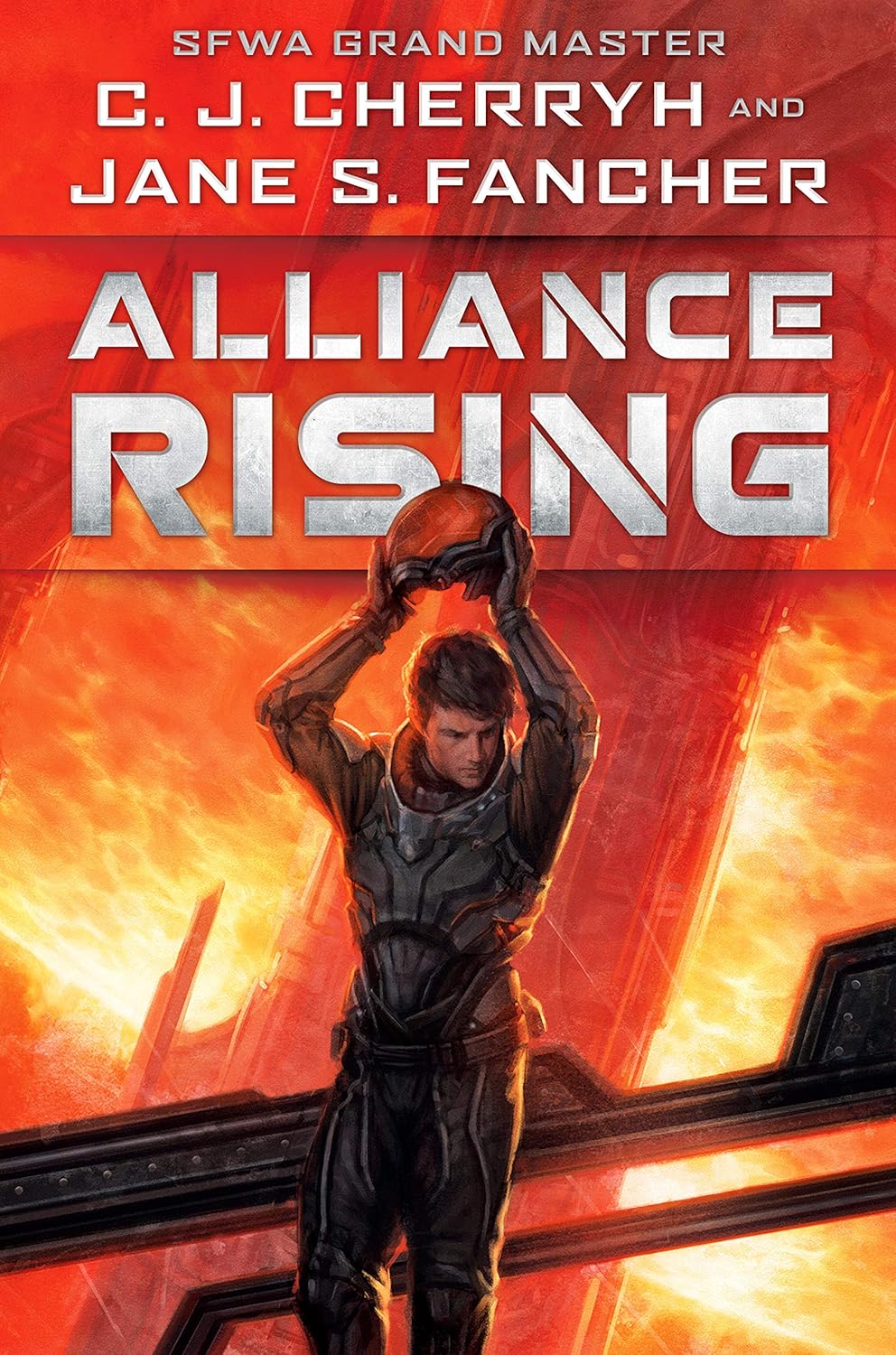
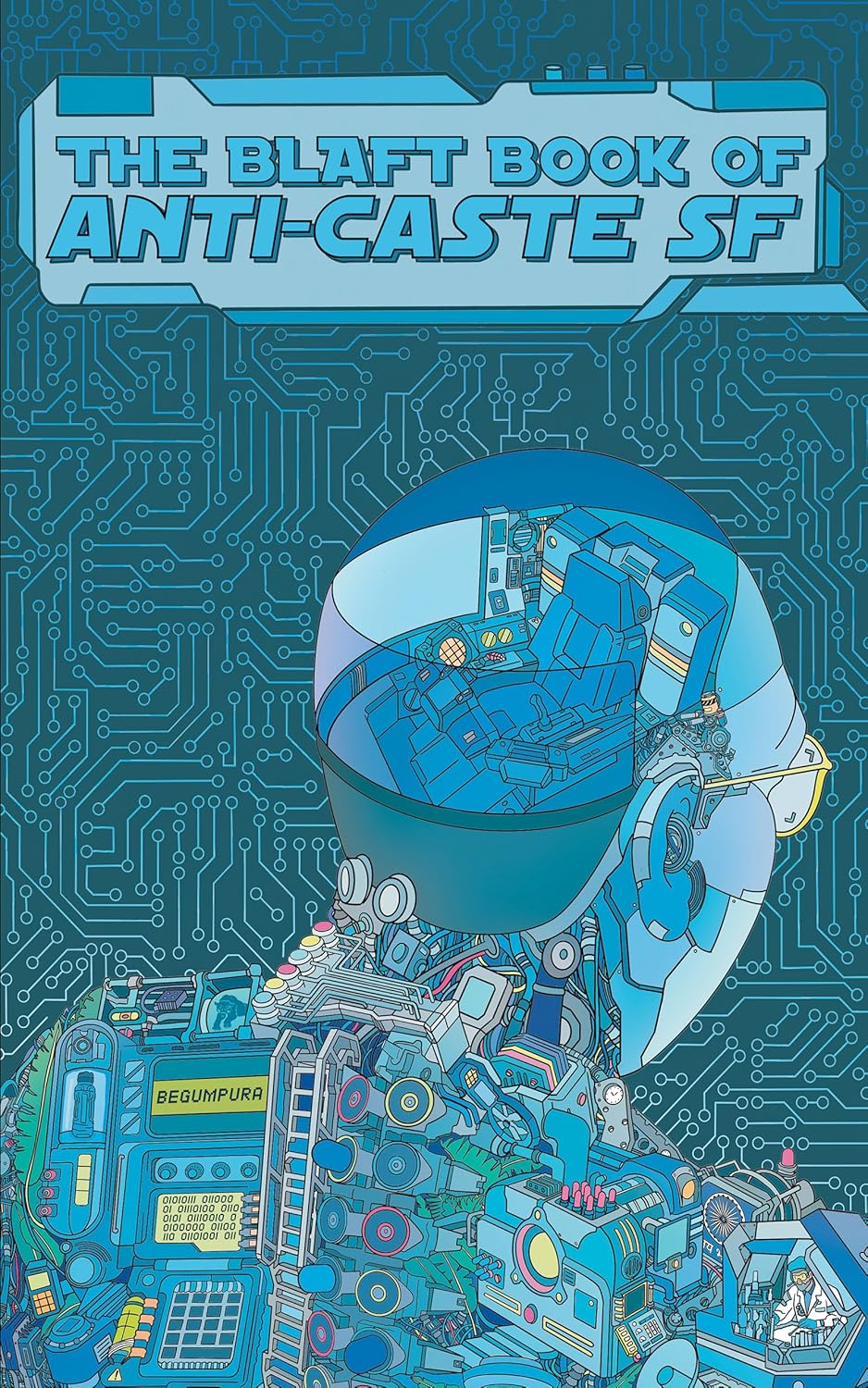



 SFRA Review