Kassia Krone’s Hollywood’s Monstrous Moms exposes the long-term stigma against mothers with mental illness in Hollywood horror films. Her study demonstrates a troubling pattern in the film industry of villainizing mothers with mental illness. Her book also identifies a research gap that hasn’t been fully explored at the intersection of disability studies, women, and mental illness. Disability studies in film has increasingly focused on representations of physically disabled bodies, arguing that their representation challenges the dominant able-bodied cinematic narrative. While there is some attention to cinematic characters with mental disorders, the one-dimensional characters make the discussion lack complexity. Even within feminist disability studies which critically examine the stereotypes about women with disabilities, women with physical disabilities or chronic illnesses are often central in discussions about the female body, beauty standards, and medical treatment as opposed to the experiences of women who are mentally ill. However, Krone’s research follows a feminist approach while adding the focus on mental disabilities.
The scope of Krone’s research includes classic horror films such as Carrie (1976), Mommie Dearest (1981), and Rosemary’s Baby (1968); slasher films such as Friday the 13th (1980) and Scream 2 (1997), as well as other more recent films such as The Sixth Sense (1999), Us (2019), Things Heard & Seen (2021), and so on. Her research also examines prestige horror films such as Hereditary (2018) and The Babadook (2014) to address the new trend. Krone’s scope is large, but all these films portray women with mental illness, which also illustrates how their images are rendered as a horror trope by the film industry. As Krone argues, these tropes vilify disability and gender together, especially motherhood. These depictions are also harmful to those in the disability community who fight for justice and equal rights.
Krone mainly examines female characters with mental illness from the following perspectives: women’s liberation movements and the film industry backlash; the representation of disability tropes; medical and social models of disability; and mother-child relationships. This approach draws her research into conversation with the gender inequality in Hollywood, disability tropes in films, and the narrative of female madness. Dating back to the Victorian period, women with mental illnesses were viewed as moral failures or as inherently emotionally fragile, which successfully constructed female madness as something stigmatizing and distorted. Krone’s analysis persuasively argues that these discriminations are also ubiquitous in contemporary cultural products.
Chapter One discusses classic horror films such as Carrie, Rosemary’s Baby and Mommie Dearest, in which mentally ill mother characters serve as a horror response to the emerging independent women. Their mental illness is used as a metaphor for punishment, suggesting that their progress is “detrimental to their mental health or stability” (22). Chapter Two analyses the films The Others (2001), Mama (2013), and Things Heard and Seen to illustrate how mental health facilities or haunted houses impact women’s mental condition and dehumanize them. This discussion is also addressed to the history of women who are diagnosed with hysteria, showing the long history of the medical narrative inclined to stigmatize them as ‘mad women’ without questioning the reason and truthfulness and then imprison them into isolated spaces (45). In these films, these female characters become ghosts after their suicide and haunt their children in the house. These depictions also complicate Jay Timothy Dolmage’s “kill or cure” trope for disability representation in film, as these mentally ill women “are already dead” and need to be banished again (57). Chapter Three focuses on the female killers in the slasher films Scream 2 and Friday the 13th. They are labelled as psychotic, driven to seek revenge for their sons’ death, a characterization reinforced by the slasher film narrative to emphasize their ‘craziness’ while ignoring their grief and emotional trauma over losing their children.
Moreover, these harmful portrayals are also linked to other forms of discrimination, such as racism and medical bias. Krone’s discussion situates these elements within the concept of intersectional feminism, which recognizes overlapping oppression rather than focusing solely on sexism. Chapter Four shifts the focus to mentally ill Black women in the horror films Ma (2019), Barbarian (2022), and Us. Even when Black women are present, the film industry often commodifies them through fixed tropes or stereotypes, such as the “Black villain” (96) and the “Black female vixen” (97). Their mental health is often overlooked by medical professionals and the film narrative, especially when they encounter racism and ableism at the same time: “blackness” is sometimes regarded as a form of disability within horror film narratives (108). Chapter five discusses the representation of mothers with Munchausen syndrome by proxy (MSP) in films The Sixth Sense, Fragile (2005), Love You to Death (2019), and Run (2020). It is implied that mothers who have mental illnesses are unfit to raise children.
However, this does not mean that all contemporary horror films are trapped in this representational dilemma. As readers might be aware, horror films are also constantly evolving, responding to the growing concern regarding approaches to disability and gender. Krone examines Things Heard and Seen in Chapter Two to argue that it provides an unconventional ending that resonates with contemporary feminist movements by foregrounding female solidarity. The film emphasizes the collaborative efforts among spectral moms to break the cycle of domestic abuse. Chapter Six shows that Hereditary and The Babadook portray the female protagonists who navigate their mental struggles with resilience which challenges stereotypes linking their mental illness with villainy. These depictions also embody the potential to understand the mentally ill in another way: to sympathize with them. This change mirrors the rising of “prestige horror” in the film industry (149); these films juxtapose mental illness with societal issues and call for greater attention to people’s spiritual world. In the films Hereditary and The Babadook, the mothers are portrayed as “three-dimensional” characters, with their mental illness symbolically linked to themes such as religion, family grief, and personal trauma (149). Krone posits that these films also “present mental illness as more of an allegory or symbol through the use of the supernatural” (176). In this way, they complicate the trope of mental illness in horror cinema, rather than solely using it to characterize villains. However, the thematic direction expressed by the creators and the audience’s perception can be vastly different. Krone argues that Hereditary expresses compassion toward mentally ill characters, especially the mother character Annie. However, I see the film as reinforcing a fear of mental illness, particularly through its title, which indicates that mental disorders are inevitably passed down through generations. This implication could further deepen societal fear and misunderstanding of mental illness. Thus, Krone’s interpretation also needs to be supported by further evidence.
Krone is, however, correct when she argues that an often-overlooked issue in horror films that we rarely reflect on is the negative impact of depicting mentally ill characters as villains. Audiences tend to accept these terrifying portrayals as natural. Furthermore, Krone points out that Hollywood rarely casts actors with disabilities in disabled roles. This reiterates the need for more diverse representations in horror films. I believe this book could explore its connection with the Victorian tradition of depicting female madness in literary works, a topic not fully explored in this study. At the same time, this book can also be integrated with queer theory, as this theory similarly challenges the narrative of “normality,” creating intersections with both disability studies and feminist scholarship. Scholars interested in horror cinema, feminist disability studies, and mad studies will likely find this book valuable.
Shiqing Zhang is a PhD candidate at Newcastle University, where she studies children’s literature. In particular, she does research on Ursula K. Le Guin and how her work challenges the conventions of YA literature. She acknowledges the support of the China Scholarship Council (CSC) for funding her research in the UK.
Review of Decoding Digital Culture with Science Fiction
Nanditha Krishna
Alan N. Shapiro. Decoding Digital Culture with Science Fiction: Hyper-Modernism, Hyperreality, and Posthumanism. Bielefeld: transcript Verlag and New York: Columbia University Press, 2024. Paperback. 374 pages. €50.00. ISBN 9783837672428.
Version 1.0.0
When I completed my Master’s degree in English Language and Literature in July 2024, I found myself increasingly drawn to the question of how science fiction (SF) can help us think critically about the digital and technological futures we now inhabit. Many of the speculative worlds I explored during my degree – once purely imaginative, especially in the late 20th century – no longer feel like distant possibilities. They feel less like fiction and more like our lived reality. Surveillance systems, pervasive data collection, algorithmic control and governance, and artificial intelligence are no longer abstract concepts. They are already here, shaping everyday life in profound ways.
Science fiction has evolved beyond simple prediction or foresight; it has become a practical method, a way to decode the complex digital cultures around us. This shift is at the heart of Alan N. Shapiro’s Decoding Digital Culture with Science Fiction, a book that blends cultural theory, media studies, and futures thinking to explore how science fiction (SF) helps us understand and even shape emerging technologies. I wish I had discovered the book earlier, particularly during my thesis research. Still, it has since become a key influence in my current role as a Fellow in the Young Future Maker Fellowship Program, run by Future Days (Portugal), the Copenhagen Institute for Futures Studies (Denmark), and Media Lab Bayern (Germany).
During my fellowship, I have been applying many of the ideas that Shapiro discusses: using literary and science-fictional thinking to analyze digital futures, especially around themes of surveillance, privacy, and algorithmic governance. My work focuses on utilizing cultural texts (literary studies) to address real-world challenges, collaborating with futures and media experts to explore how stories and technologies intersect. For instance, in preparing for my Future Days 2025 fellowship presentation, I used his concept of science fiction as a critical lens and methodological tool—an applied iteration of the Literary Futures method by Rebecca Braun and Emily Spiers—to analyze not only the stories we tell about technology but also the algorithms and systems that structure our digital lives. This book hasn’t just been a background reference; it has directly influenced my practice-based research, showing how theory can guide creative, future-oriented work. Shapiro’s framework has profoundly shaped my approach to projects that bridge narrative, technology, and futures thinking. The book has helped me frame projects that bring literature into dialogue with foresight practices, culminating in recent presentations at the Future Days Conference (2025) Garden Gallery in Estufa Fria, Lisbon, Portugal.
Shapiro’s book explores the deep entanglement of science fiction, digital technologies, and cultural theory, arguing that SF is no longer just a storytelling genre. Instead, it has become a shaping force, influencing both the design of new technologies and the ways in which society understands them. The text is divided into three interconnected sections: Hyper-Modernism, Hyperreality, and Posthumanism, progressing from analysis to critique and ultimately to proposals for transformation.
In Part 1, Shapiro introduces Hyper-Modernism, an intensification of postmodernism driven by algorithmic systems that now organize culture and everyday life. Drawing on theorists such as Fredric Jameson and Gilles Lipovetsky, he shows how science fiction has evolved from mere storytelling to a force that actively influences technological development. Through examples like Black Mirror and Star Trek, Shapiro demonstrates SF’s dual function: it both inspires technological innovation and provides critical commentary on its consequences. This section particularly resonated with me, as it highlights why SF deserves serious study within the humanities and beyond.
Part 2 engages with Jean Baudrillard’s theory of hyperreality, where simulations and images replace reality itself. Shapiro argues that in today’s digital, algorithm-driven world, Baudrillard’s ideas are more relevant than ever, but they need to be updated. Platforms such as social media, VR, and AI have pushed hyperreality to new extremes, eroding the distinction between the real and the virtual. This section also addresses post-truth politics and the algorithmic shaping of perception, connecting Baudrillard’s theories to contemporary debates. What I appreciated most here was Shapiro’s insistence that we are not powerless: by “re-coding” digital systems, we can resist and reconfigure the structures of hyperreality. His use of The Matrix as a metaphor for this kind of critical engagement was especially compelling.
Part 3 moves toward transformation, focusing on Creative Coding and Posthumanism. Drawing on N. Katherine Hayles’ How We Became Posthuman, Shapiro critiques the traditional, abstract conception of code as purely functional. Instead, he envisions coding as a creative, embodied, and collaborative practice. This has profound implications for computer science, which he argues should become more transdisciplinary, connecting technology, art, and the humanities. Creative Coding, as Shapiro presents it, can resist algorithmic capitalism, generate art, and decenter human authorship through collaboration with AI. While this section was inspiring, I found myself wishing for more detailed, practical, and concrete examples of Creative Coding, as this concept feels especially promising for education and futures studies. It would have been valuable to see specific examples of how these ideas could be applied in classrooms, labs, and workshops.
Shapiro situates his work within a rich theoretical tradition. His arguments draw on thinkers such as Michel Foucault (panopticism and power), Donna Haraway (Informatics of Domination), Cornelius Castoriadis (The Imaginary Institution of Society), Jean Baudrillard (hyperreality and simulation), and Gilles Deleuze (rhizomatic thought and networks). By engaging these foundational ideas, Shapiro provides a strong intellectual grounding for his claim that science fiction is not only a cultural artifact but also a methodological tool for decoding digital life.
In this sense, Shapiro’s work sits alongside other major texts in digital culture and futures studies. For example, while Shoshana Zuboff’s The Age of Surveillance Capitalism examines the economic and political dimensions of the surveillance economy, Shapiro goes further by showing how narrative and imagination can decode and critique these systems. Similarly, where Hayles explores the evolution of posthuman subjectivity, Shapiro provides a practical, future-facing perspective, demonstrating how SF can actively shape our responses to technological change.
One of the most compelling chapters in the book is “Science Fiction Heterotopia: The Economy of the Future.” In the section “Similar Technologies in the Real World Today,” Shapiro draws striking parallels between fictional worlds and actual technologies. He weaves together Foucault’s panopticon, Zuboff’s surveillance capitalism, and science-fiction narratives to explore the politics of surveillance and power in the digital age. These intersections between theory, technology, and narrative are where the book truly shines, showing how science fiction can act as both a mirror and a map for our future.
The book’s greatest strength lies in its interdisciplinary reach. It speaks to literary scholars interested in speculative fiction, digital humanists exploring the links and intersections of narrative and technology, and futures practitioners seeking frameworks to guide foresight projects. Its ideas could enrich courses in literary studies, cultural theory, media studies, and futures education, helping students and researchers think critically about how stories and technologies co-evolve.
From a personal perspective, this book has been transformative for my fellowship work. It provided not just theoretical insight but also a practical philosophy for using science fiction as a tool in real-world futures work. Shapiro’s approach reaffirmed my belief that fiction is not just meant to be read or interpreted, but to be applied—as a way of anticipating, critiquing, and reshaping the future. This understanding has guided my collaborations with media experts and informed public presentations, where science fiction acts as a bridge between storytelling and systems thinking.
If there is one area where the book could be expanded, it would be its treatment of Creative Coding. Shapiro’s vision of coding as an artistic and philosophical practice is compelling, but I found myself wanting more concrete examples and teaching strategies. Given the rapid growth of computational creativity and generative AI, this topic deserves more attention. While I would have liked to see a deeper dive into Creative Coding, this does not diminish the book’s impact. For me, it has been more than just an academic text: it has become a practical tool and a source of inspiration. In an era when algorithms and simulations define so much of our world, Shapiro’s call to “decode” digital culture feels both urgent and empowering.
Decoding Digital Culture with Science Fiction is more than just a book about literature or technology; it is a call to action. By positioning science fiction as both a critical lens and a creative practice, Shapiro urges readers to move beyond passive story consumption and toward active engagement with digital systems. For educators, scholars, and practitioners across philosophy, literary studies, digital humanities, and futures thinking, this book offers an essential framework for navigating our algorithmic age. It has been pivotal in my own work, highlighting that science fiction is not just a genre but a method for creating better futures. As our world becomes increasingly shaped by algorithms, simulations, and automated decisions, Shapiro’s work feels urgent and necessary. It is a book that should be read widely, not only for its intellectual depth but also for its potential to change how we teach, create, and imagine digital futures. Overall, Decoding Digital Culture with Science Fiction offers a critical yet hopeful vision of our technological future. This is a book I strongly recommend to anyone seeking to understand, critique, and reimagine our technological futures.
Nanditha Krishna graduated in 2024 with a Five-Year Integrated Master’s (M.A.) degree in English Language and Literature from Amrita Vishwa Vidyapeetham (Amritapuri, India). She is a Future Days 2025 Fellow (Copenhagen Institute for Futures Studies, Media Lab Bayern, and Future Days). Previously, she was a virtual research intern at the Australian Research Centre for Interactive and Virtual Environments (University of South Australia), contributing to projects on interactive narratives, news games, digital art, virtual reality (VR), and creativity in immersive performance. From 2021 to 2023, she was a HASTAC Scholar and a research intern at the Empathic Computing Lab (University of Auckland). Her interests span speculative fiction, media studies, and futures studies, exploring how digital technologies shape culture and society.
Cassandra L. Jones. Black Speculative Feminisms: Memory and Liberated Futures in Black Women’s Fiction. The Ohio State University Press, 2024. E-book. 122 Pages. $29.95 ISBN 9780814283776.
Version 1.0.0
In Black Speculative Feminisms, Cassandra Jones explores how Black women authors use science fiction, fantasy, and speculative fiction to challenge linear notions of time by drawing on Afrocentric concepts. The work positions itself within a larger effort to excavate and highlight the power of Black women’s history and its implications for the future. Jones emphasizes “attention to record-keeping as an ongoing antiracist intervention” (2) and introduces key hashtags such as #ListenToBlackWomen, #BlackWomenArtTheFuture, and #CiteHerWork as part of Black Twitter’s tradition of disrupting the erasure of Black women’s contributions.
The book distinguishes Afrofuturist feminism from broader Afrofuturism (speculative fiction, science fiction, fantasy, and futuristic literature written about and by Africans and African Americans), defining it as a literary tradition where “people of African descent and transgressive, feminist practices born of or from across the Afro-diaspora are key to a progressive future” (5). Central to Jones’s analysis, and repeated throughout the book, is the concept of “restorative critical fabulation” – not simply mythologizing a great African past but creating imaginative works that humanize Black women and breathe life into historical records, shifting our relationship with traumatic histories. Jones further notes that this concept of restorative fabulation “recognizes the emotional labor of the author and serves as a balm for reckoning with those histories of trauma” (8).
In Chapter 1, Jones examines Tananarive Due’s TheGoodHouse (2003) and Nalo Hopkinson’s TheNewMoon’sArms (2007) to illustrate how memory serves as an instructive device for identifying threats to Black people, a concept she defines as rememory. These repressed memories can be transformed into healing when dealing with generational traumas from the past. She notes that rememory is similar to what we are currently experiencing in political circles with the attacks on Black history and Black studies; how learning, remembering, and sharing of this history is determined to be dangerous and traumatic. Jones examines rememory through the figure of Due’s conjure woman, Angela, and Hopkinson’s Calamity, both of whom celebrate the power and promise of an African past, using memory to resolve historical horrors and transform that trauma into healing.
The chapter examines how the strength of Black women is often pathologized, referencing destructive narratives, such as the Moynihan Report (https://www.dol.gov/general/aboutdol/history/webid-moynihan). This 1965 study by sociologist and, at the time of the report, Assistant Secretary of Labor Daniel Patrick Moynihan proposed that the high rate of Black families headed by single mothers was a major obstacle to Black progress towards equality. Rather than focusing on systemic racism, the report pathologized Black women as the cause of the deterioration of the Black family. In contrast, both novels reclaim Black women as figures who celebrate them, emphasizing love over pain, a healing that is rooted in giving oneself over to a restorative fabulation that engages and adds to Dr. Sadiyah Hartman’s methodology called critical fabulation. Hartman’s method requires that we interrogate the historical record through the lens of the marginalized and the aftereffects of the institution of slavery. Both frameworks of Jones and Hartman enable the recall of a familiar history that is critical, restorative, and finally, celebratory.
The Conjure woman has also been demonized and stigmatized as an evil force, but these two novels reclaim Conjure women as bearers of ancestral knowledge that is important and continuously present. In Due’s book, it is the entity titled the Baka that represents the colonial past; the desire to suppress memories and the horrors they experienced that devours Black people. Through this analysis of works featuring spiritual possession, Jones demonstrates how surrendering oneself to memory can facilitate healing by connecting it with the transformative power of love from departed family members. This remembering is used to fight against the Baka, an evil force and horror that forces characters to kill others or themselves. One of the main characters, Tariq, is used as the metaphor for how the embrace of toxic masculinity, homophobia, and the rejection of the wisdom of the ancestors makes him vulnerable. That vulnerability causes Tariq to succumb to the Baka. It is through Angela, the Conjure woman, the figure that unites the past and future into a singular moment, that she can defeat the baka. More importantly, she can connect “ancestral memory and love…this healing a step further to physically rewrite the world, restoring Corey and all those killed by the baka to life” (26).
The chapter also examines Hopkinson’s The New Moon’s Arms, which centers on a Caribbean woman, Calamity, as she nears menopause. Her hot flashes bring back familiar memories and items from her past, and the recurring theme of good/bad mothers and communal rememory that Jones discusses throughout the book. These themes are combined in Calamity’s story with the repression of sexuality, which traumatizes Black people throughout their lives. In the novel, this sexual repression is often done through religious adherence that embraces the compulsory heterosexuality and homophobia of Calamity’s Christian upbringing, which has traumatized her since childhood. The hot flashes force her to trust her body and to accept her role as matriarch and the vessel for communal rememory. Calamity confronts the disappearance of her mother, who she believes drowned in the sea, and her memories connect to the trans-Atlantic slave trade and the sea creatures, seals and merpeople (mermaids/mermans), which in these narratives are often depicted as the descendants of enslaved Africans who escaped into the sea rather than submit to slavery. “Calamity’s horror in Hopkinson’s novel is not only tied to a fear of the supernatural unknown, but also deeply tied to a fear that repressed memories and stories from her past kept from her by her parents might reemerge” (33). It is the ability of these women, Angela and Calamity, to connect to the past that guarantees their futures and those of their ancestors.
Chapter 2, “Memory and African Traditions”, examines how memory functions in novels to imagine futures that incorporate African traditions, rather than simply reinforcing Western modernity. Jones pushes back against criticism of science fiction/fantasy as “white” literature, noting that these forms have always been part of African-centered storytelling traditions. This perspective is particularly important as Jones challenges conventional genre boundaries and demonstrates throughout the book how African narratives naturally feature “beings from space, seers, talking animals and sentient plants” (36) that communicate morality and tradition across the continent.
Jones’s analysis of Nnedi Okorafor’s Lagoon (2014), in which aliens invade Nigeria, explores how the novel critiques Christian traditions that foster self-hatred, addressing the complex interplay of ideological and physical influences in the postcolonial, neocolonized world. Jones examines how the novel challenges neocolonialism, which frames Africa as perpetually in need of Western intervention, and highlights how African intellectuals have sometimes been complicit in perpetuating cultural imperialism. This approach resonates with other significant works of Black speculative fiction, such as esteemed lawyer Derrick Bell’s “Space Traders” (1992), a story about aliens coming to America and requesting that all Black people be sent to their spaceship. In return for sending them all the African Americans, they offer the United States riches, clean air and water, and overall prosperity. Both Okorafor’s and Bell’s work confronts Black self-hatred while demonstrating how anti-Blackness has been complicit in propagating Western cultural imperialism, revealing that holding on to these ideas ultimately offers no protection.
The variety of protagonists that are central to Okorafor’s story include Father Oke, who represents anti-Blackness and misogyny; Adaora, the marine biologist who introduces the aliens; Ayodele the alien ambassador; Mami Wata, the water deity who destroys Father Oke; and Legba, whose use of the Nigerian Prince, also called the 419 scam, is rehabilitated after his encounter with the aliens. Through these diverse characters, Okorafor illustrates how the aliens serve as agents of transformation. Upon the aliens’ arrival in Lagos, Nigeria, they not only destroy the internet cafes that facilitated these scams but, as Okorafor notes, “the invasion’s dramatic ability to unseat Western discourses by strengthening the existing power of resistance” (46). Toppling multiple social hierarchies and cleansing the oceans, these shapeshifting aliens, who proclaim themselves catalysts of change, inspire nationalist pride and expel the lasting influences of colonialist rule.
The novel’s use of animals and mythological figures exemplifies how “animals hold a place of extreme importance in African storytelling and mythology” (43), serving as messengers of gods or living incarnations of deities in Ashanti, Igbo, and Yoruba traditions. This is particularly evident in Okorafor’s portrayal of Mami Wata as a powerful water deity who represents traditional African spiritual forces resisting colonial impositions. Through these elements, Jones demonstrates how “restorative fabulation employs the tropes of science fiction to restore indigenous beliefs and cultures,” using alien contact narratives to explore both anti-African sentiment and the cultural beauty and power of African cultures (51). Ultimately, the chapter reveals how Black women authors such as Okorafor use speculative fiction not merely as entertainment but as a powerful vehicle for cultural preservation and decolonization of the imagination.
In Chapter 3, Jones introduces the concept of “Sankofarration,” derived from “Sankofa,” meaning “it is not taboo to fetch what is at risk of being left behind” (56). She examines how Black authors employ narrative and writing to reclaim and preserve memory, drawing on what was left behind. The chapter contrasts how Black Studies tends to focus on the past, while Afrofuturism looks to the future, revealing how Black speculative fiction uniquely bridges these temporal orientations to recover non-Western concepts of history and time.
The chapter analyzes Octavia Butler’s Kindred (1979), showing how it connects memory, trauma, and time travel as an act of decolonization. “Decolonizing time becomes an additional approach to recognizing and healing this trauma” (53). Drawing on Butler’s archives housed at the Huntington Library in San Marino, California, Jones illuminates how the novel’s time travel mechanics connect to Igbo cosmology, demonstrating Butler’s deliberate engagement with African philosophical traditions. Kindred exemplifies “imaginative thinking that cannot change the past but can breathe life into the historical record and shift our relationship with the past” (57). Through this lens, Jones reveals how Butler attempts to spark emotion and create empathy in readers by demonstrating that racism is not merely individualized but deeply systemic, requiring a cross-temporal understanding to comprehend its enduring impacts fully.
Butler’s Wild Seed (1980) serves as another powerful example of restorative fabulation, creating “a world in which characters reckoning with chattel Slavery are not yoked to realist history” (58). This narrative approach offers readers the opportunity to shift their perspective and relationship to historical trauma without diminishing its significance. By transcending conventional temporal boundaries, Butler creates spaces where Black women can imagine alternatives to oppressive systems while acknowledging the weight of historical memory.
Jones also analyzes Rasheedah Phillips’ novella “Telescoping Effect” (2017), which borrows its central concept from psychiatry to portray memory as an economically exploitable resource. The term refers to cognitive temporal displacement where one’s understanding of linear time is disrupted, creating what Phillips sees as “an undiscovered scientific possibility that time might be collapsed in order to achieve contact between the past, present and the future” (66). Phillips argues that this “collapsing of time” that women experience in the novella serves to “decolonize our memory” (66), positioning the relationship between temporality and memory as a site for Black critical imagination and the creation of future possibilities.
What makes Phillips’ work particularly significant is her development of Black Quantum Futurism as both a theoretical framework and a practical community resource, as evident in her website and series. Unlike many academic theorists, Phillips begins with community engagement before presenting her ideas in academic spaces, thereby inverting the traditional flow of knowledge from institutions to communities. Her innovative work on metaphysics, ontology, and epistemology—areas traditionally dominated by scholars in the social sciences and humanities—represents a radical shift in how we might understand time, memory, and Blackness outside of Western paradigms. This approach demonstrates how Black women speculative writers are not merely creating entertaining fiction but developing comprehensive philosophical systems that challenge fundamental assumptions about reality, time, and historical knowledge.
Chapter 4 examines Octavia Butler’s ‘Patternists’ series (Patternmaster [1976], Mind of My Mind [1977], Survivor [1978], Wild Seed, and Clay’s Ark [1984]) as a complex exploration of memory, power, and historical consciousness that transcends conventional chronology. These interconnected novels create what Jones describes as “lieux de memoire” (sites of memory) – concentrated nodes of spontaneous public memory that function fundamentally differently from ‘official’ historical narratives, which accrue power to particular perspectives. She contrasts institutional history with living memory that incorporates “legends, folklore and other forms of storytelling” (71-72), demonstrating how Butler’s work exists in this more fluid, communal space of memory-making.
The chapter centers on Jones’s nuanced analysis of Anyanwu, the immortal shape-shifter who serves as the moral anchor and disruptive force throughout the series, particularly in Wild Seed. As a character whose existence spans centuries, Anyanwu embodies collective memory itself, defying historical amnesia and functioning as a voice of resistance whose memory offers revolutionary potential against oppressive systems. Through Anyanwu, Butler creates not just a character but a living archive of resistance that persists across temporal boundaries.
Jones masterfully dissects the power dynamics between the series’ central characters. Doro, the body-snatching immortal who builds a breeding program for psychically gifted individuals, represents the colonizer’s mindset: consuming others while justifying his actions through claims of progress and protection. Mary, who eventually defeats Doro in Mind of My Mind by creating the telepathic Pattern, initially appears to represent liberation; however, she ultimately establishes an oppressive hierarchy that mirrors Doro’s regime. Both Doro and Mary function as vampiric forces, though Mary refuses this comparison, creating a society where non-telepathic ‘mutes’ are treated as lesser beings without agency. Jones notes how both rulers create “official histories… that functions as an accounting of past events that has sedimented into layers of narrative, repeating only the ‘official’ narrative, accruing power to a certain people or nations through this shared narrative and those creators authorized to contribute layers of history, denying the ability to create legitimate narratives to the general populace” (71). Doro and Mary justify their behavior, mirroring real-world colonial and post-colonial power transitions.
What makes Jones’s analysis particularly powerful is her examination of how Anyanwu serves as the true revolutionary force throughout the series. Unlike the dramatic power struggles between Doro and Mary, Anyanwu’s resistance operates through the preservation of memory and quiet subversion. She “acts as a site of memory in multiple crucial movements,” using her historical knowledge to critique not only Doro’s horrific acts but also highlights what “E. Frances White reminds us about the problems that came from accepting a false unity during the decolonization phase that has led to the transfer of local power from an expatriate elite to an indigenous one” (88). As the embodiment of the people’s disruptive power, Anyanwu recognizes what others cannot: that Mary is becoming indistinguishable from Doro despite her claims of difference.
The chapter draws important connections between Butler’s fictional worlds and real historical processes, highlighting Butler’s interest in Igbo culture as a repository of memory and a reminder of alternative social organizations. Jones quotes Butler directly: “I don’t think it would be wise…for any black person…to forget” (82), underscoring the political dimension of memory-keeping in Black communities. Through her concept of ‘critical fabulation,’ Jones shows how Butler conjures fully realized characters that conventional historical archives often fail to document, creating speculative figures who participate in North American slavery without changing its factual record. This approach enables emotional and psychological explorations of historical trauma that traditional historical accounts often cannot access, demonstrating the unique power of speculative fiction as a tool for historical recovery and healing.
Jones concludes her analysis by connecting the theoretical frameworks she has developed throughout the book to pressing contemporary issues, including the COVID-19 pandemic, the overturning of Roe v. Wade, accelerating ecological disasters, the persistence of white supremacy, and the genocide of Palestinians in Gaza. These current crises serve as stark reminders of why speculative fiction by Black women isn’t merely entertainment but rather essential cultural work that helps us imagine alternative futures while processing traumatic histories.
While acknowledging science fiction’s visionary potential, Jones emphasizes that “understanding the past and how we remember it are equally important in any project that aims to ‘save ourselves from ourselves’” (89). She points specifically to Butler’s prescient novels, Parable of the Sower (1993) and Parable of the Talents (1998), as warnings particularly relevant to our troubled times, challenging readers to question societal priorities—whether lavish space exploration should take precedence over sustaining democratic systems and addressing fundamental human needs. The Black women authors showcased throughout Jones’s analysis demonstrate how “an understanding of the past and how we remember it are just as important in any project that purports to save ourselves from ourselves” (90), positioning memory work as essential to survival rather than merely as an academic exercise.
Jones draws urgent connections between her literary analysis and contemporary political movements aimed at suppressing collective memory, particularly highlighting anti-critical race theory legislation and voter suppression laws that echo earlier Jim and Jane Crow policies. These connections reveal the high stakes of memory work in an era where historical amnesia is being deliberately cultivated through institutional means. Against these forces, Jones advocates for public and activist scholarship that moves beyond the academy, positioning restorative fabulation as “a praxis for acting in the world” (90) rather than merely a literary technique.
The conclusion extends beyond literary analysis to consider the practical applications of Afrofuturist principles, highlighting how Black and Indigenous agricultural practices provide concrete insights as a component of Afrofuturist activism. This connection between speculative imagination and practical environmental knowledge demonstrates how restorative fabulation can inform concrete solutions to contemporary crises. Jones ultimately argues that restorative fabulation draws attention to temporality and our understanding of history, transcending the anthropocentric view of time and progress, and refusing “to reject our human emotional response to work in ways that according to patriarchal models, render us weak and overly feminine” (93).
In her final synthesis, Jones positions the worlds created by Black women speculative fiction writers as vital spaces “for respite from our horrors, a place to refresh, and a place to consider our options in responding to injustices and threats to our existence as we learn about our past and imagine our potential futures” (93). This conclusion powerfully articulates the therapeutic, political, and revolutionary potential of Black women’s speculative fiction as not just literary artifacts but as living technologies of resistance, healing, and possibility in increasingly uncertain times.
This book is an excellent text for undergraduate and graduate students in the academy. It offers a varied reading list of works for a wider public consumption, including works not critiqued by the author. Scholars of Africana Studies, English/Literature, Physics, and Women’s & Gender Studies will find that this book provides a wealth of opportunities for lively discussions and further study.
Rebecca Hankins is a full professor in the Department of Global Languages and Cultures in the College of Arts and Sciences at Texas A&M University. She has been at the University since 2003. She researches and teaches courses in Africana and Religious Studies. She has a substantial publication portfolio of peer-reviewed works and has presented at national and international conferences, most recently in Barcelona, Spain; Doha, Qatar; and Berlin, Germany.
The saddest aspect of life right now is that science gathers knowledge faster than society gathers wisdom – Isaac Asimov
This quote by Asimov resonates with one of T. J. Klune’s most recent novels. In the Lives of Puppets, published in 2023 and roughly Klune’s fifteenth novel, offers a speculative reinterpretation of familiar science fiction and fairy tale tropes. In this novel Klune explores questions of care, kinship, and ethical responsibility in a posthuman world. The narrative, which is considered a retelling of Pinocchio (1883), is set in a future shaped by advanced artificial intelligence. It follows Victor Lawson, a human raised almost in isolation by a small community of robots, whose carefully constructed life is disrupted when he encounters a dangerous threat posed by technology in the past. Combining elements of science fiction, fantasy, and romance, Klune constructs a narrative that foregrounds emotional connection and moral choice over transformative technological advances in society.
The novel revolves around an unconventional chosen family. Victor lives with his adoptive father, Giovanni Lawson, an android inventor who is also an android himself, and two robots with different personalities that have been given distinct affective capacities. Their secluded existence in the forest presents an alternative to a wider world marked by violence, constant surveillance, and the abuse of technology. When Victor is captured by the AI that was responsible for past devastation in the human world, the narrative shifts into a rescue quest that forces this found family to confront both external threats and internal fears. While the plot follows a recognizable adventure plot, In the Lives of Puppets consistently returns to its core concern, which is how love, loyalty, and care operate across the human-machine worlds.
Klune, who is already well-known for character-driven speculative fiction as in his best-seller The House in the Cerulean Sea (2020), writes this novel within a tradition of science fiction that uses non-human and robotic figures to reflect on the human condition and what it means to be human. As anticipated, this work draws on Pinocchio, reinterpreting the fairy tale and bringing in current anxieties through the lens of artificial intelligence and posthuman ethics. The protagonist’s desire to protect and be protected, to belong to his non-human community and to choose his own path, echoes the wooden puppet’s longing for humanity, while the presence of sentient machines complicates any straightforward distinction between the human and the non-human. In this sense, the novel stands out as part of a long-standing SF conversation about artificial intelligence, agency, and morals, recalling earlier explorations by writers such as Isaac Asimov while shifting the focus from logic and control to dynamics of care and affect.
Within contemporary science fiction, In the Lives of Puppets aligns with an increasing body of work that prioritizes community, intimacy, and chosen family over conflict-driven narratives and complicated world-buildings. Rather than presenting AI as a potential threat or a tool for his characters, Klune uses it to imagine artificial beings that are capable of emotional development, ethical reasoning, and profound attachment as is the case of Rambo (a sentient small vacuum robot) and Nurse Ratched (a nurse android), who are Victor’s best friends. This resonates with recent speculative fiction that foregrounds community and mutual dependence in order to thrive, positioning the novel closer to relatively recent scholarly fields such as Community Studies or Hope Studies, far from traditional dystopian science fiction. At the same time, the text does not overrule the dangers of technological power as the antagonist AI embodies the consequences of uncontrolled authority, non-human reasoning, and the desire to control rather than to coexist.
Regarding the genre of the novel, it can be described as a conjunction of science fiction, fantasy, and romance. While its futuristic setting in a post-human world firmly locates it within SF, the narrative structure and emotional arc borrow heavily from the broad tradition of fairy tale and quest narratives. The emphasis on different kinds of love, from romantic and platonic to familiar, shapes both character development and plot progression. For some SF readers, this affective focus might feel at odds with potential expectations of extensive world-building that is typical of these novels. However, this mixture is central to the novel’s intervention as by foregrounding emotion and ethical choice, Klune reorients speculative inquiry towards questions of responsibility, vulnerability, and care in a technological world.
From a scholarly perspective, In the Lives of Puppets therefore offers rich material for discussions on posthumanism, community, and care ethics. The novel repeatedly challenges anthropocentric paradigms by giving robots emotional depth, thus inviting readers to reflect on where humanness begins and ends. The novel’s portrayal of non-human beings who can love, fear loss, and make sacrifices for one another complicates binaries such as human versus machine and the natural versus the artificial. These dynamics make the text particularly relevant to academic conversations around AI, affectivity in AI, and the ethics of invention and creation with technology.
The novel lends itself well to pedagogical use across different educational stages. In the classroom of secondary education, it could be productively paired with canonical texts concerned with AI such as Isaac Asimov’s I, Robot (1950) or Philip K. Dick’s Do Androids Dream of Electric Sheep? (1968). Reading Klune’s novel alongside these works may allow students to trace how representations of AI have changed over time. While earlier SF often frames AI through anxieties about control, autonomy, and threat against human life, Klune’s text reflects a contemporary, globalized context in which human-machine interactions are an everyday reality.
At the undergraduate level, the novel can be read alongside foundational theoretical work on posthumanism, such as Donna Haraway’s essay “A Cyborg Manifesto” published in 1985 in the Socialist Review or Rosi Braidotti’s influential book The Posthuman: A Theory of the Near-Future (2013), inviting students to explore how speculative fiction reworks traditional anthropocentric frameworks. Klune’s emphasis on chosen family and ethical responsibility provides a fertile ground for discussion on how agency, humanness, and moral obligation may be redistributed in posthuman contexts. The novel’s accessible prose and emotionally engaging narrative make it suitable for undergraduate courses, while its thematic engagement with responsibility, care, and power also makes it an insightful reading for more advanced critical discussion at the master’s level.
In conclusion, In the Lives of Puppets contributes to contemporary science fiction panorama by reaffirming the genre’s capacity to explore ethical and philosophical questions through emotionally grounded storytelling. Klune demonstrates with this novel how speculative fiction can successfully interrogate potential technological futures without sacrificing community or hope, positioning care, affection, and connection as vital to survive innovation and technological transformation. By revisiting familiar tropes through a posthuman lens, the novel invites readers to think about forms of community that transcend kinship and biological boundaries, offering a thoughtful and affecting meditation on what it means to choose love in a world governed by machines.
Patricia García Santos (Córdoba, 1999) is a predoctoral researcher in the Department of English at the University of Córdoba (Spain). She holds a dual degree in Translation & Interpreting and English Studies and has completed a Master’s in Secondary Education Teaching, which she pursued alongside a Master’s in Advanced English Studies. She is currently pursuing her PhD in Literatures in English, where she is a second-year student. She holds an FPI grant linked to the state-funded project The Poetics and Politics of Transparency in Contemporary English Literature (PID2023-146346NB-100). Her research examines the tension between contemporary demands for transparency and the inherent opacity of language and linguistic systems through the reinterpretations of the myth of the Tower of Babel.
Tchaikovsky, Adrian. The Hungry Gods. Solaris, 2025.
Version 1.0.0
This novella is the first in the Terrible Worlds: Innovations series in which Tchaikovsky explores power, belief, and runaway technologies that seem to ultimately do more harm than good. The novellas are standalones, but they share themes, and they can be read out of order (at least that is the initial concept considering that only the first one is out). At first glance, The Hungry Gods evokes certain emotions and postcolonial themes found in Ursula K. Le Guin’s The Word for World Is Forest since humans with advanced technology play Gods in a world where people have no technology. Unlike the planet in Le Guin’s narrative, this is not some alien world but Earth in the distant future. At some point in the past, humans poisoned water resources, the ground, and the air. Then, when everything became barren, the brightest and the best left for a new planet, Utopia, to start a better life. They believed that nothing survived the harsh living conditions back home. However, people did survive. They live in primitive, divided, and hostile tribal communities scavenging for food, water, and other resources. The tribes are given animal names, and the weakest are the Rabbits. Their day-to-day survival is disturbed by the arrival of the Gods, the four main scientists who created Utopia. They are back to repopulate the Earth, each to his own vision and preference (overgrowth of plants, bugs, robots), and each one of them treating the humans as a means to an end. The fourth wants to stop the other three, but with his own agenda. Facing an inevitable extinction, the fourth God, Guy Westen, heads on a journey to unite the tribes and create an army to achieve his goals. Yet, there is a plot twist in the end that invites new questions and more discussions regarding the nature of humanity.
Tchaikovsky examines his favorite topics in this novella: ecology, advanced technology, and humans playing Gods. Relentless exploitation of the earth, which is something we are witnessing in our own time, will inevitably lead to an uninhabitable, desolate, and toxic environment. The what if? of this novella follows the thought that even if a new world is found and this one is abandoned, all human life might not cease to exist. What if some humans survive in such a toxic place? The people in this novella are sick and one of the elders is at the ripe old age of thirty-four. The ecological imbalance creates a hostile environment, and humanity has regressed to a “primitive” way of life, which is hunting and gathering for whatever is left. Yet, the “Gods” who had the technology to create a new, better world somewhere else, decide to use this advanced technology for extreme experiments. All four of them see humans as an expendable resource that can be utilized as a fighting force or biodegradable material. As in other novels, Tchaikovsky does not need to explain complicated and new technology. It is a means to an end, and it amplifies whatever emotions humans have in this distant future. Somehow, Tchaikovsky always comes to the conclusion that greed and power seem to prevail despite the possibility of developing better ethics and higher compassion. His logic, based on present humanity, always comes back to the dichotomy between science and ethics, which are presented as mutually exclusive. Therefore, the more technologically advanced a society becomes, the less compassion and morals people have. In Tchaikovsky’s fiction, exploitation is always driven by predatory power, which leads to the consumption of beliefs, resources and ultimately lives. According to Tchaikovsky, humanity is trapped in a vicious cycle of war, sacrifice, and conquests. This cycle is broken occasionally only to start from the beginning. This novella hints at that toward the end. His writing challenges the anthropocentric assumptions that humans are the most important entities in the universe by showing that humans more often than not tend to regress to a darkness that embraces the annihilation of many for the whims of the few.
This novella is appropriate for undergraduate courses since it is short and covers interesting topics that are worthy of discussion. Once the trilogy is out, it could be used for graduate work. The novella can also be useful for scholarly work. It is great for discussing ecocritical and postcolonial theories. The “Gods” are colonizers, and they return to Earth only to find humans alive, but they have no problem using them as resources or erasing their culture/s. They are the divine authority that can do that. By the same token, the “gods” behave as parasitic organisms who use and dispose of humans regardless of their desire to fight and live. The experiments are more important than people. What is the purpose of those experiments? Perhaps glory or just because they have nothing more to achieve. Science works toward goals and higher achievements until the final goal is some form of perverse destruction of life that will lead to a hypothetical new level of we did it because we could. Political theology is another theory that works well in this novella as well as Marxist theory or posthumanist theory. One of the scientists wishes to take all the consciousness of the people that existed and download it into robots. He is more interested in AI and preserving human thoughts than preserving life itself. The experiment focuses on nonhuman ethics while destabilizing human ethics. Tchaikovsky flirts with more theories in his writings, but he always comes back to the basics of science fiction and that is that humans can change planets and develop technology, but no good will ever come of that until we change ourselves.
Zorica Lola Jelic, Ph.D. is an Assistant Professor at the faculty of Contemporary Arts in Belgrade, Serbia. She teaches English as a foreign language, Business English, Shakespeare, and English Drama. She earned her degrees in Shakespeare studies, but she also loves to write about literary theory and science fiction. She has published scholarly papers, coursebooks, and enjoys attending professional conferences.
Novellas—specifically, speculative novellas—have once again become a popular literary form. With the rise in readers consuming books via digital devices, the novella appears to be perfect for those existing in the chaotic and harried 21st century. Works such as Martha Wells’ Murderbot have gained wide attention outside of SF circles, resulting in an acclaimed streaming series.
Emergent Properties, the third novella by American author Aimee Ogden, explores a world of battling corporations through the experiences of an AI investigative journalist. Ogden, who was a 2021 Nebula finalist for her novella Sun-Daughters, Sea-Daughters, introduces the reader to the independent AI reporter Scorn. The reader learns that Scorn is unique as ze is one of a few emancipated AIs. As Scorn possesses no defined or stabilized gender identity, Scorn utilizes ze/zir pronouns. Scorn follows the clues as ze traces a conspiracy that could remake the earth and radically reconfigure the relationship between AIs and humans.
Speculative authors have employed journalists as protagonists, or supporting characters, for decades. Heinlein includes the reporter Ben Caxton in Stranger in a Strange Land; in Ender’s Game, Valentine and Peter’s journalistic endeavors propel them into complex political games and Norman Spirad’s Jack Barron tracks down clues to reveal corruption in corporations. Perhaps the most fascinating of these literary reporters is “gonzo journalist” Spider Jerusalem (modeled after Hunter S. Thompson) in Warren Ellis and Darick Robertson’s cyberpunk comic series Transmetropolitan.
When the reader first encounters Scorn, ze cannot recall the previous ten days as zir “mindfile” (memory) has been erased. The genre has seen protagonists who have had complete memory loss (such as in Andy Weir’s Project Hail Mary), or even amnesia, such as that endured by the crew in Mur Lafferty’s Six Wakes, who awaken to find that a team member has been murdered and one of them is the culprit. The “protagonist with amnesia” has also translated with success to cinema. Spectators piece together the mystery of Memento as the protagonist—suffering short-term memory loss—solves a murder; Eternal Sunshine of the Spotless Mind details a pair of bitter ex-lovers who undergo a process to extract memories of one another.
Using the device of a memory impaired protagonist is often effective as it hinges on the existential query of “Who am I?” and the reader follows the character as they construct an understanding of their own identity. For Scorn, the memories of those missing days were excised, yet that reason remains the mystery. It is this pursuit of those missing days and who wiped zir “mindfile” that motivates Scorn’s investigation.
Scorn’s physical form manifests in a variety of iterations. Scorn’s “mindfile” and consciousness are stored in a massive, shared data cloud, allowing for backups if Scorn’s “body” is destroyed. Unlike the “sleeves” (bodies) in Richard K. Morgan’s Altered Carbon, in which an individual’s consciousness is downloaded into a human form, the world of Emergent Properties features AIs in a variety of physical forms. These physical “holders” of the AI are referred to as “chassis” and can be a palm size “spiderbot”, a designated human body, or even a kiosk. Since all high-level functioning AIs have unique personalities and traits and can inhabit any device or structure, this creates an unusual set of encounters as Scorn pieces together the clues.
Though constructed with the intention to serve on exploratory scientific missions, Scorn “found more novelty in the secrets and subtleties of existing social structures than in the unexplored Jovian moons” (9). Scorn stands as one of the few emancipated AIs while the vast majority toil as servants to humans.
Though the plot is intriguing, the novella does not adequately heighten tension or suspense. Scorn follows the clues and leads, but the reader is never fully aware of the stakes. Scorn, as noted, is basically “immortal” as zir “mindfile” can continuously be uploaded to the data cloud. So, danger to Scorn is minimal. The reader does not learn enough about this world’s given humans to have an emotional interest in their survival. When the source and reason for the conspiracy is unveiled, sadly, it is not a moment of high tension.
Emergent Properties also utilizes a variety of anachronisms, yet the effect on the reader is one of confusion. References to emojis, paper periodicals, the term “bougie” and denigrating an AI as a “Commodore 64 of a security bot” (33) and an “overgrown toaster” (38) intrude into the reader’s willing sense of disbelief. In addition, by utilizing ze/zir pronouns, Ogden calls attention to aspects of the non-binary gender identity of Scorn, but this fascinating element is not pursued in any depth.
Beyond these shortcomings, there are many fascinating concepts in the novella. Most notably, architectonic structures are “AI alive” as a building can be an AI’s chassis. Another novel concept is the “black box”, a café-like establishment in which AIs can be free of human monitoring and can converse across various networks with AIs, similar to a Reddit for AI. In another linkage to Reddit, the humans and AIs in this world display an “Aura” for their actions, intelligence, and behavior. As indicated by a color, the “Aura” ’s hue alters and changes as others add/subtract points.
By the conclusion, Scorn learns that the personal and political are often inextricably interwoven with Scorn realizing that “I think it’s a mistake to try to be more human for the sake of being human” (74). From observing humans, Scorn concludes that zir fear was never about becoming human but rather becoming that type of craven and destructive human that has corrupted their world. A quick, enjoyable read, what Emergent Properties lacks in suspense, the novella makes up with memorable and intriguing concepts.
Shannon Blake Skelton (he/him) is a teacher, professor, author, and researcher located in the Midwest. His scholarship, fiction, and reviews have appeared in numerous journals. His volume Interviews: Wes Craven was published by The University Press of Mississippi. He is a proud contributor to the Ad Astra Institute: https://adastra-sf.com/about.htm#about.
This novelette tells the story of a group of service robots—Staybehind, Sweetie, Hands, and Cayenne—with different body shapes, personalities, and backgrounds. They wake up in 2064 after having been abandoned and disconnected for several years during a war (the narrative, therefore, takes place in the not-so-distant future). Their city, San Francisco, is being rebuilt, and no one seems to remember them or the ghost kitchen where they spent years working. However, once electricity flows back through their circuits, the four protagonists know that they must earn money without alerting the authorities or their creditors, and so they decide to reopen the noodle restaurant that the owners had abandoned when the war started. It is not an easy task, though, and they will not be entirely welcome: negative reviews threaten to wipe Automatic Noodle off the map and end the robots’ livelihood.
In the context of speculative fiction, Newitz offers her audience a cozy and hopeful story, building a small world within a larger, significantly more ruthless and broken one after a war. I should mention that, over the last couple of years, several dystopian and utopian novels have presented war and post-war scenarios as a result of the independence of the state of California (for example, Another Life by Sarena Ulibarri). This tells a lot about the sociopolitical climate in which we find ourselves. Furthermore, this novel draws on a series of real and current social problems such as online tension, job insecurity, and the existence of businesses like ghost kitchens. The text reflects the gentrification that pushes people out of their neighborhoods. Another issue is the xenophobia transformed into robotphobia: the protagonists of this story represent their own race (albeit of different models and with very diverse functions), and there are even conditions of belonging that border on slavery. If we were dealing with a fantasy story, they would be elves, orcs, dwarves, witches, or any other creature whose image is marked by prejudice. If the novel were realistic, these robots would actually be people of a different race than the supposedly dominant one. The arguments used against them revolve around their different nature and warn of supposed threats. The most common? “They’ve come to take our jobs.” If we replace “robot” with “immigrants,” we get any of the far-right rhetoric that appears daily on social media and in the news. This story can be classified as “hopepunk”: despite living in a world hostile to them and having to endure segregation, the characters are full of hope and love, to each other and towards the world. They do not only prepare nourishing noodles (selflessly, since they cannot eat them); they try to build a community, a social care system. They are literally a found family.
One of the highlights of this book is the importance of food, which is illustrated in the descriptions Newitz employs: some robots cannot taste or feel the textures, and they complement each other’s scarcities. Communication is also important, since they do not talk as human characters would, so the author creates a “kitchen chatgroup” to give the readers access to their conversations. With the group chat element, we have access to the conversations between the robots, as well as their functions and relationships. This tool gives the reader background information about how the automatic kitchen works and how the robots are interconnected.
However, there is a conflict that cannot be ignored: this book has been published amidst an economic, social, and environmental crisis intrinsically linked to Generative Artificial Intelligence (AI). Advocating for AI rights seems like a bold move nowadays and probably an unfortunate one. There are robots literally taking people’s jobs. Of course, the true root of this problem lies with employers who lay off employees because Gen AI generates profits without demanding fair pay or labor rights. This substitution of human workers such as artists, writers and translators with Gen AI implies that the companies are not only ignoring the labor market bias but also their own image in the public opinion and the environmental consequences that these “robots” (chatbots, image generators, etc.) bring with them. Is this a similar case to those who employ undocumented immigrants because it is cheaper? Of course. But comparing the experiences of robots to real-life immigrants can be problematic at the least. However, Newitz’s novella has layers of sociocultural interpretation that conflict with each other, and it is not surprising that, despite the story’s lighthearted nature, the book may elicit negative opinions as a reaction to the real problem of AI, which Newitz may seem to gloss over. It is, therefore, a kind and emotional story in its plot, but entails a complex subtext that leaves many themes that could be explored in greater depth. However, that is a job reserved for critical readers. The author chose not to offer easy solutions, but instead depicts a small utopic retreat where the main question is: what if we went beyond labels and understood identities?
Andrea Valeiras-Fernández holds a Ph.D. in English Studies. Her thesis concerned the reception of Alice’s Adventures in Wonderland and its adaptations, analyzing the presence of the text in popular culture. Her academic interests focus on storytelling, worldbuilding (with special attention to costume design), and the social assimilation of different narratives, especially the ones related to fairy tales, including the “Disneyfication” processes. Her publications include articles about the illustrations of the 1920s editions of Alice, the worldbuilding process, and the role of music and poetry in the text. She has also explored Terry Pratchett’s Discworld, studying the importance and meaning of the footnotes as a way for expanding the lore and reinforcing the satirical aspects of the texts.
Andor. Dir. Tony Gilroy. Lucasfilm and Disney+, 2025.
Version 1.0.0
The second and final season of Andor confirms the radical ambitions of Tony Gilroy’s project. As Jamie Woodcock anticipated in his review of Season 1 (vol. 53, no. 3), the series covers the five-year span from the Ferrix uprising (S1, E12) leading up to the events of Rogue One. In order to do so, season 2 adopts an unusual temporal structure: twelve episodes arranged into four discrete narrative blocks each set a year apart. The compressed form reflects the show’s curtailed production history: originally conceived as a five-season arc, with each season chronicling one year in Cassian Andor’s life before the events of Rogue One, the project was ultimately reduced to two seasons. The result is a dense, deliberately segmented narrative that forces temporal leaps rather than the slow-burn immersion characteristic of Season 1. But both effect and scope grant several avenues of scholarly interest.
If the first season had already established Andor as the most politically serious entry in the Star Wars franchise, the second pushes further. It stages an even darker account of life under Imperial rule—darker not only in tone but in the domains of violence it is willing to depict. The show represents political violence in its full continuum, including its sexual forms (viewers should be warned particularly about Episode 3, titled “Harvest”). Through the character of Bix Caleen (portrayed by Adria Arjona), it also foregrounds mental health, especially the psychological costs of clandestine life, protracted fear, and revolutionary commitment. One of the season’s most insistent themes is that political resistance always exacts a price: individually, through trauma and loss; collectively, through fragmentation and moral compromise.
Where Star Wars has traditionally handled Imperial oppression metaphorically—allowing audiences to draw analogies to historical or contemporary politics—Andor has seemingly refused this metaphorical distance from Season 1. It dwells on the Empire’s brutality as bureaucratic, economic, and ecological: genocide administered through paperwork; enslavement normalised as labour policy; environmental despoliation rendered systemic. All these aspects are linked by faceless—at times robotised—violence, most evidently depicted in Episode 8, “Who Are You?”.
At the same time, it exposes the relentless pressures on the nascent Rebel Alliance, whether through the grinding search for political legitimacy by Mon Mothma (Genevieve O’Reilly reprising her role) or the perpetual shortage of funds and safe havens. As Variety’s Alison Herman has noted, “without the Jedi—and the binary conception of the Force that comes with them—as major players, Andor is never black-and-white in its morality, even as the show is clear-eyed about the larger issues at play” (2025). This refusal of moral simplification is one of the season’s principal achievements and it is perhaps best embodied by the relationship between Dedra Meero (portrayed by Denise Gough) and Syril Karn (Kyle Soller reprising his role from Season 1).
For scholarly readers, the season opens several avenues of inquiry. Its fusion of political thriller conventions with a rigorously constructed science-fictional environment offers a strong case study in genre hybridisation and in the elasticity of the Star Wars narrative frame. The central character failing their task when faced with systems much larger than them has echoes of the noir genre (see Episode 9, “Welcome to the rebellion”). At the same time, the series is explicit in its treatment of politics: it conceptualises revolutionary praxis, authoritarian governance, institutional violence, and the ethical ambiguities of insurgency with a clarity rarely seen in franchise television. For scholars interested in the politics of the image—and the image of politics—Andor is particularly fertile material. Composition, lighting, architecture, and visual rhythm become tools for articulating forms of control, surveillance, clandestinity, and collective mobilisation; the show’s visuality constructs political meaning rather than merely representing it, marking Season 2 as an especially rich site for work at the intersection of aesthetics, ideology, and media studies. The season also enlarges the material culture of the Star Wars universe, extending down to culinary practices (notably in Episode 3, “Harvest”), domestic environments, and labour ecologies, and demonstrating how detailed production design can anchor a politics of world-building. Finally, with Brandon Roberts taking over scoring duties from Nicholas Britell, the series deepens its sonic register, making Andor a valuable corpus for scholars of music and sound in science fiction.
Season 2 confirms the show as a rare intervention in the Disney era of Star Wars: one that uses franchise infrastructure to stage a rigorous, sometimes disquieting meditation on resistance, domination, and the costs of political agency.
Giaime Lazzari is a PhD candidate in French Literature at Trinity College Dublin, recipient of the Claude and Vincenette Pichois Research Award (2024-2028). His research focuses on language and space in francophone and anglophone science fictions.
The Silent Planet. Dir. Jeffrey St. Jules, Canada, 2024.
Version 1.0.0
Screened at the 48th São Paulo International Film Festival in Brazil, The Silent Planet (2024), written and directed by Jeffrey St. Jules, provokes an intriguing nostalgia, whether literal or in Jamesonian terms. The film begins by evoking 1970s audiovisual aesthetics, from the off-screen TV news explaining the visit of an alien species, the Oeians, to the anachronistic visuals perceivable in the very “texture” of the initial scenes, the costumes of the characters, and the settings throughout the entire film.
The Silent Planet relies on a generally good, yet not entirely original, idea: that of a remote landscape serving as an (alien) setting for an intimate tale about loneliness, guilt, vengeance, and regret involving two extremely vulnerable human characters. Unfortunately, even a very good idea is not always enough to sustain an entire feature-length film, but the experience provided by The Silent Planet is worth watching.
Divided into five acts, The Silent Planet tells the story of two characters sentenced to life in prison on a distant, eerie planet. Initially, there is only one prisoner, Theodore (Elias Koteas), who serves his time alone, living in a tiny life-supporting pod and forced to extract a mysterious ore from the prison-planet. The ore is sent to Earth, though its true nature and value are not detailed in the film. Theodore is monitored by a device implanted in his chest. The first act begins with Theodore learning he is close to death from the body monitor. He cuts his chest, removes the device, buries it and keeps working, refusing to accept his condition. As time goes by, the aging Theodore suffers from the decay of his body due to working for so long in such unhealthy conditions. He also struggles against the decay of his mind in absolute solitude: the memories of his past on Earth become murkier as Theodore approaches the end of his life. Strongly attached to his memories of his beloved wife Mona, Theodore believes he was unfairly convicted of the murder of his wife’s lover—or at least that is the past he has created for himself.
Aware of Theodore’s final days, the Earth-based authorities dispatch a replacement to the prison planet—another condemned worker. This is the young Niyya (Briana Middleton), whose arrival in her pod on the planet’s surface is carefully observed by Theodore. Niyya was raised by an Oeian family on Earth. The Oeians are an alien species declared “illegals” and hunted by human authorities. After witnessing her Oeian parents’ murder by the military, Niyya joins a rebel group, is captured as an Oeian sympathizer, and exiled to the prison planet.
Theodore, the planet’s current prisoner, fears being replaced and breaks into Niyya’s pod to steal her Oeian journal. While he craves companionship, Niyya wants solitude. Both have lost faith in humanity through their experiences. Theodore eventually wins her over, leading to the film’s most powerful sequence: a dinner scene where they finally have a profound conversation over whisky and marijuana.
A generational and cultural clash emerges—Theodore longs for lost human relationships while Niyya identifies with the Oeians and feels betrayed by humans. However, Theodore reveals uncertainty about his identity, suggesting he might be Nathan Flanagan, the soldier who killed Niyya’s family. This revelation triggers paranoia in both characters, who come to believe only one can survive. Their suspicions lead to a violent skirmish across the silent planet’s landscape.
According to Jeffrey St. Jules, the story derives from a fantasy he had as a child: to live alone and unbothered on another planet. But the film also revolves around the long-lasting debate over humans’ frequent incapacity to communicate effectively, often failing to reach agreement or even accept otherness. In that sense, it is significant that the film employs variation in point of view at crucial moments. For instance, Niyya’s arrival scene is first shown from Theodore’s perspective in the first act and from Niyya’s perspective in the second act. By shifting the characters’ perspectives, St. Jules essentially creates not just points-of-views but “filters” for the audience—a cinematographic way of angling or distancing each character from the other. In doing so, he creates a communication disruption for the viewer that serves to echo the characters’ selfsame miscommunication. As they are “imprisoned” by their unique point-of-view so too is the viewer drawn into this imprisonment through the shifting angles. The Silent Planet may stand as a metaphor for countless conflicts in human history, up to the present day. The anachronistic undertone of the film, with its frequent nod to television culture (Theodore enjoys TIA, an artificial intelligence that creates a sitcom based on his life, and he watches it repeatedly), in addition to the apparently purposefully outdated design of the props and settings, evokes a series of 1970s/80s science fiction films from various countries. These include, but are not limited to Nicholas Roeg’s The Man Who Fell to Earth (1976), Douglas Trumbull’s Silent Running (1972), Richard Viktorov’s Per Aspera Ad Astra (1981), and first and foremost, Solaris—the 1968 TV adaptation of Stanislaw Lem’s 1961 eponymous novel more than Andrei Tarkovsky’s 1972 version. Geoff Murphy’s This Quiet Earth (1985), as well as Wolfgang Petersen’s Enemy Mine (1985), are also in this patchwork of films evoked by The Silent Planet. In lieu of Solaris’s sentient ocean, Jeffrey St. Jules creates an interesting purple haze or pinkish fog that drifts across the surface of the silent planet periodically to capture the humans’ memories and repeat their voices from the past. When this purple haze engulfs Theodore or Niyya, they can hear echoes from past prisoners.
In the fourth act, Theodore/Nathan and Niyya have an altercation, where she eventually attacks the old man, believing he is the murderer of her Oeian family. The fight takes place in a third “homepod,” one whose past inhabitant had committed suicide by hanging. Cryptic words and drawings are on the pod’s walls, some of which turn out to be identical to ones that Koteas himself had said or heard. It becomes evident, upon this discovery, that the two main characters are not the first to experience that terrible isolation and communication disruption. Instead, several previous prisoners (maybe generations of previous prisoners) coped with similar and even worse scenarios. The third homepod casts light on the main theme being developed throughout: that isolation and solitude blurs the lines between memories and “generations” of individuals. Indeed, all the dialogues in The Silent Planet seem to serve this purpose: the human mind and memories are tricky, and what we tell ourselves has more to do with our mental state and traumas than objective past reality. The “untrustworthy” Theodore, plagued by doubts, ends up guiding Niyya in her self-discovering journey. Memories are deceiving, words are pale, and perhaps only action and attitudes are truly meaningful.
According to producer Andrew Bronfman, the budget for The Silent Planet was nearly 4 million USD. This is low for a Western SF film. In addition to the intended anachronistic, nostalgic atmosphere of Jeffrey St. Jules’s film, The Silent Planet may have also been inspired by the aesthetics of lo-fi sci-fi and “Science Fiction from the South” or a more encompassing aesthetic often associated with SF from the Global South. Regardless, lo-fi sci-fi is clearly present in the minimal, understated visual effects that are overshadowed by the drama and clever story, based on solid plot points and twists.
The story does not unfold entirely fluently, and some blind spots might be perceived in the script or the film’s world-building. For instance: while Theodore’s initial attitudes and fears are comprehensible (he is dying, he is an outcast, he is somewhat delusional), the same does not apply to Niyya. Yes, she is traumatized by humans, but some flashback scenes show her in a close, even romantic relationship with another human. While she may have been betrayed by that woman (an undercover police agent), it remains unclear why there is no empathy or stronger inclination toward cooperation, given that she and Theodore are the only two prisoners left to die on this faraway planet. We must adopt a metaphoric mode of viewing to fully enjoy The Silent Planet, since there is no symmetry between the characters nor a more coherent assemblage of their motivations and psychological nuances (Koteas’s character is better designed in this sense, paradoxically because he is more mysterious and also due to his performance). In sum, all characters’ attitudes, fears, and actions are ultimately justified by humanity’s incapacity to truly communicate, as well as an innate instinct to suspect other people and resist cooperation. Viewed positively, the film can be understood as criticizing this feature of human nature, by testing hypotheses on how human a person can remain in solitude for years, living a miserable life on a faraway planet.
While the critique of the characters’ arcs and psychologies may reveal asymmetries that could annoy some discerning spectators, there is nothing inherently problematic about metaphor or allegory. Excessive criticism of characters’ psychology and verisimilitude, or cause-and-effect in storytelling, is oftentimes not only controversial and culture-dependent, but also sterile and pointless. However, concerning The Silent Planet, problems arise when spectators must constantly shift between metaphoric and literal viewing. In metaphoric mode, there is no reason to be too demanding of answers and explanations. But when viewing literally, verisimilitude and questions concerning cause and effect become important. For instance, the ore mined on that planet is seemingly useless, likely a MacGuffin or something to fill a gap. If it were valuable, there would be no reason to send just one or two prisoners to manually extract such a rare commodity. Why not settle an entire penal colony with drones, robot-miners, and nanorobots to optimize extraction? Here we may return to allegory and view Theodore as Sisyphus. When Niyya speaks to “Jane,” the “Alexa” of that world, while picking a meal, the meal comes packed inside an ordinary “take-away box” made of aluminum foil, with a cardboard lid. Since there’s no hint of agriculture or food production on that planet, do the prisoners get these supplies from Earth? The stowed meals, like take-away or in-flight meals, distracted and annoyed me somewhat. While most actions, props, and scenes are justifiable given the anachronistic world-building, lo-fi sci-fi, and low-budget, independent film style, some details could have been better designed or developed.
As it becomes evident, Niyya was sent to the planet to replace Theodore once Earth authorities knew about his health condition. Within days, perhaps hours, she lands on the planet. In the film’s final moments, Theodore dies with Niyya’s monitoring device implanted in his body so that she can live undetected. One may wonder how naive this futuristic monitoring technology is since we already have better tracking methods today. If it is so easy to tamper with the monitoring technology, why don’t prisoners do the same upon arrival? Simply get rid of the chest monitor and enjoy freedom.
Questions remain such as whether Niyya is “free” since Theodore died in her place. However, Earth authorities could easily uncover the trick, and she cannot escape from the planet since the transportation pods are launched into space immediately after arrival. Moreover, a substitute for Niyya is expected soon. The planet’s rarefied atmosphere makes exploration difficult. The film ends with Niyya on top of a mountain, looking at the horizon, with final credits rolling without showing an expected pod entering the atmosphere.
I find myself wondering what The Silent Planet’s impact might have been had Jeffrey St. Jules decided not to show the Oeians at all. We would have to imagine them completely. As a fan of the off-screen tradition (e.g. Jacques Tourneur’s 1942 Cat People, or Joseph Lewis’s 1950 Gun Crazy), I wonder about keeping the aliens unseen, perhaps only revealed in the small picture shown by Niyya to Theodore. Like the “overlords” in Arthur C. Clarke’s 1953 Childhood’s End, the off-screen—particularly in SF and horror—is often preferable. Yet I can understand if Jeffrey St. Jules intended to pay homage to 1950s SF films like Edgar G. Ulmer’s The Man from Planet X (1951), Joseph M. Newman’s This Island Earth (1955), or Jack Arnold’s Creature from the Black Lagoon (1954).
Nevertheless, The Silent Planet seduces through the nostalgia it provokes—from Elias Koteas’s presence (an actor familiar to veteran spectators), to the intricate web of SF evoked by St. Jules’s cinematic storytelling, visual style, and evident cinephilia. For spectators open to intimate, minimalist SF cinema, unpretentious and not entirely concerned with cohesion and coherence in world-building, The Silent Planet may signal renewed interest in SF scripts with good ideas that escape the tired infantilization of most American blockbusters, even though several points (especially world-building, settings and props) could have been better developed. Not presumptuous, hermetic, or overplayed, The Silent Planet delivers valuable “ore” to its spectator: humanist SF creatively based on atmosphere and good acting. From a scholarly perspective, the film offers significant value for academic study in two key areas: first, as a compelling case study in how contemporary low-budget science fiction cinema engages with and recontextualizes the aesthetic traditions of 1970s-80s SF filmmaking, demonstrating how nostalgia functions as both narrative device and visual strategy. Second, the film provides rich material for examining the persistent themes of communication failure and otherness in science fiction, particularly how the genre continues to use isolated settings and cross-cultural encounters to interrogate fundamental questions about human nature and xenophobia in an era of increasing global tensions.
Alfredo Suppia is an Associate Professor at the Universidade Estadual de Campinas (Unicamp), Brazil, where he teaches film history and theory, science fiction cinema and new media art at the Department of Multimeios, Media and Communications. He also coordinates the Graduate Program in Social Sciences at the same university.
James Gunn, director. Superman, Warner Bros. Pictures, 2025.
Version 1.0.0
The opening shot of James Gunn’s Superman, after an on-screen line of text informs us that “3 MINUTES AGO, Superman lost a battle for the first time”, sees the titular hero (David Corenswet) plummet from the sky and crash headlong into the Arctic ice—beaten, bloodied, and nearly unconscious. He escapes succumbing to his wounds only by being unceremoniously dragged by his cape to the Fortress of Solitude by his rambunctious superpowered dog Krypto. This jarring in media res rupture of the traditional superheroic cinematic narrative (which arcs from origin to early victories to temporary defeat before concluding in a final triumph) signifies a change in focus for the new DC Universe (DCU) away from its predecessor, the Zach Snyder-helmed DC Expanded Universe (DCEU). Whereas the latter was criticized by many for treating Superman as a solemn near-god presenting as a stern Savior-type figure in a dark, desolate world, James Gunn, instead, concentrates much of his efforts on Superman’s inherent vulnerabilities and imperfections.
These facets of Superman’s character tie him to his instinctive and learned human nature and values that he consistently champions. The DCEU characterized Superman as less of an active being and more as a phenomenon, a living incident or event descending from hostile outer space—an outside force that happens to Earth—whereas the Superman of Gunn’s new film is a flawed but striving figure that operates within and as one of the denizens of his adopted planet. That conflict over definitions is the central debate at the heart of Superman—what does this superbeing imbued with immense power to destroy or to preserve, represent to the people living in his shadow? Certainly Superman is not the first product of superhero media to analyze the relationship of the hero to the world around them, but few connect the hero’s nature to his fallibility, the possibility of his losing or failing, as explicitly as the film does.
Superman is frequently overmatched in the film, facing savage attacks at the hands of the “Hammer of Boravia,” the armored metahuman sent to attack Metropolis; by “Ultraman,” the mysterious villain serving as the muscle behind Lex Luthor (Nicholas Hoult)’s brain; by Luthor’s other powered warrior “The Engineer” (Maria Gabriela de Faria); and by the morally compromised Kryptonite-wielding Rex Mason/Metamorpho (Anthony Carrigan). The film embraces the immediacy and brutality of violence, but less, perhaps for mere spectacle and more to signify Kal-El’s own embrace of the human condition. The fighting and failing and getting up and trying again is a function of being mortal, a process in which Kal willingly engages and considers a fundamental component of his own nature. In a climactic exchange with Luthor—a man fundamentally defined by his opposition to Superman as a deadly and otherworldly threat to the planet, who has just referred to Superman as “you piece of shit alien!”—Kal fervently declares,
I’m as human as anyone! I love, I get scared. I wake up every morning, and despite not knowing what to do, I put one foot in front of the other, and I try to make the best choices that I can. I screw up all the time. But that is being human, and that’s my greatest strength. And someday, I hope, for the sake of the world, you understand that it’s yours too.
Kal is an active entity of constructed choices, the most significant of these being his willingness to embrace the importance and sanctity of life everywhere. Bedrock compassion for the least of humanity is not new to the image of Superman—we’ve seen it touchingly deployed in such comic book instances as Grant Morrison’s 2005-2008 All-Star Superman series—but Gunn’s film centers it as the core of his heroic identity more than any other example in live-action Superman cinema. That aspect of Superman’s heroism has been much better served in animation—both Superman: The Animated Series (1996-2000) and My Adventures with Superman (2023-present) understand it well.
That choice to serve life defines Superman. During a battle with a kaiju in downtown Metropolis sent by Luthor as a distraction, Kal not only rescues people from imminent death, but rushes a squirrel out of harm’s way and, while nearly being crushed underfoot, gently shoos a wandering dog away from the area. His double-pronged strategy to save the lives of both people and the monster itself is a direct contrast to the actions of the corporate-sponsored superheroic Justice Gang: Guy Gardner/Green Lantern (Nathan Fillion), Hawkgirl (Isabela Merced), and Mister Terrific (Edi Gathegi), who kill the creature without compunction over Kal’s frustrated objections. Later on in the film, following Krypto’s abduction by Luthor’s forces, Kal turns himself in to the authorities in hopes of being taken wherever Krypto is being held. When Lois Lane (Rachel Brosnahan) says, “It’s just a dog”, Kal responds in the most compassionately human way possible: “I know, and he’s not even a very good one. But he’s alone, and probably scared.” Notably, Superman’s first in person confrontation with Luthor has him smashing into the latter’s office, enraged, demanding, “Where’s the dog?”
Kal’s concern for the smallfolk of the world gives him added ethical dimensionality lacking in the Justice Gang or in, say, his darker DCEU counterpart. That added complexity, ironically enough, derives from Kal’s simple core belief in the inherent goodness of people, and gives both his character and the film an emotional brightness lacking in much superhero media. When Kal protests to Lois at one point that he is, in fact, “punk rock”, an amused Lois laughingly denies this, and then says, “My point is, I question everything and everyone. You trust everyone and think everyone you’ve ever met is, like… beautiful.” Kal responds, “Maybe that’s the real punk rock.” At bottom, Superman is a hero whose mightiest powers are the implementation of radical kindness and his unshakable belief in its efficacy. If we accept that superheroes are symbolic instruments for the ethics we want to see valued in the world, presenting the most powerful being on Earth—a man with godlike abilities—as dedicated to the idea that everyone has worth and deserves compassion, is a beautifully revolutionary statement.
And there is great emotional resonance in Kal’s desire to live his values in the face of real-world political complexities, impractical as that choice might be. A powerful moment in the film comes when Lois conducts a mock interview with Superman concerning his recent intervention in an international conflict, noting his illegal entry into a sovereign country on his own, without the approval of or even consulting with US authorities, and de facto acting as a representative of the United States on foreign soil. A frustrated Superman can only exclaim, “I wasn’t representing anyone except for me! And, and, and… doing good… People were going to die!”The exchange cuts to the heart of the contradiction inherent to the image of the superhero as they operate in the world—what responsibilities do superpowered beings owe to human-established systems of law and sovereignty? And do those systems take priority over the preservation of life? These kinds of questions have relevance in the real world, where around the world we see increasing interest in extra-governmental and communal ways of living that value life over commerce, justice over laws, and the dignity of peoples over profit.
Kal’s worldview, one in which each life is deemed of value, is diametrically opposed to Luthor, a rat’s nest of ego and envy enmeshed in a system of hypocritical objectification. Objectification, because Luthor—like any number of real-world politicians and CEOs—regards his fellow humans as tools to be used in the furtherance of his own ambitions. He claims to be acting in the name of humanity, yet his machinations produce catastrophic levels of death and destruction. His obsession with subduing the “threat” of Superman leads him to ruthlessly shoot an innocent man in the head right in front of the captive hero. Luthor maintains a private prison within a pocket universe, in which he has jailed not only criminals but his personal enemies (including ex-girlfriends) and political prisoners that various governments want hidden away beyond the reach of the media and accountability. His master plan involves manipulating the nation of Boravia into invading and occupying the neighboring country of Jarhanpur—risking untold casualties—all to maneuver Superman into his control. Luthor views Superman in the DCEU model, as an alien thing who only inspires fear and (for Luthor, a much greater sin) feelings of weakness and inferiority. At one point he rants,
I can’t stand the metahumans, but he’s so much worse. Super… ‘man.’ He’s not a man. He’s an it. A thing with a cocky grin and a stupid outfit, that’s somehow become the focal point of the entire world’s conversation. Nothing’s felt right since he showed up.
Luthor is a supervillain, at base, because he conflates his own superiority with that of humanity, sublimating the latter into the former, whereas Kal is a hero because he chooses to sublimate his alien self into embracing humanity and making weakness its own strength.
The film is ultimately grounded on the power of choice. Kal became Superman in large part because he was inspired by the legacy of his birth parents on Krypton. Partway through the film, however, Kal faces an existential crisis in learning from a recording by his birth parents that he was sent to Earth not to serve humanity but to rule it and preserve his Kryptonian heritage by taking multiple human wives and spreading his genetic code. This revelation turns much of the planet against Kal—assisted by Luthor’s manipulation of social media to target him—but the doubts raised in Kal himself do even more damage. Devastated that his drive to do good sprang from a lie, Kal renews his confidence in his mission after a conversation with his adoptive father Jonathan Kent (Pruitt Taylor Vance), who reminds Kal that his choices and his actions are what define him, not the choices made for him. What Kal wanted the message from his parents to mean, says more about his character and his goodness than the message itself. Heroism is a conscious decision, the film argues, and Kal’s embrace of radical kindness represents the choice that each of us need to make as we move through the unequal and unjust world around us. In this, Superman reinforces the multidimensional nature of the superhero image and its function as a reflection of the values that we cherish most in ourselves and with each other.
Jeremy Brett is an archivist and librarian at Cushing Memorial Library & Archives, Texas A&M University. There he serves as Curator of the Science Fiction & Fantasy Research Collection, one of the largest of its kind in the world. Both his M.A. (History) and his M.L.S. (Library Science) were obtained at the University of Maryland, College Park. His professional interests include science fiction, fan studies, and the intersection of libraries and social justice.

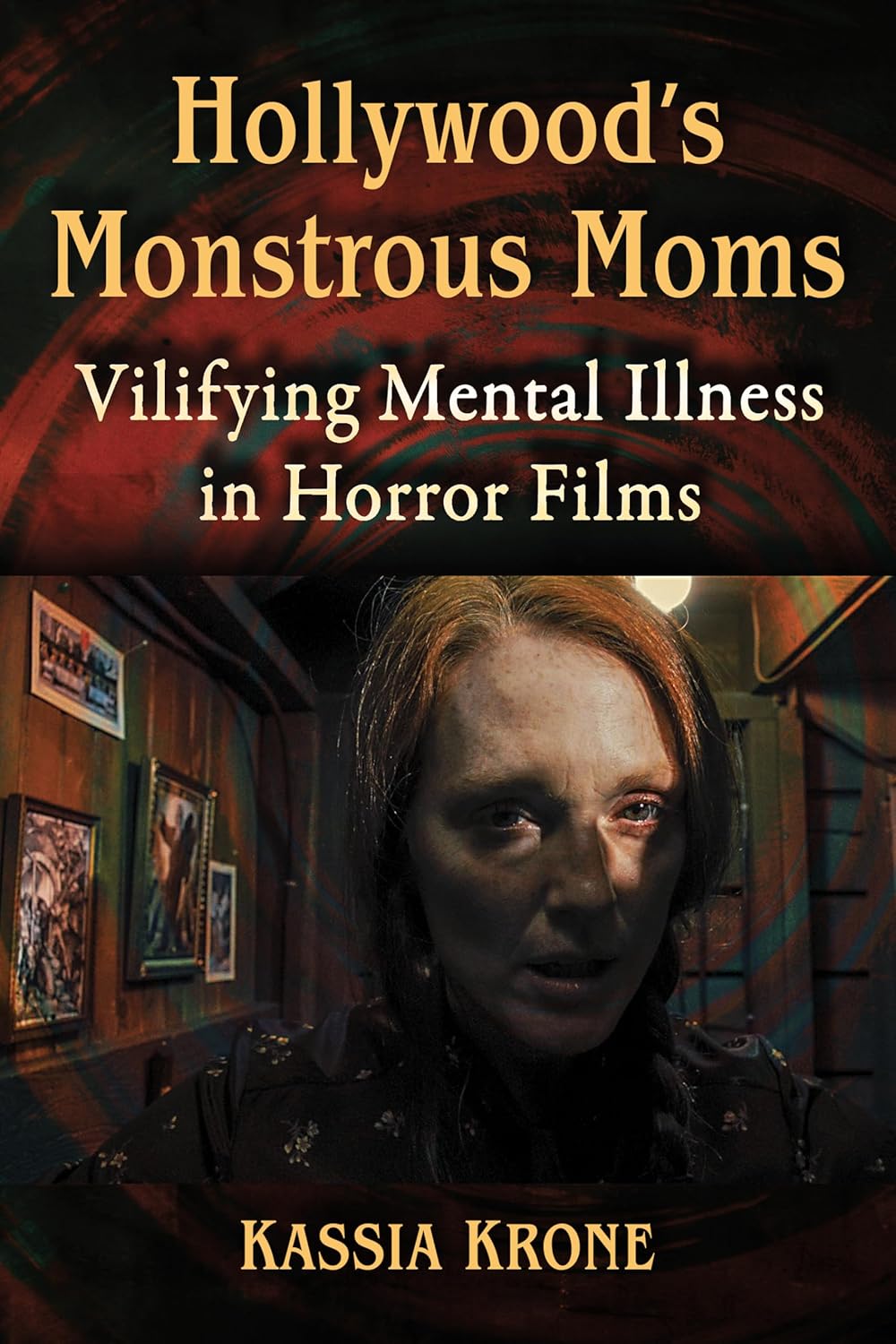
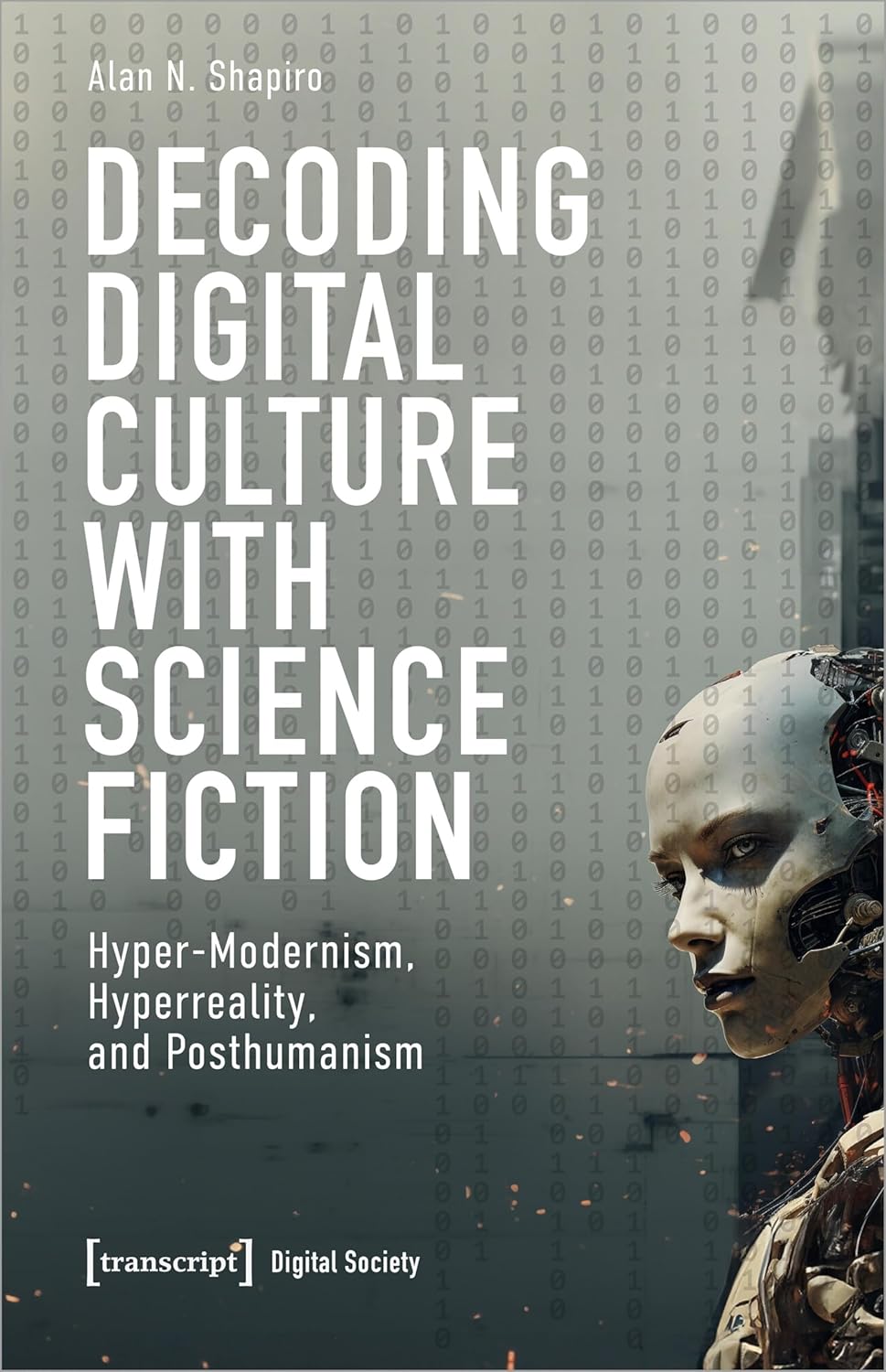
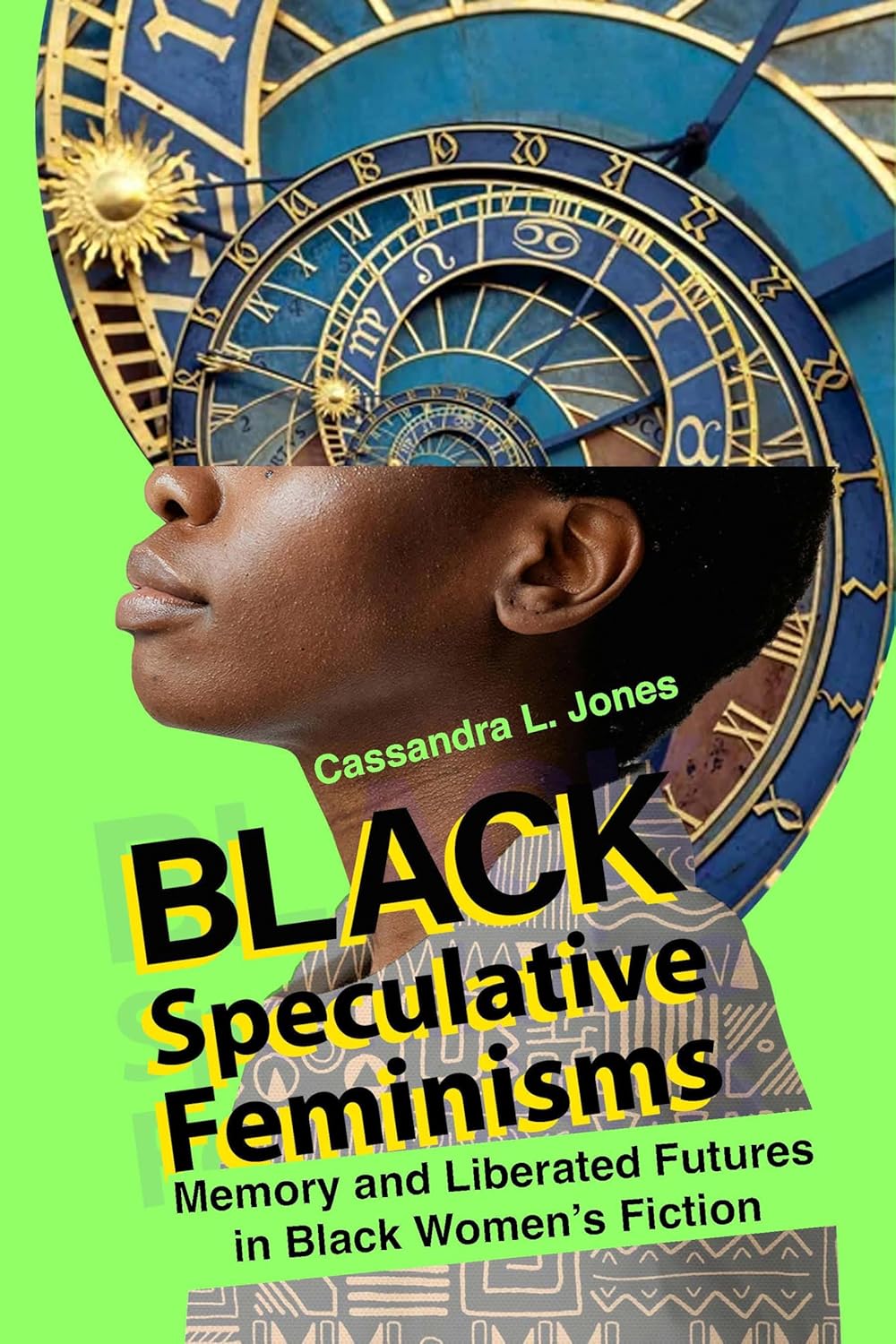
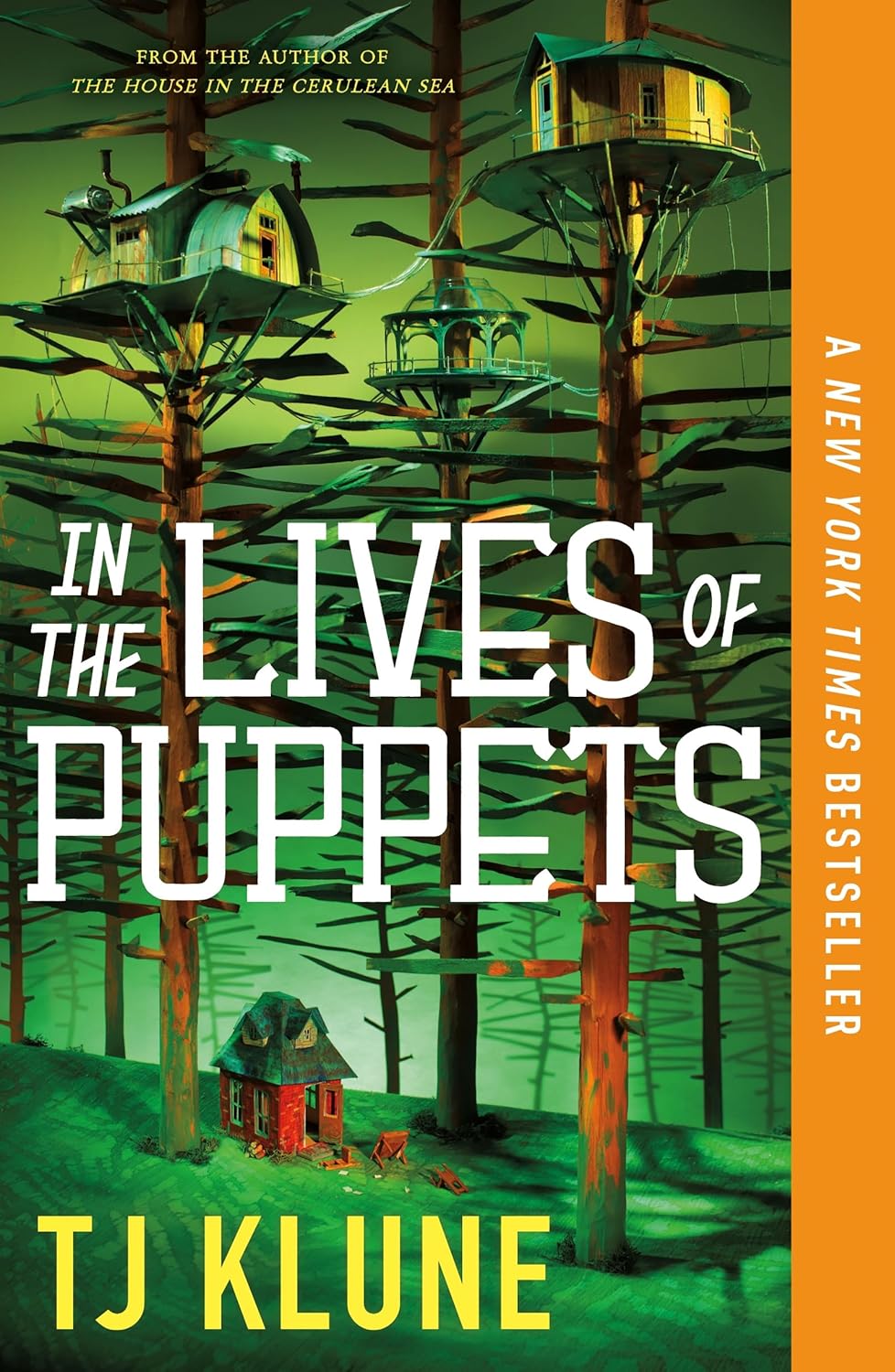
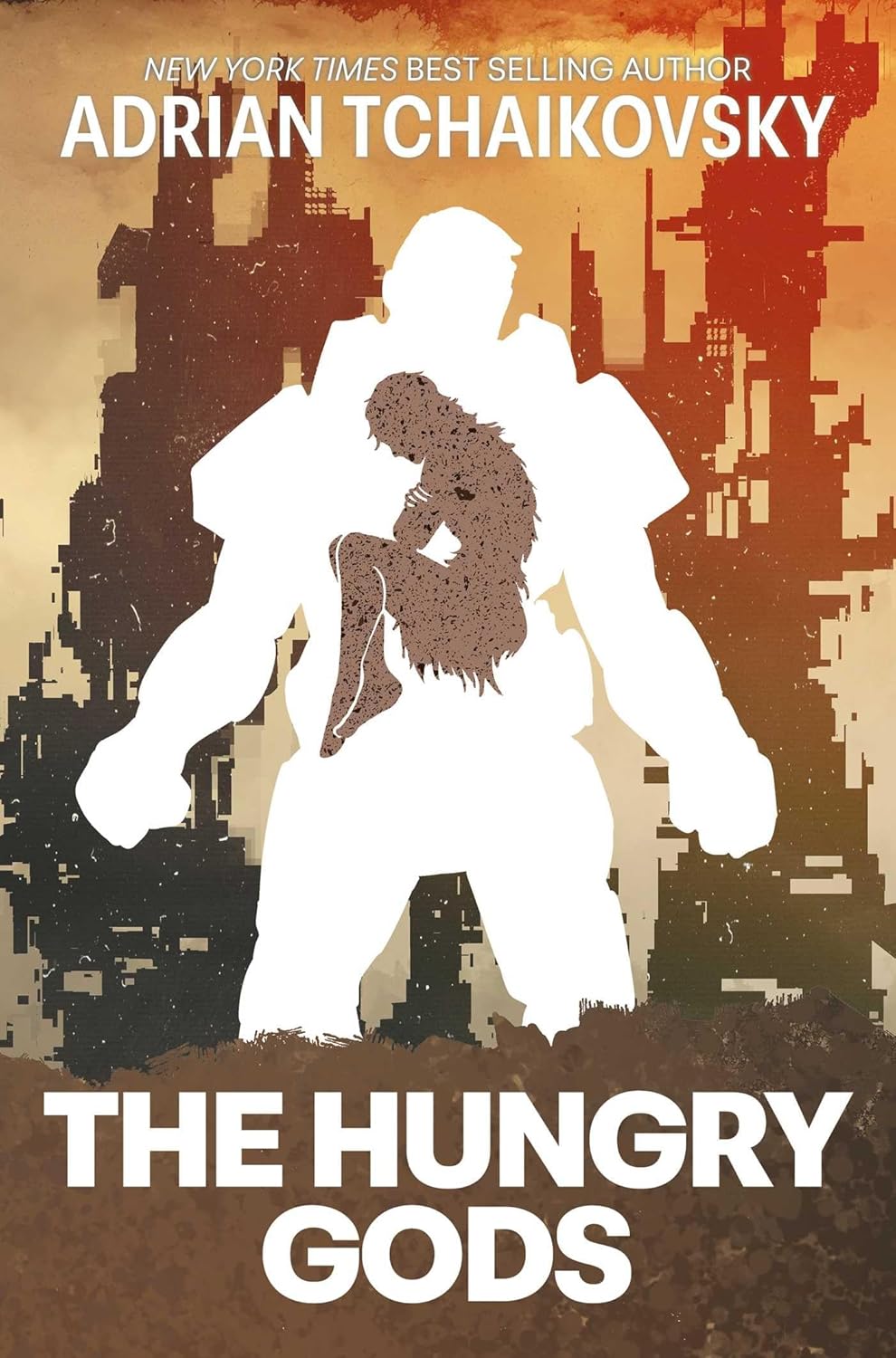
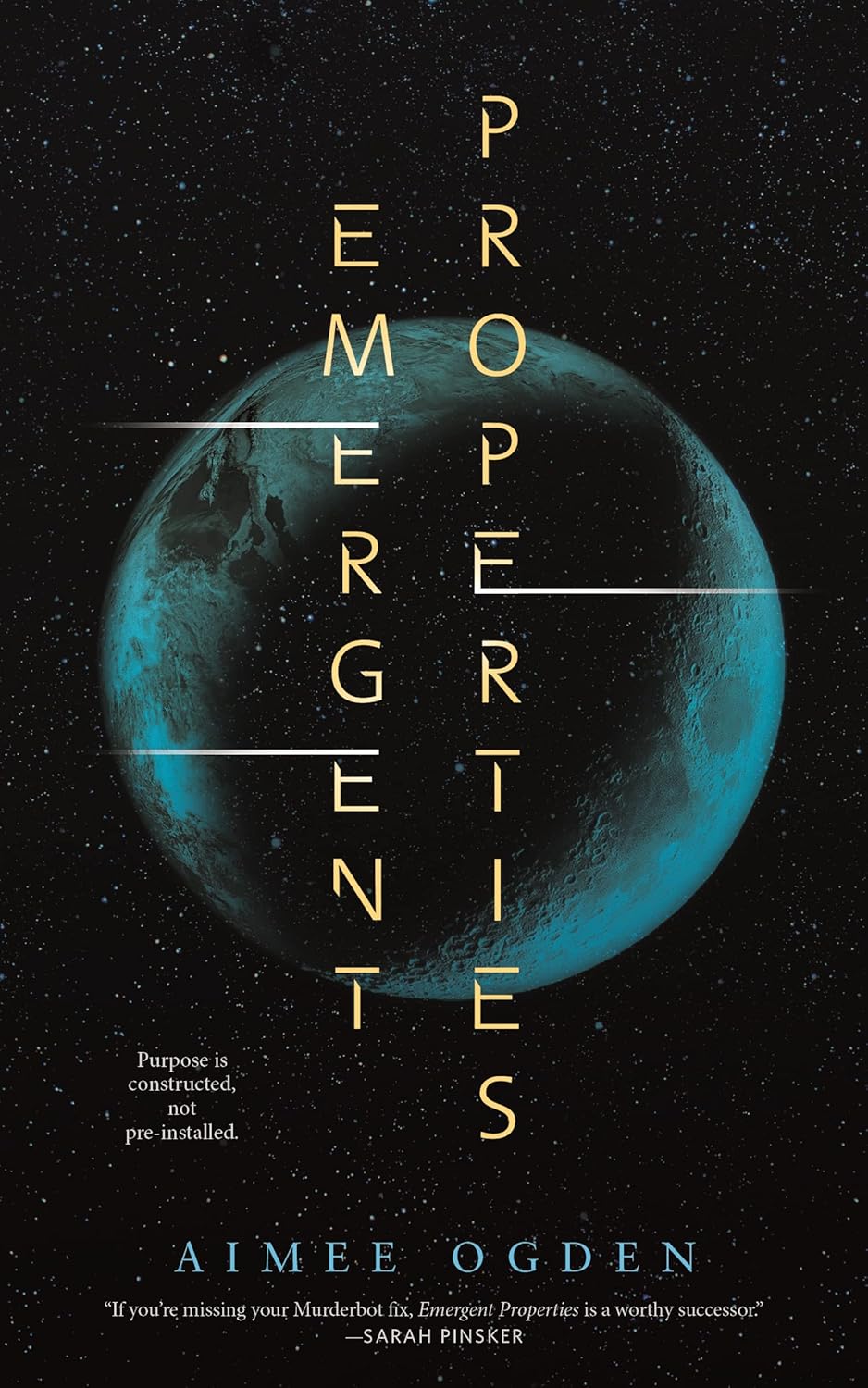
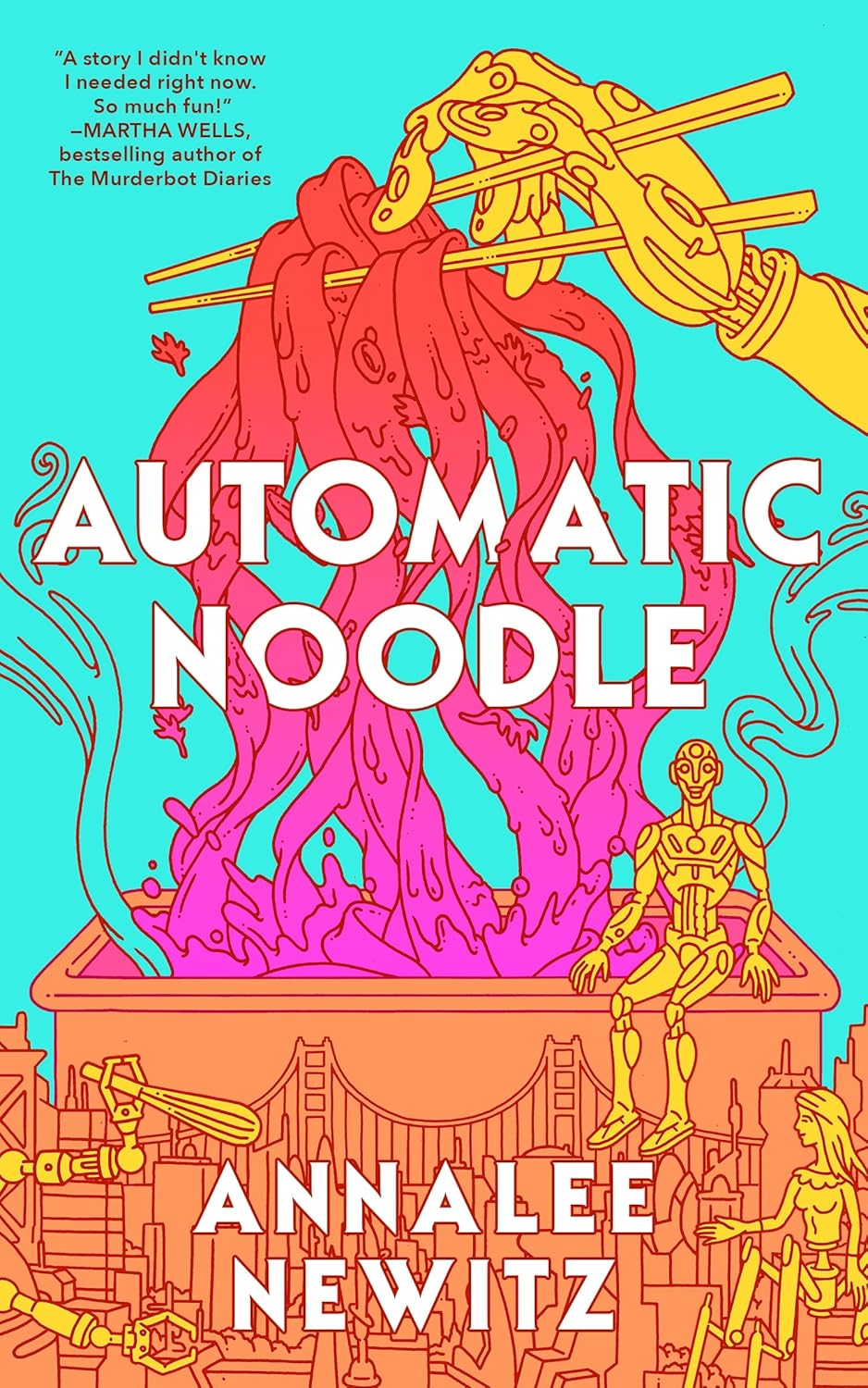
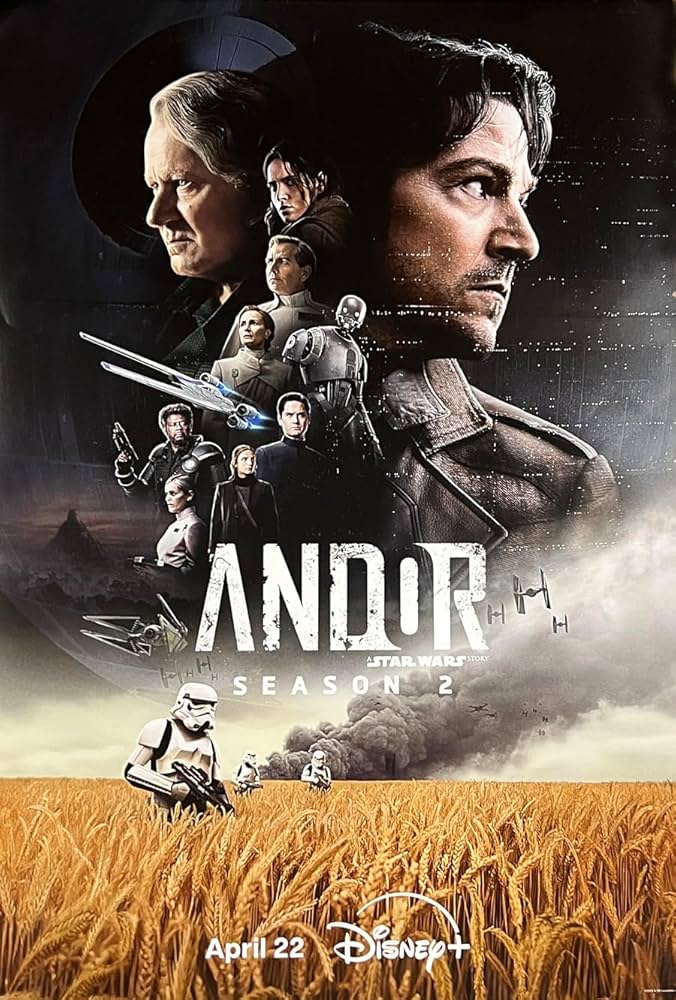
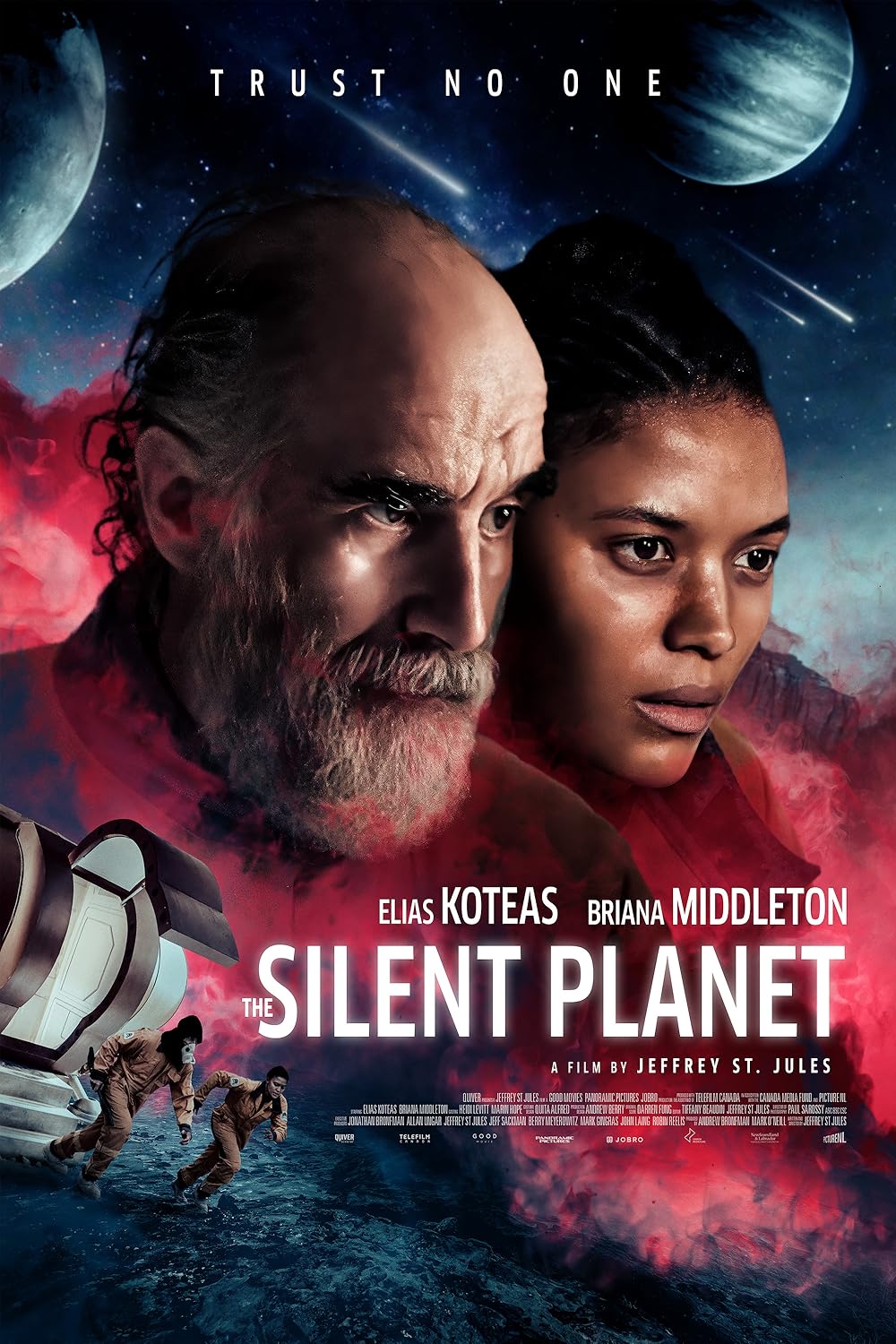

 SFRA Review