Review of Andor


Review of Andor

Jamie Woodcock

Andor. Dir. Tony Gilroy. Lucasfilm, September 2022.

Andor is the fourth Star Wars live-action television series, continuing the development of the franchise following the purchase by Disney. The first season (released so far) takes place across a single year, while the second season is expected to cover a further four years leading up to the events in the film Rogue One. Broadly speaking, the series follows the early stages of the rebellion against the Galactic Empire. In particular, it follows Cassian Andor (Diego Luna) as he becomes a revolutionary, leading up to his death in Rogue One while stealing the plans of the Death Star.

The series ties directly into the later film, meaning the audience already knows the end before the first episode starts. From the very beginning, it is clear that this series is a different kind of Star Wars. In the first episode, we see Cassian shoot two corporate security guards. There is no question, unlike in Star Wars: Episode IV – A New Hope’s multiple remasterings, of who shot first. From here, the plot first follows Cassian as he tries to sell stolen Imperial technology and then becomes embroiled in a heist and later the rebellion. Second, it follows Syril Karn (Kyle Soller) as he tries to trace Cassian for the murders and then comes into contact with the Imperial Security Bureau (ISB). The first season follows the early stages of the rebellion, the lives of those living under the Empire, as well as those trying to suppress opposition.

Andor takes a notably darker tone than either The Mandalorian (2019-present), Obi-Wan Kenobi (2022), or The Book of Boba Fett (2021-2022). The other three take more of a space-Western setting, covering the outskirts of the galaxy. In Andor, the focus conveys an impression of a franchise less driven by Grogu (“Baby Yoda”) merchandise sales. The closest to product placement we get in Andor is the Kalashnikov-inspired blasters of the rebels.

Andor goes in a much more deliberate political direction. Instead of the usual themes of Star Wars, it is much more about the work of imperialism and the rebellion against it. There are no lightsabers or Jedi superheroes ready to fight the Empire. On both sides of the rebellion, there is a sharp focus on the daily lives of people in Star Wars. As Tony Gilroy explained in an interview: “If you think about it, most of the beings in the galaxy are not aware of Jedi, and have never seen a lightsaber [… ] It’s like, there’s a restaurant and we’re in the kitchen. This is what’s going on underneath the other stuff” (quoted in Hiatt). There are scrap metal workers on Ferrix dismantling ships, prison labour, and the secret work of starting a rebellion—both with the organisation of a heist, as well as the manoeuvring of Mon Mothma (Genevieve O’Reilly) in the Senate.

Similarly, there are no visible Sith Lords seen running the empire. Instead, there is the bureaucracy of the ISB. The staff meetings focus on reports and following orders, not taking initiative. They are also an arena in which ISB supervisors Dedra Meero (Denise Gough) and Blevin (Ben Bailey Smith) go up against each other. They clash over protocols, a power struggle that is more Kafkaesque office politics than a Sith punishing failure with a force grip.

The significance of this is that Andor draws attention to the life and activities of the rank-and-file: those trying to rebel, the ISB and the army against them, and those caught in the middle. Andor has, given the name of the series, the potential to focus on Cassian’s actions. However, Cassian is often not the person leading the action, nor could he (or anyone else for that matter) do it alone. The hero’s journey, even when it involves trying to overthrow a totalitarian government, can often reinforce conservative themes. For example, in films like In Time, Equilibrium, and Dune, there is one special person (and it often is a young man) who leads everyone else to victory.

Andor subverts this hero’s journey. Cassian runs away from Ferrix after being pursued for the killing of two Pre-Mor Security Officers. The Imperial Army establishes a garrison and occupies Ferrix. Early in the season, there is evidence of collective organising in the community, with the banging of pots and pans to warn of the Pre-Mor tactical team. At Maarva (Cassian’s mother)’s (Fiona Shaw) funeral, she posthumously gives a speech via holorecording calling for the people of Ferrix to revolt against the empire. Maarva had been part of an organisation called the Daughters of Ferrix and there is further evidence of organising behind the uprising. Cassian uses this as cover for a rescue, neither inciting nor leading the action.

The first season also later features Cassian being imprisoned on Narkina 5. The representation of prison labour is another departure from the usual Star Wars. Here, the series shifts to a direct portrayal of the Empire’s power. In summary fashion, Cassian is sentenced and shipped off to a penal colony. It is a criticism of the prison-industrial complex, with prisoners making parts for the future Death Star. However, the prison is also part of the Empire’s attempts to maintain order. Knowledge of the prison is kept from the general population, providing a way to both suppress dissidents and information. The prison itself is designed to prevent collective organising, and is overseen with repressive technologies, internal competition, and separation from other prisoners. This is organising against all the odds, with a panopticism that Foucault would have been impressed with. However, inmates find a way to overcome this, with Kino Loy (Andy Serkis) turning from floor manager to worker militant.

The Star Wars franchise has, of course, been concerned with many of these themes before. The original film trilogy reflected on the Vietnam War and Nixon’s presidency. George Lucas modelled the Empire on both the British and American Empires, drawing on Nazi imagery to reinforce the criticism. The story follows the rebellion, albeit focusing on the hero’s journey of Luke Skywalker and other characters. The Prequel films address the rise of fascism and the collapse of democracy. These are more firmly space operas, providing social commentary alongside them. However, subsequent entries in the Star Wars series have not moved this critique much further, other than perhaps the focus on average citizens found in The Clone Wars and Star Wars: Rebels.

This different vision of rebellion and Empire is in part due to Tony Gilroy’s background in spy thrillers as well as his interest in history—and particularly historical revolutions. For example, Gilroy explains the heist subplot was inspired by an account of Stalin’s bank robbery in 1907 (Hiatt). The series often focuses on the dirty work needed for a rebellion. The representation of the rebels themselves is not as clear-cut as in earlier Star Wars. There are political divisions and tensions with a heavy emphasis on the need for sacrifice. There are powerful examples of this throughout including the climax of the prison break with Kino revealing he cannot swim, Luthen Rael (Stellan Skarsgård)’s speech to keep his ISB source in line, as well as Cassian’s future death which looms over the series. This is not a straightforward hero’s journey.

Andor refreshes Star Wars as a social commentary on authoritarianism, empire, and the possibility of rebellion—if not revolutionary change. It is a much more politicised entry into the Star Wars canon, which at the same time centres on the lives of ordinary people. Andor takes Star Wars in a new direction which raises avenues for further academic research on the politics of rebellion, organising, and social change.

WORKS CITED

Hiatt, Brian. “How ‘Andor’ Drew from… Joseph Stalin? Plus: Inside Season 2 of the Revolutionary Star Wars Show.” Rollingstone.com. 10 November 2023.

Review of New Gods: Yang Jian


Review of New Gods: Yang Jian

Yimin Xu

The Last of Us. HBO, 2023.

.

New Gods: Yang Jian (hereafter New Gods) is a Chinese 3D animation movie that tells the story of Yang Jian (Wang Kai), a legendary Chinese deity. Taking place in a Ragnarök-alike fictional universe where most gods have lost powers, Yang Jian, the former God of War, now works as a bounty hunter on his steamboat. On his way to a mission, however, Yang encounters his lost nephew Chen Xiang (Li Lanling). Together, Yang and Chen embark on a journey and uncover the truth behind the Yang family’s tragedy—Yang Jian’s mentor Master Yuding (Li Lihong), who sacrifices the Yang family for his own achievements.

The movie draws its inspirations from two related 17th century traditional Chinese novels, 封神演义 (Fengshen Yanyi, Investiture of the Gods) and 西游记 (Xi You Ji, Journey to the West). Together, the two novels exemplify a unique Chinese speculative genre—神魔 (shenmo, gods and demons), with the terminology derived from modern Chinese scholar and literary historian Lu Xun. As Lu Xun points out, shenmo fiction features a dynamic theological and philosophical background of Confucianism, Taoism and Chinese interpretation of Buddhism (104). Shenmo fiction arranges gods and demons in the following orders: celestial court for deity, mortal world for humans and underworlds for demons, echoing to a Confucian power hierarchy of 君 (jun, ruler) and 臣 (chen, subject).

Moreover, shenmo fiction often concentrates on the contradiction between deity and demons, but this opposition is not strictly dichotomous, due to the Taoist yin-yang philosophy. The yin and yang concepts can be understood as any set of opposites, including dark and light, female and male, good and evil. However, the yin and yang are not seen as in a dichotomy, but instead “in constant interaction, yin merging with yang and yang with yin in endless dynamism” (Kam and Edwards, 139). Therefore, in shenmo fiction, a god can transform into a demon and vis-à-vis.

In Journey to the West, Yang Jian is said to be the nephew of 玉帝 (Yu Di, Jade Emperor) the highest ruler of the celestial court. His mother, after having affairs with a mortal man and violating the Confucian power hierarchy, is confined to Mountain Tao. As he grows up, Yang Jian becomes the God of War and splits the mountain to free his mother. Despite his seemingly rebellious behavior, Yang Jian is portrayed as a guardian of celestial court order in Investiture of the Gods.

In the film, the director explores a new matriarchal god order by externalizing the rebellious spirit coded in Yang Jian from the original texts. Unlike his cruel maternal uncle Jade Emperor from Journey to the West, film-Yang Jian assumes a caring and nurturing role as a maternal uncle and mentor to his nephew, Chen Xiang. Such a familial relation evokes of what Bertrand Russel describes in his Marriage and Morals that:

in a matrilineal society a man inherits from his maternal uncle; the functions which we naturally attribute to the father are divided in a matrilineal society between the father and the maternal uncle, affection and care coming from the father, while power and property come from the maternal uncle (28).

With no reference to Chen Xiang’s father throughout the movie, Yang Jian is the sole provider of both affection and power to Chen Xiang, reinforcing the matriarchal discourse in the movie. Moreover, they become more bound to each other through their shared loss of mothers. As the film unfolds, we learn more about the Yang family. Yang Jian and his younger sister Yang Chan (Qiu Qiu) come from a matriarchal deity family, whose female members are burdened with the task of settling down evil forces for the sake of humanities. Therefore, their mother, the first-generation of matriarchal god, sacrifices herself and following their mother’s footsteps, Yang Jian’s younger sister, (Chen Xiang’s mother), the second generation of matriarchal deity, dies in the same manner.

The movie ends shortly after Yang Jian regains mighty power and defies Master Yuding, who is not only responsible for the Yang family’s tragedy, but as the movie narrative implies, related to the fall of the deity. Moreover, the morally corrupt Master Yuding embodies a transformation from a god to a demon, reenforcing my earlier statement. Yang Jian’s deifying Master Yuding, therefore, foreshadows the overthrow of the entire collapsing patriarchal god order in the movie’s sequel, and replaces it with a new matriarchal one, as suggested by the title New Gods.

The movie points out a potential new direction in re-representing traditional Chinese fantasies on modern-day big screen: gender. Significantly, this necessity of a gender perspective applies to broader speculative genres across languages. Indeed, as Veronica Hollinger points out “although sf has often been called ‘the literature of change’, for the most part it has been slow to recognize the historical contingency and cultural conventionality about gendered behaviour and about the ‘natural’ roles of women and men” (126). Yang Jian’s role as a maternal uncle, not as a father or a sexual partner of others, challenges the audience to rethink the often taken-for-granted family concept in speculative literature and film that a family must consist of a couple bounded by sexual relations.

Moreover, the Taoist yin-yang philosophy embedded in the movie can help to diversify, in particular, Anglo-American fantasy and science fiction movie industry. We have seen Hollywood’s efforts to increase diversities in recent years, for instance, Marvel Studios’ Shang-Chi and the Legend of the Ten Rings features a superhero from Chinese background. Despite their efforts, however, we still see, at least, one of problematic dualism that Donna Haraway pinpoints in A Cyborg Manifesto: technology/nature.In Hollywood-made superhero movies, the technology/nature dichotomy is often associated with an implicit orientalist discourse that represents the non-West others as mysterious and supernatural. In Marvel’s case, American-born heroes, including Ironman and Captain America, are often equipped with high-tech weaponry. The Chinese protagonist Shang-chi, however, attains his super-human abilities from “mysterious” ten-rings. This dichotomy is more evidenced in James Cameron’s Avatar 2: The Way of Water, in which the human colonists, primarily white Americans, use high-tech powers to occupy the planet, whereas the indigenous habitants of Pandora utilize natural resources to defend themselves: extra-terrestrial animals and weaponry made out of wood.

In the film New Gods, the director intentionally blurs the boundary between technology and nature and other dichotomies. Yang Jian, as we see earlier, operates a Western-style steamboat that runs on 混元气 (hunyuan qi, mixed energy), an essentially Taoist element of nature. I should also call attention to Yang Jian’s look here, in that he has three eyes, with the third on his forehead. The three eyes represent 天 (tian, celestial court), 地 (di, underground) and 人 (ren, humans). Thus, the character himself carries a sense of non-binary seeing-it-all. Additionally, the character development of Master Yuding highlights the delicate balance between evil and goodness.

Granted, increasing racial representation, to certain extent, does introduce a different voice to the dominating English-speaking speculative literature and movies. However, that does not necessarily challenge the many problematic dichotomies that distort the representation of the other and will continue to do so. In this sense, the yin-yang philosophy provides another mode of thinking that goes beyond the Westernized binary-mode and transforms “‘Western’” science and politics—the tradition of racist, male-dominant capitalism; the tradition of reproduction of the self from the reflections of the other” (7).

WORKS CITED

Haraway, Donna J. Manifestly Haraway. University of Minnesota Press, 2016. ProQuest Ebook Central, http://ebookcentral.proquest.com/lib/warw/detail.action?docID=4392065.

Hollinger, Veronica. “Feminist Theory and Science Fiction.” The Cambridge Companion to Science Fiction, edited by Edward James and Farah Mendlesohn, Cambridge University Press, 2003, pp. 125–136.

Lu, Xun. Zhongguo Xiaoshuo Shilüe [The Brief History of Chinese Fiction]. Shanghai Guji Chubanshe, 1998.

Louie Kam and Louise Edwards. “Chinese Masculinity: Theorizing Wen and Wu.” East Asian History, 1994, no.08, pp.135-148. https://www.academia.edu/892144/Chinese_Masculinity_Theorizing_Wen_and_Wu.

Russell, B.  Marriage and Morals. Allen & Unwin, 1929.


Yimin Xu is a Ph.D. student in the School of Humanities and Languages at UNSW Sydney. Her research interest is gender in Chinese science fiction, Chinese fantastical literature and Chinese popular culture in general. Her current PhD project focuses on the modernity rhetoric behind the gender representations in contemporary Chinese science fiction and the resurfacing of the late 19th century national memory of Western semi-colonisation in current Chinese science fiction writing. With her project, she hopes to contribute her own part to the great effort of de-colonisation studies in China. besides her works, she is also the country representative of Australia for the Science Fiction Research Association.

Review of The Last of Us


Review of The Last of Us

Lúcio Reis-Filho

The Last of Us. HBO, 2023.

.

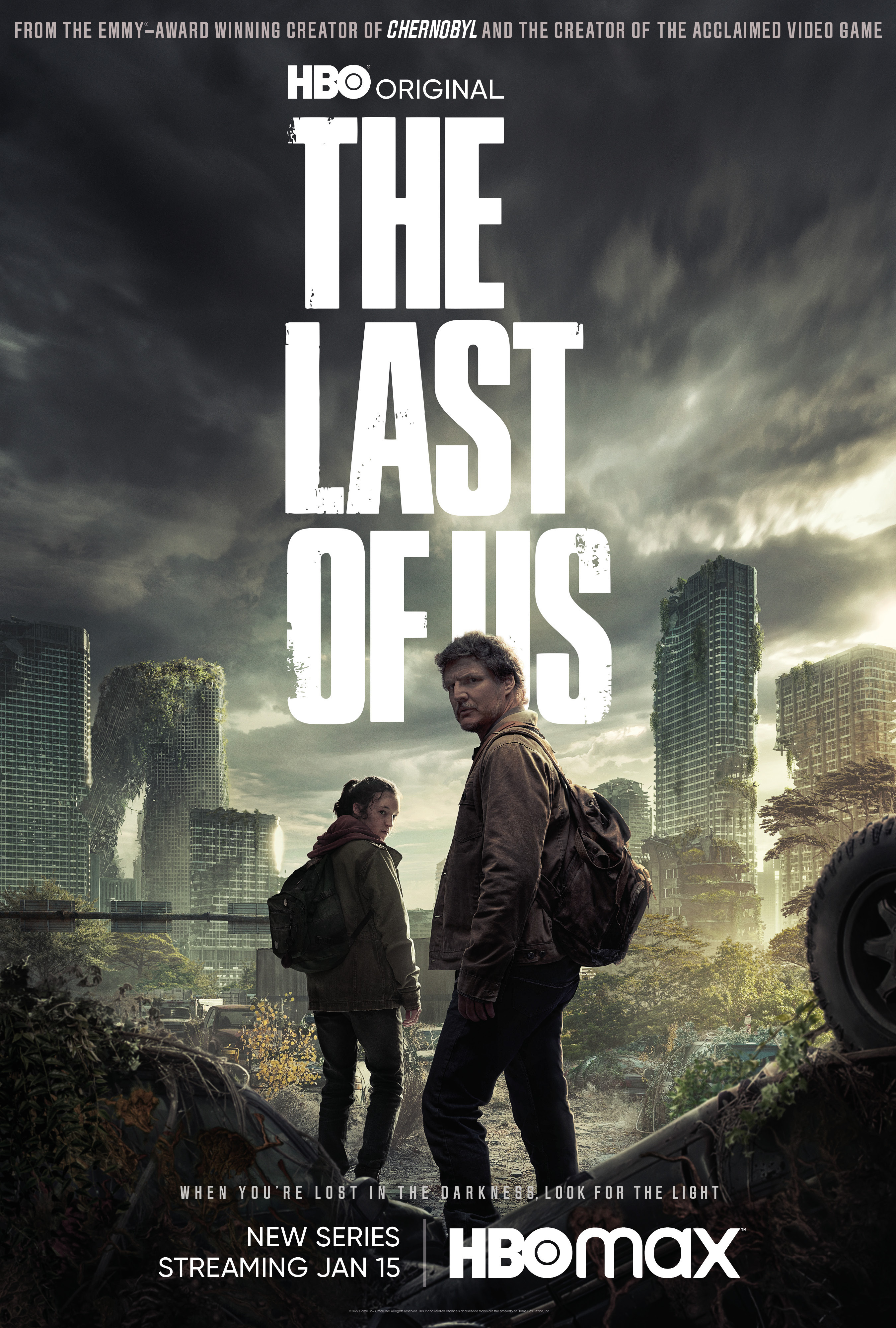
The Last of Us is a TV adaptation of the eponymous 2013 video game by PlayStation Studio’s Naughty Dog, which has garnered numerous awards and a massive fan base over the last decade. Its success culminated in an ambitious sequel in 2020 and in the TV series in 2023. The HBO adaptation follows the game’s storyline and revolves around the hero Joel (Pedro Pascal), who navigates through a dystopic version of the United States escorting the young girl Ellie (Bella Ramsey), who holds the key to the future of humanity. As the only known person immune to the fungal illness that ravaged the world, Ellie is the pivotal character and a coveted asset in the search for a cure. Among the ruins, however, nature has had a rampant comeback, evidenced by the proliferation of green spaces that literally overgrow the urban areas. In many contemporary eco-dystopias, as Roland Hughes and Pat Wheeler suggests, “Technological progress means both a movement away from and simultaneously a movement into or towards nature” (1). This is certainly the case with The Last of Us.

The HBO adaptation delves deeper into the themes of horror and science fiction that were already present in the original game, which was notable for its immersive gameplay experience that seamlessly integrated action, adventure, and drama. The prologue of the series provides a global perspective on the fungal outbreak, which taps into the quintessential “what if?” question that characterizes apocalyptic fiction in general and has gained renewed relevance, since the game’s plot has only become more gripping in the wake of COVID-19 pandemics. For instance, the prologue in episode 1 (“When You’re Lost in the Darkness”) reinforces the idea of a global outbreak, although the full-range scale of the event is not deepened throughout the series.

The Last of Us also draws from conventions once established by notable works of zombie fiction. Richard Matheson’s I Am Legend (1954), adapted for the screen three times, popularized the concept of “the last man on Earth,” while George Romero’s Night of the Living Dead (1968) played a pivotal role in shaping the contemporary zombie. Resident Evil (1996) introduced viral epidemics and genetic mutations to the mix, and Danny Boyle’s 28 Days Later (2002) gave rise to athletic, more vicious zombies that relentlessly pursue their prey. Similar to these works, The Last of Us presents an unknown disease that spreads rapidly, ultimately leading to the collapse of society. As denizens succumb, they transform into monstrous beings that attack and bite others primarily to spread their condition, as is the case with the zombies in the Resident Evil franchise, whose two first games are eventually referred to in the series. In episode 1, for instance, the camera angle and the close-up shot on the face of an infected elderly woman recreate the iconic scene of the first zombie ever seen in a Resident Evil game in 1996. Additionally, the explosion that separates Joel and his brother in the city streets echoes the prologue of Resident Evil 2 (1998) when something quite similar happens, opening up two distinct narrative lines for Leon S. Kennedy and Claire Redfield. Like most zombie stories, the infected in The Last of Us are limping, mindless, and violent wanderers with tattered clothes and decaying figures. However, it is a fungal infection rather than a viral one that causes its condition to change. As a result, the infected show a distinctive appearance, with their bodies covered in mold and scaly polyps. By attributing the outbreak to the Cordyceps fungus, which has contaminated wheat and its byproducts, the series sheds light on present-day debates about sustainability, nature conservancy, and the dangers of pesticide poisoning in crops.

Another example on this subject is a noteworthy departure from the game counterpart. The idea of a fungal network and the ubiquitous link between the infected, as seen in the series, highlight the potential impact of human activity on the environment, since the contagion has spread to the soil, causing even minor contact with the fungus mycelium to attract an entire horde in a matter of seconds. Thus, rather than single individuals, the infected become a collective with swarm behavior and a “hive mind”, a concept reminiscent of the zombies in World War Z and the Borg from the Star Trek franchise. In this sense, the infected may embody the revenge of nature, which attempts to restore itself after centuries of depletion by human hands. Although the series does not elaborate on this idea beyond episode 1, it significantly changes the zombies’ character and further emphasizes the eco-criticism. According to Gerald Farca and Charlotte Ladevèze, The Last of Us goes in direct extrapolation from our times, since it shows “a marvelous place where nature has reclaimed the planet and where the old order of a bureaucratic consumer capitalism has literally corroded” (5). The sequence of giraffes wandering serene through the ruins is a poetic example of this.

WORKS CITED

Dendle, Peter. The Zombie Movie Encyclopedia. Jefferson, North Carolina: McFarland, 2010.

Farca, Gerald; Charlotte, Ladevèze. The Journey to Nature: The Last of Us as Critical Dystopia. Proceedings of the First International Joint Conference of DiGRA and FDG Dundee, Scotland: Digital Games Research Association and Society for the Advancement of the Science of Digital Games, v. 13, no. 1, August 2016, DiGRA/FDG, http://www.digra.org/digital-library/publications/the-journey-to-nature-the-last-of-us-as-critical-dystopia/. Accessed 25 Mar. 2023.

Hughes, Rowland; Wheeler, Pat. “Introduction: Eco-dystopias: Nature and the Dystopian Imagination.” Critical Survey, v. 25, no. 2, 2013, pp. 1–6. JSTOR, https://www.jstor.org/stable/42751030. Accessed 25 Mar. 2023.

Russell, Jamie. Book of the Dead: The Complete History of Zombie Cinema. FAB, 2005.


Lúcio Reis Filho is a Ph.D. in Media Studies, film critic, filmmaker and historian specializing in the intersections between cinema, history and literature, with focus on the horror and science fiction genres. He writes book, film and game reviews, and is coordinator of Projeto Ítaca (https://projetoitaca.com.br/), a Brazilian educational website devoted to the tropes and representations of mythology in the media. His research and academic interests are essentially interdisciplinary, as they cover Cinema, Visual Arts, History, Comparative Literature and Game Studies.

Review of Prey


Review of Prey

Jeremy Brett

Prey. Directed by Dan Trachtenberg, 20th Century Studios, 2022.

.

It is delightful to view a science fiction story that, in genre tradition, explores the strangeness and peril inherent in sudden interaction with the Other and wraps that in an exciting, well-paced, thoughtful film deeply concerned with the vagaries of human interaction. Although the action, suspense, and multiple instances of gruesome and violent death welcome obvious comparisons of Prey—a Predator franchise prequelto the Alien cinematic franchise, echoes of Denis Villeneuve’s much quieter and less bloody sf film 2016 Arrival are also apparent. Both films involve (though Prey less so overtly) the inability of different cultures to communicate and the resulting mutual Othering; whereas Arrival centers around the gradual development of communication between human and heptapod, Prey cleverly makes use of the inability to understand the Other to explicitly signify how foreign and how alien two vastly different cultures seem to one another.

The pivotal scene stressing this communicative gulf takes advantage of Prey’s creators’ decision regarding language. In the film, the Native American characters speak English from the audience’s perspective, though they are meant to be speaking Comanche in-universe; in one scene, Native American warrior Naru (Amber Midthunder) is fleeing an alien pursuer when she is abducted by a band of French traders. She is caged and threatened, angry, and anxious upon hearing the barking of her captured dog. Her disorientation is made exponentially worse when the traders speak to her. Their French is not translated or subtitled, leaving the audience as confused as Naru about what these alien beings are saying to her and why. It is a truly troubling moment in the film, where we as viewers are made sympathetic to Naru in failing to understand what is happening. The traders are shot and lit as otherworldly monsters themselves, shadowed by firelight and wearing furs that give them an animalistic appearance, jabbering in an unknown language. Indeed, relief only comes when one of the trading party, Raphael Adolini (Bennett Taylor), reveals his ability to speak Comanche and brings comprehension to Naru.

Science fiction narratives are often concerned with humanity’s response to alien life, but Prey reaffirms that it is the way in which humans relate to each other that can be more jarring, more tragic, and more savage than any extraterrestrial encounter. Note, for example, that the Predator (Dane DiLiegro), though brutal, kills swiftly and seemingly without true malice, generally focusing on targets that provide a challenge or pose a direct threat to it; in stark contrast, the French traders use cruel steel traps to capture animals, and at one point bleed Naru’s captured brother Taabe (Dakota Beavers) and then tie them both to a tree as staked bait for the Predator. The subtext is so obvious as to be practically text, given real-life Native American history, in a situation where an alien life form suddenly and violently inserts itself into the midst of a Native American culture.

Naru is trained as a healer, yet longs to become a warrior and follow her brother Taabe. During a hunt, she becomes convinced of a new and powerful threat, eventually encountering a Predator that slaughters many of her companions before she manages to bring it down using a combination of craft, wiles, and sheer bloody-mindedness. Another aspect of contact with the Other in many sf narratives is the realization (whether overtly referenced by the characters themselves, or in the case of Prey via reader/viewer observation) that between one and the other there lie numerous similarities as well as differences. Humanity is defined by our relationships and reactions to others and the world around us; how we behave provides insights into who we are.

Ironically, in many ways Naru is closer—linked by powerful warrior spirit and skill—to the Predator hunting her and her fellows than she is to the Frenchmen cruelly and wantonly laying waste to the land around them. This plays out in their behavior as well: as the Predator hunts with advanced weaponry, so does Naru not only learn to use a gun but cleverly constructs an ax that can be thrown and pulled back on a string, allowing for quicker repeated use. Both Naru and the Predator avoid helpless prey, setting themselves against targets that provide challenges rather than trapping them like cowards. And at the film’s end, the victorious Naru returns to her village, wearing green Predator blood on her face as war paint and carrying the alien’s head as a symbol of victory, looking for all the world like a Predator herself after a successful trophy hunt. Naru, already a skilled hunter who puts her cleverness to use for the service of the tribe, is no Predator (who hunts, as far as the viewer can tell, for mere sport), but throughout the film we watch her resemble it in a newfound ruthlessness and willingness to adapt. As she says to the last surviving trapper, whom she uses as bait the way he did to her and Taabe, “You bled my brother. So now you bleed. You think that I am not a hunter like you. That I am not a threat. That is what makes me dangerous. You can’t see that I’m killing you. And it won’t either.” The trapper, of course, cannot understand what Naru is saying to him, stressing once more the disorienting menace that linguistic alienation can present. The film’s title ultimately, we see, can apply equally to Naru or the Predator, as the cycle of hunting turns round and round. In this relationship of similarities, the viewer comes to reevaluate what is alien, what is Other, and what factors in our behaviors and cultures separate us or make us more like another.

Prey is a significant milestone in the production of cinematic Indigenous Futurism, where Indigenous peoples, long ignored or abused by mainstream Western culture, have existence and agency, and where they resist their traditional exclusion from the speculative fiction narrative. Scholars of the Indigenous Futurism movement may find in Prey both a speculative exploration of colonial encounters not seen before in film, and a story whose focus on the emotional power of linguistic estrangement has much to say about the role of language in our cultures and our relationships with others. It also presents a necessary counternarrative to the old saw (spoken by a million Hollywood producers and executives, as well as the occasional SF publisher or editor) that people—white people—need to see themselves centered in the story if they are to relate to the film at all. On the contrary, Prey (and its critical and box office success) demonstrate that stories, if well-crafted and well-acted, can transcend the assumed tribalisms of skin color or race.


Jeremy Brett is an Associate Professor at Cushing Memorial Library & Archives, where he is both Processing Archivist and the Curator of the Science Fiction & Fantasy Research Collection. He has also worked at the University of Iowa, the University of Wisconsin-Milwaukee, the National Archives and Records Administration-Pacific Region, and the Wisconsin Historical Society. He received his MLS and his MA in History from the University of Maryland – College Park in 1999. His professional interests include science fiction, fan studies, and the intersection of libraries and social justice.

Review of Hades


Review of Hades

David Welch

Hades. Nintendo Switch version, Supergiant Games, 2020.

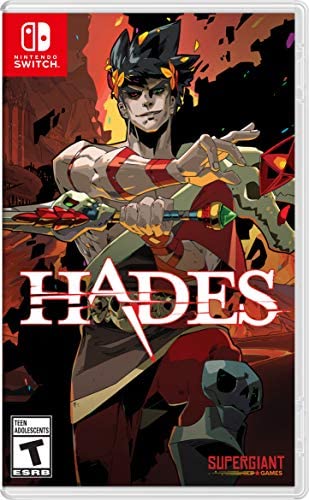
Hades is a rogue-like dungeon crawler from developer Supergiant Games in which the player takes on the role of Zagreus, son of the titular Hades. The plot centers around Zagreus’ attempts to escape the underworld after learning that he had hitherto-unknown family—the Olympian gods—on Mount Olympus eager to meet him. Zagreus’ discovery of this extended family, as well as the realization that his true parentage had been concealed from him for his whole life, motivate these escape attempts and drive the story forward, while also allowing for strong character development via conversations between Zagreus and the other residents of the underworld.

There is not much I can say about Hades as a game that hasn’t already been said; critically, it has been incredibly well-received for its art direction, gameplay, music, vocal performances, and writing. While none of this is new for Supergiant Games, all four of whose games have been critically acclaimed, Hades broke into the mainstream in a way that the others did not. One underappreciated aspect of this game, however, and one which I believe contributed to its success in a more significant way than it gets credit for, is its incorporation of the ancient Greek mythology which underlies its setting. Hades’success as a work of classical reception—the way it modernizes the setting and characters, while simultaneously respecting the source material—deserves the same degree of notoriety as its technical successes.

A problem that any work of classical reception has to deal with is balancing the antiquity of the subject matter against the modernity of its audience. Much classical reception has fallen prey to embracing its antiquity too tightly and feeling, so to speak, dusty, though this has certainly been less of a problem in recent decades. Hades, falling in line with this progress,tells a story that feels acutely modern without ever deviating too far from the ancient materials that define its setting. Dionysus, for instance, remains the god of wine and revelry, holding the staff (specifically, the thyrsus) which was his symbol in antiquity, but he has become something of a Tommy Chong figure, calling Zagreus “Zag, man,” and encouraging him to hurry to Olympus so they can party together. Hades preserves the core character of each figure as traditionally conceived, including the various (and at times complicated) interpersonal dynamics among them all, but makes the whole ensemble feel more akin to that of a modern sitcom than the serious drama that adaptations of antiquity often become.

The lighthearted attitude of these interactions, though, does not prevent Hades from including more esoteric references to ancient material. Early in the game, Zagreus asks Hypnos, the divine embodiment of sleep, to put everybody in the house of Hades into a magical slumber so that he can sneak into his father’s office—no background knowledge is needed to understand what is going on, and Zagreus’ decision to ask Hypnos for sleep-related help is an obvious one. Those more familiar with the ancient canon, though, will see here an allusion to the fourteenth book of the Iliad, in which Hera asks Hypnos to put Zeus to sleep, so that she can sneak behind his back and aid the Greeks in their struggles against the Trojans. Hades is full of such references that, while they are not integral to an understanding of the game’s plot and as such will not detract from the experience of those who don’t catch them, nonetheless allow those with some familiarity with ancient mythology to see how much work the writers put into creating a faithful representation of the classical material.

In addition to its deep engagement with the ancient literary sources, Hades demonstrates a knowledge of contemporary trends in classical scholarship as well. The modern push against Eurocentrism in academic discussions of the ancient Mediterranean, the most well-known example of which might be Bernal’s Black Athena (see McCoskey 2018 for discussion of the legacy of this work), is reflected in the varied skin tones of the game’s characters. This includes that of Athena, whose skin, alongside that of her half-brother Ares, is darker than that of any of the game’s other characters and may be a direct homage to Black Athena and its impact on modern discussions of race in antiquity.

There is, for me, one respect in which Hades as a work of reception missed the mark, however, and that is the game’s ending. Early on, Zagreus learns that his mother is in fact Persephone, who left the underworld for unknown reasons and never returned. As the plot advances, the circumstances surrounding Persephone’s initial departure from Olympus and her eventual withdrawal to the underworld are made clear, and they deviate from the traditional telling of her story. Hades exists in a modern environment in which several works of classical reception, such as Madeline Miller’s Circe, reclaim agency for the many women of ancient mythology who in the original versions of the stories had very little (see Scott 2019 for an overview of the topic); Persephone’s departure from Olympus, which in the ancient accounts was due entirely to her abduction by Hades, is made into her own decision in Hades. Her motivation for doing so, though, is placed partly on the shoulders of her mother, Demeter, for being too controlling of her daughter. While the reclamation of Persephone’s agency is admirable, the reassignment of blame from her male abductor to another woman is disappointing. Up to this point in the game, the explicit alterations of traditional narrative and visual representations had been quite progressive. What a disappointment it was, then, to reach the conclusion to the mystery of Persephone’s fate, only to learn that her male captor, who is traditionally held responsible for her disappearance, had been supplanted, in what could be read as a decidedly anti-feminist turn, by another woman in Demeter.

The absolution of Persephone’s traditional, male captor and his replacement with Demeter was disappointing in its own right, but the accompanying transformation in Demeter’s attitude toward Persephone’s disappearance compounded the issue. In the Homeric Hymn to Demeter, she immediately senses that something has gone awry with her daughter, scours the earth for nine straight days in search of her, and spends years wandering the earth in sorrow in the guise of an old woman, neglecting her duties to the earth and its harvests and nearly destroying the human race as a result. When mother and daughter are finally joyously reunited, Demeter shudders in terror at the realization that Hades has bound Persephone to spend one third of the year in the underworld for the rest of time, though yields to its necessity. In Hades, however, Demeter reacts with no more than idle curiosity when she learns of her daughter’s fate. Persephone’s disappearance is said to have turned her cold and vengeful, rather than grief-stricken; humanity is, like in the Hymn, almost wiped out as a result of her actions, but here it is retaliation for humanity’s perceived culpability, rather than grief, that drives her. After learning that Persephone is alive and well, it is Demeter who proposes that her daughter split her time between dwelling in the underworld and on Olympus, rather than begrudgingly accepting her unavoidable fate. The loving and heartbroken Demeter has been sacrificed and replaced with a cold spirit of vengeance, all in service of elevating Persephone; one is left wondering why both women could not have emerged from the narrative in a better place than their traditional portrayals would have them.

All in all, Hades is an outstanding example of a work of classical reception. It modernizes the material, providing a charming and accessible point of entry into the world of classical mythology, but never deviates too far from the source material. It treats its plot no more seriously than it needs to and, but for one misstep, seamlessly incorporates present-day ideas about classical antiquity. The game is at moments deeply learned, but that erudition never becomes burdensome or obtrusive. This combination of characteristics makes it an extremely appealing prospect for use as an educational tool—the amount of information that finds its way into Zagreus’ conversations with the game’s other characters, which are legitimately enjoyable in their own right, is considerable. The fact that this educational material is presented over the course of the standard gameplay (unlike something like the Discovery Tour mode in some of the more recent Assassin’s Creed games, which disposes of all gameplay and allows the player to walk through game’s setting as if in a museum) creates a situation in which an instructor might feel like they are ‘tricking students into learning.’ With Hades, Supergiant Games has found an extremely satisfying balance between being informative and entertaining.

REFERENCES

McCoskey, Denise Eileen. “Black Athena, White Power: Are We Paying the Price for Classics’ Response to Bernal?” Eidolon, 15 Nov. 2018. https://eidolon.pub/black-athena-white-power-6bd1899a46f2. Accessed 20 December 2022.


Scott, Aimee Hinds. “Rape or Romance? Bad Feminism in Mythical Retellings,” Eidolon, 3 Sep. 2019, https://eidolon.pub/rape-or-romance-1b3d584585b8. Accessed 20 December 2022.

David Welch is a PhD candidate in Classics at the University of Texas, Austin, where he is finishing a dissertation that explores the intermedial relationship between Julius Caesar’s Commentaries and the Roman triumphal procession. He received his MA in Classics from the University of Kansas in 2014. In addition to intermediality and Roman historiography, his research interests include language pedagogy and receptions of classical antiquity in modern SF.

Review of The Orville: New Horizons


Review of The Orville: New Horizons

Jeremy Brett

MacFarlane, Seth, creator. The Orville: New Horizons, Fuzzy Door Productions and 20th Television, 2022.

The third season of The Orville arrived with a brand-new subtitle—New Horizons—a signal from show creator and star Seth MacFarlane that the series would initiate a renewed concentration on the ship’s exploratory mission and questing spirit. However, what viewers received instead was, rather, a season-long study of the contradictions, emotional bonds, and injustices that define the human condition (or perhaps, the “sentient” condition, since these same interactions play out among various alien species as well—as with Orville’s spiritual predecessor Star Trek, alien species tend to serve as analogs for humans, whose behavior is presented as the “sentience default” galaxywide). Only one episode of New Horizons, “Shadow Realms,” centers on the exploration of unknown space; the remainder focus instead on the exploration of psychological and societal inner space and on characters’ attempts to find meaning for themselves as well as a secure place in their world for themselves and their loved ones. The Orville: New Horizons, far more than previous seasons, demonstrates the truth of Trek writer David Gerrold’s oft-quoted observation that “the final frontier is not space. The final frontier is the human soul. Space is merely the arena in which we shall meet the challenge.” (The World of Star Trek, 1973) It is likely no coincidence that, while still leavened with humor, this new season of the show is much less reliant on jokes; like the ship and its crew, the series itself has emerged into a new maturity, tempered by trauma and existential fear.

At the conclusion of the second season, the crew of the Orville and the Planetary Union      were living in the long shadow newly cast by the massive Kaylon invasion. That invasion, led in large part by Kaylon and Orville crew member Isaac (Mark Jackson), caused the deaths of thousands of Planetary Union members and their reptilian Krill allies-of-convenience, as well as the destruction of numerous ships. The season’s first episode, “Electric Sheep,” sets the psychological tone for the series, opening with an expansive recap of the desperate battle, which we find is a flashback-cum-dream experienced by Marcus Finn (BJ Tanner), the older son of Orville medical officer Claire Finn (Penny Johnson Jereld). As Marcus awakes violently from his PTSD-fueled dream of the battle and Isaac’s betrayal, the Orville itself is seen berthed in an orbiting spacedock, being refitted—symbolically reborn for a new age of unprecedented conflict. Ongoing conflict between past and present is depicted as Isaac walks the decks of the ship in an atmosphere of deep distrust after his betrayal, much of it coming from new ensign Charlie Burke (Anne Winters). Burke herself, like Marcus, suffers from righteous anger at Isaac, having barely escaped the destruction of her ship and witnessed the death of her friend/secret love. This first episode, and much of the season, is concerned with attempts to psychologically heal from grievous wounds, inflicted not only by outside invaders but by supposed allies.

Even one’s own culture can do great harm to those within it; much of this season centers on the issue of what we owe to our culture (or state, or planet) versus what we owe to each other and those we love. One of New Horizons’ most important characters is Topa, the child of  Lt. Commander Bortus (Peter Macon) and his husband Klyden (Chad L. Coleman), both members of the Moclan species. Topa (Imani Pullum) was born female in season 1—a supposed “rarity” and source of deep shame to the one-gender Moclan culture—and she was surgically altered to male at Klyden’s insistence. Season 3’s most emotionally devastating episode, “A Tale of Two Topas,” sees Topa experiencing gender dysphoria and suicidal depression, trapped between her own feelings and Klyden’s determination to honor his cultural traditions (determination fueled by self-loathing) and maintain Topa’s forced masculinity. Bortus, encouraged by Topa’s compassionate mentor/Orville first officer Kelly Grayson (Adrienne Palicki), chooses, at last to eschew the mores and strictures of his own home culture to preserve Topa’s life and emotional well-being, and she is returned to female form. The viewer is left heartbroken in watching Klyden angrily leave Bortus and Topa, declaring that he wished Topa had never been born, while Bortus then proclaims his own undying love for her. It is moments like this that give New Horizons significant emotional resonance and demonstrate SF’s ongoing capacity for viewing our own social struggles through a fantastical future lens. In a follow-up episode, “Midnight Blue,” the Planetary Union makes a similar fateful choice, choosing to expel the Moclans from the Union for their brutal treatment of female Moclans. For the Union to stand so strongly in favor of  universal personal autonomy (which in another context might simply be termed “human rights”) is a profound ethical moment, since the loss of the arms-producing Moclans exposes the Union to greater risk of Kaylon annihilation. It’s a choice that spirals into other far-reaching consequences when the expelled Moclans ally themselves with the Krill, creating a new threat that must be countered with an uneasy Union alliance with their deadly enemies the Kaylon. This new world showcases characters cautiously exploring new modes of thinking and renegotiating their relationships to the universe around them. The series’ final episode, “Future Unknown,” explicitly presents new ways of beings coming together, as Claire and Isaac consummate their romantic relationship with a formal marriage, heralding a momentous change for both human and Kaylon futures.

Other characters explore themselves and their impact on the world around them during the season as well. In “Gently Falling Rain,” Captain Ed Mercer (MacFarlane) learns that he has a daughter named Anaya (Charlie Townsend), conceived with undercover Krill operative-turned coup plotter and new Krill Chancellor Teleya (Michaela McManus). This revelation causes Ed to reevaluate his relationship to the Krill and leaves him determined to find a way to reestablish an alliance with the Krill and Teleya to protect Anaya. Previous seasons of The Orville proved that MacFarlane has always been skilled at understanding the complexities of human emotion that give the Star Trek franchise its particular resonance and relatability, but here in New Horizons we really see that understanding flower and the series as whole dramatically shift from the story of humans aboard an exploration vessel to humans themselves as exploration vessels. It adds a new and surprising dimensionality to a series that began life as a reasonably simple Star Trek pastiche driven by MacFarlane-style humor. We see this newfound maturity on full display in the episode “Twice in A Lifetime,” which centers on helmsman Gordon Malloy (Scott Grimes), who in previous seasons has served as the series’ primary quip machine. New Horizons, as it does with other characters, takes Malloy to a new level of emotional maturity and depth; in “Twice,” Malloy is accidentally thrust back two hundred years in time to 2020s Earth and believed lost. In the years (from his POV) before the Orville mounts a temporal rescue, Malloy marries and starts a family. Against Union law, he is determined to stay in his deeply satisfying roles of devoted husband and father, having discovered in himself new reserves of emotion and familial love.

The Orville: New Horizons provides viewers with gripping, thoughtful, emotionally fraught stories, which represent the natural evolution of a series when that series is not content to navel gaze into its past. Instead, New Horizons continues to mirror the development of its original Trek inspiration (as well as the long legacy of Trek-influenced sf media), moving from the typical exploration narrative towards a greater dramatic multidimensionality.

Jeremy Brett is an Associate Professor at Cushing Memorial Library & Archives, where he is both Processing Archivist and the Curator of the Science Fiction & Fantasy Research Collection. He has also worked at the University of Iowa, the University of Wisconsin-Milwaukee, the National Archives and Records Administration-Pacific Region, and the Wisconsin Historical Society. He received his MLS and his MA in History from the University of Maryland – College Park in 1999. His professional interests include science fiction, fan studies, and the intersection of libraries and social justice.

Review of Final Fantasy VII Remake


Review of Final Fantasy VII Remake

Lúcio Reis-Filho

Final Fantasy VII Remake. Square Enix, 2020.

Fifteen years after first being announced at the Electronic Entertainment Expo (E3) and twenty-three years after the original game’s debut, the long awaited Final Fantasy VII Remake was released. The classic FFVII is considered groundbreaking as it paved the way for other JRPGs outside of Japan, and it was responsible, along with anime, for making local pop culture take off in the global market. According to Matt Alt, FFVII injected “a megadose of Japanese sensibilities” into the American mainstream, including the characters with big eyes and spiky hair, the manga-style melodrama, the androgynous heroes, and the very idea that games could be profound in so many ways.

FFVII was remarkably innovative in the late 1990s, as Pablo González Taboada’s book on the franchise and the Vol. 2 of Dark Horse’s Final Fantasy Ultimania Archive both recall. The game’s basic concept, drawn from the cyberpunk subgenre, presents an industrial world of highly advanced technology in contrast to deep inequality and humanity in decline. With high-tech vehicles, garments, locales and other cyberpunk motifs, the city of Midgar lays its roots in Fritz Lang’s Metropolis (1927) and later futuristic urban landscapes as depicted in Blade Runner (1982) and Akira (1988). An exponent of cyberpunk storytelling, FFVII addresses late capitalism, existential dilemmas, psychological disorders, identity crisis, climate change, and class struggle. There are also nods to steampunk retrofuturism from previous games in the franchise, all reshaped for a more dieselpunk version. Biopunk themes are also relevant, such as the plot of the genetic modification that Shinra’s soldiers undergo.

Since its debut, FFVII has inspired countless other games, spin-offs, animated shorts, and a CGI film. What fans wanted most, however, was a remake, which was finally released in 2020. Far beyond introducing FFVII to new generations, the main goal of the project was to create a “new and nostalgic” experience for longtime fans. Thus, the Remake captures a broader sense of nostalgia in a context where a range of disparate cultural texts return to be explored for their intrinsic nostalgic value; at the same time, it rebuilds game systems to fit contemporary tastes.

Being the first installment in a series focused on recreating the classic game, the Remake only covers FFVII’s first act. The premise is the same: a group of heroes tries to save the world from capitalist exploitation. Players control the mercenary Cloud Strife, who joins the eco-terrorist group AVALANCHE in its resistance against Shinra, a megacorporation that is harvesting the planet’s energy to feed an industrial society and generate cutting-edge technology. However, the Remake deepens characters’ development, recreating them with updated visuals. The new model for Cloud has more nuance, with the handsome, androgynous, sensitive hero reframing and deconstructing the heteronormative masculinity archetype. Cloud’s effeminate features echo the archetypal images of androgynous male beauty, which Yumiko Iida relates to the visually attractive male idols of contemporary Japanese youth culture. This topic invites scholarly discussion on the “feminization of masculinity” and the androgynous male ideal of JRPG (and anime) heroes, especially in the Final Fantasy franchise.

Social criticism converges with climate justice in both FFVII and the Remake. According to Stephen K. Hirst, the classic game has inspired an entire generation of climate activists, including members of Greenpeace. It harshly denounces the savage jaw of capitalism, the power and monopoly of megacorporations, environmental degradation, and social inequality. More than two decades after FFVII’s debut, the criticism has not lost its relevance and is gaining momentum as a driving force in the environmentalism agenda in times of global warming. The Comic Book Resources noted how the social issues raised by the game are even more relevant today than they were in 1997. Following this argument, Dani Di Placido has drawn parallels between the game’s events – Shinra as a predatory force and the meteor’s approaching – and contemporary issues such as climate change, environmental catastrophes, economic collapse, and the COVID-19 pandemic. As a critique of the Anthropocene, Final Fantasy VII Remake could be of scholarly interest to environmental fiction and climate fiction scholars, since they often intersect in speculative fiction studies.

WORKS CITED

Alt, Matt. Pure Invention: How Japan Made the Modern World. New York: Crown Publishing Group, 2020.

Final Fantasy Ultimania Archive. Vol. 2. Milwaukie: Dark Horse Comics, 2018.

Gramuglia, Anthony. “Final Fantasy VII’s Story Is More Meaningful Today Than in 1997”. Comic Book Resources, June 22, 2019. Accessed 6 July 2022.      https://www.cbr.com/final-fantasy-viis-story-relevant-today/

Iida, Yumiko. “Beyond the ‘feminization of masculinity’: transforming patriarchy with the ‘feminine’ in contemporary Japanese youth culture”. Inter-Asia Cultural Studies, v. 6, 2005, pp. 56-74. Accessed 10 July 2022. https://www.tandfonline.com/doi/abs/10.1080/1462394042000326905

Hirst, Stephen K. “How Final Fantasy VII radicalized a generation of climate warriors”. Ars Technica, 29 July 2021. Accessed 6 July 2022. https://arstechnica.com/gaming/2021/07/how-final-fantasy-vii-radicalized-a-generation-of-climate-warriors/

Placido, Dani Di. “In Our Sci-Fi Dystopia Of 2020, ‘Final Fantasy VII’ Feels More Timely Than Ever”. Forbes, April 5, 2020. Accessed 6 Jul. 2022. https://www.forbes.com/sites/danidiplacido/2020/04/05/in-our-sci-fi-dystopia-of-2020-final-fantasy-vii-feels-more-timely-than-ever/

Taboada, Pablo González. Final Fantasy: la leyenda de los cristales. Palma de Mallorca: Dolmen, 2013.

Lúcio Reis-Filho is a Ph.D. in Media Studies, film critic, filmmaker and historian specializing in the intersections between cinema, history and literature, with focus on the horror and science fiction genres. He writes book, film and game reviews, and is coordinator of Projeto Ítaca (https://projetoitaca.com.br/), a Brazilian educational website devoted to the tropes and representations of mythology in the media. His research and academic interests are essentially interdisciplinary, as they cover Cinema, Visual Arts, History, Comparative Literature and Game Studies.

Review of Don’t Look Up


Review of Don’t Look Up

Steven Holmes

McKay, Adam, director. Don’t Look Up. Netflix, 2021.

“Dr. Mindy, I hear you. I hear you,” President Orlean (Meryl Streep) says after Dr. Randall Mindy (Leonardo DiCaprio) emphasizes that a comet racing toward earth will be an apocalyptic event. This scene is a critical point in both the film and audience reception of the film, as Streep’s Orlean seems indebted to the trappings of the Trump presidency, even though this specific line seems to more evoke the Bush presidency. The line echoes Bush’s “I hear you” line during the Bullhorn Speech at ground zero after 9/11. In such a moment, the film clashes between Saturday Night Live-style direct political commentary, and the attempts of the film to push its critique and satire into a broader reflection on 21st century political norms and discourse.

Adam McKay’s apocalyptic black comedy set records for streaming on Netflix. Apocalyptic black comedy has become its own sub-genre, with iterations going back at least to Dr. Strangelove (1964). Like Shaun of the Dead (2004), Don’t Look Up acts as a comment on capitalism, complacency, and the power of denial and indifference. But the closest tonal analogue may be 2013’s This is the End, an apocalyptic black comedy that used as its chief form of irony the discord between celebrity personas and actual personality. Don’t Look Up is particularly focused on the interplay between celebrity persona and personal politics both in the dramatic narrative and in the production of the film. The individual conflict and character arcs for the film protagonists—DiCaprio’s Dr. Mindy and PhD candidate Kate Dibiasky (Jennifer Lawrence)—centers around these scientists suddenly being thrust into the limelight, and the differing ways they respond to their newfound celebrity. This is contrasted with bit parts, such as the arc of celebrity Riley Bina (Ariana Grande) who goes from overshadowing the comet in the news with her personal life to encouraging people to “look up” through her songs. Behind the scenes, lead actor Leonardo DiCaprio had significant control over the script of the film;      DiCaprio, who produced and promoted the film Before the Flood (2016), a documentary on climate change, has used his celebrity status to actively advocate on behalf of the issue of climate change. Don’t Look Up is a meditation on the role of celebrity in shaping political issues, starring an actor who uses their celebrity to shape political issues.

This is not the first narrative to use a comet or celestial body as a foil for political reflection. In H. G. Wells’“The Star” (1896), the near-miss of a comet forges a new brotherhood among men. In W. E. B. Du Bois’ “The Comet” (1920) the cataclysm of New York serves as a pretext to explore race relations. The narrative overtones of these stories seem in line with many apocalyptic narratives, where dramatic disturbances in organized human life allow for the re-examination or re-organization of human society. But the narrative that Don’t Look Up most directly evokes is the 1998 film Armageddon, with its celebration of heroic blue-collar oil drillers who absurdly end up more fitted for saving the world than astronauts. Don’t Look Up is not a direct parody of Armageddon (indeed, it also is drawing heavily from Deep Impact [1998]), but it doeshave a brief arc where it telegraphs the Armageddon plot structure. Orlean brings in Benedict Drask (Ron Perlman), a casually racist parody of Bruce Willis’s hero of Armageddon, to pilot a spaceship and use nukes to blow up the comet. That is, until the plot is foiled by Peter Isherwell (Mark Rylance), an amalgam of Elon Musk and Mark Zuckerberg, who in trying to profit off the comet dooms earth to annihilation.

Despite its viewpoint characters both being scientists, Don’t Look Up is not interested in the science behind astronomy or astrophysics. The locus of its exploration of technology is less on the exigence of the comet, spaceships, and nukes, and more on the capacity to exchange in rational-critical debate and the functionality of the state. Unlike Deep Impact, where nukes are detonated but fail to completely offset the comet (only for a spaceship to fly in and use even more nukes to save the day), it seems like in Don’t Look Up the original plan to offset the comet would have succeeded had the plan not been undermined by Isherwell and his desire to profit off the comet. In turn, President Orlean’s capitulation to Isherwell highlights the extent that greed and corruption can lead to the full-scale agency capture of the state by privatized interests. In essence, the film suggests that the mechanical technology to solve largescale problems may exist, but it is the social technologies of democratic government and public discourse that are failing.  

Although the comet is a metaphor for climate change, the discourse surrounding it has clear parallels in the Covid-19 pandemic. In a historical survey, Don’t Look Up could be positioned as one of the most direct comments on the Covid-19 pandemic (and state responses to the pandemic) that was written, produced, and released during the pandemic itself. It is probable that in creating literary histories both of science fiction and apocalyptic narrative, Don’t Look Up serves as a compelling touchstone piece indicating at least some of the concerns of the post-pandemic era: collective denial in populism, the capacity of institutions to handle emergent issues, the agency capture of state institutions by privatized interests, and the totality of the warping of popular discourse around celebrity. Likewise, the strength of the film is encapsulated in the conceit of its title, where the president begins to advocate the public “don’t look up” (don’t acknowledge the comet) in a way that evokes how conspiratorial ideas can be intermixed and interwoven with both political and financial interests. Furthermore, in its interplay with Armageddon, Don’t Look Up emphasizes the cynicism and hopelessness of contemporary mass media entertainment in one of the sharpest possible contrasts to the optimism of the 1990s. To that extent, Don’t Look Up is a film that is highly productive when considered in relief to historical and literary histories.

Dr. Steven Holmes is a lecturer at the University of Hawai’i at Mānoa, where he is currently finishing a book project entitled Exploding Empire: Imagining the Future of Nationalism and Capitalism. His publications include articles in Studies in the Fantastic, The Written Dead: The Zombie as a Literary Phenomenon, War Gothic in Literature and Culture, and Gender and Sexuality in Contemporary Popular Fantasy. He teaches classes on argumentative writing, science fiction, fantasy literature, digital art, and Shakespeare.

Review of The Witcher, Season 2


Review of The Witcher, season 2

Cait Coker

The Witcher (Season 2). Created for television by Lauren Schmidt Hissrich, based on the novels by Andrzej Sapkowski. Sean Daniel Company, 2021.

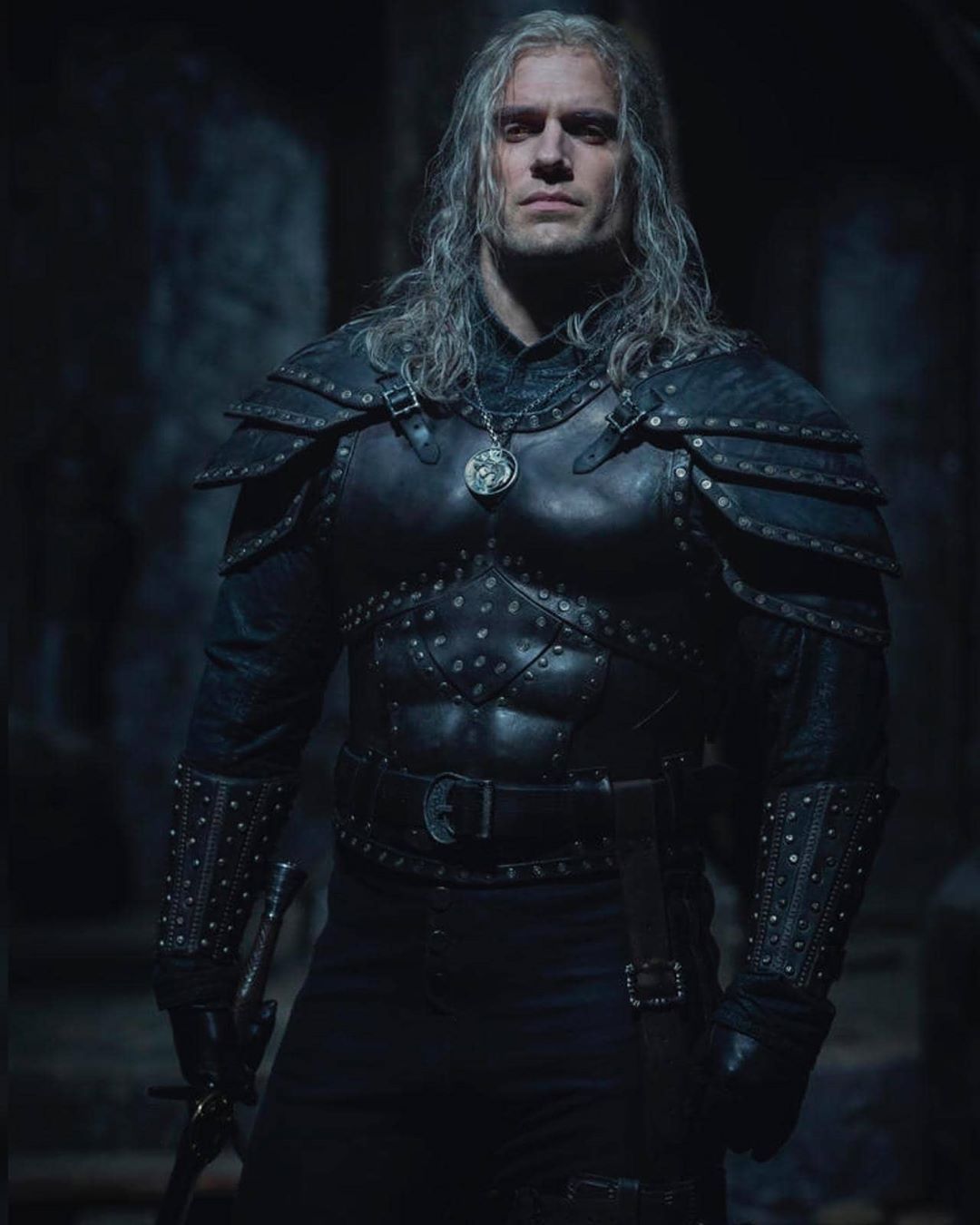
The Netflix television series The Witcher is primarily based on the novels by Andrzej Sapkowski (published in Poland from 1994 to 1999, and translated to English from 2007 to 2017), though the second season abruptly introduces elements from the popular video games created by CD Projekt Red from 2007 to 2015. The books are a political parable of Eastern European history; they utilize the language of eastern European genocide and the Holocaust—pogroms, concentration camps, political putsches, etc.—to discuss genocide, totalitarian and fascist governments, and political resistance bluntly and unsparingly. The games keep certain plot elements but scale back the political context significantly while greatly expanding character stories and arcs, thus making the television series its own unique hybrid creation. (Incidentally, and with Sapkowski’s participation, Netflix has also created a prequel anime film, The Witcher: Nightmare of the Wolf (2021), and a forthcoming prequel miniseries, The Witcher: Blood Origin (2022) to expand further on the world of the franchise.)

The second season of The Witcher picks up shortly after the first season concluded, with the dual protagonists Geralt of Rivia and Ciri finally meeting. Geralt is a Witcher, a genetically modified and mutated (and sterile) human trained to hunt and slay monsters, with an extended lifespan and enhanced healing, strength, and agility. Ciri is a refugee princess in hiding after the violent invasion of her kingdom by the Nilfgaardians, an expanding imperial force, and the murder of her family, as well as a cursed figure of prophecy. The first season of the television show revolved around the question of monstrosity: what indeed, is a monster, and when must it be killed? The eight episodes return to this question repeatedly, and often with the answer that humans are worse monsters to one another than creatures of magic ever can be. Season two returns to this question by digging into the political parables of the novels, with plots touching on revisionist histories, genocides historical and contemporary, and modes of political resistance. The character of Jaskier, for instance, Geralt’s troubadour friend and a figure of comic relief in both books and games, becomes a tortured political prisoner after running an underground operation to spirit people to safety from the violent rule of the Nilfgaardians. His role of the poet speaking truth with popular songs that put him in prison speaks to a long tradition of Polish poetry specifically as well as to the ways that art makes its own records of war and abuses. Geralt rescues him from prison, putting Geralt himself—who, as a Witcher, is ostensibly nonpolitical—into the fray as well. This is an interesting shift from the books, where Jaskier’s popular prestige usually lands him in safe space; both texts emphasize that it is the bard’s own choice to put himself in danger for his friends and their cause.

A frequent criticism of the first season was the confusing narrative structure: its eight episodes were narrated using nonlinear storytelling (effectively foreshadowing much later events in the books, should Netflix choose to renew the series for enough seasons), a trait which is alluded to in a joke about Jaskier’s singing storytelling in episode four. This second season is much less episodic as it adapts much of the material of Blood of Elves, the first novel in the series pentology (the first season being primarily drawn from the short stories collected in The Last Wish), which details Geralt’s training of Ciri and their eventual reunion with the sorceress Yennefer, sometime lover of Geralt and eventual mentor to Ciri. It also introduces the characters of the Voleth Meir, a Baba Yaga-esque demon original to the show, and the Wild Hunt, spectral figures from the games. The “Conjunction of the Spheres” that is often referenced in all franchise texts is not elaborated on in the novels, but explicated here as the specific traveling of beings across multiple worlds via interdimensional portals. Humans, then, are not just invaders of a new continent as a metaphor for real world colonization and conflicts, but they are invaders of a whole new world.

Geralt is always presented as other, as is Ciri, despite their able white bodies. In the second episode of the season, Ciri and Geralt discuss the history of the Witchers; she asks, anxiously, if he was attacked because he was “different.” Difference lies at multiple intersections here: the genetics that set them apart—Geralt being genetically-engineered while Ciri carries “the blood of Elves” that makes her both magically powerful and socially persecuted—and the social structures that endorse hierarchies of social and cultural value with nonhumans (whether Elves or Dwarves) at the bottom. Elves are coded both as indigenous peoples native to lands that are being encroached upon by human invaders and as Jewish, with scenes that invoke Passover, including a city filled with the anguished cries of families finding their magically murdered babies. Ciri is also structured as sexually different with her imitations of the sorceress Triss, foreshadowing the queer relationships that appear in the novels. The sorceress Yennefer, too, is coded as monstrous through her own sterility and the often selfish choices that she makes. All three characters are socially punished for their differences, but consistently prove themselves to better people than the humans who choose to torment them.

It is worth noting that Andrzej Sapkowski is the second most-translated SFF author after Stanisław Lem. If Lem’s work is preoccupied with failures of communication, memory, and trauma, then Sapkowski’s work finds itself in found families amid immense geopolitical unrest. Geralt, Ciri, Yennefer, and Jaskier are a chosen family trying to survive a world that is evocative of the worst parts of the Holocaust, World War II, and the Cold War. Airing only weeks before the uproar over the censorship and book banning of Art Spiegelman’s Maus in Tennessee as well as Russia’s invasion of Ukraine, The Witcher presents its viewers with stories that grapple with these newly hot-button issues, showing that history not only repeats itself but is only as fantastical as the next retelling.

Cait Coker is Associate Professor and Curator of Rare Books and Manuscripts at the University of Illinois at Urbana-Champaign. Her work is located at the intersections of gender, genre, and publishing, and her essays have appeared in journals such as Foundation, Transformative Works and Cultures, and The Seventeenth Century, among others.

Review of Raised by Wolves, season 2


Review of Raised by Wolves, season 2

Daniel Lukes

Aaron Guzikowski, creator. Raised by Wolves, season 2. HBO Max, 2022.

The most obvious fact to state about Raised by Wolves (RBW) is that it’s a Ridley Scott production: he is one of its executive producers (via his production company Scott Free), and he directed the first two episodes of Season 1; his son Luke Scott (director of the underrated android flick Morgan, 2016) also directed episodes 3,4 and 10. Ridley Scott’s vision is all over RBW, so much so that it could almost take place in the extended Alien universe. If xenomorphs were to make their appearance somehow among the crowded gallery of grotesque creatures and entities that already populate RBW, it would hardly be a surprise. Aesthetically, RBW shares much with the underrated Ridley Scott Alien prequels, Prometheus (2012) and Alien: Covenant (2017), with their muted and somewhat drab tones, colors turned down approaching grayscale, and a preponderance of dark, dimly lit settings.

Set in a future following a war between two factions: theocrats (named Mithraic, after an ancient Roman mystery cult) and atheists, which has decimated the planet, the show follows the vicissitudes of two androids, “Mother” and “Father.” This somewhat hapless couple has been sent to planet Kepler-22b to raise a family of human children, away from the pernicious influence of the Mithraic, who have also reached the planet in a colonist ship named the Ark of Heaven. Though RBW follows the various and often bloody conflicts between the Mithraic and the atheists, most of the action is filtered through Mother and Father’s struggles to keep their family together and their children alive on this barely habitable and unpredictable planet. Mother, it turns out, is not a mere service model android, but actually a weapon of mass destruction, a “Necromancer,” used by the Mithraic and reprogrammed by atheist hacker Campion Sturges. Mother’s violent—even genocidal—side comes out when she is provoked. Her actions provide one of the first moral dilemmas the show poses, and it is questionable whether Mother can really ever come back from her decision to exterminate circa-1000 Mithraic in the name of protecting her family.

RBW is science fiction of the “grimdark” variant, a type of sci-fi that stems from the world of tabletop game Warhammer 40,000, and one that generally depicts a Nietzschean universe: cold, mechanical, uncaring of human plight. In recent years, WH40K and grimdark have both been seized upon cynically by the Alt-Right, even though WH40K was originally born as a critique of heartless 1980s Thatcherism. Into this context comes RBW and its neomedievalist portrayal of future theocracy that directly recalls WH40K’s Roman Empire-influenced “Imperium” and worldbuilding. Its somewhat low-key title relates to the mythical founder of Rome, Romulus, and his brother Remus, being raised by a female wolf. RBW’s central theme of faith vs. atheism is treated in a direct and explicit way that brings to mind more the British atheist tradition (from Monty Python’s The Life of Brian to Richard Dawkins and Christopher Hitchens) than how contemporary US television typically handles faith and religion, with multiple characters here openly declaring that God (known in the show as “Sol”) does not exist and is only a myth.

What lies at the heart of RBW are its android characters. Mother, expertly played by Amanda Collin, is an android for the ages, up there with Schwarzenegger’s Terminator,  Haley Joel Osment’s creepy child in AI, and of course the Alien franchise androids—Ian Holm as Ash in Alien, Lance Henrikson as Bishop in Aliens, and Michael Fassbender as David in Prometheus/Covenant. Tellingly, Mother and Father are powered by the same milky-white “fuel blood” spilled everywhere by Ash in his famous death scene. Whether in caring or terrifying “Necromancer” mode, Mother commands attention, and is perfectly complemented by the warmer, more caring identity of Father (brilliantly played by Abubakar Salim) with his awkward dad jokes and attempts to keep the peace. The androids in RBW have something of a classic comic feel to them: Mother and Father’s bickering are often only one step away from a Samuel Beckett play, and other androids and AIs such the medic Karl (Carel Nel) in S1 and S2’s sentient quantum computer The Trust (Michael Pennington), with their varying degrees of comic relief and Britishness, feel at one remove from a Monty Python sketch, or perhaps rather the Terry Gilliam of Time Bandits or Brazil.

Leaving behind the harsh deserts and valleys of Season 1 and their uncanny rolling mountaintop clouds—both seasons were beautifully shot on location in South Africa—Season 2 is set around an atheist colony in the tropical zone. This season often feels like a cyborg reworking of Shakespeare’s The Tempest. The sea (made of acid) is ever present. Characters flit about in the countryside, appearing and disappearing at will, with Kepler-22b as a new “brave new world that has such people in it,” and a character even being directly called “Tempest.” By the end of S2 though, the mysterious “entity” pulling strings in the background, the “Prospero” in a way, has yet to be revealed. S2’s uncanny, retro-futurist ambience recalls the original Star Trek, with characters stumbling around an alien landscape, though with the exoticism toned down, and also brings to mind early 1980s UK TV shows like Day of the Triffids or The Tripods.

The presence of Mother’s seventh child, a biomechanical “world serpent”, cements the show’s status as a weird retelling of the Genesis narrative. Asking the important questions here, RBW wonders: “What if God were an alien? And what if religious scriptures were a set of instructions for events yet to occur, on another planet?” As the assorted characters make their way around this very strange Garden of Eden, the show probes and negotiates the porous boundaries between animal, human, posthuman, and A.I. When young Campion (Winta McGrath), named after the android’s “creator” Campion Sturges (Cosmo Jarvis), falls in love with the android Vrille (Morgan Santo) and wishes to welcome her into his family, though he faces strong resistance, the show’s logic is firmly on his side. Likewise, the discovery that the planet’s humanoid creatures, of which there are land and acid ocean-dwelling variants, are devolved humans, feels like a piece of poetic Darwinian reverse engineering.

RBW juggles many big themes—domesticity, child-rearing, settler colonialism, survivalism, precarity, grief, our increasing reliance on A.I.—and S2 expertly balances them with unpredictable plot twists, and visuals that are beautifully-rendered and often on the edge of body horror. While not relentlessly meta like The Boys or Mr. Robot, RBW can perhaps be compared to series like Yellowjackets, Tales from the Loop, Dark or Archive 81 for its ominous sense of impending doom introduced into the humdrum of daily life, bringing together the epic and the domestic. Whereverit goes next, RBW is a relevant and welcome addition to the SF canon at a time when everyday life often has the feel of a slow-motion apocalypse.

Daniel Lukes is Communications Officer in the Bieler School of Environment at McGill University. He has a PhD in Comparative Literature from New York University, and his reviews have appeared in Extrapolation, The Journal of the Fantastic in the Arts and Utopian Studies. He has published three books of non-fiction, and his next book will be Black Metal Rainbows (PM Press, 2022).