Out of Time: Crip Time and Fantastic Resistance


SFRA Review, vol. 52, no. 3

Medical Humanities and the Fantastic


Out of Time: Crip Time and Fantastic Resistance

Josefine Wälivaara

Part of my ongoing research investigates the subversion of normative time and disability in science fiction narratives through the depiction of characters experiencing time in non-normative ways, focusing on what I call characters out of time. [1] This analysis takes inspiration from Ellen Samuels, reading these characters as “bodies of crip time,” but it also connects to other disability and/or crip scholars such as Alison Kafer and Rosemarie Garland-Thomson. I suggest a way of engaging with disability and ability in non-realist texts not only by focusing the analysis on explicit representations of characters with realistic, culturally recognizable traits of disability, but also through fantastic elements and storytelling conventions of the genre. This could potentially make visible the ways in which discourses of disability and ability are utilized within the narratives.

Normative and Crip Time

Time is often considered a linear process, from the past to the present and towards the future. This notion is fraught by discourses of progression and development and can often be found in science fiction, where disability often is considered in terms of medical or technological developments, progress, and cures (Wälivaara). Not least in adherence to what Alison Kafer calls “disability-free” futures leading to the notion that a better and more desirable future is a future without disability (3). This linear and progressive notion of time also applies to our thinking about the structure of lifetimes, that a person, during their lifetime, should develop from birth to death via certain phases such as childhood, adolescence, adulthood, and old age. During this time, one is supposed to experience certain life events in an expected order—at the right time—such as entering the labor market, finding a partner, getting married, having children, retiring, and so on.

 However, not everyone follows this normative organization of time and life course, and those who do not are often considered deviant. As shown by research about temporality in, for example, feminist, queer, and disability studies, the way we organize time is normative, and based on white, cis-gendered, heterosexual, able-bodied and able-minded people (Freeman; Halberstam; Kafer). Kafer, for example, charts how disability is conceptualized in terms of temporality and “how might disability affect one’s orientation to time” (26). Crip time, according to Kafer, requires us to reimagine normative time and recognize that it is based on “very particular minds and bodies” (27). The impulse is not to assimilate disabled bodies into normative time, but instead reconsider how normative time can be challenged by crip time. She states: “Rather than bend disabled bodies and minds to meet the clock, crip time bends the clock to meet disabled bodies and minds” (Kafer 27).

While crip time can be used to indicate subversive ways of living in time, Ellen Samuels offers a reflection on the “less appealing aspects of crip time” in a creative non-fiction essay published in the academic journal Disability Studies Quarterly. Samuels highlights the ways in which not being in-sync, aligned, and part of a world structured according to normative time can leave marks. I read it as a type of testament to the force of normative time and the strain it can put upon those of us living in crip time.

Crip Time and the Fantastic

Notably, two of Samuels’s six perspectives on crip time are illustrated through connecting them to concepts drawn from fantastic fiction: “Crip time is time travel” and “crip time is vampire time.” Not only do these make up a sizable part of the essay, two out of six, but they also serve as a framing for the entire essay, its beginning and ending. As a scholar of science fiction and disability, I find myself intrigued by the connection Samuels establishes between her own more negative experience of living in crip time and how it is described through the language of fantastic fiction. I am, however, not surprised by this analogy. Perhaps the fantastic, and the stories in which the laws and taken-for-granted truths of current reality can be set aside in favor of an exploration of other realities, provides a language and an analogy of recognizable narratives seldom found elsewhere. While much mainstream fiction does not depict the experiences of people with disabilities, much less the experience of living in crip time, much fantastic fiction deals explicitly with explorations into the nature of time itself. Fantastic genres recurringly tell stories about characters with alternative or non-normative relationships to time: characters controlling time or losing control of time, becoming stuck in time, or being pulled/scattered across time; characters having unlimited time or being out of time. Such fantastic narratives can indeed provide us with numerous examples that can challenge normative ideas of time as linear and progressive, as the Doctor kindly reminds us: “People assume that time is a strict progression of cause to effect, but actually from a non-linear, non-subjective viewpoint – it’s more like a big ball of wibbly wobbly… time-y wimey… stuff” (“Blink”).

Looking at this preoccupation of time in science fiction and those characters experiencing time in non-normative ways from the perspective of disability might shed light on the ways in which such narratives can provide theorization about the relationship between normative time and crip time. For example, characters with unlimited lifetimes can put into question and defamiliarize to us the very ways in which we think about life, its phases, and transitions. By living multiple lifetimes, at different pacing, outside of the linear and progressive time of normative society they exist very much outside of normative time, or in vampire time, to borrow Samuels’s phrasing.

Those characters out of time, which will be my focus here, can also pose a similar challenge to normative notions of time. I have very tentatively begun to define such characters in science fiction as characters that are manufactured only to have limited lifespans or expiry dates. Their limitations in lifespan are not motivated by illness or disabilities itself, but applied to fantastic, unrealist, and seemingly able-bodied characters. Moreover, these characters are, or become, aware of this out of timeness during the course of the narrative. This potentially covers an assortment of texts and characters including for example the films The Island (2005), Parts: The Clonus Horror (1979), Never Let Me Go (2010), and Moon (2009) all focusing on clones.

I thus suggest a reading of these as “bodies of crip time”: a reading that takes as its starting point Samuels’s notion of crip time as time travel. She writes:

Crip time is time travel. Disability and illness have the power to extract us from linear, progressive time with its normative life stages and cast us into a wormhole of backward and forward acceleration, jerky stops and starts, tedious intervals and abrupt endings. […] we who occupy the bodies of crip time know that we are never linear, and we rage silently—or not so silently—at the calm straightforwardness of those who live in the sheltered space of normative time. (n.p.)

While these characters are undoubtedly able-bodied or even extraordinarily able-bodied, this crip reading of such characters can reveal ways in which discourses of disability and ability are utilized in science fiction. Indeed, elements such as characters with non-normative relationships to time can play a role in subverting the way we think about disability and ability as a system of power and privilege. Rosemarie Garland-Thomson suggested that in Never Let Me Go,the roles of normate and disabled are reversed through the strange logic of the story and that this reversal challenges assumptions about disability and ability. I argue that similar challenges can be made in other examples precisely through the storytelling conventions of fantastic fiction, in this case through the depiction of characters out of time that can serve to defamiliarize the familiar and taken-for-granted truths and norms of our current society that are closely intertwined with normative time. This is not to suggest that these stories are to be seen as subversive texts or characters, far from it, but that such a reading can provide new ways of understanding these narratives from a disability perspective.

Out of Time and Resistance   

As an example, I am going to briefly discuss the two films The Island and Parts: The Clonus Horror. Two quite similar films, which is not surprising as shown by the lawsuit filed by the creators of Clonus against The Island (Booker 184). Both films follow a similar narrative arc beginning with the protagonists unaware of their status as both clones and captives manufactured to provide spare parts for a wealthy elite. They are held in confinement without any knowledge of the everyday-life or even existence of the outside world, with the exception of respective film’s utopia: the Island or America, where the lucky few eventually are chosen to go. However, these utopias do not exist, and those chosen to go there are instead harvested for organs. The protagonists begin to question the word of authorities, the taken-for-granted life of their society, and the awful truth is eventually revealed to both audience and protagonists. The protagonists then flee, seek help, and try to expose the injustice.

Both films begin with clearly establishing the clones’ physical prowess, in Clonus through depiction of athletic competition, pushups, and cycling; in The Island through health controls, exercise, restricted and controlled diets, and the announcement that “A healthy person is a happy person.” The films thus set up a premise in which these characters are to be understood as able-bodied, or even extraordinarily able-bodied. These characters, like those in Never Let Me Go as described by Garland-Thomson, have the status of disability, but the embodiment of the normate. This reversal potentially puts into question normative notions of disability and ability through defamiliarizing it by using storytelling conventions offered by the fantastic.

 These clones are indeed characters out of time in at least two ways. First, they are outside of normative time—extracted from linear, progressive time and its normative life stages. They are held apart from the rest of society, living according to their own temporality, and governed by a medical and scientific authority. For example, in The Island,the clones’ lives are limited to work, sleep, exercise, and controlled entertainment while waiting to go to the Island, for the protagonist a tedious existence. Sexual impulses are removed, thus hindering the possibility of reproduction. In Clonus,a similar structure is in place, with the addition that most clones, except for the protagonist, have had their intelligence reduced during the cloning process, and if they are disobedient, they are lobotomized.

Second, they are running out of time—at any moment, they or those they love are subjected to organ harvest and death, which serves as a temporal driving force through the narrative when the protagonists uncover the truth. The films are constructed as narratives of resistance, of protagonists fighting against the odds against an overwhelmingly powerful force of immoral antagonists set to uphold oppressive structures. As the protagonists learn the truth of their existence, the ways in which their time is limited, and the ways in which others live their lives through love, reproduction, and freedom, they rage against the privileged positions of those “in the sheltered space of normative time.” They rage, not silently but violently, against the unjust and oppressive system that reduces them to something less than human, unworthy of life, and kept only to maintain the able-bodied population. The clones are reduced to something less than human, products, or things in order to justify the exploitation of their bodies.

Conclusion

Reading these characters as bodies of crip time can showcase the ways in which the characters experience being out of time (or indeed experience crip time) and the ways in which the narrative arc of resistance can be understood in terms of a challenge towards the privileges of those within normative time. However, as the resistance is over, the clones of The Island becomes integrated into the sheltered space of normative time and, while the main characters of Clonus are either killed or lobotomized, the final scene suggest that the resistance was successful as the existence of the clone facility reaches the press. The films emphasize the primarily negative experience of being bodies in crip time rather than the subversive aspects of crip time but, by doing so, they showcase the unjust and oppressive gatekeepers and the privilege of living within normative time. The depiction of non-realist characters experiencing time in non-normative ways can assist in reimagining, and defamiliarizing or making strange, the familiarity of the organization of time masquerading as a universal truth and highlight the privileges of those within normative time.

NOTES

[1] This study is part of a project headed by Lotta Vikström that has received funding from the Wallenberg Foundation (Stiftelsen Marcus och Amalia Wallenbergs Minnesfond, MAW 2019.0003), “Ageing with disabilities in past, present and future societies: Risks and loads from disabilities and later life outcomes.”

WORKS CITED

“Blink” Doctor Who, season 3, episode 10, written by Steven Moffat, BBC, 2007.

Booker, M. Keith. Historical Dictionary of Science Fiction Cinema. Rowman & Littlefield Publishers, 2020.

Freeman, Elizabeth. Time Binds: Queer Temporalities, Queer Histories. Duke University Press, 2010.

Garland-Thomson, Rosemarie. “Eugenic World Building and Disability: The Strange World of Kazuo Ishiguro’s Never Let Me Go.” Journal of Medical Humanities, vol. 38, no. 2, 2017, pp. 133-45.

Halberstam, J. In a Queer Time and Place: Transgender Bodies, Subcultural Lives. New York University Press, 2005.

Kafer, Alison. Feminist, Queer, Crip. Indiana University Press, 2013.

Moon. Directed by Duncan Jones, Sony Pictures Classics, 2009.

Never Let Me Go. Directed by Mark Romanek, Fox Searchlight Pictures, 2010.

Parts: The Clonus Horror. Directed by Robert S. Fiveson, 1979.

Samuels, Ellen. “Six Ways of Looking at Crip Time.” Disability Studies Quarterly, vol. 37, no. 3, 2017.

The Island. Directed by Michael Bay, Warner Bros. Pictures and Dreamworks Pictures, 2005.

Wälivaara, Josefine. “Marginalized Bodies of Imagined Futurescapes: Ableism and Heteronormativity in Science Fiction.” Culture Unbound. Journal of Current Cultural Research, vol. 10, no. 2, 2018, pp. 226-45.

Josefine Wälivaara is a researcher at Umeå University, Sweden. Her research is focused on normativity, disability, and sexuality in popular culture, mainly in science fiction. She received her Ph.D in 2016 with the thesis Dreams of a Subversive Future: Sexuality,(Hetero)normativity, and Queer Potential in Science Fiction Film and Television,andhas since published articles on, for example, Star Wars, Buffy the Vampire Slayer, Star Trek, Torchwood, and The Handmaids Tale as well as on disability representations in Swedish fiction film. Research interests include normativity, disability, sexuality, gender, temporality, and storytelling.    


Hauntology and Lost Futures: Trauma Narratives in the Contemporary Gothic


SFRA Review, vol. 52, no. 3

Medical Humanities and the Fantastic


Hauntology and Lost Futures: Trauma Narratives in the Contemporary Gothic

Emma Dee

Masuyama, Hiroyuki.The Lost Works of Caspar David Friedrich. 2009, sharjahart.org/sharjah-art-foundation/projects/the-lost-works-of-caspar-david-friedrich. Accessed 4 Jul. 2022.

Introduction

We begin, not with a text, but with an image.

This is a depiction of a painting by Caspar David Friedrich, a well-known German Romantic painter and explorer of the sublime. Not only is this a representation of what many of us might think of when we hear the term ‘Gothic,’ but the story of this particular image might help elucidate a concept of hauntology that this article is exploring. This picture is not the original.

In 2009, the artist Hiroyuki Masuyama created a series of five light boxes entitled ‘The Lost Works of Caspar David Friedrich,’ so named because none of the originals exist. Masuyama, working from photographs of the vanished and destroyed paintings, created a composite image of the original. The image is essentially haunted by the lost works, created by a series of digital memories and yet not of them. This summates a concept I have been exploring through my novel-in-progress as part of my Creative Writing PhD, namely, that of hauntology and how it relates to the embodied experience of trauma. The Gothic relates to extremes of experience; in this I’ll be looking specifically at gender-based sexual violence, the threat of which manifestly preoccupies the Gothic canon, and in the contemporary Gothic novel, how the text can be used to mirror the experience of sexual assault.

This article will examine depictions of ‘madness’ in the Gothic, particularly bipolar disorder, and how a more compassionate, understanding, and informed view of the same is needed. The Gothic has long been a space for exploring extremes of experience, to the point of ‘madness,’ a journey that could be described as a trauma narrative. This is where I feel the contemporary Gothic is able to forge a space beyond the ‘frightening’ sensationalism of the traditional Gothic canon into a radical revisioning.

Just as Masuyama worked with many digital ghosts, just as a painter works with numerous sketches, I will work with the seemingly disparate strands of hauntology, trauma narrative, illness narrative, and the Gothic canon in attempt to reconcile these into a revisioning of one of the Gothic’s most enduring, and problematic features, namely: “The Mad Woman in the Attic” (Gubar and Gilbert).

Hauntology and Lost Futures

In Merlin Coverley’s comprehensive and expansive text Hauntology: Ghosts of Futures Past, the term ‘hauntology’ is traced from Derrida and his work on Marx’s famous socialist spectre, to Mark Fisher and his work in the 1990s and early 2000s musical culture in ‘k-punk’ magazine. Coverley defines this as “the ghostly coming to invade every aspect of our lives, from the political and the technological to the cultural and the literary: to be is to be haunted” (Coverley 8). These ghostly invasions, not only of the past in the literal figure of the revenant, also represent an impossible future. Or, in the words of Fisher’s blog, “what he described as a ‘failure of the future’” (9). Coverley and Fisher are examining these on the scale of the public body, but what of the body personal?

Coverley notes that “[t]he past, as [Derrida] had suggested, refused to remain quarantined from the present and instead returned in unsettling and disruptive ways” (19). This not only is literally depicted in the Gothic, but it reminds me of the concept of trauma, and the embodied experience of it. If we accept Derrida’s assertion that to be is to be haunted, that every story is a ghost story, and every individual a sum of their past, this begins to link the concept of hauntology with the lived experience of trauma. Certainly, the phrases used when referring to a negative or unpleasant experience is that we are ‘haunted’ by it, that the experience will ‘come back to haunt us,’ turn us into ghosts, as a pale shadow of experience, mirrored in the very language we use.

Hauntology and the Classic Gothic Canon

If we consider hauntological thought in the classic Gothic canon, it is easy to see points of connection. Evil deeds return in echoing heartbeats under floorboards (Poe). Characters are trapped in haunted houses: “if those walls could speak, they could tell strange things, for they have looked upon sad doings” (Varma 19), wherein they are condemned to enact familial curses distilled from unspeakable desires, from The Castle of Otranto (Walpole)to The Monk (Lewis). Like the image at the beginning of this article, the Gothic contains echoes not only of the action within the novels themselves, but also from society, returning a distorted but engaged image. The Gothic becomes a hauntological metaphor for collective anxieties—repressed and dangerous sexualities from lesbianism in Carmilla (LeFanu) to incest in Wuthering Heights (Emily Brontë), grief, and the taboo.

It is for this very reason that members of the LGBTQ+ community (Hughes and Smith), people of colour (Taylor), women (Anderson), and other marginalised folk are drawn to the Gothic, for its depictions of alternative realities and ways of being. In depicting existence that goes against the norm, there is clear space for a neurodivergent experience within the Gothic. However, as seen in the above examples of the classic Gothic canon, these depictions often end in destruction. The Classic Gothic canon is haunted by these depictions, not only in the trauma of annihilation, but the potential future; an engagement with these experiences resulting in depictions that can elucidate, illuminate, and interpret lived experience.

Because it is not only the event—the trauma—as depicted in the Gothic returned literally by the figure of the revenant, but the potential future that has been lost, the ‘ghost of futures past’ as Coverley subtitles it. It is, of course, important to note that the experiences of marginalised people are not inherently traumatic; however, we can agree that society enacts trauma on those who do not ‘fit’ into the post-Enlightenment ideal of the straight, white, able-bodied, neurotypical man. As Hepzibah Anderson notes, “[i]n stories by women, when something goes bump in the night, it’s often the sound of the author butting her head against society’s rigid definitions of her role.” (Anderson n.p.). Similarly, many experiences of marginalised people can be objectively traumatic. And when trauma occurs, how is it dealt with? If we are thinking specifically of neurodivergent experiences, particularly issues with deteriorating mental health, some experiences can be traumatic—psychosis, anxiety, depression, delusions, hallucinations, to name but a few. All of which are elements of the Gothic, and in particular, that of “the mad woman in the attic” (Gilbert & Gubar).

As such, the contemporary Gothic is haunted by its legacy, but also by its duty to depict the experiences of marginalised—in this case, neurodivergent—people with more responsibility, to not enact further trauma on the stories of those who are neurodivergent, stories that the Gothic has been feeding vampire-like off for years. The narrative of ‘the mad woman’ and the narrative of ‘madness’ have often been observed adjacently, by the (often young, virginal, female) characters in the story, such as in Charlotte Brontë’s masterpiece Jane Eyre. It is worth noting that in Jean Rhys’ intertextual response, Wide Sargasso Sea, Antoinette ‘Bertha’ Rochester is given a voice, but only up until what we would perhaps now call her episode of psychosis. The ‘mad’ woman remains voiceless. As Susan Sontag notes in Illness as Metaphor:

Everyone who is born holds dual citizenship, in the kingdom of the well and in the kingdom of the sick. Although we all prefer to use only the good passport, sooner or later each of us is obliged, at least for a spell, to identify ourselves as citizens of that other place. (Sontag 3)

This surely relates not only to physical illness (Sontag is referring specifically to cancer and AIDS), but also mental health and all that this entails. The statistics are stark; mind.org states that one in four will experience a mental health problem of some kind each year in England. As Sontag goes on to elucidate, we have a duty towards a depiction that is not metaphorical and thus voiceless, based on pure ‘sensationalism.’ How then to reconcile this reality with the hauntological—indeed, metaphorical—language of the Gothic?

The Lived Experience of Trauma and Trauma Narratives

In her germinal work, The Body Keeps the Score, Besser Van Der Kolk explores the effects that trauma has on the brain and the body, noting that “[t]rauma [which] by definition is unbearable and intolerable.” (Kolk 1), and “while we all want to move beyond trauma […] it may be reactivated at the slightest hint of danger and mobilize disturbed brain circuits and secrete massive amounts of stress hormones” (2). Similarly, in the first section of the text (called “The Rediscovery of Trauma” in an interestingly hauntological turn of phrase), Kolk uses literary hauntological language in a quote from Jessica Stern, “That’s what trauma does. It interrupts the plot… it just happens, and then life goes on. No one prepares you for it” (7).

In my own novel, I explore this idea of trauma appearing and disappearing, like a bright star that blazes through the orbit of our personal worlds and out again, sometimes leaving no physical damage, but the memory.

And how is it, how is it, that some things happen. The most terrible of things, and yet you survive them. You come through them unscathed. They don’t leave a mark. You’d think, when you read in the papers, or hear on the news, of these terrible things, you’d think; I would be changed by that. I would never live through it. My self would warp and twist like a tree struck by lightning, as random and terrible. And it happens. And you live. And it barely leaves a mark. You don’t think about it every day. It is just another thing. That happened. (Extract from my unpublished novel-in-progress A House Called Winter)

In this section, I deliberately use the second person. There is a sense of remove, of observation, which is mirrored in the nature of reading a novel itself wherein we see the world through someone else’s eyes. In this way, then, perhaps the text is holding up a hauntological mirror to the reader in direct address.

Gothic characters and survivors of trauma in these moments, are haunted by what happened, but also the potential of it not having happened. This is the moment where the lost future of the self occurs, in a schism, and past and future is forever delineated, as well as a third, potential future lost forever; the future where trauma did not occur. As Kolk notes, “[i]t’s hard enough to face the suffering that has been inflicted by others, but deep down many traumatized people are even more haunted by the shame they feel about what they themselves did or did not do” [emphasis mine] (13). The paradox is as it stands: how can there have been a future after this experience that was so awful? How can there be a future wherein the individual did not behave as they might believe they ought?

The Gothic often plays with an unreliable narrator and a sense of doubt. Trauma survivors can lack the ability or inclination to express what has happened. In my novel-in-progress, my main character, Jenny, is experiencing a manic episode brought on by the experience of trauma. How then to write this experience, to use linguistic tools, in a way that is responsible? In the same way that the body physically keeps the score, what about the body of the text, and the subversion of traditional technological markers? The hauntological Gothic, and trauma experiences and recurrences concertina time; hours seem like minutes, the past is present, the future frozen and unattainable. How to reflect this in the body of the text?

In the process of my research, I encountered many insightful and informative texts about illness narrative, particularly Tristimania by Jay Griffiths. Within it, I was struck by how this particular narrative of a bipolar episode had many contact points with the narrative arc of Gothic fiction, from an inciting incident or catalyst, through ‘the dark night of the soul’ and back again. Or, as Aristotle would plot; equilibrium, disequilibrium, equilibrium. Indeed, the cyclical nature of some types of neurodivergence mirror narrative arcs. This itself contains troubling potential issues; in imposing a structural arc upon a lived experience, does this create an expectation of a certain ‘kind’ of ending, and a certain ‘right’ way to have lived an experience?

Similarly, if a lived experience is to be depicted responsibly, how can the texture of the narrative reflect that? In terms of Derridean thought, words are ‘haunted’ by their adjacent meanings. They are defined in terms of negation. The experience of bipolar sometimes gives rise to ‘clang’ associations, where words disrupt meaning, associated by sound or texture rather than meaning. Similarly, compelling fiction follows the same rules as the reality of trauma—trauma is not remembered, it is relived, “reactivated” (Kolk 2)—and compelling fiction is embodied. Mary Kerr notes that “strangely, readers ‘believe’ what’s rendered with physical clarity.” (n.p), something that she refers to in her work as “sacred carnality,” and there is something sacred about the exploration of these extremes of experiences. The prose returns to embodied feeling. In the section where Jenny recounts her trauma, I have tried to hold these occasionally at-odds ideas in balance. The narrative is for those experiencing trauma, but also those who are not, but can access it through this idea of carnality, not only for curiosity or ‘sensationalism’ but understanding.

I have tried to be mindful of the way that language itself can also enact and maintain trauma; the history of any medicalised or pathologized experience—from womanhood, to neurodivergence, to gendered violence—is fraught with phraseology used to enact, justify, and perpetuate trauma. Through the lack of punctuation and the deliberate run-on sentences I am trying to depict the unrelenting (re)enactment of trauma, and through repetition the strange details that stick in one’s mind. The hauntological and Gothic image of the underground transport system, where Jenny’s trauma is first enacted, is one that I feel is deeply Gothic in a modern sense; reducing distance and time, as well as creating a simultaneous sense of movement and stasis as we move through the (re)memory, through past in present, into the relative calm of post-memory.

I am angry that I turned when a hand was on my arm and I am angry that he went to touch my face with violence and I am angry that I got my face away but I couldn’t save my hair and I am angry that he touched me with violence and his body on mine and the insides of his body that he had touched whilst looking at me touching me with his eyes and his ugly ugly mind like a worm and he in his hand he his hand he had in his hand and he got my hair and the doors shut with him inside and me outside on the floor

It is a thing.’ She feels her mouth say. ‘It is a thing, a ring, a sing, a wing that happens. Just a thing.’ (extract from A House Called Winter)

Futures Found

It is here that I feel the contemporary Gothic has a duty and a responsibility to the voiceless of its past, the mute Gothic ghosts. It has often been a trope that draws marginalised people to it with its depictions of alternative, subversive existence. Yet it often fails at the final hurdle. The Gothic has always been exploring these hauntological and trauma narrative tropes, indeed it is haunted by them, but unfortunately with the language and tools available at the time, sometimes purely for ‘sensation’. Georges Bataille states that literature is evil; against the good. I take this to mean, it goes into spaces of taboo and extremes of human experience to provide answers and clarity of experience. The contemporary Gothic, therefore, will become as the image at the beginning of this article; of its past, and yet embodying its impossible future, a future that is no longer lost. Within the novel, the reader enters into that sacred space, where the lost futures of the Gothic can be reconciled and exorcised with narrative experience. In fact, writing that doesn’t dare to do this is dull indeed.

WORKS CITED

Anderson, Hepzibah. “The Secret Meaning of Ghost Stories.”BBC Culture, http://www.bbc.com/culture/article/20151204-the-secret-meaning-of-ghost-stories.

Bataille, George. Literature and Evil. Translated by Alastair Hamilton, Penguin Classics, 2012.

Brontë, Emily. Wuthering Heights. Thomas Cautley Newby,1847.

Brontë, Charlotte. Jane Eyre. Smith, Elder and Co.,1847.

Coverley, Merlin. Hauntology: Ghosts of Futures Past. Oldcastle Books, 2022.

Gilbert, Sandra M. & Gubar, Susan. The Madwoman in the Attic: The Woman Writer And The Nineteenth-Century Literary Imagination. Yale University Press, 2000.

Griffiths, Jay. Tristimania; A Diary of Manic Depression. Counterpoint Press, 2016.

Hughes, William, and Andrew Smith. Queering the Gothic. Manchester University Press, 2017. doi.org/10.7765/9781526125453. Accessed 4 Jul. 2022.

Kerr, Mary. ‘Sacred Carnality.’ The Art of Memoir, October 11, 2015. The New Yorker, www.newyorker.com/books/page-turner/sacred-carnality. Accessed 4 Jul. 2022.

Kolk, Bessek Van Der. The Body Keeps the Score: Mind, Brain, and the Transformation of Trauma. Penguin, 2015.

Lewis, Matthew Gregory. The Monk: A Romance. 1796. July, 1996, Project Gutenberg, www.gutenberg.org/files/601/601-h/601-h.htm. Accessed 4 Jul. 2022

Poe, Edgar Allen. The Tell-Tale Heart. americanenglish.state.gov/files/ae/resource_files/the_tell-tale_heart_0.pdf. Accessed 4 Jul. 2022.

Rhys, Jean. Wide Sargasso Sea. Penguin Classics, 2000.

Sontag, Susan. Illness as Metaphor.  McGraw-Hill Ryerson Ltd., 1978.

Taylor, Leila. Darkly: Black History and America’s Gothic Soul. Repeater Books, 2019.

Varma, Devendra P. The Gothic Flame: Being a History of the Gothic Novel in England. 1957. Russell & Russell, 1964.            

Walpole, Horace, The Castle of Otranto. 1764. Penguin Classics, 2001.

Emma Dee is a final year PhD candidate for the University of Kent, Writing the Novel; Practise as Research. She is interested in literary depictions of time and space, with particular focus on the Gothic. Her creative work has been published in Spiderweb Chronicles, Gothic Nature Journal, and the Paris magazine Le Menteur. She has taught on creative and critical modules at the University of Kent, most recently ‘Other Worlds; Dystopias and Futures,’ a module on speculative fiction.


Autism, Film & Estrangement


SFRA Review, vol. 52, no. 3

Medical Humanities and the Fantastic


Autism, Film & Estrangement

David Hartley

What do we think of when we consider autism and cinema? It may be that we still begin with Barry Levinson’s Rain Man (1988), that autism-and-cinema urtext that seemed to become instantly synonymous with the condition. The success of that film created a stereotype: the difficult but loveable (and usually male) ‘idiot savant’, good only for feats of mathematical wizardry. We might also be familiar with subsequent dramas like Snow Cake (2006), Adam (2009), and Mozart and the Whale (2005), or, more recently, the thriller The Accountant (2016) as well as the documentaries Life, Animated (2016) and The Reason I Jump (2020). Readers might also be aware of Music (2021) by the musician Sia, which received an angry backlash from autistic commentators for its caricatured representation and its misguided scenes involving violent restraint (Thornton 2021). Beyond the films themselves, we might think of the various endeavours by cinemas to create ‘relaxed screenings’ designed for the neurodivergent who find the more common cinema-going experience to be too sensorily overwhelming. While these screenings are a largely positive attempt to accommodate disability, autistic journalist Laura Kate Dale has noted that they tend to be arranged exclusively for family-friendly films aimed at children rather than as standard across all types of film (113).

When we narrow the criteria even further and ask where we find autism in science-fiction films, the challenge increases. It is hard to identify a mainstream sci-fi feature that openly takes autism as its subject matter. The closest is Shane Black’s reboot of The Predator (2018), which features a prominent autistic savant who the titular aliens decide is a prize worth stealing when his mathematical abilities are recognised as valuable. One of the entrapped characters in Vincenzo Natali’s horror sci-fi film Cube (1997) is autistic, again blessed with the superhuman numerical ability that enables him to escape the mathematical death trap. Rather better is Dean Isrealite’s Power Rangers (2017) reboot where the Blue Ranger is openly autistic and is a key member of the superhero gang rather than someone side-lined or rendered wholly vulnerable. Although even here the stereotype of savantism is utilised, as Blue is positioned as the brilliant technician of the gang who deciphers alien technology to help accelerate the plot.

Nevertheless, science-fiction as a genre remains a particularly pertinent realm for explorations of neurodiversity given its thematic interest in estrangement. For autistic people, feelings of estrangement can be a daily occurrence. Social interactions can prove baffling and frustrating, while issues around sensory sensitivity can make commonplace environments like schools, supermarkets, and cinemas feel alienating. It is not uncommon to hear autistic people describe themselves as feeling like aliens from another planet, with pervasive cultural stereotypes only adding to these feelings of distance. In this context, Darko Suvin’s foundational theory of sci-fi as the genre of “cognitive estrangement” (3) might be productively read as a synonym for ‘neurodivergence’, a move that serves to illuminate how the taken-for-granted real world can feel science-fictional for those who it does not appropriately accommodate.

This article aims to consider where estrangement is positioned in cinematic explorations of autism. The analysis is largely guided by the discussions that have taken place on the Autism Through Cinema Podcast, which I have co-hosted since May 2021 alongside fellow researchers and film fans. The podcast consists of conversations between the hosts and special guests, the majority of whom identify as autistic, and each episode focuses on a single film that has in some way resonated with the autistic way-of-being. This article is guided by these discussions to reflect on how estrangement operates in films where an autistic presence has been depicted or detected. It begins by acknowledging a fuzzy divide between depiction and detection, before reflecting on the term ‘estrangement’ and identifying its usage across a range of films. 

Autism Films & Autistic Films

As a collective, the co-hosts and guests on the Autism Through Cinema podcast are asked to suggest films to be discussed. Invariably, the autistic contributors have gravitated towards films that they have felt a particular connection with, rather than those that profess to depict the condition outright. The autistic film critic Georgia Bradburn, for example, admits a fascination with the work of David Lynch, suggesting that his films offer her something she “can really identify with” (ATC, episode 8). Video artist John-James Laidlow brought Agnes Varda’s documentary The Gleaners and I (2000), an idiosyncratic exploration of outsiders captured by Varda’s distracted and playful camera, which he suggests is Varda “taking pleasure in digressions” (ATC, episode 5). For film journalist Lillian Crawford, there are autistic evocations in the neat tableaus of the work of Wes Anderson, particularly in Moonrise Kingdom (2012) (ATC, episode 29), while illustrator Ash Loydon waxed lyrical about the joys of autistic pleasure in the world depicted in Disney-Pixar’s Cars (2006) (ATC, episode 17).

These choices, I suggest, might be categorised as ‘autistic films.’ Using the term as an adjective suggests the films themselves are in some way autistic, or at least are suffused with an autistic sensibility or aesthetic. This latter is not easily or neatly defined (which is entirely fitting for a condition that itself evades neat categorisation), however, if we were to entertain the idea of an autistic cinematic aesthetic, we might find some shared characteristics that begin to form a theoretical approach. It may be said that autistic films foreground sensorial experience through a mise-en-scène rich with detail and imagery and may feature a cinematographic style that aligns with a neurodivergent protagonist, such as Henry in Eraserhead or Sam in Moonrise Kingdom. The gaze of the camera may favour a form of distracted looking, as seen in The Gleaners and I, while the narratives of the characters will often relate to experiences of being a misunderstood outsider. For the ‘most’ autistic of these autistic films, the experiences of these characters are evoked through the audio-visual aesthetic, rather than purely captured as an exhibit for a presumed neurotypical audience.

In comparison (but not always in contrast), an ‘autism film’ is one where the explicit subject of the film is autism itself, or where autism plays a significant role in the plot. These include Rain Man and Music, but also films like Mercury Rising (1998), Please Stand By (2017), My Name is Khan (2010), as well as Temple Grandin (2010) and Keep the Change (2017). These latter were featured on the podcast and favourably received, not least Keep the Change, a celebrated romantic drama featuring a predominantly autistic cast. Documentaries that position autism as the central subject also feature in this category.

Due to the nature of the audience’s continued fascination with autism as a phenomenon, autism films inevitably stake a claim into the cultural construction of the condition and, like Rain Man, risk becoming an authoritative text in the minds of consumers. As such, autism films have tended to be the ones that have formed and perpetuated certain stereotypes, often preferring to exaggerate elements of the condition that best fit the narrative structures of mainstream cinematic storytelling. In comparison, autistic films are those identified by autistic viewers as evoking the lived experience of the condition, whether through aesthetic choices or via narrative metaphors that explore divergence. Curiously, many autistic films are not necessarily created with autism in mind, which perhaps enables a greater authorial freedom on the part of an interpretative viewer.

Of course, this summary is neither exhaustive nor complete, and it is true to say that there is an enormous amount of cross-over between the categories, with some films occupying space in both. I would contend, however, that one shared element is the presence of estrangement. Furthermore, the use of estrangement differs depending upon the intentions the film has towards autism as a state-of-being. To elucidate further, it is firstly useful to reflect a little more on the word ‘estrangement,’ how it is defined, and where it may be encountered in narratives involving neurodivergence.

Estrangement

Returning to Suvin, estrangement in science-fiction is placed in an inextricable relationship with the “cognition” of the author and reader’s apprehension of an empirical reality (4). The tension between these two elements—the latter as a basis for comprehending and assimilating the novelty of the former—generates what Suvin terms a “novum,” or new thing, which becomes the core of the science-fictional attitude (63). The concern here, however, is Suvin’s relatively rigid approach to the two halves of his formula. If, for example, a cognitively apprehended scientific ‘truth’ in a work of sci-fi is later found to be incorrect, should that result in the removal of the generic label? And, most pertinently to this discussion, is the readerly experience of estrangement essentially universal? Fantasy author China Miéville has noted that texts do not exist “in an a-sociological vacuum,” asking “whose cognition” does Suvin prioritise (235)? Following this further, we could also ask: whose estrangement? As autistic commentators frequently indicate, the behaviours and social organisation of the so-called ‘neurotypical’ are so fundamentally at odds with an autistic experience as to be alienating and estranging in their own right. Star Ford’s book A Field Guide to Earthlings (2010) playfully explores this concept while also acting as a guide for other baffled neurodivergent outsiders.

So too are autistic people estranged from themselves. Activist Penny Winter relates how interventionist behavioural ‘therapies’ actively suppress the ‘weird’ behaviours of the autistic, resulting in people who “will likely grow to hate their autism, and themselves with it” (116). Culturally, the proliferation of autism represented as a white, male, middle-class, quirky, savant condition misrepresents the majority of autistic people. For activist Julia Bascom, such a narrowing of representation has “made us strangers to ourselves” (8). Autism thereby exposes the fragility of both of Suvin’s theoretical elements in his ‘cognitive estrangement’ formula and prompts a reconsideration of how we might more inclusively comprehend what it means to feel estranged.

Sara Ahmed provides a more dynamic definition of ‘estrangement’ than the one suggested by Suvin:

The word ‘estrangement’ has the same roots as the word ‘strange’. And yet, it suggests something quite different. It indicates a process of transition, a movement of one register to another. To become estranged from each other … is to move … from familiarity to strangeness. The term is suggestive precisely because it names the process of moving from one to the other, rather than referring to different states of being. (92)

The emphasis here is placed on a dynamic movement between the real and the unreal, or the familiar and the unfamiliar, allowing space for fluidity and exchange. Autistic scholar Remi Yergeau describes the lived experience of autism as a “negotiation between rhetorical and arhetorical worlds” (205), suggesting a similar transitory experience where the rigidity of patterns, schedules, and order complements experiences of chaos, sensory overwhelm, or the pleasures of self-stimulation. Importantly, Yergeau doesn’t suggest that one of these states is inherently better than the other, but instead attempts to highlight how the neurodivergent find themselves in a state of constant “betweenity” (177).

Considering estrangement in these more dynamic terms brings us closer to the lived experience of an autistic person in a world still predominantly structured around neurotypical codes. In terms of genre, the excising of the ‘cognitive’ part of Suvin’s formula may well push us beyond the strictly science-fictional into wilder fantastical realms. This is by no means a bad thing, however, as Suvin’s insistence on retaining a link with “the author’s empirical environment” remains a useful structural device (4). While the precise coordinates of autism as a diagnostic category still prove elusive and fuzzy, it remains important to continue to acknowledge that it exists, persists, and forms the fundamental core of the identities of autistic people. As such, we can now move forward with a reconfiguration of Suvin’s formula into the cinematic analyses that follow. I will briefly consider how two ‘autism films’ and two ‘autistic films’ make use of a ‘neurodivergent estrangement’ in their explorations of difference. 

Estrangement, Autism, & Film

In Ben Lewin’s comedy drama Please Stand By, autistic woman Wendy (Dakota Fanning) has written a Star Trek script that she intends to send to Paramount Pictures as part of an open competition. She has an encyclopaedic knowledge of the show, often escaping to a Trek-style universe in her mind. Having missed the last postal date after a sensory meltdown, she instead decides to leave her assisted living home and travel across the state to hand the script in herself. Along the way, Wendy encounters a variety of commonplace neurotypical people: a bus driver, a check-out assistant, a ticket conductor, a police officer, and a kindly grandmother, among many others. At the point of each encounter, we see a reverse shot of the neurotypical looking at Wendy with puzzled and wearied expressions. The implications are clear; she is an alien that has disrupted their worlds, a crash-landed Captain Kirk.

Wendy’s autistic difference has already been made explicit through a montage of her morning routine showing how Please Stand By, like many autism films, assumes neurotypical viewers who “have the interest to speculate upon, but not the time to know about, what the ontological question raised by autism might be” (Murray 129). These everyday neurotypicals become, therefore, a gallery of spectator stand-ins, as if the film is asking its presumed viewers how they would react in an equivalent situation. With incredulity? Deception? Kindness? Most curiously of all, everyone in the film seems to exist in an alternate universe where the word ‘autism’ is steadfastly avoided, where a clearly vulnerable young woman is dismissed out-of-hand as an inconvenience. Estrangement here remains located firmly inside Wendy, while her method of ‘escaping’ to otherworldly imaginings of Star Trek is shown on screen but only briefly, and only when there is a reflection to be made of the real world. In many ways the film’s title is apt: Wendy is perpetually waiting for guidance that never truly arrives.

Paul Thomas Anderson’s Punch-Drunk Love (2002) was covered in the first episode of the Autism Through Cinema podcast as it was the first film eagerly pitched by co-host Georgia Bradburn. In the film, Adam Sandler stars as Barry Egan, a highly-strung sales manager whose life spirals into chaos when his overbearing sisters set him up with a woman named Lena, played by Emily Watson. The film is essentially a romantic comedy, as Barry and Lena do hit it off, but along the way the ever-anxious Barry gets embroiled in a sex-line scam that results in him facing off with terrifying small-time crook played by Philip Seymour Hoffmann. There is much about Barry’s mannerisms and his communication style that suggests a neurodivergence, particularly autism, but the film is never concerned with diagnosing him. Instead, Anderson whips up an aesthetic audio-visual chaos around Barry, mirroring his confusions and frustrations. In one key early scene, Barry is at his workplace when his aggressive sister shows up with Lena demanding that they all go to lunch. At the same time, Barry is receiving threatening phone calls from the sex-line scam and, part way through the scene, one of the workers in the warehouse drives a fork-lift truck into a wall. The scene is frantic, the cuts are fast, the characters march around the space at speed, and the camera is constantly on the move. Low-angled shots show lights and shadows dancing on the ceiling while a percussive multi-instrumental score pervades the audio track. It is a funny scene, but stressful and exhausting, and the rest of the film barely relents. Georgia describes it as “one of the best representations of sensory overload I’ve seen in film” (Autism Through Cinema Podcast, episode 1). So, while Anderson avoids diagnosing Barry on-screen, and perhaps never even intended for him to be autistic, he does make use of an estranging cinematography to evoke the stresses and intensities of Barry’s state-of-mind. Together with a collection of strange narrative incidents, there is an autistic sensibility soaked through this film.

The subject of Roger Ross William’s documentary Life, Animated is Owen Suskind, an autistic man preparing to leave his family home and move to college. The film reflects on how Owen’s deep interest in Disney films has helped him to navigate life. This is mostly told through fly-on-the-wall footage of Owen and talking heads of his family and friends; however these are punctuated by multiple scenes of animation that show the young Owen dealing with difficult moments in his childhood. Eventually these animations are weaved into a story of Owen’s own creation, ‘The Land of Lost Sidekicks,’ an adventure tale based on his favourite Disney sidekick characters. The animations are lovely additions to the film, but are brief compared to the non-animated footage, and the story of the lost sidekicks is itself side-lined in favour of a more instructional reflection of Owen’s life. Like the Star Trek fantasies of Please Stand By, we as viewers are held at a distance from being fully folded into the estrangement of these fantastical realms. In a sense, they belong wholly to Owen. We are given a glimpse, but our ‘real world,’ the film seems to imply, is with the safety of the neurotypical talking heads.

Finally, let us briefly consider Eraserhead. There is a wider argument that might claim David Lynch as an auteur of the autistic film, but taking his debut feature as a starting point, we find another neurodivergent protagonist caught up in an estranging aesthetic as his angst-ridden life begins to unravel. Henry (Jack Nance) is a factory worker who lives in near-poverty in an uncanny industrial landscape recalling Philadelphia. He discovers that a former girlfriend has given birth to a sickly, alien-like baby, so Henry marries her and takes up his role as father. The baby’s constant wailing drives the mother away, leaving Henry stuck with the infant until, overwhelmed, he ends up committing accidental infanticide. Meanwhile, he also encounters a woman with cratered cheeks who sings to him from a radiator, and he regularly falls into deeply strange dream-visions featuring decapitation and decay. Eraserhead is a hard film to describe, and just as difficult to experience, as Lynch heaps surreal image upon surreal image into a nightmarish monochrome aesthetic of alienation and anxiety. Henry remains baffled throughout, but then so are we as viewers as we submit ourselves to ninety minutes of relentless estrangement. Lynch is commenting, perhaps, on the fragility of masculinity in a post-industrial age, where pressures to be a breadwinner and a caring father are jostled by temptations of fantastical escape into irresponsible realms. But Henry can never escape; one dream suggests he is destined to become just another arbitrary and disposable fragment of a baffling society as his severed head is reconstituted by a machine into the eraser on the end of a pencil.

We covered Eraserhead on the Autism Through Cinema podcast, in which John-James Laidlow suggests that the film is attempting to “expose the absurdity of everything going on with society,” while Georgia Bradburn points to Lynch’s continual “disruption of normalcy” as an approach to art that feels in tune with her autistic way-of-being (ATC, episode 8). In contrast, John-James goes on to joke about how the film made him feel even more autistic because he frequently “had no idea what was going on” (ATC, episode 8). Ultimately, everything remains subjective, and a film that connects with one autistic person may not necessarily do the same for another. Instead, we should seek autistic sensibilities in film wherever an autistic viewer indicates they are located. ‘Neurodivergent estrangement, I suggest, can be a fruitful pathway towards those locations.

Conclusion

I have presented here two examples of autism films; Please Stand By and Life, Animated, and two autistic films; Punch-Drunk Love and Eraserhead, drawing the distinction that the former take autism as their subject matter while the latter evoke autism through aesthetic and narrative choices. Estrangement is present in all four films as a disruptive factor that interrupts and threatens conventions in order to negotiate with the presence of cognitive divergence. It is also a dynamic force, as suggested by Sara Ahmed’s definition, creating realms that viewers shift in and out of, in many cases mimicking the “negotiation between rhetorical and arhetorical worlds” of autism (Yergeau 205).

However, there is a key difference between the two types of film. In the autism films, it is often autism itself that is positioned as the estranging element. Autism is the unusual thing that we are meant to be fascinated and entranced by and, therefore, when other estrangements break in, such as Wendy’s imagined planet and Owen’s animated stories, we remain one step removed from the full estrangement these moments could provide. We attribute the aesthetic break to the autism we are already bearing witness to, so we do not necessarily move into further estrangement. In autistic films, something different happens. Here, where autism is not foregrounded as the subject or the focus, the estranging strain of aesthetic rupture moves along with the characters into estranging space, where unnerving and spectacular things can subsequently happen. These moments also move non-autistic viewers into the autistic space of estrangement and therefore have the potential to generate more meaningful bridges into insight.

This insight, I suggest, relies upon autistic audiences making connections and articulating them as meaningful, which is a key part of the work we continue to do on the Autism Through Cinema Podcast. This is not to say that an ‘autism film’ cannot or has not used aesthetic techniques to evoke the condition through audio-visual estrangements, more that there remains a tendency to avoid or compartmentalise estranging space in favour of a straightforward framing that captures autism like a specimen in a jar. For a richer future of autistic presence in film, a framework of ‘neurodivergent estrangement’ might help us make better autistic cinematic creations and discoveries.

WORKS CITED

The Accountant. Directed by Gavin O’Conner, Warner Bros, 2016.

Adam. Directed by Max Mayer, Olympus Pictures, 2009.

Ahmed, Sara. Strange Encounters: Embodied Others in Post-coloniality. Routledge, 2000.

Autism Through Cinema Podcast.” Autism Through Cinema, co-hosts Georgia Bradburn, Lillian Crawford, Janet Harbord, David Hartley, John-James Laidlow, Ethan Lyon, Alex Widdowson, episodes 1-29, Queen Mary, University of London, 2021-present. https://cinemautism.podbean.com/.

Bascom, Julia. “Foreword.” Loud Hands: Autistic People, Speaking, edited by Julia Bascom, Autistic Self Advocacy Network, 2012, pp. 6-11.

Cars. Directed by John Lasseter, Pixar, 2006.

Cube. Directed by Vincenzo Natali, Cube Libre, 1997.

Dale, Laura Kate. Uncomfortable Labels: My Life as a Gay Autistic Trans Woman. Jessica Kingsley, 2019.

Ford, Star. A Field Guide to Earthlings: An Autistic/Asperger View of Neurotypical Behavior. Ian Ford Software Corporation. 2010.

The Gleaners and I. Directed by Agnès Varda, Ciné-tamaris, 2000.

Keep the Change. Directed by Rachel Israel, Tangerine Entertainment, 2017.

Life, Animated. Directed by Roger Ross Williams, A&E IndieFilms, 2016.

Mercury Rising. Directed by Harold Becker, Universal Pictures, 1998.

Miéville, China. “Cognition as Ideology: A Dialectic of SF Theory.” Red Planets: Marxism and Science Fiction, edited by Mark Bould and China Miéville, Pluto Press, 2009, pp. 231-48.

Moonrise Kingdom. Directed by Wes Anderson, Focus Features, 2012.

Mozart and the Whale. Directed by Peter Næss, Millennium Media, 2005.

Murray, Stuart. Representing Autism: Culture, Narrative, Fascination, Liverpool UP, 2008.

Music. Directed by Sia, Vertical Entertainment, 2021.

My Name is Khan. Directed by Karan Johar, Dharma Productions, 2010.

Please Stand By. Directed by Ben Lewin, Allegiance Theater, 2017.

Power Rangers. Directed by Dean Israelite, Lionsgate, 2017.

The Predator. Directed by Shane Black, Twentieth Century Fox, 2018.

Punch-Drunk Love. Directed by Paul Thomas Anderson, Columbia Pictures, 2002.

Rain Man. Directed by Barry Levinson, United Artists, 1988.

The Reason I Jump. Directed by Jerry Rothwell, BFI, 2020.

Snow Cake. Directed by Marc Evans, Revolution Films, 2006.

Suvin, Darko. Metamorphoses of Science Fiction: On the Poetics and History of a Literary Genre, Yale UP, 1979.

Temple Grandin. Directed by Mick Jackson, HBO, 2010.

Thornton, Cheyenne. “Sia’s Film and the Deficit Model of Disability” Neuroclastic.com https://neuroclastic.com/sias-film-and-the-deficit-model-of-disability/.

Winter, Penni. “Loud Hands & Loud Voices.” Loud Hands: Autistic People, Speaking, edited by Julia Bascom, Autistic Self Advocacy Network, 2012, pp. 115-128.

Yergeau, M Remi. Authoring Autism: On Rhetoric and Neurological Queerness, Duke UP, 2018.

Dr David Hartley is an independent scholar and writer based in Manchester, UK. He is the co-host of the Autism Through Cinema Podcast and co-founder of the Narratives of Neurodiversity Network. His creative fiction has appeared in numerous literary magazines including Ambit, Black Static, and The Shadow Booth. He holds a PhD in Creative Writing from The University of Manchester, and his latest collection of short stories is Fauna from Fly on the Wall Press. He tweets at @DHartleyWriter.


A Glimpse into the Lived Experience of Disability


SFRA Review, vol. 52, no. 3

Medical Humanities and the Fantastic


A Glimpse into the Lived Experience of Disability

Mónika Rusvai

Medical Humanities and The Fantastic was a free one-day online symposium, held on 11 February 2022, funded by the University of Glasgow’s Centre for Medical Humanities and co-hosted by the Centre for Fantasy and the Fantastic. The event focused on neurodivergent and disabled lived experience and its representation in popular culture. Key topics included the way the fantastic represents or subverts neurodiversity and disability, the expressions of lived experiences depicted with the aid of the fantastic, the possibilities of reframing the social, political, and medical perception of neurodiversity and disability through fantastic re-contextualisation, and tracing the social impact of representing disability and neurodivergence in popular culture. The organisers Beáta Gubacsi (University of Liverpool) and Anna McFarlane (University of Leeds) greatly contributed to a smooth and enjoyable online event.

The introductory keynote was given by Ria Cheyne (Liverpool Hope University). I am calling her speech introductory, not only because it technically preceded the symposium, as participants could watch the recording online before they gathered for the Q&A session, but it was also introductory in the sense that it provided a detailed, precise, and meaningful introduction into the cultural research of neurodiversity, including future hopes and potential pitfalls of the field. Cheyne highlighted that recent years have brought a massive upsurge and interest in neurodiversity, hence it is our responsibility to use this increased interest to the benefit of all members of our (neuro)diverse society. Her lecture included very important clarifications of general terminology; for instance, the differentiation of the neurodiversity paradigm (variation of the human mind) from the neurodiversity movement (social justice movement); and it also included a short summary of basic terms (neurodivergent, neurotypical). Cheyne called attention to the fact that there is a multiplicity of ways academia and the wider public defines neurodivergence – hence researchers have the responsibility to consider the consequences to using these. She also formulated a warning about analysing speculative fiction and film: you cannot simply substitute the Other for any marginalised group, but you always need to give further thought to why you are using neurodiversity in a critical context.

Panel 1 bore the title “The Fantastic as Methodology,” and it contained three superb presentations. David Hartley demonstrated how cinematic versions of autism represent the state of estrangement. Based on the modes of engagement with estrangement, he identified two types of filmic approaches to autistic neurodivergence. In his view, autism films are those that include an autistic character, whilst autistic films are pervaded by a unique, autistic aura. His conclusion, that an ethical representation of disability may result in a re-evaluation of what it means to be human, is a clear message for us researchers, readers, and watchers of such cultural products. Emma Dee then provided the audience with a brief, but very interesting insight into hauntology. A literary author herself, Dee revealed through short excerpts of her own texts how she turned re-lived trauma into an embodied experience. Responsibility was also a key term in Dee’s presentation, highlighting that authors have responsibility in depicting all facets of human experience. Josefine Wälivaara’s presentation focused on non-normative time in speculative fiction and film. Wälivaara dived deep into the concept of normative time as a cultural construct; the white, cisgender, hetero, able-bodied and able-minded point-of-view of a much more complicated phenomenon. Speculative narratives, however, may provide the necessary estrangement from the familiarity with which we organise time.

Panel 2 consisted of two sections: “Senses and Sensing the World Differently” and “Lived Experiences.” The first section felt like an exciting journey through the senses and the ages. Sara Neef gave an interesting example of how blindness is represented in contemporary urban fantasy, then we travelled back in time to Sidney’s New Arcadia and observed the depiction of mind-blindness and how it might be compared to our 21st century perceptions of neurodiversity and neurodiverse people. The third presentation led the audience to the future: Leigha McReynolds showed how conventional categories of mind and body are disrupted in Samuel R. Delany’s classic science fiction novel, Babel-17. The second section of this panel uncovered very interesting landscapes for future disability researchers. I particularly enjoyed Jennifer Slagus’s presentation on graphic novels for children that focus on the lived experience of neurodiversity. The social impact of this kind of research is invaluable, as in the long term, it may contribute to the mental wellbeing of neurodiverse children. Brian Keeley’s very important presentation on the representation of heart transplantation in films left me slightly disturbed and with questions I have never thought of before. Clearly, more attention should be paid to the lived experience of heart transplantees and post-surgery experience in general.

Panel 3 focused on two themes: “Disability and Neurodiversity on Screen” and “Disability, Myths and Mythmaking.” Yet again, the symposium managed to cover a large area of screen representations of disability and neurodiversity ranging from a novel adaptation series (Good Omens, presented by Margaret Tedford) through a lesser-known Disney movie (Treasure Planet, presented by Jess Gibson) to the representation of augmented bodies in American and Japanese animation (Rebecca Jones). This section clearly showed that in pop culture research, more and more connections are developing between the wider audience and researchers (who, in many cases, are themselves fans). The two presenters of the “Disability, Myths and Mythmaking” section, however, presented on completely diverse, yet very up-to-date topics. Clare Moore, unlike any other presenter of the symposium, extended the disability topic to landscape, and demonstrated      how this terminology might be applied to the landscapes of J.R.R. Tolkien’s Middle-earth. This was a unique take on disability and had a heart-wrenching conclusion in the face of the ongoing climate crisis. The other presenter, Ellena Deeley, focused on diasporic experience through the representation of (formerly) conjoined twins in Nalo Hopkinson’s marvellous realist fiction. It was interesting to consider how the rare bodily experience of sharing a conjoined body with your twin might affect your mental health.

The symposium concluded in a creative panel with author Bogi Takács and editor Jo Ross-Barrett, both of whom belong to the neurodivergent community. An interesting discussion ensued, focusing on how disability-aware fiction is made and what the lived experience of a neurodivergent author and editor incorporate into their work. Ross-Barrett shared details of her experience as guest editor of the disabled and neurodivergent people’s issue of Shoreline of Infinity (November 2021). She reflected on such key concepts as the neurotypical gaze and how it affects our perception of neurodiversity on a daily basis, then she went on to list the most typical tropes regarding neurodiversity and disability and revealed in what ways they are harmful to both ‘normal’ and disabled people. I especially liked her harsh criticism of the trope that shows neurodivergence as supernatural in origin. Takács started a very interesting conversation about the role and dangers of allegory in neurodivergent fiction. By that time, the creative panel’s atmosphere turned cheery and colloquial, making room for such comments as Ross-Barrett’s ‘definition’ of allegory as “a taboo-friendly nonsense we have grown up with” – stating that allegory feeds the keeping-up of taboos. I found Takács’s reflection on this particularly thought-provoking as e said that this may be the reason why Eastern European speculative fiction (Takács emself is originally from Hungary) is still so fond of using allegory.

On the whole, I am very grateful for the University of Glasgow’s Centre for Medical Humanities and the Centre for Fantasy and the Fantastic for making this event possible. Extra thanks go for keeping the online format – otherwise many of us would not have been able to participate. As the keynote lectures are available on the YouTube channel of the Centre for Fantasy and the Fantastic, I certainly recommend them to watch and share the experience with us.


Mónika Rusvai is a PhD student at the University of Szeged, Hungary. She has been involved with the fantastic since her BA studies. During her MA she got acquainted with monster theory and wrote her thesis on the cultural significance of various European dragons. Since then, her road turned to the enchanted forests of European fantasy: she currently focuses on Robert Holdstock’s Mythago novels, and intends to cast new light on the series through a combination of critical plant studies and fantasy theory. As a fantasy author herself, she eagerly advocates literary myth-making of all cultural backgrounds.


Race, Utopia, and the Contemporary Post-Apocalyptic Zombie Narrative


Race, Utopia, and the Contemporary Post-Apocalyptic Zombie Narrative

Julia Lindsay

The post-apocalyptic zombie narrative has experienced an astounding resurgence of popularity in the last fifteen years. This is in part due to their symbolic flexibility, as they are often mobilized for cultural critique. According to editors of Zombie Culture: Autopsies of the Living Dead (2008) Shawn McIntosh and Mark Leverette, the contemporary zombie’s adaptability to the shifting cultural zeitgeist is indeed one of its defining features. However, tellingly for this project, they find that zombies often reflect cultural interest or underlying anxiety in contagion and the Other. Indeed, a backdrop of racial politics shapes many texts of the “zombie renaissance” (Hubner 2014). Despite the post-race narrative common to these post-apocalyptic depictions, several scholars have pointed to the anti-Blackness structuring their often racialized presentation. [1]

If “post-racial” describes a condition where race no longer matters because racism no longer persists, it, in other words, denotes the state of being beyond race. Of course, the idea of the post-racial exists as a fantasy, both in the colloquial understanding of the word fantasy as the opposite of reality but also in the sense that, to some, ceasing discussions on race and ending social movements and policy geared towards creating equitable futures is something to be fantasized about. Many zombie renaissance narratives enact the post-race fantasy, projecting into their visions of the future their desire to consign racial issues to the past. Exploring undead narratives from the eighties to the aughts, Annalee Newitz writes that these narratives “are preoccupied with the way anachronistic race relations exist alongside those of the present day, like zombies among the living” (91). Caravan points out an even greater degree of racism in contemporary zombies. Noting that open violence upon the zombie is justified as it is a threat no longer considered as human, he argues that these narratives can function as a means for white-dominant cultures to exercise fantasies about doing violence against the racial other (439). 

The Post-Race Utopian Fantasy and the White Utopian Reality 

Some contemporary zombie narratives reflect the naive progressivism of their authors who use the zombie apocalypse trope to imagine a more equitable future, imagining essentially a post-race utopia-within-dystopia. In Zombies, Migrants, and Queers: Race and Crisis Capitalism in Pop Culture, Camilla Fojas casts this post-race fantasy as an important constituent element of what she terms the “Postcrisis zombie narrative.” Many zombie television shows and films after the 2007–2008 financial crisis, she notes, manifest fantasies about the end of late-stage capitalism. These zombie stories “explore race relations through the lens of capitalism, as both a function of it while signaling a reprieve from its onslaught” (62). At best, post-racial narratives—whether it be the belief that we are a post-race society, the belief that the end of racism is nearing, or the projection of a naive desire for the end of racism into the world-building of fictional futures—are still dangerous, reflecting an ignorance towards the anti-Black violence and micro-aggressions Black people experience and witness everyday. Though one may be more malicious, these two camps, so to speak, of people touting post-racial narratives equally participate in obscuring the scope and depth of racism in American history, likewise ensuring it will continue in the future, Moreover, even well-intentioned post-race zombie narratives at best fail in creating a post-race utopia-within-dsytopia, as Canavan points out, contemporary zombie narratives often reinforce white dominion over minority groups. 

Justina Ireland’s alternate history novel Dread Nation (2018), in which zombies rise from the dead in the midst of the Civil War, remixes the zombie narrative trend, calling upon the zombie not only to foreground the historical abuses faced by Black Americans but also the legacy of systemic racism in the present. Reading the novel in the context of contemporary zombie narratives highlights the erasure of both historical and contemporary anti-Blackness inherent in post-racial discourse. Particularly focusing on the novel’s white supremacist utopia, a small frontier town called Summerland, I argue that Dread Nation undermines the post-race utopian ideal common to post-crisis zombie narratives and in fact magnifies the failure of such an ideal to come to fruition. The post-race fantasy and fallacy are reflected in the structure of their communities in—and moving across—space. The real utopian fantasy here is the maintenance, if not the enhancement, of white heteropatriarchal status quo. Summerland models the homogenizing function of America’s race-centered utopian ideal. [2] It exemplifies how perceived threats to the prevailing social order engender the creation of reactionary utopias intimately tied, in various forms, with apocalyptic projections.

Dread Nation follows protagonist and first-person narrator Jane McKeene, who is saved from her fate as a slave when the zombies (called “shamblers” in the novel) rise shortly after her birth, effectively ending both the war and chattel slavery. The novel’s legal novum, however, establishes a new form of forced labor. After the Years of Discord, the chaos period following the initial outbreak, a restructured United States government passes the Negro and Native Reeducation Act which “mandates that at twelve years old all Negroes, and any Indians living in a protectorate must enroll in a combat school ‘for the betterment of themselves and of society’” (Ireland 116). Seventeen years after the outbreak we find Jane at Miss Preston’s Combat School for Negro Girls in Baltimore. This white-run school teaches Jane and her cohort combat skills such that they may one day “work” as Attendants for aristocratic white women, essentially serving as body guards and “protectors of virtue” (Ireland 10).  

We then move to Summerland, where Baltimore’s mayor, Abraham Carr, sends Jane as punishment after she steps out of bounds one too many times. Summerland is organized around the ethos of the Survivalist party, which promulgates rhetoric on racial difference and amasses a following through the promise of safety and greatness. This segregated town is run by Sheriff Snyder—a former plantation overseer in South Carolina—and his pastor father. They force Jane and other Black captives to patrol its outer walls and exterminate any zombies attempting to breach. The importance of the wall in Summerland and the novel’s references to “greatness,” an invocation of Trumpian rhetoric, make it quite clear that Dread Nation’s alternate history also reflects and critiques material and socio-political realities of the present. 

Summerland may appear as a foil to the world presented in post-crisis zombie narratives wherein multi-ethnic groups move freely across previously policed spatial and social boundaries. However, we may in fact read Summerland as a magnification of the ethnoscapes inherent in the post-crisis narrative as characterized by Fojas. In these narratives: 

Race and ethnic differences are surmounted and absorbed into a primitive and utopian community formation that is outside any social ordering and institutions but remains fundamentally patriarchal, heterosexual, and white. This community is a refuge from the predations of the dead and represents the remaking of institutions, reforming and revising them to more conservative, autocratic, and morally rigid formations. (Fojas 62, emphasis added) 

In creating a literal utopia that is governed by white-supremacistt Christian fundamentalists through Summerland—one that is indeed built upon the reinstallation of conservative and morally rigid institutions—Ireland’s novel magnifies the fact that the communities in post-crisis narratives, and the real world from which they are derived, fail to reflect a post-race society. She likewise highlights the fallacies inherent in the post-race fantasy, a goal as Ramón Saldívar and Cameron Leader-Picone both point out, is common to many Black authors today. [3] As the government in Dread Nation, like the zombie itself, rises from the dead after a period similar to the post-crisis zombie narrative world and proceeds to cooperates with racist communities such as Summerland, Ireland suggests that the world in these shows is always liable to return to previous forms of oppressive rule. [4]

The American Small Town: A Case Study in the National Ideal

    Utopian narratives are ingrained in the national imagination, and after John Winthrop’s infamous “City on a Hill” speech, the New World’s utopian promise became centered on small towns and communities. [5] As this narrative developed in social discourse and literature, the small town came to represent the embodiment of American ideals and a model to emulate. This model undoubtedly was (and is) white and heteropatriarchal, a homogenizing force. Historically, small towns have been intentionally created on frontiers and in heterogeneous pockets in order to enforce such an ‘ideal’ (Poll). Dread Nation dramatizes this reality, highlighting the racist foundation of the American utopian ideal. If not already clear in the town’s name, Mayor Carr has clearly been inculcated in the American utopian fantasy and its promise of safety. He tells Jane: “‘Imagine it, a utopia on the Western plains, safe enough to withstand any shambler attack. . . .  America, as it should be, once more . . . a city on a hill, a place where people can raise their families without worrying about any of this nasty shambler business’” (Ireland 181). He thus co-opts Winthrop’s language, positioning Summerland as a model for other towns to emulate. 

Ireland’s speculative utopian small town is a distinctly fruitful example of America’s race-centered utopian project because it is situated in a virological zombie narrative: utopia, in its pursuit of perfection, is by necessity built upon exclusion and eradication in both an ideational and material sense. [6] An individual or group that conflicts with the norm, or that represents ideologies that go against the norm, are treated as contagions that must be homogenized or eliminated through various means. [7] The virological zombie thus serves as a parallel for this practice. Moreover, Summerland, and the novel as a whole, reflects how this exclusion and fanaticism are built upon fears of cultural annihilation, literalizing such fears in its apocalypse setting and through the apocalyptic rhetoric of its reactionary characters, as this paper will later explore. The project of assimilation and eradication in the American utopian ideal is best reflected in its model, the utopian small town, which reveals how this project is enacted through scapegoating and through creating geographic and temporal isolation. 

Ireland’s project here aligns with many SF authors of color who highlight how SF tropes and figures reflect their own experience. [8] In her exploration of contemporary SF by authors of color Joy Sanchez-Taylor coins the term “double estrangement,” linking Darko Suvin’s concept of “cognitive estrangement” with W. E. B. DuBois’s “double consciousness” (7). As many SF authors of color are “more likely to identify with the alien other,” SF offers the opportunity for cultural critique, to “presen[t] the unfamiliar as familiar” (Sanchez-Taylor 7). Moreover, “altering established SF tropes,” Sanchez-Taylor writes, SF authors of color also turn this critique inwards, drawing attention to and combating SF’s white normativity” (7). Dread Nation’s context and intertextuality bring to light the ways in which fears of contagion and annihilation are intertwined with racism and/or racial anxiety both in the diegetic world of contemporary zombie narratives and in the culture and contemporary moment that shape them and drive their production. In other words, fears of social change lead to apocalyptic imaginings and utopian fantasies that reinstall, as evidenced in their community dynamics, the white hetero-patriarchal norm. 

Summerland’s racist impetus reflects the fears of the “annihilation” of a racialized order in the face of societal changes. In Summerland’s church, Jane meets an unnamed white man who tells her: “‘We have no need for Attendant companions to live alongside our fair blossoms, no matter what Mayor Carr has instituted in those heathen cities of the east. Here, we have worked to reestablish the Lord’s natural order’” (Ireland 229). Its homogenizing project is further on display in that Jane is barred from entering the church for “bearing the Curse of Ham” (228). The racist and heteropatriarchal ideals of the town are channeled through religious symbology and terms. The term “Curse of Ham” was used to cast Black people as moral contagions, which are contrasted here with a symbol of white (female) purity, and this language is then weaponized here to police Jane’s movement, pushing Black people out of spaces central to the town. 

Ireland translates pre-existing Christian-supremacist rhetoric into her speculative world. This then informs Pastor Snyder’s sermon to the population of Summerland within its segregated mess hall. He attributes the zombie apocalypse to God’s punishment for the Civil War and the abolitionists who “unleashed the Sinners Plague of the Dead” (Ireland 254). He claims that they are a violation of “God’s order” and “God’s plan,” which is specifically racialized as he condemns thoughts of racial equality—and implicitly Black people—saying, “It was hubris to think we are all equal in His eyes, friends. Not in this world . . . For failing to understand this law,” Snyder goes on, “He has unleashed His wrath upon us” (Ireland 246). He thus scapegoats anyone believing in racial equality for this apocalyptic epidemic. Snyder’s scapegoating—and its foundation in pre-existing racialized religious rhetoric—reveals how projections of apocalypse relate to social structures; fears of annihilation amount to perceived threats to an existing social order. Such fears are then mobilized to scapegoat Black people and allies which is essential in the maintenance of his utopia, as it becomes a mechanism to reinscribe white supremacy and normativity. 

The relationship between scapegoating (an ideational apparatus to control the community) and geographic isolation (a material and spatial enforcement of control) becomes clear in this scene. After his sermon, Snyder pointedly looks to the space in the mess hall—far removed from where he stands amongst the tables of aristocratic supremacists—reserved for Black captives and other people perceived as (or actively) threatening the social order. [9]  His gaze in this context not only reinforces this scapegoating and exerts his control, it demonstrates how scapegoating works in tandem with the town’s spatial logic, seemingly authorizing their segregated place at the periphery. The mess hall is indeed a microcosm of the town, as the Snyders drive Black people and other “social deviants” to the margins. The utopian ideal in small towns is often situated in the center, typically around a Main Street or town square. [10] Progressive movement away from this center marks a shift in population ranging from the “less than ideal” to the social outcast to the sub-human Other. The position Black people occupy at the extreme limit of Summerland patrolling the outer wall serves as a reminder that they must adhere to the community’s racist regulations, as they are always vulnerable to being cast beyond the wall. In fact, we learn that the Sheriff has done just that with dissidents, pushing one of Jane’s older classmates from Miss Preston’s over the wall, defenseless, to be attacked by zombies. 

This project of segregation and isolation also occurs on a broader scale. Summerland falls in line with other utopian towns and communities in literature that rely on geographic isolation [11]—evident here in its frontier position and its walled structure—and temporal isolation. [12] This town’s social order is permitted by its distance from what we’ve seen the unnamed man in the church refer to as the “heathen cities” of the East. Such a characterization of cities, in fact, reflects the interrelationship between geographic and temporal isolation as it pertains to the homogenizing project. In reading the small town as a source and function of national identity, the locus of dominant narratives, Ryan Poll posits in Main Street and Empire that the small town symbolizes the past, a foil to the “modern” city. Cities emerging in the nineteenth century were places where black and white people frequently crossed paths, sharing social spaces unmediated by plantation politics, and, as a result, became places with comparatively (I say this lightly) more progressive politics. In the white supremacist mindset, “city” was synonymous with racial mixing, with dangerous and contagious ideas. [13] When read alongside Mayor Carr’s framing of Summerland as restoring order by way of “going back,” this comment on “heathen” cities shows that the geographic isolation of and within this small town is also a temporal project—fighting against the modernizing cities by reinstating, and attempting to spread as model, the plantation society past. The rejection of modernity in this backward-gazing small town engenders a crisis of futurity for Black people quite literally, reflecting, as GerShun Avilez has pointed out, the distinctly spatial element of injury to the injury-bound subject. [14] 

    Both within the diegetic world of the novel and the (zombie) apocalypse narrative mode that it evokes, Dread Nation highlights the function of apocalyptic rhetoric/apocalyptic projections in this spatio-temporal isolation, serving as a mechanism in the maintenance of white supremacist utopia. Apocalypse, in other words, can serve as a homogenizing force that is intimately tied with the production of space and conceptions of time. Dread Nation dramatizes a particularly Southern way of thinking that Anthony Hoefer terms the “Southern Apocalyptic Imaginary” (SAI). Part of the South’s eschatological obsession stems from the white evangelical protestant conception of Biblical apocalypse—the rhetoric of God’s judgment was (and still is) discharged as a threat against those challenging the prevailing social order. Hoefer argues that religious apocalypse plays a large role “in the production of southern spaces and places, particularly the never-ending discursive work necessary to assert and reassure the division between black and white” (12). This results in assumptions that God sends punishments to the earth when “divine” (read: white heteropatriarchal) order on Earth is threatened. “Within the cosmology of southern evangelical Protestantism,” Hoefer writes, “cataclysmic consequences are often ascribed to any violation of the radically bivalent order” (23). We’ve seen this rhetoric on display in Snyder’s sermon wherein the zombie plague is cast as an apocalyptic consequence of the moral, material, and ideational “illness” or “contagion” of free Blacks, racial integration, and racial equality. Despite the ubiquity of racism across the United States, these fears manifest in apocalyptic discourse specific to the American South, consequently informing the creation of Summerland and its isolationist spatial logic. The South’s racist eschatological fixation in turn shapes the spatial organization of Summerland; it informs the hegemonic mechanisms of control dominant in the utopian small town.

Temporal Logics in Post-Race Discourse and Apocalypse 

Whether it be the white supremacist utopia in Summerland or the false post-race/post-capitalist utopia-within-dystopia of many zombie renaissance narratives, the construction of these spaces and communities is deeply informed by conceptions of temporality. It goes without saying that as a literary mode, apocalyptic texts—be it the Book of Revelation or contemporary post-apocalyptic SF—revolve around the creation of a new time. In the Judeo-Christian tradition, apocalypse issues a new order, a new time after a great Revelation of absolute truth, and many zombie renaissance narratives maintain this formal concept of apocalypse in creating a radical break in time. [15] This is evidenced in the portrayal of clock time as anachronistic as well as in the characters’ conception of time based on “before” and “after” the apocalyptic event. In these contexts, apocalypse as a literary and discursive mode falls within a long history of exclusionary practices that reinforce white dominion over the perception of temporality, specifically here within what historian Lloyd Pratt identifies as the historical desire to create “homogenous, empty time” (qtd. in Nilges 135). Matthias Nilges highlights the racial implications of this “aim to singularize and unify time” historically and in our present moment in How to Read a Moment: The American Novel and the Crisis of the Present. He illustrates how it “emerges particularly strongly in the context of the tension between diversity and racial and national identity” (135). The creation of such identity, of course, is the American utopian ideal, historically built upon racial exclusion that is manifest and modeled in the utopian town/community. 

Such temporal homogenization is reflected today in the narrative of contemporaneity that divorces our moment from the past, or, in other words, from the history of racism, anti-black violence, and systemic oppression. “The singularization of the contemporary,” Nilges writes “serves as a central mechanism . . . of the homogenization of our social and racial imagination, and as such it is directly bound up with mechanisms of racial segregation, cultural exclusion, and historical erasure” (126). Creating this gulf between the long now and the way back can thus enable discourse that social difference based on race is or can be “resolved.” Applying this history to apocalypse studies, I argue that the temporal logics common to the apocalyptic mode mirror the conception of history and time central to the rhetoric of post-racialists; initiating a new time through the apocalypse provides the necessary conditions for, and can be seen as a form of, temporal homogenization. Manipulating temporality through the use of apocalypse therefore fosters the contemporary zombie narrative’s historical erasure, allowing for the post-racial conceit common to them. Indeed, we may even see apocalypse as the literalization of the discourse of contemporaneity. It is completely divorced from the past yet, because post-apocalyptic landscapes are often presented as wastelands, is not associated with movement towards the future: it is the embodiment of the “long now” which defines contemporaneity. 

If post-crisis zombie narratives are driven by a naive desire for a society free of social and economic constraints, this desire is paradoxically enacted through a literary and discursive mode that has historically been used to maintain white heteropatriarchal power and to control Black bodies. Creating a fictional apocalypse may thus reflect a desire to bury racism in a distant pastness. The consequences of such desire, wherever it manifests, is that it silences Black voices and obscures anti-Black violence. Dread Nation on the other hand resists the temporal logics of the post-apocalypse genre—Ireland refuses to authorize this kind of work by creating a zombie “apocalypse” that does not resemble the same rupture in time found in Abrahamic religious apocalypse or the post-crisis zombie narrative. Though we associate the zombie with the apocalypse genre, Ireland’s novel could better be seen as an epidemic narrative, as the relative similarities in the world before zombies and those after undermine the notion of a radical break, and the resurgence of the government promotes instead a cyclical perspective as it pertains to hegemony, further undermining the linear logics undergirding the post-race progressive narrative. Jane’s daily procedures at Miss Preston’s and later at Summerland, for instance, are fully regimented by clock time. Disallowing a full apocalypse, therefore, contributes to the novel’s political work and its criticism of post-racialism, as apocalypse authorizes the post-race fantasy underlying these narratives. Ireland continues this work by subverting past/present/future divides altogehter, pushing readers to rethink conceptions of history by putting the slave narrative in conversation with the contemporary virological zombie and by marrying nineteenth century racist discourse with MAGA doctrine, a counter-hegemonic move common to the neo-slave form. [16]

The myriad racial anxieties inherent in many contemporary zombie narratives makes it a useful lens through which to explore how they appear in other forms of cultural production, political discourse, social narratives, and the like. They variously reflect fantasies of violence on the racial Other, frustrations or concerns with current racial realities—be it the belief that racial tensions are anachronistic, fears of disruption to the white status quo, naive desires to imagine a world free of capitalism and racism, or the desire to disconnect the present from the burden of our fraught past. The zombie narrative proves especially fruitful in examining those societal anxieties and social discourse, as it literalizes underlying fears of contagion and annihilation while simultaneously enacting what lies at the heart of the post-race fantasy: a complete and total divorce of the present from the past. The zombie narrative exemplifies the ethnoscapes common to so many SF tropes, creating a perplexing reality for SF authors of color who have both found a home in and been alienated by the genre. Authors like Justina Ireland rise to this challenge, turning SF on its head to highlight the science fictional experiences of people of color and to make the genre more inclusive, critiquing along the way the ethnoscapes inherent in SF and the Eurowestern society from which they are born. Ireland creates a speculative past with an overtly racist white supremacist utopia not to show us how far we’ve come, but how much is still the same. Dread Nation reveals how the American utopian ideal is ostensibly white and heteropatriarchal, how this ideal was and is maintained through discursive and material mechanisms from policing the movement of bodies to controlling perceptions of temporality, our conceptions of history and of the present. And while these realities are deeply ingrained, the zombie bites back in Dread Nation

NOTES

[1] For a history of the cultural appropriation of the zombie in the United States and its racialization in pop culture from the 1930s to today, see Sarah Lauro’s The Transatlantic Zombie: Slavery, Rebellion, and Living Death.

[2] For more on white-supremacist utopias and the role of race in the American utopian imagination, see Patricia Ventura and Edward Chan’s collection Race and Utopian Desire in American Literature and Society.

[3] See Ramón Saldívar’s “The Second Elevation of the Novel: Race, Form, and the Postrace Aesthetic in Contemporary Narrative”; Cameron Leader-Picone’s Black and More Than Black: African American Fiction in the Post Era.

[4] Justina Ireland is not the only Black American author using the zombie apocalypse trope to levy this critique. Colson Whitehead’s Zone One (2011) also features the resurgence of the national government as well as large corporations, and he similarly undermines the post-race conceit.

[5] For my argument on the crossover between the utopia and the small town, I am deeply indebted to the research of Zachary Perdieu, Ph.D. candidate at the University of Georgia.

[6] While theorists such as Frederic Jameson have developed compelling and fruitful theories on utopia such as considering utopia as praxis, the concept of utopia I am working with here is utopia in the static form, in the early concept of utopia as both good place (eutopia) and no place.

[7] For more on the rhetoric of contagion and its relationship with group belonging, see Priscilla Wald’s Contagious: Cultures, Carriers, and the Outbreak Narrative.

[8] See Isiah Lavender III’s Race in American Science Fiction.

[9] Jane is actually a double threat to the social order, as her bi-sexual identity goes against the heterosexual “norm.”

[10] For more on this, see Ryan Poll’s Main Street and Empire.

[11] For example, Herland (1915) by Charlotte Perkins Gilman, Islandia (1942) by Austin Tappan Wright.

[12] The Time Machine (1895) by H.G. Wells, Looking Backward (1888) by Edward Bellamy. Some narratives taking place in outer space such as Ursula K. Le Guin’s The Dispossessed: An Ambiguous Utopia (1974) can be seen as both.

[13] Melissa Stein expounds upon this in “Nature is the Author of Such Restrictions: Science, Ethnological Medicine, and Jim Crow.”

[14] See Avilez GerShun’s Black Queer Freedom: Spaces of Injury and Paths of Desire.

[15] For additional study on Judeo-Christian apocalypse and its role in twentieth century cultural production, see James Berger’s After the End: Representations of Post-Apocalypse..

[16] See Ashraf Rushdy’s Neo-slave Narratives: Studies in the Social Logic of a Literary Form and Timothy Spualding’s Reforming the Past: History, the Fantastic, and the Postmodern Slave Narrative.

WORKS CITED

Bellamy, Edward. Looking Backward, 2000-1887. Edited by Cecelia Tichi, Penguin, 1986.

Berger, James. After the End: Representations of Post-Apocalypse. U of Minnesota P, 1999. 

Canavan, Gerry. “We are the Walking Dead: Race, Time, and Survival in Zombie Narrative.” Extrapolation, vol. 51, no. 3, 2010, 431-453.

Castillo, David R., et al. Zombie Talk: Culture, History, Politics. Palgrave-Macmillan, 2016.

Fojas, Camilla. Zombies, Migrants, and Queers: Race and Crisis Capitalism in Pop Culture. U of Illinois P, 2017. 

GerShun, Avilez. Black Queer Freedom: Spaces of Injury and Paths of Desire. U of Illinois P, 2020. 

Gilman, Charlotte Perkins. Herland. 1st ed., Pantheon Books, 1979. 

Hubner, Laura, Marcus Leaning, and Paul Manning. The Zombie Renaissance in Popular Culture. Palgrave Macmillan, 2014. 

Ireland, Justina. Dread Nation. Blazer + Bray, 2018. 

Jameson, Fredric. Archaeologies of the Future: The Desire Called Utopia and Other Science Fictions. Verso, 2007.  

Lauro, Sarah J. The Transatlantic Zombie: Slavery, Rebellion, and Living Death. Rutgers UP,  2015.  

Lavender, Isiah. Race in American Science Fiction. Indiana UP, 2011. 

Leader-Picone, Cameron. Black and More Than Black: African American Fiction in the Post  Era, UP of Mississippi, 2019.   

Le Guin, Ursula K. The Dispossessed; an Ambiguous Utopia. Harper & Row, 1974.

McIntosh, Shawn and Marc Leverette. Zombie Culture: Autopsies of the Living Dead. Scarecrow, 2008. 

Newitz, Annalee. Pretend We’re Dead: Capitalist Monsters in American Pop Culture. Duke UP, 2006. 

Nilges, Mathias. “The Tenses of Race: The Privilege of Contemporaneity and the Unequal  Distribution of Presence.” How to Read a Moment: The American Novel and the Crisis of the Present, Northwestern UP, 2021, pp. 125-170.  

Poll, Ryan. Mainstreet and Empire: The Fictional Small Town in the Age of Globalization. Rutgers UP, 2012. 

Rushdy, Ashraf. Neo-slave Narratives: Studies in the Social Logic of a Literary Form. Oxford UP, 1999.  

Saldívar, Ramón. “The Second Elevation of the Novel: Race, Form, and the Postrace Aesthetic in Contemporary Narrative.” Narrative, vol. 21, no. 1, 2013, pp. 1-18.

Sanchez-Taylor, Joy. Diverse Futures: Science Fiction and Authors of Color. The Ohio State UP, 2021. 

Spaulding, Timothy. Reforming the Past: History, the Fantastic, and the Postmodern Slave Narrative. Ohio UP, 2005. 

Stein, Melissa. “Nature is the Author of Such Restrictions: Science, Ethnological Medicine, and Jim Crow.” The Folly of Jim Crow: Rethinking the Segregated South, edited by Melissa Stein, et al., Texas A&M UP, 2012, pp.124-149. 

Ventura, Patricia and Edward Chan, eds. Race and Utopian Desire in American Literature and Society. Palgrave, 2019. 

Wald, Priscilla. Contagious: Cultures, Carriers, and the Outbreak Narrative. Duke UP, 2008. 

Wells, H. G.. The Time Machine: An Invention: Authoritative Text, Backgrounds and Contexts, Criticism, edited by Stephen Arata, W.W. Norton, 2009. 

Whitehead, Colson. Zone One. Doubleday, 2011.   

Wright, Austin Tappan. Islandia. Rinehart, 1958.

Ryan Collis is a Ph.D. student in the faculty of education at York University, working in the intersection of autism, expertise, and science fiction to discover future imaginaries where autistic students are truly supported. He holds degrees in English (B.A., Queen’s), computer science (B.Sc.H., Queen’s), education (B.Ed., OISE), and science and technology studies (B.Sc.H., York; M.A., York). Ryan has been a high school teacher in the York Region District School Board since 2006, is a Member at Large of the executive of the Canadian Committee of Graduate Students in Education (CCGSE), and serves as the Graduate Student Officer of the Canadian Educational Researchers’ Association (CERA). Ryan lives with his wife and son in Ajax, Ontario. 


Fictional Foresight and Autism Advocacy: The Role of Science Fictional Narratives in Unearthing Eugenic Motivations


Fictional Foresight and Autism Advocacy: The Role of Science Fictional Narratives in Unearthing Eugenic Motivations

Ryan Collis

At the end of August 2021, a research project named “Spectrum 10K” launched in the United Kingdom. Its goal: to collect the genetic data of 10,000 autistic people to “investigate genetic and environmental factors that contribute to the wellbeing of autistic individuals and their families” (spectrum10k.org/). This quickly became a lightning rod for controversy as the autistic community wrote articles and circulated petitions against the project. The backlash eventually grew so strong that the project voluntarily paused, with project representatives “apologiz[ing] for causing distress, and promis[ing] a deeper consultation with autistic people and their families” (Sanderson). The reason for the strong condemnation of the project, as well as the formation of a community specifically to oppose it, is the subject of this paper. The fears of the potential eugenic use of DNA brought together a community that had a unified understanding of what DNA, genetics, and eugenics are, which was mostly based on the way they are presented in the fantastic. While there are real world examples of DNA editing, such as CRISPR (Le Page), most people’s understanding of what genomic medicine is comes from science fiction. Further, through the proliferation of autistic-coded characters in SF (such as Spock, Data, and the Terminator), negative stereotypes and misrepresentations of the autistic community further influence public perception of what it means to be autistic. The claims by Dr. Simon Baron-Cohen, one of the lead researchers, that the purpose of the Spectrum 10K project is benign, must be viewed in light of fantastic representation of genetic science and eugenics. 

Non-autistics consider Baron-Cohen to be one of the most knowledgeable voices in autism research. Autistics have a significantly less positive opinion of him, because while his claims have a wide reach, they are mostly “bad takes”—a slang term used to flag what is commonly seen on social media as a clear error in judgment made even more regrettable for having been published at all (Dias). He once ran a study that produced results so improbable that the authors of the software he used objected to its publishing (Bach and Dakin). To end the controversy, the research team ran the experiment again and had to retract their original results (Tavassoli et al.). To expand the scope and source of Baron-Cohen’s negative impact on the autistic community, we can also turn to science fictional representation. In SF, the autistic-coded alien/non-human (e.g., Spock or Data) often does not understand or experience emotions, thereby placing them outside the realm of the human. I use the term “autistic-coded” because the authors of these texts were not necessarily intending the character to be autistic, but there is a link between this type of dehumanized character and the archetype of the emotionless autistic who lacks empathy. That depiction of ‘what an autistic person is like’ comes from Baron-Cohen’s “empathizing-systemizing theory,” which claims that males are systemizers and females are empathizers, a conclusion he reached based on a study where baby boys looked longer at an object and baby girls looked longer at a person. However, these results could not be replicated (Spelke). Science journalist Angela Saini argues that Baron-Cohen overstates the significance of his findings and notes that his foetal testosterone level studies have provided no evidence for his argument (Saini). This clear lack of scientific viability is significant given that Baron-Cohen is one of the creators of the autism-spectrum quotient, a common questionnaire that is used in diagnosis (Baron-Cohen et al.; “Autism Spectrum Quotient (AQ)”). It has been criticized for its overuse of stereotypes as the basis for diagnosis—for instance, an interest in math increases the score while an interest in literature or art decreases it—which further reinforces stereotypes linking math skills and autism (McGrath). In his book, The Essential Difference, Baron-Cohen presents the idea of autistic mind blindness, the idea that autistics cannot understand the minds of others. A review of the book, published in Phenomenology and the Cognitive Sciences, described his work as “very disappointing,” noting that Baron-Cohen has a “superficial notion of intelligence,” and concluding that the book’s major claims about mind-blindness and systemizing–empathizing are “at best, dubious” (Levy 315, 316). Baron-Cohen’s response to criticisms has been to agree that while his results have not been replicated, he “remains ‘open minded about these hypotheses until there are sufficient data to evaluate them’” and yet he does not see a problem with publicising his theories before there is evidence to confirm them (qtd. in Buchen 26). With this attitude towards the necessity of evidence for his theories, Baron-Cohen problematically offers pure speculation as science, suggesting that he may be content to remain within the realm of science fictional thought experiments without care for the way narratives influence both science and public perception. Scientists rely on existing cultural narratives to explain the significance of their work, and so SF that presents autism or autistic-coded characters both reflects and influences the goals, understanding, and direction of actual scientists (Hamner, Introduction).

What does genetic research with dubious justification and a researcher with a history of publicizing stereotypes about a minority have to do with the fantastic? The answer comes from the link between how people understand advanced science and SF. SF can provide an understanding as to how and why resistance to ‘advances’ formed as it did regarding the Spectrum 10K project. For most people, knowledge of genetics comes from their exposure to fiction rather than formal education, but Hamner makes the claim that scientists, too, use cultural narratives to explain their work; science both shapes and is shaped by fictional narratives (Introduction). There is no shortage of fantastic works that imagine the role of genetics in possible futures. In Jurassic Park, egotistical scientists “were so preoccupied with whether they could, they didn’t stop to think if they should” (Spielberg) while in Gattaca, testing DNA determined who was a member of the elite and who was condemned to the lowest rungs of society (Niccol). The autistic understanding of biomedical research is, in part, shaped by fictional media representations, such as those above, that often show it as “an unscrupulous enterprise that exploits individuals for the sake of advancing knowledge and/or profit” (Cottingham 285). Cottingham calls on Foucault to argue that just as texts shape and construct reality, fictional media is more than mere representation (285). Rather, fictional narratives have the power to shape public perception and public discourse and, in turn, can help us better understand the public and community-driven response to the Spectrum 10K project. To provide evidence for this claim, I will illustrate key connections between the following three concepts: that media (and specifically SF) influences public perceptions of science; that autistic people are exposed to this media and internalize the message that future scientists may weaponize genetic screening for eugenic purposes; and that this distributed knowledge has lead to the formation of a community predicated on social justice objectives: specifically that there should be no research on autism that is not guided by autistics, or, as per the motto of the Autistic Self Advocacy Network (ASAN), “nothing about us without us” (autisticadvocacy.org/).

In pursuit of my first assertion—that media influences public perceptions of science—I turn to an additional example. Kirby examines the 2002 film Blade II (del Toro), and notes the plot is a retelling of the story of aristocratic purebloods (those born with vampirism) worried that newly turned vampires are degenerating their race. The leader employs genetic manipulation to remove flaws (e.g., weakness to silver and sunlight) preventing vampiric ascendancy, mirroring how historical eugenicists argued against the dilution of pure bloodlines in pursuit of a master race. Kirby notes that “eugenics, it seems, is a clear-cut means of making vampires more evil. By implication, the film condemns any person utilizing gene-altering technologies to achieve social control” (“The Devil in Our DNA” 100). In his two-part story Beyond This Horizon, Robert Heinlein claimed that “Only under absolutism could the genetic experiments . . . have been performed, for they required a total indifference to the welfare of individuals” (Heinlein, qtd. in Clayton 324). Heinlein’s narrative cautions that if humanity learns to pick and choose what traits are permitted to pass on, we risk “homogenization of the species, or its opposite, overspecialization” (Clayton 324). Other fantastic literature echoes this claim. For example, Kirby notes that in Frankenheimer’s 1996 adaptation of The Island of Dr. Moreau, “Even though Moreau feels he can save humanity from its genetic demons, the film makes it clear that the devil is embodied in a scientist’s willingness to manipulate humanity’s molecular soul” (“The Devil in Our DNA” 100). One of the most explicit examples of fundamentally non-human beings who appear human are the replicants in Ridley Scott’s 1982 film Blade Runner, based on Philip K. Dick’s Do Androids Dream of Electric Sheep? (1968). Like the stereotype of autism promoted by Baron-Cohen, these simulacra lack the ability to empathise (a trait that is used to identify them so they can be executed) and these less-than-human beings are used to do the tasks humans cannot or will not do. The film asks if beings who are biologically similar to humans can be considered “human” despite their lack of empathy and artificial nature. Like autistics, “the replicants do not want to be considered ‘superior’ to humanity, rather they want to be considered an equal part of humanity” (“The Devil in Our DNA” 95). Often in SF there is a link between being human (with all its rights and privileges) and possessing empathy. This connection is demonstrated by the treatment of the white female protagonists in both Alien: Resurrection and Species (see Stacey 82). 

My intent is to demonstrate how SF influences both scientific aspirations and public perceptions and responses to genetics projects. At the same time, SF representation of autistic-coded characters also influences perceptions of autism, giving rise to stigma and stereotypes. Three threads intertwine here:

  • The representation of autism influences and is influenced by stereotypes, such as Dustin Hoffman’s Raymond in Rain Man , and those presented by SF and the fantastic like She-Ra’s Entrapta;
  • Expansive projects like Spectrum 10K are inspired by these representations and by the veneration of scientists’ speculation;
  • Communities also have SF as a resource to see potential futures and to push back against problematic research using SF texts as speculative narratives that illustrate their fears.

SF texts provide a way to examine possible futures, which is why SF “has come to be seen as an essential mode of imaging the horizons of possibility” (Csicsery-Ronay 1). Texts opposing genetic research argue a society which allows selection or screening of genetic traits is the opposite of a free, individualistic (and thus Western) society. These texts have alerted the autistic community to the dangers of genetics research that leads to eugenic ends. SF becomes a space where we argue the ethics of science.

When the Spectrum 10K project was announced it caused quite a stir, because anything that has the potential to be used to prenatally screen for autism holds the potential to exterminate a minority group. This is not hyperbolic: after screening programs for Down Syndrome became commonly available in Iceland, abortions of fetuses that tested positive reached 100%: no babies with Down Syndrome have been born in Iceland since 2017 (Rogers). This elimination—or as Chambers calls it, genocide—of those who have a detectable condition is feared as the fate of any group that carries a marker in their genes. Research has shown that over half of parents who had their child (aged 2-6) genetically tested for biomarkers of autism would have chosen to have the results at conception or birth (Wagner et al. 3118), recalling the warning of the film Gattaca “that the eugenic mentality of the early twentieth century might return with even greater discriminatory force in the twenty-first” (Hamner Ch. 1)—a world where human futures are decided before birth. Stacey traces the idea of the “encoded body as a threat” back to the 1950s and 1960s “body rebellion films” making it a site of suspicion and a space for potential rebellion requiring, as Gonder explains, “‘special and extreme levels of surveillance by scientific experts’” (qtd. in Stacey 72) to quash rebellion and ensure conformity. Autistics and their allies, drawing on narratives that clearly articulate the genocidal consequences of genetics screening, began to organize a resistance against the project almost immediately. 

The internet has led the creation of many communities of people who would have otherwise never encountered each other (Nicolaidis et al.). When word of the Spectrum 10K project’s plan to collect large numbers of DNA samples circulated online, a community of autistic people formed to resist this project. Botha et al. note that autistic community connectedness (ACC) plays a role in protecting the wellbeing of autistic people. Here, community is defined as a group of people united by a collective identity and shared values (Botha et al. 3) working together toward a common political goal (16), and “refusing to take part in genetic research which may lead to the potential for the removal of autistic genes or a cure” because they feel “detached and dehumanized by autism research” (19). Bothea et al. specifically reference ACC’s connection to “an awareness of shared grievances (genetic research and a fear of eradication), [and the identification of] adversaries with whom they have a power-struggle with (researchers and professionals who advocate for these genetic understandings)” (Botha et al. 20). Boycott Spectrum 10K, a coalition of autistic advocates, identified a number of red flags, including issues surrounding transparency and consent (Boycott Spectrum 10K). Spectrum 10K’s rationale for collecting DNA was suspect, and participants were required to allow unknown third parties in the future to have access to the anonymized data. The collective noted that the Common Variant Genetics of Autism and Autistic Traits (GWAS) Consortium grant funding the project is “solely focused on identifying ‘several genetic variants that contribute to the development of autism’” with no mention of aiding “co-occurring conditions,” despite that being the reason given by Spectrum 10K for collecting genetic samples. This immediately led to fears that the data could be used to create screening tools to eliminate autistics before birth. Baron-Cohen is on record in 2019 agreeing that “there’s no way that we can ever say that a future political leader or a scientist won’t use the [genetic] research for eugenics” (qtd. in Opar), which is part of the reason that autistics fear having their genetics exist in a database with unclear regulations for who will be granted access. Quinn, host of the Autistamatic YouTube channel, argues that one of the reasons autistic people are drawn to SF is because SF involves clear distinctions between the ‘good’ and ‘bad’ guys, alleviating the difficulties that autistics have with “the ambiguity of people’s motivations” (Autistamatic). An SF outlook on a mistrusted scientist leading a mysterious, well funded project that collects people’s DNA (for reasons they represent differently in the grant and in public) and can share with unknown parties in the future can only be read one way: as a potential threat. Bruno Latour wrote of the power of fiction to, “through the use of counterfactual history, thought experiments, and ‘scientifiction’,” see connections that are otherwise hidden (82). SF empowers marginalized groups in their resistance against violence by helping them articulate their fears of the consequences of potential research in a way that the public can understand, given the wide-spread proliferation of fictional narratives that depict such possibilities. SF becomes a space of empowerment.

The connection between autistics and SF has been written about before. English professor, and father to a non-speaking autistic son, Ralph James Savarese, writes that he “had a sense, a strong sense really, that autism and sci-fi went together. They were like two astronaut peas in a spaceship pod” (89). While one cannot say “all autistics love SF,” there is some research to show that it is popular with autistics (see, for example, Davidson and Weismer) and even Baron-Cohen noted that the “more systemizable” SF had greater appeal to autistics than “pure fiction” (“Autism, Hypersystemizing, and Truth.” 72). SF is influential in how people negotiate futures (Reinsborough) and “both proponents and opponents of any given technology or scientific advancement turn to science fiction narratives” when there is uncertainty about research and its social impact (Lynch 37). In some cases, books, television, film, and video games inform public perception of scientific research and public debate more than the actual developments in research (see, for example, Reinsborough; Kirby, “The New Eugenics in Cinema”; Clayton). Weingart et al. describe the SF trope of the scientist who starts out idealistic but becomes corrupted when their ambitions cause them to “lose sight of the consequences of their work; and, most importantly, they grow willing to violate ethical principles for the sake of gaining new knowledge.” (Weingart et al. 283). They further note that:

The utopian or dystopian views about science are clearly dominated by concerns about the manipulation of human and animal life. Not surprisingly, medical research is, again, most often associated with fictional developments, followed by genetics, physics, psychology, and chemistry. (286)

When the geneticist in Gattaca meets with Vincent’s family, he is eager to impress on the prospective parents that the genetic selection process removes traits that would be socially disadvantageous: baldness, poor vision, obesity. His playing on existing beliefs and attitudes is a representation of what parents, given the opportunity to secure what they see as the best possible future for their children, would experience should genetic testing and pre-implementation screening become more accurate and available. Hamner notes that “even when genetic fantasies have little to do with actual biology, they often powerfully shape science’s public reception” (Introduction). Yet the message of Gattaca is that it is because of Vincent’s defective genes that he has honed a trait the genetically enhanced characters lack: “inner strength or ‘spirit’” (Kirby, “The New Eugenics in Cinema” 207). Hamner, writing about similar issues of genetics in the X-Men movies, notes that there is a double reality at play: while the “genetic specifics might be ludicrous,” science fiction “is often deeply insightful about the ultimate inseparability of biology and culture” (Introduction). 

Hamner argues that the lesson of the X-Men universe is “less about the effects of personal genome testing or new gene therapies than whether experiences of prejudice and injustice should inspire reform or spark revolution” (Introduction). In the case of Spectrum 10K, the result was a revolution that demanded reform. In Botha et al.’s definition of ACC they employ a broader definition of community: a shared form of collective identity, values, and emotional cohesion that is not limited by proximity, which “reflects the cognitive and affective components of community; emotional bonds or ideological solidarity” (Botha et al. 3). They note that political ACC has been described by others as either a connection to a “power grid of activists” promoting social justice or a “grand counter-culture” (15). The connection to other autistic activists gave members of the group a sense of purpose, a feeling of control, and a network of like-minded individuals fighting for similar goals (Botha et al. 16). Those active in political ACC work to end stigmatizing depictions of autism, educate the public, ban unethical ‘cures,’ and direct research funding towards areas considered important by the community (Botha et al. 13). 

As a result of the attention drawn to it by autistic resistance, Spectrum 10K paused its research. Not only that, but, because of the “significant amount’ of feedback about the study” they received, the Health Research Authority and the Research Ethics Committee have requested further information from the research team about “social or scientific value; safety or integrity risks to participants; the study’s feasibility; the adequacy of the site or facilities and the ‘competence or conduct’ of the study’s sponsor or investigators” (O’Dell). Operating from a common understanding of the risks of genetic research, an understanding that was in no small way the result of the Fantastic influencing popular culture and the social understanding of science, a group of autistic advocates and their allies formed a community. This community had fewer resources (funding, public reputation, the cachet of ‘science’) yet was able to prevent, at least for now, a well-funded scientific project helmed by a world renowned ‘expert.’ Even after the announcement of the study’s pause, a group of autistic advocates engaged in a physical protest at Baron-Cohen’s research center. When autistic advocates announced they would protest at his center, Baron-Cohen, who was knighted in 2021 for his “services to people with autism” (Brackley), threatened the protesters with police officers and dogs, something he later apologised for and admitted “there were ‘no plans for police, or police dogs’ to be present” (Pring). The research center did, however, get a new chain to secure the front gate causing one protester to note, “‘Literally, they’ve locked us out completely. And that’s how it is in reality, we are locked out of any research or anything about us and it shouldn’t be like that, there should be nothing about us without us’” (Pring). 

WORKS CITED

“Autism Spectrum Quotient (AQ).” Psychology Tools, psychology-tools.com/autism-spectrum-quotient/. Accessed 23 Jan. 2022.

Autistamatic. Autism Life: Why Do So Many Autistic People LOVE Science Fiction? 2020. YouTube, http://www.youtube.com/watch?v=4U3jhO2M7XE.

Bach, Michael, and Steven C. Dakin. “Regarding ‘Eagle-Eyed Visual Acuity: An Experimental Investigation of Enhanced Perception in Autism.’” Biological Psychiatry, vol. 66, no. 10, Nov. 2009, pp. 19–20. ScienceDirect, https://doi.org/10.1016/j.biopsych.2009.02.035.

Baron-Cohen, Simon. “Autism, Hypersystemizing, and Truth.” Quarterly Journal of Experimental Psychology, vol. 61, no. 1, Jan. 2008, pp. 64–75. DOI.org (Crossref), https://doi.org/10.1080/17470210701508749.

—. “The Autism-Spectrum Quotient (AQ): Evidence from Asperger Syndrome/High-Functioning Autism, Malesand Females, Scientists and Mathematicians.” Journal of Autism and Developmental Disorders, vol. 31, no. 1, Feb. 2001, pp. 5–17. Springer Link, https://doi.org/10.1023/A:1005653411471.

Botha, Monique, et al. “It’s Being a Part of a Grand Tradition, a Grand Counter-Culture Which Involves Communities.” A Qualitative Investigation of Autistic Community Connectedness. OSF Preprints, 26 Apr. 2021. OSF Preprints, https://doi.org/10.31219/osf.io/atd69.

Boycott Spectrum 10K. “Plain Text of the Full Boycott S10k Statement.” Aucademy, 4 Sept. 2021, https://aucademy.co.uk/2021/09/04/plain-text-of-the-full-boycott-s10k-statement/.

Brackley, Paul. “New Year Honours 2021: All Those Honoured in Cambridgeshire as Prof Simon Baron-Cohen Receives a Knighthood.” Cambridge Independent, 30 Dec. 2020, http://www.cambridgeindependent.co.uk/news/new-year-honours-2021-all-those-honoured-in-cambridgeshire-as-prof-simon-baron-cohen-receives-a-knighthood-9146893/.

Buchen, Lizzie. “Scientists and Autism: When Geeks Meet.” Nature, vol. 479, no. 7371, Nov. 2011, pp. 25–27. https://doi.org/10.1038/479025a.

Chambers, Robyn. “Guest Opinion: Why the Eradication of Down Syndrome Is Genocide.” Deseret News, 20 Mar. 2021, www.deseret.com/opinion/2021/3/20/22340440/world-down-syndrome-day-eradication-iceland-genocide-humanity-special-needs.

Chappell, Caitlin. “Why She-Ra’s Entrapta Means So Much for Autistic Representation.” CBR, 1 June 2020, www.cbr.com/she-ra-entrapta-autistic-representation-matters/.

Clayton, Jay. “The Ridicule of Time: Science Fiction, Bioethics, and the Posthuman.” American Literary History, vol. 25, no. 2, 2013, pp. 317–43.

Cottingham, Marci D. “From Fantasy to Reality: Managing Biomedical Risk Emotions in and through Fictional Media.” Health, Risk & Society, vol. 19, no. 5–6, Aug. 2017, pp. 284–300.

Csicsery-Ronay, Istvan, Jr. The Seven Beauties of Science Fiction. Wesleyan UP, 2008. Project MUSE, http://muse.jhu.edu/book/2372.

Davidson, Meghan M., and Susan Ellis Weismer. “A Preliminary Investigation of Parent-Reported Fiction versus Non-Fiction Book Preferences of School-Age Children with Autism Spectrum Disorder.” Autism & Developmental Language Impairments, vol. 3, Jan. 2018, pp. 1–12. https://doi.org/10.1177/2396941518806109.

del Toro, Guillermo. Blade II. New Line Cinema, 2002.

Dias, Bruno. “Anatomy of a Bad Take.” Medium, 13 July 2017, medium.com/@NotBrunoAgain/anatomy-of-a-bad-take-a7c7abdc4e57.

Frankenheimer, John. The Island of Dr. Moreau. New Line Cinema, 1996.

Hamner, Everett. Editing the Soul: Science and Fiction in the Genome Age. 1st edition, eBook, Penn State UP, 2017.

Heinlein, Robert A. Beyond This Horizon. Astounding Science Fiction, 1942.

Kirby, David A. “The Devil in Our DNA: A Brief History of Eugenics in Science Fiction Films.” Literature and Medicine, vol. 26, no. 1, 2007, pp. 83–108. Project MUSE, https://doi.org/10.1353/lm.2008.0006.

—. “The New Eugenics in Cinema: Genetic Determinism and Gene Therapy in ‘GATTACA.’” Science Fiction Studies, vol. 27, no. 2, July 2000, pp. 192–215.

Latour, Bruno. Reassembling the Social: An Introduction to Actor-Network-Theory. Oxford UP, 2005.

Le Page, Michael. “CRISPR.” New Scientist, www.newscientist.com/definition/what-is-crispr/. Accessed 23 Jan. 2022.

Levinson, Barry. Rain Man. MGM/UA Communications Co., 1988.

Levy, Yonata. “‘Autistic People’? Who Do You Mean?” Behavioral and Brain Sciences, vol. 42, 2019, p. e97., doi:10.1017/S0140525X18002261.

Lynch, John. “Bioethics and Brave New World: Science Fiction and Public Articulation of Bioethics.” Rhetoric of Health & Medicine, vol. 2, no. 1, Apr. 2019, pp. 33–59. DOI.org (Crossref), https://doi.org/10.5744/rhm.2019.1002.

McGrath, James. “Not All Autistic People Are Good at Maths and Science – despite the Stereotypes.” The Conversation, http://theconversation.com/not-all-autistic-people-are-good-at-maths-and-science-despite-the-stereotypes-114128. Accessed 9 Jan. 2022.

Niccol, Andrew. Gattaca. Sony Pictures Releasing, 1997.

Nicolaidis, Christina, et al. “Collaboration Strategies in Nontraditional Community-Based Participatory Research Partnerships: Lessons From an Academic–Community Partnership With Autistic Self-Advocates.” Progress in Community Health Partnerships: Research, Education, and Action, vol. 5, no. 2, May 2011, pp. 143–50. Project MUSE, https://doi.org/10.1353/cpr.2011.0022.

O’Dell, Liam. “Spectrum 10K: Health Research Authority’s Request for Further Information about Autism Study Revealed.” Liam O’Dell, 30 Nov. 2021, https://liamodell.com/2021/11/30/spectrum-10k-study-autism-genetics-dna-simon-baron-cohen-university-of-cambridge-health-research-authority/.

Opar, Alisa. “In Search of Truce in the Autism Wars.” Spectrum Autism Research News, 24 Apr. 2019, www.spectrumnews.org/features/deep-dive/search-truce-autism-wars/.

Pring, John. “Autistic Campaigners’ Anger over Spectrum 10K Protest Lock-out and ‘Scare Tactics.’” Disability News Service, 4 Nov. 2021, https://www.disabilitynewsservice.com/autistic-campaigners-anger-over-spectrum-10k-protest-lock-out-and-scare-tactics/.

Reinsborough, Michael. “Science Fiction and Science Futures: Considering the Role of Fictions in Public Engagement and Science Communication Work.” Journal of Science Communication, vol. 16, no. 04, Sept. 2017, pp. 1–8. DOI.org (Crossref), https://doi.org/10.22323/2.16040307.

Rogers, Lois. “Could This Be the Last Generation of Down’s Syndrome Children?” The Telegraph, 1 Oct. 2021. www.telegraph.co.uk/family/life/could-last-generation-downs-syndrome-children/.

Saini, Angela. Inferior: How science got women wrong and the new research that’s rewriting the story. Beacon Press, 2017.

Sanderson, Katharine. “High-Profile Autism Genetics Project Paused amid Backlash.” Nature, vol. 598, no. 7879, Oct. 2021, pp. 17–18. DOI.org (Crossref), https://doi.org/10.1038/d41586-021-02602-7.

Savarese, Ralph James. See It Feelingly: Classic Novels, Autistic Readers, and the Schooling of a No-Good English Professor. Duke UP, 2018.

Scott, Ridley. Blade Runner. Warner Bros., 1982.

“Spectrum10k.” Spectrum 10K. spectrum10k.org/.

Spelke, Elizabeth S. “Sex Differences in Intrinsic Aptitude for Mathematics and Science?: A Critical Review.” American Psychologist, vol. 60, no. 9, 2005, pp. 950-58. DOI.org (Crossref), https://doi.org/10.1037/0003-066X.60.9.950.

Spielberg, Steven. Jurassic Park. Universal Pictures, 1993.

Stacey, Jackie. The Cinematic Life of the Gene. Duke UP, 2010. ProQuest Ebook Central, ebookcentral.proquest.com/lib/york/detail.action?docID=1170650.

Tavassoli, Teresa, et al. “Psychophysical Measures of Visual Acuity in Autism Spectrum Conditions.” Vision Research, vol. 51, no. 15, Aug. 2011, pp. 1778-80. ScienceDirect, https://doi.org/10.1016/j.visres.2011.06.004.

Wagner, Kayla E., et al. “Parent Perspectives Towards Genetic and Epigenetic Testing for Autism Spectrum Disorder.” Journal of Autism and Developmental Disorders, vol. 50, no. 9, Springer US, 2019, pp. 3114–25. Scholars Portal Journals, https://doi.org/10.1007/s10803-019-03990-6.

Weingart, Peter, et al. “Of Power Maniacs and Unethical Geniuses: Science and Scientists in Fiction Film.” Public Understanding of Science, vol. 12, no. 3, July 2003, pp. 279–87. DOI.org (Crossref), https://doi.org/10.1177/0963662503123006.

Ryan Collis is a Ph.D. student in the faculty of education at York University, working in the intersection of autism, expertise, and science fiction to discover future imaginaries where autistic students are truly supported. He holds degrees in English (B.A., Queen’s), computer science (B.Sc.H., Queen’s), education (B.Ed., OISE), and science and technology studies (B.Sc.H., York; M.A., York). Ryan has been a high school teacher in the York Region District School Board since 2006, is a Member at Large of the executive of the Canadian Committee of Graduate Students in Education (CCGSE), and serves as the Graduate Student Officer of the Canadian Educational Researchers’ Association (CERA). Ryan lives with his wife and son in Ajax, Ontario. 
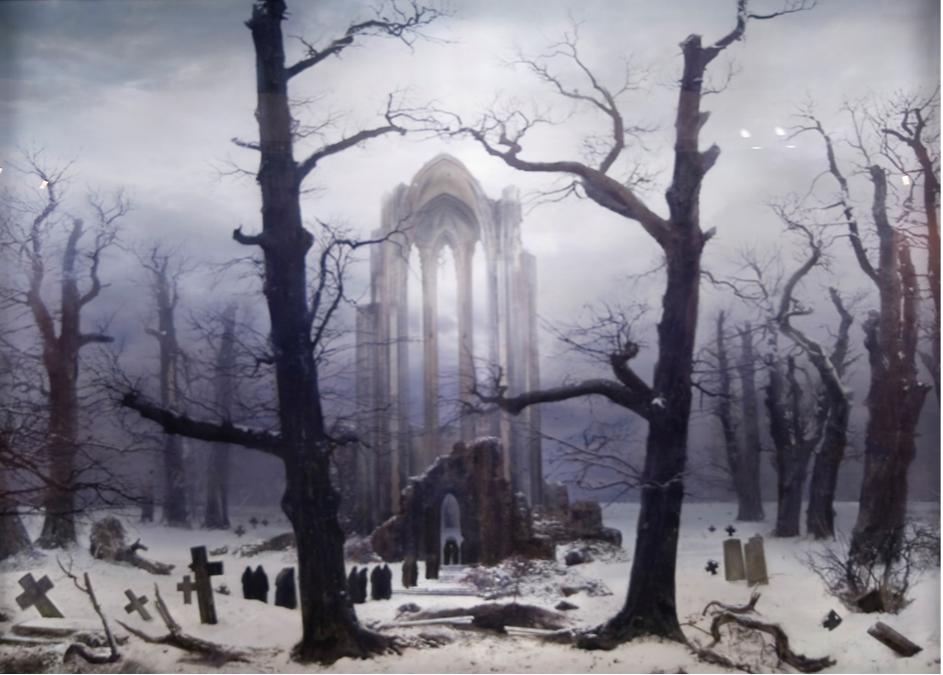

Transcendence: Facing Intergenerational Trauma through Octavia E. Butler’s Kindred and “Bloodchild”


Transcendence: Facing Intergenerational Trauma through Octavia E. Butler’s Kindred and “Bloodchild”

Candice Thornton

In “Bloodchild” and Kindred, Octavia E. Butler’s characterizations and use of time travel permits readers to examine the implications of their own intersections of identity within existing and imagined societal infrastructures. Kindred illustrates the physical, mental, emotional, and spiritual impact that descendants of enslaved Africans experience, inherit, embody, and transcend. In “Bloodchild,” Butler depicts the complex dynamics and intergenerational implications of colonial hegemony for the Tlic and Terran people. Through the characters in Kindred and “Bloodchild,” alongside her manipulation of time and setting, Butler contextualizes moral dilemmas in multi-dimensional perspectives. Butler’s works convey the persevering implications and infrastructures of capitalistic cisheteropatriarchy that contribute to the commodification, erasure and subjugation of, and violence against, marginalized individuals and communities. 

In Kindred, Dana’s relationships with Rufus, her enslaver ancestor; Alice, her enslaved ancestress; and Kevin, her Caucasian husband; illustrate the long-reaching impact of chattel slavery on African American people’s bodily agency and ability to safely engage in consensual, equitable, and loving relationships. Dana, who is an interracially wed African American woman, is transported from her middle-class California life into enslavement in antebellum Maryland. In “Bloodchild”, Gan’s relationships with his mother Lien and T’Gatoi highlight how oppressive infrastructures limit marginalized peoples’ ability to consensually engage in relationships that respect their bodily agency. In “Saying ‘Yes’: Textual Traumas in Octavia Butler’s Kindred,” Marisa Parham asserts that “Butler immediately concretizes the uncanny sensation, as she makes the briefly unfamiliar domestic present double as the site of an unfamiliar domestic past, a slippery traversion made possible by the convergence of race, gender, and history—a convergence which, once revealed, resituates Dana’s home as a place of danger and vulnerability” (1321).

In Kindred, Dana’s relationship with Rufus is inherently non-consensual because she is unable to consent to being summoned to Rufus’s era and is only transported back to her own era when faced with the threat of death. After being transported with Dana to the Weylin plantation, Kevin asserts that he will not leave Dana alone to be harmed. Dana replies, “You’ll try. Maybe that will be enough. I hope so. But if it isn’t . . . I’ll have a better chance of surviving if I stay here now and work on the insurance we talked about. Rufus. He’ll probably be old enough to have some authority when I come again. Old enough to help me” (89). Kevin counters, “It still might not work. After all, his environment will be influencing him every day you’re gone” (89). As Rufus ages, he does, in fact, assume more authority; however, as Kevin suggests, he does not grow into a helpful person. 

On the contrary, Rufus develops into an entitled, immature, and violent man. In the chapter titled “The Fight,” Dana is once again transported to Rufus’s era. She finds him beaten with “his nose . . . bleeding. His split lip . . . bleeding . . . His face was a lumpy mess, and he would be looking out of a couple of black eyes for a while” (121). Rufus was beaten by Alice’s husband, Isaac, after having assaulted Alice. In her private thoughts, Dana expresses that she “should have been used to white men preying on black women. I had Weylin as my example after all. But somehow, I had hoped for better from Rufus” (119). Dana asks Alice, “wasn’t Rufus a friend of yours? I mean . . . did he just grow out of the friendship or what?” Alice responds “Got to where he wanted to be more friendly than I did . . . He tried to get Judge Holman to sell Isaac South to keep me from marrying him” (119). Learning that Isaac is enslaved, Dana advises them to run while she tends to Rufus, to mitigate the chance that they will be killed once Rufus regains consciousness. 

After Alice and Isaac leave, Rufus awakens and asks Dana where they’ve gone. Rufus threatens, “He’s going to pay!,” to which Dana responds by attempting to persuade Rufus to blame his injuries on a fight between drunken men. Rufus vehemently retorts, “What in hell are you talking about? You know Isaac Jackson did this to me!” Dana reminds him that “You raped a woman—or tried to—and her husband beat you up . . . You’re lucky he didn’t kill you. He would have if Alice and I hadn’t talked him out of it. Now what are you going to do to repay us for saving your life?” (122). Dana asks if he managed to rape Alice, and Rufus “looked away guiltily.” She asks him, “why would you do such a thing? She used to be your friend,” and he responds, “When we were little, we were friends . . .We grew up. She got so she’d rather have a buck nigger than me!” (122). Dana counters, “Do you mean her husband?” and in her interior thoughts, admits that “Kevin had been right. I’d been foolish to hope to influence him” (122). 

Dana tends to Rufus, and “after four days of freedom together . . . [Alice and Isaac] were caught” (143). Alice was terribly beaten, and Isaac was sold South after having his ears cut off. Dana realizes that “Rufus had done exactly what I had said he would do: Gotten possession of the woman without having to bother with her husband. Now, somehow, Alice would have to accept not only the loss of her husband, but her own enslavement. Rufus had caused her trouble, and now he had been rewarded for it” (149). Through this heartbreaking series of events, Dana and her enslaved ancestress Alice are subjected to Rufus’s violence. They are continuously stripped of their agency, yet reliant upon one another for survival. 

In “Beloved and Betrayed: Survival and Authority in Kindred,” Novella Brooks de Vita provides insightful perspective about Dana’s relationship with Alice and Rufus. She asserts that Dana “holds some authority over Rufus as his instructor and protector” (18). Arguably, Dana’s authority over Rufus is limited at best, in that Rufus ultimately impacts Dana’s agency. It is through Rufus’s near-fatal encounters that Dana is transported to his side. Brooks de Vita further explains that “Dana grows to see Rufus as both a detestable chore and a pitiful child. She is unable to create in her mind an effective balance between the two views” (18). Through Rufus’s rape of Alice and attempted rape of Dana, Butler illustrates the perpetual legacy of sexual violence against African descendants by European and Anglo-American people in order to commodify, control, and otherwise subjugate them. 

In “Bloodchild,” Gan and his Terran family are non-consensually enmeshed with the Tlic person T’Gatoi. Although Butler describes both the Tlic and Terran as people, the Tlic are the ruling class and differ from humans in that their reproductive survival relies upon using the Terran people as hosts for their eggs. The short story begins with the protagonist, Gan, describing the last night of his childhood. Gan recounts his Terran family being visited by T’Gatoi, the Tlican government official. Gan explains that “when [he] was little and at home more, [his] mother used to try to tell [him] how to behave with T’Gato—how to be respectful and always obedient because T’Gatoi was the Tlic government official in charge” (Butler, “Bloodchild” 3). Although Gan’s mother, Lien, explains that “it was an honor . . . that such a person had chosen to come into the family,” Gan observes that Lien “was at her most formal and severe when she was lying” (4). Gan’s last night of childhood begins with T’Gatoi offering the family some sterile eggs that “prolonged life, prolonged vigor” (3). Despite their life-sustaining and euphoria-inducing qualities, Gan’s mother Lien declines the offering, which causes Gan to question “why [his] mother denied herself such a harmless pleasure” (3). He also reveals that his father, “who had never refused one in his life, had lived more than twice as long as he should have. And toward the end of his life, when he should have been slowing down, he had married my mother and fathered four children” (3). As the story unfolds, Gan explains that T’Gatoi’s people, the Tlics, “wanted more of us made available . . . we were necessities, status symbols, and an independent people” (4). While Gan naively describes his people as independent, the dynamics and subsequent exchanges between the Terran and Tlic people illustrate the hegemony that strips the Terran people of their agency. 

Although Butler does not rely on time travel in “Bloodchild,” she infuses elements of science fiction to create a society that reflects the breeding practices and societal dynamics which are akin to the institution and practices of chattel slavery. Despite the characters in “Bloodchild” having fictionalized racial identities, Butler’s classifications of each race and the subsequent dynamics are similar to those between European and Anglo-American people and people of the African diaspora. The Tlic people’s survival is contingent upon their ability to procreate, and their procreation is sustained by depositing their eggs into Terran hosts. 

In Kindred, Dana is unable to choose when she will be transported to rescue and otherwise care for Rufus, Alice, and other enslaved people; in “Bloodchild,” Gan’s family has little agency to liberate themselves from the breeding practices of the Tlic people. Similar to Dana, Gan and his mother understand that their safety and survival are reliant upon their compliance with and participation in the harmful practices and systems established by the ruling class. The protagonists in Kindred and “Bloodchild” “survive the tension between understanding their bodies as their ‘own’ and also recognizing their bodies in relation to pasts that exceed, leak into, the present moment” (Parham 1318). Butler uses the protagonists and their families to depict how race, gender, and class impact one’s agency. Butler’s juxtaposition of enslaved and enslaver/ruler and ruled, contextualizes how marginalized peoples are forced to negotiate what little agency they possess to preserve and protect themselves and their loved ones. Ultimately, through her manipulation of time and setting, along with her characterizations, Butler illustrates the persevering implications and infrastructures of capitalistic cisheteropatriarchy that contribute to the commodification, erasure and subjugation of, and violence against, marginalized individuals and communities. 

WORKS CITED

Brooks de Vita, Novella. “Beloved and Betrayed: Survival and Authority in Kindred.” The Griot, vol. 24, no. 1, 2005, pp. 16-20. 

Butler, Octavia E. “Bloodchild.” Bloodchild and Other Stories. Seven Stories Press, 1996. 

—. Kindred. Beacon Press, 1979. 

Parham, Marisa. “Saying ‘Yes’: Textual Traumas in Octavia Butler’s Kindred.” Callaloo, vol. 32, no. 4, 2009, pp. 1315-1331. JSTOR. http://www.jstor.org/stable/27743151.

Often described as an innovative and passionate multi-hyphenate, Candice Thornton (they/them/theirs) is a second-year humanities doctoral student and adjunct English professor at Clark Atlanta University. Candice earned their B.A. in art history from the illustrious Spelman College and their M.A. in English literature from Texas Southern University. While attending Texas Southern, Candice was awarded the Most Outstanding Student for the English department, Most Impactful Award from the Student Academic Support Services department, and the Outstanding Thesis Award from the Graduate School. Broadly speaking, Candice’s research interests combine their love of Black folx, linguistics, comparative literature, and hermeneutics to examine how oral and literary traditions of the African Diaspora articulate the complexities of Black consciousness. Beyond academia, Candice enjoys tending to their loved ones, their business MN8Beauty, and their houseplants, as well as creating mood-based playlists, painting past-life portraits, and eating all the snacks.


Mother’s Madness: The Silent Struggle of Mothers in African American Literature and Film


Mother’s Madness: The Silent Struggle of Mothers in African American Literature and Film

Aileen Fonsworth

While existing in a racist, patriarchal society, women are not in control. The mother is responsible for the duties of the home and children. In Octavia Butler’s “Bloodchild,”Toni Morrison’s Beloved, and the television miniseries THEM directed by Lena Waithe, sociopolitical and cultural pressure to perform physically traumatizes and mentally destroys the mothers of the house. Each of the matriarchs of these texts and program are tormented by the situational circumstances of their lives. Oppression and the illusion of freedom keep these women in unstable mental states. The silent struggle of these mothers drives them to insanity, self-destruction, child abandonment, and experiences of various forms of death. 

The coupling of what is socially acceptable and what they know is wrong gives birth to their behavior and, as a result, a generational curse. In “Bloodchild” by Octavia Butler, Gan’s mother, Lien, is constricted by her internal conflict. She watches and is arguably complicit in the age-inappropriate courting and ultimate rape of her youngest child by an alien creature. She does this because of a pact that she made with this creature for status. As much as she hates the idea of what is going to happen to her son, she raises him to honor his captor and to believe that his sacrifice is an honorable elevation instead of a condemned social station. She assists in the grooming of her child to elevate the rest of the family but denies herself any of the available comforts during the process. 

The aliens, called Tlic, provide sterile eggs that act as an age-defying intoxicant for humans. Lien refuses to partake in the nectar’s comforting effects as not only a silent act of rebellion but also as self-flagellation. Lien hates the alien T’Gatoi and the calamity that her family is in. She struggles through the story not sleeping or eating enough, which expedites her aging process and leads to her eventual death. This is an act of defiance that Lien exhibits as her own way of protesting. She refuses the nectar but is coerced to partake in it. T’Gatoi gaslights Lien constantly saying, “this place is a refuge because of you, yet you won’t take care of yourself’ (Butler 5). When Lien takes the bare minimum, the creature disregards her volition, forcing her to ingest more.

Against the wishes of the matriarch, the creature captures and stings her. In a venom-induced lull, Lien babbles that she wishes she would have killed T’Gatoi: “I should have stepped on you when you were small enough” (7).While this is presented as a joke between the two, Lien suffers as she bears the knowledge of what is to befall her child. The sociopolitical climate renders the humans (called Terrans) inferior and at the disposal of the Tlic. Lien promised her youngest child to the creature to secure provisions and safety for her family out of obligation, not by choice. Absent the intoxication-induced admission, she never discusses the exchange. In the stupor of the sting, Lien futilely protested, “Nothing can buy him from me” (7). She is only mocked and stung again. 

 The family’s social ascent is dependent on Gan being the carrier of T’Gatoi’s eggs. For fear of harming herself, Lien is forced to facilitate his impregnation through sodomy. When T’Gatoi takes Gan outside the designated area for his people, his mother instructs Gan to “take care of her” (5) even though he is only a child. When they do get out of the compound, there is chaos. Terrans are fighting and clamoring in fear and filth while the aliens are arguing for access. In fear of the unknown terror of the outside world, Lien becomes an accessory in the victimization of her son. Rather than risk her family being exposed to the unknown, Lien decides to protect her family at the expense of her youngest child.

In Toni Morrison’s Beloved, Sethe is physically aware of the horrors of the plantation Sweet Home, where she was formerly enslaved. After the overseer’s nephews rape pregnant Sethe, by stealing her milk, she escapes enslavement. After a tumultuous escape, she reunites with her mother-in-law to live in a false sense of socio-political and economic security. When the overseer, schoolteacher, comes looking for Sethe and her family, she decides to free her children eternally to prevent her daughters from suffering the same plight. When faced with the possibility of losing her children to the torment of a known oppressor, Sethe sacrifices her baby’s life to keep her safe. Haunted by the memory of the dead child, Sethe is internally and externally tormented by her past and her actions.

When Paul D, one of the formerly enslaved men of Sweet Home comes into town Sethe is comforted by his presence. They share the history and because of it they connect and communicate with each other. When Paul D calls into question Sethe’s choice to take the child’s life, “a forest sprang up between them” (Morrison 194). While he tried to defend his statement or offer other options, he insults her saying “you got two legs not four” (191). Sethe explains that she not only knows what she did but made the choice with the surety of knowing that anywhere would be better than Sweet Home. “I stopped him . . . I took and put my babies where I knew they’d be safe” (193). Sethe denies herself the love and comfort of a partner in standing by her decision. Like Lien, Sethe refuses herself pleasure and sacrifices her child to keep the family safe. The rejection of pleasure and comfort is often the cost of security for mothers in oppressed situations.

In the television miniseries, THEM, directed by Lena Waithe, a 1950s African American family decides to move to California from South Carolina after the mother, Lucky, is raped and the youngest son killed. The intention behind their move is to give the remaining children access to a more progressive environment and better education. Although they have family in the Watts area of Los Angeles, Lucky’s husband buys them a house in predominantly Caucasian Compton. From the day they move into their new home, the racist neighbors begin to harass them relentlessly. Lucky expresses her unease in their new place. After realizing that their neighborhood had previously prohibited African Americans from living there, she explains to her husband, with a gun in her hand,, that if any of her neighbors get too far out of line, “they ain’t getting’ a warnin’” (“Day 1” 19:34). The decision to stay in Compton wears on her mental state.

To cope, Lucky seeks refuge in the familiarity of family. Taking a day to visit relatives in town, Lucky goes to her cousin’s house to fellowship. What starts as relief ends in a triggered escape. In the scene, Lucky is getting her hair done by a cousin who also offers children’s services. During their conversation, she asks Lucky about her son’s age and hair length. “What his name . . . Chester right?” (“Day 4” 21:15). Lucky panics and leaves hastily in a mentally foggy state. It is obvious that her cousin was uninformed of the situation. After being brutally raped and having her child murdered in front of her, Lucky silently suffers that trauma alone.

While being tormented at home by neighbors, the children are also taunted at school. The eldest daughter, Ruby, is mocked constantly by her classmates and haunted by an imaginary friend. The apparition that befriends Ruby helps her navigate the social climate of her new school. Ruby’s suffering is compounded by the treatment of her family and particularly that of her mother. When she paints herself white at school to fit in, Lucky blames herself and begins to insist that they leave that house and neighborhood. The homes in Beloved and THEM are both vehicles of fear and suffering for their matriarchs.

In these texts and in the television series, the mothers sacrifice their peace to do what they think is best to protect the lives of their children and families. While these characters represent various points of contention on the oppressed freedom spectrum, they are all similar in the sense of sacrifice. None of them are willing to allow the harshness of the outside world to invade their homes and negate the little bit of control that they have. At the cost of their safety and sanity Lien, Sethe, and Lucky are willing to suffer the consequences of extreme actions for the sake of preserving their families.

WORKS CITED

Morrison, Toni. Beloved. Vintage, 2007.

Butler, Octavia. “Bloodchild.” “Bloodchild and Other Stories.” Seven Stories Press, 1996.

“Day 1.” THEM, created by Lena Waithe, season 1, episode 1, Amazon Prime, 2021.

“Day 4.” THEM, created by Lena Waithe, season 1, episode 4, Amazon Prime, 2022.

Aileen “A.E” Fonsworth is a native of San Francisco, California, currently residing in Huntsville, Texas, while attending Sam Houston State University. In her pursuit of an M.F.A. in poetry, she is an Editorial Fellow, a Poetry Fellow, GUIA Fellow, and an A.S.P.I.R.E Scholar. A.E is a mother of two and serves the undergraduate population as an Academic Recovery Coach. She is a traveling poet and speaker, as well as a proud Texas Southern University Alumna.


“I’m a Node Worker Too”:  Mexican Cyborgs as Resources and Resistance in Sleep Dealer


“I’m a Node Worker Too”:  Mexican Cyborgs as Resources and Resistance in Sleep Dealer

Karen Dollinger

In 2008, filmmaker Alex Rivera wrote and directed Sleep Dealer, a science fiction film set almost entirely in Mexico, centering on “node workers,” people who are plugged into machines run by multinational corporations so their work can be exploited around the globe. The film centers around three characters, all of whom have cybernetic enhancements. Memo works in construction, virtually controlling a giant robot in a country he himself is not allowed to enter to make skyscrapers he will never see with his own eyes. Luz works for TruNode, a corporation that allows customers to virtually experience the memories of others, selling her memories and creating memories on demand as a form of virtual tourism. Rudy, the only (Mexican) American in the film, is a drone operator, able to kill others from thousands of miles away.

An allegory for Mexican immigration in the United States, the film constructs a future with roots in Oaxaca, Mexico, in which the United States is able to receive all of the benefits of laboring Mexican workers without ever seeing actual Mexicans. Natural resources such as water are controlled by corporations, and farmers in Oaxaca must pay in U.S. dollars to have access to it. Indigenous people who would take control of their own resources or are even suspected of it are killed at the push of a button in another country. Nonetheless, the node workers, who can be considered cyborgs, discover that they can do more than merely survive, and use the very nodes that drain them as a form of resistance, creating a community of cybernetically enhanced humans to improve the lot of those subjugated by corporations.

This paper will examine the narrative and symbolic function of the protagonists through the lens of Donna Haraway’s Cyborg Manifesto, specifically, her definition of a cyborg:

The cyborg is resolutely committed to partiality, irony, intimacy, and perversity.  It is oppositional, utopian, and completely without innocence. No longer structured by the polarity of public and private, the cyborg defines a technological polis based partly on a revolution of social relations in the oikos, the household. Nature and culture are reworked; the one can no longer be the resource for appropriation or incorporation of the other. (151)

In Sleep Dealer, turning a human into a cyborg (or cybracero, another term for node worker) is meant to exploit human beings as natural resources without agency, and yet it is as cyborgs that effective resistance becomes possible. New relationships and new ways of being are created through nodes by the three protagonists, demonstrating the transformational possibilities of a post-human future.

The film begins when Memo’s father in Oaxaca is unjustly killed by a drone controlled from the United States after being mistaken for an aqua-terrorist. In order to support his family, Memo travels to Tijuana to work in a maquiladora, a type of factory. In this future, though, workers ship their labor north via “nodes,” cybernetic implants that allow them to control robots located thousands of miles away, while connected to giant machinery in the Tijuana maquiladoras, also called “Sleep Dealers,” nicknamed thus because they eventually drain the life force of the node workers. Before he can find work, Memo must locate a coyotec, an illegal dealer in the much sought-after cybernetic implants which transform ordinary human beings into something more—or lesser. The name is also a play on “coyote”—someone who assists undocumented migrants from Mexico to the United States—and “tech”—as in node technology. By chance, Memo meets Luz, a cybernetic journalist who makes her living uploading her own memories directly to the Net, allowing anyone with nodes to experience them. She is able to transform Memo into a node worker, and the two begin a romance.  

Before she had gotten to know him better, Luz had uploaded her memory of meeting Memo on a bus, intending to highlight the plight of migrant workers. A mysterious client offers to pay her to create more memories of Memo, which she does without Memo’s consent. It is revealed to the audience that the mysterious client is Rudy, the American drone pilot who killed Memo’s father and now has doubts about the dead man’s guilt. Using the memories Luz had uploaded Rudy is able to track down Memo.

At this point, the film defies audience expectations. Rudy is not there to investigate or arrest Memo; neither is this a tale of Memo avenging his father’s death. Instead, it is a tale of connection, of community, for as Rudy observes, “I’m a node worker too.” Being a node worker unites Memo, Rudy, and Luz across ethnicities, nationalities, and genders. Rudy seeks to make amends to Memo and his family for the harm he has done, and Memo decides to accept them. The three protagonists concoct a plan to destroy the dam that has devastated the farming community where Memo was born, specifically using their cybernetic abilities. The idea is the culmination of the dream of Memo’s father, who had explained to Memo in the beginning of the film that the dam choking off the river made farming nearly impossible. In a life-affirming act that harms no one, they become the aqua-terrorists the United States government feared and sought to destroy.

While initially being controlled and repressed by becoming part machine, Memo, Luz, and Rudy are all able to find liberation utilizing the very tools of their repression. They fit the model of the cyborg proposed by Haraway. As she writes of what it means to be a cyborg: 

Taking responsibility for the social relations of science and technology means refusing an anti-science metaphysics, a demonology of technology, and so means embracing the skillful task of reconstructing the boundaries of daily life, in partial connection with others, in communication with all of our parts. It is not just that science and technology are possible means of great human satisfaction, as well as a matrix of complex dominations. Cyborg imagery can suggest a way out of the maze of dualisms in which we have explained our bodies and our tools to ourselves. This is a dream not of a common language, but of a powerful infidel heteroglossia. It is an imagination of a feminist speaking in tongues to strike fear into the circuits of the supersavers of the new right. It means both building and destroying machines, identities, categories, relationships, space stories. (21)  

We see this tension throughout the film. The negative aspects of the futuristic technology of Sleep Dealer are highlighted by the plot, beginning with the dam which has nearly destroyed Memo’s family’s milpa, an indigenous farm in rural Oaxaca, then the drone technology which permits Memo’s father to be murdered by someone thousands of miles away, to the Sleep Dealers which are slowly killing node workers, to the exploitative TruNode which colonizes memories.  

While this paper examines the characters with nodes as cyborgs, there is also something vampiric about the apparatus associated with the nodes. Many scholars have pointed this out, such as Micah K. Donahue in “Borderlands Gothic Science Fiction: Alienation as Intersection in Rivera’s Sleep Dealer and Lavín’s ‘Llegar a la orilla’”:

The needle-like injection point of the wires that the cybraceros insert into their bodies, an insertion that doubles as the debilitating extraction site of labor and willpower, additionally reprises the longstanding Latin American tradition of the parasitic vampire . . . The dangling cables in Sleep Dealer and the bulbous machines above them form part of that (techno)gothic archive: cybernetic spiders descend from the rafters of the infomaquilas to suck the life from victims snared in their bioluminescent webs. Memo directly addresses the vampiric nature of the transnational Sleep Dealers. “Me estaban drenando la energía y mandándola lejos (They were draining my energy and sending it far away.)” (61)

The impersonal disembodied transnational corporation takes the role of the villainous bloodsucker here. It is not, however, the only way in which our invisible vampire casts its shadow. Luz captures moments of life—both her own and others—which are then consumed through TruNode. Rudy swoops down from the sky and deals death. Even the dessicated farm and village of Memo’s youth can be seen as a vampiric victim, drained of the lifeblood of the river by the private transnational water corporation.  

So does this mean that the nodes themselves are evil? It’s complicated. The node technology, which blurs the boundaries of organic and machine and even spatial location, also leads to powerful connections. It is the character of Luz who first sees this. She explains that she became a reporter for TruNode precisely because she wanted to bring to light—which is what “Luz” means in Spanish—the lives of diverse people and to create connections and community through her memories of them. She doesn’t see what she is doing as exploitative until Memo confronts her. Luz realizes Harraway’s promise of cyborg relationships when she suggests to Memo that they make love while connected to one another via their nodes so they can experience the act through the sensations of the other person. Binaries and boundaries—and what human experience means—is blurred in this scene. Luz is the bridge between Memo and Rudy as well.  

If Luz wants to use her cybernetic nodes to make human connections, it is Rudy who sees the connections that are already there. He muses, “I’m a node worker too,” highlighting this similarity to Memo: they are both cyborgs. This contradicts and complicates what should be very different subject positions. Rudy is American, while Memo is Mexican. Rudy is middle class, while Memo is poor. Rudy grew up in a highly technological society, while Memo grew up on an indigenous farm in Oaxaca. Rudy is a member of the military, while Memo obtained his nodes illegally from a coyotec. Rudy controls a murderous drone, while Memo controls a construction robot. Yet Rudy sees Memo as an equal, and one he has wronged. Rudy saw Memo’s father die through cybernetic eyes, but still saw the humanity of the man he killed, which made him question everything he had been taught.  

Ultimately, though, Memo is the one who must take the final steps in creating a new community blending both his indigenous roots and his new position as a node worker. He is the one who chooses to forgive Luz for appropriating his memories and experiences and to forgive Rudy for having killed his father. By choosing connection over repudiation, he is able to come up with the plan to return the river in his home town to his people by having Rudy pilot his drone to destroy the dam. The farms in Oaxaca will once again thrive and will no longer have to pay the exorbitant prices demanded by the foreign corporation for life-giving water. Ultimately, technology defeats technology. The unity of node workers led to the survival of Memo’s indigenous family and community.

Cravey, Palis, and Valdivia in their article “Imagining the future from the margins:  Cyborg labor in Alex Rivera’s Sleep Dealer” point out that the three cyborg protagonists of the film are able to learn via their nodes to recognize and value their connections with a wider community: “The three central characters also gain insight about ways in which their own individual fates are ineluctably entwined with others and with humanity; and each struggles to act with more empathy. In this regard, each of the protagonists wrestles with a specific dilemma about the consequences of one’s actions in a world of globally-extensive, densely-intertwined, social interconnections” (872). Their nodes allow them to see connections in ways none of the cyborgs could have predicted, but they realize that humanity has always been connected, nodes or not.

It can be easy to dismiss the role of Luz as superfluous, as merely the love interest of Memo. But without Luz’s work as a TruNode cyborg reporter, Rudy and Memo would never have made their connection, and they never would have made the plan to destroy the dam, freeing the river for the citizens of Memo’s village in Oaxaca. As China Medel writes in “The Ghost in the Machine: The Biopolitics of Memory in Alex Rivera’s Sleep Dealer”: 

TruNode’s simultaneous position as public forum and private marketplace for sharing memories reveals the ambivalences structuring the production of collective memory and shared images environments within neoliberalism. TruNode writer Luz becomes like the sex workers and domestics of the transnational economy whose affective  labor generates social relationships. Yet her labor also enables the film’s narrative shift from a story of romantic love to the transnational love of solidarity. (116)  

It is Luz, through her work as a sort of cybernetic interpreter, who helps Rudy and Memo come to understand one another. And it is Luz who performs the vital role of coyotec, the person who illegally transforms Memo into a cyborg. Notably, she does this for free. Luz is both Memo’s introduction to the world of the node workers and the point of contact between Memo and Rudy across national boundaries. 

The climax—the redemption for Rudy, Memo, and Luz—occurs when the trio blows up the corporate dam. No one (that we see) was killed by this act, whereas the existence of the dam had already cost lives. Is it terrorism? Orihuela and Hageman write in “The Virtual Realities of US/Mexico Border Ecologies in Maquilapolis and Sleep Dealer”: 

Blowing up the corporate dam is coded within the film itself as an act of eco-terrorism. Occasionally, shots linger over the graffiti-portraits of masked figures with the letters ‘‘EMLA’’ standing for the Mayan Army of Water Liberation, thereby using the backdrop of Tijuana to imply that Memo’s plan is a self-conscious act of eco-terror. Additionally, the television media in the film, consistent with current US media discourse, reports the dam-destruction as an act of ecoterrorism. As such, the film’s conclusion seems a deeply problematic prescription. But, as Rivera pointed out . . . the destruction of the dam brings some hard contradictions about ecology, borders, race, technology, and gender to the forefront. (183)  

One such contradiction is in who is allowed to define the word “terrorist.” Why is Rudy a terrorist but not the transnational corporation denying water to the indigenous community that had relied on it for generations? In Orihuela and Hageman’s interview with Rivera, the director says: “Words like ‘terrorist’ and ‘freedom fighter’ or ‘revolutionary,’ ‘patriot’ are obviously used by one kind of player in history against another, depending which side of the struggle you are on. ‘Ecoterrorism’ is a word that could be used with as much moral authority against Monsanto as it could against Earth Liberation Front” (qtd. in Orihuela et al., 183). So who, precisely, are the villains here? The node workers blowing up the dam is coded as an act of heroism. Throughout the entire film, we only see two direct acts of violence against individuals: when Rudy kills Memo’s father, and when Memo is robbed in Tijuana. Most of the suffering is systemic and caused by faceless corporations. Instead of a specific enemy, the cyborg protagonists must fight systemic oppression.

In the final scene, Memo is planting corn in Tijuana, and Rudy is heading deeper into Mexico to hide from the authorities. We realize that Memo still has his nodes, and the entire film was composed of Memo’s memories on TruNode, most likely uploaded by Luz. The cyborgs are still resisting, literally putting down roots in the case of Memo, but are also making new connections. Memo vows to keep resisting by staying connected. The past, as Memo’s father would say, now has a future.

WORKS CITED

Cravey, Altha, et al. “Imagining the Future from the Margins: Cyborg Labor in Alex Rivera’s Sleep Dealer.” GeoJournal, vol. 80, no. 6, 2015, pp. 867-80. https://doi.org/10.1007/s10708-015-9652-4.

Donahue, Micah K. “Borderlands Gothic Science Fiction: Alienation as Intersection in Rivera’s Sleep Dealer and Lavín’s ‘Llegar a la orilla.’” Science Fiction Studies, vol. 45, no. 1, March 2018, pp. 48-68.

Haraway, Donna Jeanne. Cyborg Manifesto. Camas Books, 2018. 

Medel, China. “The Ghost in the Machine: The Biopolitics of Memory in Alex Rivera’s Sleep Dealer.” Camera Obscura: Feminism, Culture, and Media Studies, vol. 33 no.1, May 2018, pp. 113-37.

Orihuela, Sharada Balachandran, and Andrew Carl Hageman. “The Virtual Realities of US/Mexico Border Ecologies in Maquilapolis and Sleep Dealer.” Environmental Communication vol. 5, no. 2, June 2011, pp. 166-86.

Rivera, Alex, director. Sleep Dealer: Maya Entertainment, 2008, DVD.

Dr. Karen Dollinger is a Spanish lecturer at the University of West Georgia. She has presented at the International Conference for the Fantastic in the Arts and has taught courses on Latin American science fiction.


Melancholia, Assimilation, and Genre in Charles Yu’s How to Live Safely in a Science Fictional Universe


Melancholia, Assimilation, and Genre in Charles Yu’s How to Live Safely in a Science Fictional Universe

Cynthia Zhang

In Charles Yu’s How to Live Safely in a Science Fictional Universe, the existence of multiple universes is an established fact, AIs are accepted as middle managers and drinking buddies, and time travel is a quotidian practice. When time machine technician Charles Yu (referred to as Charles for the remainder of this paper) shoots his future self and becomes trapped in a time loop, he is reassured by his AI companion TAMMY that “it happens to everyone, some even by choice” (Yu 97). Yet despite the prevalence and normalization of many recognizably sci-fi tropes, Yu’s novel is in many ways less recognizably science fiction than it is Asian American. Time travel may drive the plot of Science Fictional Universe, but it is an examination of the promises and disillusionments of the American Dream that forms the novel’s thematic center. Given the prominence of such themes, Science Fictional Universe’smain departure from a paradigmatic model of Asian-American literature would be its status as science fiction. As Science Fictional Universe is a novel more interested in questions of immigrant struggle than the implications of time travel or multiverse theory, one must ask why Yu chooses to work in science fiction and not literary realism.

In this paper, I argue that Yu deliberately works to destabilize the lines between literary fiction, Asian-American literature, and science fiction. By using science fiction to frame a story of immigrant angst, Yu reframes the dream of multiethnic assimilation itself as a particular form of science fiction, one whose conventions and expectation are just as restricting as the familiar tropes of genre fiction. This inability to assimilate fully—to be just ‘American’ as opposed to ‘Asian-American’—produces a profound sense of racial melancholia, a term I borrow primarily from David Eng and Shinhee Han’s work on the subject. Ultimately, through using the language of science fiction to capture the melancholia of racial assimilation, How to Live Safely in a Science Fictional Universe contests the hegemony of realist fiction to depict psychological states as well as the necessity for delineating between genre and literary fiction in the first place.

The Genre Question

Before proceeding to Science Fictional Universe itself, it is useful to contextualize Yu’s place within the contemporary literary marketplace. On the one hand, Yu’s status as the recipient of awards such as the Sherwood Anderson Prize (for “Third Class Superhero” in 2004) and the National Book Award (for Interior Chinatown in 2020) speak to the cultural standing of his work among arbiters of literary prizes (“About”). On the other hand, Yu’s work has also received attention from speculative fiction awards such as the Locus Awards and the Campbell Memorial Award, and Yu in 2017 was the guest editor on that year’s edition of Best American Science Fiction and Fantasy (Adams). Historically, literary fiction has defined itself as against genre fiction in negative terms, with genre fiction viewed as formulaic mass entertainment while literary fiction is thoughtful, elevated art. Yu’s status as an author with footholds in multiple fields blurs the traditional division between literary and science fiction, instead pointing to a literary landscape where the genre boundaries are not fixed but perpetually porous.

Yu’s status as a Taiwanese-American author further complicates his engagement with science fiction. As Sami Schalk traces in Bodyminds Reimagined, marginalized groups have historically tended to regard literature as a vehicle through which authors can combat dominant stereotypes “by offering positive, realistic representation” (19). Because of this commitment to authenticity as well as the greater prestige afforded to ‘realistic’ fiction, minoritarian writers often favor realism as “an effective way to create cultural change” (19). By contrast, science fiction with its robots and faraway galaxies comes to be regarded as a genre too fantastical to address pressing social issues in the ‘real’ world. Further, science fiction is a genre marked by a historically troubled relation with race, one which can be traced from H.P. Lovecraft’s fear of racial miscegenation to cyberpunk’s representations of menacing Japanese corporations. To be a writer of color in science fiction thus adds another challenge in the form of a “double-layered negotiation with authorial legitimacy within the genre community and with genre legitimacy within the literary community” (Huang 98).

Given the prevailing biases against both writers of color and genre fiction, it is certainly possible to read Yu’s success within the literary mainstream as a story of meritocracy, one in which Yu’s persistence and natural talent allow him to achieve success despite the odds against him. However, I want to propose a counternarrative of Yu’s writing career, one in which Yu’s engagement with science fiction as a minoritarian writer is also a deliberate engagement with systems of legitimation. Proceeding from the observation that genre fiction “share[s] a history of marginalization with Asian American literature vis-à-vis mainstream and academic literary establishments,” Yu’s choice to work within science fiction can be read as an embrace of the minor position with all its perils and potentials (Huang 6). Though Science Fictional Universe straddles multiple genre categories (literary fiction, science fiction, and Asian-American literature), it ultimately refuses to be neatly assimilated into any one genre, insisting instead on its position at the interstice of all three.

Racial Melancholia and the Minor Subject

In analyzing Science Fictional Universe as a critique of the American Dream, I will focus on the two characters most affected by its failure: Charles and his father. As a child, Charles works with his father, a structural engineer working for an unnamed company, to develop one of the first working theories of time travel. However, flaws in execution mean that their time machine fails to impress a visiting research director from the prestigious Institute of Conceptual Technology. As a result, it is another researcher—one who possesses significantly more financial means than Charles’s father and lives in an idyllic town where the children’s playgrounds are “painted red and white and blue”—who becomes the credited inventor of time travel, confining Charles’s father to the margins of history (Yu 193). As an immigrant to a “new continent of opportunity,” Charles’s father is a believer in the narrative of immigrant aspiration in which hard work always pays off and success proceeds “in direct proportion to effort exerted” (174). The failure of his machine thus produces a profound sense of disillusionment in Charles’s father, one which extends beyond disappointment with the American Dream into disappointment with himself. Eventually, this disappointment leads Charles’s father to build a “darker, more powerful” version of a time machine and to become subsequently lost in time (197).

Even as Charles’s father internalizes a sense of inadequacy, Science Fictional Universe points to the ways in which his success is precluded by barriers of race and class. When Charles and his father first meet the director, the differences in status between the two are evident in their appearances: while Charles’s father is a short man dressed neatly but thriftly in too-short slacks and cheap glasses, the director is an authoritative figure dressed in “cuff-linked shirtsleeves” and an impressively knotted tie, “the kind neither my father nor I ever seemed to be able to do” (172). The class disparity between Charles’s father and the director is one which is also described in racial terms, with Charles describing his father next to the director as looking like “an immigrant [. . .] a bewildered new graduate student in front of the eminent professor, a small man with a small hand in a large foreign country” (184). Despite the many years Charles’s father has spent studying and working in his adopted country, he continues to be regarded as an immigrant and a foreigner, a perpetual Other never fully belongs to their adopted country. Celebratory accounts of multicultural diversity may champion the potential for all newcomers to become a part of the national fabric, but race persists in circumscribing the extent to which non-white subjects can assimilate into an implicitly white national consciousness.

Reading Science Fictional Universe as a narrative of how race haunts the American Dream, one can read Charles and his father’s experiences as ones of a particularly racialized melancholia. As theorized by Freud in “Mourning and Melancholia,” melancholia differs from mourning in that it is a) an indefinite state and b) one in which the subject is unable to let go of the lost object (245). Freud attributes the longevity of melancholia to the fact that, unlike mourning, melancholy involves “a loss of a more ideal kind,” one in which the melancholic knows “whom he has lost but not what he has lost in him” (245). Unable to understand the true nature of their loss, the subject is unable to let go of their attachment. Instead, the melancholic is marked by “an identification of the ego with the abandoned object,” one which causes the subject’s psychic attachments to retreat inward and, “by taking flight into the ego,” thus remain intact (249-57). When the subject’s feelings towards the lost object are ambivalent in nature, the introjection of the object causes those ambivalent feelings to migrate inwards so that the negative feelings towards the lost object become transformed into self-recriminations. For Charles’s father, the process of melancholic introjection means that his failure becomes not a technical error, “but an actual failure of his own mind, his own concept” (Yu 184). Disappointment with the promises of immigrant aspiration becomes directed inward, and Charles’s father begins quite literally drifting back into the past in a manner that literalizes how attachment to a lost object anchors Freud’s melancholic to a past moment. Unable to let go of his lost dream and all that it represents, Charles’s father is borne melancholically back into the past until he becomes ultimately unreachable to his family.

While Freud’s original account of melancholia characterizes it as a pathological state, theorists since have questioned this reading of melancholia as an inherently unproductive state. David Eng and David Kazanjian, for example, argue that “melancholia’s continued and open relation to the past” opens up the possibility of “new perspectives on and new understandings of lost objects” (4). In this way, the process of staying with melancholia can prove productive in both analyzing the past and also “rais[ing] the question of what makes a world of new objects, places, and ideals possible” (4). Thus, while melancholia proves paralyzing in Science Fictional Universe, trapping characters in loops of memory and stranding them outside of time, for Charles at least melancholia also provides an opportunity for him to revisit and reinterpret his past experiences. Killing his future self may trap Charles in a melancholic time loop of his own memories, but it also forces him to directly confront his past instead of attempting to ignore it or push it aside. Given that Charles is a character whose avoidance of the past has led him to spend ten years living inside a time machine, melancholia here offers Charles an opening for self-transformation if he is willing to undertake the arduous task of examining both the past and himself. 

In addition, following Ann Cvetkovich’s call to interpret “depression as a cultural and social phenomenon rather than a medical disease,” melancholia can be read as less as an individualized malady than a collective condition resulting from the shared experience of trauma (1). For racialized subjects, shared trauma takes the form of “histories of racial loss,” with racial melancholia naming the way in which those historical losses “are condensed into a forfeited object” that continues to haunt the racialized subject (Eng and Han 1). Regarding melancholia as a cultural condition complicates Freud’s account by raising the question of ethical responsibility. If melancholia is a response to historical trauma and structural violence, then detachment becomes a form of forgetting, one which may be necessary for the subject’s survival but which does not engage in transforming the structural injustices responsible for producing melancholia in the first place. Racialized subjects can become legal citizens, but because the “standard of assimilation” remains whiteness, their ability to become fully American as opposed to hyphenated American stops “short of the color line” (Cheng 69). Promised Americanness but perpetually figured as foreign to the white nation, Asian-American subjects experience the call to assimilation as “a repetitive trauma,” one which can very much entrap the desiring subject within its structures (67). 

Stuck reviewing memories of his father in a melancholic loop, Charles as an adult is able to gain a new understanding of how race has structured his and his father’s dreams. However, Science Fictional Universe does not end with its protagonist trapped in memory and regret. Instead, Charles steps out of the time machine and lets himself be shot by his past self, thus allowing time to continue its normal forward flow. The melancholic loop is closed and Charles, while injured, survives to face a future that he now has the tools to properly confront. By the standards of a classical Freudian account, Charles’s trajectory illustrates the path of proper mourning, one in which Charles is able to let go of his investment in the ideal of immigrant assimilation and instead invest his attachments in a new model of subjectivity, one which affirms his ability to be “kind of a protagonist after all” (Yu 233). Still, it is notable that it is Charles’s experiences while stuck in a melancholic time loop that allow him to achieve this state of peace with himself. Existing in the space of melancholic attachment allows Charles to reexamine his relationship to the immigrant assimilation narrative and, with the aid of an adult perspective and an AI interlocutor, gain an increased understanding of how that narrative forecloses the very promises it offers. Faced with the systemic inequalities that underlie the American Dream, Charles is able to view his father in another light—not as a failed dreamer, but rather a racialized subject whose theories, even without institutional acceptance, “would have been good enough for the director, for the world, good enough to be a serious contribution to the field of fictional science, good enough for me” (Yu 194). Per Freud, melancholia very much possesses the power to trap Charles and his father within its structures. However, when examined as a symptom of structural forces such as systemic racism, melancholia can become a useful tool in analyzing individual relationships with larger structures and ideologies.

Science/Fiction: The Genre Question Returns

Reading Science Fictional Universe as a rejection of theconventional assimilation narrative, Yu’sapproach towards genre can be interpreted as an extension of his resistance to assimilation. While Science Fictional Universe straddles the boundaries of Asian-American literature, literary fiction, and science fiction, it ultimately refuses to fully belong to any of them. By doing so, Science Fictional Universe implicitly disputes the primacy of naturalism for realistic representation while reframing the American Dream as itself a form of science fiction.

For many minoritarian authors, the burden of representation means that realism is seen as a more robust mode for telling “authentic” depictions of marginalized communities. Yu’s decision to use science fiction to tell a story of immigrant longing can be read as a challenge to such long-standing dynamics, one which implies that there are certain experiences that science fiction can capture more fully than literary realism. In Do Metaphors Dreams of Literal Sleep?, Seo-Young Chu notes while few people would debate realistic fiction’s ability to depict the life of a university professor, objects such as “the infinitely remote future, the infinitely remote past, and whatever lies on the other side of death” are far more elusive (7). Rather than viewing science fiction and literary realism as opposites, Chu thus proposes that we see the two as poles on a spectrum, with SF offering a way of accessing objects that would be otherwise “impossible to represent in a straightforward manner” (3). In particular, Chu argues that science fiction’s tropes of time travel and alternative selves make SF a productive genre for representing trauma as an experience that alienates the subject from themselves and disrupts an ordinary relationship with time (155). One reason for deploying SF in Science Fictional Universe would thus be the narrative elasticity the genre provides, with science fiction as a mode allowing Yu to portray Charles’s relationship with the past in a manner that reflects how Charles experiences his memories of racial and familial trauma.

In addition to opening narrative space for the depiction of trauma, SF further allows Yu to reframe the narratives of immigrant assimilation and the American Dream as themselves SF constructs. Throughout Science Fictional Universe, Yu describes the country to which Charles and his father live in terms of science fiction. Charles’s father is a “recent immigrant to a new continent of opportunity, a land of possibility [. . .] the science fictional area where he had come, on scholarship” (Yu 71). Though immigrant narratives of America have frequently described the country’s promises for economic improvement in hyperbolic terms, Yu here explicitly frames it as a science fictional construct. The American Dream as SF emerges as an elusive, illusory object, a promise extended to immigrants which the racialized subject can never quite achieve. 

Yet if the American Dream is an SF text, then Yu offers an antidote in Charles’s final confrontation with himself: a heightened awareness of how imposed narratives frame our experience of the world and a willingness to revise or reinvent those narratives when necessary. If Charles is trapped in a world whose laws prevent him from being more than a minor subject, then the only way for him to be “kind of a protagonist after all” is to create an alternative world, one structured by narratives which do not bestow humanity according to racialized processes of assimilation.

WORKS CITED

“About.” Charles Yu, 3 Mar. 2021, www.charlesyuauthor.com/about/.

Adams, John Joseph. “NEWS: BASFF 2017 Cover Reveal + Announcing Guest Editor Charles Yu.” John Joseph Adams: Editor and Anthologist, 11 Apr. 2017, www.johnjosephadams.com/2017/04/11/news-basff-2017-cover-reveal-announcing-guest-editor-charles-yu/.

Cheng, Anne Anlin. The Melancholy of Race: Psychoanalysis, Assimilation and Hidden Grief. Oxford UP, 2001.

Chu, Seo-Young. Do Metaphors Dream of Literal Sleep?: a Science-Fictional Theory of Representation. Harvard UP, 2011.

Cvetkovich, Ann. Depression: A Public Feeling. Duke UP, 2012. 

Eng, David L., and David Kazanjian. “Introduction: Mourning Remains.” Loss: The Politics of Mourning, edited by David L. Eng and David Kazanjian, U of California P, 2003, pp. 1-28.

Eng, David L., and Shinhee Han. Racial Melancholia, Racial Dissociation: on the Social and Psychic Lives of Asian Americans. Duke UP, 2019.

Freud, Sigmund. “Mourning and Melancholia.” The Standard Edition of the Complete Psychological Works of Sigmund Freud: On the History of the Psychoanalytic Movement, Papers on Metapsychology, and Other Works, translated by James Stratchey, The Hogarth Press and the Institute of Psychoanalysis, 1957, pp. 243-58. 

Huang, Betsy. Contesting Genres in Contemporary Asian American Fiction. Palgrave Macmillan, 2016.

Schalk, Sami. Bodyminds Reimagined: (Dis)Ability, Race, and Gender in Black Women’s Speculative Fiction. Duke UP, 2018.Yu, Charles. How to Live Safely in a Science Fictional Universe. Pantheon Books, 2010.

Cynthia Zhang (she/they) is a Ph.D. student in the Department of Comparative Literature at the University of Southern California. She received a B.A. in comparative literature and an M.A. in the humanities from the University of Chicago, where her work focused on the intersections between new media technologies, reading practices, and fandom. At present, her research focuses on theorizing fantasy as a site for exploring the relationship between ideology and material realities. As a fiction writer, her work has been published in Phantom Drift, Kaleidotrope, and On Spec, among other venues. Her debut novel, After the Dragons, came out with Stelliform Press in 2021.