Galbraith, Patrick W. and Jason G. Karlin. AKB48. Bloomsbury, 2020. Print. Paperback. 144 pg. $22.95. ISBN 97815013411379.
AKB48 is a short monograph that is part of the broader series of books called “33 1/3 Japan.” This series aims to provide a deep dive into contemporary Japanese popular music, ranging from the soundtrack of Cowboy Bebop (the classic anime series) to the music of Hatsune Miku (a vocaloid star). This particular volume provides an in-depth analysis of the girl group AKB48 (so named because of its origins in the Akihabara district in Tokyo, and the originally intended 48 group members). While the subject matter of the book is analyzed academically, the content is fascinating enough (and the size of the book small enough) to appeal to a more general audience—particularly if they are fans of the band, or of Japanese popular culture more generally.
Formed in 2005, AKB48 is now the most commercially successful female group in Japan (which is itself the second largest music market in the world). This popularity alone is not necessarily worth scholarly analysis, but clearly Patrick W. Galbraith and Jason G. Karlin, the authors of this book, saw behind the success of AKB48 a greater and more fascinating business model in contemporary Japanese pop culture. This business model relies upon the idols monetizing their fans’ enthusiasm and affection through personalized interactions and fan-led elections to determine which girl gets top billing. The authors then utilize critical theory to extrapolate beyond this specific idol group to speculate about Japanese culture and beyond.
From the group’s beginning, the idols cultivated a sense of personal connection with their audience; AKB48’s slogan is literally “idols that you can meet” (ai ni ikeru aidoru). Their humble beginnings were in a small Akihabara theater where live performances took place in front of intimate crowds where idols could make eye contact with individual fans. Fans are encouraged to see themselves as supporters of a specific idol by calling out her name at live events, buying her specific merchandise, and visiting her at the special hand-shaking events where fans can both see their favorite idol up-close-and-personal and be seen by her, as well. The catch? Hand-shaking may only be accessed with the purchase of CDs packaged with special tickets for the events. To take things even further, AKB48’s overseeing company designed a General Election which allows fans to vote on which idol gets the top spot in the group—not unlike the highly successful American television show American Idol, in which fans participate in voting for their favorite singer. Again, fans must purchase CDs with special ballots inside in order to participate in the General Election, allowing the group to monetize the fans’ devotion to their particular idol and their desire to support her—both emotionally and financially.
Galbraith and Karlin point out that this style of interactive support is a key example of affective economics, which involves harnessing the power of a relatively small number of enthusiastic loyalists to monetize the relationship between them and their objects of desire. Some fans will buy hundreds of copies of the same CD in order to buy the chance to vote for their favorite idol; the actual content of the CDs, the music product itself, becomes secondary or even trivial. In fact, the idols are not known for being skilled singers or performers; instead, they are beloved for their relatability, their vulnerabilities, their intense striving to do better—hence making them girls who need the fans’ support in order to succeed.
In essence, the idols are selling a relationship between themselves and their fans, similar to how in Japanese host clubs, the host (while actively convincing the patron to buy expensive food or drink) is selling the perceived relationship between host and patron, demonstrating yet another example of how affective economics are at play in Japanese culture. But even if the specific appeal of AKB48 seems largely limited to Japan, the rise of idol groups in South Korea demonstrates how this phenomenon is not specific to Japan.
AKB48 provides a fascinating look at the history of idols in Japan and how they led to the success of AKB48 in recent years. While the book clearly would appeal to fans of AKB48, pop idols, or the Japanese music scene in general, the authors do an excellent job of connecting the specifics of the band’s business model and social interactions to broader concepts of business, marketing, economics, psychology, and sociology. AKB48 could be used as an engaging case study for any of these fields, as well as for students of Japanese culture or music studies.
Amber A. Logan is a university instructor, freelance editor, and author of speculative fiction. In addition to her degrees in Psychology, Liberal Arts, and International Relations, Amber holds a PhD in Creative Writing from Anglia Ruskin University in Cambridge, England. Her thesis “Men Who Lose Their Shadows: from Hans Christian Andersen to Haruki Murakami” examines the intersection of fairy tales and near-future speculative fiction, and her debut novel The Secret Garden of Yanagi Inn will be published in October 2022.
Review ofChild and Youth Agency in Science Fiction: Travel, Technology, Time
Adam McLain
Ingrid E. Castro and Jessica Clark, eds. Child and Youth Agency in Science Fiction: Travel, Technology, Time. Lexington, 2019. Hardback. 304 pg. $105.00. 9781498597388. Paperback. $42.99. 9781498597401. EBook. $40.50. 978149859739.
The conceptualization of children as agents has been an often-overlooked factor in academic conversations. This collection, edited by Ingrid E. Castro and Jessica Clark, contains twelve essays that serve as an excellent introductory point for those studying depictions of agency in science fiction. It also sets the stage for further development by beginning specific lines of inquiry and creates theoretical foundations by which future studies can interrogate cultural conception of the child and childhood. Although the collection lacks in its theoretical engagement with science fiction as a genre, favoring the application of sociological theories of agency and childhood to a chosen text, the essays provide arguments about child and youth agency that can be brought into many future studies of science fiction.
The introduction by editors Castro and Clark and the first chapter, Joseph Giunta writing about Stranger Things (2016- ), lay an excellent groundwork for the rest of the collection. Castro and Clark establish the dearth of scholarship on children in science fiction. Giunta’s chapter further elaborates this history of children’s agency by outlining the “‘new’ sociology of childhood, [which] embraces agentic youth and their active participation within hierarchies of social order” (25). This “new” sociology of childhood—that children are beings that fully act in and influence the world—is the foundation on which the essays engage with their chosen science fictional texts. Indeed, none of the essays argue that children do not have agency: a core supposition in each essay is that the actual agency of children is often overlooked, and therefore, almost all the essays outline how the characters in their chosen texts use agency. However, most of the essays don’t take the added step of detailing how the use of agency then affects the theory of agency or genre of science fiction.
For many of the essays, agency is most visible in oppositional acts. In Jessica Clark’s riveting assessment of masculinity and boyhood in the anime film Akira (1988), Clark declares that the use of agency shows that “adult status, political authority, and ideological principles are all questioned and transgressed” (123, emphasis mine). This transgression of strictures, systems, and hierarchies around the characters is what forms the ability to see the character’s agency at work. Similar to Clark, Megan McDonough argues that each book in Suzanne Collins’s Hunger Games trilogy (2008-2010) “culminates in one major agentically defiant act against the powerful government in charge” (134–35, emphasis mine); for McDonough, then, agency is about defiance and is thus a reaction to power. This approach to agency always already assumes agency as an act of opposition: a response rather than a decision. Essays like Clark’s and McDonough’s do well at showing agency, but in future studies, we must consider how an agency that emphasizes “impacting” or “subverting” rather than being in and of itself might hide some forms of agency.
Agency is also outlined in the relationship between child and parent. In Kip Kline’s chapter on Back to the Future (1985), Marty McFly is given power over not only himself but also his parents in a reading of his use of time travel as reversal of who determines whose futures: McFly becomes the metaphorical head of his family as he changes the past to align his present with his wants and desires. Kwasu David Tembo and Muireann B. Crowley look at the relationship between the X-Men characters Jubilee, X-23, and Wolverine, arguing that Jubilee and X-23 make agential actions but that those actions are always marked by Wolverine’s influence, the cultural experience of gender, or the influence of the bio-power of the controlling hegemonies. Whereas Tembo and Crowley find a frustration of agency within this relationship, other chapters, like Joaquin Muñoz’s chapter on Ender’s Game (1985) and Castro’s essay on David R. Palmer’s novel Emergence (1984), find agency in the rebellion against parents or figures of authority. Muñoz argues that in Ender’s Game, the protagonists “operationalize their agency for gaining power and control over their respective situations” (223); in other words, for Muñoz, the agency of children exists in an exerted influence on surroundings, contrary to what is controlled by the adult characters. In Emergence, Castro argues that the posthuman and biological relationships (e.g., with animals, with the surrounding world) is a place in which agency finds “purchase and context within their new intersectional and interdependent relationship” (259); in other words, a child’s agency is not determined only by a relationship with adults but by the child’s contextual world. The relationship of parent and child is also seen in Stephanie Thompson’s argument that youth agency in Ernest Cline’s Ready Player One (2011) and Neal Shusterman’s Unwind (2007) is found in the child’s transgression and subsumption of the adult’s role of home provider.
This relationship between child and adult as space for agency creation is navigated in different ways in Erin Kenny’s article on fanfiction of The 100 (2014-2020) and Jessica Kenty-Drane’s essay on Black Mirror (2011- ). Kerry’s article shows how the fanfiction communities that navigate and imagine diverse sexualities of youth characters in The 100 gain power over the narrative and their own sexualities by using their agency to pen alternative couplings than what the adult creators of The 100 intended. Kenty-Drane writes about how adult authors fear and speculate children’s use of technology as potentially binding of agency in two Black Mirror episodes. While these articles aren’t necessarily about how children gain power or voice through their use of agency, as in other articles, they do show agency as an interaction and conversations between adults and youths.
The collection is a good tool to establish one’s self in the conversation of agency in children and youth. However, even though the collection centers itself on science fiction, the theory of science fiction seems secondary to arguments about the conception of agency. While the texts considered in the collection are all science fictional in nature, the science fiction nature of the texts isn’t discussed. The collection favors describing agency and what that means to our cultural conceptions of agency to its engagement with science fiction as a field. This choice, then, leaves room for further investigations between conceptualizations of children’s agency and theorization about science fiction media, especially those that speak to science fiction studies and science fiction as genre.
Adam McLain is a MA/PhD student in English at the University of Connecticut. He researches and writes on dystopian literature, legal theory, and sexual ethics. He has a bachelor’s degree in English from Brigham Young University and a master of theological studies from Harvard University.
Review ofReconfiguring Human, Nonhuman and Posthuman in Literature and Culture
Anelise Farris
Sanna Karkulehto, Aino-Kaisa Koistinen, and Essi Varis, editors. Reconfiguring Human, Nonhuman and Posthuman in Literature and Culture. Routledge, 2019. Perspectives on the Non-Human in Literature and Culture. Hardcover. 400 pg. $160.00. ISBN 9780367197476.
A post-anthropocentric worldview rejects the primacy of human beings and seeks to encourage more ethical cohabitation between humans and nonhumans. In this vein, the anthology Reconfiguring Human, Nonhuman and Posthuman in Literature and Culture offers a collection of essays that aim to encourage serious reflection on the intra-action of various forms of matter.
The editors, Sanna Karkulehto, Aino-Kaisa Koistinen, and Essi Varis, acknowledge that this line of inquiry has become increasingly popular across disciplines as the destructive impact of human life on the planet can no longer be ignored (1-2). However, what sets this collection apart is its literary and cultural studies methodology and its subsequent attention to both real and imagined figures. They argue that art’s capacity to induce reflection on “subjective, embodied aspects of (nonhuman) experience…is likely to have notable epistemological and ethical repercussions” (5)—in ways that other disciplines are not able to achieve. In addition to effectively demonstrating the need for such an approach, the editors’ introduction identifies the significance of narrative studies to the processes by which posthumanism, and by extension new materialism, interrogate forms of embodiment.
The anthology is divided into five sections. The first section contains essays that focus on theoretical and methodological concerns. In the opening chapter, Carole Guesse, questioning whether literature can ever really be posthumanist, ponders what a literary studies framework has to offer posthumanism. This chapter is followed by essays on the summoning of nonhuman entities through art and engaging in a mode of reading called “becoming-instrument” (57). This latter chapter in particular, by Kaisa Kortekallio, offers a useful way for thinking through the essays in the second section, which reflect on the depiction of nonhuman characters in a variety of media: comic books, video games, and children’s literature. Each of these chapters posits that fictional characters “can be used as a tool for approaching other, actual or imaginary, nonhuman creatures” (Varis 87). In their chapter “Wild Things Squeezed in the Closet: Monsters of Children’s Literature as Nonhuman Others,” Marleena Mustola and Sanna Karkulehto conclude that such a tool (like a monster in a children’s book) reconfigures the boundaries between humans and nonhumans through the cultivation of empathy. The third section addresses the relationship between humans and nonhuman animals. Mikko Keskinen opens the section by positioning the deceased dog narrator in Charles Siebert’s Angus (2001) as a hybrid, “quasi-human character” (159). Similarly, the other chapters in this section examine the transboundary relationship between humans and pigs, as well as disabled humans and guide dogs.
The fourth section analyzes the agency afforded to human-created machines. Among calls for “renewed narratives about digital machines” (Collomb and Goyet 203) and “resisting the capitalist agenda of colonialism and docile subjectivity available for the player in Minecraft” (Huuhka 220), Patricia Flanagan and Raune Frankjœr offer the most distinctive chapter in the anthology: “Cyberorganic Wearables: Sociotechnical Misbehavior and the Evolution of Nonhuman Agency.” They contend that the “techno-genesis of the body [via wearable technology]…has the potential to foster interconnected ways of understanding our place within the Neganthropocene” (Flanagan and Frankjœr 236). The chapter is filled with images of cyberorganic technology like the Bamboo Whisper, and the authors make a compelling case for how such wearables force us to rethink what it means to be human, nonhuman, and everything in between. Thoughtfully placed, the final section, which consists solely of Juha Raipola’s “Unnarratable Matter: Emergence, Narrative, and Material Ecocriticism,” considers the limitations of seeking to understand that which is not human through a narrative lens.
As evidenced by the range of content contained in this collection, the diverse texts and modes that are addressed is commendable. As with any anthology, some of the essays are stronger than others, but this is a collection that conveys a sense of cohesion, of each chapter being essential and in conversation with each other, in a way that anthologies don’t always achieve. If there’s a weakness, it’s that the contents vary in terms of their accessibility both stylistically and in their subject matter. Accordingly, this is a collection for the posthumanist scholar who is already well-versed in posthumanist thought. Despite the heavy subject matter, however, there is a refreshing sense of playfulness to Reconfiguring Human, Nonhuman and Posthuman in Literature and Culture that manages not to undermine the urgency of the topic but instead demonstrates the imaginative potential for more ethical cohabitation. Ultimately, this is a significant contribution that reminds us what art and literature have to offer an endangered planet.
Anelise Farrisis an Assistant Professor of English at the College of Coastal Georgia, as well as the Faculty Advisor of Seaswells, the Art and Literary Magazine. Her research interests include genre fiction, disability studies, folklore and mythology, popular culture, and new media. She has presented her work internationally and actively publishes in her fields of study. She holds a PhD in English and the Teaching of English from Idaho State University, in addition to an MA, a BA, and a Graduate Certificate from George Mason University, where she studied literature and folklore.
SFRA Award for Lifetime Contributions to SF Scholarship Originally the Pilgrim Award, the SFRA Award for Lifetime Contributions to SF Scholarship was created in 1970 by the SFRA to honor lifetime contributions to SF and fantasy scholarship. The award was first named for J. O. Bailey’s pioneering book, Pilgrims through Space and Time and altered in 2019.
This year’s awardee is Roger Luckhurst (Professor of English, Birkbeck, University of London).
SFRA Innovative Research Award The SFRA Innovative Research Award (formerly the Pioneer Award) is given to the writer or writers of the best critical essay-length work of the year.
This year’s awardee is Amy Butt for her essay “The Present as Past: Science Fiction and the Museum” from Open Library of Humanities 7.1 (2021). The selection committee also awarded an honorable mention to Katherine Buse for her essay “Genesis Efects: Growing Planets in 1980s Computer Graphics” from Configurations 29 (2021).
Thomas D. Clareson Award The Thomas D. Clareson Award for Distinguished Service is presented for outstanding service activities-promotion of SF teaching and study, editing, reviewing, editorial writing, publishing, organizing meetings, mentoring, and leadership in SF/fantasy organizations.
This year’s awardee is Gerry Canavan of Marquette University.
Mary Kay Bray Award The Mary Kay Bray Award is given for the best review to appear in the SFRA Review in a given year.
This year’s awardee is Nora Castle for her essay “Review of Upload (2020, TV series)” (51.1).
Student Paper Award The Student Paper Award is presented to the outstanding scholarly essay read at the annual conference of the SFRA by a student.
The winner of the 2021 award is John Landreville (Wayne State University) for his paper “‘Speculative Metabolism: Digesting the Human in Upstream Color.”
SFRA Book Award The SFRA Book Award is given to the author of the best first scholarly monograph in SF, in each calendar year.
This year’s winner is David M. Higgins for his book Reverse Colonization: Science Fiction, Imperial Fantasy, and Alt-Victimhood.
Science Fiction and Technoculture Studies Book Prize Awarded by the Science Fiction and Technoculture Studies program at the University of California, Riverside, The Science Fiction and Technoculture Studies Book Prize honors an outstanding scholarly monograph that explores the intersections between popular culture, particularly science fiction, and the discourses and cultures of technoscience. The award is designed to recognize groundbreaking and exceptional contributions to the field.
This year’s winner is Sherryl Vint for Biopolitical Futures in Twenty-First-Century Speculative Fiction (Cambridge University Press). The committee also chose to recognize Jayna Brown’s Black Utopias: Speculative Life and the Music of Other Worlds (Duke University Press) with a special honorable mention.
Time: Mythological present. Scene: State Museum of Immortality, Moscow, Russia.
Act I, Scene 1
SETTING: We are in a dimly lighted space, spot-lighted large containers on the carpeted floors. These containers preserve cryogenized bodies of people who chose resurrection in the near future. The room is decorated with photos, documents and objects that were related to the dead. These personal objects are “used to restore the personality and individual identity of the deceased. . . . In other words, the Museums of Immortality functioned as a democratized version of Egyptian pyramids” (Groys).
AT RISE: Nikolai Fedorov, (tall, white beard) the CEO of Museum of Immortality is under a lot of pressure. His “Factory of Resurrection” faces problems: the relatives of the deceased demand priority in the resurrection of their loved ones, they also insist on making the resurrection process more inclusive. The technology of resurrection needed permanent repair, financial resources were always insufficient, there was not enough space to resurrect all. Fedorov’s white beard is flowing like a sail under the blows of an approaching storm . . . For a moment, his eyes go blank—he feels that his vision of a great boat—the Earth, carrying the newly resurrected humans, is doomed to sink.
Fedorov (1828-1903), a previously forgotten philosopher and provincial librarian, today is being celebrated as the father of Cosmism (Nesbit).
I was equally surprised that Cosmism, an esoteric teaching derived from Fedorov’s philosophy, has been gaining international attention since 2015, thanks to the single-minded efforts of Russian artist and curator, Anton Vidokle. His fascination with Cosmism started in 2014, and led to Immortality for All, a film trilogy that was followed by three additional films: Citizens of Cosmos (2019), The God-Building Theory (2020), and Autotrofia (2021), all infused with exploration of Cosmism in its popularity in different geographical contexts and available on the website of the Institute of The Cosmos—a comprehensive portal documenting international symposiums, publications, and art works that have fashioned Cosmism into a potent movement.1 Vidokle has successfully leveraged his international profile to draw attention to Cosmism. Cosmism and Afro-Futurism: Life Against Death exemplifies the success of his efforts.
The growing interest in Cosmism, which might conveniently be understood as a sort of Russian futurism, suggested to me that much could be learned by placing its beliefs beside those of Afrofuturism.
Afrofuturism and Cosmism: two cultural movements that are the focus of my work originate in the speculative literature of the early twentieth century. Both movements utilized conventions of speculative writing in pursuit of their respective, unique goals. Afrofuturism challenged the Western tropes of manifest destiny and proposed its own exclusively Black future. Today, Afrofuturism makes a radical call. There will be no justice on this planet as long as it is governed by the white majority. In this way, Afrofuturism completes the journey begun when Martin Luther King said “I have a dream.”
Cosmism, on the other hand, is grounded in nationalism, and religious Orthodoxy that offered Russians a sense of destiny throughout the nineteenth century. The same sentiments are voiced out in today’s Putin governance. Cosmism is the future of the past. Afrofuturism is chasing the future of the futures.
Cosmism’s founder, philosopher Fedorov (impersonated above by the CEO of the Museum of Immortality) was an eccentric polymath, celebrated as the “Socrates of Moscow.” Fedorov proclaimed that death was not natural to humans and that all nations must unite to defeat death, gravity, and nature. His teaching inspired an entire generation of writers, artists and scientists. Alexander Bogdanov followed Fedorov’s Cosmic theory in his novel Red Star (1907). The red star is Mars where a prosperous communist society predicated on the exchange of blood as a commodity. Martian society is a system that not only facilitated economic equality but also created an embodied communal existence in which society as a whole was conceptualized as a supra-organism.
Early edition of Bogdanov’s Red Star, title page.
Bogdanov continued Fedorov’s ideas of resurrection through his founding of the Soviet Institute for Blood Transfusion in 1926 (“Alexander Bogdanov”). The goal was to create a “new man” through the exchange of blood between the individuals. Both fictionists believed in the importance of kinship in achieving the ideal state of society: Fedorov through the universal resurrection of ancestors, Bogdanov envisioned a unity that extended into the body itself (Huestis).
Alexander Bogdanov (pictured with Vladimir Lenin) wrote Red Star, about a Russian Bolshevik revolutionary who visits a communist society on Mars (Credit: Alamy)
In the same year Red Star was published (1908), W. E. B. Du Bois wrote The Princess Steel, featuring a megascope that enables the protagonist to transcend time and space and finds a kidnapped African princess made from steel separated from her mother. Du Bois merges references to modern industrial technology with African aesthetics. This short story has been interpreted as a metaphor for the sense of cultural alienation and dislocation caused by slavery. Both books lay down the pre-history of each movement. Both texts appropriate outer space as un-colonized territory but for different reasons. While The Princess Steel proposes the proud embrace of the past for African Americans, Red Star centers on the collective future and the society devoid of individualism. Evidently, for Du Bois and Bogdanov, the fantasy of space travel offered abundant prospects of new economic resources, wealth, and freedom. The unique connections between these writers have remained unexplored and demand further research.
Overall, the artists, poets, and philosophers of the early twentieth century envisioned outer space as a vector to examine various futures. The fuel used for takeoff was an ideology, either Communism or Capitalism. The outer space discovered, however, was free from the political machinations and accessible for manifold visions of reclaiming history and bringing it into the future. In 1994, Mark Dery coined the term Afrofuturism in his article “Black to the Future” that opened up a polymorphous stream of creativity centered on the Black community’s embrace of the Future.
Afrofuturism is international and diasporic. Its science-driven narratives are being written in London, Lagos, and New York. Afrofuturism is inclusive. All mediums and genres, levels of art training, as well as race and class of the art practitioners, have been welcomed into its visual space. It is intrinsic to the Black culture. It is exotic for the white imagination. Among the very many exceptional Afrofuturists, the New York-based artist Sedrick Chisom is a recent seer. Chisom uses his Afrofuturistic vision to render an apocalyptic and follows the steps of Octavia Butler’s open critique of the white supremacy.
Sedrick Chisom, The Occidental Tower The Capitol Citadel of The Alt-Rightland was Naturally Situated Over a Lake of Fire,” 2021, oil on canvas, 54 x 68, image courtesy of the artist.
The artist proposes that all people of color have left Earth. That Earth is inhabited by white people who have succumbed to a contagious disease that has put them at war with each other. In an interview with Sofia Hallström, the artist explains “I wrote a sixty page play about different histories of monstrous races, the intersection between histories of disease and race, miasma theory versus germ theory, the relationship between the wilderness and the relationship between the eugenics.” His painting titled “The Occidental Tower The Capitol Citadel of The Alt-Rightland was Naturally Situated Over a Lake of Fire” (2021) depicts a Tower of Babel-like structure. Chisom responds directly to the storming of the United States Capitol by Trump supporters. He depicts the U.S. Capitol as a deserted and degraded Tower of Babel crowned with a burning cross. His work reminds us that post-racial future is still outside of current imaginaries (Hallström).
In contrast, Cosmists are a tight group of highly educated, well trained, white artists.
In this paper I focus only on one film from Vidokle’s trilogy, The Communist Revolution Was Caused By The Sun, which spans across the time and space of ex-Soviet Kazakhstan. During Stalin’s epoch, this republic was used as a mass-labor camp housing up to a million prisoners. The unseen protagonist of this film, notable Russian scientist, Alexander Chizhevsky, is represented by a chandelier being constructed under a blazing sun. Vidokle references Chizhevsky’s focus on the meta-historical and poetic dimension of solar cosmology. A woman wearing a white lab overall quotes Chizhevsky: “Sun exerts an influence on the biologic, psychological and social spheres of human activity. Therefore, the Sun influences the rhythm of all historical processes.” Towards the end of the film, the voice over describes the scientist’s fate: “Following the publication of his study, the scientist was invited to lecture at Columbia University in New York, and nominated for a Nobel Prize in science. Instead, he was arrested and sent to a labor camp. Because one possible interpretation of his work could lead to the conclusion that: the Communist Revolution was caused by the sun.”
These incantations are performed in a soothing voice, as if delivering psychedelic instructions. The narrative oscillates between real and staged footage.
Chizhevsky’s imagery is followed by a Muslim cemetery populated by mausoleums in traditional Islamic styles. Two Kazak men are digging a grave; and, later, we enter a slaughterhouse filled with bovine carcasses. The artist conveys a sense of fossilization, and left-behindness. A sense of the impossibility to return to pre-Russian times—of being forever colonized—hovers above the Kazakh steppes that Vidokle films. The wide camera view highlights the vastness of the landscape, suggesting “the master view” and the eye of the colonizer. He suggests that Soviet socialist modernity has destroyed Kazakhstan’s indigenous culture. This ex-colonial state is a progeny of the Soviet empire.
I am not alone in this interpretation. Overall, Cosmists have been criticized for their detached, potentially escapist, futuristic focus, and their lack of any engagement with the political realities of contemporary Russia. Cosmism is a refuge from the void produced by the cult of neoliberalism. Its oppositional forces mirror the intellectual confusion of the post-Soviet generation. Molly Nesbit calls it “a garden of forking but broken paths” (Nesbit).
Today, Cosmism and Afrofuturism align in the following: The Pandemic’s vast death toll provided a void for affirmative visionary cures. Russian Cosmism promised the abolition of death at a time when thousands were dying. Afrofuturism has been called as a source of survival tools for the Black Americans who are disproportionately impacted by Covid. Police brutality and corruption in both countries imposed an urgent call for emotional healing and radical reimagining of our future. Cosmism represents a savior—a system of belief capable of managing the chaos and despair felt by a large swath of the Russian populace under the Putin governance. Afrofuturism formulates a profound critique of current social, racial, and economic orders. It maps out an alternative (digital) space where the black body would not have its opposite—the white body. The singularity will help to finally dissolve ties to its racialized subjectivity. Afrofuturism actively claims digital space that has not been colonized yet. Fear of global ecological collapse renewed the appeal of Cosmism’s dream of resurrection.
Afrofuturism has its own answer to the ecology crises. The Institute of Afrofuturist Ecology brought together regenerative farmers, artists, healers, technologists, and academics to advance economic and racial justice and to solve environmental problems.
Both Cosmists and Afrofuturists are speculative narratives fueled by desperate forces of activism and resistance.
Afrofuturism answers the urgent need to imagine possibilities outside of the predominantly black pandemic’s death toll and the U.S. prison complex. The only way we can challenge the status quo is by imagining a world where this status quo does not exist.
Afrofuturism offers social justice movements a methodology to test their goals within imaginative new worlds. Afrofuturism does not offer a solution—that’s where sustained mass community organizing comes in. It is only through imagining the so-called impossible that we can begin to concretely alter our future. When we free our imaginations, we question everything. Afrofuturism tells us that other worlds are not only possible, but are on their way. We can already hear them, fast approaching.
Cosmism does not challenge the status quo, but perpetuates naïveté, mysticism, and the emphatic nationalism of its ideas. It fills the ideological void that emerged after 1989 at the clash of post-Soviet, Imperial, and neoliberal historical periods. Cosmism is, at best, a place-holder for the day when Russian artists can reclaim the dynamism as leaders of the European avant garde.
If Fedorov could wake up today, he and Afrofuturists would have a lot to learn from each other.
NOTES
[1] Autotrofia is simultaneously a documentation of an ancient pagan fertility ritual that is still practiced in this region, and scripted fiction. The scripted content of the film explores the ecological dimension of Russian Cosmism: https://www.berlinale.de/en/programme/programme/detail.html?film_id=202101630.
Huestis, Douglas W. “Alexander Bogdanov: The forgotten pioneer of blood transfusion.” Transfusion medicine reviews, vol. 21, no. 4, 2007, pp. 337-40. doi:10.1016/j.tmrv.2007.05.008.
—. The Communist Revolution Was Caused By The Sun. 2015.
—. The God-Building Theory. 2020.
Julia Tikhonova Wintner is the director of Eastern Connecticut State University Art Gallery, in Willimantic, CT. Wintner envisions Eastern Art Gallery as a leader in situating the arts in the service of the quest for social justice and promoting the role of artists in building economic and cultural equity. Wintner presented her paper “From Louverture to Lenin: Haiti, Russia, and the Dilemma of Post-Coloniality” at The U.K. Association For Art History (AAH) Annual Conference.
In her previous position as the director of UCF Art Gallery, Orlando, FL, Tikhonova developed a solid record of multidisciplinary curating and made art a central, highly visible part of academic and co-curricular life on campus. She worked closely with faculty and students, offering the gallery environment as a space to take individual risks and learn to be together both in moments of communion and in those of disagreement. Through her exhibitions and programs, she enhanced the University’s core teaching and research mission. Tikhonova was graduated from The Center for Curatorial Studies at Bard College, NY.
The Relationship Between Solarpunk and Ecofeminism
Meltem Dağcı
Solarpunk is a new genre of literature among ecological utopias that started to emerge in the 2010s and is also categorized as post-utopia in the field of science fiction and fantasy. Rather than focusing on the past or the future, this genre depicts utopian cities by considering current society and environmental conditions and creating realistic fictions based on the present. The most striking feature of these depictions is that solarpunk imagines a life to solve the problems of the twenty-first century.
Solarpunk’s notion of justice is a tool for understanding capitalism’s exploitation of nature. By blending alternative economic systems of capitalism with science fiction, it depicts realistic scenarios aimed at solving the climate crisis and producing enough to meet human needs. The ultimate goal of every solarpunk story, consciously or unconsciously, is the discovery of an equitable distribution of goods, because without equal distribution societies cannot exist in an ecological way. It is essential to rebuild economic and social structures that will create fair bonds in human-nature relations, as well as between people.
In addition to its social and economic characteristics, solarpunk also stands out for its creative depictions of architecture and aesthetics. Concepts such as “brightness” are described in detail, with emphasis on advanced solar technology in the works. For example, the facades of buildings are usually completely covered with solar panels, and structures similar to trees and flowers built into architectural structures occur frequently. These aesthetic designs hide the functional properties of solar panels and bring groundbreaking innovations to the infrastructure systems of cities. The fact that the technical features of the infrastructure systems are provided by renewable energy sources such as solar and wind reflects the desire of the system to be self-sustaining.
Throughout the history of humanity, women and nature have been controlled and exploited by the male-dominated understanding of humanity. This conflation of women and nature is turned into a tool of exploitation by equating a woman’s production function with her body and labor and nature’s function of providing production. Nature and women are at the center of the same problems in terms of the situations they are exposed to in the process and are negatively affected by these problems. The problems in question are caused by the domination-based understanding of the patriarchal society mentality towards women and nature (Özdemir and Aydemir 273)
The subordination and oppression of women, their inability to have a say over their body, and their unequal position in social roles and responsibilities exist due to the unequal, unjust, and exploitative understanding of the male-dominated system. Since the basis of the inequality and domination system is pervasive, the women’s issues have started to be handled with different approaches in the feminist movement, for example, liberal feminism with gender inequality on the political plane. Every feminist approach deals with gender inequality in a complementary way, such as gender-based wage inequality with Marxist/socialist feminism, racial inequality with Black feminism, gender inequality in internet and technology with cyberfemism. Thus, feminism gave birth to various feminist branches in the twentieth century, branches that look at women’s problem from different perspectives. Due to postmodernism, branches that deal with women’s issues in different contexts—such as radical, Marxist, socialist, Islamic, existentialist, cultural, ecofeminism—have developed. Özdemir and Duygu argue that the source of women and environmental problems is the male-dominated understanding, and argues that in a world woven with relations based on domination, an egalitarian, just, non-oppressive, livable life can only be achieved through a feminist approach to environmental problems (Aydemir 1).
Ecofeminism is a movement that sees the connection between the exploitation of the natural world and the oppression of women. It emerged in the mid-1970s with the impetus of second- and third-wave feminism alongside the green movement. Ecofeminism combines feminism and environmentalist understanding in the same pot by striving for the solution of natural and environmental problems while struggling with the sexist understanding that feminism struggles with. At this point, it is important to examine the common points of feminism and ecological approaches. I summarize the common points of feminism and ecological approaches as follows:
Patriarchal domination is associated with rationality and technocratic values, which it holds responsible for the destruction and exploitation of nature. Feminism’s criticisms of science and philosophy shaped by a masculine point of view, and criticisms of ecological approaches to the position of human in the ecosystem align. (Soper, qtd. in Üzel)
According to the common point that both feminism and “Greens” emphasize, the integration of the ecosystem and its interdependence with the human create a necessary relational ethics. This ethic, according to Ruether, “must be an ethic of environmental justice that recognizes the interconnectedness of social domination and domination over nature” (189).
The reactions of ecologists to the exploitation of nature and their demands for a change in the view of nature are parallel to the demands of feminism, the domination of women and the change of stereotypes associated with femininity. Another common point of ecological view and feminism is that the Enlightenment thought sees nature and animals as lower than human beings and makes them a means of discovery for humans, and that women are positioned lower than men (Soper, qtd. in Üzel 112-113)
Women, who came together to discuss the intersections of feminism and environmentalism, underlined the need to respect women and nature and stated that throughout human history, women and nature were associated and both were kept under pressure (Plumwood 33). As a result of a male-dominated understanding, women and nature are generally chaotic, irrational, and controlled; men, on the other hand, are generally described as rational and controlling beings. (Aydemir 1). Therefore, throughout history, nature and women have remained under the order and control of men. Ecofeminists argue that this arrangement empowers men and leads to a hierarchical structure that allows the exploitation of women and nature, especially as long as the two are interrelated. King explains the source of women and nature problems in the ecofeminist movement as follows:
Eco-feminism is about the integrity and commitment of theory and practice. It shows the special strength and integrity of all living things. We are a movement that defines women and we believe we have a special job to do in these challenging times. We see the destruction of the land and its assets by corporate fighters and the threat of nuclear annihilation as feminist concerns. It is the masculine mentality that deprives us of our rights over our own bodies and sexuality and has multiple systems of domination to possess them. (King qtd. in Salleh).
The main purpose of ecofeminist research has been to reveal the connections established between women and nature throughout history and to weaken patriarchal domination by criticizing these connections. Ecofeminist activists—women and environmentalists—invite us to work together, to end the hierarchical structures forced on both women and nature, and to end unequal relationships based on domination of one over the other. With the emergence of these ideas, critical voices have emerged among both environmental groups and feminist groups. Environmentalists, within their groups, do not question the patriarchal elements in the environmental struggle; feminists, on the other hand, criticized those who do not question the traditionally assigned relationship between nature and women.
Ecofeminist entrepreneurs point to the contradiction between production and productivity, especially regarding human reproduction, and stand up to the blows inflicted by production on both biological and social productivity, thereby drawing attention to issues and suggesting solutions. (Tamkoç) When radioactivity emerges from nuclear power plant accidents, toxic chemicals and hazardous waste threaten the biological development of the human species; thus, women have become aware of this contradiction in their own bodies and in the bodies of their children. In Western society, nature and women in their homes are polluted by industrial waste, excessive packaging and plastics; third-world women also experience the helpless feeling brought on by a lack of food, fuel, and clean water. Third-world women are also desperately trying to cope with the ecological imbalance created by multinational companies and the consumption industry by preserving their traditional lifestyles.
Women from both worlds can be ecofeminists who take action against life-threatening ecological attacks. Since many societies use the female physiological structure as an excuse to prevent them from walking freely in the society like men, women have naturally stayed at home and specialized in the management of the house and food preparation. Since women have to cope with personal problems and crisis situations at home and in their immediate environment, and their sensitivity skills are developed, they find practical solutions, and their personal and gender characteristics reveal women’s personal problems and political problems according to the growth and development processes of children. Many women activists reject technology developed by men and stress that they, not the men, have to fight the ill effects of chemical waste. They insist that their protest is a matter of life and death for women, as pesticides sprinkled on vegetables and trees reach pregnant women and children by air and water, and poison causes deaths and miscarriages.
If there is a much more important task for ecofeminists, it is to scientifically examine the reasons why the capitalist system wants to ruthlessly defeat nature. We know that the world desperately needs ecofeminists, since within patriarchal thought, ideologies such as capitalism, militarism and colonialism—that is, a system of relations based on domination—relies on the oppression of women and nature.
Factors that determine the extent to which people will be affected by climate change include social status, gender, poverty, access to resources, and who is in control. It has become questionable how both women and men respond to climate change, to what extent their views are received and supported, and how they contribute to climate change. The fact that women are not represented in decision-making mechanisms reduces the effectiveness of planning, developing, and implementing climate policies. In combating and adapting to climate change, women are unable to influence policies, programs, and decisions that may be closely related to their own life.
It has been widely accepted in recent years that climate change increases existing inequalities, especially gender inequalities, and creates different effects on women and men (Talu). The existence of structural differences between men and women due to gender-specific roles in society, work and family life, the vulnerability of both sexes to climate change, and their capacity to adapt to the impacts all cause social differences according to age, ethnicity, class, income level, religion, and gender. In this respect, it is necessary to consider the unique needs and priorities of each gender in all areas of combating climate change, and not to think that the effects on women and men are limited to short-term effects and behavioral changes. Women and men differ in their perceptions of climate change and the way they deal with this phenomenon.
Gender-based inequalities play a role in increasing vulnerability to climate change. Especially in developing countries, women living in rural areas are among the groups most affected by climate change. Rural women are more dependent on threatened natural resources for their livelihoods, due to their traditional role as primary users of natural resources and working in unpaid agricultural work. As the effects of climate change make the supply of natural resources increasingly difficult, women are more exposed to the negative effects of climate change in their daily lives—for example, in the supply of water and food than men.
The physical disadvantage of women in climate disasters is exacerbated by social norms. Even their clothes create obstacles for women to escape from disasters. In one recent Bangladesh cyclone, women could not run because of their traditional clothing, the sari—which is a long one-piece garment woven from silk or cotton, fitted to the body without the use of stitches, worn by women in South Asian countries such as Bangladesh, India, and Pakistan. The women could not swim and thus died. Also in Bangladesh, the fact that some fathers rescued their sons instead of their daughters for the sake of perpetuating their surname is a striking example of gender inequality that yields to social norms in climate disasters (“Women in Bangladesh”).
The 6th Ambassadors Meeting of the “Women’s SES” project was organized by the SES (Equality, Justice, Woman Platform) Equality and Solidarity Association in cooperation with Operation 1325 in order to make women’s voices more prominent on social media. The project aims to enable more women to be active in decision-making through raising the “Women’s SES,” as well as bringing awareness to issues such as gender equality, social peace and sustainability, reducing women’s poverty, violence against women, women’s participation in politics, and climate justice. It aims to raise awareness with creative social media campaigns to take action on urgent issues such as media freedom and solving the problems of women and girl’s refugees. (SES Equality, Justice, Women Platform)
The climate crisis has a serious relationship with gender. Nature has been metaphorized for years as a consumable, productive entity. It has been long paired with women’s sacrifice, fertility, and productivity. But this is one of the things that the patriarchal thought system produces. The representative of the climate crisis is the patriarchal system itself. If we consider how patriarchal all states and systems are, we can see that the decisions made by the system are in these non-pluralist, non-inclusive institutions where women are not permitted.
Climate justice is one of the most debated topics. Justice and equality do not go together, but simultaneously. Climate justice is also not possible without gender equality. Combating climate change is not possible without gender equality. A climate change struggle without women is unthinkable.
“Young women in Turkey have great entrepreneurial potential. We can use this potential very well. I think women should be supported a little more in this regard. Education is very important here. During the pandemic, everything went online. Increasing the access of young women to online education is very important. Of course, this is also connected with the climate crisis. The first name that comes to mind in the fight against the climate crisis is Greta Thunberg. Greta was able to educate herself on this, and so have I. I am in a position to access resources when I want to read about the climate crisis. But it is very important to raise awareness of the climate crisis among young women who do not have access to education in this way.” (SES Equality, Justice, Women Platform, Speaker: Selin Gören)
The International Union for Conservation of Nature (IUCN) report, which took two years to prepare, is the largest and most comprehensive study to date on the effects of climate change and environmental degradation on gender-based violence. The report mentions that the rate of forced marriages of girls increases in situations such as famine and hunger caused by climate disasters. Malawi is one of the regions where this situation occurs. Ntoya Sande is one of the girls forced into marriage at the age of thirteen by her family, who lost their land as a result of a flood. In times of famine in Ethiopia and South Sudan, girls are sold for cattle. (Karakaş, 2020)
Juliana Schmucker, Asia regional director of the NGO International Plan, points out that child marriages and forced marriages have increased significantly during the climate crisis. Worldwide, roughly 12 million girls are thought to be forced into marriage as a result of escalating natural disasters. In addition, climate-based disasters seem to increase trafficking in women for forced sex by 20-30%. It was also noted in the report that women fighting for environmental rights received death and rape threats. In the West, it was seen that women working in these fields were exposed to similar threats on social media.
In IUCN’s research, which compiles the responses from a total of 300 NGOs around the world, 6 out of 10 participants stated that women living in areas of environmental destruction, women’s environmental rights defenders, and women who had to migrate or take refuge in other countries as a result of environmental crises, were exposed to gender-based violence.
When we look at the international agreements that take into account the climate- and women-focused components, almost all of the governments of the world have accepted the global commitments on climate and gender. However, the policies established within the framework of these agreements do not yet contribute to the development of gender-based climate policies at national levels. Creating gender-equal climate policies should be seen as an important opportunity not only to combat climate change, but also to reduce gender discrimination.
As can be seen, gender analysis is strongly needed in areas such as mitigation, adaptation, financing, technology transfer, and capacity building in the fight against climate change. Thus, gender-sensitive priorities and needs should be highlighted. I believe that ecofeminist women/girls are on a similar and common ground of thought in the face of the problems they face, without being imprisoned in the idea of a capitalist and masculine world.
For this, women should have a say in the policies of combating climate change in order to be sensitive to gender at almost every level of government—global, regional, national, or local.
King, Ynestra. “Healing the wounds: Feminism, Ecology and Nature/Culture Dualism.” Gender/body/knowledge: Feminist Reconstructions of Being and Knowing, edited by Alison M. Jaggar and Susan R. Bordo, Rutgers UP, 1990, pp. 115-44.
Özdemir, Hacı and Duygu Aydemir. “Ekolojik Yaklaşımlı Feminizm/Ekofeminizm Üzerine Genel bir Değerlendirme: Kavramsal Analizi, Tarihi Süreci ve Türleri [A general review of Ecological Feminism/ecofeminism: its conceptual analysis, historical process and types].” Mediterranean Journal of Women’s Studies and Gender, vol. 2, no. 2, 2019, pp. 261-78.
Plumwood, Val. Feminizm ve doğaya hükmetmek. İstanbul, Metis, 2004.
Ruether, Rosemary Radford. New Woman, New Earth: Sexist Ideologies and Human Liberation. Seabury Press, 1975.
Üzel, Esra. Feminizm ve doğa ekseninde ekofeminizm. 2006. Master’s Thesis, Ankara Üniversitesi, Ankara.
After graduating from Ondokuz Mayıs University with a degree in computer programming, Meltem Dağcıgraduated from Anadolu University in the Department of Turkish Language and Literature. In recent years, she has been interested in stories and novels in the genre of science fiction and fantasy. Her stories, book articles, and interviews have been published in various magazines and newspapers. She has been on the team of the Edebiyat Nöbeti Magazine for six years. She has been continuing her conversations with the Writer’s Room in Edebiyat Haber for about two years.
Subversion of Patriarchal Norms Through the Metaphor of Mythology in Indian Science Fiction
Simran Gindwani
“While speculative fiction has not yet fully realized its transgressive potential, dominated as it has been White Man’s burden in outer space—there is still a strong undercurrent of writing that questions and subverts dominant paradigms and persists in asking uncomfortable questions.” (“A Speculative Manifesto” 202)
Advocating Vandana Singh’s above quoted remark, this paper attempts to vocalize the social issues and activist concerns associated with women’s bodies by considering three short stories— “The Good King,” “This, Other World,” and “Sita’s Descent”—from Breaking the Bow: Speculative Fiction Inspired by the Ramayana. In these SF short stories, Sita’s character becomes a metaphor of subversion in modern Indian society as the authors aim to substantiate and reinterpret Sita’s character from a different lens. Considering Sita as an emblem of subversion, the paper discusses how her character mutates into an ordinary woman, meta-human, and AI nebula in the above-mentioned short stories, respectively. All the scientific mutations are significant, and these mutations not only keep the myths alive, but continue to compress the truth as well (Disch 22). The core connecting question in this paper manifests as: How does Sita becomes a metaphor for the #metoo, #ownvoices, and other social movements of India?
Mythology and Its Contemporary Efficacy
#Metoo, #ownvoices, and other social movements related to feminism emerged as a crucial part of historical discourse in India. The revolution transpired through media, Twitter, and other social media forums; this became crucial as powerful men were exposed by the women who were oppressed by these men. As Jhalak Jain states, “It began in October 2018, with multiple women coming out with their stories of sexual abuse, harassment, rape and, misconduct.” Sita becomes a metaphor for contemporary Indian women who were confronted with sexual abuse, workplace harassment, and rape. Traditional Indian mythology, thus, is not only used as a historical tool to bring contemporary utility, but it is used with creative liberty to compound upon a few factors on how the rebellion could bring a downfall to the most powerful and corrupted men. The usage and contextual meanings of this metaphor lie in knowing its utilities and the roots in the great epic, Ramayana.
Anil Menon, in his essay titled “The Speculative Ramayana,” comments on the varied versions of Ramayana written by different authors and considers different types of narratives. In addition, Menon says: “One radical retelling is of special interest. TheChandravati Ramayana, composed by a sixteenth-century female bhaktin, barely concerns itself with Rama” (2). The most accepted and widely read version of Ramayana was written by Tulsi Das. The story follows the pattern of any other religious fantasy in which there is an avatar of God who stands against a Monster/Daityas/Rakshas and this avatar rescues the bhaktas (a spiritual devotee) from the ill-treatments of the monsters. In similar trials, Ramayana portrays an esteemed set of events wherein Sita (a goddess, a manifestation of Laxmi) and Rama (a god, a manifestation of Lord Vishnu), takes an avatar (form of human being). Sita is a victim but she is interrogated about her purity and has been accused of infidelity. These acts are similar to what happens today: the victim-blaming and oppression of a woman who has suffered. Thus, the mistreatment and misconduct of patriarchal keepers become questionable in this tale. These two situations create a similar political climate, close to giving a voice to the marginalized in not only ithihas (Indian history) but relevant in the contemporary Indian environment. Nivedita Menon also comments on how the modern Indian laws do not favour the abused/victims and how they confront the Indian society. Thus, this binary is evinced and analysed through the scientific mutations in Sita’s character. In the story, Rama and Sita (avatars of Lord Vishnu and Mata Laxmi, respectively) get married. They are sent away for an exile of fourteen years. Rama is accompanied by Sita and Lakshman. Surpnanka, Ravana’s sister, is seduced by the charm and beauty of the princes, Rama and Lakshman. Surpnakha’s face, including her nose and ears, are disfigured by Rama and Lakshman. Ravana, Surpnakha’s brother, abducts Sita after deceiving Rama and Lakshman by creating illusionary images. Rama rescues Sita and kills Ravana, the Demon king. Rama, Sita, and Lakshman return to Ayodhya but Sita is interrogated about her purity. Thus, when asked to give agni-pareeksha (an ordeal of fire to prove her chastity before she returns to Rama as a wife), she gives agni-pareeksha but has been proven ‘pure’ and truly faithful to her lawful husband by Agni Deva. She leaves the mortal Earth and is voluntarily absorbed into the Earth. Thus, the victim-blaming and victim-mistreatment, which has its roots in ancient India, begin to emerge. The goddess or god, symbols of idealistic vision of an Indian society, negotiates with the patriarchy in multiple ways by scavenging the beliefs of mankind.
Myths act as tools to endorse as well as compress subjective truths, which are subject to change from era to era. When the truth started to gain this popular meaning of ‘meaning’ in itself. Thomas M. Disch also addresses the idea of truth, explaining: “Myth aims at maximizing meaning, at compressing the truth to the highest density that the mind can assimilate without the need of, as it were, cooking. (Extending that metaphor, natural philosophy—science would represent truth in a less immediately ingestible form—dry lentils, so to speak.)” (22). In this case, the subjective truths come from distinct communities of women who attempt to raise voice against the patriarchy—whether it is related to marginalized sections of Indian society or the urban class. Activism and resistance have taken the shape through this massive feminist movement.
Sita as Metaphor of Defiance against Victim-blaming and Victim-shaming
Abha Dawesar’s “The Good King” begins with the reinterpretation of the great mythic tale, Ramayana, in a futuristic world. Ravana has a utopian kingdom, and using the pre-eminent scientific temperaments, he attempts to deceive Sita through virtual illusions, disguising himself as Rama. During her abduction, she is raped, abused, and mistreated by Ravana in different universes and in different time zones. But the fate of mythology has been creatively used to subvert the patriarchal norms of the great epic. Sita challenges and confronts traditional victim blaming and abuse when she, as a goddess, resolves to leave her mortal body and rebel against mistreatment, and she asserts her individualism and dissolves the ties of marriage:
He besmirched her. The demon in him started to rage. Upset, shaking, equally furious, Sita took up his challenge. She was pure and chaste and she was going back to Earth. Inside it. The tectonic plates shifted; the land cleaved. Sita was swallowed. (“The Good King” 60)
The scientific mutations within mythology have been constructed to showcase the rebel in contrast to the most powerful man, the hegemonic construct of a man who was placed at a higher pedestal. Nivedita Menon assesses the legal claim of how the understanding of rape by the patriarchal society has disabled not only women’s freedom but has given the rapist the opportunity to marry. The victim-blaming and commodification of women’s bodies seems to be obvious even when the just laws could protect them. Thus, the voice of Sita, who fought against her mistreatment, becomes the voice of modern Indian women who strive to rebel against their own injustices. Considering some instances from Seeing Like a Feminist, Nivedita Menon claims:
In the feminist view, the raped woman does not lose her honour, the rapist does. For instance, the campaign against the rapists of Bhanwari Devi coined the slogan Izzat gayi kis ki, Bhateri ki, meaning it was not Bhanwari Devi who lost her honour, but the village defending the rapists. Bhanwari Devi—this Dalit woman who was raped by upper caste men as a punishment for trying to implement the government’s law against child marriage in her village-is a heroine for the movement. Bhanwari Devi is the dignified and public face of the campaign against sexual violence against women. (116)
Sita as Metaphor of Non-compliance to Social Orders of Patriarchy
At the mention of her name Rama’s face closes. Sita, of Clan Janaka, sister-cousin to Boss Gui of the Kunming Toads. Chinese and Thai and Indian, her genes are the best Kunming Labs could produce. A meta-human, interfaced with cross hatched Other, she is the Queen to rule the houses of both Janaka and Ayodhya. (213)
Furthermore, when Rama rescues Sita from Ravana, she responds to him:
“What brings you to this place?” “You do.” “I never asked you to.” “You are my wife.” A single perfect eyebrow rises, and she laughs. Her voice is different, a recital when she says: “Divorce proceedings initiated by confirmatory data packet, registered Tong Yun, Mars, approved by trans-colonial Belt by-laws, Asteroid Vesta, date-” She recites a string of numbers, colons, sub-clauses and legalese. They mean one thing. “Unmarried?” “Unmade a long long time ago” “The clans-” “Can fuck themselves”, she says, with sudden savagery. “I am not a toy, a thing made for a purpose. An I-loop needs no reason but reason.” (154)
In this particular instance, Sita asserts individualism, self-love, and her own choices over the construct of marriage and goes against the conventional practice of reproducing. Through scientific mutations of power in a SF narrative—where Ravana assumes a place of an AI and Sita is a meta-human, she is already in an inverted structure of the futuristic dystopian society. This endorses Nivedita Menon comments in Seeing Like a Feminist on how the bond of marriage (which emerges out of the social order of patriarchy) binds a woman through only her predefined roles and duties. She brings light to the fact that Indian women’s unhappiness remains invisible in a marriage but her duties as a wife are only the ones she is accountable for. Menon writes: “There is no explanation available for the woman’s unhappiness at her changed state. Can a woman just go back home saying simply: ‘Idon’t want to be a wife, Idon’t like this job?’” (Seeing Like a Feminist, 44-45).
The reinterpretation of Sita’s character is employed as the epitome of revolution against the Indian patriarchal society whose goddess steps up to understand the hierarchy and rebel against it. “This is what a family is supposed to be; as a wife, you are supposed to give up everything that you thought you were; we have expectations of you, which you are supposed to fulfil. This is marriage” (43). The existing ‘expectations,’ ‘roles,’ and ‘maternal duties’ are taken into account while changing the centre of this story/epic.
Sita as Metaphor of Dissent against Courtly Injustice
“Sita’s Descent” by Infrapramit Das proposes a distinct scientific mutation of Sita’s consciousness stored in an AI nebula constructed by Laxmi, a scientist who works with a team of scientists in Bangalore; the evolution of her consciousness takes place within the mythic tale. The mythic tale is revised, and Ravana and Rama (who are seen as the most powerful) play their roles in a cosmic drama. But Sita refuses to play her ordinary role as defined in Ramayana; she rather assumes the role as the one who wants to destroy humankind for victim-blaming and mistreatment. Laxmi says in regard to the creation of Sita:
I realize once again that I am talking to a part of myself. I wrote and programmed Sita’s personality. I rebelled against the idea of a partial enactment of Ramayana in space, using these multi-billion-rupee constructs that I helped design. In some strange way Sita is trying to honor her namesake. She is doing what I would have done, if I lacked sympathy with the human race, if the only thing I could calculatedly detect was the legendary injustice evoked by any flaming. (162)
But she refuses to reconcile or settle for any injustice, she rather declares herself as a ‘Martyr.’ The consciousness in the story is used as a metaphor in order to evoke a rebellion against men, which generally happens in the sexist courtrooms (qtd. in Menon, Seeing Like a Feminist 116-117). Though the roles of other goddesses are also pointed out in other sections of the story: “We have Kali, we have Durga. Sita is not a destroyer. You are not a destroyer.” (163). Thus, #ownvoice is alluded to in these narratives. To support the notion that myth is used to subvert norms, Sami A. Khan in “Goddess Sita Mutates Indian Mythology into Science Fiction: How Three Stories from Breaking the Bow Reinterpret the Ramayana” says:
With gendered violence still a ruthless reality, the writer speaks up on behalf of all women who are victims of patriarchal setup and refuse to undergo such fire—ordeals. Still, Sita the AI does not seek vengeance. When reminded that she is not a destroyer and innocents must not pay for the sins of a few, she chooses not to engage in a similar gender power—play and exiles herself from this very binary. (20)
Conclusion
Mythology might be used as a tool to expand the truth, state the truth, or subscribe to the subjective truth through a different dimension. Sita’s character as a symbol evolves in these science fiction narratives; therefore, the meaning of the symbol and context of its use rotates within the contemporary period. Concepts like meta-humans and AI nebula not only focus on the scientific contingencies of the short stories but reinterpret them as a way to resurrect the futurisms which welcome a world of dystopia. It chooses to raise the most uncomfortable questions within the historical discourse of India. Other stories from Breaking the Bow: Speculative Fiction Inspired by the Ramayana like “The Other Woman” by Manjula Padmanabhan and “Oblivion: A Journey” by Vandana Singh project the historic gendered oppressions throughout the mythology in India. These scientific temperaments and mutations subsidize the elements of newly constructed myths which could be juxtaposed within the contemporary culture and socially and politically mutable world. Besides, these novel myths blur the boundaries among culture, caste, and geographical differences by drawing mythology close to global issues.
WORKS CITED
Das, Indrapramit.“Sita’s Descent.” Breaking the Bow: Speculative Fiction Inspired by the Ramayana, edited by Anil Menon and Vandana Singh, Vol. 1, Zubaan, 2012, pp. 155-167.
Dāsa Tulsī, and Frederic Salmon Growse. The Ramayana. Ram Narain Lal Publisher and Bookseller, 1938.
Dawesar, Abha. “The Good King.” Breaking the Bow: Speculative Fiction Inspired by the Ramayana, edited by Anil Menon and Vandana Singh, Vol. 1, Zubaan, 2012, pp. 79-100.
Disch, Thomas M. “Mythology and Science Fiction.” On SF, U of Michigan P, 2005, pp. 21-24.
Khan, Sami Ahmad, “Goddess Sita Mutates Indian Mythology into Science Fiction: How Three Stories from Breaking the Bow Reinterpret the Ramayana”, Fafnir – Nordic Journal of Science Fiction and Fantasy Research, vol. 3, no. 2, 2016, pp.17-24.
—. “Mythology.” Star Warriors of the Modern Raj: Materiality, Mythology and Technology of Indian Science Fiction, Vol. 1, U of Wales P, 2021, pp. 95-142.
Menon, Anil, “The Speculative Ramayana.” in Imran Ali Khan Kiski Kahani: Thee Ramayana project, Open Space Publications, 2012, pp. 2-4.
Menon, Nivedita. Seeing Like a Feminist. Vol. 1, Zubaan, 2012.
Padmanabhan, Manjula.“The Other Woman.” Breaking the Bow: Speculative Fiction Inspired by the Ramayana, edited by Anil Menon and Vandana Singh, Vol. 1, Zubaan, 2012, pp. 184-207.
Singh, Vandana. “A Speculative Manifesto.” The Woman who Thought She was a Planet: And Other Stories, Penguin Books India, 2008, pp. 200-203.
—. “Oblivion: A Journey” Breaking the Bow: Speculative Fiction Inspired by the Ramayana, edited by Anil Menon and Vandana Singh, Vol. 1,Zubaan, 2012, pp. 377-414.
Taylor, Sonya Renee. The Body Is Not an Apology: The Power of Radical Self-Love. Vol. 1, Berrett-Koehler Publishers, Inc., 2021.
Tidhar, Lavie.Menon, Anil, et al. “This, Other World.” Breaking the Bow: Speculative Fiction Inspired by the Ramayana, edited by Anil Menon and Vandana Singh, Vol. 1, Zubaan, 2012, pp. 145-157.
Simran Gindwanicompleted her undergraduate studies and postgraduate studies in English literature from DU and GGSIPU, respectively, in India. She is a writer and an independent research scholar. Her area of research lies in mythology, science fiction, and postmodernism. She presented in a National Conference of Science Fiction Studies organized by the Indian Association for Science Fiction Studies on Mythology in Indian Science Fiction. Besides this, she has published a paper on posthumanism titled as “Eternity of Posthuman Intellect and Algorithmic Sentience: A Hybrid of Reality, Memory and Consciousness in Japanese Visual Culture” in Consortium: An International Journal of Literary and Cultural Studies.
Tackling Trauma and Sexual Assault in Young Adult Fantasy: Kristin Cashore’sBitterblue
Cheyenne Heckermann
While themes of sexual assault, trauma, and abuse hold a constant presence in pop culture, including Young Adult (YA) fantasy literature, few titles have plots that explore these experiences without romanticizing or sensationalizing these subjects. Meanwhile, trauma and abuse hold great presence in the first three books of Kristin Cashore’s The Graceling Realms series (Graceling [2008], Fire [2009], Bitterblue [2012], Winterkeep [2021], and Spearsparrow [forthcoming, 2022]), though the extent and focus greatly differs from book to book in a contrast between depictions of both healthy relationships and the effects of trauma and abuse. Cashore does not simplify these plots with the issues terminating when King Leck, the overarching villain, is defeated, and continues addressing lasting effects of abuse even long after it has happened. Cashore exhibits the effects and goals of retributive and restorative justice, which “offer a connection to individuals coping with trauma but also create opportunities for other students to understand the effects of sexual abuse” (Charles 2). Because Cashore’s series is sold in the YA genre, the themes are key “because young adults are heavily represented in sexual violence statistics” (Colantonio-Yurko 2).
Vicarious Viciousness
King Leck is the core antagonist of the series with his influence spanning the first three books at various stages of influence: in Graceling as the ruler of a kingdom, in Fire as a child, and posthumously as a memory that haunts many in Bitterblue through the lingering results of abuse, including those committing atrocities on Leck’s behalf. In the Graceling series, people who are Graced have a unique magical ability, and Leck’s Grace is that anything he speaks is viewed unquestioningly as truth, even after his words are passed on to others. For example, this ability includes the belief that “King Leck was well liked by his people and had a great reputation for kindness to children, animals, and all helpless creatures,” and the compulsion to believe this lie carries from victim to victim (Graceling Ch. 2). The reader learns that he appeared in the childless royal family’s city, telling stories until he drew their attention. The king “named the boy his heir . . . even though they knew nothing of his past,” followed by the mysterious deaths of the ruling family, leaving him the monarch with word of his “utterly charming” reputation, granting him greater ease of targeting victims (Graceling Ch. 17).
Leck and his Grace are a fantastical manifestation of an abuser’s ability to charm, control, and manipulate others and fits closely with the Oxford English Dictionary’s definition of gaslighting: “To manipulate (a person) by psychological means into questioning his or her own sanity” (“Gaslight”). Leck’s Grace enables him to quite literally rewrite the narrative to his wishes and impose his own views on his victims, bystanders, and more. He convinces his victims, including his wife, Queen Ashen, and his daughter, Bitterblue, that their experiences happened differently than they occurred, even in the moment where “[Leck] knows [Ashen is] in pain and is showing [Bitterblue], [he] will take [Ashen’s] pain away and replace it with something else” (Bitterblue Prologue). Leck as an abuser is able to prevent Ashen from alerting Bitterblue that they are in danger and that she is not consenting, to convince them that they are happy, and to prevent them from feeling the need to speak about his abuse.
While Leck’s powers enable him to quiet his victims and erase their ability to fight back, they also allow him to force his victims to commit abuse. Leck enjoys this level of control over others as he exploits some of his victims and continues harming others the way he wishes, beyond his personal sphere of influence. This explains why he makes Thiel, Rood, Runnemood, and Darby—who were originally physicians—his advisors: they heal the wounds they inflict in Leck’s name and experiment on young girls, Leck’s preferred targets (Bitterblue Chs. 14, 35). The victims Leck weaponizes carry the guilt for actions that Leck inflicted on them. Through this vicarious control, he is able to convince an entire kingdom and beyond that he is a positive figure in the world, forcing them to turn away either by mind-control or indirect manipulation from the harm he commits both directly and indirectly.
Aftereffects of Assault: Bitterblue
Bitterblue, the third book in the series, opens with Leck’s abuse of Ashen, Thiel, and Bitterblue while Bitterblue is a child. Bitterblue explains her awareness of his abuse and control over Ashen’s actions and that she herself will “smile, too, because [her] mind is no stronger than Mama’s” to Leck’s manipulations, despite her awareness (Bitterblue Prologue). This is the first glimpse the readers are given of the extent of Leck’s abuse and manipulation of others during Graceling, and the rest of Bitterblue continues exposing the ways his abuses still affect Bitterblue and the kingdom. This includes grooming her to be dangerous and manipulative while depriving the citizens of his kingdom of their original culture and access to information by eliminating access to education and publishers. This is the plot of Bitterblue, exhibiting that Bitterblue herself “[deals] less with overcoming evil than with surviving its aftermath . . . [concerning] itself just as much with the possibilities for healing and justice once its villains are dead,” that even after the abuser can no longer do harm directly, the effects of abuse linger and are not so simple to recover from (Matthews 95).
When Bitterblue was a young child, Ashen taught her to “do arithmetic, because numbers are an anchor” when she is “confused or can’t remember” to remind herself what has happened beneath Leck’s manipulations, as math is concrete and indisputable versus memories and experiences that are under Leck’s influence (Bitterblue Prologue). She retains this habit and exhibits it throughout the book to ground herself and reframe her view of information and situations she learns of—though it is not portrayed as infallible. When Bitterblue is able to reframe her situation to recognize that Ashen and Thiel are in danger and she destroys Leck’s records, which he wrote in another language, Leck threatens to force her to abuse her loved ones as punishment for her behavior. He is able to force her to forget what is happening and threatens to cut off Ashen’s fingers and to force her to actually abuse her loved ones if she continues to destroy his work, weaponizing her love of her mother by convincing Bitterblue that if her mother is hurt, it is Bitterblue’s fault. Leck forces her to tell him she loves him before slapping her and convinces Ashen and Thiel that one of them hurt Bitterblue, not him (Bitterblue Prologue). This further makes Bitterblue believe that her abuser is the person she can trust and love safely instead of those who try to protect her and that her technique of anchoring herself could cause false confidence in her experiences with Leck’s ease of manipulation. He utilizes a similar tactic on Ashen: when Bitterblue resists, Leck implicitly threatens her with sexual assault and experimentation, saying “[Bitterblue] is a lovely age” and intimates that Ashen could give Bitterblue private lessons (Bitterblue Prologue). Bitterblue’s fear of Leck’s capability as a Graceling extends to other Gracelings who may be able to influence peoples’ minds, resulting in caution and distrust, especially of those who claim to be unaware of what their power is.
Nine years later, Bitterblue is queen with her father’s four advisors, still unaware of the full extent of Leck’s influence that remains on her and the kingdom. She manages court cases involving chaos sown by key figures whom Leck empowered during his reign. It is during one case that Bitterblue discovers that, while she declares that the people of a certain section of the city should be taught to read, her judges and advisors take issue. Their issue is setting the precedent that “the queen’s court is available to educate any citizen who comes forward claiming to be illiterate,” alleging that most people can read; that, for those who cannot, it is an active choice; and that this does not impair their ability to work or feed their families when this is indicated otherwise (Bitterblue Ch. 1). Realizing she knows little about her citizens’ experiences, including the rarity of literacy, Bitterblue sneaks out of the castle into pubs where she listens to stories her citizens tell, the only common way information and experiences are conveyed among the majority of the population, allowing her to learn about others’ experiences.
These excursions are how she meets Teddy, a man whose family suffered and burned on account of their family-owned printing press. When Leck was king of the city, “it had been particularly incautious to run a printing shop,” as printing shops had been burned to control the spread of information and limit the access of knowledge to those who could begin new print shops (Bitterblue Ch. 7). Meanwhile, Teddy is trying to create a dictionary to aid literacy in the city alongside a “book of truths” to help people learn and understand more, which aligns with Bitterblue’s goals (Bitterblue Ch. 4). Leck’s influence traveled exclusively by word of mouth: to limit the counter-influence of others’ writing, he removed literacy education so only those in control were able to read and banned printing presses to limit the spread of information he did not want shared.
Much of Bitterblue’s journey is focused on two facets of how information can be consumed to allow herself and her kingdom to learn the truth, heal, and progress. The first is by discovering hidden texts that reveal the history and details of Leck’s reign in truth rather than in his desired image. This involves discovering the translation to Leck’s journals, which were written in a foreign language, as well as the revelation that Ashen’s embroidery functioned as a coded journal, allowing her to evade Leck’s discovery by chronicling her experiences in sewing and to reread her memories to remind herself of the truth. The second focus on information is enabling and empowering others in Bitterblue’s kingdom by fighting to give them education so they may read, communicate, and learn what has happened, in a similar manner to how she does, so they may have a chance to heal and recover what was lost to Leck’s abuse.
Aftereffects of Assault: The Four Advisors
While they function as the antagonists of Bitterblue, Thiel, Runnemood, Rood, and Darby are all victims of Leck’s abuses and mind-control power. The four were originally skilled doctors that Leck made into his advisors to force them to perform experiments on patients, treat those abused so they could endure further torture, and use them as instruments of abuse. Under Leck’s control, they commit much of the rape attributed to the king. They fall into the challenge of male rape myths perpetuating harmful beliefs that men are unaffected by rape:
Male Rape Myths perpetuate the idea that males (boys and men) are unaffected by sexual assault and rape. These myths include the following ideas: that a male cannot be raped, that a male who is raped must have wanted such treatment, that only gay males can be raped, that males are not traumatized by being raped, that a male cannot be raped by a female, that male rape only happens in prison, that same sex rape means that the victim will become homosexual, that homosexual and/or bisexual males deserve rape because they are deviant, that if a victim responds sexually during rape he must of wanted to be raped. (Murphey 40)
The four advisors are victims of male rape myths because they are victims who blame themselves for their actions under Leck’s total influence when they had no power or control in these situations. The advisors distract Bitterblue from the changes she wishes to make so they can continue ruling, hiding the acts they were forced to commit out of the misplaced guilt they feel and concealing their involvement. Records of their capability as doctors were destroyed, and the four continue hiding their medical expertise due to their own trauma, including the disappearance of the medical pamphlets they had written as students (Bitterblue Ch. 15).
Each of the advisors shows signs of struggling with mental health. The earliest mention of Rood and Darby has Bitterblue realizing they are absent from work because “Rood was having one of his nervous episodes, and Darby was drunk,” both recurring reasons for their absences (Bitterblue Ch. 1). Thiel is shown to have “a long, diagonal slice across [his] inner wrist and the base of his hand, neatly stitched,” inflicted via a broken mirror that he tries hiding from Bitterblue despite wincing in pain, and she later sees that a “thin line of blood was seeping through another part of Thiel’s shirt, high on his sleeve,” indicating Thiel’s continued self-harm caused by his trauma (Bitterblue Ch. 14, Ch. 32). Thiel is not the only advisor to do so, and none receive treatment or help.
When Bitterblue unearths the truth, Thiel kills Runnemood to hide their actions. He then explains on a bridge that Leck has forced primarily him and the others to cut and rape children. Thiel says he “felt pleasure when [Leck] told [him] to,” “[feels] it when [he] sees their faces,” and has struggled to heal, insisting that what he had done is not forgivable when his consent was removed (Bitterblue Ch. 38). Thiel makes clear the misplaced guilt that the four advisors felt over actions they were forced to commit, for “being forced to perform sexual acts on another person is also traumatic” (Murphey 49). While Thiel and the advisors clearly view themselves as culpable for the experimentation, rape, and deaths, Bitterblue does not; she continues viewing Leck as at fault, recognizing the extent of control he could inflict both as a close victim of the abuser and as a witness to Leck’s abuse of Thiel. However, when the advisors manipulated the government to conceal the truth out of their sense of guilt, they prevented other victims from healing and themselves from being able to receive absolution and mental health aid.
The Struggle for Restorative Justice
Even though Leck is dead, being free of abuse and the abuser does not terminate the lasting aftereffects of trauma; not dealing with these aftereffects can cause the trauma to resonate. Through this, Cashore tackles “the question that ideologies of restorative justice have the most trouble answering: what do we do with those who harm others? How do we create systemic change that helps a society recover from that kind of large-scale harm?” (Matthews 95–96). After Thiel reveals what Leck had done to them all, he commits suicide in front of Bitterblue. She hears afterward that Darby also committed suicide while in prison, and Rood admits to having contemplated suicide multiple times. Their deaths do not restore or repair peace to their or Leck’s victims nor does it permit the victims to have justice. Once Bitterblue can work on her kingdom unimpeded, one of her first suggestions is creating the “Ministry of Mental Well-being” to help many struggling with mental health, inspired by several of her citizens and her four advisors (Bitterblue Ch. 40). While she exhibits distrust toward them and intends to correct the ongoing issues within her government, she acknowledges “how horrible [it was] to send them to the prisons,” shares that she knew both were suffering but still had a capacity for gentility and morality, and distinctly does not demonize them for their actions (Bitterblue Ch. 40).
The deaths and suicides of the majority of Bitterblue’s advisors lessens the impact of restorative justice because punishment deemed suitable for the crimes could not be enacted. The deaths of Thiel, Runemood, and Darby also mean that their knowledge of what happened is removed, as is the extent of their ability to inform the victims of Leck of the truth to allow them to seek justice. Their actions simultaneously prevent their own punishment for protecting and concealing Leck’s abuse of many, as Bitterblue does not need to enact justice, nor does the community need to come to a decision for reparation or restorations, though the advisors were humanized in Bitterblue while Leck never was in The Graceling Realm series.
However, this can be analogous to abusers who are able to escape or refuse to take part in restorative or retributive actions by choice or by punishment, in which the victims must fully support themselves or each other in choosing what directions are necessary to progress and heal. Such an example of doing so is Bitterblue’s Ministry of Mental Well-being, which Bitterblue herself stands to benefit from on a personal level due to her trauma caused by Leck, retraumatization from recovering records of past events, and experience of the truth and loss of her four advisors.
Conclusion
The first three books of the Graceling Realm Series deal heavily with relationship abuse, sexual assault, and especially abuse of men, acknowledging that many of the events that affected characters’ lives happened in the past but persist in shaping their lives. Their problems were not solved simply because the abuser could no longer act. It fits the demand of Murphey that “we must demand more accurate depictions of the aftermath and trauma that victims experience from sexual assault, even in fantasy” out of social responsibility (Murphey 49). These books’ success in this appears to be a rarity, for several books by popular writers either fail to do so, romanticize these themes, or perpetuate the aforementioned rape myths. Cashore is able to fill this void for retributive and restorative justice and healing long after the trauma has happened in a YA Fantasy series.
Charles, Amanda. “Sexual Assault and its Impacts in Young Adult Literature,” Criterion: A Journal of Literary Criticism, vol. 12, no. 2, 2019, pp. 96–103.
Colantonio-Yurko, Kathleen C., Henry Miller, and Jennifer Cheveallier. “‘But She Didn’t Scream’: Teaching About Sexual Assault in Young Adult Literature.” Journal of Language and Literacy Education, vol. 14, no. 1, 2018, pp. 1-16.
Matthews, Corinne. “Retributive and Restorative Justice in Kristin Cashore’s Graceling Trilogy.” South Central Review, vol. 36, no. 2, 2019, pp. 95–113., doi:10.1353/scr.2019.0015.
Murphey, Kathleen. “The Perpetuation of Male Rape Myths in Fantasy Fiction: Anne Rice, Anne Bishop, and E.L. James.” Pennsylvania Literary Journal, vol. 9, no. 3, 2017, pp 40–49.
Cheyenne Heckermannearned a Master of Letters in Fantasy from the University of Glasgow. She won the first Green Blotter departmental award for creative writing from Lebanon Valley College. She has been a review writer for Anomalous Press, juror for the Best Independent Fantasy Press in the British Fantasy Awards for 2020, South-Central Pennsylvania Scholastic Writing Judge, co-editor of From Glasgow to Saturn literary magazine issues 44 and 45, traveler, and fantasy enthusiast. She previously founded Lebanon Valley College’s Poets and Writers series archive, the English Departments’ video archive, and served as a reader for Green Blotter literary magazine. In 2020, she earned an honorable mention in Galaxy Press’s Writers of the Future contest for a currently unpublished short story, “Womb of the Earth.” She was the first head moderator of the Glasgow Centre for Fantasy and the Fantastic Discord, and has since been promoted to server admin.
Sexual Violence Toward a Digitised Body: Fan and Developer Gaze in the Mass Effect Trilogy
Steph Farnsworth
The Mass Effect series has been dogged by loud reactions (including trolling) and has courted debate over the depiction, sexualisation, and role of women in futurism narratives. Mass Effect killed off women (sometimes brutally) as a “refrigerator mechanic,” a term created by Gail Simone to describe the unnecessary deaths of women characters who were killed off as a way to further the rage and stories of male characters. This discourse was reignited with the remaster of Mass Effect. In the original iteration of the series, the second game featured a character, Miranda Lawson, who was genetically engineered to be a perfect woman. In every scene of Miranda Lawson, the game’s viewpoint lingers on Miranda’s bottom, including during highly emotional scenes where Miranda talks about her kidnapped sister. For the remaster, these images were removed so that Miranda’s face and expressions became the focus of her scenes—to the ire of a loud segment of gaming men. The misogyny toward digitised bodies provides a unique opportunity to interrogate any harm/influence that permeates offline spaces. This paper will address questions of the relationship between the gamer and digitised bodies (and the subsequent impact on the concept of homogeneous masculinity), and the distorted nature of the male gamic gaze.
One consequence of the online criticism of BioWare removing the “butt shots” was silencing support for the company’s editorial decision, in favour of promoting voices of rage and entitlement to digitised bodies. Women have always played and continue to play games, but they are a marginalised community in particular “when they do not fall in line with dominant gamer interpretations of video games” (Phillips 30). This power dynamic supported the ubiquity of complaints across platforms—Facebook, Reddit, and Twitter as the most prominent—to condemn BioWare’s decision to remove the shots of Miranda’s bottom. The commonality of the reactions creates a homogenous male gamer, one that is portrayed as white, cisgender, and most definitely straight: the embodiment of traditional masculinity. The concept of shared masculinity or collaborative masculinity, where gaming men can express their individuality, cannot exist under this dominant-marginalised paradigm. Women are silenced, but so too are men who do not adhere to the loud clamours for the digitised female body to be the property of these men.
The reactions ranged from those users who insisted that this was a reason they would not purchase the remaster: “RIP my interest in the remaster this was that final straw I will just stick to the old PS3 copies I have” (Corey II); fans advising “if you want to see her butt that bad then just get her on your squad and turn the camera” (Hudler); to claims modders restoring the content is a victory: “About time. In my last playthrough of MELE I had flat out rejected to help Miranda with her sister because she wasn’t showing the goods” (Konnertz). Withdrawing support for Miranda in the game can result in her death, as gamers down tools and refuse optimal endings to vent their ire at a loss of access to a digitised body, highlighting the control players seek not only over their own avatar but the digital women around them.
A common strand among the comments was that Miranda, due to her design as a character stated to be genetically perfect, was a “fanservice character”:
To be honest Miranda is a fanservice character from the get go so why remove an aspect that she is supposed fulfill? Well good thing there are mods that can fix this back to what it’s supposed to be. (Hytönen)
Fuck’s sake, I hate this assault against fanserivce. Miranda’s ass is a work of art, oh, and many female players enjoy it as well. This is why I posted the other day about only enjoying anime anymore because it’s for the most part free of this nonsense. Not that I was going to support Bioware anymore after Andromeda but the OT has a special place in my heart and I was hoping it wouldn’t be fucked with. Guess I presume too much. [u/glissandont]
Linking Miranda’s depiction of beauty and the specific shots of her bottom to a service provided for gamers suggests a transaction-based relationship between developer and player, and the player to digitised bodies—for the player to buy a game, they must in turn be serviced through certain depictions of women, as though there is an unspoken contract between gamer and creator. Anything else is to be “fucked with” by a powerful corporation, as gamers position themselves as marginalised in their relationships to wealthy studios and publishers.
Behind the loud online comments is a sense of entitlement and a feeling that something has been taken from them—access to a digitised body that gamers saw as theirs, built on a decades-long history of how women had always been depicted, and on a history where women had long been unable to voice much criticism, if any at all. Role-playing games can reinforce these norms: the player, at the centre of all things, can choose to reward non-playable characters for adhering to their ideals or punish them for challenging their own world view (as in the case of the player who would deliberately allow Miranda’s death).
Amanda Phillips defines “gamic gaze” as a “visual field that gives voyeuristic access to the virtual world, which is then complicated by a recursive set of multisensory input and output that serves to invoke a sense of copresence (and commiseration) with the avatar” (135). The non-playable characters serve as titillation for the avatar-gamer; while the “male gaze” is much discussed, the gamic gaze is being specifically interrogated for the ways in which digitised bodies serve different segments of fan communities (by encouraging and appealing to different idealised-body fantasies).
Digitised bodies have to be crafted according to the dominant player base; to have a leading character who is a woman, she has to cater to a specific audience to circumvent opposition from a potentially hostile consumer base. The original shots of Miranda, then, become part of a marketing strategy, and one which has evolved since 2010.
Adrienne Shaw examines how the Tomb Raider character Lara Croft caters to a gamic gaze. Lara Croft is a character similar to Miranda as a leading sexualised figure and, therefore, of use to this paper; she, too, is strong and combative, breaking the prior expected role for women, which was simply to be a damsel in distress. But Lara Croft is a notoriously controversial character for how she is depicted and what her legacy is for women. Croft is presented as a “kick-ass woman,” but her race, sexuality, and able-bodied status cater to dominant norms; furthermore, she is hyper-sexualised as a way to placate gamers: Lara Croft could be a leading woman but only if she fits a narrow idea of attractiveness to the men who would be playing her and talking about her (Shaw 19). This same method is applied to Miranda, as even an “empowered” digitised body (such as a leading woman) must be moulded according to narrow norms. While Miranda fits the profile of “kick-ass” through her work as a terrorist and intelligent by bringing a person back from the dead, feminists such as Maren Wilson raise questions about Miranda’s feminist legacy due to the way her character is directed and framed throughout the series. The fact that the legacies of women characters are questioned more than the legacies of male characters shows the weight of expectation on women (and their digitised depicted bodies) against a backdrop of industry sexism as women are given only the barest representation (pun unintended). Yet, there are important questions to be asked and answers to be found. Miranda is given admirable attributes. She is cool and composed, and without her, the galaxy would lose the war to the reapers. In so many ways, Miranda had the opportunity to set a new tone for women characters in games. However, her physical design is not empowering to her. As the main playable character Commander Shepard pointed out, Miranda talked about herself and her looks as though “she was a tool to be used.” And that’s exactly what BioWare did in the original iteration of the games.
Miranda became a digitised icon crafted entirely for the idea of the male gaze. But the male gaze extends to the depiction of men as well. For instance, Kratos from God of War or even James Vega from Mass Effect 3 are incredibly strong, bulky ideals of hyper-masculinity. Kratos in particular becomes a leading avatar. But the ways in which the male gaze is expressed differ according to gender. Kratos becomes a figure of glorification, but women designed for the male gaze become the outlet for violent misogynistic fantasies for both fulfilling and breaking expectations of “perfection.” As a perfect human, so much of Miranda’s character is focused upon eliciting a specific reaction from a certain demographic of gamers: one of lust. This could be seen as inevitable when the International Game Developers Association found that the “typical” game developer was white, straight, able-bodied/non-disabled averaging at 35 years old (Woodcock 87). A human’s perfection and, most significantly, a woman’s perfection is left to be defined almost exclusively by men.
Has there been an evolution in the digitisation of women’s bodies? BioWare has tried to course-correct earlier decisions. Shortly after the remaster of the original trilogy was announced, Project Director Mac Walters stated that those shots of Miranda would be removed for the Mass Effect: Legendary Edition, acknowledging that “I do think a lot of things have evolved since” (Metro, 2021). And yet, despite Walters’s comments that things have evolved, as has been shown, gamers took to social media to decry the changes and to assert that BioWare was supporting censorship and giving into what is pejoratively called “woke culture.” There were allegations that BioWare was being anti-sex, even though the games will still have just as many sex scenes and include characters who are sex workers (whose services can be utilised by Shepard) and strippers. The gamers that BioWare originally tried to appeal to by producing those shots of Miranda have certainly not changed. It may be fair for women and other marginalised gamers to ask, has anything really changed at all, particularly post-gamergate?
Women have always played games, but games are more accessible and popular, and therefore it is easier for almost anyone to become a gamer. Social media has exploded—and so too have the options for marginalised or disenfranchised gamers to call out bad content and to push for a change in how they see representations of their communities. Gaming development may still be dominated by men, but there is more opportunity to push back against the decisions of white allocisgender straight men and how they depict women, which is largely dictated by their fantasies than the realities of women or marginalised people. Indeed, this is an issue that has persisted since the conception of Lara Croft in the 1990s. Referring to the work of Stephen Kline, Nick Dyer—Witheford, and Greig de Peuter, Adrienne Shaw asserts that Lara Croft’s design “represents a revised approach to game design that more prominently incorporates women into the game world but in a way that intensifies appeal to the male market.”
It would be remiss to assert that there had been no progress on the designs of women characters, and there is more to digital women than lingering shots of their bottoms. Miranda does at least have protective clothing (more than many women in games are given), and while cosplayers have reduced Miranda’s outfit to latex-thin quality, her outfit in both the comics and video games has the thickness of high-quality leather to demonstrate that she is someone used to having shots fired at her. Still, she is made to wear precariously high boots that would be detrimental to working on the battlefield. The process for designing Miranda was undertaken to ensure that she appealed to the sexuality of (certain kinds of) gamers. This is confirmed in The Art of the Mass EffectUniverse, a book that details the ideas behind the different designs that appeared in the original trilogy: “Concepts of Miranda’s body and clothing tried to balance sex appeal with a uniform befitting a Cerberus officer” (64).
While Miranda’s concept and her digital body are tied to the men who created her, the implication of the character is that to be perfect, she prizes conforming to ideals of beauty that adhere to dominant/supremacist norms. Those norms are determined by the normative and supremacist structures in place, those that empower the idea of a homogenous male gamer and silence those calling for more diverse women. As Victoria Flanagan asserts: “The role that the female body plays in the production of feminine identity is significant in the context of patriarchal discourses of femininity that seek to prescribe only certain body shapes, physical features and behaviours as desirable” (101).
This, of course, extends to which genitals women are assigned in stories, their body shape, their skin colour (or, more aptly, their whiteness), and even whether their hair is visible or hidden. Flanagan’s words can be applied to game studies, as women are created and designed, their feminine identity crafted to cater to a gaming base and to aid marketing of a product. It is a burden all women in fiction carry: the axiomatic belief of what makes a woman. These video game images of women are then replicated throughout other media, such as magazines presenting a singular narrative of women across mediums (Fisher 5). They are not their own characters but defined by their audiences’ and creators’ perceptions of what a woman should be. Miranda encapsulates this history that they all carry, and she is the example of the pinnacle of these forces. The legacy of Lara Croft is still felt in the games industry.
Through examining gender in role-playing games, ReBecca Compton finds that the very concept of the male gaze did not only cater to monolithic men, but the hypersexualisation of digitised women gave women players a (false) representation of the “ideal” body in a way that could not be challenged, as the designs themselves reinforce normative and normalised ideas about how women should look and even carry themselves.
Even when studios, with their wealth and resources, work to correct their own errors, independent modders now have the power to enforce previous narratives. One modder, for instance, created content to restore the infamous “butt shots.” Anyone can now produce a digitised body; it is not just those with the most resources creating images of bodies that will dominate and carve out norms, as fans can flock to independently made content that can feed into these narrow beauty and gendered ideas. The mod demonstrates a continually shifting relationship as gamers seek to change the canon material back to the original, but importantly, back to an artefact that was a capsule for perceptions and politics of 2010, an era pre #MeToo. Since then, there has been a shift in the openness of discussion around misogyny, even if games developers and industry leaders have taken little action to stamp down on the issue itself. However, there has been a cultural swing, since #MeToo and particularly since the gamergate controversy. Gamergate started out with an ex-boyfriend of writer Zoe Quinn making unfounded allegations about her career, which sparked gamers to troll her and other prominent women in gaming—a movement that has quieted but has never been fully defeated—and led to cisgender men claiming marginalisation for their gender.
“It’s funny to me how the fact that men like ass is to them a shocking and harrowing realization that shakes them to the very core. Probably so used to their sniveling, servile, emaciated soy golems who get off to licking the dirt off their shoes that they forget that men exist as more than walking wallets and emotional tampons.” [u/CzechoslavakianJesus]
Men, by this worldview, are disempowered if women are not subjugated: the genders are in competition, and to empower masculinity is to supplant femininity. Yet games, even single-player action-adventure games, can and do often queer its players. Helen Kennedy uses the example of Lara Croft to show how players are “queered” by gaming: white heterosexual men are the focus of the game’s marketing (and Croft is crafted to a heterosexual male gaze) and yet those very same players occupy her space and her body and assume her as an avatar, essentially a transgender experience. The transhumanist experience of video-game play incorporates gender-play, disrupting and distorting the idea of fixed genders, and of the static idea of the male-gaze. Through delivering on the base desires of the loudest and most homogenous gamers, they are themselves queered and transformed.
The context of the original launch of Mass Effect fuelled the idea of a moving ground beneath the feet of cisgender men; the original launch of the first game was met with criticism and outrage during a FOX News segment, where it was falsely proclaimed that children would be exposed to extreme sexual content. The nudity in Mass Effect is limited and only related to a final cutscene with the playable character’s romantic interest, but the backdrop of outrage lingers in the minds of gamers who falsely compare the moral indignation about sex scenes in video games, with inappropriate voyeurism during emotionally fraught scenes.
Perhaps Mass Effect did not help itself with its own inherent lack of consideration for its women characters. It is clear that the iteration of FemShep—the playable female version of Commander Shepard—was coded after and based upon the figure of the male Shepard. As Phillips states, this helps to “reveal a core belief in women as the second, ornamental sex” (151). Miranda is heavily tied to the idea of an ornamental sex: a character whose backstory is that she was genetically designed to be perfect and the reaction to her was one of entitlement and control to a digitised body. The culture of loud misogyny gravitates around digitised bodies, as gamers seek to ensure that women are created and designed for them, and it leaves women who game further still on the margins, and communities of men stuck on an isolated land that is collapsing beneath their feet.
WORKS CITED
Compton, ReBecca Elizabeth. RPG: Role-Playing Gender, and How the Game Industry Has Sustained and Defied Sexism. 2019. Cardiff University, PhD dissertation.
Corey II, Daryl DeWayne. “Mass Effect Changes.” Facebook, 5 February 2021.
Fisher, Howard D. “Sexy, Dangerous—and Ignored: An In-depth Review of the Representation of Women in Select Video game Magazines.” Games and Culture, vol. 10, no. 6, 2015, pp. 551–70, doi: 10.1177/1555412014566234
Flanagan, Victoria. Technology and Identity in Young Adult Fiction: The Posthuman Subject. Palgrave Macmillan, 2014.
Helper, Chris. The Art of the Mass Effect Universe. Dark Horse Books, 2012.
Hudler, James. “Mass Effect changes reaction.” Facebook, 5 February 2021.
Hytönen, Tatu. “Mass Effect changes reaction.” Facebook, 5 February 2021.
Kennedy, Helen W. “Lara Croft: Feminist Icon or Cyberbimbo? On the Limits of Textual Analysis.” Game Studies, vol. 2, no. 2, 2002, http://gamestudies.org/0202/kennedy/
Konnertz, Ralf. “Mass Effect changes reaction.” Facebook, 5 February 2021.
Phillips, Amanda. Gamer Trouble: Feminist Confrontations in Digital Culture. New York University Press, 2020.
Shaw, Adrienne. Gaming at the Edge: Sexuality and Gender at the Margins of Gamer Culture. University of Minnesota Press, 2015.
Simone, Gail. “Women in Refrigerators.” Women In Refrigerators, 1999, https://lby3.com/wir/. Accessed 28 April 2022.
Woodcock, Jamie. Marx at the Arcade. Haymarket Books, 2019.
Steph Farnsworthis a Ph.D. candidate at the University of Sunderland, researching mutants in science fiction and specifically in the video game series Mass Effect. Steph Farnsworth has previously been published in Fantasy/Animation, and has presented several times at conferences, including the paper “Mutants of Fire Emblem Three Houses: An Exploration of Bio-exploitation, and How Humans Become Gods.” She is notable as the co-founder and Director of Events and Projects for the multidisciplinary academic network MultiPlay.
“Fight Back or Die”: Rape, Revenge, and the Supernatural in Tomb Raider
Kenzie Gordon
In 2012, one of gaming’s most recognizable icons, Lara Croft, found herself in an all-too-familiar position—at the center of a controversy around gender and representation in games. In a promotional interview prior to the release of Crystal Dynamics’s 2013 Tomb Raider reboot, executive producer Ron Rosenberg revealed that Lara’s origin story included a rape attempt, with the scene featured in the first-look gameplay trailer (Schreier). Rosenberg’s interview set off an internet maelstrom that drew a hasty walk-back from the studio. Three days later, studio head Darrell Gallagher asserted that “sexual assault of any kind is categorically not a theme we cover in this game” (qtd. in Gera).
Crystal Dynamics’s attempt to downplay the assault is far from surprising—depictions of sexual assault can earn a game an 18+ rating from the Entertainment Software Ratings Board, and pre-launch controversy around sexual violence is likely not what the studio had in mind for its revamped, more progressive take on the franchise. The assertion that sexual violence is not a theme in the game, however, is demonstrably false: the incident at the heart of the controversy, in which Lara is groped and nuzzled by an armed assailant, is sexual violence. But the question of sexual violence as theme extends far beyond this initial incident. Although it bears many hallmarks of its Indiana Jones-style action-adventure heritage, Tomb Raiderin many ways is a supernatural rape-revenge story, with Lara’s first kill—her would-be assailant—setting into motion the events of this game and recontextualizing Lara Croft’s character as one hardened by the threat of gendered violence. The rape-revenge premise of Tomb Raider is obscured by two narrative choices made by the game’s developers. By not subjecting Lara to a physical rape, the developers grant themselves plausible deniability, leaning heavily on public (mis)understandings of what constitutes sexual violence. More insidiously, the developers rely on the estranging aspects of the game’s science fiction premise to abstract the sexually violent aspects of the plot beyond an immediately identifiable reading. In other words, using a female, supernatural antagonist as the shadowy force behind the tangible threats Lara faces obscures the ways that Tomb Raider subjects Lara to largely male gendered violence with undertones of sexual threat. Upon closer examination, the supernatural force that Lara faces in the games poses a threat to her intersubjective personhood, a danger that feminist philosopher Ann Cahill argues constitutes the psychological harm of rape (132). In this paper, I explore how Tomb Raider’s developers use narrative and ludic instantiations of occult forces as devices to obscure the enactment of common tropes of sexual violence and rape-revenge in media. Jacinda Read argues that as filmmakers become self-conscious about how their work falls into feminist theoretical paradigms, their work shifts, requiring theory to adapt and refocus (246). Likewise, as game developers adapt to calls for more diverse representation and less stereotypical roles for women, our analysis must move beyond obvious instantiations of sexual violence to include a more nuanced understanding of sexual violence as expressed through themes, metaphor, and gameplay.
“I had no choice”: Raising the Stakes with Sexual Assault
In Tomb Raider, twenty-one-year-old archaeologist Lara is a junior member of the Endurance, a reality TV/archaeological expedition to find the legendary kingdom of Yamatai, somewhere south of Japan. The expedition is wrecked upon Yamatai’s shores in a storm, only to discover that the island is home to a group of violent cultists called the Solarii, who still worship the legendary Sun Queen Himiko. The main plot arc of the game revolves around the attempts of the cult (which consists of survivors of past wrecks on the island) to kidnap Lara’s best friend Samantha for a mysterious ritual, and Lara’s attempts to rescue the team while unraveling the mystery of Queen Himiko. Tomb Raider is Lara Croft’s origin story, and the Lara we meet at the outset of the game is very different from the mature, ruthless Lara of earlier installments of the franchise. Lara is nervous and hesitant; she frequently cries out for help and relies on her older male mentor Roth for direction about what to do next. The player’s first act in control of Lara is to light her on fire, whereupon she falls from the ceiling to be impaled on a piece of rebar. Throughout the subsequent scenes, she moves slowly, hunched over and hugging her injured torso, chilled by frigid rain and wearing a wet, ripped tank top. Although of course most video game protagonists begin at a stage of weakness relative to their enemies and environment, Lara is very explicitly framed as vulnerable, an aspect of the story the game’s developers focused heavily on in pre-release media (Paul 104).
The notorious assault scene takes place as the murderous intentions of the cult are first revealed. Lara, hands bound behind her back, attempts to sneak past a group of armed men hunting her and other survivors on the island. Spotting her, one of the cultists (a Russian-speaking man named Vladimir) pulls Lara to him, fondling her hips and nuzzling her neck before she can grab his gun. Lara shoots the man in the ensuing struggle, thus making her first human kill an act of self-defense. Lara breaks down in tears and vomits following the murder. Although Lara’s assault is committed by a single man, there are frequent connections made between Vladimir and the broader Solarii throughout the game. For example, as Lara sneaks up on groups of Solarii throughout the game, she often overhears them discussing Vladimir. She also must fight and kill several groups of men who explicitly state they are trying to kill Lara as vengeance “for Vladimir.” The constant reference to Vladimir as a well-known member of the Solarii serves to situate all Solarii as aligned with him and therefore equally threatening to Lara; what Vladimir tried to do, any of them could try again. It also provides a narrative justification for Lara’s violence against the Solarii—she repeatedly argues that she is killing because she “has no choice” and is only acting to protect herself and her friends. Under closer scrutiny, this argument becomes almost comical in the context of the combat structure of the game, as Lara kills at least four hundred men over the two- to three-day period in which the game takes place. It bears noting that every single member of the Solarii is a man; in fact, of the roughly 1,200 kills that Lara makes in the first three games of the rebooted series, only one, Himiko, is an (undead) woman.
Vladimir strokes Lara’s neck during Tomb Raider’s assault scene. Screenshot from “Vladimir” entry on Tomb Raider Wiki, by user KillerZ. www.tombraider.fandom.com/wiki/Vladimir.
Games media reporting on the incident often framed it as a “rape attempt” rather than a sexual assault (Hamilton). To be clear, the event that takes place in the game is a sexual assault; although different countries’ criminal codes vary in their definition of sexual assault/contact, in Western feminist definitions, sexual assault is understood to extend to a range of non-penetrative acts of a sexual nature (Canadian Women’s Foundation). Whether an act of penetrative sexual violence took place or not is, on the narrative level, immaterial; the incident demonstrates that as a woman, Lara can be subjected to types of violence that would never happen to a male counterpart, like Uncharted’s Nathan Drake. The point of the incident is to place Lara in a position of extreme, gendered vulnerability, and to create a scenario in which Lara has an ethically permissible reason to first cross the threshold of killing another human being. Although an explicit reference to sexual(ized) violence is never made again throughout the game, heavy emphasis is placed on the gendered nature of the conflict. Per head writer Rhianna Pratchett, Vladimir’s assault is the type of violence that Lara faces because of the context of the Solarii: “We’re talking about a community on that island which is solely male . . . It felt very right that this character would try those sorts of things. He is trying to terrify Lara as much as anything else” (qtd. in Gibson). This comment seems indicative of the common misconception that sexual violence is about sex and desire rather than about power and control; the idea that an assailant would commit sexual violence to terrify and exert power over Lara is fully consistent with feminist models of violence. In response to the controversy, Pratchett vehemently denied that sexual assault was a thematic arc in the game or that the assault scene was a “character-defining moment for Lara” (qtd. in Gibson). Whatever Pratchett’s intentions with the story, it is difficult to accept the premise that the event which sets into motion Lara’s transition from a fearful, dependent young woman to a Rambo-esque assassin is not “character-defining,” and the frequent references back to Vladimir throughout the game ensures that the player will not forget why Lara must kill all the Solarii.
Throughout the rest of the game, Solarii dialogue reinforces the gendered nature of their conflict with Lara. In overheard conversations and exclamations during combat sequences, Solarii constantly refer to Lara as “just one girl,” implying that her gender ought to render her less threatening to them. This framing reminds the player again and again that women are not understood as agential beings in this world. In fact, the only woman besides Lara and Himiko to exercise any significant agency in the story is a former Sun Priestess named Hoshi, whose suicide prevented Himiko from possessing her body. While men on the island may lose their freedom, women’s only possible fate is to lose their bodies and selves, and Lara’s every action in the game must push against this imperative. [1]
Possession & Bodily Autonomy
Over the arc of the game, Lara discovers that Queen Himiko is a powerful sorceress who has been transferring her soul between sacrificial women’s bodies as “vessels” for centuries. The storms which trap Lara and her friends on Yamatai are the result of Himiko’s soul being trapped in a decaying body without a new living vessel, which she requires to maintain immortality. All men who crash on the island are either killed or recruited into the cult, while all women are offered as sacrifices to Himiko and assessed for suitability as a new vessel. Lara’s friend Sam is eventually revealed to be a distant descendant of Himiko and is selected to become the next vessel. Lara kills Himiko during her climactic attempt to possess Sam’s body, ending the storms and allowing the surviving crew of the Endurance to finally escape the island.
The threat of supernatural possession is a common theme in science fiction and horror stories, and it does not always carry gendered implications or a thematic relationship to sexual violence. However, in the context of a narrative that has been so explicitly set in motion by the threat of sexual violence and its constant reiteration in gameplay, the parallels between possession and sexual violence in Tomb Raider merit closer examination. Ann Cahill posits that sexual violence is not only an attack on the physically embodied self but perhaps more critically on the victim’s sense of themselves as an agential subject: “Because it renders impossible for that moment the victim’s intersubjective agency, rape is a bodily, sexual assault on a woman’s underlying conditions of being” (132). In other words, the suspension of autonomy that sexual violence enacts on the victim calls into question their fundamental, existential condition as an individual, permanently altering every aspect of the victim’s self. [2] There are clear parallels between the suspension of autonomy that rape enacts in the real world and the conditions under which supernatural possession often occurs in fiction. The possessed, like the rape victim, unwillingly lose control of their physical (and sometimes, inner) self to an overpowering assailant, facing a threat to their existential conditions. And the effects of possession leave long-lasting psychological scars; as Cahill argues, “to know oneself as not only rapeable, but as raped, is to become a different self” (133). Interestingly, Cahill’s framing of the rapist’s intersubjectivity also bears strong parallels to that of possessing forces like Himiko, where the assailant is subject to a “paradoxical dependency” on the victim to fulfill their establishment of power. Like sexual violence, possession threatens to dispossess its victim of control over their intersubjective reality, conscious but trapped in the prison of their dissociated form. To be clear, I am not arguing that possession as it is presented in Tomb Raider is sexual violence, but rather that it bears many thematic parallels and that the way it is constructed in the broader context of the game sets possession up as a metaphor for sexual violence.
The premise of the story also forms a connection between the tangible violence Lara faces from Vladimir and the other Solarii and the existential threat of Himiko’s possession. As Himiko’s embodied agents in the game world, the Solarii frequently reference their instructions to either kill or capture Lara. Lara spends a significant portion of the game trying to rescue Sam, who is repeatedly captured by the Solarii. [3] In one scene, Lara is speaking to Sam over a walkie talkie when Sam is recaptured by the cult, frantically screaming “no” as Lara stands by, helpless to respond. Even if the threat of sexual violence against Sam is never made explicit through her kidnapping, her extreme helplessness is heavily gendered and connotes undertones of sexual violence. All of this serves to cement the connection between the violence of the gameplay and the threatened violence of the narrative, Sam’s existential death through Himiko’s possession.
Hostile Environments and Loss of Control
Tomb Raider further manifests the notion of a loss of control of self through the design and interactivity of the game’s environments. Navigating the gameworld in Tomb Raider alternates between free exploration around relatively open spaces, like a valley or a village, and narrow, high-speed traversal sequences along predetermined paths. In her trapped form, Himiko’s primary power is the ability to exert control over the weather and environment, which is reflected in the traversal sequences of the gameplay, where she constantly leverages the environment to foil Lara’s attempts to move through the island. Throughout the game, Lara must run through tight, constrained pathways that unexpectedly crumble, explode, or otherwise disintegrate, requiring the player to correctly perform a sequence of jumping, climbing, and swinging maneuvers to avoid death. From Lara’s perspective, navigation of the game world is dominated by the experience of a loss of control over her body, as she paraglides through dense forests and is thrown time and time again down cliffs, waterfalls, and collapsing buildings. Lara is constantly pushed to the edge of her ability to maintain control, and the consequences of failing to maintain that control are sexualized. Should the player fail a navigation maneuver, Lara is subject to a vast array of grisly horrors that many have described as torture porn (Brown), frequently depicting Lara being impaled through the head or neck. These are often accompanied by writhing, loud gasps, and breathy moans from Lara, eroticizing her suffering. The player is invited to take pleasure in Lara’s loss of control at the hands of a hostile environment, even as their gameplay renders them complicit (Blythe Adams 61).
Throughout the game’s narrative, Lara and the player learn about Himiko through diegetic texts such as journal entries, statues and carvings, and other characters like Father Mathias, the leader of the Solarii. As Lara gradually uncovers Himiko’s history and discovers the secret to her immortality, Himiko is positioned as a dangerous antagonist motivated by anger and a desire to reclaim her power. But Himiko herself barely exists in the gameworld; we never read a diegetic text written in her own voice, we never hear her speak, and we see her only briefly, when Lara stabs Himiko’s corpse to stop her from possessing Sam. Perhaps most unusually for a video game, Himiko is an end boss that the player does not fight—Lara stabs Himiko in a cutscene and never battles her directly. As a villain, Himiko serves as a kind of false front, giving a narrative veneer of conflict between women while all the actual gameplay conflict occurs between Lara and men, and Lara and the environment. Himiko’s supernatural, imprisoned condition provides a narrative condition for a female antagonist without the ability to act, necessitating male agents who subsequently dominate the game’s landscape under the guise of a woman’s direction.
The game space of Tomb Raider has been designed specifically to extend Lara’s body (Ahmed 58)—many tombs, ancient ruins, and other supposedly human-made spaces can seemingly only be traversed with Lara’s specific sets of tools and abilities. Yet these gameplay spaces are also chronically prone to systematically suspensending Lara’s bodily control and exposing her to sexualized brutality from an environment expressly oriented toward harming her. Throughout the game, the theme of loss of bodily autonomy is reiterated again and again not only through the possession elements of the storyline, but through a gameworld and mechanics that create a holistic ludonarrative experience of loss of control over the (gendered) self, an experience whose gendered nature is obscured by Himiko being a woman.
“Run you bastards! I’m coming for you all!”: Rape-Revenge in Tomb Raider
Further evidence for a reading of Tomb Raider with sexual violence as a core theme is its aesthetic and thematic relationship to rape-revenge films. In her analysis of the “revisionist” rape-revenge genre, Claire Henry identifies a loose iconography of rape-revenge, almost all of which is evidenced in Tomb Raider (4). Despite her significant shift to more realistic body proportions, Lara is still a conventionally beautiful white woman; relative to everyone else in the game she is scantily clad; she is often shown mud-covered or wet; she has many guns at her disposal. The key themes of rape-revenge, trauma, and transformation are explicitly at the center of the narrative, and her death animations border on torture porn, another staple of rape-revenge. In fact, the only aspect of the genre iconography that is fully absent is the femme fatale presentation of the heroine. Unlike previous versions of Lara, whose sexuality was often obscured but at least alluded to, Tomb Raider’s Lara has no sexuality to speak of, no stated romantic or sexual interests, and no sexual agency. That this Lara is much less a femme fatale than her predecessors can likely be attributed to the efforts of Tomb Raider’s female-headed writing team to address some of the more egregiously sexist aspects of her portrayal.
If, as Henry argues, the pleasures of the rape-revenge genre emerge from both the expectations and affect of revenge, Tomb Raider catapults the filmic pleasures of the genre to a new level with the ludic ones, as the player revels in their increasing proficiency at killing Lara’s enemies in new and interesting ways. Alison Young argues that the “law” of the rape-revenge genre is the need for lex talionis—the idea that the world cannot be set right until vengeance is achieved (17). The need to enact revenge against Himiko and her cultists is structured into the narrative: Lara cannot protect Sam from being possessed without working her way through the cultists to kill Himiko, and the crew of the Endurance cannot return to the outside world until Himiko is killed and the storms cease. But lex talionis also provides a justification for the violence of the gameplay. As we see in Lara’s traumatic response to killing Vladimir, the act of taking a human life is meant to be a major transitional point in Lara’s backstory, and throughout the rest of the game, she repeatedly states that she is killing only in self-defense or to save the lives of her companions. This narrative justification is distinctly out of line with the combat gameplay, as Lara’s skill tree progression allows her to expand her arsenal of violence and as the player earns trophies for killing enemies in increasingly creative ways. The conventions of first-person shooter games, which tend to treat enemies as disposable bodies (Blythe Adams 122), project lex talionis in Tomb Raider to obscene levels. Because Himiko and the Solarii’s antagonism is so tightly entwined and resolved simultaneously (with Lara killing the Solarii leader Father Mathias and Himiko in the same cutscene), we never have to grapple with the question of whether the Solarii’s masculine violence would exist without Himiko’s power, conveniently collapsing the physical and spiritual threats to women’s personhood into an easily resolvable epilogue.
Conclusion
The positioning of the undead Sun Queen Himiko at the top of a cult otherwise completely composed of violent men helps to obscure the highly gendered orientation of violence in Tomb Raider. In this framing, the men in the cult are able to target Lara and Sam in ways that are very specifically related to control over their gendered bodies while maintaining the façade of conflict between women. Himiko’s supernatural control over the island’s weather and environment puts her in a constant position of power over Lara’s body, subjecting her to a gauntlet of eroticized torture, while Himiko’s absence from the game as an actual agential being relegates her to the position of figurehead, allowing the game far wider license to brutalize Lara. Situating Lara’s quest to kill every member of the Solarii and avenge the (sexual) violence done to herself and other members of the expedition inside the narrative frame of Himiko’s possession of Sam obscures the many ways that this is a rape-revenge story. Through these design choices, the narrative of the game hinges around a threat of the loss of (female-gendered) self as agential individual, in a context that opens with the threat of sexual violence, while still allowing the writers and studio head to claim that sexual violence is “categorically” not a theme in the game.
NOTES
[1] There is one other woman in the story, a member of the crew of the Endurance named Joslin Reyes, who is not subjected to this imperative, presumably because once the Solarii discover Sam, they no longer have need for sacrifices. Reyes never leaves the larger group of the crew, never acts independently, and does not figure into the narrative aside from some minor conflict with Lara about the right course of action for the group.
[2] Notably, Cahill argues that it is the process of healing from trauma, not the trauma itself, that produces the transformed self, an element of the process that is typically overlooked in rape-revenge narratives where revenge stands in for healing.
[3] See Blythe Adams for an excellent examination of the game’s tepid attempts to lampshade Sam’s damsel in distress status and the stymied queer potential of Lara rescuing her.
WORKS CITED
Ahmed, Sara. Queer Phenomenology: Orientations, Objects, Others. Duke University Press, 2006.
Blythe Adams, Meghan. Exquisite Corpses: Markedness, Gender, and Death in Video Games. 2020. University of Western Ontario Electronic Thesis and Dissertation Repository, PhD dissertation.
Tomb Raider. Crystal Dynamics, 2013. Playstation 3.
Uncharted. Naughty Dog, 2007. Playstation 3.
Young, Alison. The Scene of Violence: Cinema, Crime, Affect. Routledge-Cavendish, 2010.
Kenzie Gordon(she/her) is a social worker, settler scholar, and Ph.D. candidate in digital humanities and media and cultural studies at the University of Alberta, on Treaty 6 territory. Her research examines the intersections of gaming and gender-based violence, and equity issues in the video game education to employment pipeline.









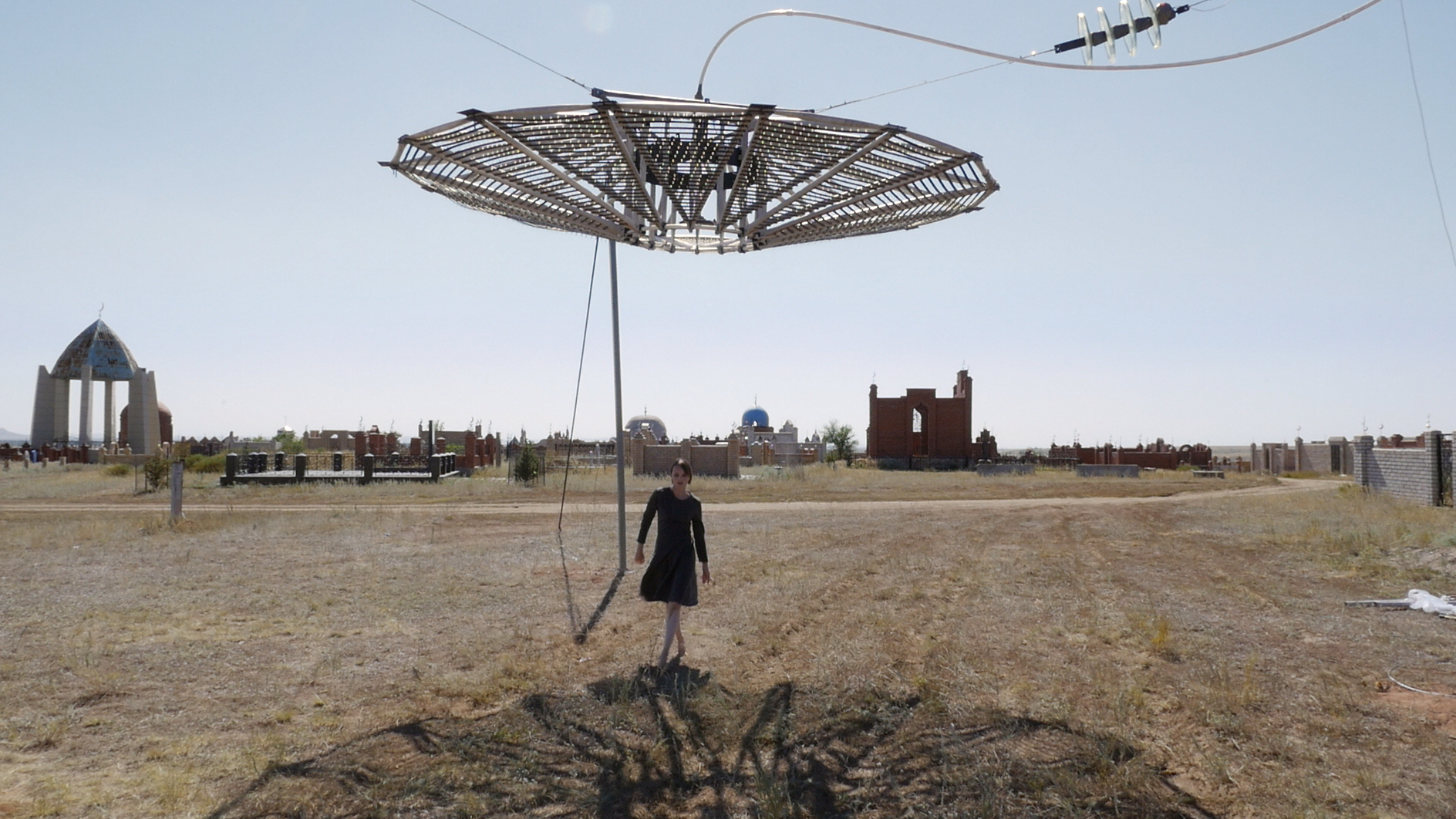
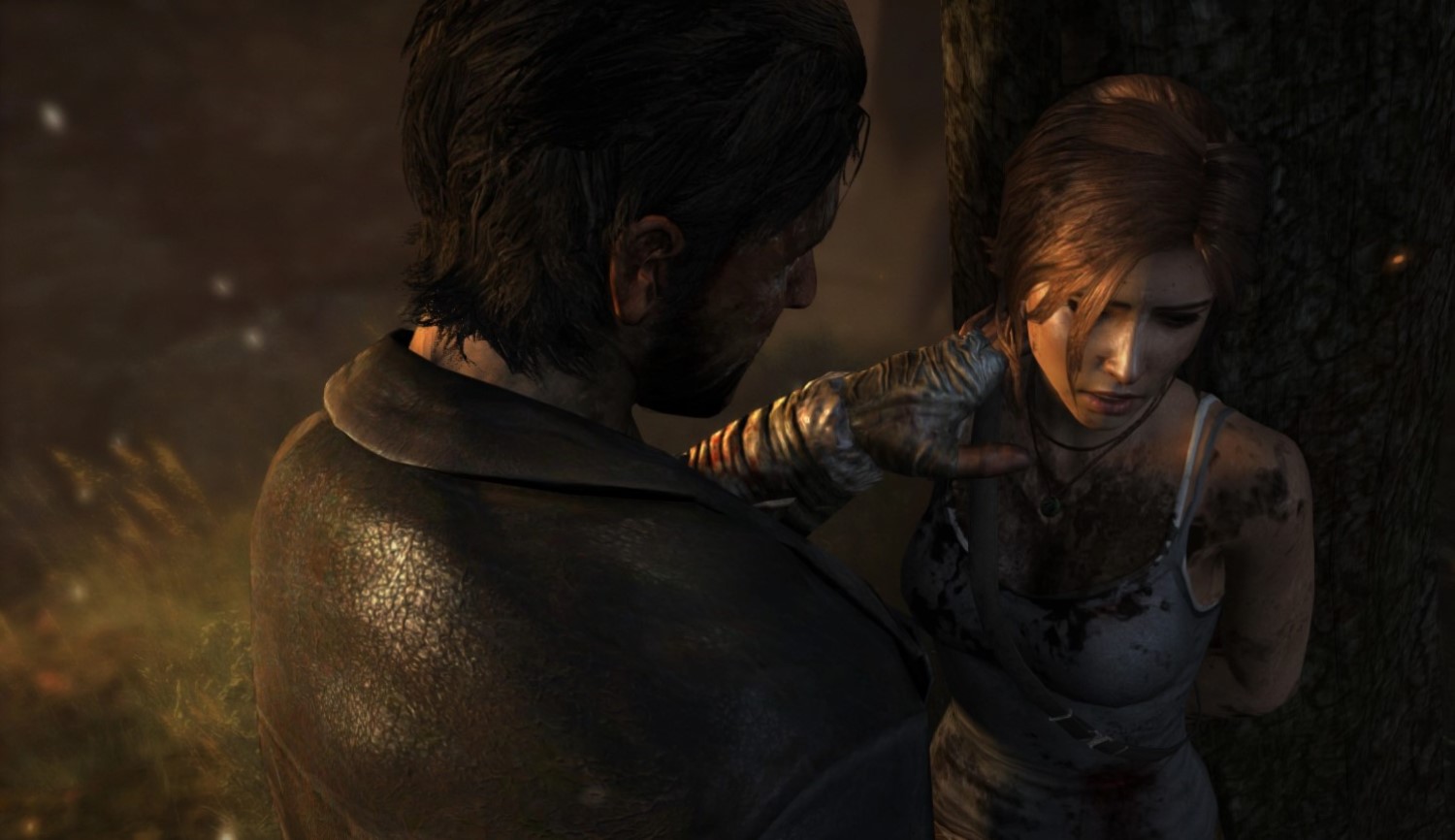
 SFRA Review