Andor. Dir. Tony Gilroy. Lucasfilm and Disney+, 2025.
Version 1.0.0
The second and final season of Andor confirms the radical ambitions of Tony Gilroy’s project. As Jamie Woodcock anticipated in his review of Season 1 (vol. 53, no. 3), the series covers the five-year span from the Ferrix uprising (S1, E12) leading up to the events of Rogue One. In order to do so, season 2 adopts an unusual temporal structure: twelve episodes arranged into four discrete narrative blocks each set a year apart. The compressed form reflects the show’s curtailed production history: originally conceived as a five-season arc, with each season chronicling one year in Cassian Andor’s life before the events of Rogue One, the project was ultimately reduced to two seasons. The result is a dense, deliberately segmented narrative that forces temporal leaps rather than the slow-burn immersion characteristic of Season 1. But both effect and scope grant several avenues of scholarly interest.
If the first season had already established Andor as the most politically serious entry in the Star Wars franchise, the second pushes further. It stages an even darker account of life under Imperial rule—darker not only in tone but in the domains of violence it is willing to depict. The show represents political violence in its full continuum, including its sexual forms (viewers should be warned particularly about Episode 3, titled “Harvest”). Through the character of Bix Caleen (portrayed by Adria Arjona), it also foregrounds mental health, especially the psychological costs of clandestine life, protracted fear, and revolutionary commitment. One of the season’s most insistent themes is that political resistance always exacts a price: individually, through trauma and loss; collectively, through fragmentation and moral compromise.
Where Star Wars has traditionally handled Imperial oppression metaphorically—allowing audiences to draw analogies to historical or contemporary politics—Andor has seemingly refused this metaphorical distance from Season 1. It dwells on the Empire’s brutality as bureaucratic, economic, and ecological: genocide administered through paperwork; enslavement normalised as labour policy; environmental despoliation rendered systemic. All these aspects are linked by faceless—at times robotised—violence, most evidently depicted in Episode 8, “Who Are You?”.
At the same time, it exposes the relentless pressures on the nascent Rebel Alliance, whether through the grinding search for political legitimacy by Mon Mothma (Genevieve O’Reilly reprising her role) or the perpetual shortage of funds and safe havens. As Variety’s Alison Herman has noted, “without the Jedi—and the binary conception of the Force that comes with them—as major players, Andor is never black-and-white in its morality, even as the show is clear-eyed about the larger issues at play” (2025). This refusal of moral simplification is one of the season’s principal achievements and it is perhaps best embodied by the relationship between Dedra Meero (portrayed by Denise Gough) and Syril Karn (Kyle Soller reprising his role from Season 1).
For scholarly readers, the season opens several avenues of inquiry. Its fusion of political thriller conventions with a rigorously constructed science-fictional environment offers a strong case study in genre hybridisation and in the elasticity of the Star Wars narrative frame. The central character failing their task when faced with systems much larger than them has echoes of the noir genre (see Episode 9, “Welcome to the rebellion”). At the same time, the series is explicit in its treatment of politics: it conceptualises revolutionary praxis, authoritarian governance, institutional violence, and the ethical ambiguities of insurgency with a clarity rarely seen in franchise television. For scholars interested in the politics of the image—and the image of politics—Andor is particularly fertile material. Composition, lighting, architecture, and visual rhythm become tools for articulating forms of control, surveillance, clandestinity, and collective mobilisation; the show’s visuality constructs political meaning rather than merely representing it, marking Season 2 as an especially rich site for work at the intersection of aesthetics, ideology, and media studies. The season also enlarges the material culture of the Star Wars universe, extending down to culinary practices (notably in Episode 3, “Harvest”), domestic environments, and labour ecologies, and demonstrating how detailed production design can anchor a politics of world-building. Finally, with Brandon Roberts taking over scoring duties from Nicholas Britell, the series deepens its sonic register, making Andor a valuable corpus for scholars of music and sound in science fiction.
Season 2 confirms the show as a rare intervention in the Disney era of Star Wars: one that uses franchise infrastructure to stage a rigorous, sometimes disquieting meditation on resistance, domination, and the costs of political agency.
Giaime Lazzari is a PhD candidate in French Literature at Trinity College Dublin, recipient of the Claude and Vincenette Pichois Research Award (2024-2028). His research focuses on language and space in francophone and anglophone science fictions.
The Silent Planet. Dir. Jeffrey St. Jules, Canada, 2024.
Version 1.0.0
Screened at the 48th São Paulo International Film Festival in Brazil, The Silent Planet (2024), written and directed by Jeffrey St. Jules, provokes an intriguing nostalgia, whether literal or in Jamesonian terms. The film begins by evoking 1970s audiovisual aesthetics, from the off-screen TV news explaining the visit of an alien species, the Oeians, to the anachronistic visuals perceivable in the very “texture” of the initial scenes, the costumes of the characters, and the settings throughout the entire film.
The Silent Planet relies on a generally good, yet not entirely original, idea: that of a remote landscape serving as an (alien) setting for an intimate tale about loneliness, guilt, vengeance, and regret involving two extremely vulnerable human characters. Unfortunately, even a very good idea is not always enough to sustain an entire feature-length film, but the experience provided by The Silent Planet is worth watching.
Divided into five acts, The Silent Planet tells the story of two characters sentenced to life in prison on a distant, eerie planet. Initially, there is only one prisoner, Theodore (Elias Koteas), who serves his time alone, living in a tiny life-supporting pod and forced to extract a mysterious ore from the prison-planet. The ore is sent to Earth, though its true nature and value are not detailed in the film. Theodore is monitored by a device implanted in his chest. The first act begins with Theodore learning he is close to death from the body monitor. He cuts his chest, removes the device, buries it and keeps working, refusing to accept his condition. As time goes by, the aging Theodore suffers from the decay of his body due to working for so long in such unhealthy conditions. He also struggles against the decay of his mind in absolute solitude: the memories of his past on Earth become murkier as Theodore approaches the end of his life. Strongly attached to his memories of his beloved wife Mona, Theodore believes he was unfairly convicted of the murder of his wife’s lover—or at least that is the past he has created for himself.
Aware of Theodore’s final days, the Earth-based authorities dispatch a replacement to the prison planet—another condemned worker. This is the young Niyya (Briana Middleton), whose arrival in her pod on the planet’s surface is carefully observed by Theodore. Niyya was raised by an Oeian family on Earth. The Oeians are an alien species declared “illegals” and hunted by human authorities. After witnessing her Oeian parents’ murder by the military, Niyya joins a rebel group, is captured as an Oeian sympathizer, and exiled to the prison planet.
Theodore, the planet’s current prisoner, fears being replaced and breaks into Niyya’s pod to steal her Oeian journal. While he craves companionship, Niyya wants solitude. Both have lost faith in humanity through their experiences. Theodore eventually wins her over, leading to the film’s most powerful sequence: a dinner scene where they finally have a profound conversation over whisky and marijuana.
A generational and cultural clash emerges—Theodore longs for lost human relationships while Niyya identifies with the Oeians and feels betrayed by humans. However, Theodore reveals uncertainty about his identity, suggesting he might be Nathan Flanagan, the soldier who killed Niyya’s family. This revelation triggers paranoia in both characters, who come to believe only one can survive. Their suspicions lead to a violent skirmish across the silent planet’s landscape.
According to Jeffrey St. Jules, the story derives from a fantasy he had as a child: to live alone and unbothered on another planet. But the film also revolves around the long-lasting debate over humans’ frequent incapacity to communicate effectively, often failing to reach agreement or even accept otherness. In that sense, it is significant that the film employs variation in point of view at crucial moments. For instance, Niyya’s arrival scene is first shown from Theodore’s perspective in the first act and from Niyya’s perspective in the second act. By shifting the characters’ perspectives, St. Jules essentially creates not just points-of-views but “filters” for the audience—a cinematographic way of angling or distancing each character from the other. In doing so, he creates a communication disruption for the viewer that serves to echo the characters’ selfsame miscommunication. As they are “imprisoned” by their unique point-of-view so too is the viewer drawn into this imprisonment through the shifting angles. The Silent Planet may stand as a metaphor for countless conflicts in human history, up to the present day. The anachronistic undertone of the film, with its frequent nod to television culture (Theodore enjoys TIA, an artificial intelligence that creates a sitcom based on his life, and he watches it repeatedly), in addition to the apparently purposefully outdated design of the props and settings, evokes a series of 1970s/80s science fiction films from various countries. These include, but are not limited to Nicholas Roeg’s The Man Who Fell to Earth (1976), Douglas Trumbull’s Silent Running (1972), Richard Viktorov’s Per Aspera Ad Astra (1981), and first and foremost, Solaris—the 1968 TV adaptation of Stanislaw Lem’s 1961 eponymous novel more than Andrei Tarkovsky’s 1972 version. Geoff Murphy’s This Quiet Earth (1985), as well as Wolfgang Petersen’s Enemy Mine (1985), are also in this patchwork of films evoked by The Silent Planet. In lieu of Solaris’s sentient ocean, Jeffrey St. Jules creates an interesting purple haze or pinkish fog that drifts across the surface of the silent planet periodically to capture the humans’ memories and repeat their voices from the past. When this purple haze engulfs Theodore or Niyya, they can hear echoes from past prisoners.
In the fourth act, Theodore/Nathan and Niyya have an altercation, where she eventually attacks the old man, believing he is the murderer of her Oeian family. The fight takes place in a third “homepod,” one whose past inhabitant had committed suicide by hanging. Cryptic words and drawings are on the pod’s walls, some of which turn out to be identical to ones that Koteas himself had said or heard. It becomes evident, upon this discovery, that the two main characters are not the first to experience that terrible isolation and communication disruption. Instead, several previous prisoners (maybe generations of previous prisoners) coped with similar and even worse scenarios. The third homepod casts light on the main theme being developed throughout: that isolation and solitude blurs the lines between memories and “generations” of individuals. Indeed, all the dialogues in The Silent Planet seem to serve this purpose: the human mind and memories are tricky, and what we tell ourselves has more to do with our mental state and traumas than objective past reality. The “untrustworthy” Theodore, plagued by doubts, ends up guiding Niyya in her self-discovering journey. Memories are deceiving, words are pale, and perhaps only action and attitudes are truly meaningful.
According to producer Andrew Bronfman, the budget for The Silent Planet was nearly 4 million USD. This is low for a Western SF film. In addition to the intended anachronistic, nostalgic atmosphere of Jeffrey St. Jules’s film, The Silent Planet may have also been inspired by the aesthetics of lo-fi sci-fi and “Science Fiction from the South” or a more encompassing aesthetic often associated with SF from the Global South. Regardless, lo-fi sci-fi is clearly present in the minimal, understated visual effects that are overshadowed by the drama and clever story, based on solid plot points and twists.
The story does not unfold entirely fluently, and some blind spots might be perceived in the script or the film’s world-building. For instance: while Theodore’s initial attitudes and fears are comprehensible (he is dying, he is an outcast, he is somewhat delusional), the same does not apply to Niyya. Yes, she is traumatized by humans, but some flashback scenes show her in a close, even romantic relationship with another human. While she may have been betrayed by that woman (an undercover police agent), it remains unclear why there is no empathy or stronger inclination toward cooperation, given that she and Theodore are the only two prisoners left to die on this faraway planet. We must adopt a metaphoric mode of viewing to fully enjoy The Silent Planet, since there is no symmetry between the characters nor a more coherent assemblage of their motivations and psychological nuances (Koteas’s character is better designed in this sense, paradoxically because he is more mysterious and also due to his performance). In sum, all characters’ attitudes, fears, and actions are ultimately justified by humanity’s incapacity to truly communicate, as well as an innate instinct to suspect other people and resist cooperation. Viewed positively, the film can be understood as criticizing this feature of human nature, by testing hypotheses on how human a person can remain in solitude for years, living a miserable life on a faraway planet.
While the critique of the characters’ arcs and psychologies may reveal asymmetries that could annoy some discerning spectators, there is nothing inherently problematic about metaphor or allegory. Excessive criticism of characters’ psychology and verisimilitude, or cause-and-effect in storytelling, is oftentimes not only controversial and culture-dependent, but also sterile and pointless. However, concerning The Silent Planet, problems arise when spectators must constantly shift between metaphoric and literal viewing. In metaphoric mode, there is no reason to be too demanding of answers and explanations. But when viewing literally, verisimilitude and questions concerning cause and effect become important. For instance, the ore mined on that planet is seemingly useless, likely a MacGuffin or something to fill a gap. If it were valuable, there would be no reason to send just one or two prisoners to manually extract such a rare commodity. Why not settle an entire penal colony with drones, robot-miners, and nanorobots to optimize extraction? Here we may return to allegory and view Theodore as Sisyphus. When Niyya speaks to “Jane,” the “Alexa” of that world, while picking a meal, the meal comes packed inside an ordinary “take-away box” made of aluminum foil, with a cardboard lid. Since there’s no hint of agriculture or food production on that planet, do the prisoners get these supplies from Earth? The stowed meals, like take-away or in-flight meals, distracted and annoyed me somewhat. While most actions, props, and scenes are justifiable given the anachronistic world-building, lo-fi sci-fi, and low-budget, independent film style, some details could have been better designed or developed.
As it becomes evident, Niyya was sent to the planet to replace Theodore once Earth authorities knew about his health condition. Within days, perhaps hours, she lands on the planet. In the film’s final moments, Theodore dies with Niyya’s monitoring device implanted in his body so that she can live undetected. One may wonder how naive this futuristic monitoring technology is since we already have better tracking methods today. If it is so easy to tamper with the monitoring technology, why don’t prisoners do the same upon arrival? Simply get rid of the chest monitor and enjoy freedom.
Questions remain such as whether Niyya is “free” since Theodore died in her place. However, Earth authorities could easily uncover the trick, and she cannot escape from the planet since the transportation pods are launched into space immediately after arrival. Moreover, a substitute for Niyya is expected soon. The planet’s rarefied atmosphere makes exploration difficult. The film ends with Niyya on top of a mountain, looking at the horizon, with final credits rolling without showing an expected pod entering the atmosphere.
I find myself wondering what The Silent Planet’s impact might have been had Jeffrey St. Jules decided not to show the Oeians at all. We would have to imagine them completely. As a fan of the off-screen tradition (e.g. Jacques Tourneur’s 1942 Cat People, or Joseph Lewis’s 1950 Gun Crazy), I wonder about keeping the aliens unseen, perhaps only revealed in the small picture shown by Niyya to Theodore. Like the “overlords” in Arthur C. Clarke’s 1953 Childhood’s End, the off-screen—particularly in SF and horror—is often preferable. Yet I can understand if Jeffrey St. Jules intended to pay homage to 1950s SF films like Edgar G. Ulmer’s The Man from Planet X (1951), Joseph M. Newman’s This Island Earth (1955), or Jack Arnold’s Creature from the Black Lagoon (1954).
Nevertheless, The Silent Planet seduces through the nostalgia it provokes—from Elias Koteas’s presence (an actor familiar to veteran spectators), to the intricate web of SF evoked by St. Jules’s cinematic storytelling, visual style, and evident cinephilia. For spectators open to intimate, minimalist SF cinema, unpretentious and not entirely concerned with cohesion and coherence in world-building, The Silent Planet may signal renewed interest in SF scripts with good ideas that escape the tired infantilization of most American blockbusters, even though several points (especially world-building, settings and props) could have been better developed. Not presumptuous, hermetic, or overplayed, The Silent Planet delivers valuable “ore” to its spectator: humanist SF creatively based on atmosphere and good acting. From a scholarly perspective, the film offers significant value for academic study in two key areas: first, as a compelling case study in how contemporary low-budget science fiction cinema engages with and recontextualizes the aesthetic traditions of 1970s-80s SF filmmaking, demonstrating how nostalgia functions as both narrative device and visual strategy. Second, the film provides rich material for examining the persistent themes of communication failure and otherness in science fiction, particularly how the genre continues to use isolated settings and cross-cultural encounters to interrogate fundamental questions about human nature and xenophobia in an era of increasing global tensions.
Alfredo Suppia is an Associate Professor at the Universidade Estadual de Campinas (Unicamp), Brazil, where he teaches film history and theory, science fiction cinema and new media art at the Department of Multimeios, Media and Communications. He also coordinates the Graduate Program in Social Sciences at the same university.
James Gunn, director. Superman, Warner Bros. Pictures, 2025.
Version 1.0.0
The opening shot of James Gunn’s Superman, after an on-screen line of text informs us that “3 MINUTES AGO, Superman lost a battle for the first time”, sees the titular hero (David Corenswet) plummet from the sky and crash headlong into the Arctic ice—beaten, bloodied, and nearly unconscious. He escapes succumbing to his wounds only by being unceremoniously dragged by his cape to the Fortress of Solitude by his rambunctious superpowered dog Krypto. This jarring in media res rupture of the traditional superheroic cinematic narrative (which arcs from origin to early victories to temporary defeat before concluding in a final triumph) signifies a change in focus for the new DC Universe (DCU) away from its predecessor, the Zach Snyder-helmed DC Expanded Universe (DCEU). Whereas the latter was criticized by many for treating Superman as a solemn near-god presenting as a stern Savior-type figure in a dark, desolate world, James Gunn, instead, concentrates much of his efforts on Superman’s inherent vulnerabilities and imperfections.
These facets of Superman’s character tie him to his instinctive and learned human nature and values that he consistently champions. The DCEU characterized Superman as less of an active being and more as a phenomenon, a living incident or event descending from hostile outer space—an outside force that happens to Earth—whereas the Superman of Gunn’s new film is a flawed but striving figure that operates within and as one of the denizens of his adopted planet. That conflict over definitions is the central debate at the heart of Superman—what does this superbeing imbued with immense power to destroy or to preserve, represent to the people living in his shadow? Certainly Superman is not the first product of superhero media to analyze the relationship of the hero to the world around them, but few connect the hero’s nature to his fallibility, the possibility of his losing or failing, as explicitly as the film does.
Superman is frequently overmatched in the film, facing savage attacks at the hands of the “Hammer of Boravia,” the armored metahuman sent to attack Metropolis; by “Ultraman,” the mysterious villain serving as the muscle behind Lex Luthor (Nicholas Hoult)’s brain; by Luthor’s other powered warrior “The Engineer” (Maria Gabriela de Faria); and by the morally compromised Kryptonite-wielding Rex Mason/Metamorpho (Anthony Carrigan). The film embraces the immediacy and brutality of violence, but less, perhaps for mere spectacle and more to signify Kal-El’s own embrace of the human condition. The fighting and failing and getting up and trying again is a function of being mortal, a process in which Kal willingly engages and considers a fundamental component of his own nature. In a climactic exchange with Luthor—a man fundamentally defined by his opposition to Superman as a deadly and otherworldly threat to the planet, who has just referred to Superman as “you piece of shit alien!”—Kal fervently declares,
I’m as human as anyone! I love, I get scared. I wake up every morning, and despite not knowing what to do, I put one foot in front of the other, and I try to make the best choices that I can. I screw up all the time. But that is being human, and that’s my greatest strength. And someday, I hope, for the sake of the world, you understand that it’s yours too.
Kal is an active entity of constructed choices, the most significant of these being his willingness to embrace the importance and sanctity of life everywhere. Bedrock compassion for the least of humanity is not new to the image of Superman—we’ve seen it touchingly deployed in such comic book instances as Grant Morrison’s 2005-2008 All-Star Superman series—but Gunn’s film centers it as the core of his heroic identity more than any other example in live-action Superman cinema. That aspect of Superman’s heroism has been much better served in animation—both Superman: The Animated Series (1996-2000) and My Adventures with Superman (2023-present) understand it well.
That choice to serve life defines Superman. During a battle with a kaiju in downtown Metropolis sent by Luthor as a distraction, Kal not only rescues people from imminent death, but rushes a squirrel out of harm’s way and, while nearly being crushed underfoot, gently shoos a wandering dog away from the area. His double-pronged strategy to save the lives of both people and the monster itself is a direct contrast to the actions of the corporate-sponsored superheroic Justice Gang: Guy Gardner/Green Lantern (Nathan Fillion), Hawkgirl (Isabela Merced), and Mister Terrific (Edi Gathegi), who kill the creature without compunction over Kal’s frustrated objections. Later on in the film, following Krypto’s abduction by Luthor’s forces, Kal turns himself in to the authorities in hopes of being taken wherever Krypto is being held. When Lois Lane (Rachel Brosnahan) says, “It’s just a dog”, Kal responds in the most compassionately human way possible: “I know, and he’s not even a very good one. But he’s alone, and probably scared.” Notably, Superman’s first in person confrontation with Luthor has him smashing into the latter’s office, enraged, demanding, “Where’s the dog?”
Kal’s concern for the smallfolk of the world gives him added ethical dimensionality lacking in the Justice Gang or in, say, his darker DCEU counterpart. That added complexity, ironically enough, derives from Kal’s simple core belief in the inherent goodness of people, and gives both his character and the film an emotional brightness lacking in much superhero media. When Kal protests to Lois at one point that he is, in fact, “punk rock”, an amused Lois laughingly denies this, and then says, “My point is, I question everything and everyone. You trust everyone and think everyone you’ve ever met is, like… beautiful.” Kal responds, “Maybe that’s the real punk rock.” At bottom, Superman is a hero whose mightiest powers are the implementation of radical kindness and his unshakable belief in its efficacy. If we accept that superheroes are symbolic instruments for the ethics we want to see valued in the world, presenting the most powerful being on Earth—a man with godlike abilities—as dedicated to the idea that everyone has worth and deserves compassion, is a beautifully revolutionary statement.
And there is great emotional resonance in Kal’s desire to live his values in the face of real-world political complexities, impractical as that choice might be. A powerful moment in the film comes when Lois conducts a mock interview with Superman concerning his recent intervention in an international conflict, noting his illegal entry into a sovereign country on his own, without the approval of or even consulting with US authorities, and de facto acting as a representative of the United States on foreign soil. A frustrated Superman can only exclaim, “I wasn’t representing anyone except for me! And, and, and… doing good… People were going to die!”The exchange cuts to the heart of the contradiction inherent to the image of the superhero as they operate in the world—what responsibilities do superpowered beings owe to human-established systems of law and sovereignty? And do those systems take priority over the preservation of life? These kinds of questions have relevance in the real world, where around the world we see increasing interest in extra-governmental and communal ways of living that value life over commerce, justice over laws, and the dignity of peoples over profit.
Kal’s worldview, one in which each life is deemed of value, is diametrically opposed to Luthor, a rat’s nest of ego and envy enmeshed in a system of hypocritical objectification. Objectification, because Luthor—like any number of real-world politicians and CEOs—regards his fellow humans as tools to be used in the furtherance of his own ambitions. He claims to be acting in the name of humanity, yet his machinations produce catastrophic levels of death and destruction. His obsession with subduing the “threat” of Superman leads him to ruthlessly shoot an innocent man in the head right in front of the captive hero. Luthor maintains a private prison within a pocket universe, in which he has jailed not only criminals but his personal enemies (including ex-girlfriends) and political prisoners that various governments want hidden away beyond the reach of the media and accountability. His master plan involves manipulating the nation of Boravia into invading and occupying the neighboring country of Jarhanpur—risking untold casualties—all to maneuver Superman into his control. Luthor views Superman in the DCEU model, as an alien thing who only inspires fear and (for Luthor, a much greater sin) feelings of weakness and inferiority. At one point he rants,
I can’t stand the metahumans, but he’s so much worse. Super… ‘man.’ He’s not a man. He’s an it. A thing with a cocky grin and a stupid outfit, that’s somehow become the focal point of the entire world’s conversation. Nothing’s felt right since he showed up.
Luthor is a supervillain, at base, because he conflates his own superiority with that of humanity, sublimating the latter into the former, whereas Kal is a hero because he chooses to sublimate his alien self into embracing humanity and making weakness its own strength.
The film is ultimately grounded on the power of choice. Kal became Superman in large part because he was inspired by the legacy of his birth parents on Krypton. Partway through the film, however, Kal faces an existential crisis in learning from a recording by his birth parents that he was sent to Earth not to serve humanity but to rule it and preserve his Kryptonian heritage by taking multiple human wives and spreading his genetic code. This revelation turns much of the planet against Kal—assisted by Luthor’s manipulation of social media to target him—but the doubts raised in Kal himself do even more damage. Devastated that his drive to do good sprang from a lie, Kal renews his confidence in his mission after a conversation with his adoptive father Jonathan Kent (Pruitt Taylor Vance), who reminds Kal that his choices and his actions are what define him, not the choices made for him. What Kal wanted the message from his parents to mean, says more about his character and his goodness than the message itself. Heroism is a conscious decision, the film argues, and Kal’s embrace of radical kindness represents the choice that each of us need to make as we move through the unequal and unjust world around us. In this, Superman reinforces the multidimensional nature of the superhero image and its function as a reflection of the values that we cherish most in ourselves and with each other.
Jeremy Brett is an archivist and librarian at Cushing Memorial Library & Archives, Texas A&M University. There he serves as Curator of the Science Fiction & Fantasy Research Collection, one of the largest of its kind in the world. Both his M.A. (History) and his M.L.S. (Library Science) were obtained at the University of Maryland, College Park. His professional interests include science fiction, fan studies, and the intersection of libraries and social justice.
Scardapane, Dario, Corman, Matt, and Ord, Chris, creators. Daredevil: Born Again, Season 1. Marvel Studios, 2025.
Version 1.0.0
The themes of Marvel’s restarted gritty superhero show Daredevil are made manifest (indeed, quite unsubtle) in the opening credits, which depict (to the strains of contemplative theme music that quickly grow pensive) the crumbling away of the old—images of Daredevil’s iconic horned helmet, Daredevil’s criminal archenemy Wilson Fisk/Kingpin (Vincent D’Onofrio), Lady Justice, the steeple of Matt Murdock’s beloved church, a sign for ‘Nelson Murdock Page, Attorneys at Law’, the Statue of Liberty—only for the fragments to reassemble into a reborn Matt /Daredevil (Charlie Cox). What was, now passes away as both Murdock and Fisk look to reidentify themselves both within and beyond traditional systems of governance and control.
But the central theme of the show is not merely resurrection, but instead a revolving and returnto the same point of existential origin as multiple characters attempt to remodel themselves but find, in doing so, that efforts at personal transformation often expose the adamantine and unchanging core of one’s character, motivations, desires, and vulnerabilities. For both Murdock and Fisk, a jarring act of personal violence inspires a personal reexamination of themselves and the worlds in which they have traditionally moved. In Fisk’s case, it is his having been betrayed and shot in the face by his protégé/ward at the conclusion of Marvel’s Echo (2024) —that trauma caused him to temporarily abandon his criminal career and his beloved wife Vanessa (Ayelet Zurer), rethink his life’s priorities, and inspire an ultimately warped and misguided need to “serve the city”. For Matt, this process begins in the opening minutes of the show, where his best friend and law partner Foggy Nelson (Elden Henson) is gunned down in front of their mutual friend Karen Page (Deborah Ann Woll) by Matt’s old adversary Benjamin Poindexter/Bullseye (Wilson Bethel). An enraged Matt, clad as Daredevil, violates the traditional superhero code of restraint by deliberately tossing Bullseye off a roof and nearly killing him. It is a moment of existential crisis for Matt, a character already known (as a practicing Catholic) for his frequent wrestling with guilt and angst. Gone from this series is the lighter and more comical, yellow-suited Matt viewers enjoyed briefly in 2022’s She-Hulk: Attorney at Law.
The series asks us to consider whether we can truly escape our deepest motivations, the things that drive us to be who and what we are. In the remaking, do we reveal our actual selves? Both Matt and Fisk want to be ‘better’ than they were, but whether they can in such an imperfect world that both produces and rewards moral compromises becomes the through-line theme. Master criminal Fisk runs for and becomes the Mayor of New York City, and he does so at least in part with the sincere motivation of helping the city he loves to reach a place of safety, citing the growing presence of masked vigilantes as a symptom of NYC’s illness. No one in this political climate will miss the relevance of a felon gaining vast political power in part by finding scapegoats to blame for a supposed breakdown in law and order. But though Fisk may act with legitimate concern for the city’s welfare, he also manipulates the city’s government and political processes to serve not only his and Vanessa’s criminal empire but his internalized hatred for Daredevil and, by extension, all costumed heroes who work outside the system and therefore his iron control. Fisk’s innate need to dominate curdles his better impulses and by the series’ conclusion drives him to overtly license police brutality, stage a societal breakdown via cutting power to the entire city, and finally, declare martial law. As he notes to Vanessa, “I ran to serve the city, but…opportunities present themselves.”
Matt’s attempts to change are even more profound. His near-murder of Bullseye and the tragedy of Foggy’s death drives him to permanently eschew his Daredevil identity in favor of pursuing justice through more traditional means, within the established legal system. But the system is profoundly broken, prompting an inquiry into the role of superheroes in a world where the justice and political systems can be so corrupted that they no longer serve the innocent. Captain America: Civil War (2016) introduced, through the Sokovia Accords, the idea that powerful people might require institutional control to prevent mass casualties and destruction caused by their actions, but Daredevil: Born Again suggests a necessary role for extralegal protectors when the law or system fails. Of course that role is integral to the image of the superhero and has been at least since Superman’s debut in 1938, but it takes on a special significance now, at this moment in US history when social and economic inequality are at dismayingly high levels and police violence criminally so—should people with powers circumvent established avenues and become, as Fisk calls them, purposely using a loaded term, “vigilantes”? Matt over the course of the series returns to this question, at first fervently denying the necessity for a masked hero when the legal system he serves as an attorney is in place, but by the conclusion this denial has crumbled. The series shows audiences the reality of an unequal system in a powerful scene in episode 4 (“Sic Semper Systema”) between Matt and one of his indigent clients, who is angered by the unfairness of a structure that grinds up people like him and denies them dignity, autonomy, or fair chances at rehabilitation. And late in the series Matt returns to being Daredevil in order to stop serial killer Muse (Hunter Doohan), a murderer that Fisk’s cops cannot find. But the primary reason Matt finally accepts his inner drive to do right and protect the people of his city is Fisk’s weaponizing of corrupt elements of the NYPD by creating an Anti-Vigilante Task Force—ostensibly to capture criminals like Muse—that answers only to him. People sworn to serve justice willingly bow instead to corrupt power and give themselves over to Fisk in exchange for free reign to exercise brutality against perceived enemies of Fisk, the city, and themselves. Crises bring forth the heroes needed to fight them.
The ‘street-level’ Marvel heroes have almost always been set apart from the world-threatening or cosmic levels of narrative that dominate the MCU; though Matt during Daredevil’s Netflix years fought his share of faceless ninjas and a mystically resurrected Elektra, his most savage battles have always been against the ruthless and violent criminal appetites of the all-too-human Fisk. That dynamic is characteristic of the MCU in general, where the most chilling and emotionally complex villains have never been Thanos, or the Kree, or Cassandra Nova, but human beings with familiar motives such as Fisk, Kilgrave, “Cottonmouth” Stokes, or Erik Killmonger—people who operate (to a degree) on our own recognizable and relatable levels and utilize casual, up-close cruelty against fellow humans. That sort of ground-level intimacy also provides additional dimensionality to another of Daredevil’s concerns: the moral complexities of heroism. Like anything else, heroism can be a corrupting and corruptible idea: a number of NYPD cops in the series wear the skull insignia of their ironic folk hero the murderous Frank Castle/Punisher (Jon Bernthal), seeing Frank as a legend and a role model for stopping crime. These heroes of their own stories commit vicious assaults—including the shooting of masked hero Hector Alaya/White Tiger (Kamar de los Reyes)—even in the face of Frank’s clear and utter contempt for them. Despite Matt’s offering that Frank might truly be of service to people by saving lives, Frank knows himself and his broken nature, and is not nor ever will be a hero. But tragically, other people desiring to free their inner savagery will always find models on which to imprint, and can always weave false heroism out of selfishness.
The ‘street-level’ Marvel heroes have almost always been set apart from the world-threatening or cosmic levels of narrative that dominate the MCU; though Matt during Daredevil’s Netflix years fought his share of faceless ninjas and a mystically resurrected Elektra, his most savage battles have always been against the ruthless and violent criminal appetites of the all-too-human Fisk. That dynamic is characteristic of the MCU in general, where the most chilling and emotionally complex villains have never been Thanos, or the Kree, or Cassandra Nova, but human beings with familiar motives such as Fisk, Kilgrave, “Cottonmouth” Stokes, or Erik Killmonger—people who operate (to a degree) on our own recognizable and relatable levels and utilize casual, up-close cruelty against fellow humans. That sort of ground-level intimacy also provides additional dimensionality to another of Daredevil’s concerns: the moral complexities of heroism. Like anything else, heroism can be a corrupting and corruptible idea: a number of NYPD cops in the series wear the skull insignia of their ironic folk hero the murderous Frank Castle/Punisher (Jon Bernthal), seeing Frank as a legend and a role model for stopping crime. These heroes of their own stories commit vicious assaults—including the shooting of masked hero Hector Alaya/White Tiger (Kamar de los Reyes)—even in the face of Frank’s clear and utter contempt for them. Despite Matt’s offering that Frank might truly be of service to people by saving lives, Frank knows himself and his broken nature, and is not nor ever will be a hero. But tragically, other people desiring to free their inner savagery will always find models on which to imprint, and can always weave false heroism out of selfishness.
But more positively, Matt reframes the concept of hero to center it not around a single costumed figure, but as a collective popular phenomenon. At the series’ conclusion, with Fisk exercising draconian control over the city, Matt decides not to attack him in traditional superheroic fashion and, rather, begins to raise an army of resistance among the ordinary people of New York. Instead of a lone hero, he embodies a call to mass heroic action. As he says in his final words of the season,
I can’t see my city. But I can feel it. The system isn’t working. And it’s rotten. Corrupt. But this is our city. Not his. And we can take it back, together. The weak… The strong… All of us… Resist. Rebel. Rebuild. Because we are the city. Without fear.
Daredevil: Born Again argues that heroism is not, indeed, should not, be the province of a single powered individual (nor even an elite team like the Avengers), but the collective effort of people working together to resist corrupt institutions and to change them to better suit the societies those institutions were created to serve. One important detail of the series is that, more so than any other MCU production, it is marked by frequent shots of New York City streets and people, with frequent commenting (via the website reporting of BB Urich [Genneya Walton]) by New Yorkers about Fisk, Daredevil, and their own fears about/faith in the city. New York City and the people who make it what it is are equal participants in the series with Matt, Fisk, or anyone else. There is a popular sentiment in Daredevil that we have not yet seen in the MCU, and that sentiment and its concomitant social relevance gives the series particular significance. It should prove a profitable source of study for scholars studying the evolution of the superhero trope or those interested in the ways in which popular culture reflects and amplifies the concerns of our time.
Jeremy Brett is an archivist and librarian at Cushing Memorial Library & Archives, Texas A&M University. There he serves as Curator of the Science Fiction & Fantasy Research Collection, one of the largest of its kind in the world. Both his M.A. (History) and his M.L.S. (Library Science) were obtained at the University of Maryland, College Park. His professional interests include science fiction, fan studies, and the intersection of libraries and social justice.
Adapted for television by Diane Ademu-John and Alison Schapker. Legendary Television / HBO, 2024..
Version 1.0.0
Legendary Television / HBO’s Dune: Prophecy series expands the universe created by Frank Herbert with a prequel set 10,000 years before the events of the first Dune novel, focusing on the origins of the Bene Gesserit sisterhood during the tumultuous period following the Butlerian Jihad. Based on Sisterhood of Dune (2012) by Brian Herbert and Kevin J. Anderson (who also serve as executive producers) and positioned as a prequel to Denis Villeneuve’s Dune movies (2021 and 2024), the series explores the early machinations of the enigmatic order of women whose genetic breeding program and political manoeuvring would eventually shape the destiny of the known universe. The series’ narrative centers on sisters and Reverend Mothers Valya and Tula Harkonnen (played by Emily Watson and Olivia Williams) and their involvement in the nascent Bene Gesserit, tracing how personal vendettas and political necessities transform into the cold, calculated practices that define the sisterhood in Herbert’s original novels. In the course of season one’s six episodes, Valya and Tula must overcome social and supernatural forces that threaten the stability and the political prominence of the Sisterhood: the growing suspicions of Emperor Javicco Corrino (interpreted by Mark Strong), the rift between the Harkonnens and the other Great Houses, the haunting violent legacy of the Sisterhood itself, and a new enemy who seeks to oust them from the Imperium (played by Desmond Hart).
Dune: Prophecy enters a television landscape already transformed by prestige science-fiction series based on classics of the genre, such as Isaac Asimov’s Foundation (Apple TV, 2021) and Liu Cixin’s 3 Body Problem (Netflix, 2024). However, the series positions itself not merely as a television adaptation, as it was the case for previous Syfy-produced series Frank Herbert’s Dune (2000)and Frank Herbert’s Children of Dune (2003), but an expansion of the Dune universe itself by focusing on aspects only alluded to in the original hexalogy as well as in the current cinematic revival of Dune. For this reason, Prophecy is in itself a valuable addition for any scholar working on the Dune universe, particularly when inscribing it in a multimedia framework. Spawning licensed game boards (six, as of 2025), video games (six, as of 2025), graphic novels adaptations and expansions, Dune has established itself as one of the most relevant and successful multimedia franchises in decades, particularly after 2021 Villeneuve’s adaptation, and Dune: Prophecy offers new material to consolidate and expand it.
Within the Dune world, Prophecy’s positioning is particularly significant as the narrative navigates the aftermath of the Butlerian Jihad—humanity’s rebellion against thinking machines and a foundational event in Herbert’s universe. The seriescontextualises the rise of the Sisterhood precisely as the human response to the banning of the rebellious intelligent machines: faced with the impossibility of omniscience and objectivity, and thus of avoiding deceptions and intrigues, the Great Houses of the Imperium employ—or deploy—the Sisterhood-trained Reverend Mothers as ‘truthsayers’ capable of discerning truth from lies. This post-Butlerian setting allows the series to explore themes of technological ethics and societal reconstruction that may resonate with contemporary political and societal anxieties around artificial intelligence as well as broad epistemological concerns on the relationship between truth, post-truth, and political power.
What distinguishes Dune: Prophecy within the science fiction contemporary television landscape is its deliberate centering of female power structures within an feudal interstellar society. Where Herbert’s original novels presented the Bene Gesserit as an already-established force operating in the shadows of a patriarchal empire, Prophecy examines the sisterhood’s formation as a response to and subversion of male-dominated, patrilineal power structures. The series thereby engages with feminist science fiction traditions established by SF writers like Ursula K. Le Guin, Octavia Butler, Élisabeth Vonarburg, and Margaret Atwood, who, among others, similarly explored how female-centered societies might evolve within—or against—patriarchal frameworks. However, rather than creating a straightforward utopian feminist vision, Prophecy portrays the early Bene Gesserit as morally complex, violent and manipulative, and their accumulation of power as driven more by survival necessity than by altruistic concerns for humanity’s future. In this perspective, the show’s exploration of the Bene Gesserit’s evolution offers particularly rich ground for academic analysis of gender and power in SF.
The Bene Gesserit occupies a paradoxical position, wielding immense influence through their manipulation of bloodlines and politics while simultaneously presenting themselves as merely ‘servants’ (truthsayers) to the great houses. Prophecy illuminates the origins of this strategic self-effacement, depicting how the early sisterhood learns to transform apparent submission into covert domination precisely by being able to recognise—and to effectuate—the distinction between truth and lies. Within this scheme, the series’ portrayal of the tension between the exclusively patrilineal noble houses and the matriarchal Sisterhood raises questions about how women’s bodies and minds become sites of political contestation, and how genetic lineage intersects with gender in determining authority.
Dune: Prophecy is not without flaws. At times, for instance, it sacrifices Herbert’s philosophical depth for more conventional television tropes, such as plainly explanatory dialogues, unnecessary cliffhangers, overuse of dramatic music to signal suspense. At times, it also feels burdened with overly ambitious, almost cinematic, shots. While this provides visual continuity with Denis Villeneuve’s Dune films, Prophecy seems to resort to these techniques in order to complement its lack of interest for material environments the characters inhabit. Where Herbert’s original work meticulously detailed the ecological systems and physical environments of planets like Arrakis, Prophecy offers sweeping cosmic vistas without grounding them in tangible planetary contexts. This environmental disconnection represents a significant departure from one of the most distinctive aspects of Herbert’s universe, where human politics are inextricably shaped by their material surroundings. The series also exhibits the fundamental tension between expositional density and narrative propulsion that characterizes adaptations of Herbert’s work—an inherent challenge when translating the encyclopaedic world-building of the Dune universe into the temporal constraints and visual grammar of episodic television.
Giaime Lazzari is a translator and a PhD candidate in French Literature at Trinity College Dublin, recipient of the Claude and Vincenette Pichois Research Award (2024-2028). His research focuses on language and space in the works of David Bunch, Joanna Russ, Daniel Drode, and Monique Wittig. He previously earned joint Master’s degrees from University of Bologna and Université Paris-Nanterre, with a dissertation on ecology and geophilosophy in Frank Herbert’s Dune. His professional experience includes serving as Junior Lecturer at Université Paris 8 Vincennes—Saint Denis.
Schaeffer, Jac, creator. Agatha All Along, Marvel Studios, 2024.
Version 1.0.0
At the heart of Agatha All Along (and its 2021 prequel WandaVision) lies the fundamental truth that the worlds we construct for ourselves are often the ones that help us manage, or indeed survive the most unbearable situations. These psychological constructions allow us spaces in which we confront our fears and our traumas, develop and play out scenarios for overcoming the myriad stresses that weigh heavy on us—our guilt, our grief, our anger—and sometimes create fantasy lives marked by denial and avoidance. These alternate realities can be seductive beyond the telling of it, allowing occupation of a happy, hopeful imaginative space; at the same time, though, they can hinder emotional growth and our acceptance of, among other things, the ultimate experience that is death. The process is natural enough in the real world, but these fantasies take on monstrous and destructive new significance when fueled by magical abilities that transform the psychological interior into the physical exterior. In WandaVision we watched the dehumanizing consequences of this transmutation when out of bottomless grief and anger Wanda Maximoff/Scarlet Witch (Elizabeth Olsen) warped an entire town into a bubble of domestic sitcom-shaped fairyland in which she could live a life with her (non-deceased) husband Vision (Paul Bettany) and the two sons she created from nothing. In the process, she enslaved the innocent people of Westview, New Jersey, by puppeting them into characters for Wanda’s new life. The series was an extended meditation on the damage that grief and unexamined psychological suffering can render on both trauma’s original victim and those around her. And among the lessons that WandaVision offered was the time-honored warning about the corruptive nature of great power, especially when power begins to perceive and use people as mere tools.
Agatha All Along continues along the road that its predecessor series first laid down, this time centering on WandaVision’s secondary antagonist, legendary witch Agatha Harkness (Kathryn Hahn), and her own struggles against the tragedies of her past. At series opening, Agatha is still in Westview, living out the fading ramifications of Wanda’s now-distorted spell that imprisoned Agatha in a false past and identity—she believes herself a hard-nosed cop in a small-town police procedural. When a mysterious red-haired woman turns up dead and snarky FBI agent Rio Vidal (Aubrey Plaza) arrives on the scene dropping enigmatic hints about the truth of Agatha’s situation (early on she asks Agatha, “Is this really how you see yourself?” and later, “Do you remember why you hate me?”), Agatha’s constructed world begins to crack. The appearance of a young man (Joe Locke) asking questions about Agatha and chanting in Latin becomes the catalyst for the walls to finally collapse and Agatha to reassert her true identity in the real Westview (albeit now without her Wanda-removed witching powers). Now back in control of her faculties, Agatha discovers at once that Rio is a sister witch (and former lover) come for revenge against her, that she is being pursued by the children of the Salem witches Agatha murdered in 1693, and that the young man (whom she names “Teen”) has his own agenda requiring Agatha’s assistance. Teen seeks the legendary Witches’ Road, a magical pathway that promises the fulfilment of one’s deepest desires to whomever can survive the Road’s various trials. Both Agatha and Teen are in search of power, something Teen senses he had but is now missing and something that Agatha knows she once wielded. The two bring together a coven, each member marked by a desire for liberation from their own traumatic pasts: Divination Witch Lilia Calderu (Patti LuPone), Potions Witch Jen Kale (Sasheer Zamata), and Protector Witch Alice Wu-Gulliver (Ali Ahn), with Rio herself eventually joining as the coven’s Green Witch. In addition, Agatha dragoons her Westview neighbor and fellow victim of Wanda’s magic Sharon Davis (Debra Jo Rupp) along for the perilous journey as the original Green Witch, an early sign of Agatha’s willingness to pitilessly use other people for her own selfish ends. The Road is conjured (via a haunting ballad which recurs throughout the series), and the trials begin.
Much of the series centers on the inability to control the chaos that imbues the world, and a concomitant desire for agency. Just as Wanda—scarred not only by Vision’s death but by those deaths she accidentally caused during her tenure as an Avenger—temporarily wrested the order of time and space into an emotionally satisfying frame, so Agatha throughout the series continually struggles for control, or at least be seen to have the semblance of control. She frequently and expertly deploys sarcastic confidence as a defense mechanism when her agency comes into question, even during her own Road-caused trial as she dares to taunt the spirits that come to punish her for her transgressions. Agatha is a figure determined to shape her own destiny—she accomplished this (gaining a noxious reputation among her sister witches) by serially murdering her covens and stealing their power. These killings were accomplished through Agatha’s careful, elaborate construction of a psychologically seductive narrative. In short, we learn Agatha invented the concept of the Witches’ Road, its generative ballad, its rituals and trials, and its possibilities for revelation and recovery—all framed as an ancient mythos to attract desirous witches into her trap. Over time her invention assumes an imaginative life of its own and becomes a fundamental part of witch lore despite its objective nonexistence—the emotional and psychological significance of story and its value as a mechanism of human control are key facets of the series (as they were in WandaVision).
The power of narrative formation reveals itself with the existence of the Road; Agatha is as shocked as the rest of the coven, whom she planned to murder for their magic, to see her fictional creation appear from nothing as the ballad is sung (though she covers her surprise as part of her elaborate façade of omniscience). A competing story has suddenly emerged to force Agatha’s own into reality, as “Teen” turns out to be Wanda’s conjured son Billy, whose spirit entered the body of a recently dead teenager. Billy struggles throughout the series with his own identity, being unsure who he really is; that identity crisis fuels the recognition of the vast power of creation he inherited from his mother. Seduced by the idea of the Road, he unconsciously wills it into existence and sets the coven upon the path but within this larger storyworld there emerges the potential for individual autonomy. We see Lilia, Jen, and Alice face down their own past regrets and fears: for Lilia, the trauma of the death of her coven and loved ones; for Jen, the binding that separated her from her magic; and for Alice, the generational curse that destroyed her mother. In the process, each witch gains a certain measure of liberation—unlike the toxic, dehumanizing stories of Wanda and Agatha, in which people are merely characters to be cast or instruments to be used, Billy’s more empathic narrative allows for agency and emotional progress. For example, at one point, an angry Billy protests to Agatha that coven members should look out for one another and that “people can’t be replaced.” Agatha replies characteristically and drily, “Can’t they?”
The root of Agatha’s nonchalance about others and ease of taking life, however, lies, as did Wanda’s actions, in deeply buried personal tragedy. Flashbacks show how in the 1750s Agatha had a son, Nicholas (Abel Lysenko), with whose six years of life she bargained for with Death (revealed to be Rio’s true identity). At Nicholas’ death, he had begun to work on Agatha’s conscience, proposing another way to live beside preying on other witches. A traumatized Agatha then develops the mythology of the Road as a psychological defense for her toxic grief, with tragic results. However, Agatha’s exposure to Billy’s capability for compassion and empathy, as well as her fatal embrace by Rio and subsequent reemergence as a ghost, marks a potential change in Agatha’s behavior and the ways in which she chooses to see the world. Agatha All Along proposes that the true power of narrative construction lies in its malleability and the many ways that stories and their narrators may exchange toxicity and trauma for emotional and personal renewal. It is no coincidence that the series centers on witches—a class of people marked by traditions of undergoing harsh injury, suffering, misogyny, and persecution—hoping to inject into this troubled historical legacy the potential for hope, escape, and recognition.
Jeremy Brett is a librarian at Cushing Memorial Library & Archives, where he is, among other things, the Curator of the Science Fiction & Fantasy Research Collection. He has also worked at the University of Iowa, the University of Wisconsin-Milwaukee, the National Archives and Records Administration-Pacific Region, and the Wisconsin Historical Society. He received his MLS and his MA in History from the University of Maryland – College Park in 1999. His professional interests include science fiction, fan studies, and the intersection of libraries and social justice.
Once Upon A Time In The Future: 2121. Dir. Altın, Serpil. Serpil Altın Film. 2022.
Version 1.0.0
Once Upon A Time In The Future: 2121 (2121), directed by Serpil Altın—regarded as the first woman science fiction director in Turkey—presents a poignant exploration of a future Earth devastated by environmental decay and extreme scarcity. Against the backdrop of an uninhabitable surface, survivors reside in underground colonies ruled by the dystopian “Young Administration,” a government implementing “The Scarcity Laws” that demand the removal of older generations to ensure resources for the young. Through the lives of a family faced with an impending birth, Altın’s film probes complex questions around generational sacrifice, ethical choices, and survival under eco-authoritarianism. This ambitious Turkish science fiction film balances thematic weight with visual sophistication, marking a pivotal moment for both Turkish cinema and sustainable filmmaking in the science fiction genre.
The story centers on Zeynep (Selen Öztürk) and her husband Onur (Çağdaş Onur Öztürk), who live in one of these underground colonies with their young daughter (Sukeyna Kılıç) and Onur’s elderly mother (Ayşenil Şamlıoğlu). Zeynep is pregnant with their second child, a development that brings both joy and tension, as the government’s population control measures become more invasive and threatening. The family’s young daughter adds another layer to their struggle, embodying innocence and hope amid a repressive environment, and forming a strong bond with her grandmother despite the regime’s harsh policies.
As Zeynep’s pregnancy progresses, the family is forced to confront the brutal laws that threaten the grandmother’s life, torn between obedience to the regime and their commitment to one another. The young girl’s presence intensifies the family’s determination to preserve their unity, even as they weigh the risks of protecting their elderly matriarch in a world that has sacrificed empathy for survival. Together, they must navigate a series of moral and existential choices, challenging the regime’s authority in their bid to protect each other.
Serpil Altın explains her motivations behind 2121, calling it a “documentary of the future” that reflects her mounting concerns over humanity’s environmental impact. Inspired by questions from her daughter about the planet’s future, Altın wrote the script alongside Korhan Uğur during the pandemic, using the atmosphere of that period to shape the film’s narrative. Altın discusses her motivation for creating 2121, focusing on climate change concerns and her desire to explore what the world might look like 100 years from now. As Turkey’s first “green film,” it reflects Altın’s commitment to eco-friendly practices on set, such as minimizing waste and using sustainable materials, recycled materials, digital scripts, and energy-efficient lighting to minimize environmental impact. Altın also addresses the film’s themes of generational power dynamics and the hypothetical scenario of young people ruling over older generations. Her commitment aligns with industry trends where environmentalism influences both the film’s message and its production methods, showcasing how cinema can promote sustainability in practice as well as theme.
One of the film’s most unique features is its focus on generational sacrifice, an idea that is uncommon even within dystopian sci-fi. This adds a provocative ethical layer, inviting comparisons to Kazuo Ishiguro’s Never Let Me Go (2005), where characters’ lives are valued solely for their utility. By requiring that older generations sacrifice their lives for the younger, Altın critiques not only environmental neglect but also the tendency to devalue past generations’ wisdom, positioning her narrative as a reflection on the costs of generational inequality. The family’s decision to bring new life into a world that prohibits it represents a hopeful defiance, asserting a belief in resilience and humanity’s will to persist.
In 2121, environmental collapse and authoritarian control echo themes found in Logan’s Run (Michael Anderson, 1976) and THX 1138 (George Lucas, 1971). In Logan’s Run, citizens are sacrificed at age 30 to maintain balance; both it and 2121 explore resistance against population control, however, 2121 emphasizes the moral dilemmas of a family’s choice to protect their elderly, underscoring intergenerational bonds. Similarly, THX 1138 portrays a sterile, authoritarian society suppressing individual emotions, and 2121 shows a government that places control over compassion, threatening family unity. Together, these films critique dehumanizing societies prioritizing order and resource management over human connection, but 2121 uniquely explores the resilience of family loyalty and ethical decision-making in a world where survival clashes with empathy.
The film’s choice to center on a family facing generational conflict under authoritarian policies places it in the lineage of dystopian stories like Children of Men (Alfonso Cuarón, 2006) and the Hunger Games (2012-2015) film series, yet with the intimacy and moral complexity of Turkish storytelling. While the Mad Max (1979-2024) franchise and Snowpiercer (Bong Joon Ho, 2013) portray futuristic societies with intense action sequences to reflect chaos and scarcity, 2121 conveys urgency and tension through subtle, measured pacing and human connection. This juxtaposition between global sci-fi conventions and Turkish sociopolitical motifs adds a fresh dimension to the genre. Altın’s approach is introspective and intimate, framing the conflict around human values and familial bonds, allowing the film to resonate emotionally while exploring grand ecological themes.
For Turkish cinema, this film is a milestone, demonstrating how local filmmakers can address global issues through culturally resonant narratives. 2121 has garnered multiple awards and screenings at international film festivals, furthering its impact globally. Additionally, the film has attracted the interest of an American distributor, signaling its resonance beyond Turkish borders and contributing to the international conversation on climate change and human resilience. In doing so, 2121 not only carves a path for Turkish eco-science fiction but also calls on viewers to reconsider their relationship with nature, urging us to act before today’s hypothetical dystopias become tomorrow’s realities. 2121 takes an activist stance, critiquing contemporary society’s detachment from nature and reliance on unsustainable consumption. Altın’s willingness to confront these issues brings Turkish cinema into a more active role in the global eco-cinema movement. 2121 doesn’t shy away from tough questions, but instead cloaks them in the ironic echo of “Happy Lives”—a haunting slogan that serves as both warning and lament for a future we can still change.
—. “Serpil Altın – Director of Once Upon a Time in the Future: 2121.” Interview by Davide Abbatescianni. Cineuropa, 18 Sep 2023. https://cineuropa.org/en/interview/449988/. Accessed 16 Oct 2024.
Özgür Çalışkan, Ph.D., is an associate professor in Anadolu University’s Department of Cinema and Television. He completed his BA in Cinema and Television at Bahçeşehir University, his MA in Digital Culture at the University of Jyvaskyla, and his Ph.D. at Anadolu University. He has participated in exchange programs at the University of Ulster and the University of Ljubljana and served as a guest lecturer at the Polytechnic University of Valencia. An Executive Board member of the Eskişehir International Film Festival, Çalışkan publishes and lectures on cinematic narrative, screenwriting, film genres, science fiction, identity, and digital technologies.
Rose Engine. Signalis. Humble Games and PLAYISM, 2022.
Version 1.0.0
“Achtung. Achtung.” The first line of Rose Engine’s 2022 science fiction survival horror game Signalis isa distress signal repeating a single German word over an interstellar radio, flashing over a dramatic glitching red CRT screen. The opening is an obvious deep space horror trope meant to denote the game’s membership in the lineage of other SF and survival horrors such as Alien Isolation, Dead Space, and Silent Hill. However, it’s not long before this genre allusion is betrayed. Signalis proves through its referential prowess and surrealist mechanics as not only an SF survival horror, but a psychological text that challenges the delineations of genre, and engages with transmedia cultural, historical and philosophical discourses on the nature of personhood, death, and memory. The game opens with the player journeying out from a crash-landed spaceship into a strange deep hole in the ground where a nightmarish mining facility spirals impossibly deep into the earth and the laws of time and space become distant memories. As the title cards flash, so do lines from Chambers’ The King in Yellow,a shocking rendition of Bocklin’s painting The Isle of the Dead, and several lines from Lovecraft’s The Festival. The message the developers telegraph with this intensely convoluted yet beautifully referential introduction to the game world is clear: this game is not what you think it is. Achtung. Achtung. Danger. Danger.
Signalis is set in a dystopian future where humanity has spread across the solar system under totalitarian militaristic rule. Even in deep space, the long tendrils of fascism exert their crushing grip on the last vestiges of humanity and its replicas. The player follows one such “Replika”, Elster, an android created using edited memories copied from a long-dead human. The plot follows her on a nightmarish cosmic journey after her ship, the Penrose, crashes and its only other inhabitant goes missing. Most of the game takes place in the strange underground government mining facility stuck in a dreamy time loop that shifts to reflect the repressed memories of Elster, her originator, and her missing friend. The developers have woven themes of identity and memory throughout the game world and many have speculated the plot itself is a living memory, an existential crisis, or the melting dreams of an artificial being whose concept of ‘self’ is coming apart at the seams. The possibilities for exploring the notion of personhood are plentiful, and Signalis knowingly presents these themes at the forefront of its game world inviting speculation meant both to enhance the player’s experience and to incite a deeper consideration of the genre themes at play in games centered on artificial protagonists.
The game’s survival horror mechanics are directly reminiscent of Resident Evil and Silent Hill—a limited 6-item inventory, a stash box only found in safe rooms, a sprawling puzzle-filled map requiring continuous doubling back and detailed exploration, and enemies that deal high damage compared to your very limited health. Stealth, exploration, survival and purposeful confusion are the driving forces of play. These classic mechanics weave expertly alongside a story of surreal complexity that requires a constant re-exploration of the environment, and a science fiction setting that blurs the lines between the possible and the otherworldly. In the era of infinite inventories and mechanics that encourage larger and larger amounts of time spent in menu optimizing status over in world exploration, Signalis’restrictive inventory system is a refreshing callback that forces the player to stay in the scary enthralling game world and boosts rather than breaks immersion.
Interspersed throughout the story are interactions with literary works that at first glance seem out of place in the science fiction world, but which upon further examination serve to situate the game within genre traditions of cosmic horror and the problematic nature of some of the genre’s more historically prominent creators. It is likely no coincidence that the player is invited into the deeply fascist dystopia of the mining colony with the words of HP Lovecraft and Robert W. Chambers, authors whose prominence gave rise to the cosmic horror and weird fiction literary genres, and who in equal measure were notorious racists who wielded white privilege to enable their rise to literary fame. Working in cosmic horror has troubled creators for generations: how do we reconcile these deeply problematic authors with their contributions to the genre and all it offers as a space for creative and horrific expression? Here Signalis gives us an engagement with cosmic horror that future developers should note—treating these ‘fathers’ of cosmic horror as themselves horrors. Where it could have been easier to make cursory allusions to the cosmic horror genre in the setting of Signalis using similarly aligned aesthetic tropes, Rose Engine has made a concerted effort to engage with the authors themselves in the game world, framing these works as fascist, hellish, and problematic objects that trouble the player, protagonist, and NPCs alike.
Mechanically, Signalis is definitively retro-tech. From the HUD and UI to the limited player mechanics, to the creation of a gameworld where analogue technology dominates over digital, the metallic and plastic clicking and clacking of mechanical interaction are a key element of the game’s design and play well with the game’s use of low poly modeling. Although the game is cross-platform, it is best described as a PlayStation 2 throwback. This is common in many retro-style survival horror AA games that seek to emulate the Silent Hill and Resident Evil style, Another comparable release much like Signalis in its recreation of this look and feel is Headware Game’s 2024 Hollowbody which likewise relies on a limited inventory, low poly modeling, fixed camera angles and surreal horror elements. Even though the developers likely wanted to re-create the visuals of the bygone era of 2000s survival horror, the graphics of the game also speak to the developers’ ability to write an intriguing story. Where modern AAA releases rely on ‘good graphics’ and impressive animation, Signalis pulls off the same impact with low graphics fidelity and uncomplicated mechanics. What keeps the player entranced in this retro space is the strength of how the retro technical look plays into the expertly crafted storyline and atmosphere, which is only enhanced, rather than undercut, by the limited and vintage quality graphics. This is perhaps one of the reasons for the current appeal of the early 2000s or Playstation 2 era survival horrors: a desire to push back against the supplanting of well-written and truly surrealist stories with impressive visuals as seen in the AAA industry, and instead return to narrative-driven horrors that work with what technologies are available to tell compelling stories.
Perhaps most impactfully is Signalis’engagement with an array of musings and histories related to death and dying. Arguably, we can consider the entire story as one drawn-out death played and replayed through memory in the mind of two decaying minds clinging to each other in the depths of space. More specifically, within the facility, death constructs both the environment and actions of the NPCs—Replikas wander the halls in a zombie-like state, molding, and slowly crumbling. The walls of the facility bleed and turn from metal to cancerous flesh over time. It’s no coincidence the developers chose Japanese as one of the dominant surviving cultures and languages in their distant society, with their depiction of mass death in the facility often showing ashen shadows of bodies imprinted on walls and floors, calling to mind the tragic imagery of victims of nuclear fallout. Bocklin’s Isle of the Dead is not only a painting found throughout the game, but makes its way into the game as a location visited by the player, inviting us to situate the game alongside the symbolist tradition of depicting death through lenses of oblivion and the surreal. At one point the player explores a literal hellscape, and encounters rituals of death and funeral whose names are long lost. Through and through death lingers over the entirety of Signalis,keeping it unrelentingly on the mind of the player.
Signalis is a challenging game, not only because its mechanics are unforgiving, its puzzles challenging, and its environment deeply upsetting, but because it demands a level of analytical, philosophical and historical engagement the player may not anticipate from a Playstation 2 homage. However, Rose Engine’s work is worthy of playing, and replaying, as it offers multiple points of entry for analytical engagement and is unique in both the survival horror and science fiction genres. Overall, Signalis is a work that delivers on the key elements of both deep space horror and retro survival horrors, is an expert return to 2000s aesthetics and modes of play, and layers in unique and compelling storytelling that touches on themes of personhood, death, and memory in completely unexpected and deeply evocative ways.
Bryn Shaffer is a graduate student at the University of British Columbia School of Information, where she holds a SSHRC award for her thesis work on information video games, and is an ALA Spectrum BIPOC scholar. Her research interests are in video games, HCI, horror and capitalism and labour studies. When she isn’t writing her thesis, she’s writing video game reviews and essays for the internet, or playing video games with her cat Salem.
Yamazaki, Takashi, director. Godzilla Minus One, Toho Studios, 2023.
Version 1.0.0
Scholar and translator Jeffrey Angles notes in his recent translation of the original Shigeru Kayama Godzilla novellas, that Kayama used the massive, irradiated reptile as a driver for suggesting that “humanitarian values, especially when coming from the postwar generation, will be what Japan needs,to guide the country through its ethical dilemmas” (Angles, 215) That observation could just as equally apply to the 2023 film (and most recent franchise reboot) Godzilla Minus One, in which the realization of ethical commitment to a new future, to a new generation, is brought to bear by a traumatized and shaken population emerging from complete catastrophe. Godzilla’s use as a metaphor for the atomic bombings of Japan and the existential fear of nuclear war is already well-known, but much of the genius of Godzilla Minus One is an explicit coupling of that to the deep trauma produced by the American firebombing of Tokyo and immense conventional destruction levied against a civilian population in the course of war. The people of Tokyo near the end of World War II did not experience an atomic attack, but no less than the populations of Hiroshima and Nagasaki suffered incomprehensible loss and the end of everything and everyone they knew, believed, and loved. It is in the aftermath of that loss that Godzilla arises. The 37th film in the Godzilla franchise—and the 33rd by Toho Studios—Godzilla Minus One strips away layers of backstory, titanic battles between kaiju, and many of the traditional Godzilla tropes, to create an ultimately simpler story of character and the ways in which humans not only process and learn to cope with shock, but transform it into constructive, beneficial action.
Both the trauma of war and the human failure war signifies suffuse the entire film, centered on pilot Shikishima Koichi (Kamiki Ryunosuke). At the very end of the war, Koichi lands his plane at a garrison on distant Odo Island, claiming technical problems. Mechanic Tachibana Sosaku (Aoki Munetaka) quickly realizes Koichi’s true motive—to avoid fatal service as a kamikaze; a realist, Tachibana supports Koichi’s choice to live in a world when the outcome of the war is patently obvious. But war, in the person of Godzilla, is not done with Koichi; the monster rampages through the garrison, which is decimated after Koichi freezes in terror and fails to turn his plane’s gun on Godzilla. Once Godzilla departs, only Koichi and a wounded, enraged Tachibana are left amid the bodies and the wreckage. In an example of Godzilla’s ongoing metaphorical shifting throughout the film (and, indeed, the franchise), Koichi cannot escape modern war’s destruction, which knows no limit and which indiscriminately creates victims, no matter how hard he tries or how remote the location to which he flees. War, like a giant monster, is relentless in its progress. The film, interestingly, presents a monstrous and deadly Godzilla from the outset—the 1946 US atomic bomb tests that in previous incarnations of the franchise create Godzilla, here simply amplify him, both in size and destructive capability (i.e., his radioactive heat ray); Godzilla Minus One suggests that war to a great extent is only a continual evolution towards greater and greater harm, but that in some form has always been a part of the human experience.
Koichi returns to a devastated, defeated Tokyo, carrying only the family photographs of the men on Odo for whose deaths he feels responsible. The scenes set in the ruins of the city are powerful in their presentation—a once-thriving capital is a place of shacks, shanties, food lines, and the ghosts and memories of the countless dead slaughtered in the firebombings. The dead include both Koichi’s parents and the children of his embittered neighbor Sumiko (Ando Sakura), who rages at Koichi for not having sacrificed himself as his duty to try and save the nation. Her reaction only compounds his survivor’s guilt, yet he discovers a motive for living when he encounters Oishi Noriko (Hamabe Minami), a young woman, left utterly alone, carrying baby Akiko (played by Nagatani Sae as a toddler) through the ruined streets. By 1946, the three have become a found family (overcoming Koichi’s terror of closeness and its concomitant risk of loss), imagining the possibility of hope and renewal, both on the personal and the national level. The strength of human connection proves powerful even in the face of existential oblivion—when Koichi tells Noriko he has obtained risky work on a ramshackle boat charged with destroying American mines, she grows furious and terrified, ordering Koichi not to get himself killed.
The minesweeping crew represents different elements of the postwar Japanese generation— Koichi, the traumatized veteran, wracked by guilt-ridden nightmares of Godzilla; Noda Kenji (Yoshioka Hidetaka), the former weapons designer wrapped in his own introspective remembrances; Akitsu (Sasaki Kuranosuke), the cynical captain bitter at his government’s history of using and silencing the common man; and Mizushima (Yamada Yuki), too young to have seen service but anxious to prove himself. Akitsu counterbalances Mizushima’s youthful enthusiasm, telling him at one point, “To have never gone to war is something to be proud of.” Following reports of Godzilla sinking American ships, the crew are posted with orders to stall the monster until naval reinforcements arrive. Their encounter with Godzilla reveals his new mutations—increased size, deadly heat ray, and his regenerative powers that let him rapidly recover from both naval artillery and a mine jammed into his mouth and then exploded by gunfire from Koichi. But this defeat proves a turning moment for Koichi in his journey towards redemption. In a desperate plea to Noriko that he be able to “put all this to rest”—his guilt at being alive at all—she responds, “Everyone who survived the war is meant to live.” Koichi gains newfound purpose and determination; he is reconstructing himself just as the Japanese nation has begun to reconstruct itself after the war, just as the Ginza district of Tokyo, where Noriko now works, is busily rebuilding itself. A new and horrific attack by Godzilla on the city, though, levels much of Ginza, kills 30,000 people, and apparently kills Noriko just after she pushes Koichi out of the way of the blast wave caused by Godzilla’s heat ray. Koichi is left with a renewed sense of trauma and guilt, castigating himself for daring to try and live when his redemption remains unfulfilled.
At this point, the film begins to center on a collective popular effort to stop Godzilla from returning to Tokyo; the struggles of the Japanese people as a whole become signified by a concerted endeavor by men at the lower end of the social order to save their nation. Unlike previous Godzilla films, there are no labs full of white-coated scientists developing high-tech solutions to eliminate the monster, only Noda putting together a desperate plan to entrap Godzilla with freon gas and destroy him via rapid underwater descent and reascension. There are no masses of generals and other officers in war rooms and bunkers planning stratagems and massive responses, only a single former naval captain, Hotta (Tanaka Miou), asking for former naval personnel as volunteers to steer four disarmed destroyers into harm’s way. There is no help coming from either the Japanese government, which has no resources to muster, or the occupying Americans, who fear military action might antagonize the Soviets—in this, Tokyo’s desperate hour, victory and the end of years of prostration will come through the mutual efforts of ordinary men—navy veterans, engineers, and tugboat crews. Years of feeling betrayed by a neglectful and abusive government, and without agency in a newborn world, are to be superseded by a chance at preserving, not taking, life. As Noda says to the assembled group of volunteers the night before the attack,
Come to think of it, this country has treated life far too cheaply. Poorly armored tanks. Poor supply chains resulting in half of all deaths from starvation and disease. Fighter planes built without ejection seats and finally, kamikaze and suicide attacks. That’s why this time, I’d take pride in a citizen led effort that sacrifices no lives at all! This next battle is not one waged to the death, but a battle to live for the future.
The hope of a better world becomes the engine driving the war against Godzilla, who represents at this one moment both the endlessly destructive past and the potentially devastating atomic future —Godzilla Minus One posits that the legacy of the one and the looming danger of the other are effectively countered only by a common human effort, one that looks unselfishly to what might come after. As the volunteers, including Noda and Akitsu, board their ships, Mizushima—enthusiastic to help—is purposely left behind; over Mizushima’s protests, Akitsu mutters, “We leave you the future.” Stopping Godzilla has transformed from the simple killing of a monster into, instead, a dramatic step in the process of Japanese societal rebirth and restructuring, and another progression towards exorcising the trauma of war. It is an emotionally resonant return to the original postwar ethos of the Godzilla saga –a turn away from the frequent positioning in the series of Godzilla as Japan’s protector rather than its destroyer and back towards his symbolic image as the terrible power of war and nuclear destruction. (The film also, I note, supplies a psychological complexity and thematic value absent from the recent American “Monsterverse’ Godzilla series, which would rather ape traditional disaster movies and add unnecessary backstories than confront the real human traumas and costs inherent to Godzilla.)
Koichi also finds in this battle his own restoration, and an end to his crippling guilt. He pilots a late-war experimental fighter to lure Godzilla into position in Sagami Bay—the plane is repaired by Tachibana, one of the ghosts of Koichi’s past, reconciliation with whom is vital to Koichi’s healing process. And before Godzilla can use his heat ray to eliminate the volunteer fleet, Koichi flies the bomb-filled plane directly into Godzilla’s mouth, destroying him from the inside. He survives because Tachibana had installed an ejector seat, demanding of Koichi that he must put aside his guilt and live. And so, Koichi does, indeed, live, having given himself, his adopted daughter Akiko, and his nation, a new chance for life. It is telling that the film’s final line of dialogue, from Noriko (who has survived and is in hospital) to Koichi, “Is your war finally over?”, references the psychological struggles that have defined him, his friends, his country, and, indeed, the film as a whole. What Godzilla, a monster whose metaphorical nature has been a fundamental part of the character since his 1954 inception, represents in this impressive and striking film above all is the collective ordeal of the Japanese wartime and postwar experience. That trauma is both a shared experience and shared uniquely by each individual Japanese; much of the strength of the impressive Godzilla Minus One comes from its recognition of the psychological journeys that both societies and individuals take in overcoming guilt and trauma inflicted by the vagaries of catastrophic war.
WORKS CITED
Angles, Jeffrey, translator. Godzilla and Godzilla Raids Again. By Shigeru Kayama, University of Minnesota Press, 2023
Jeremy Brett is a librarian at Cushing Memorial Library & Archives, where he is, among other things, the Curator of the Science Fiction & Fantasy Research Collection. He has also worked at the University of Iowa, the University of Wisconsin-Milwaukee, the National Archives and Records Administration-Pacific Region, and the Wisconsin Historical Society. He received his MLS and his MA in History from the University of Maryland – College Park in 1999. His professional interests include science fiction, fan studies, and the intersection of libraries and social justice.
Review of Guillermo del Toro’s Cabinet of Curiosities
Alice Fulmer
Guillermo del Toro’s Cabinet of Curiosities. Guillermo del Toro. Netflix, October 2022.
Version 1.0.0
In the late 70s-tinged seventh episode of illustrious writer-director and auteur-tastemaker Guillermo del Toro’s Cabinet of Curiosities, “The Viewing”, we are innocuously introduced to the anthology’s thesis. Upon being asked ‘what was the best song you ever heard?’ by his insidious host Lional Lassiter (Peter Weller), comedian Eric Andre’s blaxploitation-esque, funk troubadour character Randall pensively remarks that, “1969. I’m in Greece and I … fall in with these freaks making psychedelic music. One of them played this song one night. Never been recorded, something they knew. It made me nostalgic for things that never happened”. This is also the perspective we are invited to share as an audience—beholden to del Toro’s series of hauntological, liminal spectacles which are scripted, animated, performed, recorded, and or otherwise “things that never happened”
At the helm Cabinet of Curiosities coming from the same director of Cronos (1992) and Pan’s Labyrinth (2006), it should be no great surprise then to see how or why classical motifs collide with Victorian ghosts, microwaveable hot wings, or deep cuts from the 20th century’s speculative fiction and horror to create an anthology rich with anachronistic gestures. These selections range from H.P. Lovecraft (1890-1937), Henry Kuttner (1915-58), and Michael Shea (1946-2014), as well as adaptations (or teleplays thereof) from del Toro himself and contemporaries like Panos Cosmatos and Emily Carroll. This anthology series creates a different dialectic of aesthetics and mores while paying homage to many of del Toro’s formative influences. Perhaps it is for the best that he is not looking through rose-tinted glasses to Lovecraft—tempting as it may be for any fan of horror, sci-fi, and related genres. Instead, the show’s relationship to nostalgia is complicated.
For Randall, nostalgia—whose inception in ancient Greek poetry was characterized as Odysseus’s longing for home—appears in contrast to the German fernweh, “far-sickness”, or in more archaic English, “far woe”. For a horror hound audience this is a devastating conclusion because del Toro’s manipulation of nostalgia and its oppositional forces like fernweh is what not only drives the aesthetic overtures of Cabinet of Curiosities, but uses the audiences’ sentimentality against them. This tension is central to the series. His take on the gothic, macabre, and the monstrous is pointedly different from other anthology series that have been quick to cash in on their own self-referential nostalgic tropes. Ryan Murphy’s American Horror Story, for one, though pioneering in several different ways including a stellar inclusion of LGBTQ+ talent, is guilty of producing seasons and storylines that cannibalize past ones in the name of early 2010’s tumblr nostalgia for the first three seasons. While Cabinet of Curiosities so far seems to just be a standalone season, its internal and nearly randomized structure precludes anything like its immediate predecessors (or future competitors)—one of the shows’ many strengths.
In terms of nostalgia’s embodiment, there is more represented than just the ‘specter’ that Derrida posited from Marx’s sediment in the opening lines of The Communist Manifesto (1848)– —Cabinet of Curiosities presents visceral alternatives. This is seen plainly in “The Autopsy” as well as “The Murmuring”—literally parasitic in the former and neurodivergent ruminations in the latter. The alien forces entering the miner’s bodies in “The Autopsy” need human bodies to demonstrate their vision of humanity’s future. And as the episode crescendos, their argument about their natural embodiment versus the humans they ‘possess’ is as convincing as it is unsentimental. This is not unlike the motion towards the bodies of the dead as resources in “Graveyard Rats” by Masson. In both instances, the script propels the viewer to sympathize. But from overhead in both episodes initially evoked here (or rats underground, for “Graveyard Rats”), nostalgia strikes back. At the climax of “The Autopsy”, Dr. Winters (F. Murray Abraham) reaches for the scalpel just off the exam table and kills the alien inside Allen (Luke Roberts).
Similarly, from overhead in “The Murmuring”, it is only after Claudette’s (Hannah Galway) apparition is carried off by a classic of (folk) horror, a huge flock of birds, that Nancy (Essie Davis) can confront the pushed back grief of the loss of her only child Ava with her husband, Edgar. The grieving has been subdued by them both—and from the onset of the episode the marriage appears both unromantic and anti-nostalgic. Their internal and external grief’s dam is filled given the release of catharsis through the parallel ghost train that Nancy is witness to over the course of the episode, spanning the events of Claudette’s son being drowned and her subsequent suicide. Her husband, however, is not privy to this. Nonetheless, both episodes end optimistically if but on the precipice of confession—the alien plot will be unfoiled from a tape recorder in Dr. Winter’s lab and Nancy wants to talk to Edgar about the feelings surrounding their daughter’s death—and perhaps revive a ghost of their own lifetime: an emotionally open and vulnerable marriage.
Furthermore, Guillermo del Toro’s Cabinet of Curiosities as an anthology series resists easy classification, and the manipulation of nostalgia and fernweh can be argued to operate on an uneasy hauntological fulcrum that even contests the arguments of Fisher. Mark Fisher lamented in his 2012 “What is Hauntology?” that, “The future is always experienced as a haunting: as a virtuality that already impinges on the present, conditioning expectations and motivating cultural production. What hauntological music mourns is less the failure of a future to transpire—the future as actuality—than the disappearance of this effective virtuality” (Fisher, 16). These cultural theories on hauntology are useful to highlight the series’ often contradicting and (not but) multivalent takes on sentimentality and temporality. Consider the second episode, “Graveyard Rats” and the sixth, “Dreams in the Witch House”, and their attitudes to the departed. In the former, the cadavers of the mortuary and those already buried in the nearby cemetery (and their valuable belongings) are bargaining tokens for the intrepid graverobber Masson’s (David Hewlett) conflicting Protestant work ethic and theological guilt: how can a graverobber go to Heaven? If this rhetorical question stands in doubly as a set up for a joke, a punchline may roll out as “He gets buried alive”. His rationalization of graverobbing for profit disrupts the sentimentality around burial within the wider Christian tradition, burying any guilt accrued from religious or scrupulous guilt—a haunting which remains unresolved as he is exhumed in the same grave he dug, eaten alive by rats and discovered sometime later by other graverobbers.
Conversely, “Dreams in the Witch House” has a disruption of the dead that is heavily and/or overly sentimental: researcher Gilman’s (Rupert Grint) teleological drive to ghosts, spirits, séances and other antiqued Spiritualist ephemera is endemic of unresolved trauma over his twin sister’s childhood death. His obsession to re-animate her body becomes the de-animation of his own. It is worth noting that this episode is based on a Lovecraft short story originally a part of the Cthulhu Mythos—an embedded narrative whose inclusion would not fit the scope of this series at all because of the Mythos’ own concepts of continuity. So instead, our protagonist is situated in the 1930’s at the end of the Spiritualist movement. This framing is emblematic of the series writ large, and how it deals with the pernicious afterlives of its socio-cultural subjectivities. This contrasts with Fisher’s conceptions of hauntology (Derrida’s notwithstanding), which necessitate the need for a haunting to come within one’s lifetime.
The Spiritualist movement and its aesthetics no doubt ‘haunt’ our understandings of ghosts and the corporeality (or lack thereof) of the dead in media. Tarot cards, deliberate conjuring of the dead, and uncanny salons, galleries and basements are all in the backdrops of several episodes. This hallmark set of aesthetics is not only showcased in del Toro’s Cabinet of Curiosities, but in contemporary adaptations of media which depict the dead made before the peak of Spiritualism circa the latter half of the 19th century. The “Dreams in the Witch House” not only lampoons the decline of Spiritualism (nearly ‘dead’ by the 1930’s), it dispels that conjuration ‘fixes’ the past or that lofty aims to revive the dead are conducive to the human condition of grief. For our cultural moment that is rife with a renaissance in astrology, tarot, and practices this take is refreshing. Cabinet of Curiosities does not deny the existence of ghosts, hauntings, or even aliens—it does affirm though that there are several approaches, materialist or “Spiritualist”, to how nostalgia is processed as an inhibition or disinhibition for characters like Gilman.
Walter Gilman (Rupert Grint) and Mariana (Tenika Davis) with the tetrapych predicting his death, and the fate of other dead characters. Copyright Netflix, 2022.
From my scholastic methods used to conduct this review, these three episodes—“Lot 36”, “Graveyard Rats”, and “Pickman’s Model”—did not manipulate sentimentality, nostalgia or fernweh effectively and sparingly used the dark, macabre, hyper temporalities and realms that lies at the heart of del Toro’s work. This is evidenced from the episodes’ near-unison clamor on the locus of the archive—be it a storage unit (“Lot 36”), cemetery underground (“Graveyard Rats” or even an art gallery (“Pickman’s Model”)—these are dangerous places that will eat you alive if given the chance. From a theoretical point of view, Fisherian hauntology may offer some potential answers as to how and why the hauntings are constructed and conceived.
Alice Fulmer (she/her) is an MA/PhD student at the University of California, Santa Barbara, educator, and poet. She is pursuing a Medieval Studies emphasis, and planning a prospectus on disability and gender in the Canterbury Tales. Her debut collection Faunalia (2023), is available from Ritona Press. Aside from reviews in SFRA Review, other academic publications include an article on Sir Launfal (c. 1400) in UCLA’s Comitatus. In February 2025, an arts & comedy podcast co-hosted by her and graduate students, Cunterbury, will debut on all major podcasting platforms.

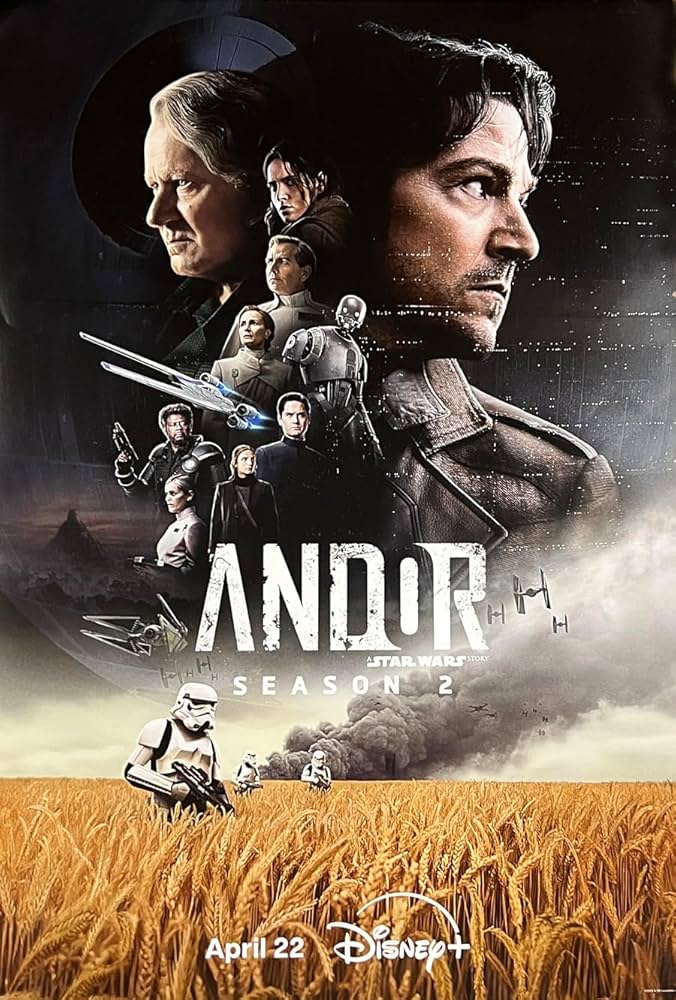
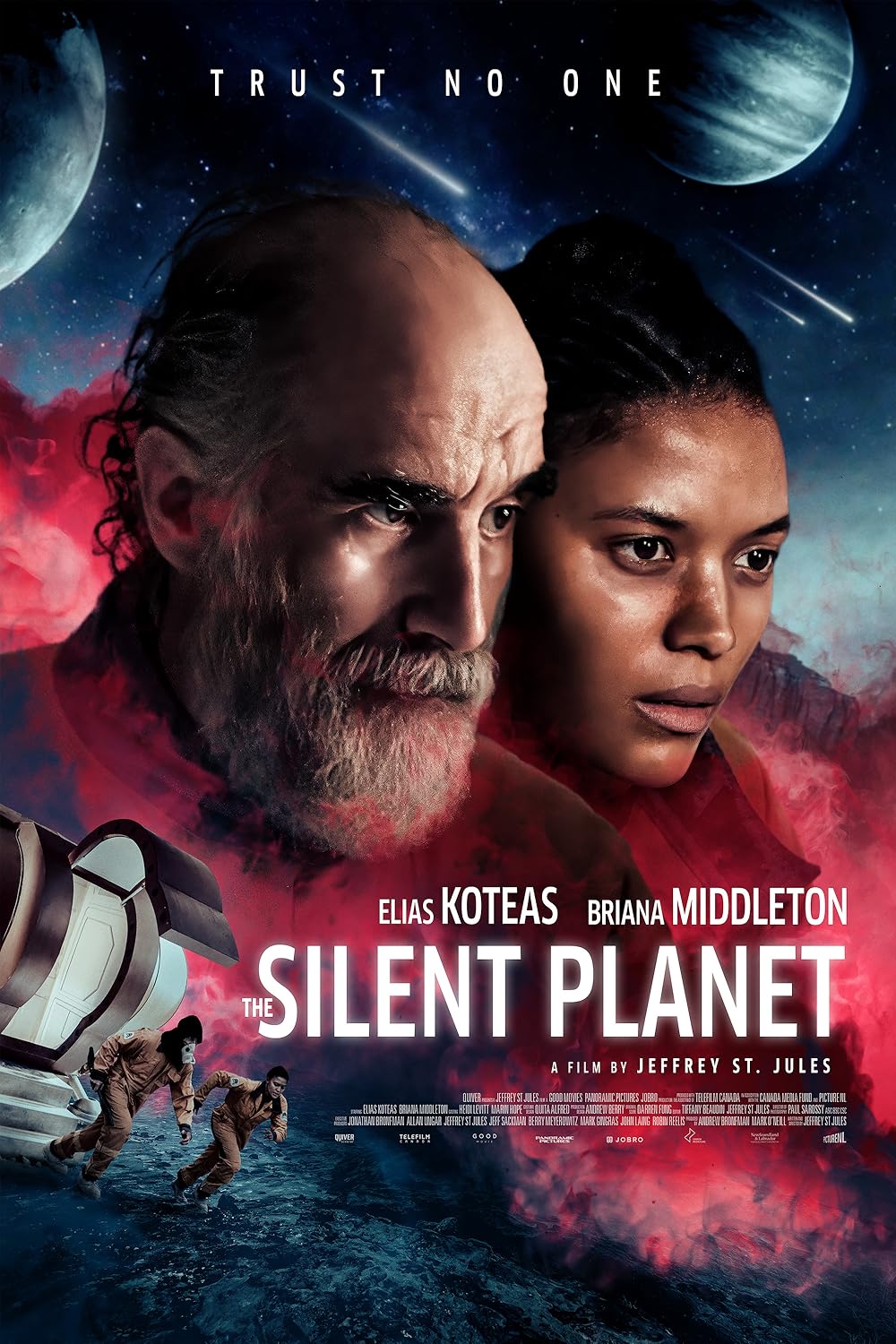
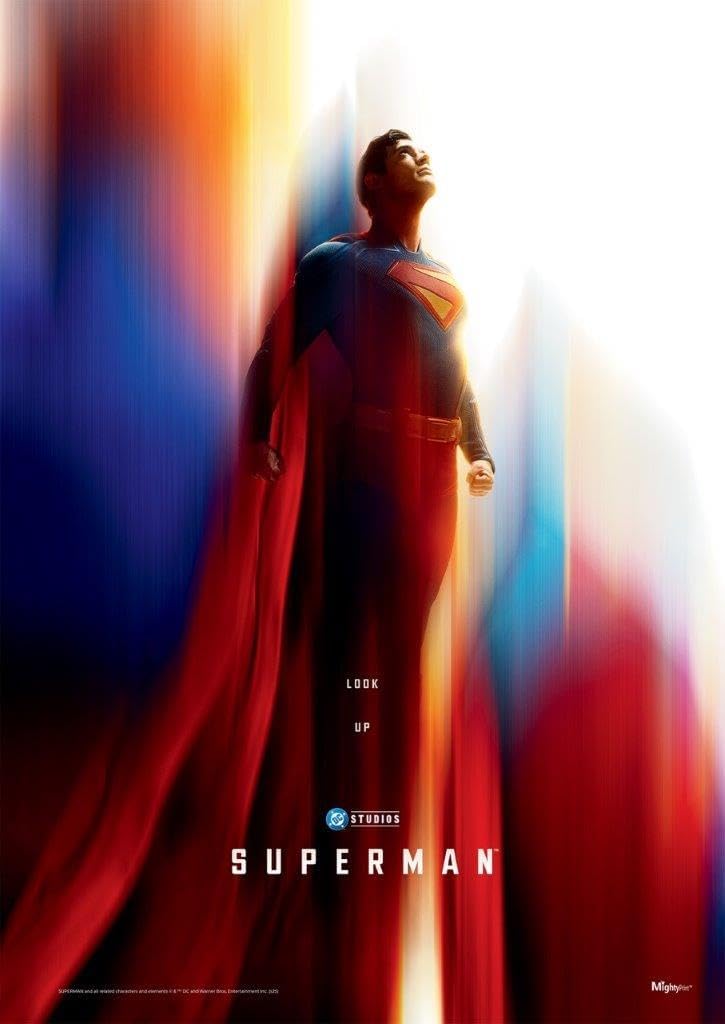


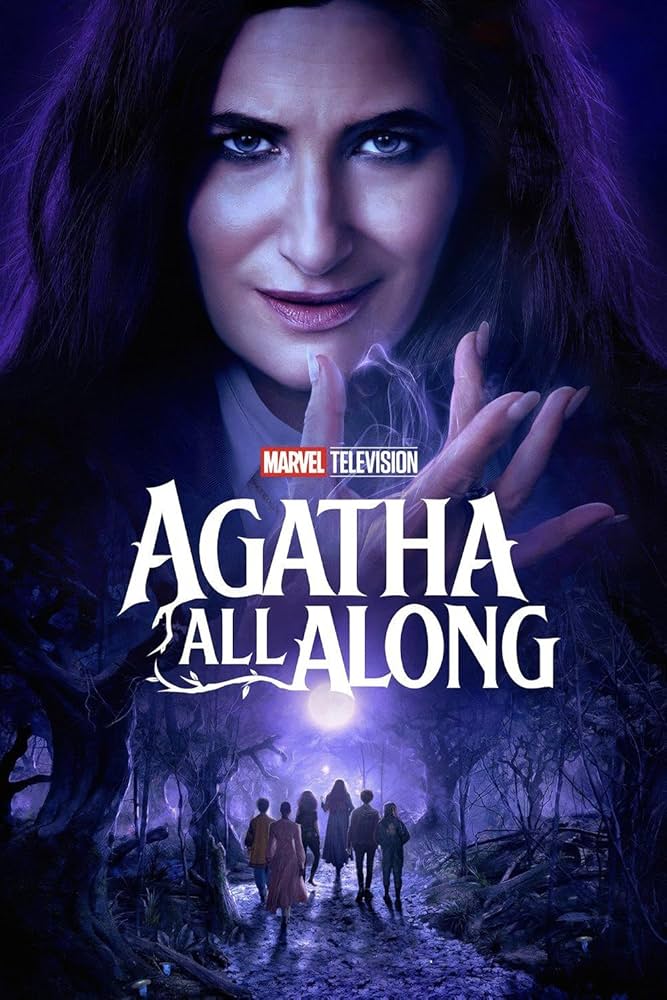
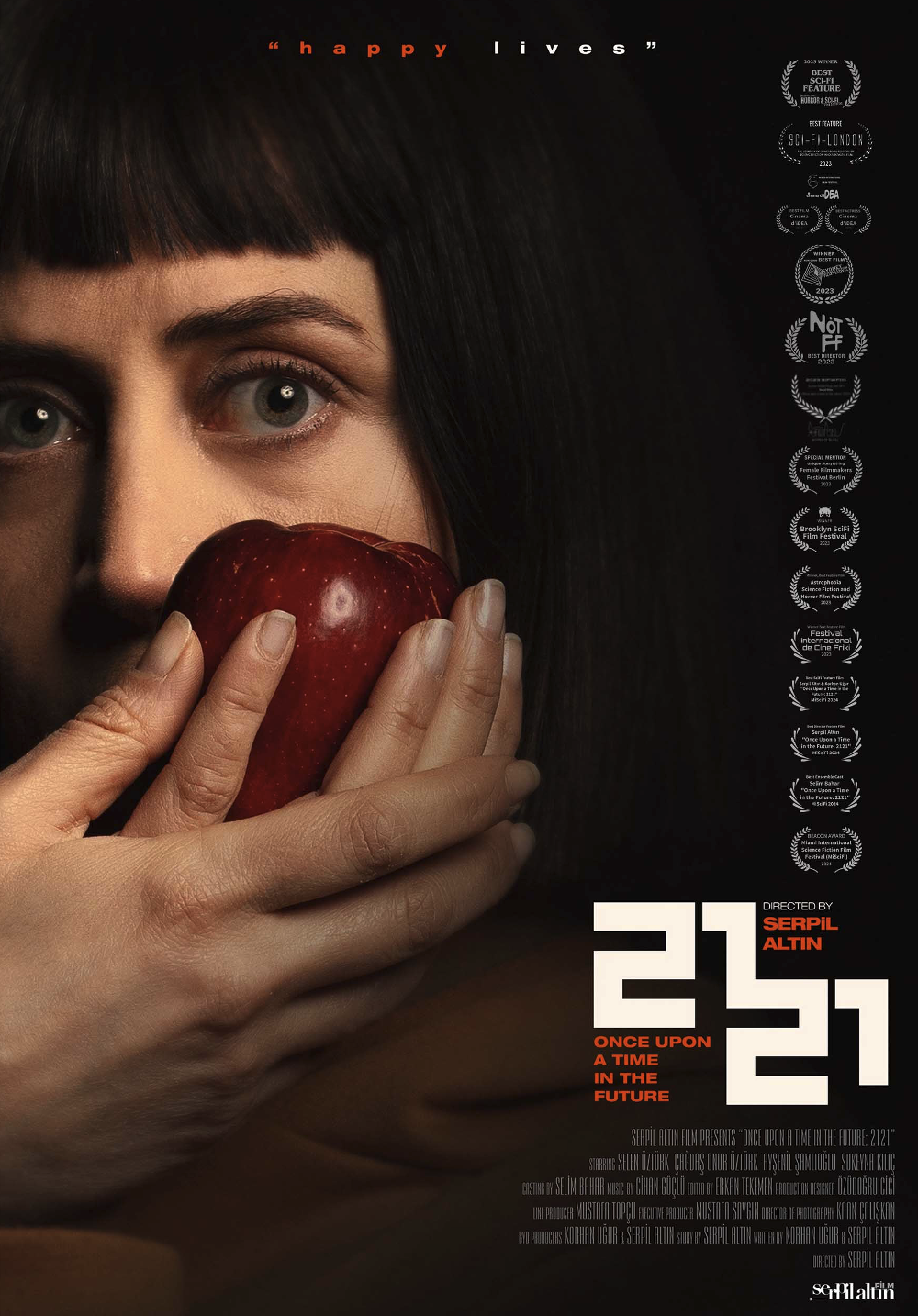


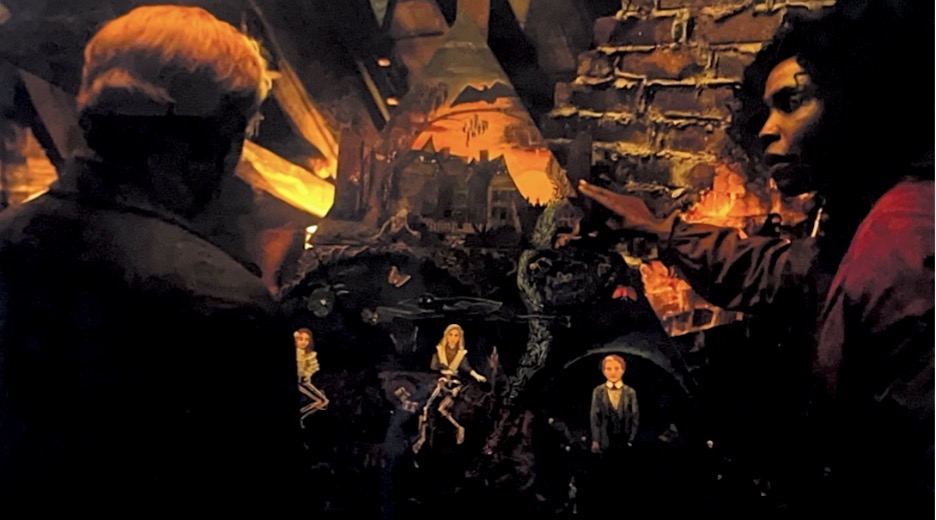
 SFRA Review